Summary
Table of Content

Smart Drug Delivery Systems Market
Get a free sample of this report
Form submitted successfully!
Error submitting form. Please try again.
Thank you!
Your inquiry has been received. Our team will reach out to you with the required details via email. To ensure that you don't miss their response, kindly remember to check your spam folder as well!
Request Sectional Data
Thank you!
Your inquiry has been received. Our team will reach out to you with the required details via email. To ensure that you don't miss their response, kindly remember to check your spam folder as well!
Form submitted successfully!
Error submitting form. Please try again.
Smart Drug Delivery Systems Market Size
This substantial growth is driven rising prevalence of chronic diseases, growing adoption of digital health technologies, shift towards patient-centric and home-based care and technological advancements in drug delivery. The rapidly increasing prevalence of chronic diseases is a significant factor driving the growth of the smart drug delivery systems market. Chronic illnesses such as cardiovascular diseases, cancer, respiratory disorders, and diabetes continue to account for the majority of global morbidity and mortality, thereby intensifying the need for advanced and effective therapeutic management. For instance, according to the international diabetes federation (IDF), approximately 589 million adults (20–79 years) were living with diabetes in 2024. This number is projected to escalate dramatically, reaching 853 million by 2050, highlighting the urgent need for advanced management technologies as traditional drug delivery methods struggle to meet the rising demand for controlled and frequent dosing.
Smart Drug Delivery Systems Market Key Takeaways
Market Size & Growth
- 2025 Market Size: USD 13.9 Billion
- 2026 Market Size: USD 16.1 Billion
- 2035 Forecast Market Size: USD 64.5 Billion
- CAGR (2026–2035): 16.7%
Regional Dominance
- Largest Market: North America
- Fastest Growing Region: Asia Pacific
Key Market Drivers
- Rising prevalence of chronic diseases.
- Growing adoption of digital health technologies.
- Shift towards patient-centric and home-based care.
- Technological advancements in drug delivery.
Challenges
- High cost associated with device development and production.
- Lack of standardization.
Opportunity
- Expansion of connected and data driven drug delivery platforms.
Key Players
- Market Leader: Becton Dickinson and Company led with over 18% market share in 2025.
- Leading Players: Top 5 players in this market include Becton Dickinson and Company (BD), Medtronic, West Pharmaceutical Services, Novo Nordisk, Ypsomed, which collectively held a market share of 55% in 2025.
Get Market Insights & Growth Opportunities
The increasing burden of these long-term conditions necessitates precise, controlled, and patient-specific drug administration, areas where traditional delivery methods often fall short. Smart drug delivery systems offer targeted, responsive, and programmable release mechanisms that significantly enhance treatment outcomes while improving patient adherence. As healthcare providers shift toward personalized and outcome-based care, the demand for these technologically advanced systems is expected to rise, making the growing prevalence of chronic diseases a driver of market expansion.
Additionally, the growing shift toward patient‑centric and home‑based care is emerging as a key driver of the smart drug delivery systems market. Healthcare systems worldwide are prioritizing convenience, cost efficiency, and improved quality of life encouraging patients to manage chronic conditions outside traditional clinical settings. Smart drug delivery technologies, including connected injectors, wearable injectors, enable safe and precise medication administration at home, reducing the need for hospital visits and lowering overall healthcare burden. These solutions also integrate digital monitoring features, allowing real‑time tracking of dosage adherence and treatment effectiveness, which is essential for chronic disease patients requiring long‑term therapy. As demand for remote care and personalized treatment models continues to rise, smart drug delivery systems are becoming critical for modern home‑based healthcare, significantly accelerating market growth.
The smart drug delivery systems market encompasses digitally enhanced drug‑delivery technologies that integrate sensors, connectivity, and data intelligence to improve dosing accuracy, therapy adherence, and overall patient management. These systems support remote monitoring, personalized treatment, and seamless integration with digital health ecosystems. As healthcare shifts toward automation and home‑based care, smart delivery solutions continue to gain strategic importance across global treatment pathways.
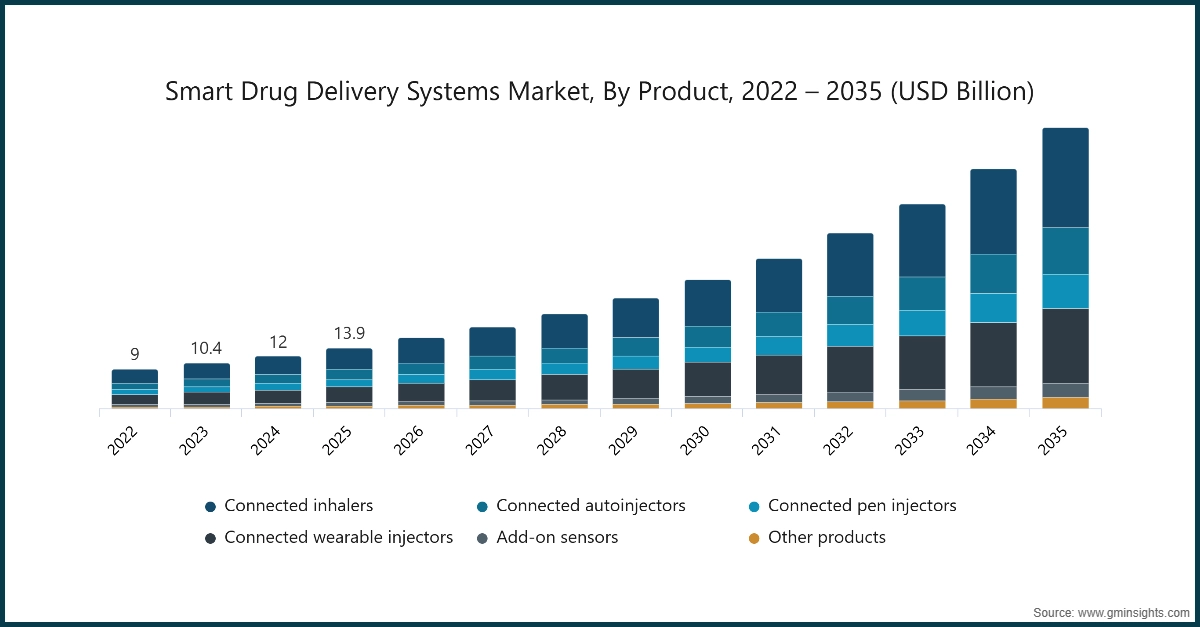
The global smart drug delivery systems market was valued at USD 13.9 billion in 2025 and is projected to grow from USD 16.1 billion in 2026 to USD 64.5 billion by 2035, expanding at a CAGR of 16.7%, according to the latest report published by Global Market Insights Inc.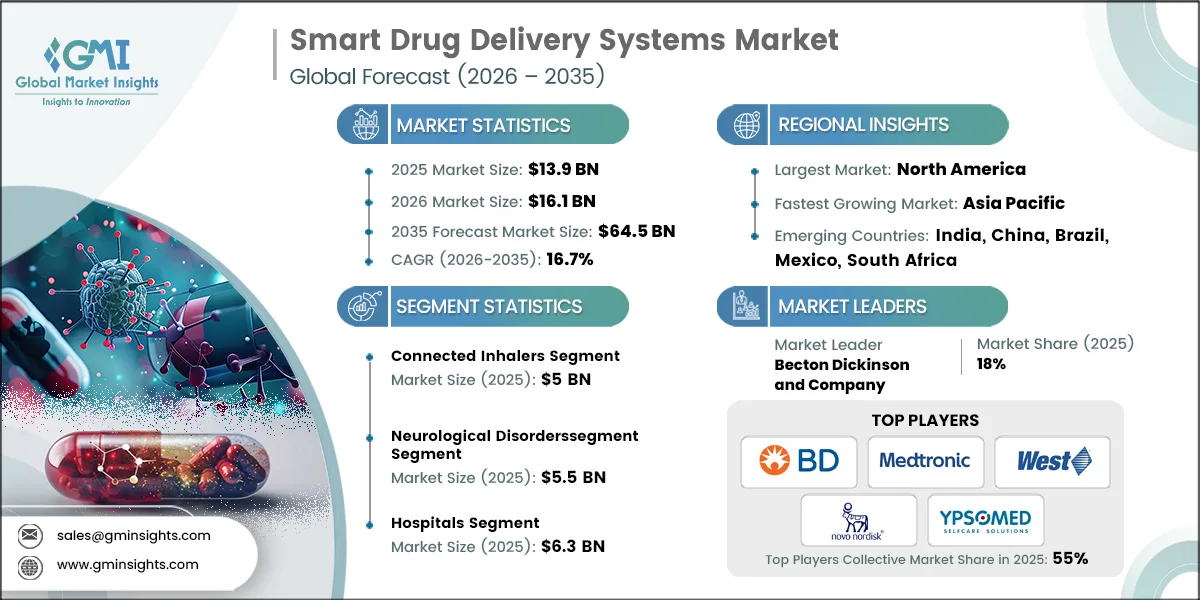
To get key market trends
Smart Drug Delivery Systems Market Trends
- The increasing integration of digital health technologies is reshaping the smart drug delivery systems landscape by enhancing precision, accessibility, and treatment adherence. Emerging innovations such as, the use of artificial intelligence in drug delivery, real‑time physiological monitoring, and IoT‑enabled devices are redefining chronic diseases are management and monitoring.
- The market is also experiencing a strong shift toward personalized therapeutics tailored to individual patient profiles. Manufacturers are increasingly developing solutions capable of delivering customized dosages and time‑specific administration based on parameters such as genetic markers, biomarkers, or continuously captured patient data.
- Additionally, companies are prioritizing the digital transformation of existing drug delivery devices with an emphasis on smartphone connectivity for better oversight and adherence. For instance, in December 2022, the FDA approved Mallya a smart sensor that attaches to insulin pens and converts them into connected devices capable of transmitting dosing data to a mobile application. This digital shift is fostering greater innovation in smart drug delivery and is poised to enhance treatment accuracy and compliance.
- Moreover, advancements in wearable technologies, including smart insulin pens and digital patches, are rapidly gaining traction. These devices are user‑friendly and offer continuous monitoring capabilities, making them highly appealing for chronic disease management. As a result, wearable insulin delivery systems are positioned to significantly enhance diabetes care across large patient populations.
- Consequently, the growing adoption of smart wearables is transforming chronic disease management by empowering patients with better treatment oversight and improved control over their health outcomes.
Smart Drug Delivery Systems Market Analysis
Learn more about the key segments shaping this market
Based on product, the smart drug delivery systems market is divided into connected inhalers, connected autoinjectors, connected pen injectors, connected wearable injectors, add-on sensors, and other products. The connected inhalers segment held significant share in the market with a revenue of USD 5 billion in 2025.
- Connected inhalers are experiencing strong uptake in the smart drug‑delivery landscape because they address long‑standing issues in respiratory care, such as inconsistent medication adherence, poor inhalation technique, and lack of objective usage data. Traditional inhalers cannot track whether patients are using their medication correctly or frequently enough, creating major gaps in disease management. Connected inhalers solve these issues by embedding or attaching digital sensors that automatically record inhalation events, flow quality, and dosing frequency.
- Moreover, adoption is also rising due to the broader shift toward telehealth, remote patient monitoring, and integrated digital therapeutics. Connected inhalers offer features such as usage reminders, symptom tracking, and analytics‑driven insights, significantly enhancing patient engagement. Their compatibility with mobile apps and electronic health platforms makes them effective tools for personalized disease management. Advancements in sensor accuracy, user‑friendly app interfaces, and data‑sharing capabilities have further strengthened their role in respiratory care.
- For instance, Teva Pharmaceutical’s FDA‑approved ProAir Digihaler (albuterol sulfate 117 mcg), which incorporates built‑in sensors that connect to a companion mobile application, offering patients with asthma and COPD immediate access to inhaler‑use data and feedback to improve management. This type of integrated digital functionality is reshaping how respiratory diseases are monitored and treated.
- Overall, the rise of connected inhalers reflects a broader evolution toward data‑driven, patient‑centric respiratory care. By providing real‑time insights, improving adherence, and supporting better clinical decision‑making, these devices are increasingly becoming a central component of modern respiratory‑management strategies.
Based on application, the smart drug delivery systems market is segmented into metabolic disorders, neurological disorders, respiratory disorders, hormonal disorders, and other applications. Needs a space between disorders and segment with the largest revenue of USD 5.5 billion in 2025.
- Neurological conditions include disorders that affect the brain, spinal cord, and peripheral nerves, impacting movement, cognition, behavior, and sensory functions. These conditions range from stroke, dementia, and epilepsy to migraine and neurodevelopmental disorders.
- Many neurological diseases require precise, timely, and continuous medication delivery to maintain therapeutic stability, prevent symptom fluctuations, and avoid severe episodes. Traditional dosing methods often fail to ensure consistency due to human error, adherence challenges, and variability in drug absorption. Smart drug‑delivery devices help overcome these limitations by enabling controlled dosing, automated delivery, and real‑time monitoring crucial for chronic conditions like Parkinson’s disease, epilepsy, and migraine.
- A major 2024 study published in The Lancet Neurology reports that more than 3 billion people worldwide were living with a neurological condition in 2021, underscoring the immense and growing global health burden. This rising prevalence reinforces the critical importance of smart drug‑delivery systems in ensuring precision, adherence, and improved quality of care for neurological patients worldwide.
- In conclusion, the escalating scale of neurological conditions highlights the urgent need for advanced, technology‑enabled therapeutic solutions.
Based on route of administration, the smart drug delivery systems market is segmented into injectable, inhalation, and oral. The injectable segment accounted for the largest market share of 63.8% in 2025.
- Injectable smart drug‑delivery systems are widely used in therapeutic areas that require precise, controlled, and targeted administration of medications. These include chronic diseases such as diabetes, cancer, autoimmune disorders, and neurological conditions, where consistent dosing and rapid onset of action are essential. Smart injectables are also used for biologics and biosimilars, as these large‑molecule drugs often cannot be administered effectively via oral or inhalation routes.
- The injectable segment shows strong growth due to advances in materials science, nanotechnology, and sensor technologies that significantly expand the functionality and accuracy of injectable systems. These innovations support efficient drug release, enhanced monitoring, and treatment personalization, factors that strengthen market demand. Additionally, regulatory agencies like the U.S. FDA are increasingly approving smart injectable devices, creating a supportive environment for commercialization. This regulatory momentum accelerates innovation and expands the availability of next‑generation injectable products.
- Overall, injectables remain a key route of administration in smart drug‑delivery systems due to their ability to deliver precise dosing, support advanced therapies, and integrate seamlessly with connected technologies. Continued technological progress and strong regulatory support further reinforce the segment’s leading position. As adoption grows, smart injectables are expected to play an even more central role in improving therapeutic outcomes across multiple disease areas.

Learn more about the key segments shaping this market
Based on end use, the smart drug delivery systems market is segmented into hospitals, clinics, home care, ambulatory care settings, and other end users. The hospitals segment dominated the market with the largest revenue of USD 6.3 billion in 2025.
- The growing incidence of chronic illnesses including diabetes, cancer, cardiovascular disorders, asthma, and COPD is further increasing the reliance on smart drug‑delivery solutions in hospitals. These devices support timely interventions, reduce clinical errors, and improve long‑term disease management across diverse patient populations.
- Moreover, this segment is expected to expand as healthcare infrastructure improves, hospitalization rates increase, and hospitals allocate higher budgets toward technologically advanced smart drug‑delivery devices. Investments in digital therapeutics and connected platforms are also accelerating system upgrades.
- Additionally, hospitals are prioritizing data‑driven care models, which is boosting the adoption of connected drug‑delivery systems capable of integrating with electronic health records (EHRs). This interoperability supports better decision‑making and enhances coordination among clinical teams.
- Further, the growing focus on patient safety and regulatory compliance is prompting hospitals to choose smart systems that reduce adverse drug events, ensure dosage consistency, and support audit‑friendly digital documentation factors that strengthen the segment’s market traction.
Looking for region specific data?
North America Smart Drug Delivery Systems Market
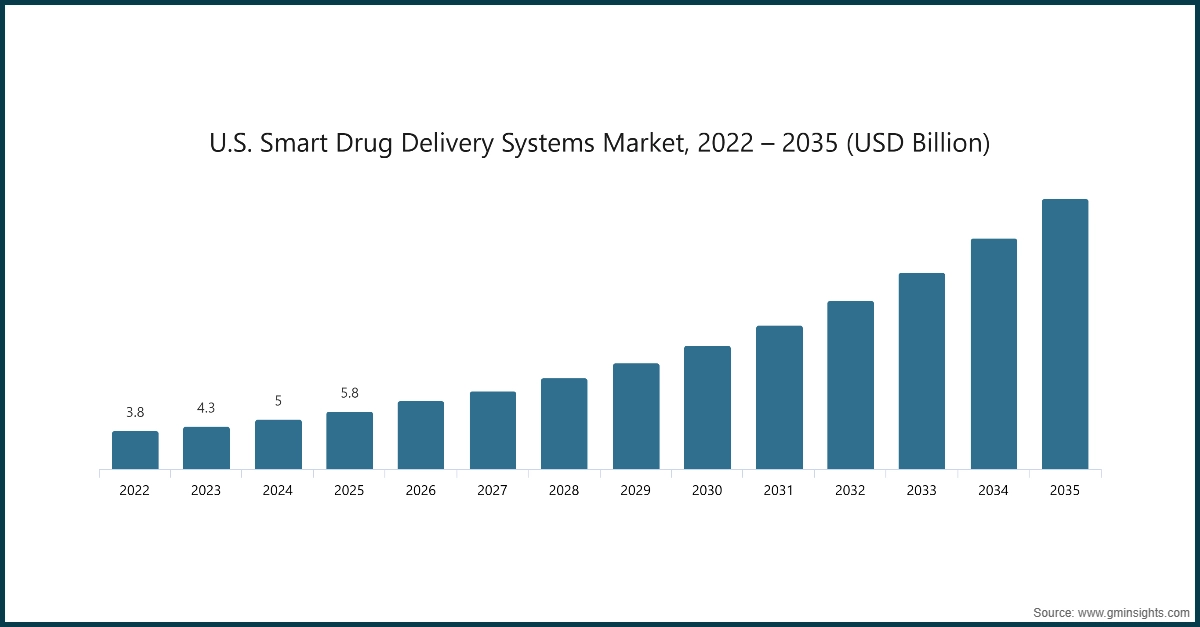
The North America region accounted for 45.7% of the global market in 2025. The market in North America is experiencing robust expansion, driven by the increasing prevalence of chronic diseases.
- North America is experiencing a rapid expansion in digital health adoption, driven by strong regulatory support, high healthcare digitalization, and widespread integration of connected medical devices. Smart drug‑delivery systems align closely with this trend, as hospitals, clinics, and home‑care settings increasingly rely on real‑time data, remote monitoring, and automated dosing to enhance care quality. The region’s advanced digital infrastructure and early uptake of telehealth platforms are further accelerating the use of smart, connected therapies.
- The rise of AI‑enabled tools, mobile health applications, and IoT‑based medical devices is creating ideal conditions for smart drug‑delivery adoption. Patients and providers value the ability to track medication usage, receive digital alerts, and optimize treatment pathways, while payers benefit from improved adherence and reduced hospitalizations. As digital transformation increases across North America, demand for intelligent, data‑driven drug‑delivery technologies continues to expand.
- The growing burden of chronic diseases in the U.S. is significantly increasing the need for advanced and technology‑enabled drug‑delivery solutions. Conditions such as diabetes, cancer, cardiovascular diseases, and respiratory disorders require precise, consistent, and long‑term medication management. Smart drug delivery systems are specifically designed to overcome critical treatment challenges by improving dosing precision, enabling remote monitoring, and strengthening medication adherence, thereby increasing their value across diverse healthcare settings.
- For instance, estimated 129 million people in the U.S. live with at least one major chronic disease, including heart disease, cancer, diabetes, obesity, and hypertension, according to the U.S. Department of Health and Human Services. Five of the top ten leading causes of death in the country are linked to preventable and treatable chronic diseases, demonstrating their considerable health and economic impact. This growing disease prevalence is accelerating the adoption of smart drug‑delivery systems that support better disease control and reduce the burden on hospitals and caregivers.
- The continued increase in chronic illness nationwide is driving the U.S. healthcare sector to focus on advanced approaches that strengthen clinical outcomes, optimize medication workflows, and lower the incidence of avoidable complications. As a result, the U.S. market is increasingly aligned with digital, data‑driven, and patient‑centric therapeutic models that enhance both efficiency and quality of care.
Europe Smart Drug Delivery Systems Market
Europe market accounted for USD 2.9 billion in 2025 and is anticipated to show lucrative growth over the forecast period.
- Europe is witnessing a strong transition toward patient‑centric and home‑based care models, driven by ageing populations, rising chronic disease cases, and pressure to reduce hospital congestion. Healthcare providers are increasingly adopting solutions that enable patients to manage treatment outside traditional clinical settings with greater convenience and autonomy. Smart drug‑delivery systems fit seamlessly into this shift by offering connected, user‑friendly platforms that support safer and more efficient therapy at home.
- Additionally, the region’s rapidly evolving digital‑health ecosystem is accelerating the uptake of smart drug‑delivery systems that allow remote monitoring, automated dosing, and real‑time adherence tracking. These technologies empower patients to stay engaged in their treatment plans while enabling clinicians to monitor progress through integrated digital platforms.
- This sustained focus on patient‑centric delivery models is expected to further accelerate demand for smart drug‑delivery systems across the European market.
Germany's smart drug delivery systems market is projected to experience steady growth between 2026 and 2035.
- Germany is experiencing a steady rise in chronic diseases, increasing the need for advanced and technology‑enabled drug‑delivery solutions that support precise and long‑term treatment management. The growing burden of conditions such as diabetes, cardiovascular disorders and respiratory illnesses is pushing healthcare providers to adopt smart delivery systems that enhance dosing accuracy and improve adherence. Additionally, these solutions offer meaningful support for patient self‑management, which aligns with Germany’s broader shift toward digital and value‑based care models.
- For instance, according to IDF, the diabetic population has grown from 2.6 million in 2000 to 5.0 million in 2011, and further to 6.5 million in 2024, with projections indicating 6.1 million by 2050. This sustained prevalence is accelerating the adoption of smart drug‑delivery systems that ensure consistent dosing, support remote monitoring, and help reduce complications associated with chronic disease management.
Asia Pacific Smart Drug Delivery Systems Market
The Asia Pacific region is projected to show a lucrative growth of about 17% during the forecast period.
- The Asia‑Pacific region is rapidly advancing in digital‑health integration, supported by expanding healthcare modernization, rising smartphone penetration, and growing acceptance of connected medical technologies. Countries across the region are investing in digital platforms that enhance treatment monitoring and improve medication accuracy, creating favorable conditions for smart drug‑delivery adoption. Additionally, the shift toward remote‑care models and telemedicine is further strengthening the need for intelligent, data‑enabled delivery systems.
- Moreover, the region’s increasing focus on personalized medicine and real‑time patient management is accelerating demand for smart drug‑delivery devices capable of automated dosing and continuous tracking. Healthcare providers are adopting these technologies to improve clinical outcomes, reduce treatment variability, and support long‑term disease management.
India smart drug delivery systems market is poised to witness lucrative growth between 2026 – 2035.
- India is undergoing a substantial rise in chronic illnesses such as diabetes, heart‑related conditions, and respiratory disorders driving a shift toward advanced, technology‑integrated drug‑delivery solutions. As disease management becomes more complex and long‑term, smart delivery systems are gaining traction for their ability to streamline therapy, improve dosage reliability, and support greater patient autonomy within an evolving digital‑health infrastructure.
- According to the IDF, India’s diabetic population expanded sharply from 32.7 million in 2000 to 61.3 million in 2011, reaching 89.8 million in 2024, with forecasts projecting 156.7 million adults by 2050. This rapid and persistent rise is accelerating the move toward smart drug‑delivery technologies that bring consistency to dosing, enable real‑time monitoring, and help mitigate the long‑term risks associated with chronic disease progression.
- Collectively, these trends show that smart drug‑delivery systems are becoming increasingly essential in India, offering practical, connected solutions that can better support the country’s growing chronic‑care need.
Latin America Smart Drug Delivery Systems Market
Brazil is experiencing significant growth in the market.
- Brazil is facing a growing health burden driven by widespread chronic noncommunicable diseases, increasing the need for advanced smart drug‑delivery solutions that support long‑term and precise treatment. Research article from Unicamp in Campinas, São Paulo, shows that 45% of Brazilians aged 18 and over suffer from chronic conditions, including hypertension, diabetes, arthritis, back problems, depression, and asthma. Additionally, this rising disease load is pushing healthcare providers to adopt technologies that improve adherence and reduce treatment variability.
- Expanding prevalence of these chronic illnesses is strengthening demand for smart drug‑delivery systems that enable consistent dosing and support connected, data‑driven care models. Hospitals and outpatient centers in Brazil are increasingly integrating these solutions to improve therapy management and reduce complications associated with poorly controlled chronic diseases.
- Additionally, the shift toward digital health adoption across Latin America is creating a favorable environment for broader deployment of smart drug‑delivery technologies.
Middle East and Africa Smart Drug Delivery Systems Market
- Saudi Arabia is undergoing a rapid transformation in healthcare digitalization, driven by national initiatives under Vision 2030 that prioritize advanced, technology‑enabled patient care. Investments in connected medical platforms, AI‑enhanced monitoring, and smart therapeutic devices are creating strong momentum for next‑generation drug‑delivery solutions.
- Additionally, the country’s push toward integrated digital health records and telemedicine is increasing demand for systems that deliver precise, data‑supported treatment.
- Moreover, the expanding adoption of remote‑care models and sophisticated digital infrastructure is positioning Saudi Arabia as a key growth environment for smart drug‑delivery technologies. Healthcare providers are embracing tools that enhance accuracy.
Smart Drug Delivery Systems Market Share
- The leading players in the smart drug delivery systems devices market include Becton, Dickinson and Company (BD), Medtronic, West Pharmaceutical Services, Novo Nordisk, and Ypsomed, which collectively accounted for an estimated 55% share of the global market. BD maintains a strong position through its extensive portfolio, supported by deep partnerships across pharmaceutical combination‑product pipelines.
- Leading companies in the market are increasingly emphasizing advanced therapeutic‑support capabilities and digital optimization. Vendors are enhancing system performance through intuitive interfaces, dosage‑timing alerts, real‑time adherence notifications, connected dispensers, and personalized treatment‑insight dashboards. These enhancements are designed to improve long‑term adherence, strengthen clinical outcomes across chronic conditions such as diabetes, cardiovascular diseases, and COPD, and minimize risks tied to missed or improper dosing.
- Market participants are building broader collaborations with hospitals, primary‑care networks, specialty clinics, home‑care operators, and digital‑health platforms to accelerate the integration of connected drug‑delivery technologies. These partnerships support seamless device rollout, facilitate EHR integration, and streamline patient onboarding and monitoring workflows. The importance of such alliances is particularly evident in fast‑digitizing regions like Asia‑Pacific, Latin America, and the Middle East, where remote‑monitoring adoption and digital‑health infrastructure are rapidly advancing.
- Emerging regional technology providers are focusing on scalable, cost‑efficient platforms to cater to price‑sensitive markets. These companies are developing affordable adherence‑tracking solutions—such as mobile‑enabled sensors, Bluetooth‑connected delivery devices, and simplified cloud monitoring dashboards to broaden patient access. Leveraging local distributors, telehealth ecosystems, and retail‑pharmacy networks enables rapid geographic expansion while maintaining affordability and accessibility for diverse patient populations.
Smart Drug Delivery Systems Market Companies
Few of the prominent players operating in the smart drug delivery systems industry include:
- Amiko Digital Health
- Becton Dickinson and Company
- Biocorp
- Elcam Medical
- Medtronic
- Medtrum
- Nemera
- Novo Nordisk
- Phillips-Medisize
- Portal Instruments
- Teva Pharmaceutical Industries
- West Pharmaceutical Services
- Ypsomed
- Haselmeier
- Insulet
- Novo Nordisk
Novo Nordisk enhances its competitive position in the smart drug delivery systems market by integrating connectivity, behavioral insights, and patient‑centric design into its portfolio of smart pens and digital adherence tools. Its connected injection systems capture precise dosing events, sync seamlessly with disease‑management apps, and provide data‑driven feedback that empowers both patients and clinicians. With deep therapeutic expertise in diabetes, obesity, and chronic metabolic conditions, Novo Nordisk leverages real‑world adherence intelligence to strengthen treatment personalization and improve long‑term outcomes. Through its combined device‑drug‑digital ecosystem and global deployments, the company advances scalable, technology‑enabled adherence programs that reduce burden and enhance therapy continuity.
Ypsomed commands a strong position through its modular smart injection systems and connectivity‑ready platforms designed to meet the evolving requirements of biologics and patient self‑administration. Its smart pens, patch injectors, and digital monitoring interfaces deliver accurate dosing feedback, automated data transmission, and intuitive support for remote adherence management. With a strategic focus on customization for pharmaceutical partners, Ypsomed offers flexible integration with digital therapeutics, patient apps, and population health systems.
Medtrum strengthens its role in smart drug delivery with connected wearable injectors and digitally enabled diabetes‑management solutions. Recognized among leading developers of connected drug‑delivery devices, Medtrum integrates sensor‑driven automation and wireless data capabilities to simplify self‑administration, support adherence, and enable remote therapeutic oversight across chronic‑disease care pathways.
Smart Drug Delivery Systems Market Report Attributes
| Key Takeaway | Details |
|---|---|
| Market Size & Growth | |
| Base Year | 2025 |
| Market Size in 2025 | USD 13.9 Billion |
| Market Size in 2026 | USD 16.1 Billion |
| Forecast Period 2026-2035 CAGR | 16.7% |
| Market Size in 2035 | USD 64.5 Billion |
| Key Market Trends | |
| Drivers | Impact |
| Rising prevalence of chronic diseases | Accelerates demand for smart drug delivery solutions as more patients require long‑term, technology‑supported therapy management. |
| Growing adoption of digital health technologies | Boosts integration of connectivity and data‑driven features in drug‑delivery devices, expanding market penetration and innovation. |
| Shift towards patient-centric and home-based care | Increases the need for easy‑to‑use, remote‑monitoring‑enabled delivery systems that support self‑administration. |
| Technological advancements in drug delivery | Enhances device accuracy, connectivity, and usability, driving wider adoption across therapeutic areas and improving treatment outcomes. |
| Pitfalls & Challenges | Impact |
| High cost associated with device development and production | Limits scalability and slows market expansion as manufacturers face higher investment barriers and pricing pressures. |
| Lack of standardization | Creates interoperability challenges, delaying integration across digital ecosystems and hindering widespread adoption of connected drug‑delivery technologies. |
| Opportunities: | Impact |
| Expansion of connected and data driven drug delivery platforms | Drives growth by enabling smarter, more personalized therapies and seamless digital‑health integration. |
| Market Leaders (2025) | |
| Market Leader |
18% Market Share |
| Top Players |
Collective Market Share of 5 companies is 55% |
| Competitive Edge |
|
| Regional Insights | |
| Largest Market | North America |
| Fastest growing market | Asia Pacific |
| Emerging countries | India, China, Brazil, Mexico, South Africa |
| Future outlook |
|
What are the growth opportunities in this market?
Smart Drug Delivery Systems Market News:
- In October 2022, Merck and ALCOR announced that they entered into an agreement for the development and supply of specific version of Mallya device, a Bluetooth enabled clip-on device for pen injectors, which is intended as an accessory for one of Merck KGaA's drug delivery devices. This collaboration bolstered the company’s growth and also enhanced its market reach.
The smart drug delivery systems market research report includes an in-depth coverage of the industry with estimates and forecast in terms of revenue in USD Billion and from 2022 – 2035 for the following segments:
Market, By Product
- Connected inhalers
- Connected autoinjectors
- Connected pen injectors
- Connected wearable injectors
- Add-on sensors
- Other products
Market, By Application
- Metabolic disorders
- Neurological disorders
- Respiratory disorders
- Hormonal disorders
- Other applications
Market, By Route of Administration
- Injectable
- Inhalation
- Oral
Market, By End Use
- Hospitals
- Clinics
- Home care
- Ambulatory care settings
- Other end users
The above information is provided for the following regions and countries:
- North America
- U.S.
- Canada
- Europe
- Germany
- UK
- France
- Italy
- Spain
- Netherlands
- Asia Pacific
- China
- India
- Japan
- Australia
- South Korea
- Latin America
- Brazil
- Mexico
- Argentina
- Middle East and Africa
- Saudi Arabia
- South Africa
- UAE
Frequently Asked Question(FAQ) :
What is the projected market size of smart drug delivery systems by 2035?
The market is projected to reach USD 64.5 billion by 2035, growing at a CAGR of 16.7% from its 2026 value of USD 16.1 billion.
What are the primary drivers for this market growth?
Key drivers include the rising prevalence of chronic diseases (like diabetes and cancer), the growing adoption of digital health technologies, and a global shift toward patient-centric and home-based care.
Which product segment held a significant market share in 2025?
The connected inhalers segment held a significant share, generating USD 5 billion in revenue in 2025 by addressing issues like inconsistent inhalation technique and adherence.
Which application dominated the market in terms of revenue?
The neurological segment dominated the market with the largest revenue of USD 5.5 billion in 2025, driven by the need for precise dosing in conditions like Parkinson’s and epilepsy.
What is the leading route of administration for these systems?
The injectable segment accounted for the largest market share of 63.8% in 2025, as it is essential for biologics and drugs requiring rapid onset or precise, controlled delivery.
Which region is currently the largest market, and which is the fastest-growing?
North America was the largest market in 2025 (45.7% share), while Asia Pacific is projected to be the fastest-growing region with a CAGR of approximately 17%.
Who are the key players leading the smart drug delivery market?
The top five players—Becton Dickinson and Company (BD), Medtronic, West Pharmaceutical Services, Novo Nordisk, and Ypsomed—collectively hold a 55% market share.
Smart Drug Delivery Systems Market Scope
Related Reports