Summary
Table of Content

Sepsis Diagnostics Market
Get a free sample of this report
Form submitted successfully!
Error submitting form. Please try again.
Thank you!
Your inquiry has been received. Our team will reach out to you with the required details via email. To ensure that you don't miss their response, kindly remember to check your spam folder as well!
Request Sectional Data
Thank you!
Your inquiry has been received. Our team will reach out to you with the required details via email. To ensure that you don't miss their response, kindly remember to check your spam folder as well!
Form submitted successfully!
Error submitting form. Please try again.
Sepsis Diagnostics Market Size
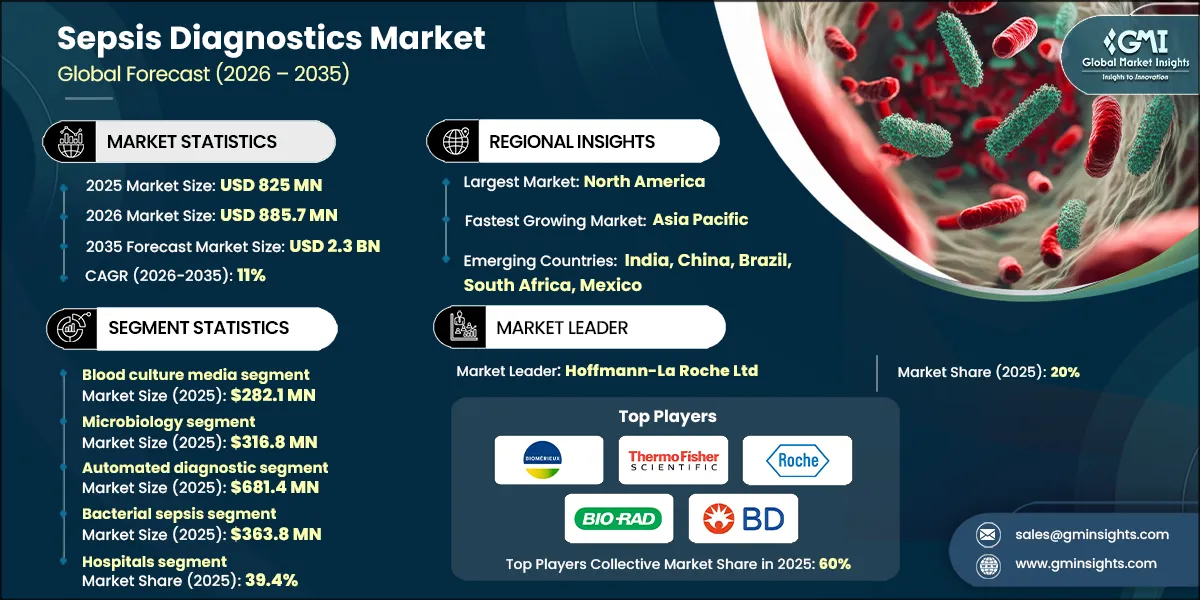
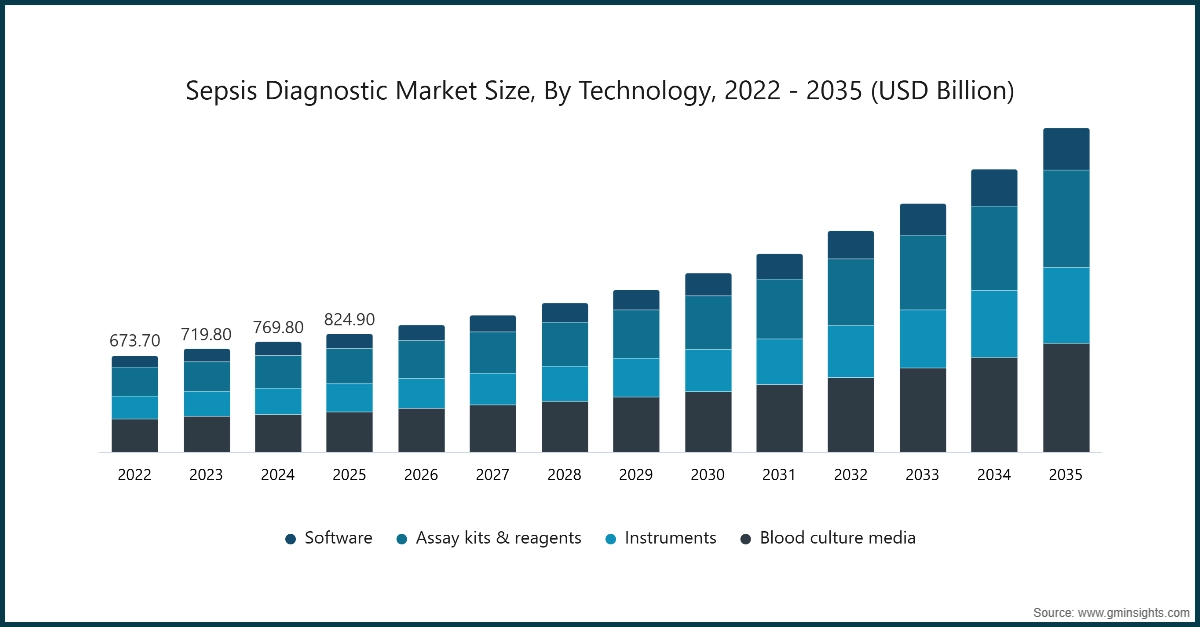
The global sepsis diagnostics market was valued at USD 825 million in 2025 and is projected to grow from USD 885.7 million in 2026 to USD 2.3 billion by 2035, expanding at a CAGR of 11%, according to the latest report published by Global Market Insights Inc.
To get key market trends
This steady growth is driven by surge in prevalence of infectious diseases, increasing government initiatives towards infectious diseases, technological advancements in infectious diseases diagnosis and rising awareness regarding infectious diseases and its diagnosis.
The market increased from USD 719.8 million in 2023 to USD 769.9 million in 2024. The rising infectious diseases is a critical driver for the sepsis diagnostics market. Sepsis often develops as a severe complication of infections, making early and accurate diagnosis essential for reducing mortality. According to the National Institute of Health (NIH), infectious diseases contribute to over 52 million global deaths annually, accounting for 33% of total deaths worldwide. This staggering statistic underscores the urgent need for advanced diagnostic solutions to identify sepsis at its earliest stages.
Factors such as antimicrobial resistance, hospital-acquired infections, and the growing burden of chronic illnesses further amplify the risk of sepsis, particularly in vulnerable populations like the elderly and immunocompromised patients. As healthcare systems strive to improve patient outcomes and reduce costs associated with prolonged ICU stays, the demand for rapid, reliable, and point-of-care sepsis diagnostic tools is accelerating. The surge in infectious disease prevalence not only highlights the clinical importance of timely sepsis detection but also creates significant growth opportunities for diagnostic companies to innovate and expand their offerings globally.
Government-led initiatives to strengthen public health infrastructure are significantly driving the growth of the sepsis diagnostics market. Sepsis often arises as a severe complication of infectious diseases, making timely detection critical for reducing mortality and healthcare costs. Recognizing this, governments worldwide are investing heavily in programs aimed at improving disease surveillance, diagnostic capabilities, and emergency response systems. For instance, in November 2022, the U.S. Centers for Disease Control and Prevention (CDC) launched a USD 3.2 million grant program to fortify nationwide public health infrastructure.
Such large-scale funding enhances laboratory capacity and diagnostic technology adoption and accelerates the integration of advanced tools like molecular assays and point-of-care testing into clinical workflows. Similar initiatives in Europe, Asia-Pacific, and other regions are creating a favorable environment for diagnostic companies to innovate and expand their offerings. As governments continue prioritizing infectious disease control, the demand for rapid and accurate sepsis diagnostics is expected to surge, presenting significant growth opportunities for market players globally.
Sepsis diagnostics refers to the process of identifying and diagnosing sepsis, a potentially life-threatening condition caused by the body's overwhelming response to an infection. It involves the use of various clinical and laboratory methods to detect the presence of infection and assess the severity of the condition.
Sepsis Diagnostics Market Report Attributes
| Key Takeaway | Details |
|---|---|
| Market Size & Growth | |
| Base Year | 2025 |
| Market Size in 2025 | USD 825 Million |
| Market Size in 2026 | USD 885.7 Million |
| Forecast Period 2026-2035 CAGR | 11% |
| Market Size in 2035 | USD 2.3 Billion |
| Key Market Trends | |
| Drivers | Impact |
| Surge in prevalence of infectious diseases | This increases the demand for rapid and accurate diagnostic solutions, driving market growth |
| Increasing government initiatives towards infectious diseases | Government funding and awareness programs accelerate adoption of advanced diagnostic technologies |
| Technological advancements in infectious diseases diagnosis | Innovations such as molecular testing and AI-powered tools improve diagnostic accuracy and reduce turnaround times |
| Rising awareness regarding infectious diseases and its diagnosis | Greater public and clinical awareness promotes early testing and preventive measures, boosting market penetration |
| Pitfalls & Challenges | Impact |
| High cost of sepsis diagnostics devices | The elevated cost limits adoption in resource-constrained healthcare settings and slows market penetration in emerging economies |
| Stringent regulatory framework | Complex approval processes and compliance requirements delay product launches and increase development costs for manufacturers |
| Opportunities: | Impact |
| Integration with AI & digital health | Combining AI algorithms with digital health platforms enables predictive analytics, real-time monitoring, and personalized sepsis diagnostics, improving clinical decision-making and patient outcomes |
| Market Leaders (2025) | |
| Market Leader |
20% Market Share |
| Top Players |
Collective market share is 60% in 2025 |
| Competitive Edge |
|
| Regional Insights | |
| Largest Market | North America |
| Fastest growing market | Asia Pacific |
| Emerging countries | India, China, Brazil, South Africa, Mexico |
| Future outlook |
|
What are the growth opportunities in this market?
Sepsis Diagnostics Market Trends
- In the evolving landscape of infectious disease diagnostics, particularly for sepsis, molecular diagnostics have established as a transformative technology, driving faster, more accurate, and efficient detection. Techniques such as Polymerase Chain Reaction (PCR) and nucleic acid amplification now dominate the field, offering unparalleled precision in pathogen detection and identification of antibiotic-resistant strains. Revered for their exceptional sensitivity, these methods guide clinicians toward the most effective treatment strategies. Additionally, the rise of point-of-care molecular diagnostic devices has reshaped sepsis testing, enabling rapid, on-site analysis and accelerating timely therapeutic interventions.
- Additionally, technological progress in proteomics and genomics has introduced groundbreaking approaches for identifying biomarkers linked to infectious diseases like sepsis. Biomarker-based assays provide a non-invasive and highly efficient diagnostic pathway, ensuring early detection and accurate pathogen differentiation. Furthermore, these biomarkers play a crucial role in monitoring disease progression and assessing treatment response, making them indispensable for personalized patient care.
- Moreover, the incorporation of artificial intelligence (AI) and machine learning (ML) into diagnostic platforms is revolutionizing accuracy and efficiency. These advanced technologies enhance data interpretation, minimize diagnostic errors, and streamline clinical workflows. By leveraging predictive analytics and pattern recognition, AI-driven systems deliver actionable insights, empowering clinicians to make faster and more informed decisions.
- Collectively, these advancements molecular diagnostics, biomarker-based assays, and AI integration are redefining the sepsis diagnostics landscape. They provide healthcare professionals with powerful tools for swift and precise decision-making, improving patient outcomes and reducing mortality rates. As innovation continues to accelerate, the market is poised for significant growth, driven by the demand for rapid, reliable, and intelligent diagnostic solutions.
Sepsis Diagnostics Market Analysis
Learn more about the key segments shaping this market
Based on product, the market is segmented into instruments, assay kits & reagents, blood culture media, and software. The blood culture media segment was valued at USD 282.1 million in 2025.
- Blood culture media are specialized nutrient broths designed to support the growth of microorganism bacteria, fungi, and yeasts from patient blood samples. These media are used in conjunction with automated detection systems to identify bloodstream infections, including sepsis-causing pathogens. Their formulations often contain antimicrobial-neutralizing resins and colorimetric sensors to enhance the speed and reliability of detection.
- Blood culture media play a foundational role in sepsis diagnostics, as blood cultures remain the gold standard for confirming infections. Their widespread use in hospitals and diagnostic laboratories ensures consistent demand. Additionally, advancements in media formulations and integration with automated detection systems have improved accuracy and reduced turnaround times, making them indispensable for early sepsis detection.
- For instance, bioMérieux’s BACT/ALERT are ready-to-use culture bottles are optimized for recovering a broad spectrum of microorganisms, featuring antimicrobial-neutralizing beads and colorimetric sensors for reliable and rapid detection.
- As a result, blood culture media continue to dominate the sepsis diagnostics market. Their compatibility with automated systems, ability to neutralize antibiotics, and proven reliability make them indispensable in clinical workflows.
Based on technology, the market is segmented into microbiology, molecular diagnostics, immunoassays and flow cytometry. The microbiology was valued at USD 316.8 million in 2025.
- Microbiology refers to diagnostic methods that involve cultivating and identifying microorganisms from patient samples, primarily blood. This process relies on blood culture media, which are nutrient-rich formulations designed to support the growth of bacteria and fungi for subsequent identification and susceptibility testing.
- Microbiology is the most widely adopted and clinically validated approach for detecting bloodstream infections. It provides comprehensive pathogen identification and supports antimicrobial susceptibility testing, which is critical for guiding treatment decisions.
- Furthermore, well-established protocols and global standardization contribute to its widespread acceptance in healthcare. Ongoing research ensures continuous innovation in microbiological methods, sustaining its dominance in sepsis diagnostics
- As a result, microbiology continues to dominate the sepsis diagnostics market due to its proven reliability, ability to deliver actionable results, and compatibility with automated systems.
Based on method, the market is segmented into conventional diagnostics and automated diagnostics. The automated diagnostic segment was valued at USD 681.4 million in 2025
- Automated diagnostics refers to systems that use advanced instruments and software to perform sepsis testing with minimal manual intervention. These platforms integrate robotics, sensors, and data analytics to streamline processes such as blood culture monitoring, molecular assays, and biomarker detection. Automation ensures consistent quality, reduces human error, and accelerates turnaround times for critical results.
- Automated diagnostics drive market growth by improving efficiency and scalability in clinical laboratories. Hospitals and diagnostic centers increasingly adopt automation to handle high sample volumes, reduce labor costs, and meet stringent quality standards. These systems also enable faster detection of pathogens and antibiotic resistance, which is vital for timely treatment in sepsis cases.
- For instance, Becton Dickinson (BD) offers the BD BACTEC FX system, an advanced automated blood culture platform that streamlines sample processing and provides real-time alerts for positive cultures. This enhances workflow efficiency and supports rapid, accurate detection of bloodstream infections, including sepsis.
- As a result, automated diagnostics dominate the sepsis testing market due to their ability to deliver faster, more accurate results while reducing operational complexity.
Based on pathogen, the sepsis diagnostics market is segmented into bacterial sepsis, fungal sepsis and other pathogen types. The bacterial sepsis segment was valued at USD 363.8 million in 2025
- Bacterial sepsis occurs when bacteria enter the bloodstream and trigger a severe systemic inflammatory response, leading to organ dysfunction. It is the most common form of sepsis and often results from infections such as pneumonia, urinary tract infections, or surgical site infections. Early and accurate detection is critical to prevent complications and reduce mortality.
- The dominance of bacterial sepsis drives significant demand for diagnostic solutions because it accounts for the majority of sepsis cases globally. Hospitals and diagnostic laboratories prioritize rapid identification of bacterial pathogens to guide timely antibiotic therapy. This need has accelerated the adoption of advanced technologies such as automated blood culture systems, molecular assays, and biomarker-based tests, all of which improve diagnostic speed and accuracy. The high prevalence of bacterial infections ensures consistent market growth for related diagnostic products.
- As a result, bacterial sepsis remains the primary focus of diagnostic innovation and investment. Its high incidence and clinical urgency reinforce the demand for rapid, reliable testing solutions.
Learn more about the key segments shaping this market
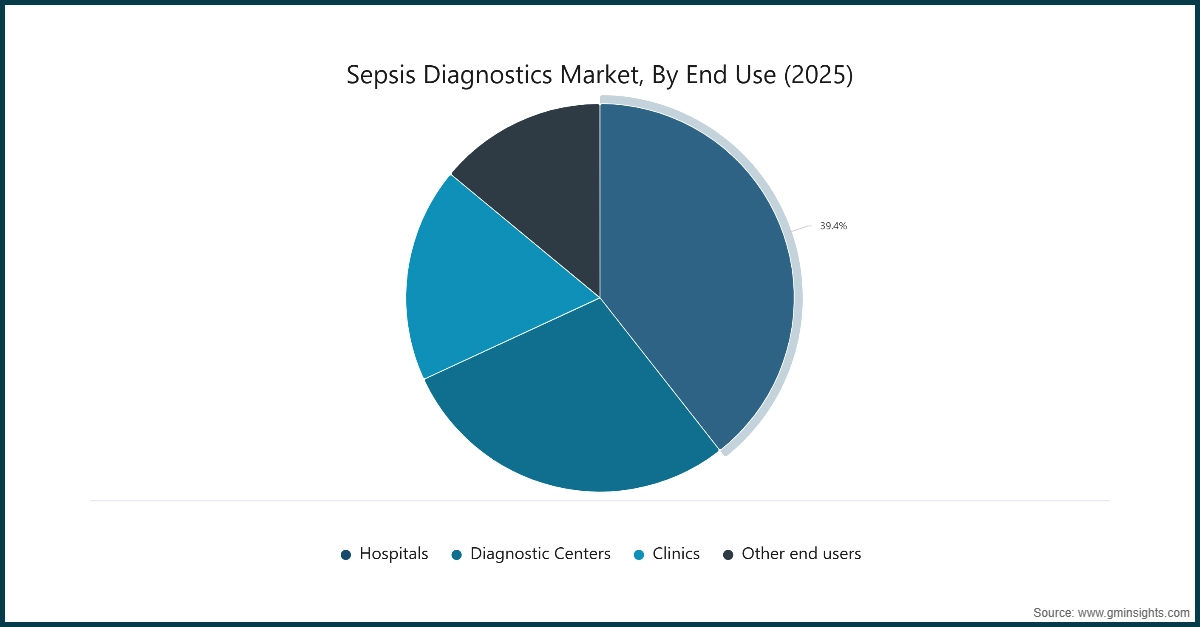
- Hospitals remain the primary point of care for patients requiring sepsis testing due to their comprehensive diagnostic capabilities and access to advanced laboratory infrastructure. These facilities are equipped with automated blood culture systems, molecular diagnostic platforms, enabling accurate and timely detection of sepsis-causing pathogens. Their ability to provide complete services including sample collection, analysis, and immediate clinical intervention makes hospitals the most preferred setting for sepsis diagnostics.
- The dominance of hospitals in this segment is supported by the availability of skilled laboratory technicians, microbiologists, and integrated diagnostic units. Hospitals also serve as hubs for critical care and emergency services, where rapid sepsis detection is essential for reducing mortality. The presence of advanced testing infrastructure and trained personnel enhances diagnostic accuracy and patient confidence, driving adoption of sepsis diagnostic solutions in these settings.
- Moreover, growing integration of automation and digital platforms within hospital laboratories is improving efficiency and accessibility. Hospitals are increasingly adopting AI-powered diagnostic systems and cloud-based data management solutions that enable automated result interpretation, risk assessment, and standardized reporting for sepsis cases.
- In conclusion, as the global burden of sepsis continues to rise, hospitals will play a pivotal role in early detection and management. Investments in advanced laboratory technologies, telehealth integration, and automated workflows will strengthen their position as the leading end-user segment.
Looking for region specific data?
North America Sepsis Diagnostics Market
The North America region accounted for 36.7% of the global market in 2025. The market in North America is experiencing robust expansion, driven by the region’s advanced healthcare infrastructure and technological advancements.
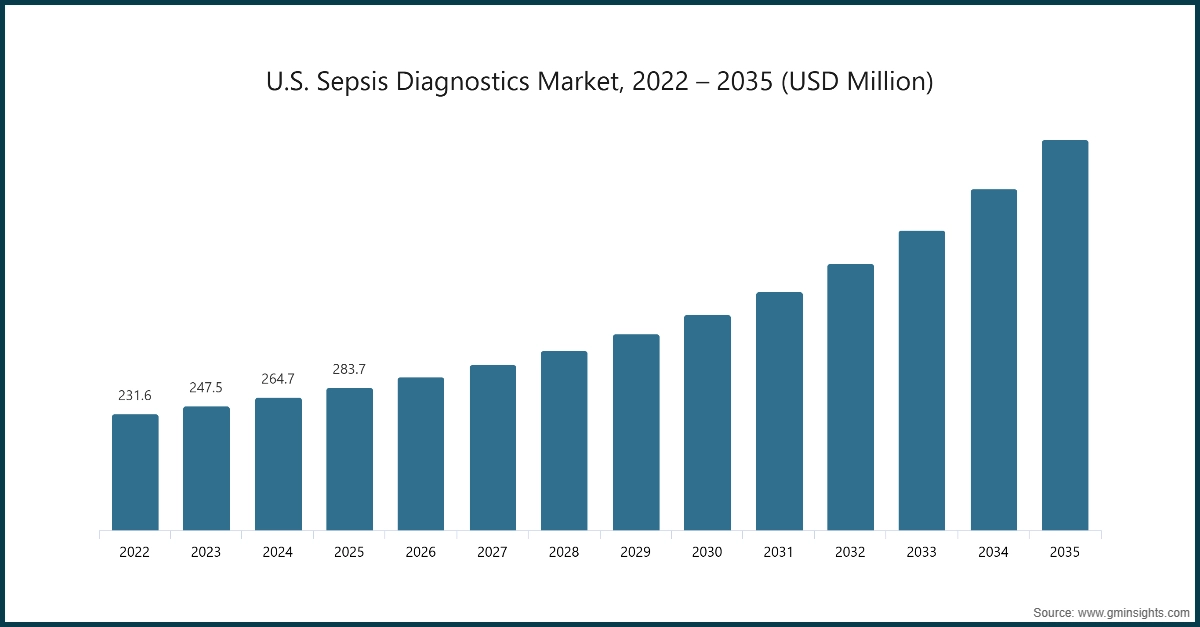
- The U.S. market was valued at USD 231.6 million and USD 247.5 million in 2022 and 2023, respectively. The market size reached USD 283.7 million in 2025, growing from USD 264.7 million in 2024.
- The increasing prevalence of infectious diseases in the U.S. is a key factor driving the growth of the sepsis diagnostics market. Sepsis often develops as a severe complication of infections, making rapid and accurate detection essential for improving patient outcomes. According to CDC, there were 4.7 million emergency department visits in the U.S. with infectious and parasitic diseases as the primary diagnosis, highlighting the significant burden on healthcare facilities.
- This surge in infection-related cases increases the risk of sepsis, particularly among vulnerable populations such as the elderly and immuno-compromised patients. To address this challenge, hospitals and diagnostic laboratories are adopting advanced technologies, including automated blood culture systems, molecular assays, and biomarker-based tests, which enable faster and more reliable detection.
- The growing incidence of infections underscores the clinical importance of timely sepsis diagnosis and creates strong market opportunities for diagnostic companies to innovate and expand their offerings. As infection rates continue to rise, the demand for efficient sepsis diagnostic solutions in emergency and critical care settings will remain a major growth driver for the U.S. market.
Europe Sepsis Diagnostics Market
Europe market accounted for USD 222.3 million in 2025 and is anticipated to show lucrative growth over the forecast period.
- Increasing awareness about infectious diseases and the importance of timely diagnosis is a key factor driving the market in Europe.
- Public health campaigns, educational programs, and initiatives by healthcare authorities are emphasizing early detection and treatment of infections to prevent severe complications like sepsis. This growing awareness is encouraging hospitals, diagnostic laboratories, and clinicians to adopt advanced diagnostic solutions, including automated blood culture systems, molecular assays.
- Additionally, patient education and preventive health programs are leading to higher testing rates, particularly in high-risk groups such as the elderly and immunocompromised individuals.
- As awareness continues to rise across Europe, the demand for rapid and accurate sepsis diagnostic tools is expected to increase significantly.
Germany's sepsis diagnostics market is projected to experience steady growth between 2026 and 2035.
- The rising prevalence of infectious diseases in Germany is a significant factor driving the market. Sepsis often develops as a severe complication of infections, making rapid and accurate detection essential for improving patient outcomes.
- For instance, the point prevalence of severe sepsis or septic shock in ICUs was 17.9%, with an incidence of 11.64 per 1,000 ICU days, highlighting the substantial burden on critical care units. This high prevalence underscores the urgent need for advanced diagnostic solutions that enable early identification and intervention.
- As the burden of infectious diseases in Germany continues to rise, so does the demand for innovative and reliable sepsis diagnostics solutions.
Asia Pacific Sepsis Diagnostics Market
The Asia Pacific region is projected to show a lucrative growth of about 11.5% during the forecast period.
- Rapid technological progress in infectious disease diagnostics is a major growth driver for the market in Asia-Pacific.
- These innovations enable early identification of sepsis-causing pathogens and antibiotic resistance, which is critical for reducing mortality and improving patient outcomes. Additionally, the integration of artificial intelligence (AI) and machine learning into diagnostic workflows is enhancing data interpretation and risk assessment, while point-of-care molecular devices are expanding access to rapid testing in remote and resource-limited settings.
- As countries in Asia-Pacific invest heavily in modernizing healthcare infrastructure and digital health platforms, the demand for technologically advanced sepsis diagnostic tools is expected to accelerate, creating significant opportunities for market players.
Japan sepsis diagnostics market is poised to witness lucrative growth between 2026 – 2035.
- Government initiatives in Japan aimed at strengthening infectious disease management are significantly driving the market. National health authorities are investing in programs to improve early detection and treatment of infections, which are critical for preventing sepsis-related complications. These initiatives include funding for advanced diagnostic technologies, integration of automated systems in hospitals, and nationwide awareness campaigns to promote timely testing.
- Additionally, Japan’s focus on enhancing healthcare infrastructure and implementing digital health solutions supports the adoption of molecular diagnostics. By prioritizing infection control and rapid diagnosis, these government-led efforts create a favorable environment for market growth and encourage diagnostic companies to introduce innovative solutions. As public health policies continue to emphasize early intervention and advanced diagnostics, the demand for sepsis testing tools in Japan is expected to rise steadily.
Latin America Sepsis Diagnostics Market
Brazil is experiencing significant growth in the market.
- The growing prevalence of infectious diseases in Brazil is a major factor driving the sepsis diagnostics market. Sepsis often develops as a severe complication of infections, making early and accurate detection critical for reducing mortality.
- Brazil faces a high burden of infectious diseases, including respiratory infections, urinary tract infections, and hospital-acquired infections, which significantly increase the risk of sepsis.
- This trend is pushing hospitals and diagnostic laboratories to adopt advanced diagnostic solutions.
Middle East and Africa Sepsis Diagnostics Market
- Rapid innovations in diagnostic technologies, are significantly improving the speed and accuracy of detecting infectious pathogens responsible for sepsis. These advancements enable early identification of bloodstream infections and antimicrobial resistance patterns, which is critical for timely intervention and reducing mortality rates.
- In Saudi Arabia, the growing adoption of automated platforms and AI-driven diagnostic tools in hospitals and laboratories is further accelerating the demand for advanced sepsis diagnostic solutions.
- Additionally, integration of digital health and telemedicine with diagnostic systems supports real-time monitoring and decision-making, aligning with the country’s Vision 2030 healthcare modernization goals.
Sepsis Diagnostics Market Share
- The top players in the market include BioMérieux SA, Thermo Fisher Scientific Inc., Hoffmann-La Roche Ltd., Bio-Rad Laboratories, Inc., and Becton, Dickinson and Company, collectively accounting for a 60% of global market share.
- These leading companies in the market are driving innovation to improve sample collection, analysis, and reporting globally. They are investing in advanced automated analyzers, rapid molecular diagnostic platforms, and AI-powered decision-support tools to ensure faster, more accurate detection of sepsis. These technologies enhance diagnostic precision, reduce turnaround times, and enable early intervention critical for improving patient survival rates and reducing healthcare costs.
- Through acquisitions and global expansion strategies, these companies are strengthening their position in the sepsis diagnostics ecosystem. Partnerships with hospitals, diagnostic laboratories, and healthcare networks are enabling broader access to advanced sepsis diagnostic solutions, particularly in emerging markets. This collaborative approach ensures better diagnostic coverage, timely availability of test results, and improved continuity of care for critical conditions.
- In conclusion, the focus on automation, digital integration, and regulatory compliance by these industry leaders will significantly shape the future of the sepsis diagnostics market. Integration of IoT-enabled devices and AI-driven predictive analytics will further enhance operational efficiency, accuracy, and safety standards.
- Their commitment to innovation and strategic alliances will accelerate adoption globally, improve patient outcomes, and drive sustained market growth. As healthcare systems prioritize modernization and preventive care, these advancements will remain central to meeting the rising demand for reliable and cost-effective sepsis diagnostic solutions.
Sepsis Diagnostics Market Companies
Few of the prominent players operating in the sepsis diagnostics industry include:
- F. Hoffmann-La Roche Ltd
- Thermo Fisher Scientific, Inc
- Abbott Laboratories
- Beckman Coulter Inc (Danaher Corporation)
- Siemens Healthineers
- Becton, Dickinson and Company
- bioMerieux SA
- Bio-Rad Laboratories
- Bruker Corporation
- T2 Biosystems, Inc
· Bruker
Bruker is recognized for its expertise in advanced analytical and diagnostic technologies, including mass spectrometry and microbiology solutions for sepsis detection. The company emphasizes innovation in rapid pathogen identification and antimicrobial resistance profiling, enabling clinicians to make timely and informed decisions. Bruker’s focus on precision, automation, and integration with digital platforms ensures high diagnostic accuracy and efficiency. Its global expansion and partnerships with healthcare institutions drive adoption of cutting-edge sepsis diagnostic solutions worldwide.
Thermo Fisher Scientific leverages its expertise in life sciences to deliver innovative sepsis diagnostics solutions, including reagents, molecular diagnostic platforms, and laboratory automation systems. The company emphasizes precision, compliance, and data-driven insights through advanced software integration. Strategic partnerships and acquisitions strengthen Thermo Fisher’s position in personalized medicine and genetic testing, enabling early detection and improved patient care. Its commitment to sustainability and digital transformation ensures continued growth in the sepsis diagnostics market.
Bio-Rad specializes in life science research and clinical diagnostics, with a strong portfolio of products for sepsis detection. The company leverages its expertise in molecular biology and immunology to develop high-performance reagents and diagnostic systems. Bio-Rad emphasizes precision, compliance, and workflow efficiency through advanced software integration and connectivity solutions. Its commitment to innovation and strategic partnerships ensures continued growth and global adoption of its sepsis diagnostic technologies.
Sepsis Diagnostics Market News:
- In March 2022, bioMérieux obtained FDA clearance for its state-of-the-art VITEK MS PRIME MALDI-TOF mass spectrometry identification system. This system represents a powerful analytical technique that enables the rapid and precise identification of microorganisms. The FDA clearance significantly bolstered the competitive edge of the company in the market, affirming the system's adherence to regulatory standards and enhancing its credibility within the industry.
The sepsis diagnostics market research report includes an in-depth coverage of the industry with estimates and forecast in terms of revenue in USD Million and from 2022 – 2035 for the following segments:
Market, By Product
- Blood culture media
- Instruments
- Assay kits & reagents
- Software
Market, By Technology
Reagents and kitsInstrumentsSoftwareMarket, By Method
- Conventional diagnostics
- Automated diagnostics
Market, By Pathogen Type
- Bacterial sepsis
- Fungal sepsis
- Other pathogen types
Market, By End Use
- Hospitals
- Clinics
- Diagnostic centers
- Other end users
The above information is provided for the following regions and countries:
- North America
- U.S.
- Canada
- Europe
- Germany
- UK
- France
- Italy
- Spain
- Netherlands
- Asia Pacific
- China
- India
- Japan
- Australia
- South Korea
- Latin America
- Brazil
- Mexico
- Argentina
- Middle East and Africa
- Saudi Arabia
- South Africa
- UAE
Frequently Asked Question(FAQ) :
How much revenue did the blood culture media segment generate?
The blood culture media segment generated USD 282.1 million in 2025.
What was the valuation of the microbiology technology segment?
The microbiology segment was valued at USD 316.8 million in 2025.
Which pathogen segment led the sepsis diagnostics market?
The bacterial sepsis segment led the market with a valuation of USD 363.8 million in 2025.
Which region leads the sepsis diagnostics market?
North America held a 36.7% share of the global market in 2025, driven by advanced healthcare infrastructure and technological advancements.
What are the upcoming trends in the sepsis diagnostics industry?
Key trends include the adoption of molecular diagnostics like PCR and nucleic acid amplification, advancements in biomarker-based assays, and the rise of point-of-care diagnostic devices for rapid and accurate testing.
Who are the key players in the sepsis diagnostics market?
Key players include F. Hoffmann-La Roche Ltd, Thermo Fisher Scientific, Inc, Abbott Laboratories, Beckman Coulter Inc (a subsidiary of Danaher Corporation), Siemens Healthineers, Becton, Dickinson and Company, bioMerieux SA, and Bio-Rad Laboratories.
What was the market size of the sepsis diagnostics market in 2025?
The market size was USD 825 million in 2025, with a CAGR of 11% projected through 2035, driven by advancements in molecular diagnostics and biomarker-based assays.
What is the projected value of the sepsis diagnostics market by 2035?
The market is expected to reach USD 2.3 billion by 2035, fueled by technological innovations in proteomics, genomics, and point-of-care diagnostic devices.
What is the projected size of the sepsis diagnostics market in 2026?
The sepsis diagnostics industry is expected to reach USD 885.7 million in 2026.
Sepsis Diagnostics Market Scope
Related Reports