Summary
Table of Content

Robotic Catheter Navigation System Market
Get a free sample of this report
Form submitted successfully!
Error submitting form. Please try again.
Thank you!
Your inquiry has been received. Our team will reach out to you with the required details via email. To ensure that you don't miss their response, kindly remember to check your spam folder as well!
Request Sectional Data
Thank you!
Your inquiry has been received. Our team will reach out to you with the required details via email. To ensure that you don't miss their response, kindly remember to check your spam folder as well!
Form submitted successfully!
Error submitting form. Please try again.
Robotic Catheter Navigation System Market Size
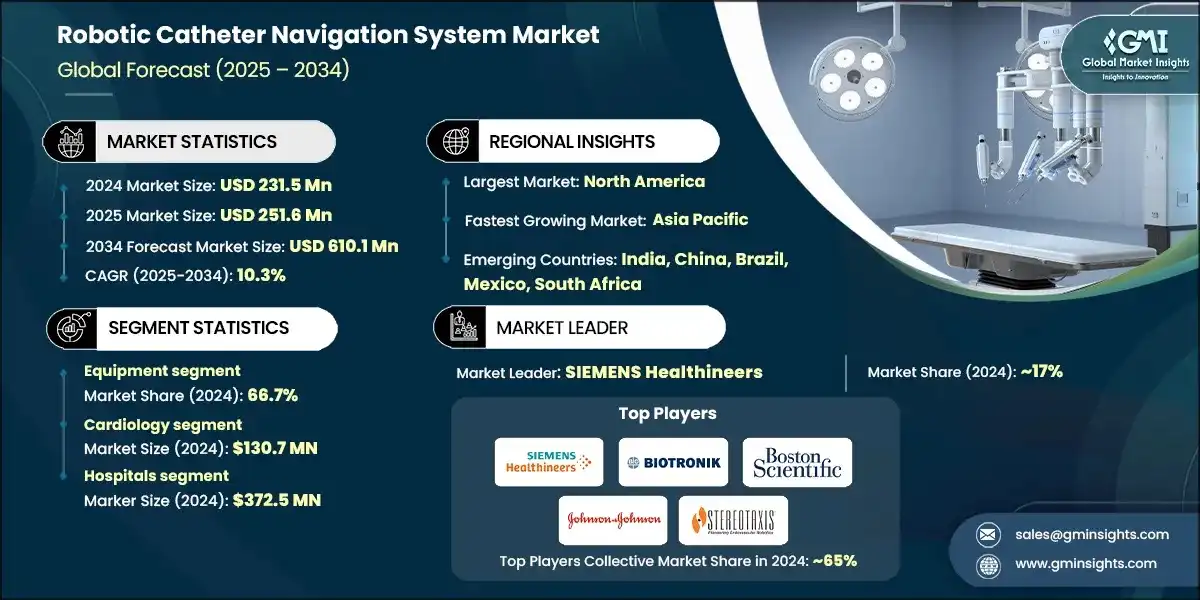
The global robotic catheter navigation system market was valued at USD 231.5 million in 2024. The market is expected to reach from USD 251.6 million in 2025 to USD 610.1 million in 2034, growing at a CAGR of 10.3% during the forecast period, according to the latest report published by Global Market Insights Inc. The high market growth is attributed to the growing adoption of minimally invasive surgeries, technological advancements in robotic systems, rising prevalence of cardiovascular and neurological disorders, and increasing demand for precision and safety in interventional procedures, among other contributing factors.
To get key market trends
Robotic catheter navigation system is an advanced medical technology that allows physicians to control the catheter remotely and guide it with great precision inside the patient's body during minimally invasive surgeries. To achieve accuracy and stability in complicated anatomical structures, it can employ robotic arms, magnetic guidance, or electromechanical systems.
Leading players in the robotic catheter navigation system market include SIEMENS Healthineers, BIOTRONIK, Boston Scientific, Johnson & Johnson, and STEREOTAXIS. These companies maintain their competitive edge through continuous product innovation, global market presence, and significant investments in research and development.
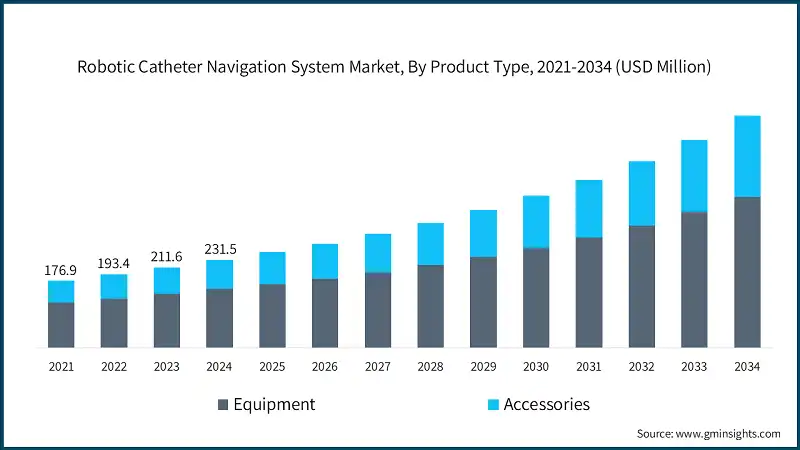
The market has increased from USD 176.9 million in 2021 and reached USD 211.6 million in 2023, with the historic growth rate of 9.4%. The market growth was driven by the shortage of skilled interventional surgeons, growing emphasis on reducing radiation exposure during catheterization procedures, increasing hospital automation trends, and rising investment by healthcare providers in advanced robotic systems to improve procedural efficiency and patient outcomes.
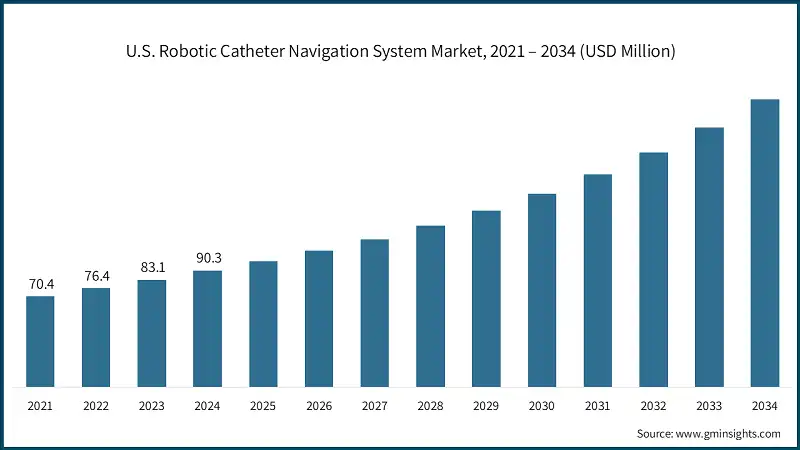
The rising prevalence of atrial fibrillation, coronary artery disease, and stroke drives the demand for minimally invasive procedures. For instance, according to the CDC, approximately 800,000 people in the U.S. experience a stroke annually, with 2023 data showing a 12% increase from 2021. The American Heart Association reported that atrial fibrillation affects 5.5 million Americans in 2023, up from 4.8 million in 2021.
Additionally, the WHO estimates that coronary artery disease cases increased by 15% between 2021 and 2023 globally. Robotic catheter systems provide accurate navigation within complex blood vessels, making them vital for advanced cardiac and neurological interventions.
Furthermore, integration of AI, 3D mapping, real-time imaging, and haptic feedback is boosting the accuracy and control of robotic catheter systems. These innovations improve clinical outcomes and attract wider usage across interventional specialities.
Robotic Catheter Navigation System Market Report Attributes
| Key Takeaway | Details |
|---|---|
| Market Size & Growth | |
| Base Year | 2024 |
| Market Size in 2024 | USD 231.5 Million |
| Market Size in 2025 | USD 251.6 Million |
| Forecast Period 2025 – 2034 CAGR | 10.3% |
| Market Size in 2034 | USD 610.1 Million |
| Key Market Trends | |
| Drivers | Impact |
| Increasing prevalence of cardiovascular disorders | This is fueling higher demand for robotic catheter systems, as hospitals prioritize advanced interventions to manage complex cardiac conditions. |
| Rising demand for minimally invasive surgeries | The trend toward less invasive procedures is boosting adoption of robotic navigation systems, enhancing procedural precision and patient recovery. |
| Technological advancements in robotic guidance systems | Innovations such as AI-assisted navigation and enhanced imaging capabilities are improving procedural efficiency and clinical outcomes, driving market growth. |
| Growing adoption in electrophysiology and interventional cardiology | Wider use in specialized cardiac procedures is expanding the market, as clinicians rely on robotics for accuracy in complex ablations and interventions. |
| Pitfalls & Challenges | Impact |
| High cost of robotic navigation systems | The expensive investment limits adoption in smaller hospitals and emerging markets, restraining overall market expansion. |
| Complex installation and integration requirements | The need for specialized infrastructure and training slows deployment and increases implementation challenges for healthcare providers. |
| Opportunities: | Impact |
| Growing adoption in emerging countries | Increasing healthcare infrastructure and rising awareness of advanced interventions in these regions are expected to significantly expand market penetration. |
| Expansion in neurology and oncology interventions | Entering new clinical applications will diversify use cases, driving higher demand and fostering innovation in robotic catheter technologies. |
| Market Leaders (2024) | |
| Market Leaders |
Market Share ~17% |
| Top Players |
Collective market share in 2024 is~65% |
| Competitive Edge |
|
| Regional Insights | |
| Largest Market | North America |
| Fastest growing market | Asia Pacific |
| Emerging countries | India, China, Brazil, Mexico, South Africa |
| Future outlook |
|
What are the growth opportunities in this market?
Robotic Catheter Navigation System Market Trends
The market is growing considerably with the rising adoption of hybrid robotic systems, increased use in electrophysiology and cardiac ablation procedures, rising collaborations between device manufacturers and hospitals, increasing focus on cost-effectiveness and efficiency, and expansion of 3D imaging and mapping technologies, among other factors collectively driving industry growth.
- Robotic catheter systems are increasingly incorporating AI algorithms for enhanced decision support and predictive navigation. Machine learning enables real-time mapping of patient anatomy, improving procedural accuracy and reducing intervention time.
- Advanced 3D imaging tools, such as electroanatomical mapping, are being integrated with robotic platforms, allowing precise visualization of complex cardiac or vascular structures and enhancing procedural outcomes.
- The adoption of robotic navigation systems also enables physicians to manipulate catheters remotely during interventional procedures. According to the FDA, robotic-assisted surgical procedures increased by 35% in 2023 compared to 2021. Additionally, the American College of Cardiology reported a 95% reduction in radiation exposure for physicians using these systems in 2022.
- Furthermore, data from the American Hospital Association showed that 72% of U.S. hospitals implemented telesurgery capabilities using robotic systems in 2023, up from 45% in 2021, further supporting market growth.
Robotic Catheter Navigation System Market Analysis
Learn more about the key segments shaping this market
Based on the product type, the robotic catheter navigation system market is segmented into equipment and accessories. The equipment segment is further bifurcated into magnetic navigation systems and electromechanical navigation systems. The equipment segment has asserted its dominance in the market by securing a significant market share of 66.7% in 2024 owing to the growing adoption of advanced robotic catheter navigation systems, continuous technological innovations in navigation and imaging tools, and increasing preference for minimally invasive interventional procedures across cardiology and neurology applications. The segment is expected to exceed USD 397.1 million by 2034, growing at a CAGR of 10.1% during the forecast period.
On the other hand, the accessories segment is expected to grow with a CAGR of 10.9%. The growth of this segment is driven by the rising demand for consumables and ancillary devices required for robotic catheter procedures, increasing adoption of procedure-specific catheters and guidewires, and the need for system upgrades and maintenance in hospitals and surgical centers.
- The equipment segment continues to dominate the market. Manufacturers are introducing upgraded robotic systems with enhanced flexibility, catheter reach, and real-time responsiveness. These improvements boost procedural success rates in complex vascular pathways. Frequent hardware innovations, including magnetic and electromechanical navigation technologies, are driving demand for advanced equipment in hospitals and electrophysiology labs.
- Moreover, robotic catheter equipment is increasingly integrated with fluoroscopy, intracardiac echocardiography (ICE), and CT/MRI imaging systems. This interoperability enables real-time anatomical visualization and precise path planning. The ability to combine robotic control with sophisticated imaging platforms is boosting preference for high-performance equipment.
- The accessories segment held a revenue of USD 77.1 million in 2024, with projections indicating a steady expansion at 10.9% CAGR from 2025 to 2034. The growth of the segment is driven by the growing use of procedure-specific catheters, guidewires, and other consumables that drive the demand for accessories. Hospitals and surgical centers increasingly require replacement parts and system upgrades to maintain robotic navigation efficiency. Additionally, the expansion of minimally invasive procedures and complex interventions boosts the need for specialized accessory components.
Based on application, the robotic catheter navigation system market is segmented into cardiology, neurology, urology, gastroenterology, and other applications. The cardiology segment dominated the market in 2024, accounting for USD 130.7 million and is anticipated to grow at a CAGR of 10.4% during the forecast period.
- Cardiology is the largest application area for robotic catheter systems due to the growing incidence of atrial fibrillation (AFib) and other cardiac rhythm disorders. AFib alone affects millions globally and is a major cause of stroke and heart failure. Robotic catheter systems support precise catheter placement during ablation therapy, improving treatment outcomes and reducing recurrence rates in arrhythmia patients.
- Further, interventional cardiology is shifting away from invasive surgical procedures toward catheter-based treatments for arrhythmias, coronary artery disease, and congenital heart issues. Robotic navigation improves catheter maneuverability inside delicate cardiac chambers. This trend supports the broader clinical adoption of robotic catheter systems for safer and faster cardiac procedures.
- The neurology segment accounted for significant revenue in 2024 and is anticipated to grow at a CAGR of 10.9% over the forecast period. The rising prevalence of neurological disorders, such as stroke and epilepsy, is increasing demand for precise robotic-assisted interventions. Additionally, advancements in stereotactic navigation and minimally invasive neuro-procedures are driving adoption in neurology.
- The urology segment held a revenue of USD 24 million in 2024, with projections indicating a steady expansion at 9.4% CAGR from 2025 to 2034. The growing incidence of urinary tract disorders and prostate-related conditions is fuelling demand for robotic-assisted urological interventions. Enhanced procedural accuracy and reduced complication rates with robotic navigation are further boosting adoption in this speciality.
- The gastroenterology segment accounted for significant revenue in 2024 and is anticipated to grow at a CAGR of 9.9% over the forecast period. The increasing prevalence of gastrointestinal disorders and the rising demand for minimally invasive endoscopic procedures are driving adoption of robotic catheter systems. Additionally, advancements in precision navigation and imaging technologies improve procedural outcomes, encouraging their use in gastroenterology.
Learn more about the key segments shaping this market
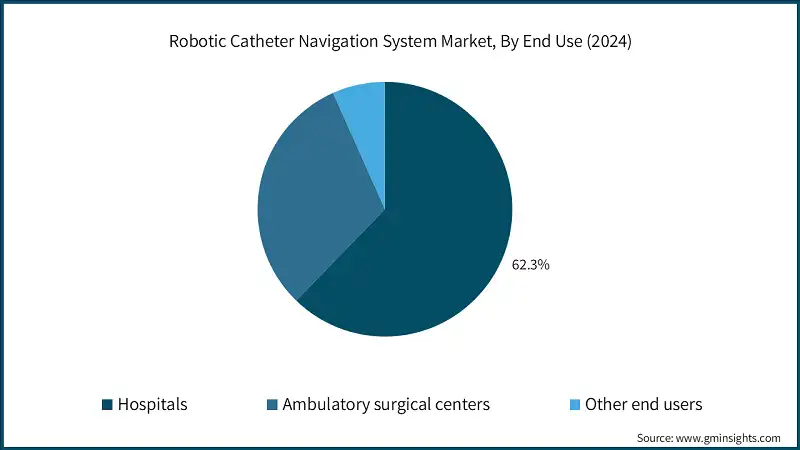
Based on end use, the robotic catheter navigation system market is classified into hospitals, ambulatory surgical centers, and other end users. The hospitals segment dominated the market with a revenue share of 62.3% in 2024 and is expected to reach USD 372.5 million within the forecast period.
- Hospitals are increasingly adopting robotic catheter systems to offer minimally invasive procedures, which reduce patient recovery time, hospital stays, and post-operative complications. These systems enable precise catheter navigation, improving outcomes in cardiac, neurological, and peripheral interventions. By offering advanced procedures, hospitals can attract more patients seeking safer and less invasive treatment options.
- Hospitals equipped with robotic navigation systems position themselves as technologically advanced care centers. This differentiation helps attract both patients and skilled specialists, increasing patient volume and supporting hospital branding as a leader in cardiac and neuro-interventional care.
- The ambulatory surgical centers segment held a revenue of USD 71.9 million in 2024, with projections indicating a steady expansion at 10.9% CAGR from 2025 to 2034. The segmental growth is driven by the rising preference for outpatient minimally invasive procedures, which is fueling the adoption of robotic catheter systems within ambulatory surgical centers.
- These centers benefit from reduced procedure times, faster patient recovery, and lower operational costs. Additionally, the demand for high-precision interventions with minimal radiation exposure encourages integration of advanced robotic navigation technologies.
Looking for region specific data?
North America Robotic Catheter Navigation System Market North America dominated the market with the highest market share of 41.2% in 2024. Europe market accounted for USD 63.6 million in 2024 and is anticipated to show lucrative growth over the forecast period. The Asia Pacific market is anticipated to grow at the highest CAGR of 11.5% during the analysis timeframe. The Latin America market is experiencing robust growth over the analysis timeframe. The Middle East & Africa (MEA) market is experiencing robust growth over the analysis timeframe. The global market is competitive, characterized by rapid technological advancements, continuous product innovations, and strategic collaborations among leading medical device companies. The market features a mix of well-established global corporations and emerging specialized players, all striving to enhance procedural precision, reduce intervention times, and improve patient outcomes. Key players include SIEMENS Healthineers, BIOTRONIK, Boston Scientific, Johnson & Johnson, and STEREOTAXIS, collectively accounting for ~65% of the total market share. These companies maintain a competitive edge through diversified product portfolios, robust R&D investments, and strategic partnerships with hospitals and research institutions. Companies like Intuitive Surgical and ClearPoint Neuro focus on expanding into neurology and minimally invasive surgical applications, while Boston Scientific and Johnson & Johnson strengthen their positions in cardiology and electrophysiology. Emerging players, such as Robocath and MAGNETECS, are gaining traction with cost-effective solutions and innovative robotic platforms targeting niche markets. Competitive strategies in this market revolve around new product launches, system upgrades, mergers and acquisitions, and expansion into emerging regions. Additionally, emphasis on AI integration, advanced imaging, and remote-assisted procedures is shaping market dynamics, creating differentiation opportunities for companies aiming to lead in precision robotic navigation. The competitive landscape continues to evolve rapidly, driven by technological progress and increasing global demand for minimally invasive interventions. A few of the prominent players operating in the robotic catheter navigation system industry include: SIEMENS Healthineers leads the robotic catheter navigation system market with a ~17% share in 2024. It offers strong integration of robotic navigation systems with advanced imaging and electrophysiology platforms, enabling precise, real-time visualization during complex interventions. Their solutions enhance procedural efficiency and workflow optimization across hospitals worldwide. Through its Biosense Webster division, Johnson & Johnson provides advanced mapping and catheter technologies for electrophysiology procedures, ensuring high procedural accuracy. Their broad distribution network and continuous product innovation strengthen adoption in cardiac interventions. STEREOTAXIS is a pioneer in magnetic robotic navigation systems, delivering unparalleled precision and stability in complex cardiac procedures. Their technology reduces radiation exposure for clinicians and supports minimally invasive interventions with enhanced safety and efficiency.Europe Robotic Catheter Navigation System Market
Asia Pacific Robotic Catheter Navigation System Market
Latin America Robotic Catheter Navigation System Market
Middle East & Africa Robotic Catheter Navigation System Market
Robotic Catheter Navigation System Market Share
Robotic Catheter Navigation System Market Companies
Robotic Catheter Navigation System Industry News:
The robotic catheter navigation system market research report includes an in-depth coverage of the industry with estimates and forecast in terms of revenue in USD Million from 2021 – 2034 for the following segments:
Market, By Product Type
- Equipment
- Magnetic navigation systems
- Electromechanical navigation systems
- Accessories
Market, By Application
- Cardiology
- Neurology
- Urology
- Gastroenterology
- Other applications
Market, By End Use
- Hospitals
- Ambulatory surgical centers
- Other end users
The above information is provided for the following regions and countries:
- North America
- U.S.
- Canada
- Europe
- Germany
- UK
- France
- Spain
- Italy
- Netherlands
- Asia Pacific
- China
- Japan
- India
- Australia
- South Korea
- Latin America
- Brazil
- Mexico
- Argentina
- Middle East and Africa
- South Africa
- Saudi Arabia
- UAE
Frequently Asked Question(FAQ) :
Which region leads the robotic catheter navigation system market?
North America dominated the market with a 41.2% share in 2024, driven by advanced healthcare infrastructure and high adoption of robotic technologies.
What are the upcoming trends in the robotic catheter navigation system industry?
Key trends include the integration of AI algorithms for predictive navigation, adoption of machine learning for real-time mapping, and the expansion of advanced 3D imaging tools like electroanatomical mapping to enhance procedural outcomes.
Who are the key players in the robotic catheter navigation system market?
Key players include BIOTRONIK, Boston Scientific, Catheter Precision, ClearPoint Neuro, Intuitive Surgical, Johnson & Johnson, MAGNETECS, and MicroPort.
What was the valuation of the cardiology application segment?
The cardiology segment accounted for USD 130.7 million in 2024 and is anticipated to grow at a CAGR of 10.4% during the forecast period.
How much revenue did the equipment segment generate?
The equipment segment generated USD 154.5 million in 2024, leading the market with a 66.7% share, driven by the adoption of advanced robotic systems and innovations in navigation and imaging tools.
What is the projected size of the robotic catheter navigation system market in 2025?
The market is expected to reach USD 251.6 million in 2025.
What is the market size of the robotic catheter navigation system in 2024?
The market size was USD 231.5 million in 2024, with a CAGR of 10.3% expected through 2034, driven by the growing adoption of minimally invasive surgeries, technological advancements, and increasing prevalence of cardiovascular and neurological disorders.
What is the projected value of the robotic catheter navigation system market by 2034?
The market is expected to reach USD 610.1 million by 2034, fueled by advancements in robotic systems, rising demand for precision in interventional procedures, and the expansion of 3D imaging technologies.
Robotic Catheter Navigation System Market Scope
Related Reports