Summary
Table of Content

Respiratory Disease Vaccine Market
Get a free sample of this report
Form submitted successfully!
Error submitting form. Please try again.
Thank you!
Your inquiry has been received. Our team will reach out to you with the required details via email. To ensure that you don't miss their response, kindly remember to check your spam folder as well!
Request Sectional Data
Thank you!
Your inquiry has been received. Our team will reach out to you with the required details via email. To ensure that you don't miss their response, kindly remember to check your spam folder as well!
Form submitted successfully!
Error submitting form. Please try again.
Respiratory Disease Vaccine Market Size
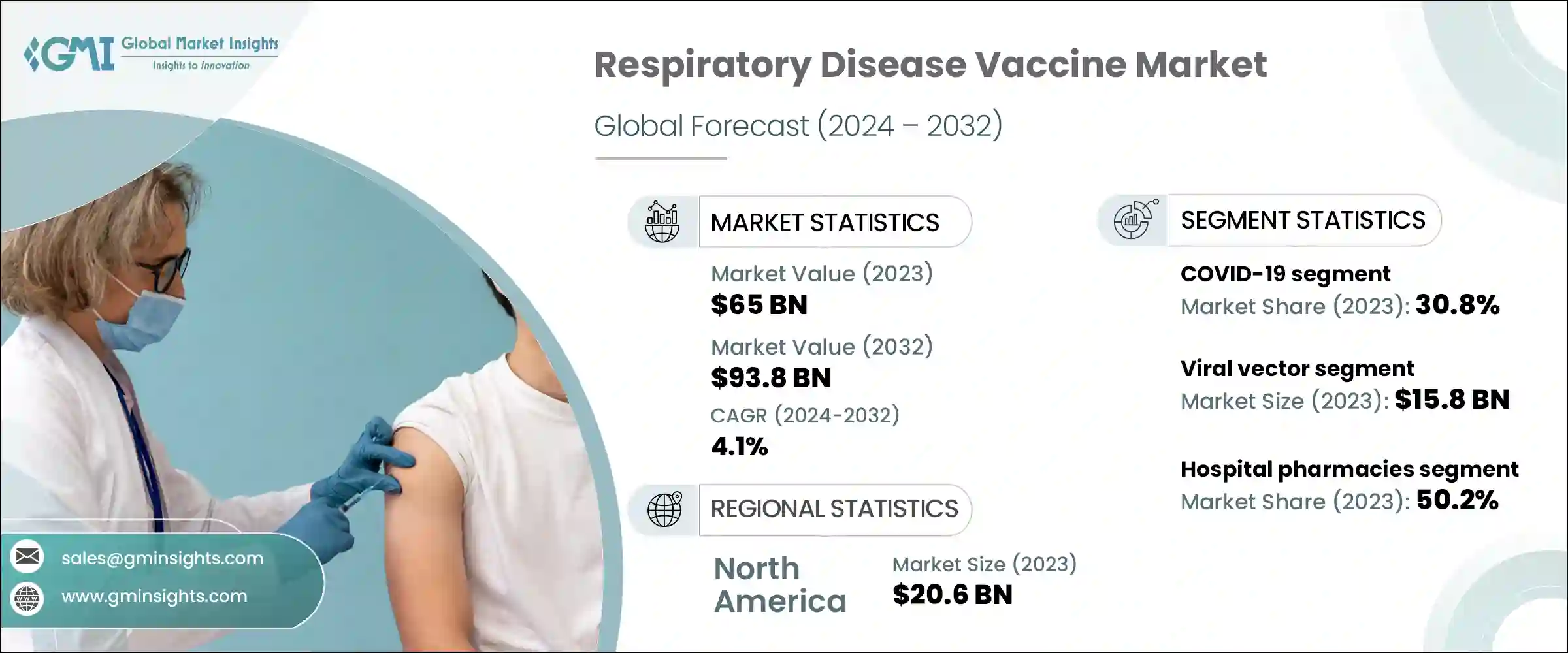
Respiratory Disease Vaccine Market size was valued at around USD 65 billion in 2023 and is estimated to grow at 4.1% CAGR from 2024 to 2032. The increasing prevalence of respiratory diseases, such as asthma, COPD, and influenza, is fueling the growth of the market.
Respiratory Disease Vaccine Market Key Takeaways
Market Size & Growth
- 2023 Market Size: USD 65 Billion
- 2032 Forecast Market Size: USD 93.8 Billion
- CAGR (2024–2032): 4.1%
Key Market Drivers
- Increasing prevalence of respiratory diseases.
- Rising burden of diseases such as influenza, pneumonia, pertussis, and respiratory syncytial virus (RSV).
- Rising technological advancements.
- Growing healthcare expenditure.
Challenges
- Complexity of developing vaccines due to evolving pathogens, increased expenses, and extended development times.
Get Market Insights & Growth Opportunities
For instance, according to the Centers for Disease Control and Prevention (CDC), chronic lower respiratory diseases (including asthma) accounted for a significant burden in the U.S. In 2021, the number of deaths due to chronic lower respiratory diseases was 147,382, with a death rate of 44.2 per 100,000 population, ranking as the 6th leading cause of death. This rise in respiratory illnesses has prompted a greater demand for preventative measures like vaccines. Considering latest pandemic as governments and healthcare organizations prioritize respiratory health, the market for vaccines targeting these diseases is expected to expand further, driven by the urgent need to reduce disease burden and improve public health outcomes.
A respiratory disease vaccine is a type of immunization designed to protect against diseases that affect the respiratory system, which includes the lungs and airways. These vaccines work by stimulating the body's immune system to recognize and fight specific pathogens that cause respiratory infections.
To get key market trends
Respiratory Disease Vaccine Market Trends
The respiratory disease vaccine industry has seen significant growth driven by recent technological advancements that have improved vaccine efficacy, delivery methods, and production capabilities.
- One major advancement is the development of novel vaccine platforms, such as mRNA vaccines, which have gained prominence due to their ability to rapidly produce vaccines against respiratory pathogens like influenza and COVID-19. These platforms offer advantages such as faster development timelines, scalability, and potential for targeted modifications to enhance immune response.
- Additionally, the use of adjuvants and delivery systems to improve vaccine effectiveness is helping to boost the immune response to vaccines, allowing for lower doses and fewer administrations, while delivery systems like microneedle patches and inhalable vaccines offer non-invasive and convenient alternatives to traditional injections.
- For example, the use of microneedle patches for influenza vaccines has shown promising results in clinical trials, offering painless administration and improved stability of the vaccine.
- Furthermore, advancements in manufacturing technology have streamlined vaccine production processes, enabling quicker scale-up and distribution. Cell-based and recombinant technologies are increasingly being used for vaccine production, reducing reliance on egg-based methods and providing more flexibility in responding to emerging respiratory threats.
Respiratory Disease Vaccine Market Analysis

Learn more about the key segments shaping this market
Based on technology, the market is categorized into viral vector, mRNA, conjugate, live attenuated, inactivated, recombinant, and other technologies. The viral vector segment dominated the market, generating approximately USD 15.8 billion revenue in 2023.
- Viral vector platforms allow for relatively rapid vaccine development. This was exemplified during the COVID-19 pandemic when viral vector vaccines were among the first to be authorized for emergency use, hence increased its demand.
- Additionally, advances in vector engineering have led to the development of safer and more effective viral vectors, reducing the risk of adverse reactions and improving the immunogenic profile, may contributed to its segmental growth.
Based on age group, the respiratory disease vaccine market is categorized into pediatric and adult. The adult segment is anticipated to witness highest growth with USD 71.5 billion during the forecast period. Adults generally experience a higher burden of respiratory diseases compared to children. Adults contribute significantly to community transmission of respiratory diseases. Vaccination in this age group helps reduce the overall spread of infections within communities, protecting both vaccinated individuals and those who may be at higher risk of severe illness. Hence the adult segment dominates the respiratory disease vaccines market.
Based on infection, the respiratory disease vaccine market is categorized into COVID-19, influenza, respiratory syncytial virus (RSV), pneumonia, and other infections. The COVID-19 segment dominated the market, with a revenue share of around 30.8% in 2023.
- COVID-19 is highly transmissible, and severe cases can lead to hospitalizations, intensive care admissions, and death. The severity of the disease and its potential to overwhelm healthcare systems have heightened the importance of vaccination as a primary prevention strategy, resulted in its increased demand.
- Additionally, public awareness of the importance of COVID-19 vaccination in controlling the spread of the virus and ending the pandemic has been high. Acceptance of vaccination as a key public health measure has contributed to the dominance of the COVID-19 segment in the market.

Learn more about the key segments shaping this market
Based on distribution channel, the respiratory disease vaccine market is categorized into hospital pharmacies, retail pharmacies, and other distribution channels. The hospital pharmacies segment dominated the market, with a revenue share of around 50.2% in 2023.
- Hospital and retail pharmacies are widely distributed and easily accessible to the general population. Patients can receive vaccinations during routine healthcare visits or without the need for an appointment, making them convenient locations for vaccine administration.
- Additionally, many government vaccination programs and initiatives encourage vaccination at hospitals and retail pharmacies. Government authorities often partner with these facilities to distribute vaccines and promote vaccination campaigns, contributing to the dominance of this distribution channel.

Looking for region specific data?
North America respiratory disease vaccine market accounted for USD 20.6 billion revenue in 2023 and is predicted to witness substantial market growth over the analysis timeline.
- North America has a robust healthcare infrastructure with high healthcare expenditure. This enables easy access to vaccines and encourages investments in research and development, fostering market growth.
- Additionally, increased awareness about the importance of vaccination and preventive healthcare measures among the population further boosts demand for respiratory disease vaccines. Educational campaigns by healthcare authorities and organizations play a crucial role in driving vaccine uptake and its market growth.
The U.S. respiratory disease vaccine market accounted for the dominant position with the market share of 90.8% in 2023.
- Government in the U.S. prioritize public health and implement vaccination programs to control the spread of respiratory diseases. The Centers for Disease Control and Prevention (CDC) in the country, for instance, promotes influenza vaccination campaigns, contributing to market growth.
- Additionally, government-funded vaccination programs, such as the Vaccines for Children (VFC) program in the U.S., ensure that vulnerable populations, including children from low-income families, have access to essential vaccines, including those for respiratory diseases, resulting in its increased demand.
Germany respiratory disease vaccine market is expected to grow significantly during the forecast period.
- Germany is home to several major pharmaceutical companies and research institutions that are actively involved in vaccine development and manufacturing. These companies invest in research and development to innovate new vaccines and improve existing ones, contributing to market growth.
- Additionally, the presence of numerous research institutions and academic centers in Germany fosters innovation in vaccine research. These institutions collaborate with pharmaceutical companies to conduct clinical trials, validate vaccine efficacy, and explore new avenues for respiratory disease prevention and treatment, drives the respiratory vaccine market growth.
China respiratory disease vaccine market is anticipated to witness a high growth rate from 2024 – 2032, due to several factors.
- China has made significant progress in expanding vaccination coverage across the population, particularly in rural areas. Efforts to improve access to vaccines and increase awareness about the importance of vaccination contribute to the growing demand for respiratory disease vaccines.
- Additionally, the government has implemented comprehensive vaccination programs, including the National Immunization Program (NIP), which aims to provide free or subsidized vaccines to all Chinese citizens. Such initiatives have contributed to drive the market.
Respiratory Disease Vaccine Market Share
The respiratory disease vaccine industry is competitive in nature, with various large multinationals and small and mid-sized companies competing in the industry. The development and launch of novel vaccines with improved efficiency and cost-effectiveness are key market strategies for respiratory disease vaccine manufacturers, driving competition and innovation in the industry. This emphasis on innovation aims to address evolving clinical needs and enhance patient outcomes, positioning companies to gain market share and meet the growing demand for novel respiratory disease vaccines.
Respiratory Disease Vaccine Market Companies
Some of the eminent market participants operating in the respiratory disease vaccine industry include:
- AstraZeneca
- Emergent BioSolutions Inc.
- GSK plc.
- Johnson & Johnson Services, Inc.
- Merck & Co., Inc.
- Novavax
- Pfizer Inc.
- Sanofi SA
- Serum Institute of India Pvt. Ltd.
- SINOVAC
Respiratory Disease Vaccine Market Report Attributes
| Key Takeaway | Details |
|---|---|
| Market Size & Growth | |
| Base Year | 2023 |
| Market Size in 2023 | USD 65 Billion |
| Forecast Period 2024 - 2032 CAGR | 4.1% |
| Market Size in 2032 | USD 93.8 Billion |
| Key Market Trends | |
| Growth Drivers |
|
| Pitfalls & Challenges |
|
What are the growth opportunities in this market?
Respiratory Disease Vaccine Industry News:
- In May 2024, Sanofi and Novavax entered into a co-exclusive licensing agreement to co-commercialize Novavax's adjuvanted COVID-19 vaccine and develop novel flu-COVID-19 combination vaccines. This strategic partnership may expand Sanofi's vaccine portfolio, strengthens its position in the post-pandemic vaccine market and boosts its long-term vaccine sales.
- In October 2023, Modern, Inc. announced a significant milestone with the dosing of the first participant in the phase III study of their combination vaccine candidate, mRNA-1083, targeting both influenza and COVID-19, in the U.S. This marks a strategic move for Moderna as mRNA-1083 is their first respiratory combination vaccine candidate to advance to a phase III trial. This strategic approach may position Moderna as a leader in the development of novel respiratory disease vaccines.
Respiratory disease vaccine market research report includes an in-depth coverage of the industry with estimates & forecast in terms of revenue in USD Million from 2021 to 2032 for the following segments:
Market, By Technology
- Viral vector
- mRNA
- Conjugate
- Live attenuated
- Inactivated
- Recombinant
- Other technologies
Market, By Age Group
- Pediatric
- Adult
Market, By Infection
- COVID-19
- Influenza
- Respiratory syncytial virus (RSV)
- Pneumonia
- Other infections
Market, By Distribution Channel
- Hospital pharmacies
- Retail pharmacies
- Other distribution channels
The above information is provided for the following regions and countries:
- North America
- U.S.
- Canada
- Europe
- Germany
- UK
- France
- Italy
- Spain
- Netherlands
- Rest of Europe
- Asia Pacific
- China
- Japan
- India
- Australia
- South Korea
- Rest of Asia Pacific
- Latin America
- Brazil
- Mexico
- Argentina
- Rest of Latin America
- Middle East and Africa
- Saudi Arabia
- South Africa
- UAE
- Rest of Middle East and Africa
Frequently Asked Question(FAQ) :
What is the size of the respiratory disease vaccine market?
Respiratory disease vaccine industry size was USD 65 billion in 2023 and will depict 4.1% CAGR from 2024 to 2032, owing to the rising incidence of respiratory infections like influenza, COVID-19, and pneumococcal diseases.
Why is the demand for respiratory disease vaccines growing for COVID-19?
The COVID-19 segment recorded 30.8% of the market share in 2023, attributed to the global demand for effective vaccines to combat the pandemic, government initiatives and substantial funding for mass vaccination campaigns.
How substantial is the respiratory disease vaccine market in North America?
North America respiratory disease vaccine industry size was USD 20.6 billion in 2023, driven by the advanced healthcare infrastructure, high vaccination coverage rates, strong government initiatives and funding for immunization programs.
Which prominent players are operating in the respiratory disease vaccine industry?
Key firms operating in the respiratory disease vaccine industry are AstraZeneca, Emergent BioSolutions Inc., GSK plc., Johnson & Johnson Services, Inc., Merck & Co., Inc., Novavax, Pfizer Inc., Sanofi SA, Serum Institute of India Pvt. Ltd., and SINOVAC, among others.
Respiratory Disease Vaccine Market Scope
Related Reports