Summary
Table of Content

Prostate Cancer Biomarkers Market
Get a free sample of this report
Form submitted successfully!
Error submitting form. Please try again.
Thank you!
Your inquiry has been received. Our team will reach out to you with the required details via email. To ensure that you don't miss their response, kindly remember to check your spam folder as well!
Request Sectional Data
Thank you!
Your inquiry has been received. Our team will reach out to you with the required details via email. To ensure that you don't miss their response, kindly remember to check your spam folder as well!
Form submitted successfully!
Error submitting form. Please try again.
Prostate Cancer Biomarkers Market Size
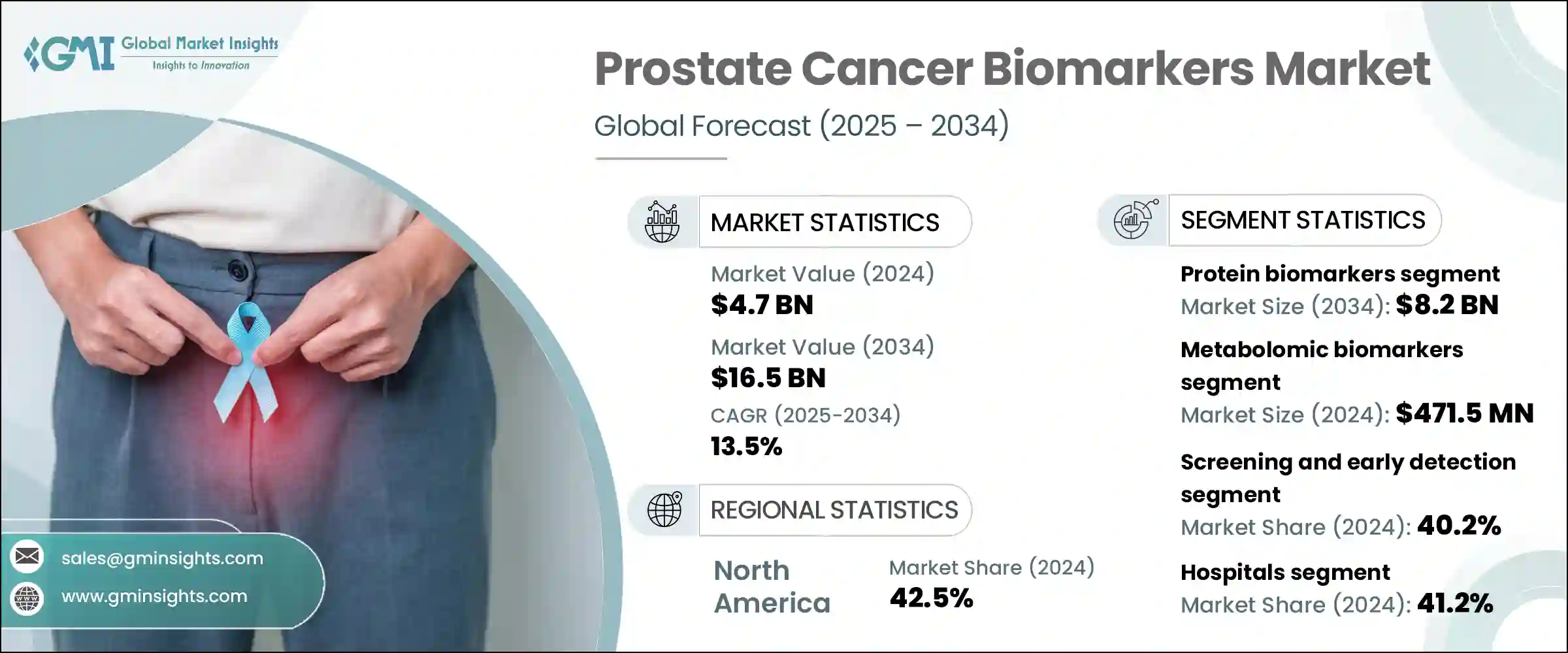
The global prostate cancer biomarkers market was valued at USD 4.7 billion in 2024 and is projected to grow from USD 5.3 billion in 2025 to USD 16.5 billion by 2034, expanding at a CAGR of 13.5%. This steady growth is stimulated by the rising incidence of prostate cancer among the aging male population and the advancements in biomarker-based diagnostic technologies.
To get key market trends
The inclusion of innovative diagnostic tools, such as liquid biopsies, genomic profiling, and AI-powered risk assessment platforms, is improving early detection accuracy and enabling more personalized treatment strategies. In addition to this, investments are growing in healthcare, and governments of different countries are also supporting screening programs. These factors are positively influencing the market expansion across both developed and emerging regions. Prostate cancer biomarkers are biological indicators used to detect, diagnose, and monitor the progression or treatment response of prostate cancer. Major companies in the industry include Beckman Coulter, Bio-Rad Laboratories, Bio-Techne, and OPKO Health.
Prostate Cancer Biomarkers Market Report Attributes
| Key Takeaway | Details |
|---|---|
| Market Size & Growth | |
| Base Year | 2024 |
| Market Size in 2024 | USD 4.7 Billion |
| Forecast Period 2025 - 2034 CAGR | 13.5% |
| Market Size in 2034 | USD 16.5 Billion |
| Key Market Trends | |
| Drivers | Impact |
| Rising incidence of prostate cancer | Drives demand for early detection tools and non-invasive biomarker-based diagnostics. |
| Advancements in biomarker-based diagnostic technologies | Enhances diagnostic accuracy and reduces reliance on traditional biopsies. |
| Increased research and development investments from the public and private sectors | Fuels innovation in biomarker discovery and validation. |
| Growing adoption of personalized medicine through biomarker testing | Promotes tailored treatment plans based on individual risk profiles and tumor biology. |
| Pitfalls & Challenges | Impact |
| High cost of advanced diagnostic tests | Slows adoption in cost-sensitive healthcare systems and developing markets. |
| Limited access and awareness in rural and underdeveloped regions | Contributes to delayed diagnoses and poorer outcomes in underserved areas. |
| Opportunities: | Impact |
| Rising investments in non-invasive biomarker platforms | Accelerates development of liquid biopsy and urine-based tests. |
| Increasing use of combination biomarker panels for early diagnosis | Improves diagnostic accuracy by integrating multiple biological indicators. |
| Market Leaders (2024) | |
| Market Leaders |
6.5% market share |
| Top Players |
Collective Market Share in 2024 is 12% |
| Competitive Edge |
|
| Regional Insights | |
| Largest Market | North America |
| Fastest Growing Market | Asia Pacific |
| Emerging Countries | India, Brazil, Mexico, South Africa |
| Future outlook |
|
What are the growth opportunities in this market?
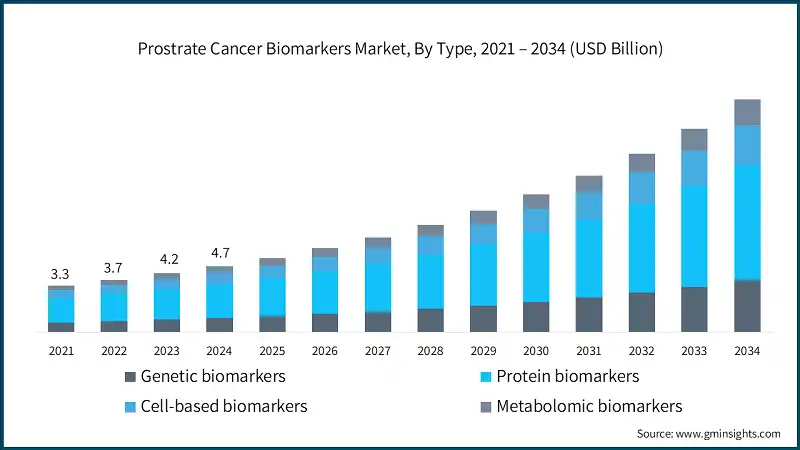
The market increased from USD 3.3 billion in 2021 to USD 4.2 billion in 2023. This growth can be primarily attributed to the rising number of prostate cancer cases and the rising awareness among people for early detection. The adoption of advanced biomarker-based diagnostic platforms surged, supported by government-led screening initiatives and continuous technological innovations. Furthermore, the healthcare system is shifting towards patient-centric and precision diagnostics, making biomarker-driven approaches the preferred choice for prostate cancer detection and monitoring. These solutions enhance diagnostic accuracy, reduce invasive procedures, and minimize reliance on hospital-based testing, thereby improving patient comfort and accessibility.
The surge in prostate cancer prevalence is a key factor driving the growth of the prostate cancer biomarkers market, as early detection is critical for improving patient outcomes. In 2022, there were 1,467,854 new cases of prostate cancer diagnostics (market was valued at USD 4.5 billion in 2023 and is expected to exhibit growth at a CAGR of 10.5% from 2024 to 2032 globally), making it the 4th most common cancer worldwide and the 2nd most common cancer in men. These figures underscore the urgent need for advanced diagnostic tools that can accurately detect and monitor the disease.
Additionally, prostate cancer is strongly age-related, with approximately 6 in 10 cases diagnosed in men aged 65 or older. It is rare in men under 40. As the global elderly population continues to rise rapidly, the demand for biomarker-based diagnostics is expected to grow. According to the World Health Organization (WHO), the number of people aged 60 and above is projected to reach 1.4 billion by 2030, up from 1.1 billion in 2023. This demographic shift is driving healthcare systems toward patient-centric and precision diagnostic approaches. Biomarker platforms are becoming a preferred choice due to their ability to reduce invasive procedures and improve accessibility for older adults.
The market encompasses a range of diagnostic technologies and platforms designed to detect, monitor, and guide treatment for prostate cancer using biological indicators. These biomarkers include genetic, protein, cell-based, and metabolomic markers, which are measurable substances found in blood, urine, or tissue that signal the presence or progression of prostate cancer.
Prostate Cancer Biomarkers Market Trends
- The global market is evolving rapidly, influenced by both macro and micro-level trends. At the macro level, rising global incidence of prostate cancer, especially among aging male populations, is driving demand for early detection tools. Governments and healthcare systems are expanding screening programs and investing in precision diagnostics, which is accelerating the adoption of biomarker-based testing platforms.
- At the micro level, technological advancements in biomarker discovery such as AI-powered analytics, genomic profiling, and liquid biopsy techniques are improving diagnostic accuracy and enabling personalized treatment planning. Platforms such as OPKO Health’s 4Kscore and Veracyte’s Decipher classifier are being integrated into clinical workflows to support risk stratification and reduce unnecessary biopsies.
- Moreover, portable and decentralized biomarker platforms are gaining traction, especially in outpatient and community settings. These solutions offer flexibility, reduce reliance on hospital-based labs, and improve access in underserved regions. Companies are investing in scalable, cost-effective technologies that support remote diagnostics and mobile screening initiatives.
- With healthcare systems prioritizing early detection and personalized care, prostate cancer biomarker platforms are transforming into intelligent diagnostic tools that enable real-time analytics, clinical decision support, and broader deployment across diverse care environments.
Prostate Cancer Biomarkers Market Analysis
Learn more about the key segments shaping this market
The global market was valued at USD 3.3 billion in 2021. The market size reached USD 4.2 billion in 2023, from USD 3.7 billion in 2022.
Based on the type, the market is segmented into genetic biomarkers, protein biomarkers, cell-based biomarkers, and metabolomic biomarkers. The protein biomarkers segment led this market in 2024, accounting for the highest market share due to their extensive clinical applications, widespread use in routine screening, and strong validation across multiple phases of disease management.
This segment was valued at USD 2.4 billion in 2024 and is projected to reach USD 8.2 billion by 2034, growing at a CAGR of 13.1%. This growth is because protein biomarkers such as PSA, free PSA, and hK2 are well-established in clinical practice, supported by decades of research and guideline recommendations. They are cost-effective, easily measurable through blood tests, and widely accessible, making them the preferred choice for initial screening and risk assessment.
Additionally, innovations such as the 4Kscore test have enhanced the predictive power of protein biomarkers, helping reduce unnecessary biopsies and improving patient outcomes. Their integration into routine diagnostics and broad acceptance among clinicians continue to drive their dominance in the market. In comparison, the metabolomic biomarkers segment, valued at USD 471.5 million in 2024, is expected to grow to USD 1,786.4 million by 2034, with a higher CAGR of 14.3%, supported by growing interest in metabolic profiling for cancer detection, advancements in mass spectrometry and bioinformatics, and the ability of metabolomic markers to reflect dynamic physiological changes.
- The protein biomarkers segment holds a dominant share in the prostate cancer biomarkers market, driven by its widespread clinical acceptance and utility in routine screening. Biomarkers such as Prostate-Specific Antigen test (PSA), free PSA, and hK2 are well-established tools used globally for early detection, risk stratification, and monitoring of prostate cancer progression. Their reliability and ease of integration into standard diagnostic workflows make them a cornerstone of prostate cancer diagnostics.
- A major driver for this segment is its ability to deliver fast, cost-effective, and minimally invasive testing. Protein biomarkers are typically detected through blood-based assays, allowing for broad accessibility across primary care and specialized urology settings. These tests also support longitudinal monitoring, helping clinicians track disease dynamics over time and adjust treatment strategies accordingly.
- For instance, Beckman Coulter’s prostate health index (phi) combines total PSA, free PSA, and [-2] proPSA into a single score that improves specificity in prostate cancer detection. It helps differentiate between benign conditions and clinically significant prostate cancer, reducing unnecessary biopsies and enhancing clinical decision-making.
- Manufacturers in this segment are focusing on improving assay sensitivity, automating lab workflows, and integrating AI-based interpretation tools to boost diagnostic accuracy and reporting efficiency. As healthcare systems continue to prioritize early detection and value-based care, the protein biomarkers segment is expected to remain a key driver of innovation and accessibility in prostate cancer diagnostics.
Based on the application, the prostate cancer biomarkers market is segmented into screening and early detection, diagnosis and risk stratification, prognosis and treatment monitoring, and companion diagnostics. The screening and early detection segment accounted for the highest market share of 40.2% in 2024.
- Screening and early detection platforms are designed to support high-throughput diagnostic workflows, offering rapid, non-invasive testing solutions that help identify prostate cancer at its earliest stages. These platforms often utilize blood- or urine-based biomarker assays, which are well-suited for routine screening in primary care and public health settings.
- Screening-focused biomarker platforms are optimized for high-volume testing environments, offering rapid turnaround times and minimal sample processing requirements. These solutions are particularly effective in primary care and outpatient settings, where early detection is critical and clinical resources may be limited. Their ability to deliver reliable results from simple blood or urine samples makes them ideal for broad population screening initiatives.
- Conversely, the companion diagnostics segment is expected to expand to the highest CAGR of 14.4%. Companion diagnostics are essential for tailoring treatment strategies based on a patient’s unique genetic and molecular profile. This aligns with the broader shift toward precision oncology, where therapies are matched to biomarker-defined subgroups.
Learn more about the key segments shaping this market
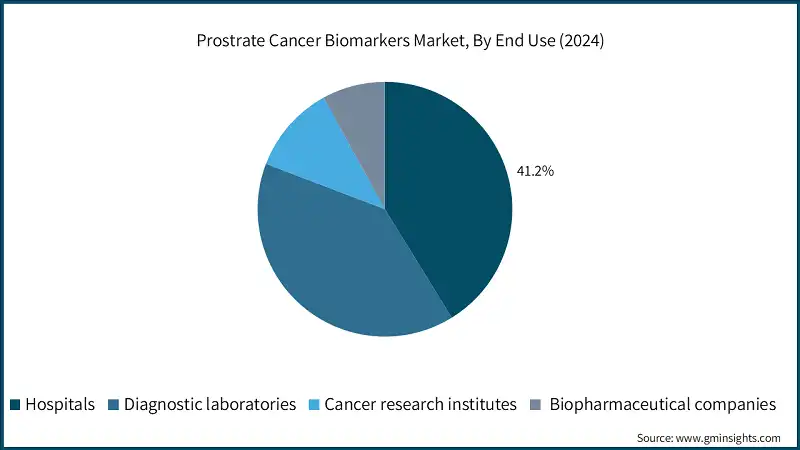
Based on end use, the prostate cancer biomarkers market is segmented into hospitals, diagnostic laboratories, cancer research institutes, and biopharmaceutical companies. The hospitals segment accounted for the highest market share of 41.2% in 2024.
- The hospital segment held the largest market share due to the widespread availability of advanced diagnostic infrastructure and multidisciplinary clinical teams. Hospitals are the primary centers for prostate cancer screening, diagnosis, and treatment, offering a full suite of services. Their ability to manage complex cases, especially high-risk or advanced-stage prostate cancer, makes them the preferred end-users in this market.
- This segment observes large patient volumes, government-supported screening programs, and integrated healthcare networks, which favor the adoption of advanced biomarker platforms. Diagnostic systems in hospitals are enabling seamless data exchange and efficient clinical workflows.
- Additionally, hospitals often serve as hubs for clinical trials and translational research, accelerating the adoption of innovative prostate cancer diagnostics and reinforcing their dominant position in the market.
- Moreover, the diagnostic laboratories segment, accounting for 39.6% market share in 2024, is expanding quickly due to the increasing demand for high-throughput, specialized testing services that support precision diagnostics.
Looking for region specific data?
North America dominated the global prostate cancer biomarkers market with the highest market share of 42.5% in 2024. The region has advanced healthcare infrastructure, with widespread access to specialized oncology centers and diagnostic laboratories. Further, there is an increasing prevalence of prostate cancer in the U.S. and Canada, thus propelling the growth of this market.
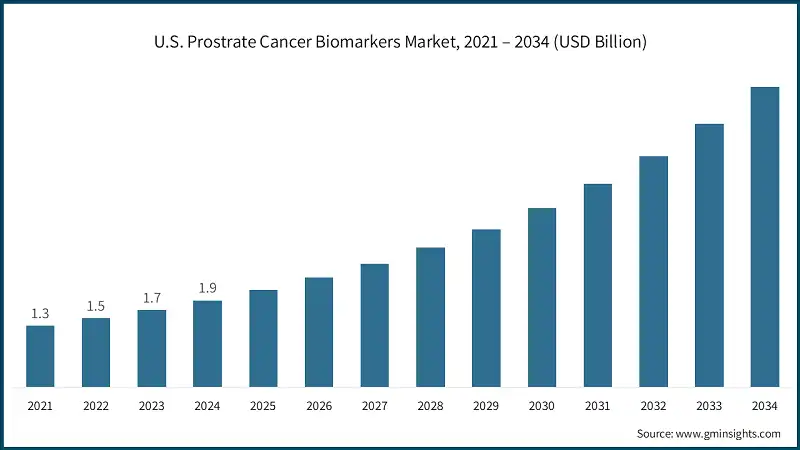
- The U.S. market was valued at 1.3 billion and USD 1.5 billion in 2021 and 2022, respectively. In 2024 the market size reached USD 1.9 million from USD 1.7 million in 2023.
- The country observed a surge in the number of prostate cancer cases over the years. According to the World Cancer Research Fund, the United States reported 230,125 new cases of prostate cancer in 2022, making it the country with the highest incidence globally.
- Similarly, data from the Global Cancer Observatory shows that 33,746 deaths were attributed to prostate cancer in the U.S. that year, highlighting the disease’s significant health burden and the urgent need for improved diagnostic and monitoring tools.
- Moreover, the process of regulatory approvals is streamlined in developed countries such as the U.S., and the region benefits from high public awareness, strong healthcare infrastructure, and robust research and development investment. These factors support the continuous rollout and adoption of innovative biomarker-based diagnostic platforms for prostate cancer.
Europe prostate cancer biomarkers market accounted for USD 1.3 billion in 2024 and is anticipated to show lucrative growth over the forecast period.
- Europe’s market is driven by its strategic adoption of biomarker-based diagnostic platforms and precision oncology tools. The region has a rising prevalence of prostate cancer and has implemented national screening programs in several countries. According to the World Cancer Research Fund, Germany, France, and the UK are among the top ten countries globally for prostate cancer incidence.
- In the UK alone, 55,485 new cases were reported in 2022, with an age-standardized rate (ASR) of 74.0 per 100,000, reflecting a significant public health concern.
- Germany, France, and the UK are leading countries in adopting advanced biomarker technologies. These nations are integrating multimodal diagnostic platforms that combine PSA testing, genomic profiling, and AI-enhanced risk stratification tools. Public-private partnerships, centralized laboratory networks, and mobile screening initiatives are further accelerating market growth.
- The region’s strong regulatory frameworks and investment in translational research also support the rapid commercialization of innovative prostate cancer diagnostics.
Germany prostate cancer biomarkers market is projected to experience steady growth between 2025 and 2034.
- The market in Germany is expanding steadily, driven by the rising incidence of prostate cancer and the country’s strong healthcare infrastructure. According to the World Cancer Research Fund, Germany recorded 65,269 new cases of prostate cancer in 2022, with 18,015 deaths attributed to the disease. These figures highlight the growing need for early detection and precision diagnostics to improve patient outcomes.
- Such statistics underscore the demand for advanced biomarker-based diagnostic platforms, including PSA derivatives, genomic classifiers, and liquid biopsy technologies. Hospitals and diagnostic laboratories in Germany are increasingly adopting integrated biomarker workstations that support high-throughput testing. These innovations are enhancing diagnostic accuracy, workflow efficiency, and personalized treatment planning across the country.
The Asia Pacific region is projected to be valued at USD 1.2 billion in 2025 and is expected to reach USD 3.9 billion by 2034.
- The region is expected to grow at the fastest CAGR due to increasing awareness about prostate cancer, expanding government-sponsored screening programs, and rising disposable incomes. Additionally, the region’s growing elderly population and improving insurance coverage are boosting demand for early detection and precision diagnostics.
- In Asia Pacific, the number of older persons is projected to increase from 630 million in 2020 to about 1.3 billion by 2050, with one-quarter of the population expected to be aged 60 or older. This demographic shift is a major driver of prostate cancer incidence and the need for scalable, non-invasive biomarker-based screening solutions.
- China reported 134,156 new cases of prostate cancer in 2022, making it one of the highest-incidence countries in the region. India recorded 37,948 new cases in the same year, reflecting a growing burden of disease and an urgent need for accessible diagnostic infrastructure. These trends are encouraging both public and private investment in biomarker technologies, laboratory automation, and AI-powered risk stratification tools across the region.
Japan prostate cancer biomarkers market is poised to witness lucrative growth between 2025 - 2034.
- The country’s aging demographic is a major driver for the market, its aging population and increasing focus on early detection. According to Statista, 29.1% of Japan’s population was aged 65 and older as of 2023, making age-related diseases such as prostate cancer a growing concern.
- In 2022, Japan recorded 104,318 new cases of prostate cancer, underscoring the need for scalable, non-invasive diagnostic solutions. This rising incidence is fueling demand for biomarker-based screening tools, genomic classifiers, and AI-powered risk assessment platforms.
- Government initiatives and public awareness campaigns are expanding access to screening services, positioning Japan as a key player in the Asia-Pacific prostate cancer diagnostics landscape.
Brazil is experiencing significant growth in the prostate cancer biomarkers market, driven by its expanding adoption of chronic disease management.
- In Brazil, prostate cancer was one of the most frequently diagnosed cancers among men in 2022. According to the Global Cancer Observatory, the country reported 102,519 new cases and 19,958 deaths due to prostate cancer that year. This growing burden is accelerating demand for non-invasive diagnostic solutions, including biomarker-based screening tools, genomic classifiers, and liquid biopsy platforms.
- Additionally, Brazil’s aging population is contributing to increased screening needs. As per the Brazilian Institute of Geography and Statistics, the number of individuals aged 65 and older reached 22.17 million in 2022, accounting for 10.9% of the total population, a 57.4% increase since 2010. This demographic shift is driving adoption of biomarker testing, particularly in public hospitals and regional screening programs, positioning Brazil as a key emerging market in Latin America for prostate cancer diagnostics.
The prostate cancer biomarkers market in Saudi Arabia is expected to experience significant and promising growth from 2025 to 2034.
- Saudi Arabia's elderly population is rising at a much faster pace than any other segment. It is estimated that the population aged 60 years and above will grow from 2 million (5.9 percent of the total population) in 2020 to 10.5 million by 2050.
- This demographic trend is increasing the prevalence of age-related diseases such as prostate cancer, thereby boosting demand for early detection and non-invasive diagnostic solutions.
Prostate Cancer Biomarkers Market Share
- The top 5 players, such as OPKO Health, Veracyte, mdxhealth, Beckman Coulter, and, Bio-Techne (ExoDx), collectively held ~12% of the total market share. These firms retain their leadership through a mix of technological advancements, AI incorporation, regulatory clearance, and strategic collaborations with healthcare organizations.
- Beckman Coulter is the leading player with its Prostate Health Index (phi), which is designed to improve prostate cancer detection and reduce unnecessary biopsies. The advantage of this system lies in its superior specificity, ability to distinguish aggressive from non-aggressive cancers, and seamless integration with laboratory workflows, making it a preferred option for clinical laboratories worldwide.
- Meanwhile, new competitors such as Roche Diagnostics, and QIAGEN are making headway with low-cost, AI-enabled, and liquid biopsy solutions. These players are filling gaps in the market for early detection, minimal invasive testing, and integrated diagnostic platforms.
- To increase market share, firms are introducing cost-effective biomarker panels and AI-powered analytics for prostate cancer risk stratification, monitoring, and treatment selection.
Prostate Cancer Biomarkers Market Companies
Few of the prominent players operating in the prostate cancer biomarker industry include:
- Beckman Coulter
- Bio-Rad Laboratories
- Bio-Techne
- F. Hoffmann-La Roche
- Genomic health
- MDxHealth
- Merck KGaA
- Myriad Genetics
- OPKO Health
- QIAGEN
- Siemens
- Thermo Fisher Scientific
- Veracyte
- Exact Sciences
Exact Sciences is recognized for its precision oncology portfolio, which includes the Oncotype DX a clinically validated test that helps assess the aggressiveness of localized prostate cancer. The company’s strength lies in integrating genomic intelligence with clinical decision-making, offering tools that personalize treatment strategies.
- Veracyte
Veracyte leads with its Decipher Prostate Genomic Classifier, a gene expression test. Veracyte’s expansion into metastatic disease testing underscores its commitment to providing actionable insights across the full spectrum of prostate cancer care.
- MDxHealth
MDxHealth offers a comprehensive suite of prostate cancer biomarker tests. These tests support early detection, biopsy decision-making, and treatment planning for patients across risk categories. MDxHealth’s focus on epigenetic and genomic technologies positions it as a one-stop provider for precision diagnostics in urology.
Prostate Cancer Biomarkers Industry News:
- In February 2025, Myriad Genetics partnered with PATHOMIQ to integrate artificial intelligence technology into its oncology portfolio. Through this strategic collaboration, Myriad secured exclusive U.S. licensing rights to PATHOMIQ_PRAD, an AI-powered platform designed for prostate cancer diagnostics. The platform enhances Myriad’s existing offerings. This partnership is expected to improve clinical decision-making and patient outcomes by combining genetic and morphologic data with predictive analytics.
- In February 2024, DiaCarta and OncoAssure announced a strategic collaboration to launch a new prostate cancer test. The partnership aims to commercialize OncoAssure’s advanced genomic test through DiaCarta’s CLIA-certified laboratory infrastructure. This initiative is expected to enhance access to precision diagnostics for prostate cancer, offering clinicians a powerful tool for risk stratification and personalized treatment planning.
The prostate cancer biomarkers market research report includes an in-depth coverage of the industry with estimates and forecast in terms of revenue in USD Million and from 2021 - 2034 for the following segments:
Market, By Type
- Genetic Biomarkers
- Protein Biomarkers
- Cell-based Biomarkers
- Metabolomic Biomarkers
Market, By Application
- Screening and early detection
- Diagnosis and risk stratification
- Prognosis and treatment monitoring
- Companion diagnostics
Market, By End Use
- Hospitals
- Diagnostic laboratories
- Cancer research institutes
- Biopharmaceutical companies
The above information is provided for the following regions and countries:
- North America
- U.S.
- Canada
- Europe
- Germany
- UK
- France
- Italy
- Spain
- Netherlands
- Asia Pacific
- China
- India
- Japan
- Australia
- South Korea
- Latin America
- Brazil
- Mexico
- Argentina
- Middle East and Africa
- Saudi Arabia
- South Africa
- UAE
Frequently Asked Question(FAQ) :
What are the key trends in the prostate cancer biomarkers industry?
Key trends include AI-powered analytics, genomic profiling, liquid biopsy techniques, and integration of platforms like OPKO Health's 4Kscore and Veracyte's Decipher classifier into clinical workflows.
Which region leads the prostate cancer biomarkers market?
North America dominated with 42.5% market share in 2024, supported by advanced healthcare infrastructure and increasing prostate cancer prevalence in the U.S. and Canada.
What was the market share of screening and early detection segment?
The screening and early detection segment accounted for 40.2% market share in 2024, offering rapid, non-invasive testing solutions.
What is the projected size of the prostate cancer biomarkers market in 2025?
The market is expected to reach USD 5.3 billion in 2025.
How much revenue did the metabolomic biomarkers segment generate?
The metabolomic biomarkers segment was valued at USD 471.5 million in 2024 and is projected to reach USD 1,786.4 million by 2034, growing at a CAGR of 14.3%.
What is the projected value of the prostate cancer biomarkers industry by 2034?
The market is expected to reach USD 16.5 billion by 2034, expanding at a CAGR of 13.5%.
What is the market size of prostate cancer biomarkers in 2024?
The global prostate cancer biomarkers market was valued at USD 4.7 billion in 2024, driven by rising incidence of prostate cancer and advancements in biomarker-based diagnostic technologies.
Who are the key players in the prostate cancer biomarkers market?
Key players include Beckman Coulter, Bio-Rad Laboratories, Bio-Techne, F. Hoffmann-La Roche, Genomic health, MDxHealth, Merck KGaA, and Myriad Genetics.
Prostate Cancer Biomarkers Market Scope
Related Reports