Summary
Table of Content

Potato Protein Market
Get a free sample of this report
Form submitted successfully!
Error submitting form. Please try again.
Thank you!
Your inquiry has been received. Our team will reach out to you with the required details via email. To ensure that you don't miss their response, kindly remember to check your spam folder as well!
Request Sectional Data
Thank you!
Your inquiry has been received. Our team will reach out to you with the required details via email. To ensure that you don't miss their response, kindly remember to check your spam folder as well!
Form submitted successfully!
Error submitting form. Please try again.
Potato Protein Market Size
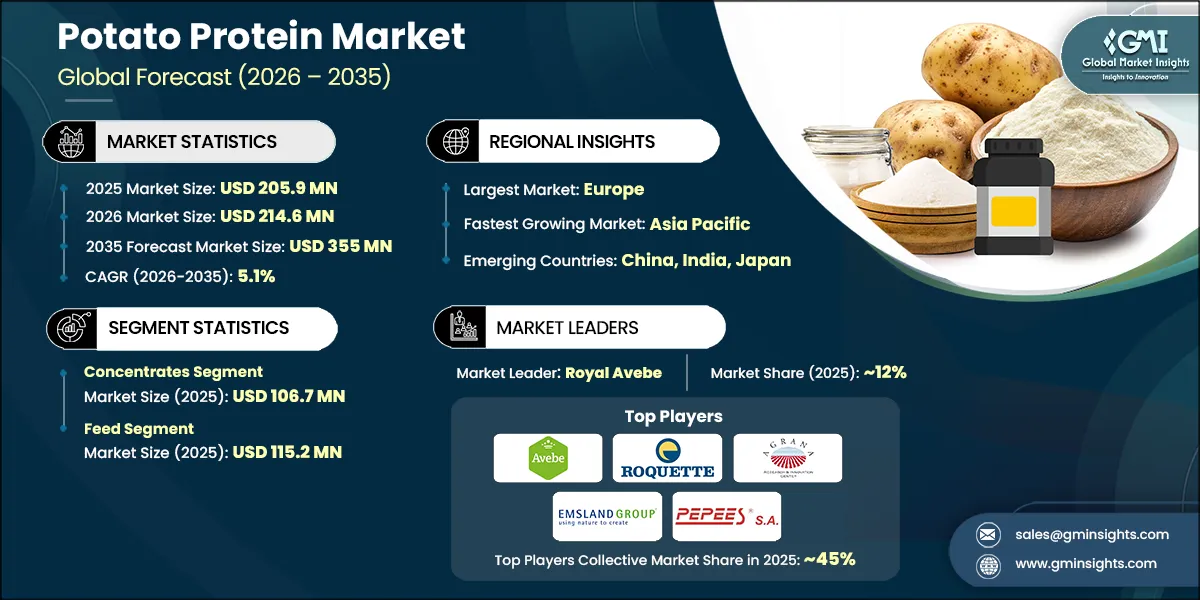
The global potato protein market size was valued at USD 205.9 million in 2025. The market is estimated to grow from USD 214.6 million in 2026 to USD 355 million in 2035, at a CAGR of 5.1% according to the latest report published by Global Market Insights Inc.
To get key market trends
- Potato protein refers to high-quality plant-based protein derived from potato tubers through industrial extraction and purification processes that yield protein concentrates and isolates with superior functional and nutritional properties. These proteins are characterized by excellent amino acid profiles, high digestibility rates exceeding 95%, and hypoallergenic properties that make them suitable for consumers with common food allergies to soy, dairy, and gluten.
- Potato protein products include isolates with protein content exceeding 90%, concentrates containing 50-80% protein, and specialty formulations that combine exceptional emulsification, foaming, and water-binding capabilities. They are produced through precision extraction methods utilizing enzymatic hydrolysis, membrane filtration, and spray drying technologies that preserve native protein functionality while achieving food-grade purity standards required for human consumption and premium animal feed applications.
- Potato protein has witnessed significant technological advancements in recent years, driven by improvements in extraction efficiency, protein yield optimization, and functional property enhancement. Enhanced membrane filtration technologies, including ultrafiltration and nanofiltration systems, have enabled the production of high-purity isolates with protein content exceeding 95% while maintaining native protein structure and bioactivity. Modern production methods have achieved extraction yields of 75%-85% from potato processing streams, minimizing waste and improving economic viability through integration with starch production facilities.
- Innovations in enzymatic treatment protocols and pH optimization have expanded the range of functional characteristics available, allowing manufacturers to develop potato protein products with tailored solubility, gelation properties, and emulsion stability for specific food applications including meat analogues, dairy alternatives, and bakery formulations.
- Innovations in processing technologies and sustainable sourcing practices have expanded market opportunities while addressing environmental and nutritional challenges. Advanced spray drying techniques with controlled particle size distribution and surface modification processes have enhanced dispersibility and reconstitution properties, improving application performance in beverage systems and instant food products. The development of organic and non-GMO certified potato protein products has addressed consumer demand for clean-label ingredients, with several manufacturers achieving certifications for allergen-free production facilities.
- Integration of potato protein extraction with circular economy principles, utilizing side streams from potato starch and French fry production, has improved sustainability metrics and reduced production costs. Growing recognition of potato protein's superior amino acid profile, particularly high lysine content and balanced essential amino acid composition, has driven adoption in sports nutrition, clinical nutrition, and premium pet food formulations where protein quality is a critical specification parameter.
Potato Protein Market Report Attributes
| Key Takeaway | Details |
|---|---|
| Market Size & Growth | |
| Base Year | 2025 |
| Market Size in 2025 | USD 205.9 Million |
| Market Size in 2026 | USD 214.6 Million |
| Forecast Period 2026 - 2035 CAGR | 5.1% |
| Market Size in 2035 | USD 355 Million |
| Key Market Trends | |
| Drivers | Impact |
| Plant-based food market expansion and protein diversification | Potato protein offers hypoallergenic properties and clean-label positioning, with digestibility exceeding 95% and complete amino acid profiles, driving adoption in meat analogues, dairy-free products, and allergen-free formulations. |
| Sustainable protein sourcing and circular economy integration | Potato protein extraction utilizes side streams from existing starch and potato processing operations, reducing waste by 40-50% and providing cost-effective protein production with lower environmental footprint compared to primary crop cultivation. |
| Sports nutrition and functional food development | Growing consumer awareness of protein quality metrics supports adoption of potato protein with biological value exceeding 90 and rapid absorption characteristics, meeting performance nutrition requirements in beverages, bars, and supplement formulations. |
| Pitfalls & Challenges | Impact |
| Limited production capacity and supply chain constraints | Potato protein production is concentrated in Europe with limited processing facilities globally, creating supply constraints during peak demand periods and restricting market expansion in emerging regions. |
| Higher production costs compared to established plant proteins | Extraction yields of 3-5% from potato raw material and specialized processing requirements result in production costs 20-30% higher than soy protein isolates, limiting price-sensitive applications in commodity food products. |
| Opportunities: | Impact |
| Expansion in Asian markets and localized production | Rapid growth in plant-based food consumption in China, Japan, and India creates opportunities for regional potato protein production facilities, with market potential exceeding USD 90 million by 2035 in Asia Pacific. |
| Development of specialized functional protein systems | Innovation in enzymatically modified potato proteins, hydrolyzed formulations for enhanced solubility, and texturized protein products expands addressable markets in ready-to-drink beverages, infant nutrition, and clinical applications. |
| Premium pet food and aquaculture feed applications | Growing demand for high-quality, digestible protein sources in premium pet food formulations and sustainable aquaculture feeds creates opportunities for potato protein concentrates with protein content of 60-75%. |
| Market Leaders (2025) | |
| Market Leaders |
~12% Market Share |
| Top Players |
|
| Competitive Edge |
|
| Regional Insights | |
| Largest Market | Europe |
| Fastest growing market | Asia Pacific |
| Emerging country | China, India, Japan |
| Future outlook |
|
What are the growth opportunities in this market?
Potato Protein Market Trends
- Growing demand for potato protein isolates is anticipated to be driven by expanding applications in premium meat analogues, dairy-free beverages, and sports nutrition products. Potato protein isolates deliver protein content exceeding 90%, exceptional amino acid scores above 95%, and superior emulsification properties that enable clean-label formulations without synthetic stabilizers.
- The isolates segment is estimated to experience growth at 4.9% CAGR, with food manufacturers requiring high-purity, allergen-free protein ingredients meeting stringent quality standards for plant-based burger patties, protein shakes, and functional beverage applications. Advanced membrane filtration systems capable of producing isolates with minimal off-flavors and neutral taste profiles are expected to enable new applications in ready-to-drink protein beverages and clear protein water products where sensory attributes are critical specification parameters.
- Expansion of meat analogue production is forecasted to create substantial growth opportunities for potato protein. The meat analogue sub-segment within the food and beverages application category is anticipated to grow at 6% CAGR, driven by global plant-based meat sales estimated to exceed USD 30 billion annually by 2030. Potato protein serves critical functions in texture development, moisture retention, binding properties, and nutritional fortification, with formulations typically incorporating 15%-25% potato protein to achieve meat-like texture and complete protein profiles.
- The proven performance of potato protein in extruded and formed meat alternatives, combined with hypoallergenic properties and clean-label positioning, is expected to support continued market penetration. Manufacturers are anticipated to develop specialized potato protein formulations with enhanced gelation and fibrous texture formation to meet evolving consumer expectations for authentic meat-like sensory experiences.
- Dairy-free product innovation is estimated to increase demand for potato protein in cheese alternatives, yogurt formulations, and protein-enriched plant milk. These applications represent a significant market segment, with potato protein used in cream cheese alternatives, Greek-style yogurt products, and high-protein oat milk formulations. Potato protein offers emulsification properties and neutral flavor profiles that enable dairy-like texture and mouthfeel in plant-based products, with functionality advantages of 25-35% compared to pea protein in certain applications where color and taste neutrality are critical.
- Growing regulatory acceptance of potato protein in dairy alternative categories and increasing consumer familiarity with potato-based ingredients are anticipated to drive specification rates in new product development, with several major food brands establishing approved ingredient lists that include potato protein isolates and concentrates.
- Asia Pacific market expansion is forecasted to be a significant growth driver, with potato protein adoption estimated to grow at 5.6% CAGR in the region. The market is expected to benefit from rapid urbanization, rising disposable incomes, and increasing health consciousness driving plant-based food consumption in China, Japan, and India. Potato protein's positioning as a premium, allergen-free ingredient aligns with Asian consumer preferences for clean-label products and functional foods with documented health benefits.
- Local production capacity development in China and India is anticipated to reduce import dependency and improve cost competitiveness, with several regional processors investing in potato protein extraction facilities integrated with existing starch production operations. The growing sports nutrition and fitness industry in Asia Pacific, with gym memberships exceeding 200 million regionally, is estimated to create demand for potato protein in localized supplement formulations and functional beverage products.
- Technological innovations in protein modification and application development are anticipated to enable production of specialized potato protein ingredients for demanding applications. Advanced enzymatic hydrolysis techniques and controlled fermentation processes are expected to produce potato protein hydrolysates with enhanced solubility, rapid absorption characteristics, and bioactive peptide content for clinical nutrition and sports recovery applications. Innovations in texturization technology are forecasted to enable production of structured potato protein products with fibrous texture suitable for whole-muscle meat alternatives and seafood analogues.
- Development of potato protein-based microencapsulation systems and delivery matrices is estimated to expand applications in fortified beverages, supplement tablets, and functional food bars. Sustainability-focused innovations utilizing organic potato sources and renewable energy in processing operations are anticipated to address environmental requirements while maintaining nutritional quality, with several manufacturers targeting carbon-neutral production by 2030 and bio-content certification for premium product lines.
Potato Protein Market Analysis
Learn more about the key segments shaping this market
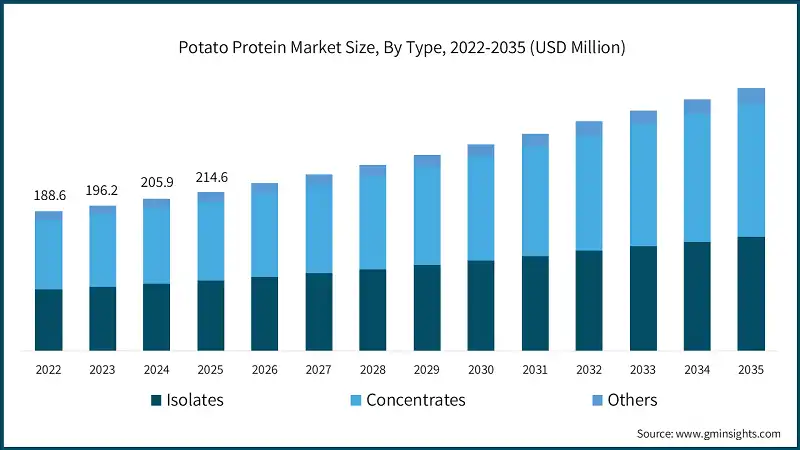
The potato protein market by type is segmented into isolates, concentrates, and others. Concentrates hold the largest market value of USD 106.7 million in 2025.
- Concentrates are anticipated to show consistency in demand due to their cost-effectiveness in food formulations, balanced functional properties, and ability to deliver protein enrichment without significant flavor impact. This is attributed to their position as the most widely specified potato protein category, accounting for 50% of total market value in 2025, making them the most economically viable option for bakery, processed foods, and feed applications.
- Furthermore, protein content ranging from 50%-80% provides sufficient nutritional fortification while maintaining favorable pricing compared to isolates, combined with established performance data in meat extension, bakery improvers, and animal feed formulations, have sustained applications across food manufacturing and premium pet food production.
- The growing segments is for isolates as industries are leaning towards high-purity protein ingredients for premium plant-based foods and allergen-free formulations. Isolates, valued at USD 94.7 million in 2025, find applications in meat analogues, dairy-free beverages, and sports nutrition products due to their protein content exceeding 90% and superior amino acid profiles.
- This segment is estimated to demonstrate steady growth at 4.9% CAGR, driven by plant-based meat market expansion and demand for clean-label protein sources in functional beverages. Isolates are anticipated to continue being essential in protein shakes, vegan cheese alternatives, and high-protein snack bars for their neutral taste profiles and exceptional emulsification properties.
- The isolates segment, valued at USD 94.7 million in 2025, is estimated to experience steady growth driven by specialized requirements across sports nutrition, clinical nutrition, and premium food sectors. Isolates are engineered with application-specific functional properties, minimal processing aids, and optimized solubility characteristics to meet precise nutritional and sensory requirements. This segment serves high-value applications including ready-to-drink protein beverages, infant formula components, and medical nutrition products where protein purity and digestibility are critical specification parameters. Isolates command premium pricing due to advanced membrane filtration processing and higher extraction costs, with price premiums of 40%-60% compared to concentrates.
- Emerging product categories within the "others" segment represent specialized applications valued at USD 13.2 million in 2025. This category includes potato protein hydrolysates, modified potato proteins with enhanced functionality, and specialty blends combining potato protein with other plant proteins. Hydrolyzed potato proteins are gaining attention in clinical nutrition and sports recovery products for their rapid absorption characteristics and pre-digested peptide content. Modified potato protein ingredients are experiencing increased interest in confectionery and beverage applications for their improved heat stability, pH tolerance, and foam stabilization properties with functionality enhancements of 30-40% compared to native proteins.
Learn more about the key segments shaping this market
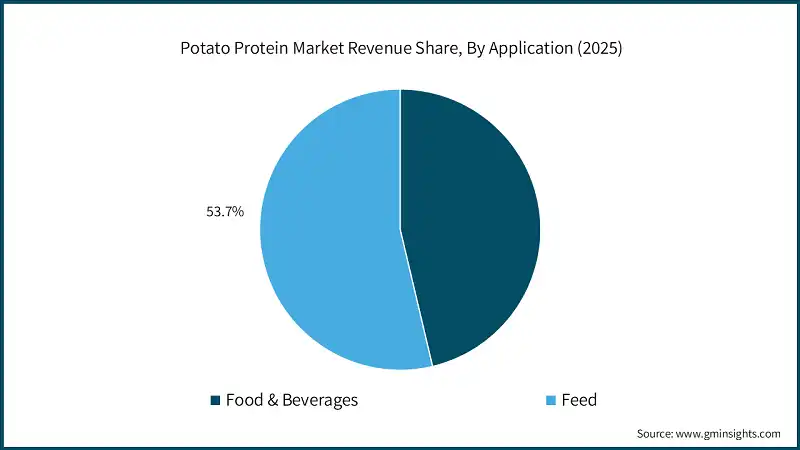
The potato protein market by application is segmented into food & beverages, and feed. Feed applications hold the largest market value of USD 115.2 million in 2025.
- Feed applications are anticipated to show consistency in demand due to their extensive use in premium pet food formulations, aquaculture feeds, and specialty animal nutrition products requiring high-quality, digestible protein sources. This is attributed to their position as the most established application segment, accounting for approximately 53.7% of total market value, making them essential for dog and cat food, fish feed, and livestock nutrition supplements.
- Furthermore, potato protein's proven performance in animal nutrition with digestibility coefficients exceeding 90%, combined with hypoallergenic properties beneficial for sensitive animals and amino acid profiles supporting growth and maintenance requirements, have sustained applications across premium pet food brands, salmon and trout aquaculture operations, and specialty feed formulations for young animals.
- Within the food and beverage the growing segments include meat analogue and typical foods applications as industries are leaning towards plant-based protein ingredients for sustainable food production and clean-label formulations. Meat analogue, valued at USD 30.5 million in 2025, finds applications in plant-based burgers, sausages, and nuggets due to superior binding properties, moisture retention capabilities, and contribution to meat-like texture development.
- This segment is estimated to demonstrate the fastest growth at 6% CAGR, driven by expanding plant-based meat market penetration and consumer demand for allergen-free protein sources. Typical foods applications, valued at USD 23.3 million in 2025 and anticipated to grow at 5.7% CAGR, continue to be essential in protein bars, breakfast cereals, and nutritional supplements for their contribution to protein fortification and functional benefits including satiety enhancement.
- Moreover the bakery segment, valued at USD 16.7 million in 2025, is estimated to experience steady growth driven by protein enrichment trends and clean-label ingredient requirements in bread, muffins, and specialty baked goods. Potato protein is engineered to provide dough strengthening, improved moisture retention, and extended shelf life while contributing to protein content enhancement of 3-5 grams per serving.
- This segment serves applications including high-protein bread formulations, gluten-free baking systems, and premium artisan products where allergen-free ingredients are critical specification parameters. Bakery applications benefit from potato protein's neutral flavor profile, heat stability during baking processes, and water-binding capacity improving product texture and freshness retention for 2-3 days beyond standard formulations.
Looking for region specific data?
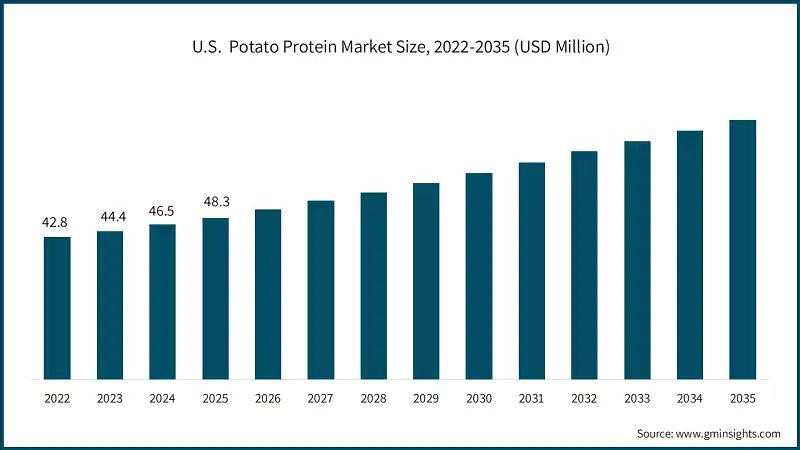
The U.S. potato protein market accounted for USD 48.3 million in 2025.
- The strong support for potato protein in North America comes primarily from the United States, wherein consistent demand is driven by well-established plant-based food industry, advanced food processing capabilities, and extensive premium pet food manufacturing. Constant emphasis on allergen-free protein ingredients for meat analogues, dairy-free products, and sports nutrition formulations, along with robust adoption of clean-label ingredients in food manufacturing and specialty animal nutrition sectors, consistently elevates the country's market position.
- The presence of major food ingredient distributors and growing partnerships with European potato protein producers including Royal Avebe and Emsland Group, combined with established regulatory acceptance (GRAS status) and increasing consumer awareness of hypoallergenic protein sources, ensures sustained demand for high-quality potato protein meeting food safety specifications and nutritional quality standards.
The potato protein market in Germany is estimated to experience significant and promising growth from 2025 to 2035.
- Potato protein growth in Europe is an integral component of the market due to strong food processing infrastructure and well-established sectors of plant-based food production and premium pet food manufacturing. In Germany, food manufacturers and ingredient suppliers are utilizing high-quality potato protein that meets stringent European food safety standards (EU regulations) and organic certification requirements, which can improve nutritional profiles and functional properties while meeting stricter regulatory requirements for allergen labeling and clean-label positioning, driving the advancement of specialty-grade potato protein ingredients into meat analogue applications, bakery formulations, and premium animal feed across food processing and pet nutrition sectors.
The potato protein market in China is estimated to experience significant and promising growth from 2026 to 2035.
- Asia Pacific is the fastest-growing region in the potato protein market and includes China, India, Japan, and South Korea. China remains the most essential growth driver of the Asia-Pacific market, which is increasingly driven by the expansion of domestic plant-based food consumption, rapid urbanization, massive health and wellness trends, and growing adoption of alternative protein ingredients.
- The country is increasing the import volumes from established European producers and exploring domestic production capacity development, thus becoming a significant consumer in the global arena. The regional momentum is further fueled by strong demand from meat analogue production, sports nutrition products, premium pet food formulations, and functional food applications, with rising middle-class purchasing power and increasing emphasis on protein quality accelerating market expansion.
Saudi Arabia market is estimated to experience significant and promising growth from 2026 to 2035.
- The potato protein market keeps steadily growing in the Middle East and Africa catered by rising investments in food processing infrastructure, health and wellness sector development, and expanding sports nutrition industry. The development of food manufacturing facilities, premium retail channels, and strategic positioning as regional food import hubs are the drivers for such high-quality potato protein requirements in countries like Saudi Arabia and the UAE in the Middle East.
- In Africa, countries such as South Africa are experiencing increased adoption in functional food products, sports nutrition formulations, and premium pet food applications all requiring allergen-free, high-digestibility protein ingredients for health-conscious consumers and demanding nutritional specifications.
Brazil is estimated to experience significant and promising growth from 2026 to 2035.
- Brazil is contributing to the potato protein market in Latin America owing to its increasing emphasis on plant-based food innovation, food processing industry expansion, and health and wellness product development. With the growth in Brazil's plant-based meat sector, gaining momentum for clean-label protein ingredients, and thus demand for potato protein isolates, concentrates, and specialty formulations is steady. Industries are maintaining the trend with increasing regional adoption of potato protein for applications in meat analogue products, bakery enrichment, functional beverages, and premium pet food formulations across diverse end-use sectors.
Potato Protein Market Share
Potato protein industries are moderately consolidated with players like Royal Avebe, Roquette Frères, AGRANA, Emsland Group, and PEPEES Group holding approximately 45% market share collectively in 2025.
- Potato protein manufacturers are constantly involved in research and development to improve extraction processes, develop enhanced functional properties, and enhance production efficiency. Innovations in membrane filtration technologies, enzymatic modification techniques, protein hydrolysate formulations, and advanced spray drying capabilities help companies meet evolving customer needs and remain relevant in high-growth sectors such as meat analogues, dairy-free products, sports nutrition, and premium pet food.
- Advanced quality control capabilities using protein purity analysis, amino acid profiling, functional property testing, and microbiological validation systems, along with ISO 22000, FSSC 22000, and organic certifications, enable producers to consistently deliver products that exceed stringent food safety specifications and meet industry standards including GRAS status, EU Novel Food regulations, and various nutritional quality requirements across multiple jurisdictions.
- By establishing collaborations with food manufacturers, ingredient distributors, plant-based meat producers, and industry associations, companies are increasing the strength of their market presence. These collaborations facilitate co-development of customized potato protein formulations for specific food applications such as burger patties, dairy-free cheese, protein beverages, or bakery improvers, and sharing best practices which lead to improved formulation methodologies and performance specifications. Strategic partnerships with end-users enable manufacturers to anticipate market trends and develop next-generation products aligned with industry requirements, including texturized potato proteins, enhanced solubility isolates, and specialized blends that enhance application performance and nutritional profiles.
- Eco-friendly practices, such as utilization of side streams from potato starch processing operations, optimization of water and energy utilization in extraction and drying processes, development of organic and non-GMO certified potato protein ingredients, and reduction of waste generation and carbon emissions at production facilities, are becoming the trend. Beyond being environmentally friendly, these practices are often demanded by food manufacturers, brand owners, and consumers looking for sustainable protein ingredients, maximizing the reputation of the brand and making it competitive in the market.
- Companies investing in circular economy initiatives by integrating potato protein extraction with existing starch production facilities, implementing renewable energy in processing operations, and sourcing from certified sustainable potato cultivation, are positioning themselves favorably as sustainability becomes a key specification criterion across plant-based food, functional nutrition, premium pet food, and clean-label product categories seeking carbon-neutral certification and environmental product declarations.
Potato Protein Market Companies
Major players operating in the potato protein industry are:
- Royal Avebe
- Emsland Group
- Roquette Frères
- KMC Ingredients
- AKV AMBA
- PEPEES Group
- Kemin Industries
- Bioriginal Food and Science Corporation
- AGRANA Group
- PPZ Niechlów S.A.
- Finnamyl
- Nutragreenlife Biotechnology Co., Ltd.
- Hongjiu Biotech Co., Ltd.
Royal Avebe produces innovative starch-based solutions derived from potatoes. Avebe operates globally, catering primarily to the food, animal nutrition, and industrial sectors. The company specializes in a diverse range of products including modified starches, potato proteins, and fibers, all known for their functional properties and sustainability.
Avebe's commitment to quality and innovations is evident across its value chain, from sustainable potato cultivation practices to advanced processing technologies. With a strong emphasis on R&D, Avebe continuously strives to expand its product portfolio and enhance market competitiveness. By maintaining close partnerships with its growers, Avebe ensures a reliable supply of high-quality raw materials, reinforcing its position as a trusted supplier in the global starch industry.
Emsland specializes in the growing, production, application, and supply of innovative plant-based ingredients derived from sourced potato and pea. The company’s business areas include clean labels and modified starches, plant proteins, fibers, potato flakes, and granules. The company provides a wide range of products in the dried potato products segment of the food retail sector and offers customized product solutions for customers in the areas of adhesives, flocking agents, construction additives, textile applications, and filter materials. It has a global presence comprising production sites, offices, and distribution centers in over 100 countries.
Roquette Frères, a global leader in plant-based ingredients, operates across various sectors including food, nutrition, pharmaceuticals, and industrial applications. The company specializes in developing sustainable solutions derived from maize, wheat, potatoes, and peas. Roquette offers a diverse product portfolio encompassing plant proteins, starches, fibers, and sugar substitutes that cater to the evolving demand of the food and pharmaceutical industries for healthier & sustainable alternatives. With a strong commitment to innovations and sustainability, Roquette focuses on enhancing nutritional value, taste, texture, and functional properties of its products.
The company also invests significantly in R&D to address market trends such as clean label, plant-based diets, and personalized nutrition. Roquette's global presence and partnerships with industry stakeholders highlight its role in driving advancements in plant-based innovations and meeting the growing consumer demand for sustainable & high-performance ingredients. The company currently operates in more than 100 countries, through more than 30 manufacturing sites.
KMC Ingredients is a prominent manufacturer and supplier of potato-based ingredients for the global food industry. The company specializes in producing high-quality potato starch, fibers, proteins, and flakes. These ingredients are used to enhance the texture, stability, and nutritional value of various food products including dairy, meat alternatives, bakery items, and confectionery. KMC Ingredients is committed to sustainability, focusing on environment-friendly production processes and responsible sourcing.
The company operates state-of-the-art production facilities and invests heavily in R&D to innovate and meet the evolving market demand. With a strong emphasis on customer service and collaborations, KMC Ingredients maintains a robust global distribution network, ensuring reliable supply and support for its clients worldwide in more than 80 countries.
Potato Protein Industry News
- In February 2024, KMC Ingredients developed texturized potato proteins that can be used as ingredients in meat alternatives. This innovation helped the company to gain competitive edge in plant-based ingredients and potato-based ingredients market as the company claims that this protein is the first of its kind in the world.
- In February 2025, Israeli food-tech startup Finally Foods has unveiled the world’s first genetically engineered potatoes that produce real cow-milk casein protein. Supported by Strauss Group’s The Kitchen incubator, the company will begin its first field trial next month in southern Israel. The potatoes act as natural bio-reactors, offering a sustainable alternative to livestock-based dairy production. Once harvested, they will be processed to extract casein, essential for cheese-making due to its melting and stretching properties.
The potato protein market research report includes an in-depth coverage of the industry with estimates and forecast in terms of revenue in USD Million and volume in terms of kilo tons from 2022 to 2035 for the following segments:
Market, By Type
- Isolates
- Concentrates
- Others
Market, By Application
- Food & Beverages
- Meat Analogue
- Dairy-free
- Confectionery
- Bakery
- Processed foods
- Typical foods
- Others
- Feed
The above information is provided for the following regions and countries:
- North America
- U.S.
- Canada
- Europe
- Germany
- UK
- France
- Spain
- Italy
- Rest of Europe
- Asia Pacific
- China
- India
- Japan
- Australia
- South Korea
- Rest of Asia Pacific
- Latin America
- Brazil
- Mexico
- Argentina
- Rest of Latin America
- Middle East and Africa
- Saudi Arabia
- South Africa
- UAE
- Rest of Middle East & Africa
Frequently Asked Question(FAQ) :
How much revenue did the concentrates segment generate in 2025?
The concentrates segment generated approximately USD 106.7 million in 2025, accounting for 50% of the total market value due to its cost-effectiveness and balanced functional properties.
What is the expected size of the potato protein industry in 2026?
The market size is projected to reach USD 214.6 million in 2026.
What is the projected value of the potato protein market by 2035?
The market is poised to reach USD 355 million by 2035, fueled by advancements in extraction technologies, rising adoption in meat analogues, and growing demand for clean-label and allergen-free ingredients.
What was the market size of the potato protein in 2025?
The market size was valued at USD 205.9 million in 2025, with a CAGR of 5.1% expected through 2035. The growth is driven by increasing demand for plant-based proteins, hypoallergenic properties, and expanding applications in food and feed industries.
What was the valuation of the feed applications segment in 2025?
The feed applications segment was valued at USD 115.2 million in 2025, led by its extensive use in premium pet food, aquaculture feeds, and specialty animal nutrition products.
What is the growth outlook for the isolates segment from 2026 to 2035?
The isolates segment is set to expand at a CAGR of 4.9% till 2035, supported by increasing demand for high-purity, allergen-free protein ingredients in food and beverage applications.
Which region leads the potato protein sector?
Asia Pacific is expected to lead with a CAGR of 5.6% through 2035. The market is driven by rapid urbanization, rising disposable incomes, and increasing health consciousness in countries like China, Japan, and India.
What are the upcoming trends in the potato protein market?
Key trends include protein modification innovations, structured potato protein for meat and seafood analogues, improved microencapsulation systems, and sustainability-focused production.
Who are the key players in the potato protein industry?
Key players include Royal Avebe, Emsland Group, Roquette Frères, KMC Ingredients, AKV AMBA, PEPEES Group, Kemin Industries, AGRANA Group, PPZ Niechlów S.A., and Finnamyl.
Potato Protein Market Scope
Related Reports