Summary
Table of Content

Post-acute Care Market
Get a free sample of this report
Form submitted successfully!
Error submitting form. Please try again.
Thank you!
Your inquiry has been received. Our team will reach out to you with the required details via email. To ensure that you don't miss their response, kindly remember to check your spam folder as well!
Request Sectional Data
Thank you!
Your inquiry has been received. Our team will reach out to you with the required details via email. To ensure that you don't miss their response, kindly remember to check your spam folder as well!
Form submitted successfully!
Error submitting form. Please try again.
Post-acute Care Market Size
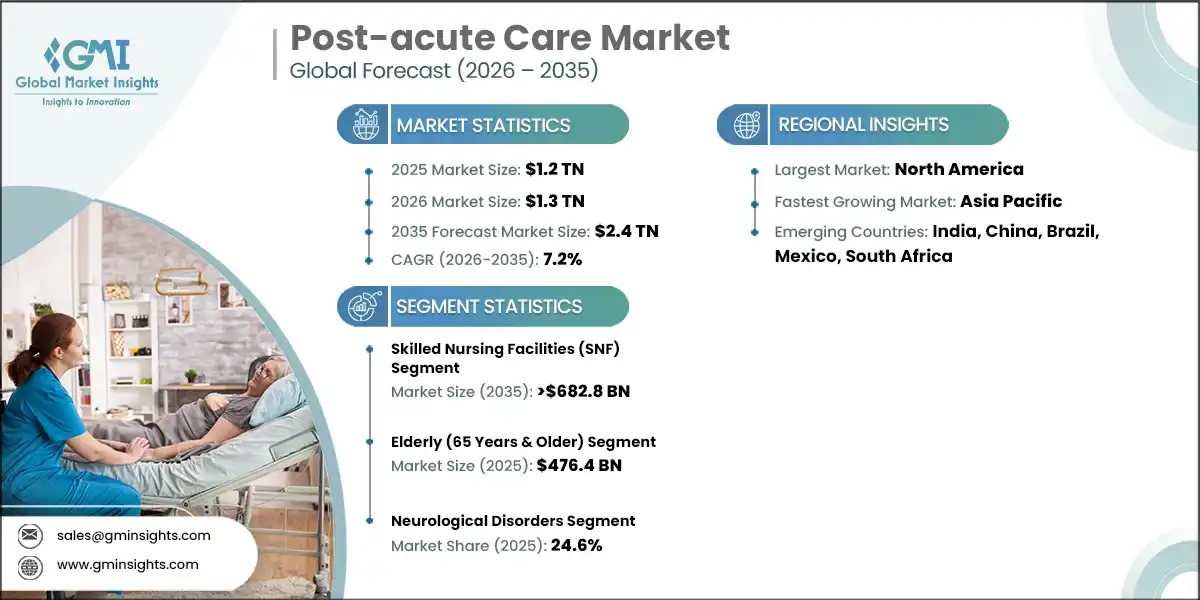
The global post-acute care market was valued at USD 1.2 trillion in 2025. The market is expected to reach from USD 1.3 trillion in 2026 to USD 2.4 trillion in 2035, growing at a CAGR of 7.2% during the forecast period, according to the latest report published by Global Market Insights Inc. The high market growth is attributed to the growing adoption of home-based and community-based services, technological advancements in rehabilitation and remote monitoring, rising prevalence of chronic and age-related diseases, among other contributing factors.
Post-acute Care Market Key Takeaways
Market Size & Growth
- 2025 Market Size: USD 1.2 Trillion
- 2026 Market Size: USD 1.3 Trillion
- 2035 Forecast Market Size: USD 2.4 Trillion
- CAGR (2026–2035): 7.2%
Regional Dominance
- Largest Market: North America
- Fastest Growing Region: Asia Pacific
Key Market Drivers
- Rising prevalence of chronic diseases and comorbidities.
- Shift to value-based care and pressure to reduce hospital readmissions.
- Increasing patient preference for home- and community-based care.
- Advances in telehealth and remote patient monitoring.
Challenges
- Reimbursement uncertainty and policy/regulatory changes.
- Fragmented care coordination across providers and settings.
- Competition from skilled nursing facilities and outpatient centers.
Opportunity
- Expansion of telehealth and remote monitoring services.
- Growth of hospital-at-home and home-based acute care programs.
Get Market Insights & Growth Opportunities
Post-acute care refers to a range of medical and supportive services that a patient may need after a hospital stay. These services are meant to help the patient recover, regain function, or manage a chronic condition. The care is basically rehabilitation, nursing care at the skilled level, home health, and long-term care services that are targeted at improving patient outcomes reads more correct and natural.
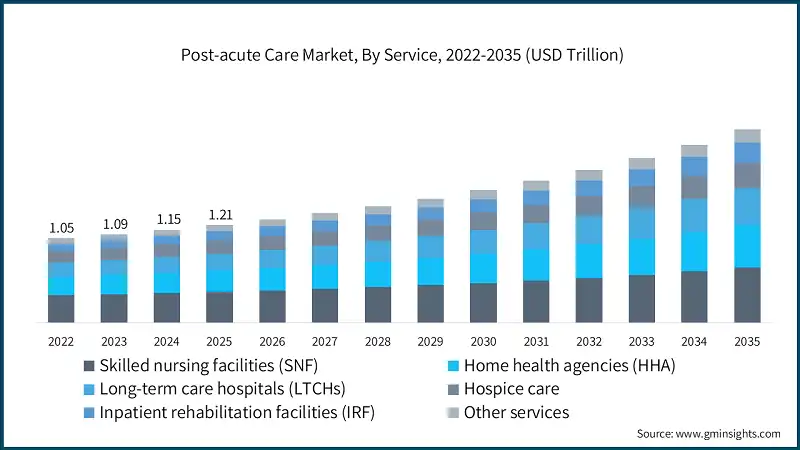
The market has increased from USD 1 trillion in 2022 and reached to USD 1.1 trillion in 2024, with the historic growth rate of 4.8%. The market growth was driven by rising chronic disease prevalence, expanding ageing populations requiring long-term recovery support, and increasing adoption of value-based care models, which prioritize coordinated post-hospital services.
As chronic illnesses such as cardiovascular disease, diabetes, and neurological disorders become more prevalent, the demand for rehabilitation and long-term recovery services continues to rise. For instance, according to the World Health Organization (WHO), cardiovascular diseases accounted for 32% of global deaths in 2022, while the International Diabetes Federation reported that 537 million adults were living with diabetes in 2021, a figure is projected to reach 643 million by 2030.
Similarly, global ageing trends are increasing the need for extended recovery support after hospital discharge; the United Nations estimated that individuals aged 65 and older represented 10% of the global population in 2022. Together, these factors are driving greater reliance on home healthcare services, skilled nursing facilities, and inpatient rehabilitation centers.
Furthermore, integration of digital health tools such as telerehabilitation, wearable sensors, AI-based recovery tracking, and automated therapy devices is improving post-acute outcomes. These technologies enable providers to monitor patients continuously, deliver personalized care plans, and intervene early when complications arise.
To get key market trends
Post-acute Care Market Trends
The market is growing considerably with the rapid expansion of home-based post-acute care models, integration of telehealth, remote monitoring & virtual rehabilitation, and increasing focus on value-based care and outcome-driven models, among other factors collectively driving industry growth.
- Home and community-based rehabilitation is increasingly being chosen over institutional care because they cost less and the patients are more satisfied. As a result, providers are heavily investing in programs for therapy at home, skilled nursing, and remote care. This change is shifting PAC delivery to be a home- rather than facility-centric.
- Large healthcare systems and private equity groups are acquiring skilled nursing facilities, home health agencies, and rehab centers to build integrated care networks. Consolidation helps streamline referrals, improve care quality, and negotiate stronger payer contracts. This trend is reshaping the competitive landscape toward fewer but larger players.
- Moreover, predictive algorithms are increasingly used to assess patient risk, recommend care pathways, and identify factors impacting rehabilitation success. Health systems use analytics to allocate resources, personalize care intensity, and prevent complications. This trend supports better clinical decisions and operational efficiency, thereby sustaining market growth.
Post-acute Care Market Analysis
Learn more about the key segments shaping this market
Based on the service, the post-acute care market is segmented into skilled nursing facilities (SNF), home health agencies (HHA), long-term care hospitals (LTCHs), hospice care, inpatient rehabilitation facilities (IRF), and other services. The skilled nursing facilities (SNF) segment has asserted its dominance in the market by securing a significant market share of 31.5% in 2025 owing to rising demand for 24/7 medical supervision, advanced rehabilitation services, and comprehensive post-hospital care for patients with complex medical needs. The segment is expected to exceed USD 682.8 billion by 2035, growing at a CAGR of 6.2% during the forecast period.
On the other hand, the inpatient rehabilitation facilities (IRF) segment is expected to grow with a CAGR of 8.5%. The growth of this segment is driven by increasing demand for intensive, multidisciplinary rehabilitation programs and rising patient referrals for specialized therapy following strokes, orthopedic surgeries, and neurological conditions.
- The skilled nursing facilities (SNF) segment continues to dominate the market. Patients discharged after major surgeries, stroke, cardiac events, or trauma often require intensive rehabilitation and 24/7 skilled nursing support. SNFs provide a lower-cost alternative to long hospital stays while maintaining medically supervised care. Growing pressure on hospitals to shorten inpatient duration is increasing SNF referrals.
- Government and private payers emphasize reduced rehospitalizations and improved recovery outcomes. SNFs play a crucial role in these value-based care models by delivering coordinated rehabilitation and preventing avoidable complications. Facilities performing well under bundled payments gain higher referrals and stronger reimbursement.
- The home health agencies (HHA) segment held a revenue of USD 263.8 billion in 2025, with projections indicating a steady expansion at 7.3% CAGR from 2026 to 2035, owing to rising preference for cost-effective in-home recovery supported by expanding insurance coverage for home-based services. Additionally, workforce innovations and mobile care teams, are enabling agencies to deliver higher-acuity care directly at patients’ homes.
- The long-term care hospitals (LTCHs) segment accounted for significant revenue in 2025 and is anticipated to grow at a CAGR of 8.2% over the forecast period. The segment is driven by the rising number of medically complex patients requiring extended acute-level treatment, especially those with respiratory failure, severe infections, or multi-organ complications. Growing adoption of specialized ventilator weaning programs and advanced clinical capabilities further supports demand for LTCH services.
Based on age group, the post-acute care market is segmented into elderly (65 years & older), adult (45-64 years), and other age groups. The elderly (65 years & older) segment dominated the market in 2025, accounting for USD 476.4 billion and is anticipated to grow at a CAGR of 7.1% during the forecast period.
- The global population of people aged 65 and above is rapidly increasing, which is causing a higher demand for post-acute care (PAC) services. In many cases, ageing is associated with limited mobility and an increased occurrence of chronic diseases, thus leading to the need for continuous medical supervision, rehabilitation, and long-term recovery support.
- Many elderly patients prefer recovering at home with professional support rather than extended hospital stays. The availability of home health services, telehealth, and caregiver-assisted programs enable safer, cost-effective, and patient-centric recovery for older adults, enhancing their engagement with PAC services.
- The adult (45-64 years) segment accounted for significant revenue in 2025 and is anticipated to grow at a CAGR of 7.7% over the forecast period. The segment is mainly influenced by the escalating prevalence of chronic conditions such as diabetes, cardiovascular disease, and musculoskeletal disorders that necessitate post-hospital rehabilitation. Additionally, the increasing awareness of early intervention and preventive care is also driving demand for outpatient and home-based post-acute services in this age group.
Learn more about the key segments shaping this market
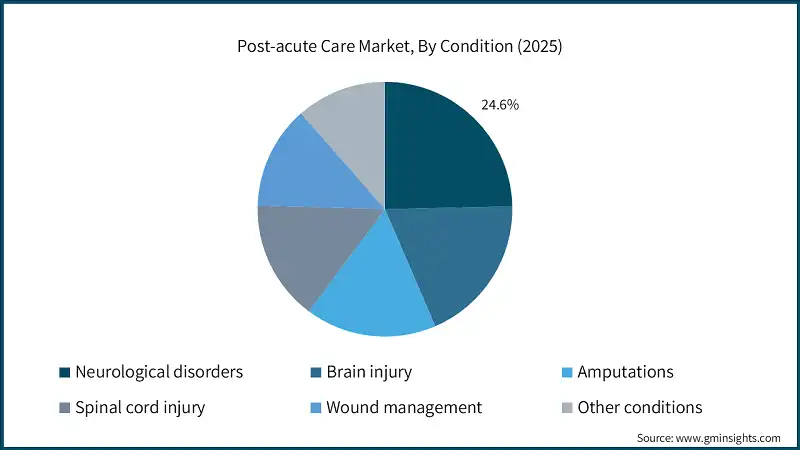
Based on condition, the post-acute care market is classified into neurological disorders, brain injury, amputations, spinal cord injury, wound management, and other conditions. The neurological disorders segment dominated the market with a revenue share of 24.6% in 2025 and is expected to reach USD 626.2 billion within the forecast period.
- The increasing incidence of stroke, Parkinson’s disease, Alzheimer’s, multiple sclerosis, and traumatic brain injuries are the main factors leading to the demand for specialized post-acute care. Such patients are typically given long-term rehabilitation programs and continuous monitoring to regain the lost functions and maintain their quality of life.
- Neurological patients may also need coordination of their care through physical, occupational, and speech therapy. Post-acute care centers offer structured rehabilitation programs that are specifically designed for neurological deficits, thereby improving the recovery outcomes and reducing the possibility of coexisting conditions.
- The brain injury segment accounted for significant revenue in 2025 and is anticipated to grow at a CAGR of 6.8% over the forecast period. The segment is driven by rising incidence of traumatic and acquired brain injuries, coupled with the need for specialized neurorehabilitation programs. Advances in cognitive and motor therapy technologies are further enhancing recovery outcomes and service demand.
- The amputations segment accounted for significant revenue in 2025 and is anticipated to grow at a CAGR of 8.4% over the forecast period. The segment is driven by increasing cases of diabetes, vascular diseases, and traumatic injuries requiring post-surgical rehabilitation. Innovations in prosthetics and targeted physical therapy programs are boosting patient recovery and service adoption.
Looking for region specific data?
North America Post-acute Care Market
North America dominated the market with the highest market share of 43.2% in 2025.
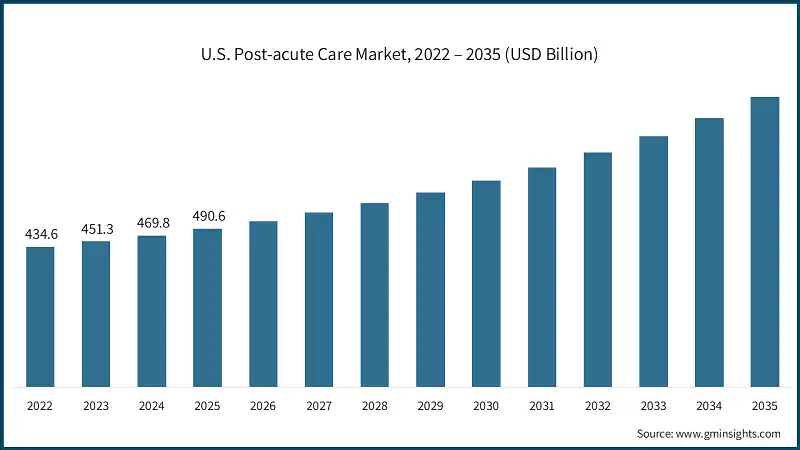
- The U.S. post-acute care market was valued at USD 434.6 billion and USD 451.3 billion in 2022 and 2023, respectively. The market size reached USD 490.6 billion in 2025, growing from USD 469.8 billion in 2024, and is anticipated to grow at a CAGR of 6.4% between 2026 and 2035.
- Healthcare systems in the U.S. and Canada are moving toward value-based care models that reward improved patient outcomes and reduced readmissions. Post-acute care facilities, including skilled nursing facilities and inpatient rehab centers, play a key role in transitional care. Hospitals actively refer patients to PAC providers to avoid penalties and improve care continuity.
- Furthermore, there is a strong preference among patients for home-based post-acute care due to convenience, lower costs, and better comfort. Technological adoption, such as telehealth, remote monitoring, and mobile care platforms has accelerated the shift from facility-based to home-based care. Payers are increasingly supporting these services to reduce healthcare costs while maintaining quality outcomes.
Europe Post-acute Care Market
Europe market accounted for USD 359.5 billion in 2025 and is anticipated to show lucrative growth over the forecast period.
- The burden of chronic diseases such as diabetes, obesity, cardiovascular disorders, and musculoskeletal conditions is increasing across Europe. These conditions often require extended rehabilitation and post-hospital care, driving higher utilization of skilled nursing facilities, home healthcare, and physiotherapy services.
- Many European countries are implementing healthcare reforms to shift from hospital-centric to community-based care. Programs emphasize coordinated discharge planning, home rehabilitation, and outpatient support to reduce hospital congestion. PAC services are positioned as a key component of integrated care pathways.
Asia Pacific Post-acute Care Market
The Asia Pacific market is anticipated to grow at the highest CAGR of 8.6% during the analysis timeframe.
- Countries like Japan, China, South Korea, and India are witnessing a rapidly growing elderly population due to increasing life expectancy and declining fertility rates. Urbanization is also creating nuclear family structures, reducing traditional home-based care and increasing reliance on professional post-acute care services, including skilled nursing facilities and home health services.
- Moreover, there is increasing awareness among patients and caregivers about the importance of post-acute rehabilitation for recovery after surgeries or major illnesses. Governments, NGOs, and private healthcare providers are promoting rehabilitation services, physiotherapy and occupational therapy programs, which boosts PAC adoption.
Latin America Post-acute Care Market
The Latin America market is experiencing robust growth over the analysis timeframe.
- Latin America’s ageing population and rising prevalence of chronic diseases, such as diabetes and cardiovascular disorders, are increasing the demand for structured post-hospital care. Limited hospital bed capacity and high patient loads encourage early discharges to PAC facilities and home health services. Growing awareness of rehabilitation and recovery services among patients and caregivers is boosting service adoption.
- Expansion of private healthcare providers and gradual improvements in insurance coverage are enhancing access to skilled nursing facilities and rehabilitation programs. Technological adoption, including telehealth and remote monitoring, is supporting care delivery in urban and remote areas, improving recovery outcomes.
Middle East & Africa Post-acute Care Market
The Middle East & Africa (MEA) market is experiencing robust growth over the analysis timeframe.
- Rising prevalence of lifestyle-related chronic diseases, such as diabetes, hypertension, and cardiovascular disorders, is driving the demand for post-acute care in MEA. Rapid urbanization and changing family structures are reducing traditional home-based care, increasing reliance on skilled nursing and rehabilitation services. Governments are investing in healthcare infrastructure and expanding public-private partnerships to improve access to post-acute and rehabilitative care.
- Technological adoption, including telemedicine and mobile health solutions, is helping manage patients in remote and underserved areas. Additionally, increasing awareness of early rehabilitation and recovery programs among patients and caregivers is fuelling market growth.
Post-acute Care Market Share
The global post-acute care market is fragmented, with a mix of large multinational healthcare providers, regional chains, and smaller independent facilities competing across the home health, skilled nursing, inpatient rehabilitation, and outpatient rehabilitation segments. Key players focus on expanding their service portfolios, forming strategic partnerships with hospitals, and integrating technology-enabled care solutions to enhance patient outcomes and improve operational efficiency.
Consolidation through mergers and acquisitions is a notable trend, particularly in North America and Europe, as companies aim to strengthen their network of facilities and gain preferential referrals from hospitals. Additionally, specialized programs for orthopedic, cardiac, and neurological rehabilitation are emerging as differentiators, allowing providers to capture niche patient segments while improving care quality and recovery outcomes.
Major players are also investing in digital health innovations such as telerehabilitation, remote patient monitoring, and AI-based therapy platforms to stay competitive in a market increasingly driven by patient-centric and value-based care models. Key players include Kindred Healthcare, Encompass Health, Genesis HealthCare, Amedisys, LHC Group, and Brookdale Senior Living, collectively accounting for a significant share of the market in developed regions.
Regional players in Asia-Pacific, Latin America, and MEA are rapidly expanding to address growing demand, often leveraging government initiatives and partnerships with local hospitals. Overall, competition is shaped by service quality, breadth of care offerings, technological integration, and the ability to navigate reimbursement and regulatory frameworks effectively.
Post-acute Care Market Companies
Few of the prominent players operating in the post-acute care industry include:
- Alden Network
- Amedisys
- Athena Health Care Systems
- Bella Vista Health Center
- Benchmark Senior Living
- Brookdale Senior Living
- CareCentrix
- Covenant Care
- Encompass Health
- Evernorth Health
- Genesis Healthcare
- Select Medical
- SYMPHONY CARE NETWORK
- Vineyard Post Acute
- VITAS Healthcare
- Alden Network
Alden Network offers highly specialized rehabilitation programs supported by integrated therapy services, enabling faster and more effective recovery. Its strong clinical expertise and multidisciplinary care teams enhance care quality and differentiate its post-acute service offerings.
Amedisys focuses on home health and hospice services, supported by robust remote monitoring and telehealth capabilities that enable personalized care in patients’ homes. Its scalable home-based model delivers high patient satisfaction and cost-effective post-acute care.
Brookdale Senior Living leverages a large national footprint and a broad portfolio of senior care services to provide seamless transitions across home-based, community, and facility-based post-acute settings. Its advanced care coordination systems and specialized rehabilitation programs help improve patient outcomes.
Post-acute Care Market Report Attributes
| Key Takeaway | Details |
|---|---|
| Market Size & Growth | |
| Base Year | 2025 |
| Market Size in 2025 | USD 1.2 Trillion |
| Market Size in 2026 | USD 1.3 Trillion |
| Forecast Period 2026 - 2035 CAGR | 7.2% |
| Market Size in 2035 | USD 2.4 Trillion |
| Key Market Trends | |
| Drivers | Impact |
| Rising prevalence of chronic diseases and comorbidities | Increasing chronic illness burden is steadily boosting demand for rehabilitation, skilled nursing, and long-term recovery services across post-acute settings. |
| Shift to value-based care and pressure to reduce hospital readmissions | Providers are expanding coordinated post-discharge programs to avoid penalties and improve outcomes, directly uplifting service utilization. |
| Increasing patient preference for home- and community-based care | Strong preference for home recovery is accelerating growth in home health agencies and community rehabilitation models. |
| Advances in telehealth and remote patient monitoring | Virtual care tools are enhancing continuity of care and enabling faster scaling of post-acute services, especially for high-risk patients. |
| Pitfalls & Challenges | Impact |
| Reimbursement uncertainty and policy/regulatory changes | Variable payment models and shifting rules are creating financial instability for post-acute providers. |
| Fragmented care coordination across providers and settings | Lack of interoperability and unified care pathways continues to hinder smooth patient transitions and outcomes. |
| Competition from skilled nursing facilities and outpatient centers | Rising competition is pressuring margins and pushing providers to differentiate on quality and specialized services. |
| Opportunities: | Impact |
| Expansion of telehealth and remote monitoring services | Wider adoption of virtual care will enable continuous oversight of high-risk patients, improving outcomes and expanding post-acute service capacity. |
| Growth of hospital-at-home and home-based acute care programs | Scaling these models will shift more recovery and short-term acute care into home settings, significantly increasing demand for integrated home-based post-acute solutions. |
| Market Leaders (2025) | |
| Competitive Edge |
|
| Regional Insights | |
| Largest Market | North America |
| Fastest growing market | Asia Pacific |
| Emerging countries | India, China, Brazil, Mexico, South Africa |
| Future outlook |
|
What are the growth opportunities in this market?
Post-acute Care Industry News:
- In November 2025, Antara Senior Care, in collaboration with Cloudphysician, introduced an AI-enabled patient management system at its Bannerghatta Transition Care facility in India, providing 24/7 monitoring for seniors during post-hospital recovery. This advancement enhanced patient safety, early risk detection, and clinical decision-making. The move is expected to support the market by demonstrating the growing adoption of AI-driven monitoring solutions that improve outcomes and operational efficiency.
- In October 2025, Clinware announced the launch of its AI-powered admissions and clinical workflow optimization platform, backed by USD 4.25 million in private funding, designed for skilled nursing facilities and the wider post-acute care continuum. The platform used predictive analytics and automation to speed up admissions, improve reimbursement, and reduce administrative burden. This development is anticipated to support the market by enhancing operational efficiency and enabling providers to focus more on delivering high-quality patient care.
- In February 2024, TeamHealth announced the launch of TeamACO, an accountable care organization designed to serve the unique healthcare needs of over 17,000 post-acute care patients across the U.S. The initiative focused on improving coordinated care, reducing complications, and enhancing patient outcomes. This development supported the post-acute care market by strengthening value-based care models and improving care continuity across post-acute settings.
The post-acute care market research report includes an in-depth coverage of the industry with estimates and forecast in terms of revenue in USD Billion from 2022 – 2035 for the following segments:
Market, By Service
- Skilled nursing facilities (SNF)
- Home health agencies (HHA)
- Long-term care hospitals (LTCHs)
- Hospice care
- Inpatient rehabilitation facilities (IRF)
- Other services
Market, By Age Group
- Elderly (65 years & older)
- Adult (45-64 years)
- Other age groups
Market, By Condition
- Neurological disorders
- Brain injury
- Amputations
- Spinal cord injury
- Wound management
- Other conditions
The above information is provided for the following regions and countries:
- North America
- U.S.
- Canada
- Europe
- Germany
- UK
- France
- Spain
- Italy
- Netherlands
- Asia Pacific
- China
- Japan
- India
- Australia
- South Korea
- Latin America
- Brazil
- Mexico
- Argentina
- Middle East and Africa
- South Africa
- Saudi Arabia
- UAE
Frequently Asked Question(FAQ) :
What was the market size of the post-acute care market in 2025?
The market was valued at USD 1.2 trillion in 2025, driven by the growing adoption of home-based and community-based services, technological advancements, and the rising prevalence of chronic and age-related diseases.
What is the projected value of the post-acute care market by 2035?
The market is expected to reach USD 2.4 trillion by 2035, growing at a CAGR of 7.2% during the forecast period, fueled by advancements in rehabilitation technologies and increasing focus on value-based care models.
What was the market share of the skilled nursing facilities (SNF) segment in 2025?
The skilled nursing facilities (SNF) segment held a significant market share of 31.5% in 2025, driven by the demand for 24/7 medical supervision and advanced rehabilitation services. The segment is projected to exceed USD 682.8 billion by 2035, growing at a CAGR of 6.2%.
What was the valuation of the elderly (65 years & older) segment in 2025?
The elderly segment accounted for USD 476.4 billion in 2025 and is anticipated to grow at a CAGR of 7.1% during the forecast period.
What was the revenue share of the neurological disorders segment in 2025?
The neurological disorders segment dominated the market with a revenue share of 24.6% in 2025 and is expected to reach USD 626.2 billion by 2035.
Which region led the post-acute care market in 2025?
North America dominated the market with the highest market share of 43.2% in 2025, supported by advanced healthcare infrastructure and increasing investments in post-acute care services.
What are the key trends in the global post-acute care industry?
Key trends include the rapid expansion of home-based care models, integration of telehealth and remote monitoring, virtual rehabilitation, and a growing focus on value-based and outcome-driven care models.
Who are the key players in the global post-acute care market?
Prominent players include Alden Network, Amedisys, Athena Health Care Systems, Bella Vista Health Center, Benchmark Senior Living, Brookdale Senior Living, CareCentrix, Covenant Care, Encompass Health, and Evernorth Health.
Post-acute Care Market Scope
Related Reports