Summary
Table of Content

Pharmaceutical Gelatin Market
Get a free sample of this report
Form submitted successfully!
Error submitting form. Please try again.
Thank you!
Your inquiry has been received. Our team will reach out to you with the required details via email. To ensure that you don't miss their response, kindly remember to check your spam folder as well!
Request Sectional Data
Thank you!
Your inquiry has been received. Our team will reach out to you with the required details via email. To ensure that you don't miss their response, kindly remember to check your spam folder as well!
Form submitted successfully!
Error submitting form. Please try again.
Pharmaceutical Gelatin Market Size
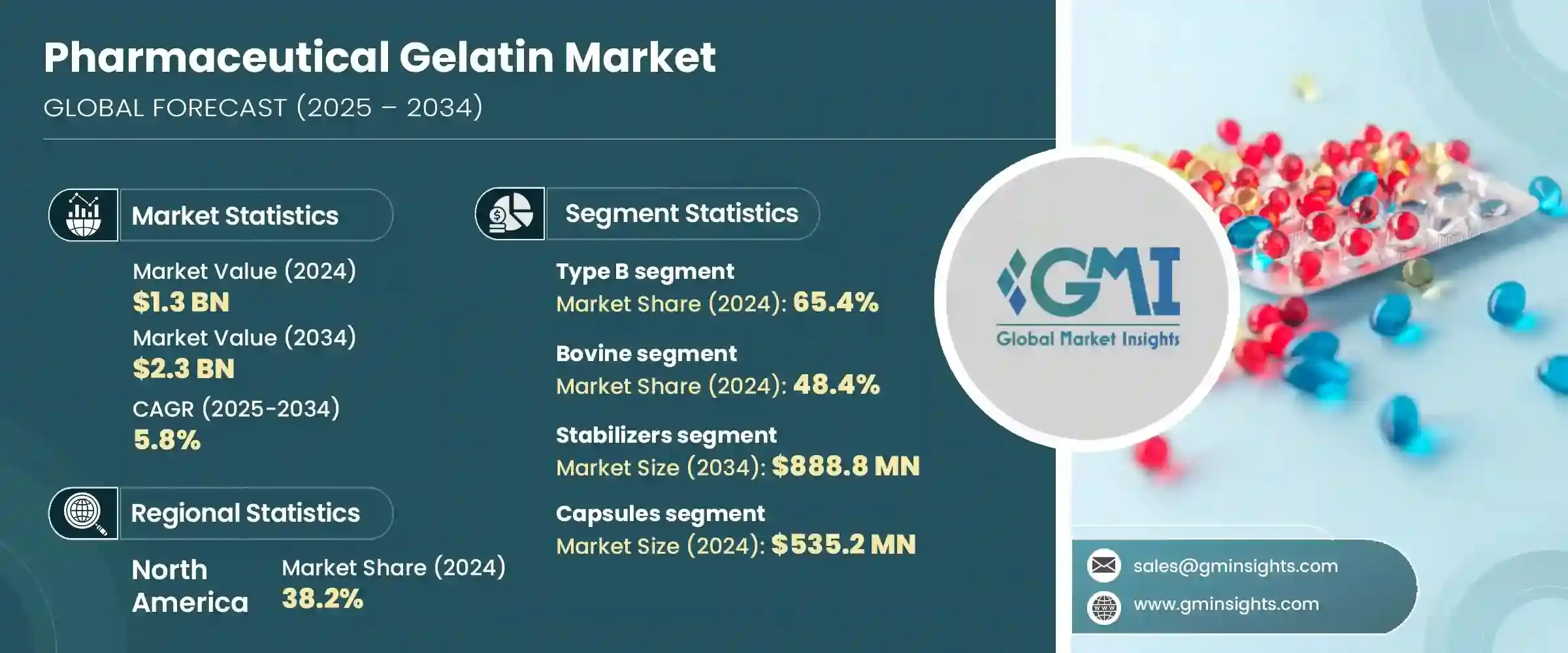
The global pharmaceutical gelatin market was estimated at USD 1.3 billion in 2024. The market is expected to grow from USD 1.4 billion in 2025 to USD 2.3 billion in 2034, growing at a CAGR of 5.8%. The market for pharmaceutical gelatin is experiencing high growth with the growing demand for oral solid dosage forms such as capsules and tablets.
Pharmaceutical Gelatin Market Key Takeaways
Market Size & Growth
- 2024 Market Size: USD 1.3 Billion
- 2034 Forecast Market Size: USD 2.3 Billion
- CAGR (2025–2034): 5.8%
Key Market Drivers
- Rising demand for capsules and softgels.
- Expanding elderly population and chronic disease burden.
- Use of gelatin in hemostatic agents and wound care.
- Growing vaccine production and biologics.
Challenges
- Side effects associated with animal-derived gelatin in humans.
- Emergence of plant based and synthetic alternatives.
Opportunity
- Use in regenerative medicine and tissue engineering.
- Rising demand for pharma gelatin in developing countries.
Get Market Insights & Growth Opportunities
Gelatin plays a critical role in the formulation of both hard and softgel capsule, offering excellent encapsulation properties for lipophilic and hydrophilic drugs, thereby enhancing their bioavailability. With the increased global incidence of chronic illnesses, including cardiovascular conditions, diabetes, and cancer, the demand for oral solid dosage products has intensified, thus driving pharmaceutical-grade gelatin demand among drug manufacturers.
Pharmaceutical gelatin is a highly purified protein obtained from collagen, typically obtained from bovine, porcine, or fish tissues, and is widely applied as an excipient in the pharmaceutical field. It is used for its biocompatibility, biodegradability, and thermo-reversible gel-forming property and thus serves as a preferred material to prepare capsules, tablets, suppositories, and coating agents. Major players in the global pharmaceutical gelatin industry are Gelita AG, Rousselot (Darling Ingredients), PB Leiner, and Nitta Gelatin. Collectively, these players drive innovation, ensure high-quality and regulatory-compliant gelatin production, and support the global pharmaceutical industry by offering specialized gelatin solutions for advanced drug delivery systems.
The pharmaceutical gelatin market witnessed steady growth, growing from USD 1.2 billion in 2021 to USD 1.3 billion in 2023, growing at a CAGR of 3.9%. One major trend was the rising demand for advanced drug delivery systems, particularly softgel and hardgel capsules, which utilize pharmaceutical-grade gelatin extensively as an encapsulating agent. The pandemic also redirected attention to biologics and vaccines, where gelatin was used as a stabilizer, enhancing its injectable formulation applications. Advancements in processing technologies have enabled more precise customization of gelatin properties, such as viscosity and bloom strength, expanding its suitability across a wider range of pharmaceutical applications. These innovations have been helpful in accelerating market growth.
Another major growth driver is the growing geriatric population across the globe, which is more prone to age-related health issues that need frequent medication. Capsules made of gelatin are simpler to swallow and digest, and they are best suited for elderly patients, as they have a problem consuming regular tablets. With the growing population of aging people, particularly in developed parts of the world such as Europe, Japan, and North America, drug companies are increasingly developing patient-friendly dosage forms, thereby driving market growth.
The expanding application of gelatin beyond traditional pharmaceutical uses is contributing to new growth avenues in the market. Increasing research highlights its role in cosmetics, biomedical fields, and intrinsic therapeutic activities, particularly in wound care, tissue regeneration, and bone substitute formulations. For example, a study published by the National Institutes of Health (NIH) reported the use of bovine hydroxyapatite-gelatin-hydroxypropyl methylcellulose combined with alendronate as an injectable bone substitute (IBS) for treating osteoporosis in animal models. Such advancements in gelatin-based biomedical applications are expected to further drive market expansion in the coming years.
To get key market trends
Pharmaceutical Gelatin Market Trends
- One of the key trends in the pharmaceutical gelatin industry is the high adoption of gelatin-based capsules, particularly softgel and hardgels. These dosage forms have several benefits over conventional tablets such as swallowability, quicker action, and higher bioavailability. Their widespread acceptance among pediatric, geriatric, and chronically ill patients has led to their growing integration into modern drug formulations.
- As patient preferences shift toward more convenient and effective drug delivery systems, pharmaceutical manufacturers are expanding their product portfolios to include gelatin capsules. This consumer-driven demand is creating a sustained need for high-purity, pharmaceutical-grade gelatin across global markets.
- label and alternative-source gelatin products. As consumers become more conscious of ingredient transparency, ethical sourcing, and dietary preferences, manufacturers are shifting toward bovine and fish-derived gelatin as alternatives to traditional porcine sources. This trend is especially prominent in regions such as the Middle East, Southeast Asia, and parts of Europe, where consumer choices are increasingly guided by health, lifestyle, and cultural factors.
- For instance, Gelita, which is a global leader in pharmaceutical gelatin, has a portfolio of clean-label gelatin products that do not contain artificial additives and allergens. Another market leader is Rousselot. Rousselot provides gelatin options that cater to specific dietary and labeling requirements, helping pharmaceutical companies address diverse consumer expectations.
- Gelatin producers are focusing on transparency in sourcing, gaining certifications, and ensuring traceability in their supply chains to ensure that their products comply with these standards.
- Advances in gelatin production technology are also responsible for influencing market growth. Innovations in enzymatic hydrolysis and better filtration methods have resulted in the production of purified gelatin of controlled bloom strength and viscosity, which can be suitable for a variety of pharmaceutical applications. This has extended the application of gelatin in advanced drug delivery systems like sustained-release products, enteric-coated pills and capsules, and injectable products.
- Moreover, enhanced processing technologies have enabled producers to achieve higher quality and regulatory requirements demanded by multinational pharmaceutical organizations.
- The continued growth of over the counter (OTC) drugs market is further driving growth in the pharmaceutical gelatin industry.
Pharmaceutical Gelatin Market Analysis
Learn more about the key segments shaping this market
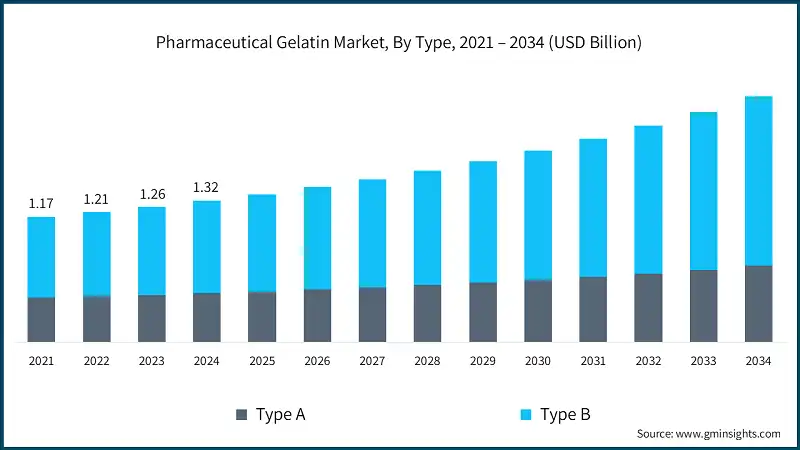
The global market was valued at USD 1.17 billion in 2021. The market size reached USD 1.26 billion in 2023, from USD 1.21 billion in 2022.
Based on the type, the market is segmented into type A and type B. The type B segment dominated the market with a share of 65.4% in 2024. One of the key reasons for its high market share is its wide availability and cost-efficient production process compared to other gelatin types. Produced through an alkaline treatment, type B gelatin exhibits desirable characteristics such as neutral pH and high thermal stability, making it highly suitable for capsule manufacturing and diverse pharmaceutical applications.
- Type B gelatin is widely utilized in the formulation of hard and soft capsules, film coatings, and injectable solutions, owing to its strong gelling, binding, and stabilizing properties. Its molecular structure also enables it to have consistent viscosity and bloom strength, which are essential for ensuring uniformity in pharmaceutical products.
- Due to its reliable performance and versatility, Type B gelatin has become a preferred excipient among pharmaceutical formulators, thereby maintaining a leading position in the global market.
- On the other hand, the type A segment is expected to grow with a CAGR of 4.7%. Type A gelatin is known for its good gelling strength and high viscosity, making it an ideal choice for the manufacturers of soft gelatin capsules, especially in oral liquids and nutraceutical applications.
- In contrast to type B, type A gelatin provides higher clarity and quicker gelation, attributes increasingly valued in rapid-release drug delivery systems.
Learn more about the key segments shaping this market
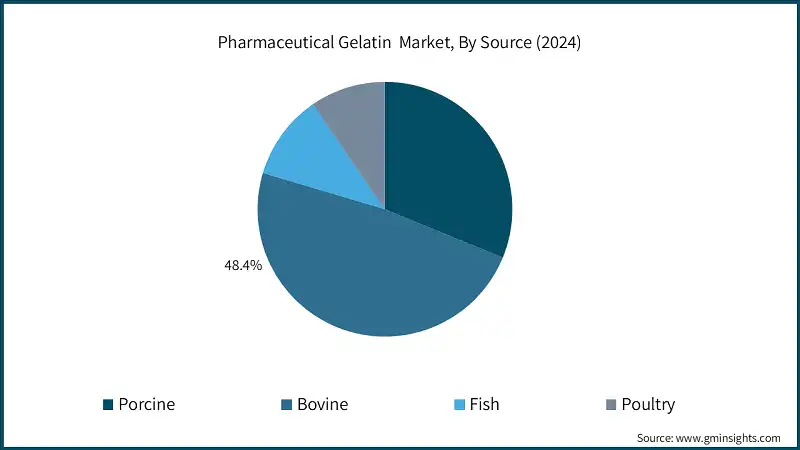
Based on the source, the pharmaceutical gelatin market is segmented into bovine, porcine, fish, and poultry. The bovine segment accounted for the highest market share of 48.4% in 2024 and is anticipated to grow at a CAGR of 6.1% over the forecast period. Cattle are massively raised for meat and milk, making them a constant and inexpensive source of bones and hides for extracting gelatin. This stable supply base minimizes production fluctuation and enables the high-volume production of pharmaceutical-grade gelatin, particularly in countries with mature livestock sectors like Brazil and U.S. among others.
- Bovine gelatin has excellent gel strength, stability, and viscosity, which renders it very useful for varied pharmaceutical uses such as capsule shells, tablets, plasma expanders, and dressings for wounds.
- Its reproducible performance in a variety of formulation and process conditions provides it with a competitive advantage over other gelatin sources, thus ensuring continued preference among drug manufacturers.
- Regulatory acceptance further strengthens bovine gelatin’s market dominance. Major global health authorities and pharmacopoeias, including the U.S. FDA and the European Medicines Agency, recognize bovine-derived gelatin as suitable for pharmaceutical use, provided it meets established safety and quality standards.
- The porcine segment held the second-largest market share of 31.2% in the market, fueled by its high availability and affordability. Sourced from pigskin, porcine gelatin is widely used due to its high availability, cost-effectiveness, and favorable functional properties such as clarity, elasticity, and low gelling temperatures. These characteristics make it especially well-suited for softgel capsules, suppositories, and microencapsulation technologies.
- Despite some cultural limitations due to consumer preferences and market constraints, porcine gelatin remains widely used in North America, Europe, and large parts of Asia.
Based on the function, the pharmaceutical gelatin market is segmented into stabilizers, thickeners, gelling agents, film forming, adhesion, and other functions. The stabilizers segment accounted for the highest market share of 35.6% in 2024 and is anticipated to reach USD 888.8 million by 2034. The high market share is attributed to its critical role in enhancing the stability, consistency, and shelf life of various drug formulations. The thickeners segment holds the second-largest share in the pharmaceutical gelatin industry, with a market share of 22.4% in 2024, spurred by its indispensable function in modifying the texture and flow of liquid and semi-solid formulations.
- Gelatin is commonly applied as a stabilizer in liquid and semi-solid medicinal products to avoid ingredient separation and ensure uniform dispersion. This function is particularly vital in vaccines, biologics, emulsions, and suspensions, where stability directly affects product performance.
- Its high biocompatibility and compatibility with a broad range of active pharmaceutical ingredients (APIs) make gelatin an excipient of choice in complex drug formulations.
- Furthermore, its application in stabilizing sensitive biologic drugs such as insulin and monoclonal antibodies, is growing rapidly. With biopharmaceuticals increasingly dominating new drug pipelines, the need for reliable stabilizers capable of preserving protein integrity and minimizing aggregation continues to rise, bolstering demand for pharmaceutical-grade gelatin
Based on the application, the pharmaceutical gelatin market is segmented into capsules, tablets, absorbable hemostats, and other applications. The capsules segment dominated the market in 2024 with a revenue of USD 535.2 million. The segment is further divided into hard capsules and soft capsules.
- Capsules remain the largest application segment for pharmaceutical gelatin due to its exceptional film-forming, gelling, and encapsulating properties. These attributes make gelatin ideally suited for producing easy-to-swallow, fast-dissolving capsules capable of delivering a wide range of APIs in solid, semi-solid, and liquid forms.
- Pharmaceutical gelatin supports a broad spectrum of therapeutic categories, and its use in capsules allows for features such as controlled release, enhanced bioavailability, and targeted delivery, factors that are critical to improving patient compliance and drug efficacy.
- Additionally, gelatin capsules can be manufactured at high speeds and offer customization in size, color, branding, and coating, making them highly adaptable for both branded and generic pharmaceutical products.
- As oral drug delivery remains the dominant trend within the pharmaceutical industry, the functional and commercial benefits of gelatin capsules ensure that this segment will remain a mainstay of the pharmaceutical gelatin sector.
Looking for region specific data?
North America dominated the global pharmaceutical gelatin market with the highest market share of 38.2% in 2024, attributable to the superior pharmaceutical manufacturing capabilities and established healthcare infrastructure of the region.
- North America is home to some of the major drug manufacturers and contract manufacturing organizations that rely on gelatin for manufacturing capsules, soft gels, and other dosage forms.
- Favorable regulatory landscape as well as robust compliance guidelines provide a balanced environment for the use of gelatin in pharma applications.
- The region is also driven by innovation and R&D spending that fuels the creation of sophisticated gelatin-based delivery systems.
- The combination of a high prevalence of chronic diseases and a well-established pharmaceutical sector reinforces North America's position as a global leader in the market.
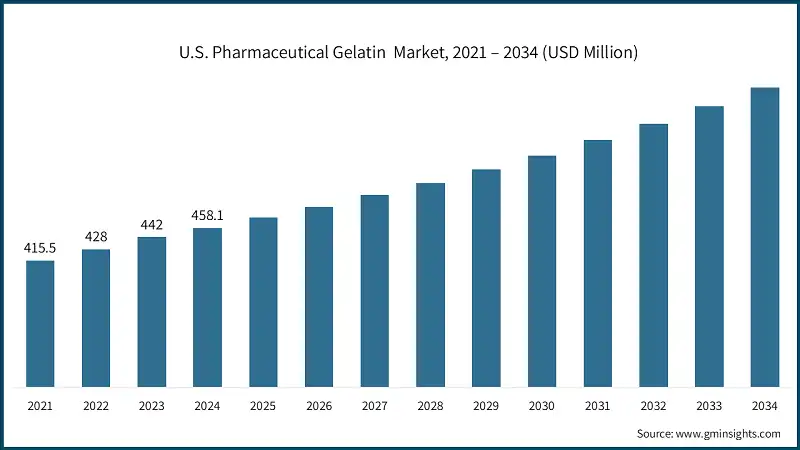
The U.S. pharmaceutical gelatin market was valued at 415.5 million and USD 428 million in 2021 and 2022, respectively. In 2024, the market size reached USD 458.1 million from USD 442 million in 2023.
- The U.S. holds a leading position in the pharmaceutical gelatin industry owing to its well-established pharmaceutical industry, robust domestic consumption, and access to high-quality raw materials.
- The U.S. is home to pharmaceutical innovation, with high levels of drug development and production activities that are critically dependent on gelatin for capsule production, drug delivery systems, and stabilizers in biologics.
- In addition, the U.S. market is supported by ongoing investments in research and technological innovation in drug formulation. Firms are increasingly turning to gelatin-based technologies for extended-release capsules, injectable products, and personalized medicine applications, contributing to the widening of applications of gelatin in advanced therapies.
- Furthermore, the growing aging population in the U.S. is driving demand for easy-to-swallow dosage forms, further solidifying the country’s dominance in the global market.
Europe pharmaceutical gelatin market accounted for USD 414.2 million in 2024.
- Europe's considerable market share in the global market can be attributed to its established pharmaceutical sector, high-quality standards, and high demand for premium gelatin in the pharmaceutical industry.
- Germany, France, and Switzerland are among the countries that are home to leading gelatin producers and pharmaceutical firms using gelatin on a large scale in capsules and tablets.
- Furthermore, a strong R&D and manufacturing infrastructure, alongside increased demand for personalized medicine and biologics, is continuing to strengthen Europe's position in the global market.
- Germany holds a significant market share in the Europe market with its robust pharmaceutical production industry and high-tech manufacturing facilities.
- The country hosts some of the world's top pharmaceutical firms and manufacturers of gelatin that ensures steady demand for drug formulation-based pharmaceutical-grade gelatin.
- The region’s emphasis on drug delivery innovation, including controlled-release capsules and gelatin-based systems, is strengthening its global competitiveness.
The Asia Pacific region is poised for accelerated growth in the pharmaceutical gelatin market, driven by increasing pharmaceutical manufacturing, rising healthcare spending, and growing consumption of gelatin-based drugs.
- India, China, and South Korea are becoming key hubs for pharmaceutical manufacturing and gelatin manufacturing owing to cost benefits and rising local demand.
- Countries such as India, China, and South Korea are becoming regional powerhouses, benefiting from cost-efficient manufacturing and a surge in local demand. Multinational pharmaceutical companies are also expanding their operations in the region, while domestic players scale up production capabilities.
- Additionally, favorable government policies, increasing healthcare access, and a growing elderly population are strengthening the demand for gelatin-based drug delivery systems in the region.
China leads the Asia Pacific pharmaceutical gelatin market, owing to its large-scale pharmaceutical production facilities and favorable domestic demand.
- The large population and increasing chronic disease burden in the country have driven the demand for sophisticated drug delivery forms such as softgels and gelatin-based capsules.
- The country has also invested heavily in upgrading its gelatin processing facilities to meet pharmaceutical-grade standards, enabling it to serve both domestic and export markets.
- Its capacity to hold on to a cost-effective manufacturing model while aligning to international quality standards has enabled China to be the supplier of choice in the region.
Latin America is experiencing robust growth in the pharmaceutical gelatin market.
- The market in Latin America is gaining momentum, supported by increasing investment in healthcare infrastructure, a growing emphasis on accessible medication, and expanding production capacity.
- Rising demand for capsules and tablet formulations is prompting local manufacturers to scale up and meet the needs of a broader patient base. Consumers are also gravitating toward patient-friendly drug delivery formats, thereby augmenting greater adoption of gelatin-based products.
- Demographic factors such as a growing elderly population and the rising incidence of chronic diseases are further accelerating the demand for reliable, consistent dosage forms, bolstering market growth across the region.
The Middle East and Africa market is experiencing rapid growth in the pharmaceutical gelatin sector fueled by improvements in healthcare infrastructure, rising pharmaceutical output, and growing interest in advanced dosage forms.
- Countries such as Saudi Arabia, the UAE, and South Africa are investing in pharmaceutical manufacturing, leading to a surge in demand for gelatin in capsules and tablets. As the region focuses on localizing production and developing biotechnology capabilities, the use of gelatin in drug formulation and delivery systems is steadily increasing.
- Additionally, manufacturers in the region are expanding region-specific production lines that adhere to clean-label and certification standards, which is further driving demand for high-purity pharmaceutical gelatin across both domestic and export markets.
Pharmaceutical Gelatin Market Share
The market is characterized by steady growth, fueled by increasing demand for capsule-based drug delivery and biomedical applications. Leading companies like Gelita AG, Rousselot (Darling Ingredients), PB Leiner (Tessenderlo Group), and Nitta Gelatin together hold between 55% - 60% of the market share in the consolidated global market. Top players maintain strong market positions through worldwide manufacturing networks, innovation in products, and adherence to rigorous pharmaceutical requirements. These firms spend significantly on R&D to improve the functional characteristics of gelatin for specialty uses like sustained-release capsules and absorbable hemostats.
At the same time, emerging players in regions like Asia Pacific and Latin America are building momentum by offering cost-effective alternatives, establishing certified production facilities, and targeting untapped local markets.
Pharmaceutical Gelatin Market Companies
Few of the prominent players operating in the pharmaceutical gelatin industry include:
- Capsugel (Lonza)
- Funingpu Biotechnology
- Gelita AG
- India Gelatine & Chemicals
- ITALGEL
- Junca Gelatines
- Lapi Gelatine
- Nitta Gelatin
- Rousselot (Darling Ingredients)
- Sterling Biotech
- PB Leiner (Tessenderlo Group)
- Trobas Gelatine
- Weishardt Group
- Xiamen Gelken Gelatin
- Gelita AG
Gelita AG is one of the world-leading suppliers of pharmaceutical gelatin, known for its broad portfolio of products and innovation in gelatin for capsules, tablets, and hemostatic use. The company focuses on high-quality, pharmaceutical-grade gelatin with worldwide production sites ensuring regulatory compliance.
- Nitta Gelatin
Nitta Gelatin has established a strong network, particularly in North America and Asia Pacific, for both bovine and fish source-derived pharmaceutical gelatin. Its emphasis on research and environmentally sound sourcing makes it a one of the major players in specialty and diet-sensitive gelatin products.
- Rousselot (Darling Ingredients)
Rousselot, owned by Darling Ingredients, is one of the leading manufacturers with a robust image of dependable quality and innovation. Its pharmaceutical gelatin finds extensive application in soft capsules, and it also provides purified grades specifically for biomedical uses.
- PB Leiner (Tessenderlo Group)
PB Leiner is recognized for its diverse gelatin solutions, including halal- and kosher-certified pharmaceutical grades. With a growing footprint in emerging markets, it caters to a wide range of drug delivery and nutraceutical applications.
Pharmaceutical Gelatin Market Report Attributes
| Key Takeaway | Details |
|---|---|
| Market Size & Growth | |
| Base Year | 2024 |
| Market Size in 2024 | USD 1.3 Billion |
| Forecast Period 2025 - 2034 CAGR | 5.8% |
| Market Size in 2034 | USD 2.3 Billion |
| Key Market Trends | |
| Drivers | Impact |
| Rising demand for capsules and softgels | Increased demand for capsules and softgels is driving the requirement for pharmaceutical-grade gelatin and overall market growth. |
| Expanding elderly population and chronic disease burden | The increasing population of elderly and chronic disease prevalence are increasing the use of patient-compliant gelatin-based drug delivery systems. |
| Use of gelatin in hemostatic agents and wound care | The application of gelatin in hemostatic products and wound care is broadening its scope, underpinning stable demand across therapeutic segments. |
| Growing vaccine production and biologics | Growing vaccine production and the trend towards biologics are propelling gelatin application as a stabilizer and delivery vehicle. |
| Pitfalls & Challenges | Impact |
| Side effects associated with animal-derived gelatin in humans | Concerns over side effects and allergic reactions to animal-derived gelatin are limiting its acceptance in certain patient groups. |
| Emergence of plant based and synthetic alternatives | The emergence of plant-based and synthetic alternatives is creating competitive pressure, potentially reducing gelatins market share. |
| Opportunities: | Impact |
| Use in regenerative medicine and tissue engineering | Enlarging applications in regenerative medicine and tissue engineering will create new high-value areas of application for pharmaceutical gelatin. |
| Rising demand for pharma gelatin in developing countries | Growing demand in emerging markets, fueled by improved access to healthcare and domestic drug manufacture, will open tremendous growth opportunities. |
| Market Leaders (2024) | |
| Market Leader |
|
| Top Players |
Collective market share in 2024 is 57% |
| Competitive Edge |
|
| Regional Insights | |
| Largest Market | North America |
| Fastest growing market | Asia Pacific |
| Emerging countries | China, India, Brazil, Mexico, South Africa |
| Future outlook |
|
What are the growth opportunities in this market?
Pharmaceutical Gelatin Industry News:
- In December 2023, Darling Ingredients’ health brand Rousselot, announced that it has been granted U.S. Patent and Trademark Office (USPTO) Patent No. US11795489B2, securing its intellectual property rights for StabiCaps, a specialized gelatin that improves the formulation and stability of soft gel capsules to enhance the release of active ingredients, including medications.
- In May 2022, Capsugel enhanced its titanium dioxide-free capsule line by offering white firm gelatin capsules without titanium dioxide (TiO2-free). The new titanium dioxide-free capsule is based on crystalline salts and provides similar masking and whitening as titanium dioxide capsules. The product provides great light shielding and opacity.
- In January 2022, Terasaki Institute for Biomedical Innovation (TIBI) collaborated with Rousselot, a Darling Ingredients company. The collaboration aimed to advance gelatin-based therapies with Rousselot's X-Pure modified gelatin range. This strategy is expected to enhance their long-term business relations.
The pharmaceutical gelatin market research report includes an in-depth coverage of the industry with estimates and forecast in terms of revenue in USD Million and from 2021 – 2034 for the following segments:
Market, By Type
- Type A
- Type B
Market, By Source
- Porcine
- Bovine
- Fish
- Poultry
Market, By Function
- Stabilizers
- Thickeners
- Gelling agents
- Film forming
- Adhesion
- Other functions
Market, By Application
- Capsules
- Hard capsules
- Soft capsules
- Tablets
- Absorbable hemostats
- Other applications
The above information is provided for the following regions and countries:
- North America
- U.S.
- Canada
- Europe
- Germany
- UK
- France
- Italy
- Spain
- Netherlands
- Asia Pacific
- China
- Japan
- India
- Australia
- South Korea
- Latin America
- Brazil
- Mexico
- Argentina
- Middle East and Africa
- South Africa
- Saudi Arabia
- UAE
Frequently Asked Question(FAQ) :
What was the size of the global pharmaceutical gelatin market in 2024?
The pharmaceutical gelatin industry was valued at USD 1.3 billion in 2024. Growth was driven by rising demand for oral solid dosage forms.
What is the projected size of the pharmaceutical gelatin market in 2025?
The market is expected to reach USD 1.4 billion in 2025, supported by increased adoption of gelatin in capsules, wound care products, and biologic stabilizers.
How large is the pharmaceutical gelatin industry expected to be by 2034?
The pharmaceutical gelatin industry is projected to grow to USD 2.3 billion by 2034, with continued expansion in advanced drug delivery systems, injectables, and personalized medicine.
What is the CAGR of the pharmaceutical gelatin industry from 2025 to 2034?
The global pharmaceutical gelatin industry is forecast to grow at a CAGR of 5.8% during the period from 2025 to 2034.
Pharmaceutical Gelatin Market Scope
Related Reports