Summary
Table of Content

Osteoporosis Drugs Market
Get a free sample of this report
Form submitted successfully!
Error submitting form. Please try again.
Thank you!
Your inquiry has been received. Our team will reach out to you with the required details via email. To ensure that you don't miss their response, kindly remember to check your spam folder as well!
Request Sectional Data
Thank you!
Your inquiry has been received. Our team will reach out to you with the required details via email. To ensure that you don't miss their response, kindly remember to check your spam folder as well!
Form submitted successfully!
Error submitting form. Please try again.
Osteoporosis Drugs Market Size
The market growth is attributed to the rising aging population, increasing incidence of osteoporotic fractures, and advancements in drug development and novel therapies, among other contributing factors.
Osteoporosis drugs are used to prevent, slow, or reverse bone loss either by reducing bone resorption and/or by stimulating bone formation. They are primarily prescribed to lower the risk of fracture in patients with osteoporosis, especially postmenopausal women and among geriatric population.
Osteoporosis Drugs Market Key Takeaways
Market Size & Growth
- 2025 Market Size: USD 16.6 Billion
- 2026 Market Size: USD 17.1 Billion
- 2035 Forecast Market Size: USD 27.4 Billion
- CAGR (2026–2035): 5.4%
Regional Dominance
- Largest Market: North America
- Fastest Growing Region: Asia Pacific
Key Market Drivers
- Increasing prevalence of osteoporosis.
- Technological advancements in drug development.
- Rising incidence of fractures.
- Growth in biologic and novel therapeutic adoption.
Challenges
- High cost of treatment.
- Side effects and safety concerns.
Opportunity
- Development of next-generation anabolic agents.
- Biosimilar and biobetter entry.
Key Players
- Market Leader: Amgen led with over 22.7% market share in 2025.
- Leading Players: Top 5 players in this market include Amgen, Eli Lilly and Company, Novartis, Pfizer, Radius Health, which collectively held a market share of 57% in 2025.
Get Market Insights & Growth Opportunities
The major players in the global osteoporosis drugs market are Amgen, Eli Lilly and Company, Novartis, Pfizer, and Radius Health. These companies have established their competitive advantage in the market through ongoing product innovation, expansion of market presence, and substantial investments in research and development.
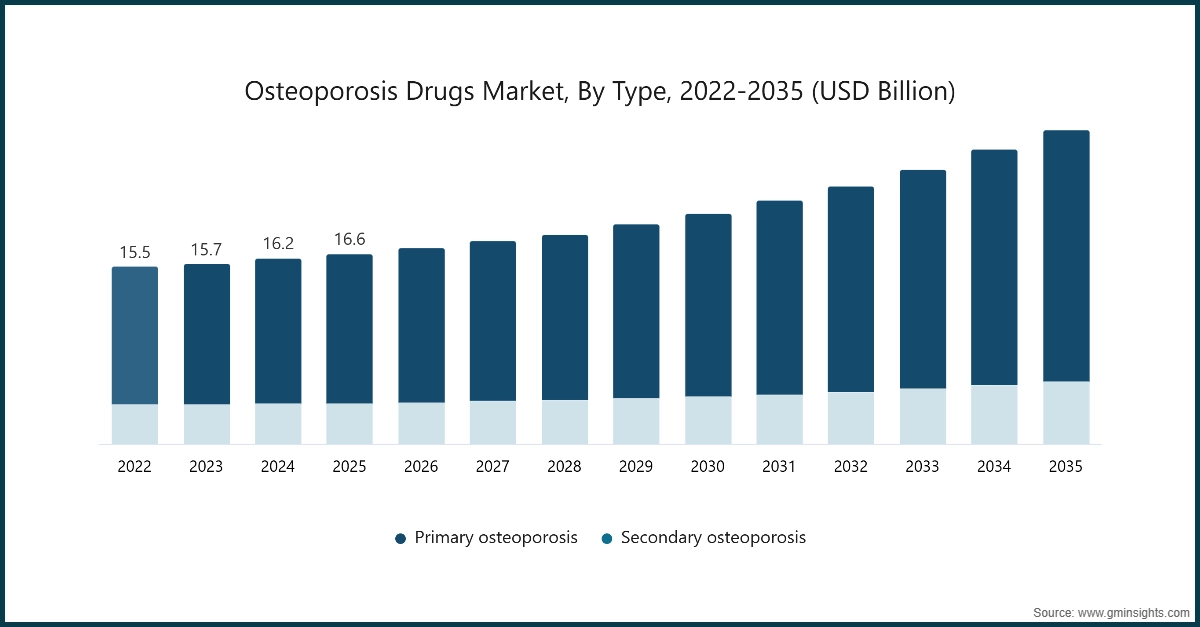
The market has increased from USD 15.5 billion in 2022 and reached to USD 16.2 billion in 2024, with a historical growth rate of 2.3%. The market growth was driven by aging population, increasing prevalence of osteoporosis and fracture risk, rising awareness and diagnosis rates among general population, and continued use of established oral therapies across major healthcare markets.
Moreover, there is a gradual rise in the global elderly population is subsequently increasing the number of people suffering from osteoporosis, owing to the fact that bone density decreases with age. According to the United Nations, the global population aged 65 and older was projected to reach 761 million by 2025, up from 727 million in 2022. This demographic trend is notably pronounced in both developed nations and swiftly aging emerging markets. For example, the World Bank reported that Japan's elderly population (65 years and older) accounted for 29% of its total population in 2022, the highest globally, while countries like China are experiencing rapid aging, with projections indicating that 20% of its population will be over 60 by 2025.
Furthermore, the growing awareness among patients and healthcare professionals has led to increase in the diagnosis rates especially in emerging countries. Expanded use of bone mineral density (BMD) testing and national screening initiatives enables earlier treatment initiation. This trend improves patient inflow into long-term osteoporosis drug regimens.
The global osteoporosis drugs market was valued at USD 16.6 billion in 2025. The market is expected to reach from USD 17.1 billion in 2026 to USD 27.4 billion in 2035, growing at a CAGR of 5.4% during the forecast period, according to the latest report published by Global Market Insights Inc.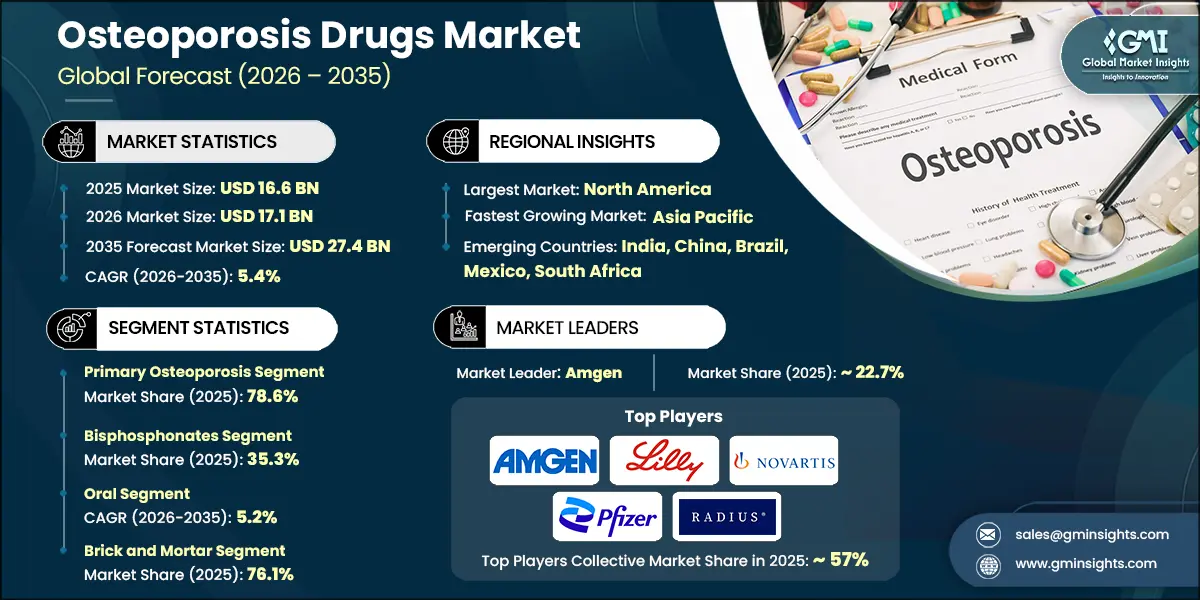
To get key market trends
Osteoporosis Drugs Market Trends
The market is growing considerably with the growing adoption of biologics and anabolic therapies, shift toward injectable and less frequent dosing regimens, and expansion of generics and biosimilars in mature markets, among other factors collectively driving industry growth.
- Clinicians use anabolic medications followed by anti-resorptive therapies to achieve maximum bone density growth. This method is supported by expanding clinical evidence and revised treatment guidelines. Combination techniques increase the length of therapy and the lifetime patient value. Pharma companies are coordinating their portfolios to support treatment sequencing.
- Patent expiry of blockbuster osteoporosis drugs in the recent past has been leading to the introduction of low-cost generics and biosimilars. This is leading to a market scenario associated with intense pricing competition, particularly in North America and Europe.
- Moreover, introduction of digital tools for analysis of fracture risk assessment, medication adherence, and remote patient monitoring, are been increasingly integrated into standard osteoporosis care across healthcare settings in developed and emerging countries. These technologies support better therapy outcomes and persistence rates. Pharmaceutical companies are collaborating with digital health providers to improve real-world effectiveness. This trend enhances long-term treatment continuity and market sustainability.
Osteoporosis Drugs Market Analysis
Learn more about the key segments shaping this market
Based on type, the osteoporosis drugs market is segmented into primary osteoporosis and secondary osteoporosis. The primary osteoporosis segment has asserted its dominance in the market by securing a significant market share of 78.6% in 2025 and is expected to exceed USD 22 billion by 2035, growing at a CAGR of 5.6% during the forecast period.
- Primary osteoporosis is strongly linked to age-related bone loss, so the elderly makeup the largest patient pool. Age-related osteoporosis is becoming more common as life expectancy rises around the world. This creates ongoing demand for long-term pharmacological treatment. The trend is most noticeable in developed and rapidly aging economies.
- Further, wider adoption of bone mineral density testing enables earlier detection of primary osteoporosis before fracture occurrence. Increased screening leads to proactive treatment initiation rather than reactive care. Early diagnosis extends treatment duration and lifetime drug usage. This is significantly driving the prescription volumes.
- The secondary osteoporosis segment held a revenue of USD 3.5 billion in 2025, with projections indicating a steady expansion at a CAGR of 4.5% from 2026 to 2035. The growth of the segment is driven by rising incidence of chronic conditions like rheumatoid arthritis, diabetes, and long-term corticosteroid use, which increase bone loss risk, along with enhanced physician awareness and targeted therapeutic interventions in these patient populations.
Based on drug class, the osteoporosis drugs market is classified into bisphosphonates, RANK ligand inhibitors, parathyroid hormone analogs, hormone replacement therapy (HRT), selective estrogen receptor modulators (SERMs), and other drug classes. The bisphosphonates segment dominated the market with a revenue share of 35.3% in 2025 and is expected to reach USD 9.6 billion within the forecast period.
- Bisphosphonates have been clinically shown to reduce the risk of vertebral, hip, and nonvertebral fractures. Because of their high efficacy, many treatment guidelines recommend them as first-line therapy. This boosts physician confidence and promotes consistent prescribing.
- These drugs have been around for decades, making them widely available in hospitals, clinics, and retail pharmacies. Strong brand recognition and generics expansion broaden patient reach. This entrenched presence ensures consistent demand.
- The RANK ligand inhibitors segment accounted for significant revenue in 2025 and is anticipated to grow at a CAGR of 5.8% over the forecast period. The segment is driven by their superior efficacy in reducing fracture risk, favourable dosing convenience with less frequent administration, and growing physician preference for biologic therapies in high-risk osteoporosis patients.
- The parathyroid hormone analogs segment accounted for significant revenue in 2025 and is anticipated to grow at a CAGR of 4.6% over the forecast period. The segment is being driven by their bone-forming (anabolic) mechanism, efficacy in severe osteoporosis cases, and growing popularity among patients who are resistant to anti-resorptive therapies.
Based on route of administration, the osteoporosis drugs market is segmented into oral, injectable, and other routes of administration. The oral segment dominated the market in 2025, accounting for USD 9.1 billion and is anticipated to grow at a CAGR of 5.2% during the forecast period.
- Oral formulations are widely available in hospitals, retail pharmacies, and online channels. They dominate both developed and emerging markets due to ease of distribution. This extensive reach ensures consistent sales volumes.
- Several oral drugs, including bisphosphonates and selective estrogen receptor modulators (SERMs), have well-documented clinical efficacy in reducing fracture risk. This long-standing evidence boosts physician confidence in prescribing oral therapy.
- The injectable segment accounted for significant revenue in 2025 and is anticipated to grow at a CAGR of 5.7% over the forecast period. The segment is driven by growing preference for biologics and anabolic therapies, improved patient adherence due to less frequent dosing, and higher per-patient treatment value compared to oral therapies.
Learn more about the key segments shaping this market
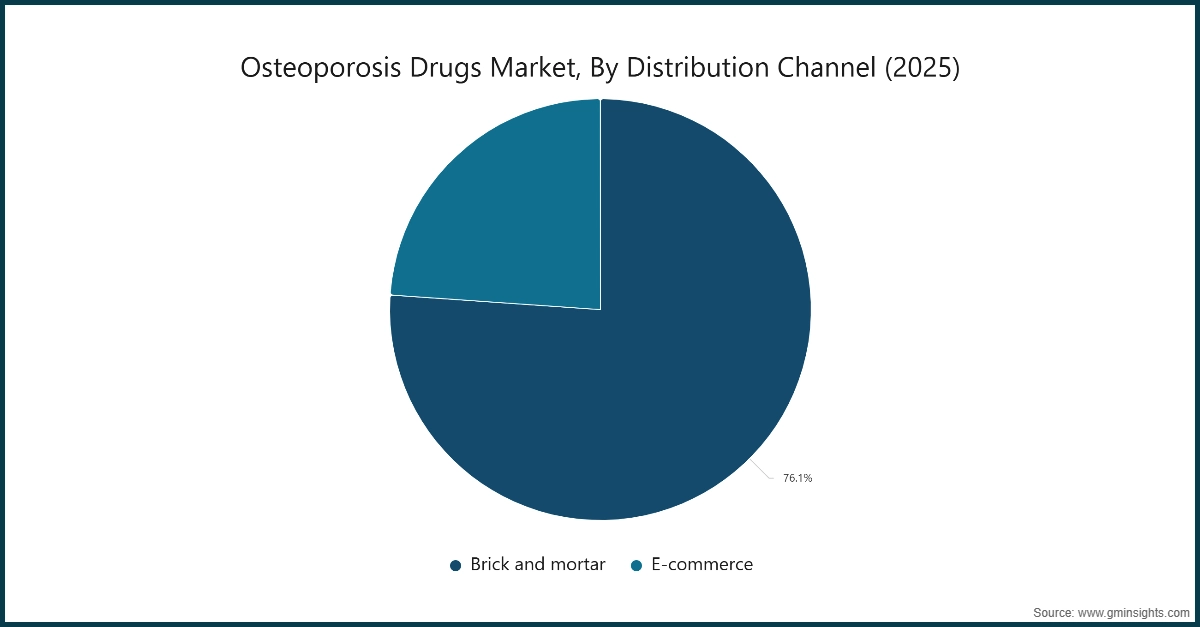
Based on distribution channel, the osteoporosis drugs market is classified into brick and mortar and e-commerce. The brick and mortar segment dominated the market with a revenue share of 76.1% in 2025 and is expected to reach USD 20.4 billion within the forecast period.
- Pharmacists and hospital dispensaries are reputable providers of medication, particularly for elderly osteoporosis patients. Patients prefer in-person appointments for prescription verification and guidance. This trust supports continuous sales through brick-and-mortar stores.
- Traditional retailers offer a wide selection of osteoporosis medications, both branded and generic. This ensures that patients can receive selected therapies without delay. Extensive product variety improves market penetration.
- The e-commerce segment accounted for significant revenue in 2025 and is anticipated to grow at a CAGR of 6% over the forecast period. The segment is driven by increasing digital adoption, convenience of home delivery for chronic osteoporosis medications, and expanding online pharmacy platforms improving access in both urban and remote regions.
Looking for region specific data?
North America Osteoporosis Drugs Market
North America dominated the global market with a market share of 36.9% in 2025.
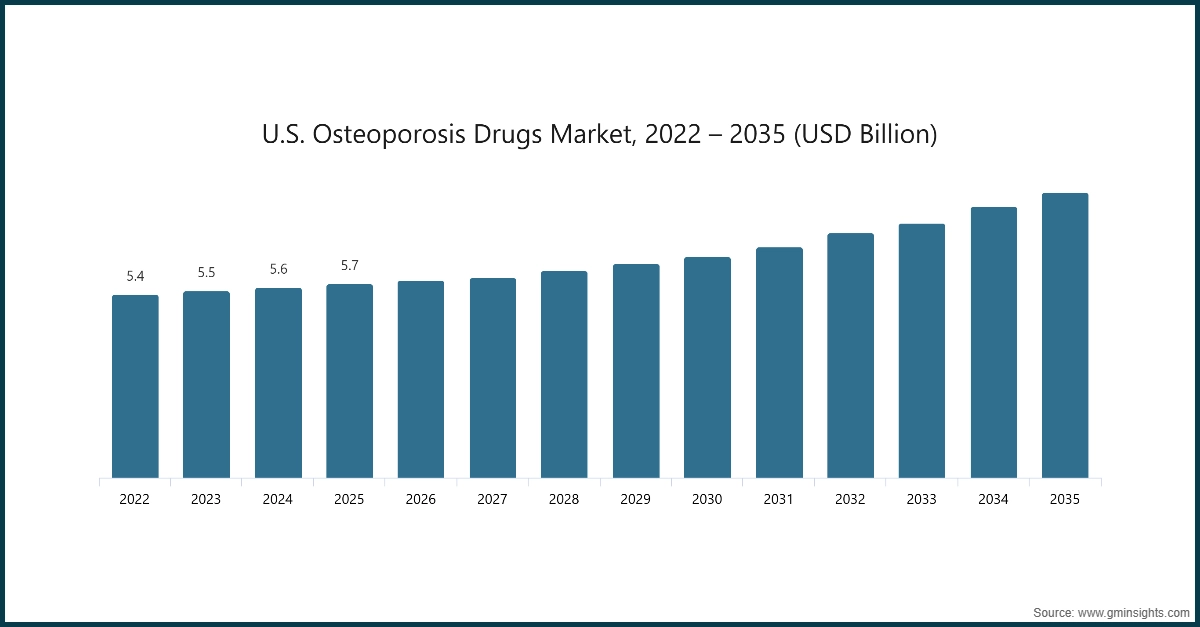
- The U.S. osteoporosis drugs industry was valued at USD 5.4 billion and USD 5.5 billion in 2022 and 2023, respectively. The market size reached USD 5.7 billion in 2025, growing from USD 5.6 billion in 2024, and is anticipated to grow at a CAGR of 4.3% from 2026 to 2035.
- Osteoporosis and fractures are prevalent among the senior population in the U.S. and Canada. Increased life expectancy results in a larger patient population requiring long-term pharmaceutical care. Awareness campaigns and physician-led screening initiatives have helped to increase the uptake of preventive treatments.
- Further, the region boasts sophisticated healthcare facilities and high penetration of diagnostic tools like DEXA scans. Early detection of osteoporosis encourages timely treatment initiation, driving sustained drug consumption. Hospitals, specialty clinics, and well-established pharmacies ensure seamless drug availability.
Europe Osteoporosis Drugs Market
Europe market accounted for USD 4.8 billion in 2025 and is anticipated to show lucrative growth over the forecast period.
- Universal healthcare coverage in European countries provides access to osteoporosis drugs. National reimbursement plans lower out-of-pocket expenses, promoting early and consistent treatment. This promotes continuous rise in prescription volume for both oral and injectable formulations.
- The government prioritizes bone health and fracture prevention, which includes regular bone density screenings. Early identification of at-risk patients enables timely pharmaceutical intervention. This preventive approach raises the demand for both generic and branded medications.
Asia Pacific Osteoporosis Drugs Market
The Asia Pacific market is anticipated to grow at the highest CAGR of 6.7% during the analysis timeframe.
- Countries such as Japan, China, and South Korea are experiencing significant increases in elderly populations, resulting in higher osteoporosis prevalence. Urbanization and lifestyle changes exacerbate risk factors. This demographic shift is a major driver of market expansion in the region.
- Additionally, awareness campaigns about bone health and government-led screening programs are gaining traction. Early detection encourages adoption of preventive pharmacotherapy. The rise in health literacy among urban populations is boosting the uptake of osteoporosis medications.
Latin America Osteoporosis Drugs Market
The Latin America market is experiencing robust growth over the analysis timeframe.
- Patients are increasingly proactive about bone health and fracture prevention. Health campaigns and physician-led guidance encourage early adoption of pharmacotherapy. This trend is gradually shifting osteoporosis treatment from reactive to preventive care.
- Moreover, patent expirations of key osteoporosis drugs have facilitated generic availability. Cost-sensitive populations in Latin America benefit from affordable options, increasing overall treatment volumes. This makes generics a significant growth driver in the region.
Middle East & Africa Osteoporosis Drugs Market
The Middle East & Africa (MEA) market is experiencing robust growth over the analysis timeframe.
- National health programs are increasingly including osteoporosis screening and treatment in coverage schemes. Reimbursement for prescription drugs reduces patient cost burden and improves therapy adherence. Policy support is key in expanding market penetration.
- Urbanization and economic growth are increasing disposable income in MEA countries. Affordability of branded therapies and preference for modern healthcare options encourage treatment adoption. Rising purchasing power strengthens the market for both premium and generic drugs.
Osteoporosis Drugs Market Share
The global osteoporosis drugs industry is competitive, characterized by the presence of multinational pharmaceutical companies with strong R&D capabilities and diverse product portfolios. Key strategies adopted by market players include product innovation, patent-protected biologics, strategic collaborations, and expansion into emerging markets. Companies are increasingly focusing on developing novel therapies such as monoclonal antibodies, anabolic agents, and long-acting formulations to gain a competitive edge and meet the growing demand from aging populations.
Key players include Amgen, Eli Lilly and Company, Novartis, Pfizer, and Radius Health. These players collectively accounted for around 57% of the total market share in 2025. These companies dominate the market through extensive brand recognition, robust distribution networks, and established relationships with healthcare providers. Additionally, the market sees competition from generic manufacturers who drive affordability and accessibility, particularly in price-sensitive regions. Continuous innovation, clinical evidence generation, and strategic marketing campaigns remain crucial for maintaining and expanding market share.
The competitive environment also emphasizes lifecycle management, with companies exploring combination therapies, sequential treatment protocols, and new drug delivery formats to enhance patient adherence. Mergers, acquisitions, and partnerships are commonly employed to strengthen product pipelines, expand geographic reach, and reinforce market positioning. Overall, companies that balance innovative therapy development with broad market access are well-positioned to lead growth in the global market.
Osteoporosis Drugs Market Companies
Few of the prominent players operating in the osteoporosis drugs industry include:
- Amgen
- Apotex
- DAIICHI SANKYO COMPANY
- Dr. Reddy’s Laboratories
- Eisai
- Eli Lilly and Company
- Merck & Co.
- Mylan
- Novartis
- Pfizer
- Radius Health
- Roche
- Sanofi
- Sun Pharmaceutical Industries
- Teva Pharmaceutical Industries
- Amgen
Its market-leading biologic therapies, particularly denosumab, which offer strong fracture risk reduction and long-term efficacy. Its global reach, robust clinical evidence, and physician trust enhance adoption across both established and emerging markets.
Its anabolic osteoporosis portfolio, including teriparatide, which stimulates bone formation for severe osteoporosis cases. The company’s expertise in endocrinology and innovation in next-generation anabolic agents strengthens its market positioning.
Its diversified osteoporosis portfolio, including bisphosphonates and nasal calcitonin, catering to multiple patient segments. Strong global distribution channels and focus on both prevention and treatment therapies enhance accessibility and market penetration.
Osteoporosis Drugs Market Report Attributes
| Key Takeaway | Details |
|---|---|
| Market Size & Growth | |
| Base Year | 2025 |
| Market Size in 2025 | USD 16.6 Billion |
| Market Size in 2026 | USD 17.1 Billion |
| Forecast Period 2026-2035 CAGR | 5.4% |
| Market Size in 2035 | USD 27.4 Billion |
| Key Market Trends | |
| Drivers | Impact |
| Increasing prevalence of osteoporosis | Rising elderly and postmenopausal populations are expanding the treated patient pool, sustaining steady demand for long-term osteoporosis therapies. |
| Technological advancements in drug development | Advances in biologics and anabolic agents are improving efficacy and dosing convenience, supporting uptake of premium-priced therapies. |
| Rising incidence of fractures | Higher fracture rates are accelerating diagnosis and treatment initiation, reinforcing the need for effective fracture-prevention drugs. |
| Growth in biologic and novel therapeutic adoption | Shift toward injectables and novel mechanisms is increasing per-patient treatment value and driving market revenue growth. |
| Pitfalls & Challenges | Impact |
| High cost of treatment | Premium pricing of biologics and anabolic therapies limits access in cost-sensitive markets and constrains broader adoption. |
| Side effects and safety concerns | Concerns around long-term safety and adverse events negatively impact patient adherence and prescribing confidence. |
| Opportunities: | Impact |
| Development of next-generation anabolic agents | Next-generation anabolic therapies are expected to deliver superior fracture reduction and safety profiles, driving higher adoption and accelerating market value growth. |
| Biosimilar and biobetter entry | Entry of biosimilars and biobetters will improve treatment affordability, expand patient access, and increase overall market penetration across regions. |
| Market Leaders (2025) | |
| Market Leader |
~ 22.7% market share |
| Top Players |
Collective market share is ~ 57% |
| Competitive Edge |
|
| Regional Insights | |
| Largest Market | North America |
| Fastest growing market | Asia Pacific |
| Emerging countries | India, China, Brazil, Mexico, South Africa |
| Future outlook |
|
What are the growth opportunities in this market?
Osteoporosis Drugs Industry News
- In January 2026, Hikma Pharmaceuticals launched Enoby and Xtrenbo, biosimilar versions of Prolia and Xgeva, respectively. Denosumab was indicated for postmenopausal osteoporosis, prevention of skeletal complications in bone-metastatic cancer, and treatment of unresectable giant cell tumors. This launch is anticipated to boost the market by improving access, offering cost-effective alternatives, and enhancing competition among biologic therapies.
- In December 2025, Accord Healthcare announced the launch of Osvyrti and Jubereq, biosimilars of Prolia and Xgeva, respectively. Osvyrti, available as a 60 mg pre-filled syringe, was indicated for treating osteoporosis in postmenopausal women and men at increased risk of fractures. This launch is expected to support the market growth by enhancing accessibility, providing cost-effective alternatives, and increasing competition in the osteoporosis biologics segment.
- In December 2025, Amphastar Pharmaceuticals, Inc. received FDA approval for its ANDA for teriparatide injection, indicated for postmenopausal women with high fracture risk or intolerance to other therapies. This approval allowed the company to offer a cost-effective anabolic osteoporosis treatment in the U.S. It enhanced market competition, improved patient access, and supported growth in the injectable segment.
The osteoporosis drugs market research report includes an in-depth coverage of the industry with estimates and forecast in terms of revenue in USD Million from 2022 – 2035 for the following segments:
Market, By Type
- Primary osteoporosis
- Postmenopausal osteoporosis
- Senile osteoporosis
- Idiopathic osteoporosis
- Secondary osteoporosis
Market, By Drug Class
- Bisphosphonates
- RANK ligand inhibitors
- Parathyroid hormone analogs
- Hormone replacement therapy (HRT)
- Selective estrogen receptor modulators (SERMs)
- Other drug classes
Market, By Route of Administration
- Oral
- Injectable
- Other route of administrations
Market, By Distribution Channel
- Brick and mortar
- E-commerce
The above information is provided for the following regions and countries:
- North America
- U.S.
- Canada
- Europe
- Germany
- UK
- France
- Spain
- Italy
- Netherlands
- Asia Pacific
- China
- Japan
- India
- Australia
- South Korea
- Latin America
- Brazil
- Mexico
- Argentina
- Middle East and Africa
- South Africa
- Saudi Arabia
- UAE
Frequently Asked Question(FAQ) :
What is the market size of the osteoporosis drugs market in 2025?
The global market size was valued at USD 16.6 billion in 2025, driven by rising aging population, increasing fracture incidence, and growing adoption of biologic and anabolic therapies across the industry.
What is the osteoporosis drugs market size in 2026?
The market is projected to reach USD 17.1 billion in 2026, supported by expanding elderly demographics, increasing diagnosis rates, and higher uptake of injectable biologics and next-generation anabolic therapies.
What is the projected value of the osteoporosis drugs market by 2035?
The market is expected to reach USD 27.4 billion by 2035, growing at a CAGR of 5.4% from 2026 to 2035. Growth is supported by next-generation anabolic agents, expanding biologics adoption, and improved fracture prevention strategies.
How much revenue did the primary osteoporosis segment generate in osteoporosis drugs industry in 2025?
The primary osteoporosis segment accounted for 78.6% share in 2025 and is projected to exceed USD 22 billion by 2035, growing at a CAGR of 5.6%, supported by increasing elderly population and wider adoption of early bone mineral density testing.
What was the valuation of the oral route of administration segment in osteoporosis drugs industry in 2025?
The oral segment generated USD 9.1 billion in 2025 and is expected to grow at a CAGR of 5.2% over the forecast period, owing to strong clinical evidence, wide availability, and physician preference for established therapies.
Which distribution channel leads the osteoporosis drugs market?
The brick and mortar segment held 76.1% market share in 2025 and is expected to reach USD 20.4 billion by 2035. Strong pharmacist trust, in-person prescription verification, and broad product availability continue to drive dominance in the osteoporosis drugs industry.
Which region dominates the osteoporosis drugs market?
North America accounted for 36.9% of the global market share in 2025. The U.S. market reached USD 5.7 billion in 2025 and is projected to grow at a CAGR of 4.3% through 2035, supported by advanced diagnostic infrastructure, high biologics adoption, and strong fracture prevention initiatives.
Who are the key players in the osteoporosis drugs industry?
Key players in the industry include Amgen, Eli Lilly and Company, Novartis, Pfizer, Radius Health, Roche, Sanofi, Teva Pharmaceutical Industries, Sun Pharmaceutical Industries, Dr. Reddy’s Laboratories, Mylan, Eisai, DAIICHI SANKYO COMPANY, Apotex, and Merck & Co. These companies focus on biologics innovation, biosimilar expansion, and strategic collaborations to strengthen market position.
Osteoporosis Drugs Market Scope
Related Reports