Summary
Table of Content

North America Specialty Medical Chairs Market
Get a free sample of this report
Form submitted successfully!
Error submitting form. Please try again.
Thank you!
Your inquiry has been received. Our team will reach out to you with the required details via email. To ensure that you don't miss their response, kindly remember to check your spam folder as well!
Request Sectional Data
Thank you!
Your inquiry has been received. Our team will reach out to you with the required details via email. To ensure that you don't miss their response, kindly remember to check your spam folder as well!
Form submitted successfully!
Error submitting form. Please try again.
North America Specialty Medical Chairs Market Size
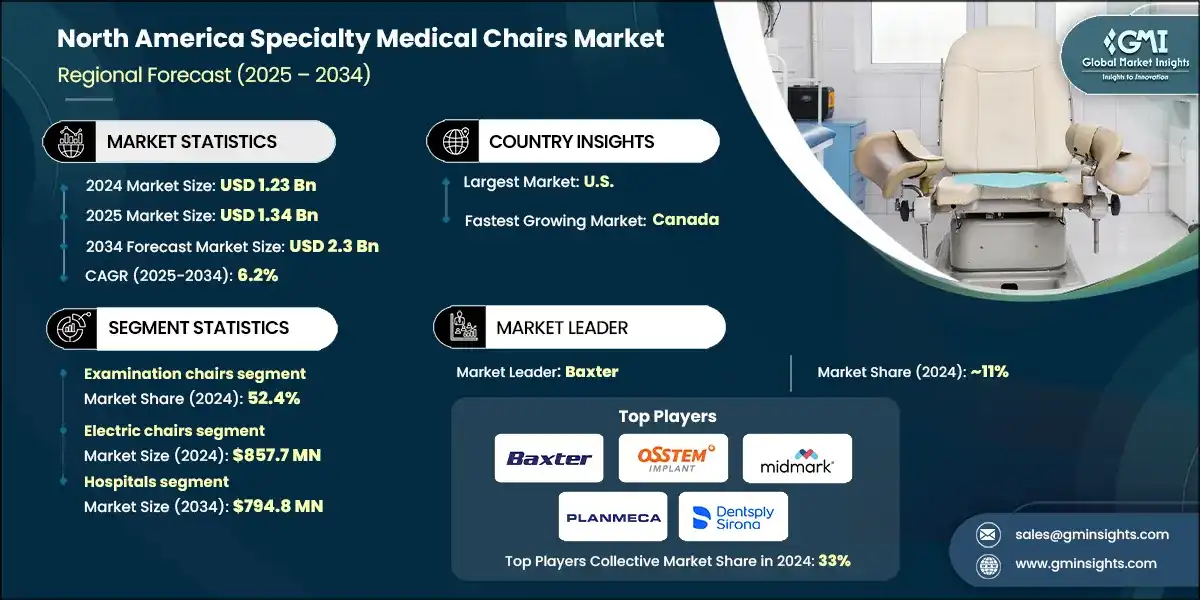
The North America specialty medical chairs market was valued at USD 1.23 billion in 2024. The market is expected to reach from USD 1.34 billion in 2025 to USD 2.3 billion in 2034, growing at a CAGR of 6.2% during the forecast period, according to the latest report published by Global Market Insights Inc. The high market growth is attributed to the ongoing advancements in chair technology, rising outpatient and home healthcare services, favourable reimbursement policies, and increasing awareness of patient comfort and safety, among other contributing factors.
North America Specialty Medical Chairs Market Key Takeaways
Market Size & Growth
- 2024 Market Size: USD 1.23 Billion
- 2025 Market Size: USD 1.34 Billion
- 2034 Forecast Market Size: USD 2.3 Billion
- CAGR (2025–2034): 6.2%
Regional Dominance
- Largest Market: U.S.
- Fastest Growing Country: Canada
Key Market Drivers
- Increasing number of specialty clinics, blood banks, and urgent care centers.
- Technological advancements and demand for powered chairs.
- Growing geriatric population and need for rehab procedures.
- Rising ambulatory surgical procedures.
Challenges
- High cost of specialized equipment.
- Limited reimbursement policies.
Opportunity
- Expansion of outpatient and home healthcare.
- Medical tourism growth.
Key Players
- Market Leader: Baxter led with over 11% market share in 2024.
- Leading Players: Top 5 players in this market include Baxter, OSSTEM, Midmark, PLANMECA, Dentsply Sirona, which collectively held a market share of 33% in 2024.
Get Market Insights & Growth Opportunities
Specialty medical chairs are designed for patients to provide the correct ergonomic support and comfort during the specific medical treatment or examination process. Such chairs typically allow the user to adjust the position and perform specialized functions to be compatible with various clinical procedures.
The top players in the North America specialty medical chairs market are Baxter, OSSTEM, Midmark, PLANMECA, and Dentsply Sirona. They maintain their market position by implementing innovative products, extending their operations in different regional markets, and making substantial R&D investments.
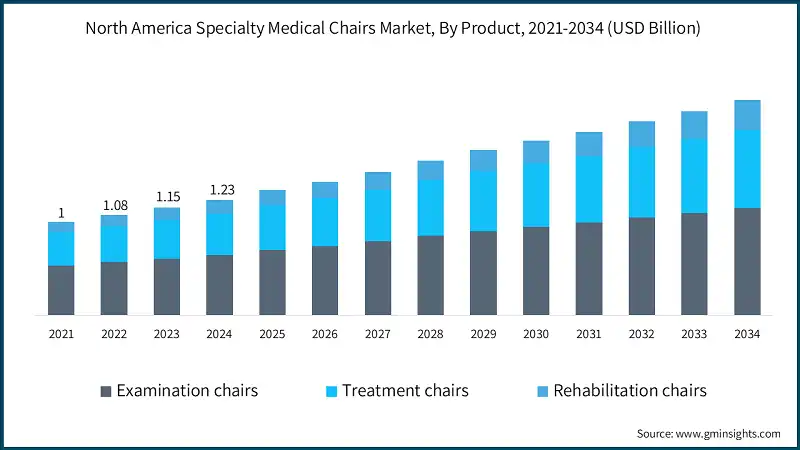
The market has increased from USD 1 billion in 2021 and reached USD 1.15 billion in 2023, with the historic growth rate of 7.3%. The market growth was driven by the rising geriatric population, increasing prevalence of chronic diseases, and growing demand for advanced patient care and comfort in healthcare facilities.
Moreover, the region’s elderly population is expanding significantly, with the U.S. Census Bureau projecting that adults aged 65 and older will reach 77 million by 2024. This demographic faces chronic conditions such as cardiovascular diseases, diabetes, and mobility impairments.
For instance, according to the Centres for Disease Control and Prevention (CDC), in 2022, 85% of older adults had at least one chronic health condition, while 15% had two or more chronic conditions. This demographic trend increases the demand for specialty medical chairs in hospitals, nursing homes, and home care settings, as these chairs offer comfort, support, and improved mobility.
Furthermore, integration of features such as ergonomic design, pressure relief systems, automated adjustments, and electronic controls has enhanced patient comfort and caregiver efficiency. Such innovations make specialty chairs more appealing for clinical and home care environments, boosting adoption rates.
To get key market trends
North America Specialty Medical Chairs Market Trends
The market is growing considerably with the shift toward home healthcare solutions, integration of smart and connected features, rise of ergonomic and patient-centric designs, and surging need for personalization and customization options, among other factors that are collectively driving industry growth.
- Specialty medical chairs are gradually becoming IoT-equipped with sensors, monitoring systems, and automated adjustment features. These smart chairs track patient vitals & seat positions and offer real-time feedback to caregivers, which is compatible with digital health and telemedicine trends.
- Manufacturers are focusing on the ergonomic design of chairs that provide both patient comfort and good posture and also have a feature to lower the risk of pressure ulcers. Hospitals and nursing homes are being customized with features like adjustable armrests and lumbar support for better patient care.
- Additionally, with the growing preference for home-based care, there is a rising demand for portable, easy-to-use, and multifunctional specialty chairs. These chairs facilitate patient mobility, rehabilitation, and therapy at home, reflecting the broader trend of decentralizing healthcare services.
- Further, the market is seeing an adoption of chairs made from recyclable, antimicrobial, and environmentally friendly materials. This trend aligns with healthcare providers focus on sustainability and infection control in medical environments, thereby sustaining market growth.
North America Specialty Medical Chairs Market Analysis
Learn more about the key segments shaping this market
Based on the product, the North America specialty medical chairs market is segmented into examination chairs, treatment chairs, and rehabilitation chairs. The examination chairs segment has asserted its dominance in the market by securing a significant market share of 52.4% in 2024 owing to its essential role in routine diagnostics, patient comfort, and wide adoption across hospitals, clinics, and specialty care centers. The segment is expected to exceed USD 1.1 billion by 2034, growing at a CAGR of 5.6% during the forecast period.
On the other hand, the treatment chairs segment is expected to grow with a CAGR of 6.4%. The growth of this segment is driven by increasing demand for specialized procedures, rising outpatient treatments, and the need for ergonomic, adjustable chairs that enhance patient comfort and clinician efficiency.
- The examination chairs segment continues to dominate the market. The rise of outpatient clinics, diagnostic centers, and ambulatory care facilities is substantially contributing to the demand for examination chairs. Such chairs are the primary instruments for the smooth running of patient assessments and procedures, thus ensuring both comfort and easy accessibility to patients and medical staff.
- Examination chairs with ergonomic designs, adjustable heights, and padded seating improve patient comfort during medical assessments. Enhanced safety features, such as sturdy construction and side supports, reduce the risk of falls and injuries, encouraging adoption across healthcare settings.
- The treatment chairs segment held a revenue of USD 441.2 million in 2024, with projections indicating a steady expansion at 6.4% CAGR from 2025 to 2034. The growth of the segment is driven by the rising number of outpatient procedures and specialized therapies requiring patient comfort and stability.
- Growing adoption of powered and adjustable chairs enhances efficiency for healthcare providers during treatments. Additionally, the expanding geriatric population and increasing rehabilitation needs are fuelling demand for ergonomic and supportive treatment chairs.
- The rehabilitation chairs segment held a revenue of USD 145.7 million in 2024, with projections indicating a steady expansion at 7.8% CAGR from 2025 to 2034. The segment is propelled by the increasing prevalence of chronic illnesses and post-surgical recovery programs that require prolonged patient support.
- Integration of advanced features, such as adjustable positioning and pressure-relief systems, improves therapy outcomes. Furthermore, rising awareness of physical therapy benefits and expanding rehab centers are contributing to higher adoption rates across the region.
Based on type, the North America specialty medical chairs market is segmented into electric chairs and manual chairs. The electric chairs segment dominated the market in 2024, accounting for USD 857.7 million, and is anticipated to grow at a CAGR of 6.5% during the forecast period.
- Electric specialty chairs offer motorized adjustments for height, tilt, and recline, enabling precise patient positioning during examinations and treatments. These features help reduce physical strain for individuals with mobility impairments or chronic conditions, making such chairs widely used across hospitals, outpatient clinics, and long-term care facilities.
- Moreover, modern electric chairs are designed to maximize functionality across diagnostic, therapeutic, and minor surgical procedures. Features such as adjustable armrests, footrests, and advanced tilt mechanisms allow clinicians to achieve optimal positioning, enhancing procedural accuracy and improving overall patient comfort and care quality.
- The manual chairs segment accounted for significant revenue in 2024 and is anticipated to grow at a CAGR of 5.4% over the forecast period. The growth of the segment is driven by its cost-effectiveness and ease of maintenance, making it suitable for smaller clinics and budget-conscious healthcare facilities.
- Its simple design ensures reliable performance in routine procedures without dependence on power sources. Additionally, the demand for lightweight and easily maneuverable chairs in outpatient and emergency care settings supports steady market growth.
Learn more about the key segments shaping this market
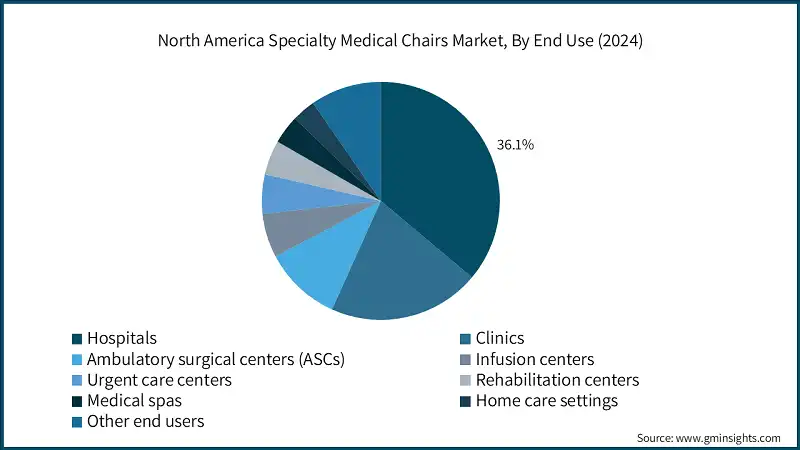
Based on end use, the North America specialty medical chairs market is classified into hospitals, clinics, ambulatory surgical centers (ASCs), infusion centers, urgent care centers, rehabilitation centers, medical spas, home care settings, and other end users. The hospitals segment dominated the market with a revenue share of 36.1% in 2024 and is expected to reach USD 794.8 million within the forecast period.
- The three largest segments account for over 67.3% of the total market value. The hospitals segment is the largest, as they are experiencing increased patient volumes due to aging populations and the prevalence of chronic diseases. These drives demand for specialty medical chairs to ensure patient comfort, facilitate diagnostic and therapeutic procedures, and improve workflow efficiency in high-traffic hospital settings.
- Hospitals are increasingly investing in chairs with electric adjustment systems, modular components, and smart features like programmable positions and IoT integration. These technologies streamline patient handling, support multiple medical procedures, and improve clinical efficiency, aligning with modern hospital workflow requirements.
- The clinics segment held a revenue of USD 254.2 million in 2024, with projections indicating a steady expansion at 6% CAGR from 2025 to 2034. Clinics are driving demand for specialty medical chairs due to the increasing number of outpatient visits and the need for versatile, space-efficient seating solutions. Enhanced patient comfort and procedural efficiency further encourage clinics to invest in advanced chair designs.
- The ambulatory surgical centers (ASCs) segment accounted for significant revenue in 2024 and is anticipated to grow at a CAGR of 6.9% over the forecast period. Ambulatory surgical centers are fuelling demand for specialty medical chairs as they require durable, adjustable seating to support a high volume of procedures efficiently. The focus on patient safety, comfort, and quick turnover between surgeries further drives adoption in ASCs.
Looking for region specific data?
U.S. Specialty Medical Chairs Market
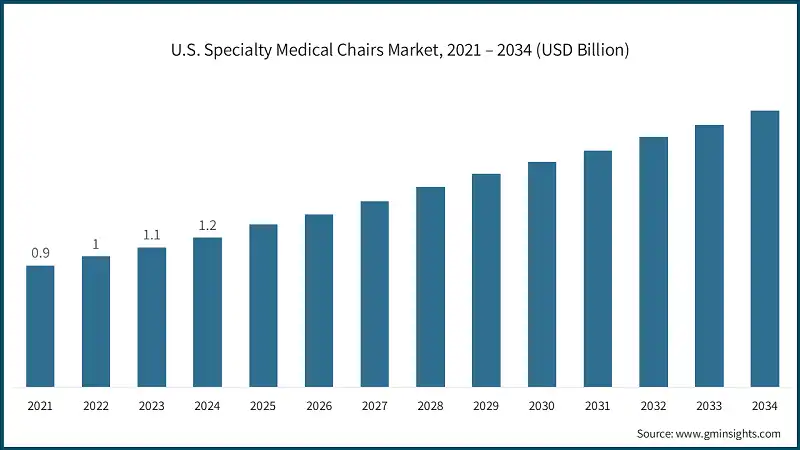
The U.S. specialty medical chairs market was valued at USD 0.9 billion and USD 1 billion in 2021 and 2022, respectively. The market size reached USD 1.2 billion in 2024, growing from USD 1.1 billion in 2023, and is anticipated to grow at a CAGR of 6.1% between 2025 and 2034.
- The U.S. has a rapidly aging population, with a significant proportion requiring long-term care, rehabilitation, or frequent medical examinations. This demographic trend drives demand for specialty medical chairs that offer comfort, mobility support, and ergonomic features suitable for elderly patients.
- According to the Centers for Disease Control and Prevention (CDC), as of 2023, 6 in 10 adults in the U.S. have at least one chronic disease, while 4 in 10 have two or more chronic conditions. The American Heart Association reported that cardiovascular diseases affected 48% of U.S. adults in 2022, while the CDC data shows that 37.3 million Americans (11.3% of the population) had diabetes in 2021.
- The high prevalence of chronic conditions drives the demand for regular clinical assessments and therapeutic interventions. Healthcare facilities are increasingly adopting specialty chairs to improve patient positioning, accessibility, and comfort during medical procedures.
- Further, the U.S. market is witnessing the introduction of advanced chairs with electric adjustment systems, pressure-relief cushions, modular designs, and smart connectivity. These features improve procedural efficiency, patient safety, and overall care quality, making them a preferred choice for hospitals and outpatient centers.
Canada Specialty Medical Chairs Market
The Canada specialty medical chairs market is anticipated to grow at the highest CAGR of 8% during the analysis timeframe.
- Canada’s universal healthcare system ensures that hospitals, clinics, and long-term care facilities have access to government funding for medical equipment. This promotes the adoption of specialty medical chairs with advanced features, as healthcare institutions aim to improve patient care while adhering to budget allocations.
- Canadian healthcare facilities place significant importance on infection prevention, particularly in hospitals and outpatient centers. Specialty chairs made from easy-to-clean, antimicrobial materials or with removable cushions are increasingly preferred to maintain hygiene standards and reduce cross-contamination risks.
- Moreover, the demand for home care services in Canada is growing due to patient preference and healthcare cost efficiency. Portable, adjustable, and multi-functional specialty chairs are essential for home settings, enabling safe patient transfers, therapy, and daily care.
North America Specialty Medical Chairs Market Share
The market is highly competitive, characterized by the presence of both global leaders and regional players offering a diverse range of chairs tailored for examinations, treatments, and rehabilitation.
Companies are focusing on product innovation, ergonomic designs, and integration of advanced technologies such as powered adjustments and patient monitoring features to differentiate themselves and meet evolving healthcare demands.
Key players include Baxter, OSSTEM, Midmark, PLANMECA, and Dentsply Sirona, collectively accounting for 33% of the total market share. These companies leverage strong distribution networks, established brand reputations, and strategic partnerships to maintain their market positions and expand their customer base.
Smaller and mid-sized manufacturers are also contributing to the competitive landscape by offering cost-effective and specialized solutions, thereby increasing market fragmentation and fostering continuous innovation in product features and functionality.
North America Specialty Medical Chairs Market Companies
A few of the prominent players operating in the North America specialty medical chairs industry include:
- ActiveAid
- A-dec
- ATMOS MedizinTechnik
- Baxter
- Champion Healthcare Solutions
- CLINTON INDUSTRIES
- DENTALEZ
- Dentsply Sirona
- FRESENIUS MEDICAL CARE
- Hill Laboratories
- Lemi MD
- MARCO
- Midmark
- OSSTEM
- PLANMECA
- TOPCON
- Baxter
Baxter leads the North America specialty medical chairs market with 11% share in 2024, and it offers highly durable and ergonomically designed specialty chairs, ensuring patient comfort and safety across multiple care settings. Their strong distribution network in North America enhances accessibility and reliability for healthcare providers.
Dentsply Sirona integrates advanced technology and customizable features into their chairs, catering to diverse clinical needs while enhancing procedural efficiency and patient experience.
PLANMECA focuses on innovative, multifunctional chairs with precise adjustability and modern design, supporting both dental and medical applications with superior comfort and workflow efficiency.
North America Specialty Medical Chairs Market Report Attributes
| Key Takeaway | Details |
|---|---|
| Market Size & Growth | |
| Base Year | 2024 |
| Market Size in 2024 | USD 1.23 Billion |
| Market Size in 2025 | USD 1.34 Billion |
| Forecast Period 2025 - 2034 CAGR | 6.2% |
| Market Size in 2034 | USD 2.3 Billion |
| Key Market Trends | |
| Drivers | Impact |
| Increasing number of specialty clinics, blood banks, and urgent care centers | The expansion of healthcare facilities is boosting demand for specialized chairs to support patient comfort and procedural efficiency. |
| Technological advancements and demand for powered chairs | Innovations like motorized adjustments and smart features are driving adoption in hospitals and rehab centers. |
| Growing geriatric population and need for rehab procedures | The aging population is increasing demand for chairs designed for mobility support and rehabilitation. |
| Rising ambulatory surgical procedures | The surge in outpatient surgeries is pushing healthcare providers to invest in versatile, procedure-specific seating solutions. |
| Pitfalls & Challenges | Impact |
| High cost of specialized equipment | The expensive nature of advanced chairs limits adoption among smaller clinics and low-budget facilities. |
| Limited reimbursement policies | Inadequate insurance coverage restricts widespread utilization, affecting market growth. |
| Opportunities: | Impact |
| Expansion of outpatient and home healthcare | Growth in home-based and outpatient care will drive demand for compact, portable, and multifunctional specialty chairs. |
| Medical tourism growth | Increasing cross-border medical treatments will encourage healthcare facilities to invest in high-quality, patient-friendly chairs to enhance service standards. |
| Market Leaders (2024) | |
| Market Leaders |
~11% market share |
| Top Players |
Collective market share in 2024 is 33% |
| Competitive Edge |
|
| Regional Insights | |
| Largest Market | U.S. |
| Fastest growing market | Canada |
| Future outlook |
|
What are the growth opportunities in this market?
North America Specialty Medical Chairs Industry News:
- In February 2024, Champion Healthcare Solutions launched a unique premium antimicrobial fabric across its lineup of luxury medical chairs. The innovative upholstery was designed to improve infection control in clinical settings while ensuring patient comfort. This launch strengthened the company’s market appeal and helped drive revenue growth in the North American specialty medical chairs market.
- In June 2023, A-dec launched its digitally connected delivery systems, the A-dec 500 Pro and A-dec 300 Pro platforms, marking a major advancement in smart operatory technology. These platforms integrated seamlessly with A-dec’s dental chairs, enhancing clinical workflows through real-time data connectivity and improved ergonomic control. This launch strengthened A-dec’s product portfolio and expanded its presence in the premium dental operatory segment, driving adoption of advanced specialty chairs in North America.
- In December 2021, Baxter International Inc. completed its acquisition of Hillrom, uniting two leading medtech companies. This strategic move expanded Baxter’s capabilities in digital health, connected care, and patient monitoring. The acquisition strengthened Baxter’s market position, enabling broader access to advanced specialty chairs and driving growth in the region.
The North America specialty medical chairs market research report includes an in-depth coverage of the industry with estimates and forecast in terms of revenue in USD Million from 2021 – 2034 for the following segments:
Market, By Product
- Examination chairs
- Dental
- OB/GYN
- Dialysis
- Ophthalmic
- Dermatology
- Blood drawing
- Mammography
- Other examination chairs
- Treatment chairs
- Dental
- Ophthalmic
- ENT
- Dermatology
- Other treatment chairs
- Rehabilitation chairs
- Geriatric chairs
- Pediatric chairs
- Bariatric chairs
- Other rehabilitation chairs
Market, By Type
- Electric chairs
- Manual chairs
Market, By End Use
- Hospitals
- Clinics
- Ambulatory surgical centers (ASCs)
- Infusion centers
- Urgent care centers
- Rehabilitation centers
- Medical spas
- Home care settings
- Other end use
The above information is provided for the following countries:
- U.S.
- Canada
Frequently Asked Question(FAQ) :
What was the market size of the North America specialty medical chairs in 2024?
The market size was USD 1.23 billion in 2024, with a CAGR of 6.2% expected through 2034, driven by advancements in chair technology, rising outpatient and home healthcare services, and favorable reimbursement policies.
What is the projected value of the North America specialty medical chairs market by 2034?
The market is expected to reach USD 2.3 billion by 2034, fueled by the integration of smart features, ergonomic designs, and increasing demand for home-based care solutions.
What is the projected size of the North America specialty medical chairs market in 2025?
The market is expected to reach USD 1.34 billion in 2025.
How much revenue did the examination chairs segment generate in 2024?
The examination chairs segment accounting for 52.4% of the market share, driven by its essential role in diagnostics and widespread adoption in healthcare facilities.
What was the valuation of the electric chairs segment in 2024?
The electric chairs segment generated USD 857.7 million in 2024 and is anticipated to grow at a CAGR of 6.5% during the forecast period.
Which country leads the North America specialty medical chairs market?
The United States leads the market, with a valuation of USD 1.2 billion in 2024. The market is projected to grow at a CAGR of 6.1% between 2025 and 2034, driven by strong healthcare infrastructure and increasing demand for advanced medical equipment.
What are the upcoming trends in the North America specialty medical chairs industry?
Key trends include the adoption of IoT-equipped chairs with sensors and monitoring systems, ergonomic designs to enhance patient comfort, and rising demand for portable and multifunctional chairs for home-based care.
Who are the key players in the North America specialty medical chairs market?
Key players include ActiveAid, A-dec, ATMOS MedizinTechnik, Baxter, Champion Healthcare Solutions, CLINTON INDUSTRIES, DENTALEZ, Dentsply Sirona, FRESENIUS MEDICAL CARE, Hill Laboratories, Lemi MD, and MARCO.
North America Specialty Medical Chairs Market Scope
Related Reports