Summary
Table of Content

North America Self-monitoring Blood Glucose Devices Market
Get a free sample of this report
Form submitted successfully!
Error submitting form. Please try again.
Thank you!
Your inquiry has been received. Our team will reach out to you with the required details via email. To ensure that you don't miss their response, kindly remember to check your spam folder as well!
Request Sectional Data
Thank you!
Your inquiry has been received. Our team will reach out to you with the required details via email. To ensure that you don't miss their response, kindly remember to check your spam folder as well!
Form submitted successfully!
Error submitting form. Please try again.
North America Self-monitoring Blood Glucose Devices Market Size
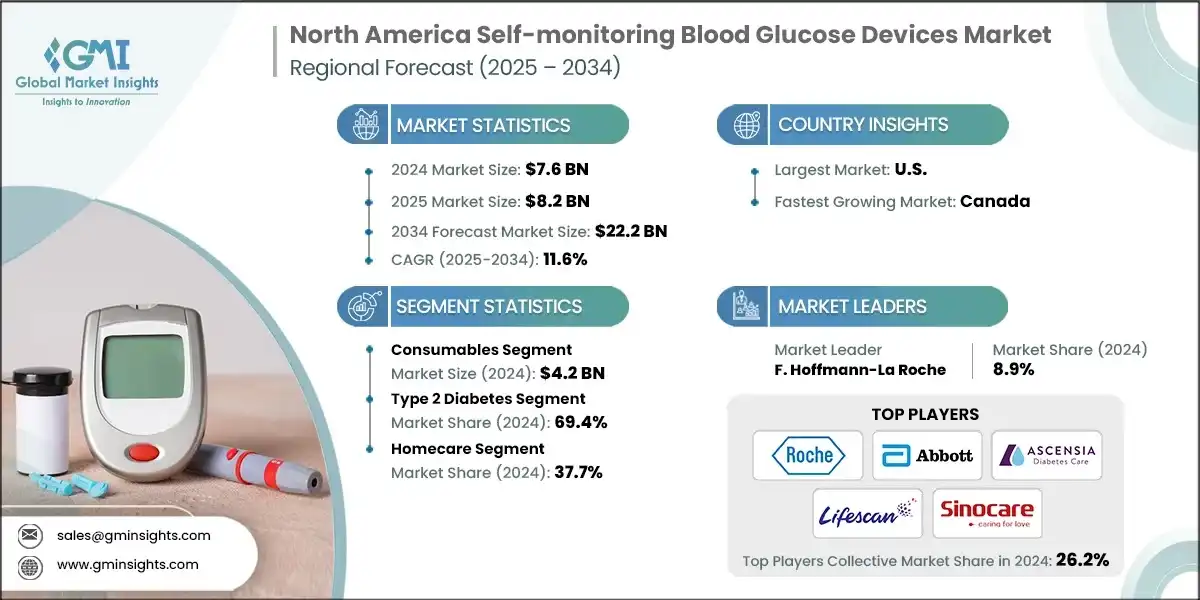
The North America self-monitoring blood glucose devices market was valued at USD 7.6 billion in 2024. The market is projected to grow from USD 8.2 billion in 2025 to USD 22.2 billion by 2034, expanding at a CAGR of 11.6%, according to the latest report published by Global Market Insights Inc.
To get key market trends
This steady growth is stimulated by various factors such as the growing prevalence of diabetes across the North America, rising technological advancements in self-monitoring blood glucose devices, and increased healthcare spending and accessibility. Self-monitoring blood glucose devices are medical instruments used by individuals with diabetes to measure and monitor their glucose levels regularly. These devices enable patients to manage their condition effectively by providing real-time data on blood sugar levels, helping them make informed decisions about diet, physical activity, and medication. Major companies in the industry include F. Hoffmann-La Roche, Abbott Laboratories, Ascensia Diabetes Care Holdings, LifeScan, and Sinocare.
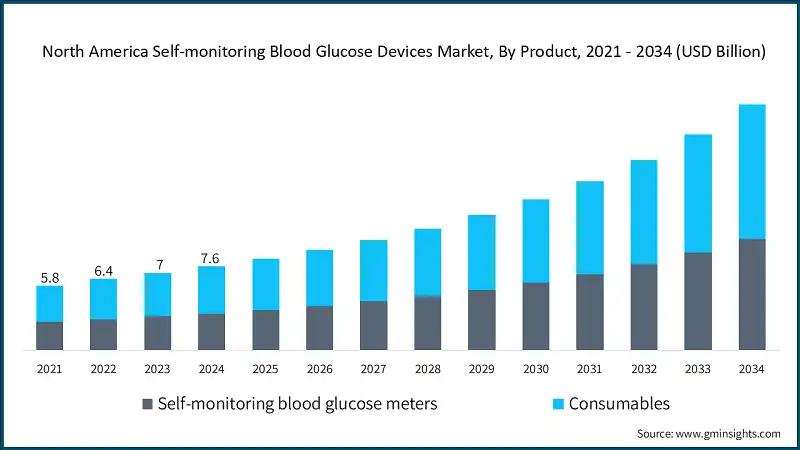
The market increased from USD 5.8 billion in 2021 to USD 7 billion in 2023, largely due to rapid technological advancements in self-monitoring blood glucose devices. Improvements in accuracy, ease of use, and patient engagement have significantly transformed diabetes care. Innovations such as compact and highly precise glucose meters, Bluetooth-enabled data sharing, and integration with mobile health platforms have not only enhanced disease management but also broadened the user base by making monitoring more accessible and personalized. These developments are propelling market growth by making SMBG solutions smarter, more connected, and centered around patient needs.
The growing incidence of diabetes across regions has notably increased the demand for efficient monitoring and management tools. As more people are diagnosed with diabetes, the need for advanced healthcare technologies, such as self-monitoring blood glucose devices, which is estimated to reach USD 59.1 billion by 2034, insulin delivery systems, and digital health platforms, continues to rise, fueling innovation and investment in these areas.
For instance, according to the data from the Centers for Disease Control and Prevention (CDC) in 2021, in the U.S. alone, 38.4 million people of all ages, equivalent to 11.6% of the U.S. population, had diabetes, among them 38.1 million were adults of 18 years or older, representing 14.7% of the U.S. adult population. This substantial patient base highlights the urgent need for scalable diabetes care technology. Therefore, this increasing burden of diabetes is accelerating the growth of the self-monitoring blood glucose devices market.
Self-monitoring blood glucose (SMBG) devices are tools that allow individuals with diabetes to regularly check their own blood glucose levels to make informed decisions about their treatment, diet, and physical activity. These devices, such as blood glucose meters, typically require a small blood sample obtained via a lancet, a test strip, and the meter itself, to display a blood glucose reading. SMBG helps manage diabetes by providing real-time data to control blood sugar, prevent complications, and adjust therapy as needed.
North America Self-monitoring Blood Glucose Devices Market Report Attributes
| Key Takeaway | Details |
|---|---|
| Market Size & Growth | |
| Base Year | 2024 |
| Market Size in 2024 | USD 7.6 Billion |
| Market Size in 2025 | USD 8.2 Billion |
| Forecast Period 2025 - 2034 CAGR | 11.6% |
| Market Size in 2034 | USD 22.2 Billion |
| Key Market Trends | |
| Drivers | Impact |
| Growing prevalence of diabetes across the North America | Drives increased demand for self-monitoring devices to manage rising diabetic populations. |
| Rising technological advancements in self-monitoring blood glucose devices | Enhance device accuracy, convenience, and adoption among tech-savvy users. |
| Increased healthcare spending and accessibility | Expands market reach through better affordability and availability of monitoring devices. |
| Pitfalls & Challenges | Impact |
| High cost of advanced devices and accessories | Limits adoption among low- and middle-income patients, restraining market growth. |
| Stringent regulatory requirements | Delays product approvals and increases compliance costs for manufacturers. |
| Opportunities: | Impact |
| Growth of mobile health and digital platforms | Boosts user engagement and remote monitoring, driving adoption of smart glucose tracking solutions. |
| Market Leaders (2024) | |
| Market Leaders |
8.9% |
| Top Players |
Collective market share in 2024 is 26.2% |
| Competitive Edge |
|
| Regional Insights | |
| Largest market | U.S. |
| Fastest growing market | Canada |
| Future outlook |
|
What are the growth opportunities in this market?
North America Self-monitoring Blood Glucose Devices Market Trends
- Technological innovation is reshaping diabetes care in North America. Self-monitoring blood glucose (SMBG) devices are becoming more accurate, more user-friendly, and less invasive. These new capabilities are encouraging patients to manage chronic care on their own.
- Improved patient outcomes and increased access needs have created demand for easier and more accurate monitoring tools across the region. The need and outcomes are accelerating companies to invest significantly in research and development, increasing the number of SMBG products entering the market.
- Integration with mobile apps and cloud-based platforms allows patients to share data in real-time with their doctors and other healthcare providers. Companies are also opening to build these digital partnerships for more personalized and connected care, which has stimulated the increased adoption of SMBG devices in hospitals, clinics, and home settings.
- For instance, Contour Next One by Ascensia Diabetes Care is a smart self-monitoring blood glucose device that syncs with the Contour Diabetes App via Bluetooth. It offers highly accurate reading, instant feedback through its SmartLIGHT feature, and allows manual input of meals and insulin doses. By combining precision with mobile integration, it enhances user engagement and personalized care, propelling the market growth through improved accessibility and patient-centric innovation.
- Therefore, all these factors representing technological advances have greatly facilitated and increased patient adoption of SMBG, making them much more accessible as a focus of modern diabetes management, and thus driving the increased growth of the market in the region.
North America Self-monitoring Blood Glucose Devices Market Analysis
Learn more about the key segments shaping this market
The North America self-monitoring blood glucose devices market was valued at USD 5.8 billion in 2021. The market size reached USD 7 billion in 2023, from USD 6.4 billion in 2022.
Based on product, the market is segmented into self-monitoring blood glucose meters and consumables. The consumables segment is further bifurcated into testing strips and lancets. The consumables segment held leading position in the market, accounting for USD 4.2 billion in 2024. In comparison, the self-monitoring blood glucose meters segment, valued at USD 3.3 billion in 2024, is expected to grow to USD 10.1 billion by 2034.
- The SMBG meter segment has a substantial portion of the North America self-monitoring blood glucose devices market, providing millions of individuals with diabetes with reliable, cost-effective, and convenient means to monitor blood glucose levels. These key devices enable blood sugar testing to be performed anywhere, at any time, using simple testing steps, allowing for independent management of their diabetes condition and facilitating ongoing decision-making about diet, medication, and lifestyle. This empowers individuals to make immediate adjustments as needed for optimal glucose control.
- Moreover, SMBG meters are widely adopted around the region because of their simplicity, affordability, and the expanding possibilities of interoperability with mobile apps. This connectivity enables real-time data sharing with healthcare providers, personalized feedback, and long-term tracking, making them especially valuable for both patients and clinicians.
- Moreover, as health technology continues to grow in the region, ongoing improvements in the accuracy, size, and usability of self-monitoring blood glucose meters help establish healthy habits as part of patient care, all of which contribute to stimulating the revenue for SMBG devices in hospital-based, clinic-based, and home-based environments.
- Thus, the revenue potential for SMBG meters is driven by new forms of personalized care built around the individual's needs and scope of care, of which SMBG is key to business growth for the overall SMBG devices marketplace.
Based on applications, the North America self-monitoring blood glucose devices market is segmented into type 1 diabetes, type 2 diabetes, and gestational diabetes. The type 2 diabetes emerged as a dominant segment in the market, accounting for 69.4% of revenue share in 2024 and is expected to reach USD 15.6 billion by 2034.
- Type 2 diabetes is a long-standing illness characterized by the body not producing enough insulin or being resistant to the effects of insulin to maintain normal glucose levels.
- Diabetes can happen at any age, unlike type 1 diabetes, which is typically diagnosed in childhood, type 2 diabetes develops primarily in adults aged 45 or older, but the prevalence in younger individuals is increasing.
- Managing type 2 diabetes requires frequent blood sugar monitoring, in particular for patients on medications that may cause hypoglycemia. Self-monitoring blood glucose (SMBG) devices, including self-monitoring blood glucose meters, lancets, and testing strips, enable patients to measure and monitor their glucose levels, allowing them to make informed decisions about diet, activity, and medication based on their glucose levels.
- For instance, according to the data from the Centers for Disease Control and Prevention (CDC), more than 38 million individuals in the U.S. are diabetic, and almost 90% - 95% of those cases account for type 2 diabetes.
- Therefore, as the prevalence of type 2 diabetes increases in the region, so does the demand for regular monitoring, and the evolution of user-friendly self-monitoring blood glucose (SMBG) device technologies, thereby propelling the segment's growth in the region.
Learn more about the key segments shaping this market
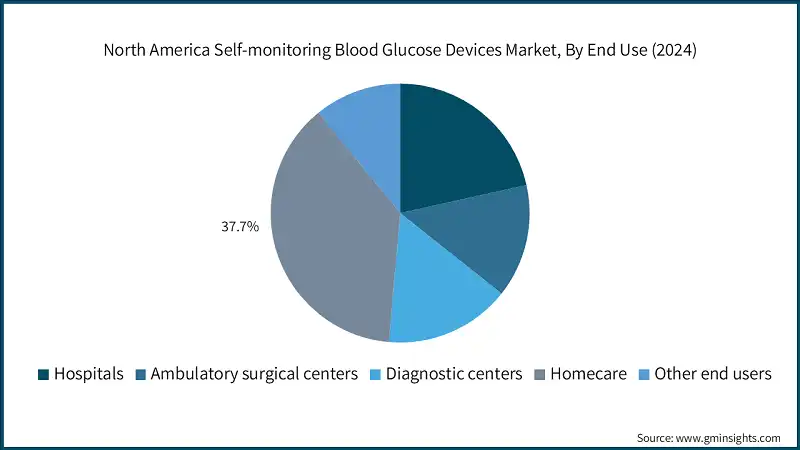
Based on end use, the self-monitoring blood glucose devices market is segmented into hospitals, ambulatory surgical centers, diagnostic centers, homecare, and other end users. Homecare accounted for the largest revenue share of 37.7% in 2024. Hospitals have become the fastest-growing segment in the North America self-monitoring blood glucose (SMBG) device market, as they are vital in managing diabetes-related complications in acute-care settings.
- With an increase in diabetes cases in the region, hospitals are incorporating technologically advanced SMBG devices in response to the demand for accurate information to aid clinical decisions during hospitalizations, as well as enhancing their diabetes management options for outpatients.
- SMBG devices enable practitioners to quickly help manage fluctuating blood glucose levels for patients in their care area, particularly in emergency care settings, as rapid blood glucose level declines or increases can be life-threatening.
- Additionally, technological advancements and integrations with electronic health records (EHRs) are stimulating growth in the hospital segment. Modern SMBG devices are gaining wireless technology, which allows patients to send glucose data to healthcare providers effortlessly.
- Therefore, hospitals are becoming the fastest-growing segment in the SMBG market due to their need for accurate blood sugar monitoring devices, growing patient volumes, and the integration of advanced technologies.
Looking for region specific data?
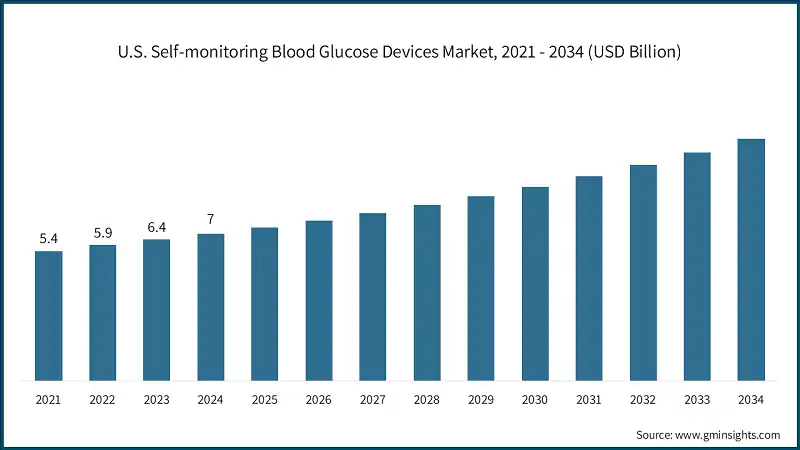
The U.S. self-monitoring blood glucose devices market was valued at USD 5.4 billion and USD 5.9 billion in 2021 and 2022 respectively. In 2024 the market size reached USD 7 billion from USD 6.4 billion in 2023.
- With increased healthcare investment in the country, these technologies become more affordable and accessible to a wider population in the country. Therefore, as more people gain access to these tools, self-monitoring becomes a routine part of diabetes care. This expansion in accessibility leads to higher adoption rates, which in turn stimulating the growth of the U.S. SMBG devices market.
- For instance, in 2023, health spending in the U.S. rose by 7.5%, reaching a staggering USD 4.9 trillion or USD 14,570 per capita. This marks a significant acceleration compared to the 4.6% increase in 2022. Apart from the exceptional 10.4% rise in 2020 due to the COVID-19 pandemic, this is the highest growth rate observed since 2003 (8.5%). Such a substantial increase in healthcare expenditure reflects a strong commitment to improving medical services and access, which directly supports the adoption and utilization of diabetes care technologies across the country.
Canada self-monitoring blood glucose devices market accounted for USD 598.1 million in 2024 and is anticipated to show lucrative growth over the forecast period.
- The rising prevalence of diabetes in Canada is significantly boosting the demand for self-monitoring blood glucose devices.
- With increasing cases of both type 1 and type 2 diabetes, the need for regular and effective blood glucose monitoring has become essential. Individuals are now more reliant on SMBG devices to manage their condition and avoid complications through timely interventions.
- For instance, as per the data from Diabetes Canada, Canada currently has an estimated 5.8 million individuals living with diabetes, representing nearly 15% of the population. Of these, over 4 million are diagnosed, accounting for 10% of the population. These figures highlight the urgent need to expand access to advanced diabetes care devices and technologies to support early detection and improved patient outcomes and reduce long-term complications.
- Therefore, as the burden of diabetes continues to grow in Canada, the demand for self-monitoring blood glucose devices is anticipated to rise in the foreseeable future.
North America Self-monitoring Blood Glucose Devices Market Share
- The North America self-monitoring blood glucose devices industry is competitive, top five companies such as F. Hoffmann-La Roche, Abbott Laboratories, Ascensia Diabetes Care Holdings, LifeScan, and Sinocare hold the most market share accounting for approximately 26.2% in 2024. Their dominance is driven by extensive product portfolios, robust distribution networks, regulatory compliance, and continuous innovation. Among them, LifeScan and F. Hoffmann-La Roche stand out for their user-friendly glucometers and test strips, which are widely adopted in both clinical and home settings, giving them a competitive edge.
- Beyond hospitals and clinics, the growing demand for home-based SMBG devices is creating new opportunities for both established and emerging players. Consumers increasingly prefer portable, easy-to-use devices that offer quick results and privacy. This shift is further supported by advancements in Bluetooth-enabled meters, smartphone integration, and cloud-based data tracking, making self-monitoring more convenient and effective.
- Emerging players in SMBG space are adopting diverse strategies to gain market share. These include focusing on next-generation glucometers with smartphone connectivity, AI-driven analytics, and personalized feedback. Many are also forming strategic partnerships with digital health platforms, pharmacies, and healthcare providers to enhance accessibility, reduce costs, and improve patient adherence.
- For instance, Arkray partnered with Rimidi to integrate its GLUCOCARD Shine Connex blood glucose monitoring system with electronic health records (EHR) platforms, enabling real-time data sharing between patients and healthcare providers for improved clinical decision-making. The device features Bluetooth connectivity, allowing seamless syncing with mobile devices to support remote monitoring and proactive diabetes care.
North America Self-monitoring Blood Glucose Devices Market Companies
Few of the prominent players operating in the North America self-monitoring blood glucose devices industry include:
- Abbott Laboratories
- AgaMatrix
- All Medicus
- Arkray
- Ascensia Diabetes Care Holdings
- B. Braun Melsungen
- Bionime Corporation
- DarioHealth
- F. Hoffmann-La Roche
- LifeScan
- Nova Biomedical
- Omnis Health
- Sanofi
- Sinocare
- Ypsomed Holding
- Abbott Laboratories
Abbott Laboratories is a healthcare company known for its innovative and connected glucose monitoring technologies, with a market share of 2.6% in 2024. It focuses on accuracy and ease of use to support both clinical and personal diabetes management. The company emphasizes accessibility and convenience to help individuals manage their condition more effectively.
B. Braun Melsungen is a healthcare company recognized for its clinically focused and reliable diabetes care solutions. The company also integrates its tools with broader patient management systems to ensure consistent monitoring and treatment.
Bionime Corporation is a healthcare company focused on delivering intelligent and user-friendly diabetes monitoring solutions. It emphasizes accuracy, digital integration, and personalized care through its advanced data management technologies. Bionime’s approach supports efficient self-monitoring and empowers users with tools for better treatment decisions
North America Self-monitoring Blood Glucose Devices Industry News:
- In March 2024, Nova Biomedical launched the New Generation StatStrip Glucose Hospital Meter System in the U.S., featuring enhanced usability, improved cybersecurity, and FDA clearance for use with critically ill patients, reinforcing the company's commitment to advancing healthcare technology and reliable glucose monitoring in hospital settings.
- In March 2021, F. Hoffmann-La Roche Ltd launched the Accu-Chek Instant system, a Bluetooth-enabled blood glucose monitoring system connected to the mySugr app for seamless data transfer. This launch bolstered Roche's position in digital health by enhancing user convenience and integrating advanced diabetes management tools into its Accu-Chek brand.
The North America self-monitoring blood glucose devices market research report includes in-depth coverage of the industry with estimates and forecast in terms of revenue in USD Million and from 2021 - 2034 for the following segments:
Market, By Product
- Self-monitoring blood glucose meters
- Consumables
- Testing strips
- Lancets
Market, By Application
- Type 1 diabetes
- Type 2 diabetes
- Gestational diabetes
Market, By End Use
- Hospitals
- Ambulatory surgical centers
- Diagnostic centers
- Homecare
- Other end use
The above information is provided for the following countries:
- U.S.
- Canada
Frequently Asked Question(FAQ) :
What was the market size of the North America self-monitoring blood glucose devices in 2024?
The market size was valued at USD 7.6 billion in 2024, with a CAGR of 11.6% expected through 2034. The market growth is driven by the rising prevalence of diabetes, technological advancements, and increased healthcare spending.
What is the projected value of the North America self-monitoring blood glucose devices market by 2034?
The market is poised to reach USD 22.2 billion by 2034, fueled by innovations in device technology, integration with digital platforms, and growing adoption in homecare and clinical settings.
What is the expected size of the self-monitoring blood glucose meters segment by 2034?
The self-monitoring blood glucose meters segment dominated around USD 3.3 billion in 2024 and is set to cross USD 10.1 billion by 2034.
What was the revenue share of the type 2 diabetes segment in 2024?
The type 2 diabetes segment accounted for 69.4% of the market revenue in 2024 and is anticipated to surpass USD 15.6 billion by 2034.
Which segment held the largest revenue share in 2024?
The homecare segment held the largest revenue share of 37.7% in 2024, due to their role in managing diabetes-related complications.
What was the valuation of the U.S. self-monitoring blood glucose devices sector?
The U.S. market was valued at USD 7 billion in 2024. Increased healthcare investments have made these devices more accessible, driving higher adoption rates and market growth.
What are the key trends in the North America self-monitoring blood glucose devices market?
Key trends include improved accuracy, mobile and cloud integration, real-time data sharing, and personalized care solutions.
Who are the prominent players in the North America self-monitoring blood glucose devices industry?
Prominent players include Abbott Laboratories, AgaMatrix, All Medicus, Arkray, B. Braun Melsungen, Bionime Corporation, DarioHealth, F. Hoffmann-La Roche, LifeScan, Nova Biomedical, Omnis Health, Sanofi, Sinocare, and Ypsomed Holding.
North America Self-monitoring Blood Glucose Devices Market Scope
Related Reports