Summary
Table of Content

North America Remote Patient Monitoring Market
Get a free sample of this report
Thank you!
Your inquiry has been received. Our team will reach out to you with the required details via email. To ensure that you don't miss their response, kindly remember to check your spam folder as well!
Form submitted successfully!
Error submitting form. Please try again.
Request Sectional Data
Thank you!
Your inquiry has been received. Our team will reach out to you with the required details via email. To ensure that you don't miss their response, kindly remember to check your spam folder as well!
Form submitted successfully!
Error submitting form. Please try again.
North America Remote Patient Monitoring Market Size
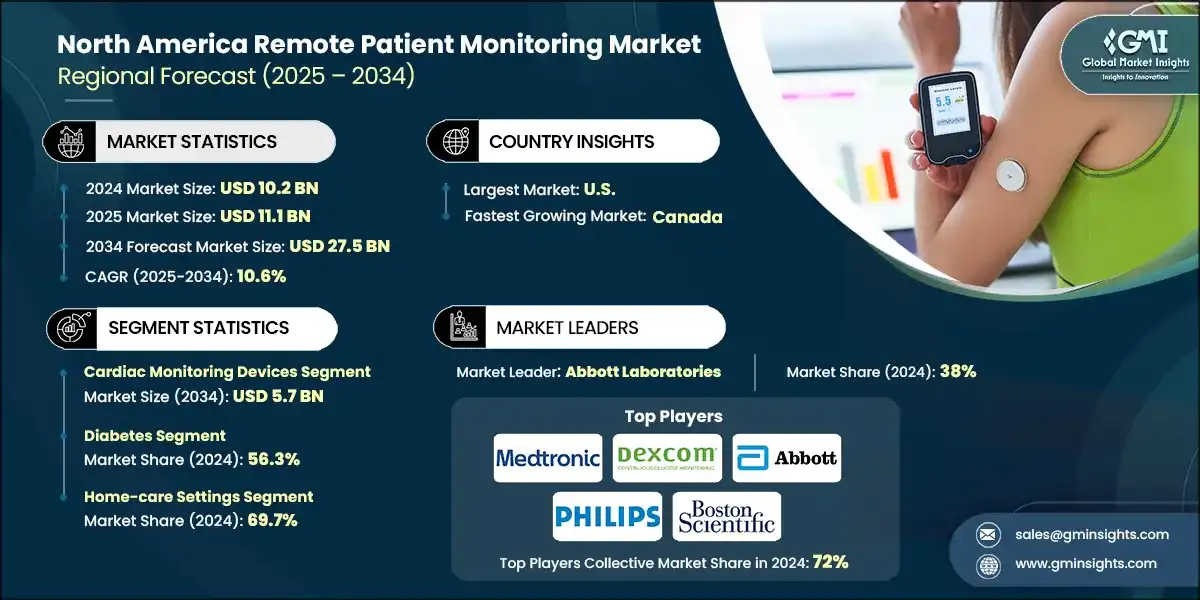
The North America remote patient monitoring market was valued at USD 10.2 billion in 2024. The market is expected to grow from USD 11.1 billion in 2025 to USD 27.5 billion in 2034, at a CAGR of 10.6% during the forecast period, according to the latest report published by Global Market Insights Inc.
To get key market trends
The market for remote patient monitoring (RPM) devices in North America is growing strongly due to the high prevalence of chronic diseases, rapid technological advancements, and increasing focus on value-based care. The demand for easy-to-use, connected, and accurate RPM solutions such as wearable sensors, mobile health apps, and cloud-integrated platforms is rising quickly because patients and providers are seeking more convenient and effective ways to manage health conditions outside traditional clinical settings. This trend is further supported by favorable reimbursement policies, strong healthcare infrastructure, and the growing aging population, which collectively drive adoption of RPM technologies across the region.
This market segment plays a pivotal role in advancing proactive healthcare delivery and enabling continuous patient engagement across diverse clinical settings. Leading companies such as Medtronic, Dexcom, Abbott Laboratories, Koninklijke Philips N.V., and Boston Scientific are at the forefront of this industry. These players sustain their competitive advantage through relentless innovation in remote monitoring technologies, integration of advanced data analytics, and strategic collaborations with healthcare providers. Their robust distribution networks and focus on interoperability aim to improve clinical outcomes, reduce hospital readmissions, and simplify chronic disease management for patients and caregivers alike.
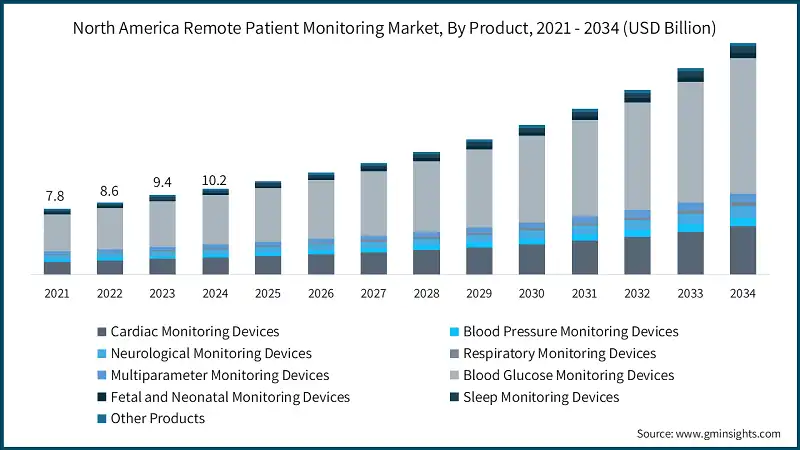
North America remote patient monitoring market is growing aggressively, increasing from USD 7.8 billion in 2021 to USD 9.4 billion in 2023. The market for remote patient monitoring (RPM) devices in North America is expanding rapidly, driven by the growing prevalence of chronic diseases and the urgent need for continuous, home-based care solutions. In the U.S. alone, 934,509 deaths were attributed to cardiovascular diseases in 2021, with heart disease and stroke ranking as the first and fifth leading causes of death, respectively.
Diabetes accounted for over 103,000 deaths, making it the eighth leading cause of death. According to the National Institutes of Health (NIH), more than 37 million people across the U.S. had diabetes in 2019, and an additional 96 million adults were classified as prediabetic. These figures underscore the scale of the chronic disease challenge and highlight the critical role RPM technologies play in improving patient outcomes and reducing hospital readmissions.
Moreover, increasing initiatives by federal health agencies and government programs are significantly contributing to RPM adoption. The Centers for Medicare & Medicaid Services (CMS) has expanded reimbursement for RPM services under the Medicare program, incentivizing providers to integrate remote monitoring into chronic care management. These policies, combined with strong healthcare infrastructure and growing public awareness, are accelerating the uptake of connected devices such as wearable sensors, mobile health applications, and cloud-based platforms across North America. As healthcare systems shift toward value-based care, RPM solutions are becoming indispensable for managing high-risk populations and reducing the economic burden of chronic diseases.
The remote patient monitoring (RPM) market encompasses medical technologies designed to collect, transmit, and analyze patient health data outside of traditional clinical settings. This includes a wide range of devices that monitor vital signs, chronic conditions, and other health metrics, enabling healthcare providers to track patient status remotely. The market also includes integrated software platforms that facilitate data collection, analysis, and communication between patients and providers. Additionally, it covers compatible monitoring devices developed by manufacturers to work seamlessly with proprietary RPM software solutions, ensuring interoperability and efficient remote care delivery.
North America Remote Patient Monitoring Market Report Attributes
| Key Takeaway | Details |
|---|---|
| Market Size & Growth | |
| Base Year | 2024 |
| Market Size in 2024 | USD 10.2 Billion |
| Market Size in 2025 | USD 11.1 Billion |
| Forecast Period 2025 - 2034 CAGR | 10.6% |
| Market Size in 2034 | USD 27.5 Billion |
| Key Market Trends | |
| Drivers | Impact |
| High prevalence of chronic diseases | In the U.S. alone, cardiovascular diseases caused 934,509 deaths in 2021, with heart disease and stroke ranking as the first and fifth leading causes of death. This growing burden of chronic conditions is driving strong demand for RPM solutions. |
| Strong healthcare infrastructure and reimbursement policies | North America benefits from advanced healthcare systems and supportive reimbursement frameworks, such as CMS coverage for RPM services under Medicare. |
| Technological leadership and innovation in the market | The region is leading in the development and adoption of AI-powered RPM platforms, IoT-enabled devices, and cloud-based solutions that enhance real-time data sharing and predictive analytics for better patient outcomes. |
| Growing adoption of remote patient monitoring devices | Increasing emphasis on value-based care and home healthcare is accelerating the uptake of RPM devices, as providers seek to improve patient engagement and reduce costs associated with hospital stays. |
| Pitfalls & Challenges | Impact |
| High cost of devices | Advanced RPM systems and wearable sensors involve significant upfront investment and maintenance costs, which can be a barrier for smaller healthcare providers and uninsured patients. |
| Stringent regulatory framework | Compliance with FDA regulations, HIPAA security standards, and interoperability requirements adds complexity and cost, potentially delaying product launches and market entry. |
| Opportunities: | Impact |
| Increasing adoption of AI-powered predictive monitoring tools | Growing interest in predictive analytics for early detection of health deterioration is creating opportunities for AI-driven RPM platforms that support proactive care and reduce emergency admissions. |
| Emergence of wearable biosensors for continuous, real-time health tracking | High demand for non-invasive, user-friendly devices is fueling innovation in wearable biosensors that monitor vital signs and transmit data seamlessly to healthcare providers, enhancing remote care capabilities |
| Market Leaders (2024) | |
| Market Leaders |
38% market share |
| Top Players |
Collective market share in 2024 is 72% |
| Competitive Edge |
|
| Regional Insights | |
| Largest market | U.S. |
| Fastest growing market | Canada |
| Future outlook |
|
What are the growth opportunities in this market?
North America Remote Patient Monitoring Market Trends
- The remote patient monitoring (RPM) market in North America is undergoing a transformative evolution, driven by the region’s high burden of chronic diseases and growing demand for decentralized, technology-enabled care. As healthcare systems in the U.S. and Canada shift toward value-based models and hospital-at-home programs, RPM solutions are becoming essential for managing chronic conditions and supporting post-acute recovery.
- Devices and platforms that enable continuous, real-time monitoring are increasingly preferred over traditional in-clinic visits due to their convenience, efficiency, and ability to improve patient outcomes.
- Technological innovation is a key catalyst for market growth in North America. Companies are integrating advanced technologies such as artificial intelligence (AI), Internet of Things (IoT), and biosensors into RPM systems to enable predictive analytics and personalized care.
- AI-powered algorithms can analyze trends in vital signs such as blood pressure, glucose levels, and respiratory rates to detect early signs of deterioration and prevent complications. IoT connectivity ensures seamless data transmission to cloud-based platforms, allowing clinicians to monitor patients remotely and intervene promptly.
- For instance, Blue Spark Technologies introduced its VitalTraq platform in January 2024. This first-of-its-kind multi-sensor RPM solution combines a Bluetooth-enabled TempTraq temperature patch with AI-powered contactless monitoring using Remote Photoplethysmography (rPPG). These innovations are redefining remote monitoring standards and reducing the burden on both patients and healthcare providers.
North America Remote Patient Monitoring Market Analysis
Learn more about the key segments shaping this market
Based on product, the market is divided into cardiac monitoring devices, blood pressure monitors, neurological monitoring devices, multiparameter monitoring devices, blood glucose monitoring devices, fetal and neonatal monitoring devices, sleep monitoring devices, and other monitoring devices. The cardiac monitoring devices segment held a significant market share of 19.6% in 2024. The segment is expected to reach USD 5.7 billion by 2034, growing with a CAGR of 11.2% during the forecast period. On the other hand, fetal and neonatal monitoring devices segment is expected to grow with slightly lower CAGR of 10.6%.
- The cardiac monitoring devices segment is one of the most critical components of the North America RPM market, driven by the region’s high prevalence of cardiovascular diseases and the growing need for continuous, real-time monitoring solutions.
- These devices are designed to track vital cardiac metrics such as heart rhythms, heart rate variability, and other indicators that support early diagnosis and timely intervention, making them indispensable for patients with chronic cardiac conditions or those recovering post-surgery.
- Innovation is the main driver of growth for this segment. Companies are focusing on AI-powered analytics and advanced sensor integration to improve detection accuracy and predictive capabilities. For instance, Medtronic’s LINQ II insertable cardiac monitor, approved by the U.S. FDA, utilizes AccuRhythm AI, an algorithm designed to enhance arrhythmia detection accuracy. This device offers long-term monitoring for patients with unexplained syncope or suspected arrhythmia, enabling clinicians to make informed decisions based on continuous data.
- Such advancements are particularly beneficial in home and clinical environments where reliability and usability are critical. Devices are also being tailored for diverse patient groups, including elderly individuals and those with high-risk cardiac profiles, making remote cardiac monitoring more accessible and effective across North America.
Based on application, the North America remote patient monitoring market is segmented into cardiovascular diseases, cancer, diabetes, neurological disorders, infectious diseases respiratory diseases, and other applications. The diabetes segment held a significant market share of 56.3% in 2024 driven by the rise in diabetes prevalence and the increasing need for continuous, real-time disease management.
- The diabetes monitoring devices segment is a key component of the North America RPM market, driven by the region’s high diabetes prevalence and growing need for continuous, real-time glucose monitoring. According to the CDC, 38.4 million people of all ages or 11.6% of the U.S. population had diabetes in 2021, underscoring the critical role of RPM solutions in improving patient outcomes and reducing complications.
- These devices are preferred because they enable frequent monitoring of blood glucose levels, insulin administration support, and other metabolic parameters without requiring frequent clinic visits. Integration with digital health platforms allows patients and clinicians to access real-time data, improving treatment adherence and enabling timely interventions.
- Technological innovation is the main driver of growth for this segment. Modern RPM devices feature enhanced sensor accuracy, AI-powered analytics, and cellular connectivity, enabling seamless data transmission and early detection of complications such as hypoglycemia and hyperglycemia. These capabilities help reduce hospitalization risks and long-term damage.
- Such advancements are particularly beneficial in home and clinical environments where usability and dependability are critical. Devices are increasingly designed for diverse patient groups, including elderly individuals and those with complex diabetes profiles, making remote diabetes monitoring more accessible and effective across North America.
Learn more about the key segments shaping this market
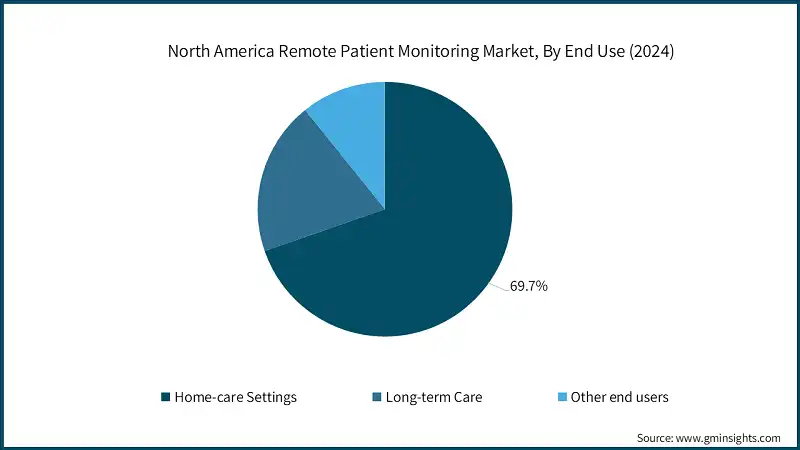
Based on end use, the North America remote patient monitoring market is bifurcated into home-care settings, long-term care, and other end users. Among these, the home-care settings segment accounts for 69.7% of the total market share.
- The home-care settings segment is emerging as a dominant area within the North America RPM market, driven by the growing preference for decentralized healthcare and the need to manage chronic conditions outside traditional clinical environments.
- Technological advancements have made RPM devices more user-friendly, accurate, and accessible for home use. These devices now offer real-time tracking of vital signs, automated alerts, and seamless data sharing with healthcare providers, empowering patients to manage their health proactively while reducing the need for frequent hospital visits.
- Many RPM systems are designed to integrate with smartphones and digital health platforms, allowing users to monitor their health metrics and share data with clinicians effortlessly. This connectivity enhances patient engagement and enables timely interventions, improving overall care outcomes.
- The COVID-19 pandemic significantly accelerated the adoption of home-based healthcare solutions. With patients seeking to minimize exposure to clinical environments, RPM devices have become essential tools for managing chronic conditions remotely. This trend has continued post-pandemic, reinforcing the role of RPM in decentralized healthcare delivery and driving sustained growth in the home-care segment.
Looking for region specific data?
U.S. Remote Patient Monitoring Market
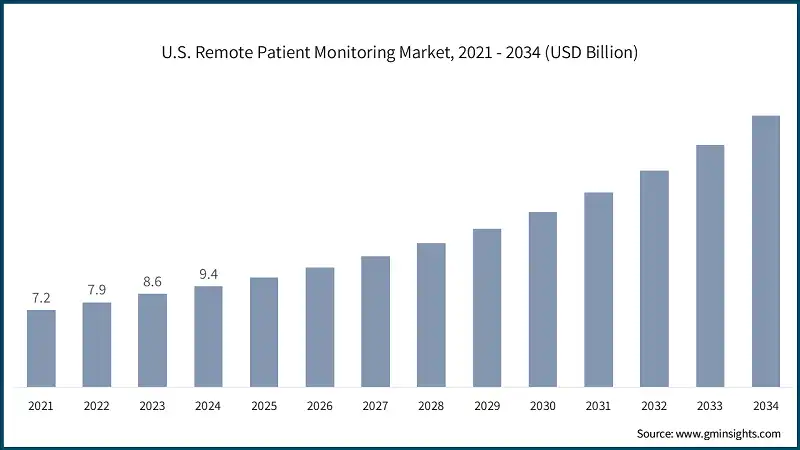
- The U.S. stands at the forefront of the North America remote patient monitoring (RPM) market, propelled by a high burden of chronic diseases, advanced healthcare infrastructure, and strong regulatory support. Cardiovascular diseases alone accounted for 934,509 deaths in 2021, while diabetes affected 38.4 million people or 11.6% of the population according to the CDC. This substantial and diverse patient base drives consistent demand for RPM solutions across all age groups.
- As healthcare delivery increasingly shifts toward decentralized and home-based care, patients are opting for convenient and precise RPM devices such as smart blood pressure monitors, wearable ECG systems, and pulse oximeters over frequent in-person visits. These technologies enable patients to track vital signs from home while healthcare providers receive continuous data for timely decision-making, reducing hospital readmissions and improving outcomes.
- These devices offer real-time monitoring, automated alerts, and seamless integration with digital health platforms, aligning with the U.S. healthcare system’s emphasis on precision, safety, and patient engagement. Their widespread availability through hospital networks, retail channels, and e-commerce platforms, coupled with CMS reimbursement policies, has significantly boosted adoption.
- The U.S. remains at the forefront of RPM innovation and adoption. Strong healthcare infrastructure, favorable reimbursement frameworks, and active public-private initiatives are reinforcing the region’s leadership in modern remote care and driving continued growth in the RPM market.
Canada Remote Patient Monitoring Market
Canada remote patient monitoring market accounted for USD 809.7 million in 2024 and is anticipated to show lucrative growth over the forecast period.
- Canada is emerging as a significant region in the North America RPM market, supported by its universal healthcare system and rising burden of chronic diseases such as cardiovascular conditions, diabetes, and respiratory disorders. National health data indicates that chronic illnesses account for the majority of healthcare utilization, highlighting the need for scalable, accurate, and user-friendly remote monitoring solutions.
- The growing prevalence of these conditions across all age groups underscores the importance of RPM devices that enable continuous, real-time monitoring of vital signs from home. Devices such as smart blood pressure monitors, wearable ECG systems, and pulse oximeters are increasingly being adopted to manage chronic conditions effectively, reducing the need for frequent hospital visits and improving patient outcomes.
- Canada’s healthcare system supports the integration of RPM technologies into chronic disease management programs, aligning with broader national efforts to enhance preventive care and reduce hospital readmissions. These trends reinforce Canada’s role as a key market for innovation and growth in the RPM sector, with strong potential for adoption of AI-powered analytics and wearable biosensors in the coming years.
North America Remote Patient Monitoring Market Share
The North America RPM market is defined by a mix of dominant players and innovative regional companies, creating a moderately consolidated yet highly competitive environment. Abbott Laboratories leads the market, driven by its strong portfolio of connected health solutions and leadership in continuous glucose monitoring through its FreeStyle Libre platform. Abbott’s emphasis on affordability, accessibility, and integration with digital health ecosystems has positioned it as a key innovator in RPM adoption across the region. Top five players such as Medtronic, Dexcom, Abbott Laboratories, Koninklijke Philips N.V., and Boston Scientific are collectively contributing 72% of market share.
To strengthen their market positions, these companies are adopting multi-pronged strategies such as partnerships, acquisitions, and technology integration. These efforts aim to improve accessibility and affordability of RPM devices while addressing evolving patient needs across homecare and hospital settings. The increasing integration of advanced features such as AI-driven predictive analytics, Bluetooth connectivity, and cloud-based platforms is further accelerating adoption in the region.
Overall, the North American RPM market is experiencing intensified competition and rapid technological advancement, as both established and emerging companies continue to evolve their offerings to meet the rising demand for effective remote care solutions.
North America Remote Patient Monitoring Market Companies
Prominent players operating in the North America remote patient monitoring industry are as mentioned below:
- Abbott Laboratories
- Baxter International
- BIOTRONIK SE & Co. KG
- Boston Scientific
- Dexcom
- F. Hoffmann-La Roche Ltd
- GE Healthcare
- Johnson & Johnson
- Koninklijke Philips N.V.
- Medtronic
- OMRON Healthcare
- Sotera Wireless
- VitalConnect
Philips is a leading player in the North America remote patient monitoring market, recognized for its strong portfolio of connected care solutions. The company emphasizes integrated platforms that combine advanced monitoring devices with cloud-based analytics to support real-time clinical decision-making. Philips’ strategic partnerships with healthcare systems and focus on interoperability enable seamless data exchange, improving patient engagement and reducing hospital readmissions across the U.S. and Canada.
Medtronic is a prominent player in the North America remote patient monitoring market, known for its leadership in chronic disease management and advanced medical technologies. The company offers comprehensive remote monitoring solutions, particularly for cardiac and diabetes care, combining device connectivity with AI-driven insights. Medtronic’s focus on expanding access through strategic alliances and digital health platforms positions it as a key contributor to improving care coordination and patient adherence across the region.
Boston Scientific plays a significant role in the remote patient monitoring landscape through its expertise in cardiovascular and electrophysiology solutions. The company leverages implantable devices integrated with remote monitoring capabilities to track patient health continuously. Its commitment to innovation and collaboration with providers ensures timely interventions, enhancing outcomes for patients with chronic conditions. Boston Scientific’s strong presence in North America is supported by its technology-driven approach and robust distribution network
North America Remote Patient Monitoring Industry News
- In July 2025, OMRON Healthcare and Tricog Health launched KeeboHealth, an AI-powered remote cardiac care platform integrating OMRON’s connected devices with Tricog’s real-time analytics to detect early signs of heart deterioration, which helped the company advance its ‘Going for Zero’ vision, improve cardiac outcomes.
The North America remote patient monitoring research report includes in-depth coverage of the industry with estimates and forecast in terms of revenue in USD Million from 2021 - 2034 for the following segments:
Market, By Product
- Cardiac monitoring devices
- Blood pressure monitoring devices
- Neurological monitoring devices
- Respiratory monitoring devices
- Multiparameter monitoring devices
- Blood glucose monitoring devices
- Fetal and neonatal monitoring devices
- Sleep monitoring devices
- Other monitoring devices
Market, By Application
- Cardiovascular diseases
- Cancer
- Diabetes
- Neurological disorders
- Infectious diseases
- Respiratory diseases
- Other applications
Market, By End Use
- Home-care settings
- Long-term care
- Other end use
The above information is provided for the following countries:
- U.S.
- Canada
Frequently Asked Question(FAQ) :
What are the upcoming trends in the North America remote patient monitoring market?
Key trends include the adoption of continuous, real-time monitoring devices, integration of AI and IoT for predictive analytics, and the increasing focus on hospital-at-home programs and value-based care models.
Who are the key players in the North America remote patient monitoring market?
Key players include Abbott Laboratories, Baxter International, BIOTRONIK SE & Co. KG, Boston Scientific, Dexcom, F. Hoffmann-La Roche Ltd, GE Healthcare, Johnson & Johnson, Koninklijke Philips N.V., Medtronic, and OMRON Healthcare.
How much revenue did the cardiac monitoring devices segment generate?
The cardiac monitoring devices segment holding a 19.6% market share, and is projected to reach USD 5.7 billion by 2034 with a CAGR of 11.2%.
What was the valuation of the home-care settings segment?
The home-care settings segment accounted for 69.7% of the total market share in 2024.
What was the market size of the North America remote patient monitoring market in 2024?
The market size was USD 10.2 billion in 2024, with a CAGR of 10.6% expected through 2034, driven by the high burden of chronic diseases and the growing demand for decentralized, technology-enabled care.
Which region within North America shows significant growth in the remote patient monitoring market?
Canada's remote patient monitoring market was valued at USD 809.7 million in 2024 and is anticipated to exhibit lucrative growth during the forecast period.
What is the projected size of the North America remote patient monitoring market in 2025?
The market is expected to reach USD 11.1 billion in 2025.
What is the projected value of the North America remote patient monitoring market by 2034?
The market is expected to reach USD 27.5 billion by 2034, fueled by advancements in AI, IoT, and biosensors, along with the shift toward value-based healthcare models.
North America Remote Patient Monitoring Market Scope
Related Reports