Summary
Table of Content

North America Cerebral Palsy Treatment Market
Get a free sample of this report
Form submitted successfully!
Error submitting form. Please try again.
Thank you!
Your inquiry has been received. Our team will reach out to you with the required details via email. To ensure that you don't miss their response, kindly remember to check your spam folder as well!
Request Sectional Data
Thank you!
Your inquiry has been received. Our team will reach out to you with the required details via email. To ensure that you don't miss their response, kindly remember to check your spam folder as well!
Form submitted successfully!
Error submitting form. Please try again.
North America Cerebral Palsy Treatment Market Size
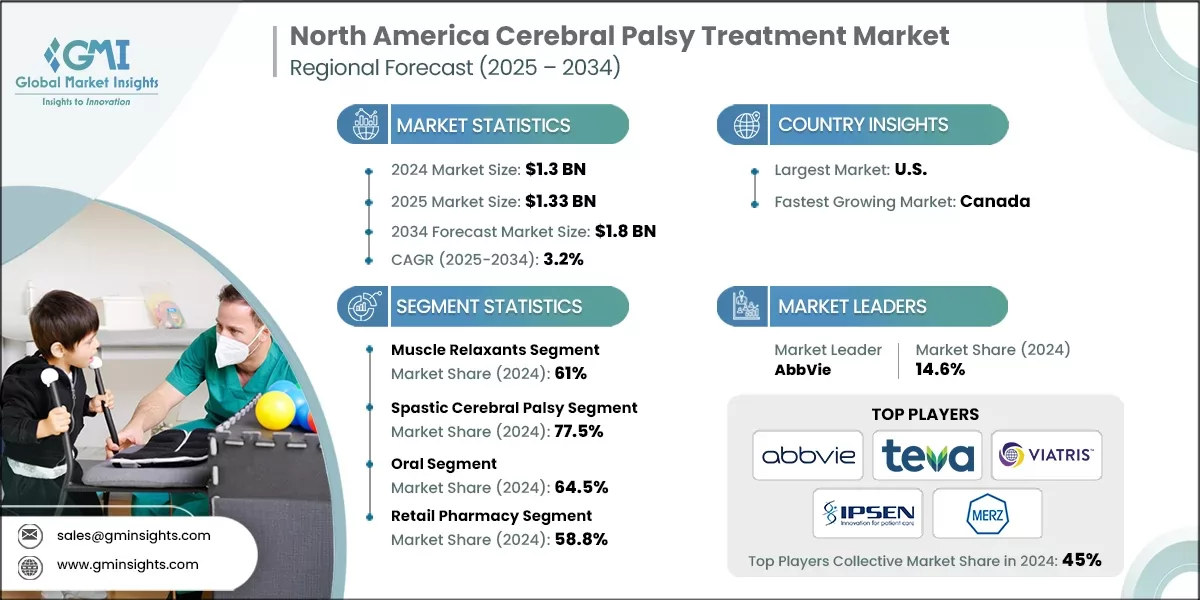
The North America cerebral palsy treatment market was valued at USD 1.3 billion in 2024 and is projected to grow from USD 1.33 billion in 2025 to USD 1.8 billion by 2034, registering a CAGR of 3.2% from 2025 to 2034, according to the latest report by Global Market Insights Inc. This strong growth is driven by rising prevalence of cerebral palsy and increased adoption of advanced therapies enhancing patient outcomes. Expanding healthcare access and ongoing R&D investments in novel treatment options further fuel market growth.
To get key market trends
According to 2023 data from the Centers for Disease Control and Prevention (CDC), cerebral palsy affects approximately 1 in 345 children in the U.S., making it the most common motor disability among children. In 2022, Cerebral Palsy Guidance reported that about 1 million children and adults in the U.S. live with symptoms of the condition. Major players in the industry include AbbVie Inc., Teva, VIATRIS, IPSEN, and Merz Pharmaceuticals.
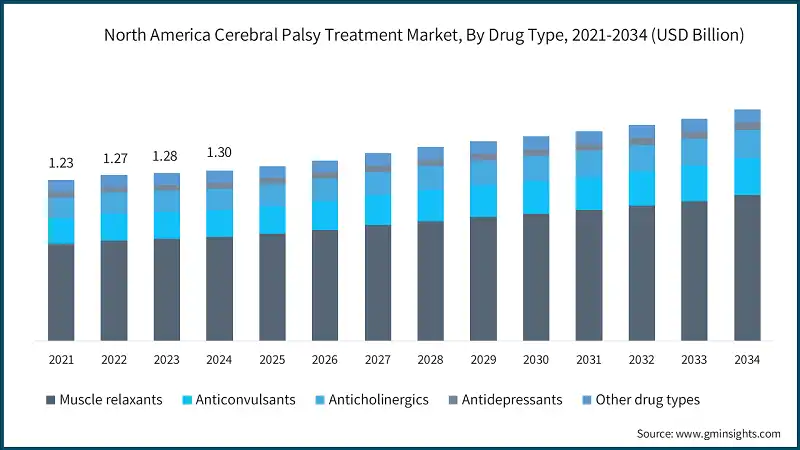
The market has increased from USD 1.23 billion in 2021 and reached USD 1.28 billion in 2023. Growth has been supported by advancements in oral medications, the development of targeted muscle relaxants, and the wider use of botulinum toxin injections, all of which have improved functional outcomes and symptom management. In addition, strong U.S.-based R&D and an active FDA approval pipeline are fostering the introduction of novel therapies, driving adoption across hospitals, ambulatory surgical centers, and home care settings.
Access to cerebral palsy care in the U.S. continues through Medicare, Medicaid, and private insurers. Comprehensive insurance coverage often includes medications, therapy sessions, and assistive devices. In 2023, Medicare served more than 65 million people, Medicaid covered nearly 83 million Americans, and CHIP supported 7.1 million children. Federal data indicates that 66.4% of the U.S. population had private insurance in 2021, ensuring broader access to specialized cerebral palsy treatment. Additionally, state-specific initiatives in 2023 extended coverage to 4.3 million individuals, further strengthening support for families in need of care.
Cerebral palsy (CP) treatment refers to a range of medical, surgical, therapeutic, and supportive interventions aimed at improving motor function, managing symptoms, and enhancing quality of life for individuals with CP. It may include physical, occupational, and speech therapy; medications to reduce muscle stiffness or spasms; orthopedic surgery; and assistive devices. Treatment is individualized and focuses on maximizing independence and functional abilities rather than curing the condition.
North America Cerebral Palsy Treatment Market Report Attributes
| Key Takeaway | Details |
|---|---|
| Market Size & Growth | |
| Base Year | 2024 |
| Market Size in 2024 | USD 1.3 Billion |
| Forecast Period 2025 – 2034 CAGR | 3.2% |
| Market Size in 2034 | USD 1.8 Billion |
| Key Market Trends | |
| Drivers | Impact |
| Rising prevalence of cerebral palsy | Increasing patient numbers are fueling the need for comprehensive and long-term treatment solutions. |
| Advancements in drug formulations | Enhanced efficacy and safety profiles are encouraging greater adoption of therapeutic options. |
| Increased awareness and early diagnosis | Early detection is leading to timely interventions and stronger uptake of available treatments. |
| Surging investments in research and development activities | Expanded R&D efforts are strengthening the pipeline with more effective and innovative treatment options. |
| Pitfalls & Challenges | Impact |
| Adverse effects associated with drugs | Drug-related side effects hinder adherence and create obstacles to consistent therapy use. |
| Opportunities: | Impact |
| Development of targeted therapies | Precision medicine strategies hold potential to improve outcomes while reducing adverse effects. |
| Strategic partnerships between pharma companies and pediatric hospitals | Partnerships between pharmaceutical companies and care providers will drive innovation and enhance access to advanced treatment options. |
| Market Leaders (2024) | |
| Market Leaders |
14.6% Market share |
| Top Players |
Collective market share in 2024 is 45% |
| Competitive Edge |
|
| Regional Insights | |
| Largest Market | U.S. |
| Fastest growing market | Canada |
| Future outlook |
|
What are the growth opportunities in this market?
North America Cerebral Palsy Treatment Market Trends
The growing prevalence of cerebral palsy (CP) in North America is driving expansion of the treatment market, largely due to drug therapies that manage conditions such as seizures and muscle spasticity. Estimates suggest that approximately 3 in 1,000 children or 1 in 345 will receive a CP diagnosis by 2025, with about 10,800 new U.S. cases each year.
- Today, more than 1 million Americans live with CP, many of whom rely on long-term medication to maintain quality of life. While CP incidence has remained relatively stable for decades, surveillance indicates a gradual rise in prevalence, particularly among infants born prematurely or underweight. Advances in neonatal care have improved survival rates, which has, in turn, increased the number of children living with CP.
- In 2024, the CDC-funded Autism and Developmental Disabilities Monitoring (ADDM) Network broadened its surveillance scope to include CP. This initiative aims to generate more accurate data on prevalence, diagnosis timelines, and geographic variations, with implications for long-term care planning.
- By expanding its scope, the ADDM supports earlier identification, better resource allocation, and deeper insights into comorbidities such as CP with autism spectrum disorder, providing policymakers and healthcare providers with valuable evidence for targeted interventions.
- Demand for CP treatments is largely medication-driven, with common drug classes including anticonvulsants (e.g., carbamazepine, oxcarbazepine) and antispasmodics. This creates strong incentives for drug developers to introduce more targeted therapies. Meanwhile, insurers both private payers and public programs such as Medicare and Medicaid face increasing pressure to adapt coverage policies to meet rising patient needs.
- With CP prevalence trending upward, reliance on drug-based care is expected to grow. Researchers, clinicians, and advocacy groups are intensifying their focus, supported by heightened investment in clinical trials, funding initiatives, and pharmaceutical innovation. These prevalence patterns will continue to shape growth in the North American CP treatment market.
North America Cerebral Palsy Treatment Market Analysis
Learn more about the key segments shaping this market
Based on the drug type, the North America cerebral palsy treatment market is segmented into muscle relaxants, anticonvulsants, anticholinergics, antidepressants, and other drug types. The muscle relaxants segment has asserted its dominance in the market, securing a significant market share of 61% in 2024, driven by their extensive application in alleviating spasticity and reducing muscle rigidity, key and highly disabling manifestations of cerebral palsy, has made them a primary choice in treatment protocols.
The segment is expected to exceed USD 1.1 billion by 2034, growing at a CAGR of 3.5% during the forecast period. On the other hand, the anticonvulsants segment is expected to grow with a CAGR of 3.1%. The segment is driven by their critical role in managing epilepsy and seizure disorders, which are common comorbidities among cerebral palsy patients, ensuring consistent demand.
- The muscle relaxants segment holds a dominant position, primarily due to their critical role in addressing spasticity, which affects nearly 75–80% of CP patients in the U.S. as of 2023. Spasticity often leads to muscle stiffness, contractures, and reduced mobility, making effective management essential for improving patient outcomes. Physicians commonly prescribe agents such as baclofen, tizanidine, and diazepam, with prescription rates rising by 12% between 2021 and 2023, reflecting their widespread clinical adoption.
- According to the National Institutes of Health (NIH), these therapies improve range of motion and daily functioning in 65–75% of patients, underscoring their efficacy. Technological advancements such as intrathecal baclofen pumps and targeted drug delivery systems have further enhanced precision and minimized systemic side effects, thereby improving treatment compliance and patient comfort.
- Moreover, muscle relaxants play an integral role in pre- and postoperative care, as well as rehabilitation programs, supporting faster recovery. With broad accessibility through hospital, retail, and specialty pharmacies, these medications ensure consistent availability for both pediatric and adult CP patients.
- The anticonvulsants segment held a market share of 16% in 2024. The segment is driven by the high prevalence of epilepsy and seizure disorders, affecting up to 35% of CP patients. Rising prescription rates, the availability of multiple drug options like levetiracetam and valproate, and innovative pediatric-friendly formulations enhance treatment precision and adherence. Additionally, broad insurance coverage and wide distribution through hospital, retail, and online pharmacies ensure accessibility, supporting consistent demand for long-term seizure management.
Based on the disease type, the North America cerebral palsy treatment market is segmented into spastic cerebral palsy, dyskinetic cerebral palsy, ataxic cerebral palsy, and mixed cerebral palsy. The spastic cerebral palsy segment accounted for the highest market share of 77.5% in 2024, due to its high prevalence and the significant demand for targeted therapies to manage associated muscle stiffness and movement difficulties.
- The spastic cerebral palsy segment dominates the treatment market due to its high prevalence. Sustained demand for assistive devices, orthopedic procedures, physical rehabilitation, and pharmacological therapies is driven by this large patient pool. Advancements in orthopedic and neurosurgical interventions, such as tendon-lengthening surgeries, are increasingly evident. Pediatric rehabilitation programs, in conjunction with these interventions, are significantly improving patient outcomes.
- Adoption of advanced technologies such as smart orthotics, robotic exoskeletons, and motion-tracking systems is rising, as they support both gait correction and muscle re-education. According to the NIH, robotic exoskeletons were available in 65% of U.S. rehabilitation centers in 2023. The CDC also reported a 40% increase in the adoption of smart orthotics between 2021 and 2023. Clinical studies indicate a 35% improvement in mobility when smart orthotics are combined with conventional therapy.
- Insurance coverage, including Medicaid and private payers, ensures affordability and accessibility, which collectively drives strong growth in this segment.
- The dyskinetic cerebral palsy segment accounted for 7.9% of the market share in 2024. This segment is advancing through neurosurgical and pharmacological interventions such as deep brain stimulation and intrathecal baclofen therapy, which effectively manage symptoms. Growing awareness, neonatal screening, and early detection are enabling more timely interventions. Expanded access to speech therapy, augmentative and alternative communication (AAC) systems, and assistive technologies further enhances patient outcomes. Consistent segment growth is supported by favorable insurance coverage and policy initiatives that strengthen holistic care delivery.
Based on the route of administration, the North America cerebral palsy treatment market is bifurcated into oral and injectable. The oral segment accounted for the highest market share of 64.5% in 2024, due to its ease of administration, patient compliance, and suitability for long-term management of cerebral palsy symptoms.
- The oral segment dominates because it is highly effective, widely accessible, and convenient for patients. Oral drugs encompass a broad range of therapeutic agents, including antispasmodics such as baclofen for reducing muscle spasticity, analgesics for pain relief, and antiepileptic medications for managing seizures, comorbidities frequently associated with CP. Since spasticity affects over 80% of CP patients, oral medications play a critical role in improving daily functioning and quality of life.
- Nutritional supplements further add value by supporting sufficient calorie intake and maintaining overall patient health. Oral formulations carry a significant advantage in terms of ease of administration, particularly for children, as they avoid more invasive options such as intramuscular or intravenous routes. This simplicity not only enhances patient compliance but also reduces caregiver burden.
- Additionally, oral drugs are cost-effective, with broad insurance coverage and availability of generics ensuring financial accessibility. Collectively, these advantages reinforce the dominance of oral therapies and their continued role as the first-line option in treatment guidelines for CP.
Learn more about the key segments shaping this market
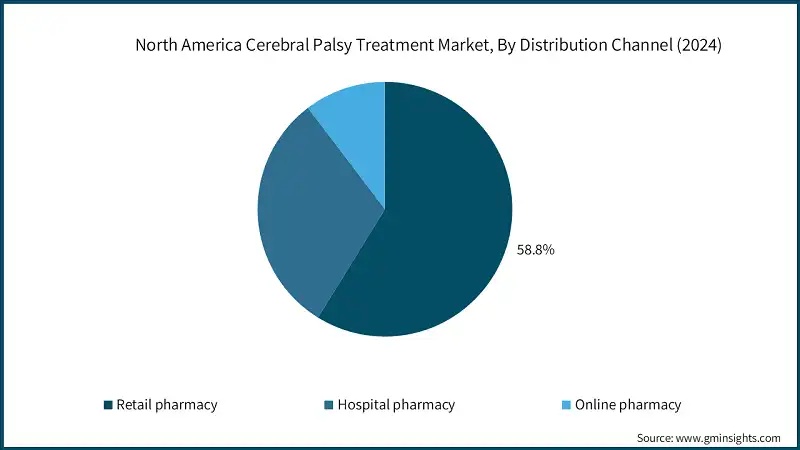
Based on the distribution channel, the North America cerebral palsy treatment market is segmented into retail pharmacy, hospital pharmacy, and online pharmacy. The retail pharmacy segment accounted for the highest market share of 58.8% in 2024, due to its widespread accessibility, convenience, and ability to provide timely medication refills for long-term cerebral palsy management.
- The retail pharmacy segment plays a key role as it drives growth through accessibility and reliable service delivery for patients. Retail pharmacists are increasingly recognized as essential care providers, offering personalized counseling on medication use, potential side effects, and adherence strategies-all of which are particularly important for caregivers managing the complex multi-drug regimens often required for CP patients.
- Retail pharmacies also enhance treatment adherence through initiatives such as medication synchronization and specialized adherence programs. These efforts significantly improve care quality and long-term clinical outcomes. By collaborating with healthcare providers, pharmacists support medication therapy management (MTM), quickly dispense drugs, and help resolve drug-related problems through physician coordination.
- This integration strengthens patient care by improving continuity of treatment and reducing complexity. Public confidence further fuels the segment’s growth according to the 2023 Wolters Kluwer Pharmacy Next survey, 79% of Americans trust pharmacists, underlining their critical role in chronic disease management and preventive care.
- The online pharmacy segment held a market share of 4.9% in 2024. Integration with telehealth enables remote consultations and seamless prescription fulfillment, improving efficiency in care delivery. Online platforms also provide educational resources on adherence, disease management, and lifestyle support, strengthening patient outcomes while enhancing trust. Together, these benefits highlight the growing importance of online pharmacies in improving access and convenience.
Looking for region specific data?
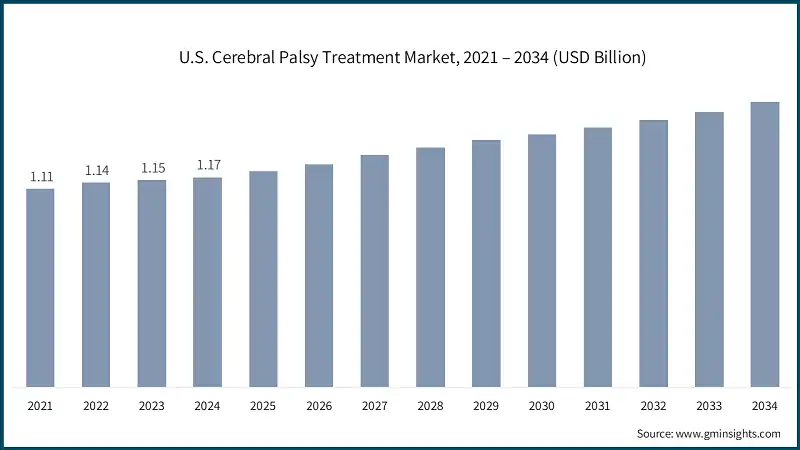
U.S. dominated the North America cerebral palsy treatment market with the 89.9% market share in 2024. The region has its advanced healthcare infrastructure, strong R&D pipeline, and extensive insurance coverage ensuring broad access to specialized treatments.
- The U.S. cerebral palsy treatment market was valued at USD 1.12 billion and USD 1.16 billion in 2021 and 2022, respectively. In 2024, the market size grew to USD 1.17 billion from USD 1.15 billion in 2023.
- One of the primary growth drivers is the country’s advanced healthcare infrastructure, which provides access to specialized hospitals, rehabilitation centers, and home care services equipped to effectively manage cerebral palsy. A robust research ecosystem and strong FDA pipeline accelerate the availability of revolutionary therapies, improving functional outcomes through medications, muscle relaxants, and injections.
- Comprehensive insurance coverage through Medicaid, Medicare, CHIP, and private insurers significantly reduces the financial burden on families, thereby supporting the adoption of higher treatment. In 2023, Medicare served more than 65 million beneficiaries, while Medicaid covered around 83 million Americans, ensuring broad access to cerebral palsy treatments.
- The integration of telehealth services and digital platforms is enhancing convenience in care delivery. Overall, the U.S. is firmly positioned as the market leader in North America for cerebral palsy treatment and long-term therapy management.
Canada cerebral palsy treatment market accounted for USD 131 million in 2024 and is anticipated to show lucrative growth over the forecast period.
- Rising government investments in healthcare infrastructure and supportive policies for inclusive care are improving access to advanced treatments. Awareness initiatives by healthcare organizations and advocacy groups are also driving early diagnosis and timely intervention, which are critical for effective cerebral palsy management.
- Canada’s universal healthcare system plays a key role in minimizing financial barriers by covering essential services, including medications, rehabilitation therapies, and assistive devices. Technological advancements such as botulinum toxin injections, targeted muscle relaxants, and non-invasive therapies are further enhancing treatment outcomes. The growing adoption of telehealth and digital platforms ensures that patients in remote areas gain access to specialized care, improving equity in treatment delivery.
- Additionally, collaborations between research institutes and pharmaceutical companies are fostering innovation, expanding the therapeutic pipeline, and driving long-term market growth.
North America Cerebral Palsy Treatment Market Share
Major players such as AbbVie Inc., Teva, VIATRIS, IPSEN, and Merz Pharmaceuticals collectively account for around 49% of the North America cerebral palsy treatment market. The industry shows a moderate level of consolidation, with a handful of leading pharmaceutical companies holding significant influence. Their competitive strength lies in diverse product pipelines, strong brand reputation, and extensive global reach.
These companies continuously advance through research and development, focusing on novel therapies, enhanced drug delivery methods, and broader treatment indications. Strategic collaborations, acquisitions, and partnerships enable them to expand geographically and tap into emerging opportunities.
Moreover, their sustained commitment to clinical trials and regulatory submissions supports the introduction of innovative therapies, ensuring steady leadership. By combining scientific expertise with substantial resources, these companies play a pivotal role in shaping treatment standards and driving the growth trajectory of the market.
North America Cerebral Palsy Treatment Market Companies
A few of the prominent players operating in the North America cerebral palsy treatment industry include:
- AbbVie
- amneal
- CHEPLAPHARM
- Dr. Reddy's
- GSK
- IPSEN
- Merz Pharmaceuticals
- Novartis
- Roche
- Teva
- UCB
- VIATRIS
- AbbVie
AbbVie leads the North America cerebral palsy treatment market with a 14.6% share in 2024. The company’s USP in this market is its flagship product, BOTOX (onabotulinumtoxinA), a well-established muscle relaxant widely used for managing spasticity. With proven clinical efficacy, long-lasting results, and strong physician familiarity, BOTOX is positioned as the preferred choice for targeted symptom relief in cerebral palsy patients.
Teva’s USP lies in its diverse cerebral palsy drug portfolio, which includes Lamotrigine ER tablets (anticonvulsant), Tizanidine (Zanaflex) for muscle relaxation, and Diazepam for spasticity-related symptoms. This multi-class offering supports comprehensive symptom management by addressing both the neurological and muscular aspects of cerebral palsy, while also leveraging Teva’s strong distribution network and affordability advantage.
North America Cerebral Palsy Treatment Industry News:
- In April 2023, CHEPLAPHARM acquired the global commercial rights to Eli Lilly’s Zyprexa portfolio, including ZypAdhera/Relprevv, Zyprexa IM2, Zyprexa Zydis/Velotab, and oral tablets. This acquisition strengthened CHEPLAPHARM’s CNS portfolio with a leading antipsychotic brand, enhancing its psychiatric care offerings and expanding its global footprint in mental health treatment.
- In January 2022, Amneal Pharmaceuticals, Inc. completed the acquisition of Saol Therapeutics’ Baclofen franchise, which includes Lioresal, LYVISPAH, and a pipeline product. This transaction bolstered Amneal’s neurology portfolio, expanded its commercial infrastructure, and positioned the company for growth in the biosimilar institutional market while reinforcing its role in specialty and institutional pharmaceuticals.
- In July 2021, Allergan, part of AbbVie, received FDA approval to expand BOTOX’s label for treating eight additional upper limb muscles in adult spasticity, including those in the elbow, forearm, hand, and thumb. With the inclusion of ultrasound-guided treatment, this approval broadened its therapeutic scope, strengthened AbbVie’s neurology market presence, and underscored its leadership in precision medicine.
The North America cerebral palsy treatment market research report includes an in-depth coverage of the industry with estimates and forecast in terms of revenue in USD Million from 2021 – 2034 for the following segments:
Market, By Drug Type
- Muscle relaxants
- Anticonvulsants
- Anticholinergics
- Antidepressants
- Other drug types
Market, By Disease Type
- Spastic cerebral palsy
- Hemiplegia
- Diplegia
- Quadriplegia
- Dyskinetic cerebral palsy
- Ataxic cerebral palsy
- Mixed cerebral palsy
Market, By Route of Administration
- Oral
- Injectable
Market, By Distribution Channel
- Retail pharmacy
- Hospital pharmacy
- Online pharmacy
The above information is provided for the following countries:
- U.S.
- Canada
Frequently Asked Question(FAQ) :
What are the upcoming trends in the North America cerebral palsy treatment market?
Key trends include advancements in neonatal care improving survival rates, increased focus on targeted therapies for spastic cerebral palsy, and growing adoption of innovative drug therapies for symptom management.
Who are the key players in the North America cerebral palsy treatment market?
Key players include AbbVie, Amneal, CHEPLAPHARM, Dr. Reddy's, GSK, IPSEN, Merz Pharmaceuticals, Novartis, Roche, and Teva.
Which region leads the North America cerebral palsy treatment market?
The United States dominated the market with an 89.9% share in 2024. Its advanced healthcare infrastructure, strong R&D pipeline, and extensive insurance coverage drive its leadership.
What was the valuation of the oral route of administration segment?
The oral route of administration segment held a 64.5% market share, attributed to its ease of use and suitability for long-term management of symptoms.
What is the market size of the North America cerebral palsy treatment in 2024?
The market size was USD 1.3 billion in 2024, with a CAGR of 3.2% expected from 2025 to 2034, driven by the rising prevalence of cerebral palsy and the adoption of advanced therapies improving patient outcomes.
How much revenue did the muscle relaxants segment generate?
The muscle relaxants segment accounted for 61% of the market share, driven by their extensive use in managing spasticity and muscle rigidity.
What is the projected size of the North America cerebral palsy treatment market in 2025?
The market is expected to reach USD 1.33 billion in 2025.
What is the projected value of the North America cerebral palsy treatment market by 2034?
The market is expected to reach USD 1.8 billion by 2034, fueled by expanding healthcare access and ongoing R&D investments in novel treatment options.
North America Cerebral Palsy Treatment Market Scope
Related Reports