Summary
Table of Content

North America Blood Collection Market
Get a free sample of this report
Form submitted successfully!
Error submitting form. Please try again.
Thank you!
Your inquiry has been received. Our team will reach out to you with the required details via email. To ensure that you don't miss their response, kindly remember to check your spam folder as well!
Request Sectional Data
Thank you!
Your inquiry has been received. Our team will reach out to you with the required details via email. To ensure that you don't miss their response, kindly remember to check your spam folder as well!
Form submitted successfully!
Error submitting form. Please try again.
North America Blood Collection Market Size
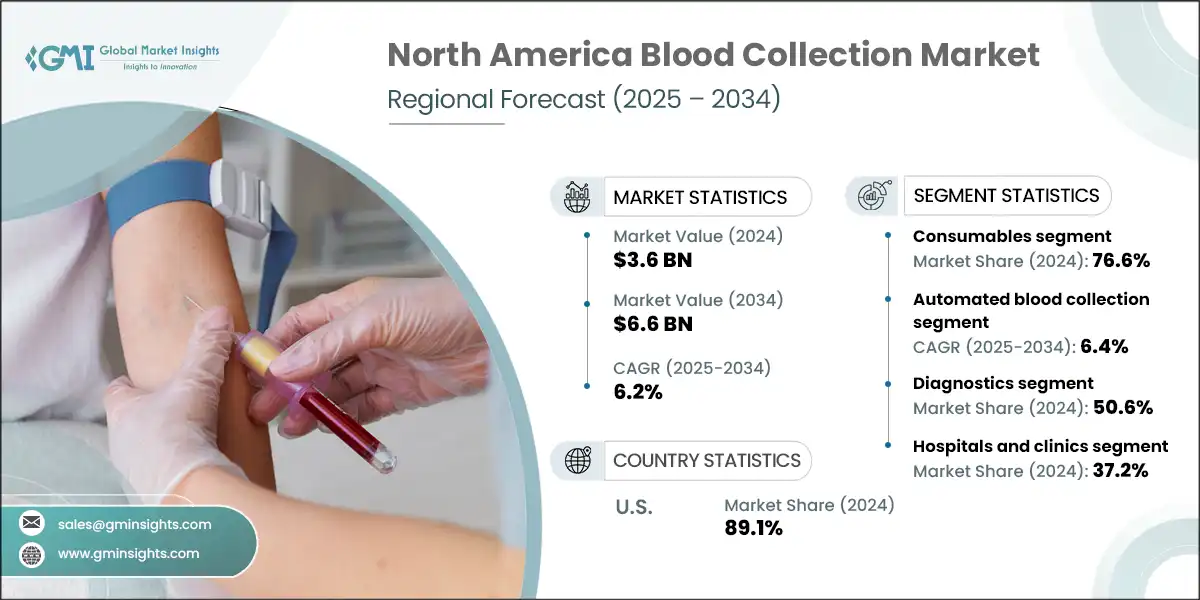
According to a recent study by Global Market Insights Inc., the North America blood collection market size was estimated at USD 3.6 billion in 2024. The market is expected to grow from USD 3.8 billion in 2025 to USD 6.6 billion in 2034, growing at a CAGR of 6.2%. The growth of the market is driven by the increasing prevalence of chronic and infectious diseases such as diabetes, cancer, cardiovascular disease, tuberculosis, and HIV, among others. Additionally, the rising number of surgical procedures and advancements in blood collection technologies are contributing to market expansion.
North America Blood Collection Market Key Takeaways
Market Size & Growth
- 2024 Market Size: USD 3.6 Billion
- 2034 Forecast Market Size: USD 6.6 Billion
- CAGR (2025–2034): 6.2%
Regional Dominance
- Largest Market: U.S.
- Fastest Growing Country: Canada
Key Market Drivers
- Increasing incidence of chronic and infectious diseases in North America.
- Growing demand for diagnostic testing.
- Increasing number of surgical procedures.
- Rising technological advancements in blood collection systems.
Challenges
- Needle-stick injuries and safety concerns.
- Stringent regulatory challenges.
Opportunity
- Rising government-led campaigns for promoting blood donation and disease screening.
Key Players
- Market Leader: Becton, Dickinson and Company led with over 10.2% market share in 2024.
- Leading Players: Top 5 players in this market include Fresenius SE & Co, McKesson Corporation, Nipro Corporation, Cardinal Health and Becton, which collectively held a market share of 40.2% in 2024.
Get Market Insights & Growth Opportunities
A blood collection device is a medical tool designed to draw blood samples safely and efficiently for purposes such as diagnostic testing, transfusions, and research. These devices play a key role in clinical environments and are widely used in hospitals, laboratories, and blood banks. Major players in the blood collection industry include Becton, Dickinson and Company, Terumo Corporation, Nipro Corporation, and McKesson Corporation.
The market comprises various devices, such as needles and syringes, vacuum blood collection tubes, lancet, which is estimated to USD 1.8 billion by 2032, and blood collection sets, each developed to enhance patient comfort, maintain sample integrity, and ensure the safety of healthcare professionals.
The North America blood collection market grew from USD 3.1 billion in 2021 to USD 3.4 billion in 2023, driven by increasing investments in healthcare infrastructure and diagnostics. The rising demand for routine testing, disease screening, and blood transfusions has significantly boosted the adoption of advanced blood collection devices. Furthermore, innovations such as automated collection systems, safety-engineered needles, and integrated digital tracking have improved procedural efficiency, enhanced sample quality, and minimized risks for both patients and healthcare professionals. The region’s focus on preventive care, streamlined clinical workflows, and improved patient outcomes continues to propel market growth.
The growing number of chronic and infectious diseases is fueling the expansion of the North America blood collection market. For example, the Centers for Disease Control and Prevention (CDC) reports that in 2024, approximately 129 million people in the U.S. are living with at least one major chronic condition, such as heart disease, cancer, or diabetes.
Chronic diseases remain a significant concern, making up five of the top ten leading causes of death in the country. This increasing number of patients highlights the need for accurate and early diagnosis, where blood collection plays a key role. Blood samples offer essential diagnostic insights, helping doctors provide timely medical care and create personalized treatment plans. Thus, the demand for reliable diagnostic tools is expected to drive substantial market growth.
In addition, advancements in blood collection technology are reshaping the North America blood collection market. New innovations, such as automated blood processing platforms, vacuum-assisted collection systems, and integrated digital tracking, have improved the efficiency, accuracy, and safety of blood collection processes. These technologies simplify workflows, reduce human errors, and enhance the quality of blood samples. For example, Terumo’s Reveos system, a user-friendly platform that automates and integrates the entire process of collecting and separating whole blood components. By making operations more straightforward and consistent, such innovations are encouraging hospitals, laboratories, and blood banks to adopt modern blood collection systems.
Blood collection is the process of collecting blood samples for diagnostic, therapeutic, or research purposes. Depending on the test type and the amount of blood needed, samples are collected using either venous or capillary methods. The process involves various tools and devices, such as needles, syringes, lancets, blood collection tubes, and automated systems, to ensure that samples are collected safely, hygienically, and accurately.
To get key market trends
North America Blood Collection Market Trends
- The increasing number of surgical procedures across North America is significantly driving the demand for blood collection at various stages of surgical care. Pre-surgical testing typically involves routine blood work, intraoperative procedures often require transfusions, and post-surgical monitoring depends on blood sample analysis.
- For instance, according to the Centers for Disease Control and Prevention (CDC), over 51.4 million inpatient surgical procedures are performed annually in the U.S., including 1.3 million cesarean sections, 395,000 coronary bypass grafts, and 1 million cardiac catheterizations. These figures highlight the growing need for reliable blood collection devices to support surgical interventions, particularly amid rising chronic illnesses and an aging population.
- Surgical procedures necessitate comprehensive pre-operative blood testing to evaluate patient readiness, identify underlying conditions, and plan for potential transfusions. This drives consistent demand for blood collection tubes, syringes, and related consumables in hospital settings.
- Additionally, innovations such as BD’s Preset Eclipse Arterial Blood Collection Syringe and Terumo’s Reveos system are improving surgical blood collection by offering automation, safety-engineered features, and precision sampling, which are especially beneficial in high-pressure operating environments. These trends contribute to the sustained growth of the market in surgical settings.
North America Blood Collection Market Analysis

Learn more about the key segments shaping this market
The North America blood collection market was valued at USD 3.1 billion in 2021. The market size reached USD 3.4 billion in 2023, from USD 3.3 billion in 2022.
Based on the product type, the North America blood collection market is segmented into system and consumables. The consumables segment accounted for 76.6% of the market in 2024 due to their precise sample collection and ability to support various types of blood tests. The segment is expected to exceed USD 5 billion by 2034, growing at a CAGR of 6.1% during the forecast period. On the other hand, the system segment is expected to grow with a CAGR of 6.6% from 2025 to 2034. The growth of this segment is driven by increasing demand for automation, advancements in technology, and the rising adoption of integrated systems across industries to enhance operational efficiency.
- Automated blood collection systems are designed to improve precision, safety, and efficiency, especially in high-volume environments such as hospitals and blood banks. These systems often use advanced technologies to standardize the collection process, reduce human error, and enhance the overall quality of blood samples.
- For example, Terumo Corporation’s Trima Accel Automated Blood Collection System enables the collection of blood components in various combinations using a single-needle procedure. This allows healthcare organizations to adapt to changing demands and optimize resource utilization effectively.
- In contrast, manual blood collection systems are widely used due to their simplicity, cost-effectiveness, and adaptability across different clinical settings. These systems typically involve basic tools such as needles, syringes, collection tubes, and blood bags, relying heavily on the skill and expertise of healthcare providers. Their affordability and versatility continue to drive market growth.
Based on the method, the North America blood collection market is segmented into manual blood collection and automated blood collection. The automated blood collection segment is growing with CAGR of 6.4%.
- In North America, the automated blood collection segment is experiencing significant growth, driven by the region’s advanced healthcare infrastructure and the increasing demand for efficient, standardized diagnostic procedures.
- These systems provide notable benefits, including enhanced safety, reduced human error, and improved sample consistency, making them particularly suitable for high-throughput environments such as hospitals and clinical laboratories.
- Automated blood collection systems are versatile and applicable across various healthcare settings, including hospitals, clinical laboratories, and blood banks. They are used for routine venipunctures, apheresis, component separation, and other specialized procedures. Their ability to streamline operations and maintain high-quality standards has made them essential in modern healthcare.
- For instance, data from America’s Blood Centers highlights the scale of blood collection in the U.S. In 2019, blood centers across the country collected approximately 10.9 million units of red blood cells and supplied around 2.5 million units of platelets and 2.7 million units of plasma to hospitals nationwide. This underscores the growing need for advanced blood collection devices to support efficient and reliable supply chains.
Based on application, the North America blood collection market is segmented into diagnostics, treatment, and research. The diagnostics segment accounted for the highest market share of 50.6% in 2024.
- The growth of the segment is primarily attributed to the increasing prevalence of chronic conditions such as diabetes, cardiovascular diseases, and cancer, which is significantly accelerating the demand for advanced blood collection systems.
- For instance, data from the Centers for Disease Control and Prevention (CDC) highlights the severity of cardiovascular diseases in the U.S. Heart disease remains the leading cause of death among men, women, and most racial and ethnic groups. Each year, approximately 805,000 people in the U.S. suffer a heart attack, with 605,000 experiencing their first.
- Therefore, as the prevalence of chronic diseases continues to rise, the demand for blood collection equipment also increases. These tools are essential for diagnostic testing, disease progression monitoring, and treatment evaluation. Their widespread use across healthcare settings significantly contributes to the growth of the diagnostics segment within the blood collection market.
- Additionally, the high volume of diagnostic testing in North America is supported by a well-developed healthcare infrastructure. The region is home to numerous hospitals, outpatient centers, and diagnostic laboratories that cater to diverse medical needs. Blood collection procedures are a fundamental component of preventive care and chronic disease management, further driving market growth.
Learn more about the key segments shaping this market
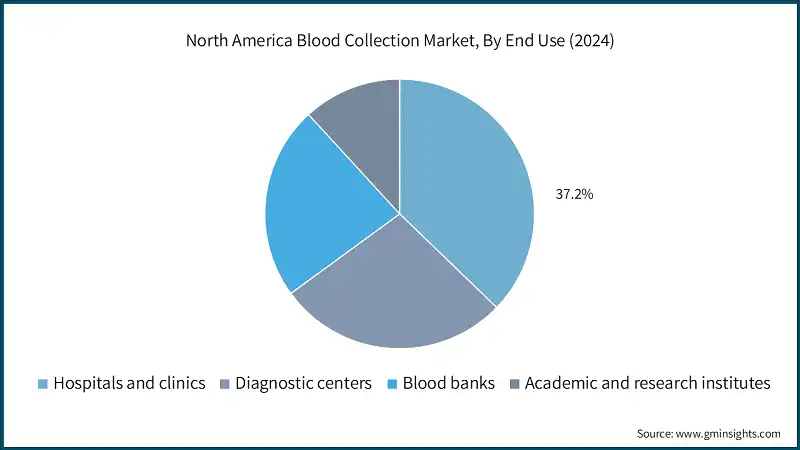
Based on end use, the market is segmented into hospitals and clinics, diagnostic centers, blood banks, and academic and research institutes. The hospitals and clinics segment accounted for the highest market share of 37.2% in 2024.
- The rising number of hospitals and clinics across North America is significantly boosting the demand for blood collection systems, as these facilities serve as primary end-users for both diagnostic and therapeutic applications. Blood collection is a critical function across departments, supporting routine testing, emergency care, surgical procedures, and chronic disease management.
- High patient volumes in these settings necessitate advanced devices that ensure consistent sample quality and minimize procedural errors. For instance, according to the National Blood Collection and Utilization Survey, hospitals used approximately 10.76 million units of red blood cells in 2021, underscoring the scale of demand.
- Further, this growing need for high-quality blood samples is driving the adoption of both manual and automated collection methods in hospitals and clinics, with a strong emphasis on safety, efficiency, and patient comfort, thereby fuelling market growth.
Looking for region specific data?
The U.S. dominated the North America blood collection market with a market share of 89.1% in 2024. The market is driven by rising incidence of chronic diseases and presence of robust healthcare infrastructure. Advancements in blood collection technology and a growing focus on early and accurate diagnosis also support market growth.
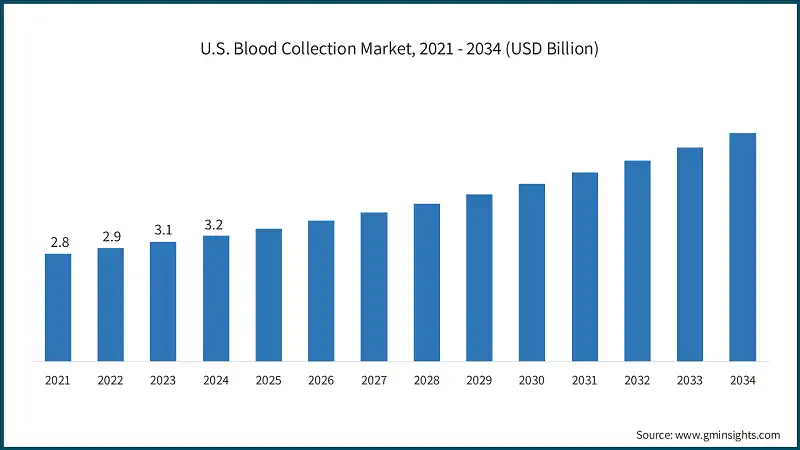
The U.S. blood collection market was valued at USD 2.8 billion and USD 2.9 billion in 2021 and 2022, respectively. The market size reached USD 3.2 billion in 2024, growing from USD 3.1 billion in 2023.
- This growth is largely attributed to the rising prevalence of chronic and infectious diseases, increasing blood donations, and demographic shifts across the country.
- For instance, according to Statista, an estimated 11.5 million successful blood donations were recorded in the U.S. in 2021, reflecting strong donor participation and public health engagement.
- Additionally, the U.S. benefits from a streamlined regulatory approval process, high public awareness, and significant investments in research and development, which support the steady introduction of innovative diagnostic solutions.
- Furthermore, the U.S. is emerging as a global leader in blood collection technologies, driven by its advanced healthcare infrastructure, widespread adoption of both manual and automated systems, and strong public-private collaboration.
Canada blood collection market accounted for USD 393.1 million in 2024 and is anticipated to show lucrative growth over the forecast period.
- The rising prevalence of chronic diseases, coupled with a growing aging population in Canada, is expected to significantly drive the growth of the North American blood collection market. These demographic and health trends are increasing the demand for reliable diagnostic and therapeutic solutions across the country.
- For instance, as of July 2024, 7.74 million Canadians were aged 65 or older. This represents 18.7% of the total population, and they are more susceptible to suffering from chronic and infectious diseases.
- Therefore, as healthcare needs evolve, the demand for dependable blood collection systems becomes increasingly critical. Blood collection plays a vital role in disease detection, treatment planning, and ongoing patient care.
- The growing need for high-quality diagnostic tools positions blood collection as a key segment within Canada’s expanding healthcare sector, supporting its shift toward more proactive and personalized medical care.
North America Blood Collection Market Share
- The top 5 players, such as Becton, Dickinson, and Company, Fresenius SE & Co, McKesson Corporation, Nipro Corporation, and Cardinal Health collectively held 40.2% of the market share in the North America blood collection market. These businesses keep their dominance by combining strong product lines, business alliances, legal clearances, and continuous innovation.
- McKesson Corporation remains a key player in the North American blood collection market, leveraging its extensive distribution network and healthcare technology solutions. Through its McKesson Distribution Solutions and Third Party Logistics (3PL) services, the company supports the delivery of blood collection products and related medical supplies to hospitals, laboratories, and clinics. McKesson’s strategic focus on streamlining supply chains and enabling the efficient commercialization of therapies, including blood-based diagnostics and treatments, positions it as a vital contributor to the region’s healthcare infrastructure.
- Companies operating in the North American blood collection market are increasingly adopting competitive pricing strategies to expand their footprint, especially in underserved and emerging areas. Leading players are addressing unmet clinical needs by introducing advanced blood collection systems designed for high-volume sampling, enhanced safety, and improved patient comfort.
- Emerging trends in the North American blood collection market include the development of high-throughput systems, the integration of digital tracking for sample integrity, and the rise of home-based blood collection kits. These innovations are driven by the growing demand for chronic disease diagnostics, personalized medicine, and decentralized healthcare delivery.
North America Blood Collection Market Companies
Some of the eminent market participants operating in the North America blood collection industry include:
- Abbott Laboratories
- Becton, Dickinson, and Company
- Cardinal Health
- FL MEDICAL
- Fresenius SE & Co
- Greiner
- Haemonetics Corporation
- McKesson Corporation
- Nipro Corporation
- QIAGEN
- Sarstedt AG & Co
- Siemens Healthineers
- Streck
- Terumo Corporation
- Thermo Fisher Scientific
- Becton, Dickinson, and Company (BD)
BD’s holds a significant share in blood collection market, through its comprehensive product portfolio. The company’s FDA cleared MiniDraw capillary blood collection system. BD also leads with its Vacutainer range, a gold standard in specimen management, reinforcing its dominance in clinical diagnostics.
- Terumo Corporation
Terumo Corporation has a strong global workforce of approximately 30,689 employees, which enables the company to drive innovation, and deliver high-quality solutions.
- Cardinal Health
Cardinal Health has a robust geographical presence, which enables it to enhance its market reach. Cardinal Health operates over 30 countries, thus comprising of a strong distribution network.
North America Blood Collection Market Report Attributes
| Key Takeaway | Details |
|---|---|
| Market Size & Growth | |
| Base Year | 2024 |
| Market Size in 2024 | USD 3.6 Billion |
| Forecast Period 2025 - 2034 CAGR | 6.2% |
| Market Size in 2034 | USD 6.6 Billion |
| Key Market Trends | |
| Drivers | Impact |
| Increasing incidence of chronic and infectious diseases in North America | Drives consistent demand for consumables such as blood collection tubes, vials, and related supplies. Chronic conditions require regular monitoring, boosting routine blood testing volumes. |
| Growing demand for diagnostic testing | Expands the use of blood collection tools in outpatient clinics, long-term care facilities, and home healthcare settings. |
| Increasing number of surgical procedures | Leads to higher blood sample throughput and necessitates efficient, high-capacity collection systems. |
| Rising technological advancements in blood collection systems | Enhances accuracy, safety, and workflow efficiency. Automation and digital integration support high-volume processing and reduce manual errors. |
| Pitfalls & Challenges | Impact |
| Needle-stick injuries and safety concerns | Lack of coordination among blood banks and hospitals can lead to inefficiencies and increased risk. |
| Stringent regulatory challenges | Increases operational complexity for manufacturers. Compliance with sterility, labeling, and traceability standards can slow product development and market entry. |
| Opportunities: | Impact |
| Rising government-led campaigns for promoting blood donation and disease screening | Increases demand for blood bags, tubes, and related supplies, especially in outreach and public health programs. |
| Market Leaders (2024) | |
| Market Leaders |
10.2% Market Share |
| Top Players |
Collective Market Share in 2024 is 40.2% |
| Competitive Edge |
|
| Regional Insights | |
| Largest Market | U.S. |
| Fastest Growing Market | Canada |
| Future outlook |
|
What are the growth opportunities in this market?
North America Blood Collection Industry News
- In December 2023, BD (Becton, Dickinson, and Company) announced that it received 510(k) clearance from the U.S. Food and Drug Administration (FDA) for an innovative blood collection device that uses a fingerstick to deliver lab-quality results for several commonly ordered blood tests. This regulatory approval provided BD with a competitive advantage in the market.
The North America blood collection market research report includes an in-depth coverage of the industry with estimates and forecast in terms of revenue in USD Million from 2021 - 2034 for the following segments:
Market, By Product Type
- System
- Automated systems
- Manual systems
- Consumables
- Venous
- Needles and syringes
- Double-ended needles
- Winged blood collection sets
- Standard hypodermic needles
- Other blood collection needles
- Blood collection tubes
- Serum-separating
- EDTA
- Heparin
- Plasma-separating
- Blood bags
- Other venous products
- Needles and syringes
- Capillary
- Lancets
- Micro-container tubes
- Micro-hematocrit tubes
- Warming devices
- Other capillary products
- Venous
Market, By Method
- Manual blood collection
- Automated blood collection
Market, By Application
- Diagnostics
- Treatment
- Research
Market, By End Use
- Hospitals and clinics
- Diagnostic centers
- Blood banks
- Academic and research institutes
The above information is provided for the following countries:
- U.S.
- Canada
Frequently Asked Question(FAQ) :
What is the market size of the North America blood collection in 2024?
The market size was USD 3.6 billion in 2024, with a CAGR of 6.2% expected through 2034. The growth is driven by the increasing prevalence of chronic and infectious diseases.
What is the projected value of the North America blood collection market by 2034?
The market is projected to reach USD 6.6 billion by 2034, supported by technological innovations and the growing demand for blood collection in diagnostics and surgical settings.
How much revenue did the consumables segment generate in 2024?
The consumables segment generated approximately 76.6% of the market revenue in 2024 and is expected to exceed USD 5 billion by 2034.
What was the growth rate of the automated blood collection segment?
The automated blood collection segment is growing at a CAGR of 6.4% till 2034, led by advancements in automation and precision sampling technologies.
Which segment held the highest market share in 2024?
The diagnostics segment accounted for the highest market share of 50.6% in 2024, owing to the increasing need for early and accurate disease diagnosis.
Which country dominated the North America blood collection sector?
The U.S. dominated the market with an 89.1% share in 2024. The market growth is driven by strong healthcare systems, more chronic diseases, and advanced blood collection tech.
What are the key trends in the North America blood collection market?
Key trends include more surgeries, innovative blood collection devices, and rising hospital consumables demand.
Who are the key players in the North America blood collection industry?
Key players include Abbott Laboratories, Becton, Dickinson, and Company, Cardinal Health, FL MEDICAL, Fresenius SE & Co, Greiner, Haemonetics Corporation, McKesson Corporation, Nipro Corporation, QIAGEN, Sarstedt AG & Co.
North America Blood Collection Market Scope
Related Reports