Summary
Table of Content

Non-Aerosol Body Mist Market
Get a free sample of this report
Form submitted successfully!
Error submitting form. Please try again.
Thank you!
Your inquiry has been received. Our team will reach out to you with the required details via email. To ensure that you don't miss their response, kindly remember to check your spam folder as well!
Request Sectional Data
Thank you!
Your inquiry has been received. Our team will reach out to you with the required details via email. To ensure that you don't miss their response, kindly remember to check your spam folder as well!
Form submitted successfully!
Error submitting form. Please try again.
Non-Aerosol Body Mist Market Size
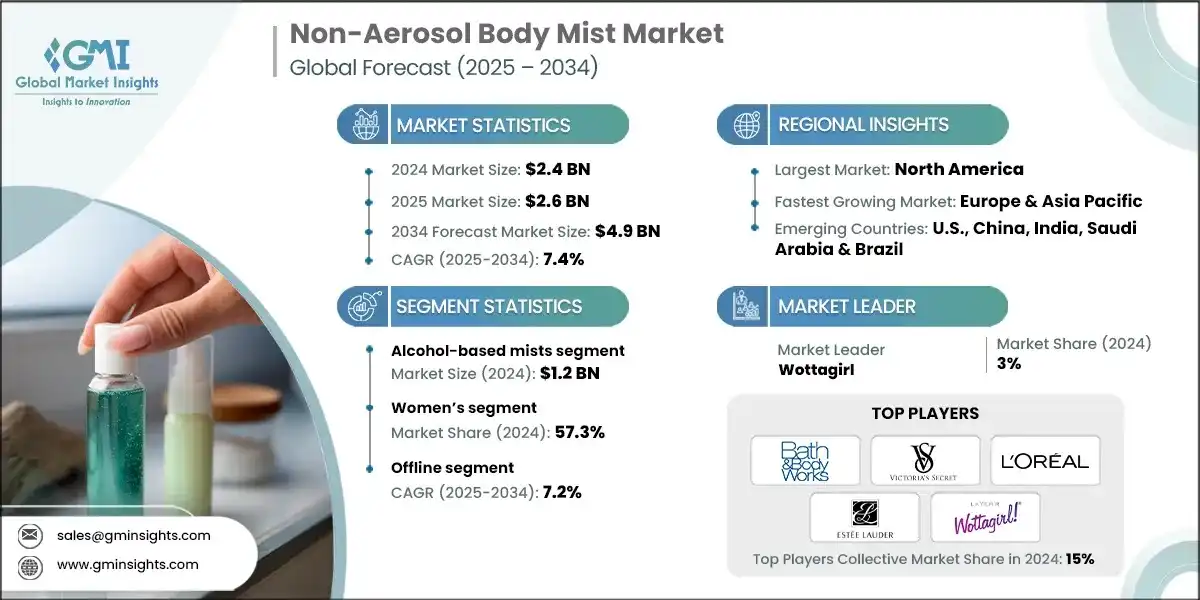
The non-aerosol body mist market was estimated at USD 2.4 billion in 2024. The market is expected to grow from USD 2.6 billion in 2025 to USD 4.9 billion in 2034, at a CAGR of 7.4% according to latest report published by Global Market Insights Inc.
Non-Aerosol Body Mist Market Key Takeaways
Market Size & Growth
- 2024 Market Size: USD 2.4 Billion
- 2025 Market Size: USD 2.6 Billion
- 2034 Forecast Market Size: USD 4.9 Billion
- CAGR (2025–2034): 7.4%
Key Market Drivers
- Health- & skin-friendly formulations.
- Wellness & self-care trend.
- Premiumization & multipurpose formulations.
Challenges
- Market saturation & differentiation difficulties.
- Consumer concerns over skin sensitivity & alcohol use.
Opportunity
- Clean, natural, & eco-friendly innovation.
- Expansion through e-commerce & social media.
Key Players
- Market Leader: Wottagirl led with over 3% market share in 2024.
- Leading Players: Top 5 players in this market include Wottagirl, Bath & Body Works, Victorias Secret, LOréal, Estée Lauder, which collectively held a market share of 15% in 2024.
Get Market Insights & Growth Opportunities
- The non-aerosol body mist market is growing due to the transition toward health and skin-friendly products. The public is becoming increasingly aware that traditional aerosol sprays are often made with alcohol and synthetic propellants and have indicated that they would rather choose milder options. Non-aerosol body mists are water based and have botanical extracts, vitamins, and skin moisturizers such as aloe or glycerin. These ingredients not only offer a pleasant scent but also offer nourishment and hydration for the skin and might even be appropriate for sensitive skin. Non-aerosol body mists are also aligned with the clean beauty movement focusing on safe and transparent ingredient lists. According to the Environmental Working Group (EWG), 73% of consumers in the United States now prefer personal care products that contain natural or otherwise non-toxic ingredients, which certainly demonstrates this trend starting to solidify with consumers.
- In addition, the wellness and self-care movement has driven consumer behavior in consideration of personal care. Body mists are not simply fragrance products and can be part of a daily ritual, which supports emotional well-being and relaxation. Body mists have a lighter and refreshing base which can allow for use several times per day, providing an indulgent yet refreshing moment for consumers. This emotional connection to the experience of fragrance combined with the self-care ritual surrounding body mists has provided more opportunity for acceptance in the daily routine of consumers with age and needs towards overall wellness and lifestyle.
- Additionally, the market is experiencing a shift toward premiumization and multifunctionality in the types of products available. Brands are introducing body mists that combine fragrance with skincare benefits, like anti-aging protection, UV defense, hydration, etc. catering to consumers seeking efficiency and added value. These premium formulations often tout natural, high-quality ingredients and arrive dressed in chic packaging that initially appeals to urban city dwellers and aspirational consumers. The merger of luxe, beneficial use, and wellness is moving the category of non-aerosol body mists and new body mists into a broader category of products, as a category, in personal care.
To get key market trends
Non-Aerosol Body Mist Market Trends
- The non-aerosol body mist industry is experiencing a significant surge in demand due consumers preference towards lighter, fresher products for everyday use. This largely departing from the traditional heavy perfume and aerosol spray market, we are seeing a preference towards body mists that offer a light fragrance and a gentler scratch on the skin. Furthermore, the growing popularity in alcohol-free, water-based products with natural ingredients (i.e. aloe vera, chamomile, essential oils, etc.) can largely be credited to the demand. Not only is this an ideal personal fragrance, but it adds hydration and soothing properties taking another layer of care of the wearers skin, particularly for those with sensitive skin. Moreover, the clean beauty market has helped drive this demand, as customer increasingly climb towards transparent and ethical ingredient sourcing and wellness and sustainability in product offerings.
- In addition, the explosion of body mists into the wellness and self-care routines is noteworthy trend in the evolving marketplace. These products are increasingly positioned as more than just fragrances, but a key element of a holistic lifestyle focused on emotional wellness and personal pampering. Many non-aerosol body mists now possess added skin-care benefits with functional ingredients like hyaluronic acid, silk proteins, and vitamins to address the demands of busy consumers looking for multi-use products. This trend parallels growth within the personal care industry, with users wanting products that are sensory pleasing while still providing skin benefits. Brands are addressing this consumer behaviour through creative and innovative packaging solutions and formulations that combine luxury with utility. These products solidify body mists as a staple of contemporary beauty and wellness routines while addressing the consumer who desires both utility and pampering.
Non-Aerosol Body Mist Market Analysis
Learn more about the key segments shaping this market
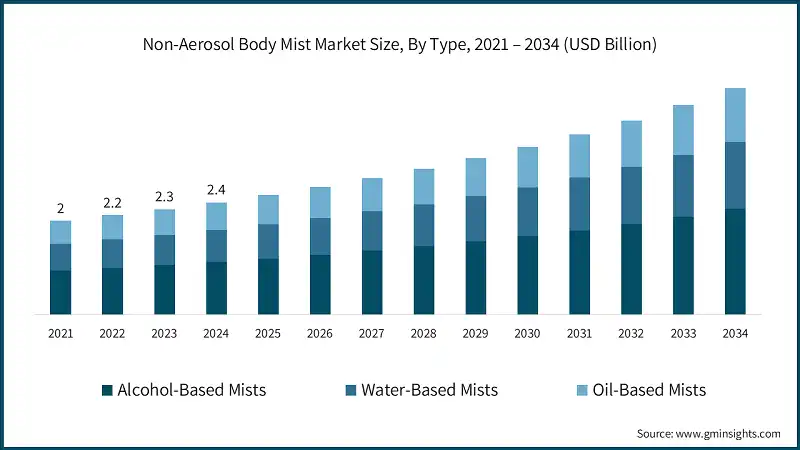
Based on type, the market is categorized into alcohol-based mists, water-based mists and oil-based mists. The alcohol-based mists accounted for revenue of around USD 1.2 billion in 2024 and is anticipated to grow at a CAGR of 7.3% from 2025 to 2034.
- Unlike traditional aerosol sprays, these mists offer a more controlled and skin-friendly application, often formulated with lower alcohol concentrations that balance longevity with reduced skin irritation. Consumers appreciate the refreshing feeling and quick evaporation of alcohol-based mists, which makes them ideal for use in warm climates or active lifestyles.
- Additionally, many brands are enhancing these formulations with added skincare benefits such as botanical extracts, vitamins, and antioxidants to appeal to health-conscious buyers. The versatility of alcohol-based mists also supports layering with other personal care products, allowing users to customize their scent profiles.
Based on end use of non-aerosol body mist market consists of women, men and unisex. The women’s emerged as leader and held 57.3% of the total market share in 2024 and is anticipated to grow at a CAGR of 7.3% from 2025 to 2034.
- Women have traditionally been the primary consumers of personal care and fragrance products, and this trend remains strong due to their higher engagement with beauty routines and wellness-oriented lifestyles. Non-aerosol body mists, with their gentle application and skin-friendly formulations, align well with the preferences of female consumers who seek products that combine fragrance with hydration, soothing effects, and clean ingredients.
- Additionally, the rise of self-care culture has further fueled demand, as women increasingly incorporate body mists into their daily rituals for relaxation and mood enhancement. Brands have responded by launching a wide variety of scents tailored to feminine preferences ranging from floral and fruity to gourmand and musky, often supported by elegant packaging and targeted marketing campaigns.
Learn more about the key segments shaping this market
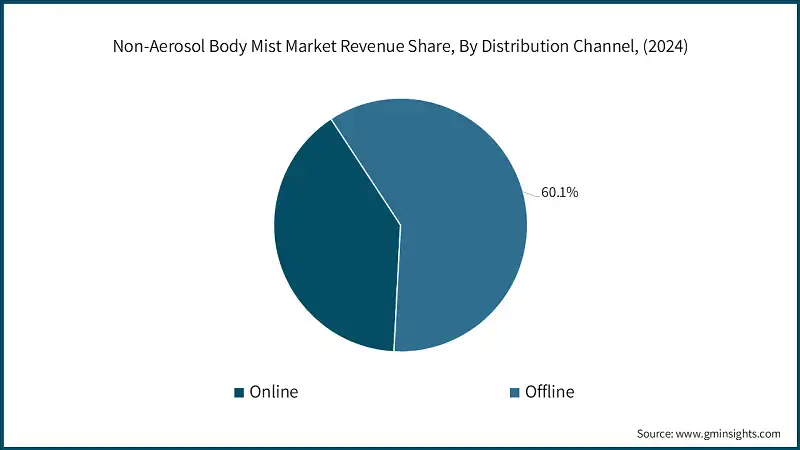
Based on distribution channel of non-aerosol body mist market consists of online and offline. The offline distribution channel emerged as leader and held 60.1% of the total market share in 2024 and is anticipated to grow at a CAGR of 7.2% from 2025 to 2034.
- Consumers purchasing body mists frequently prefer to test fragrances in person, evaluating scent profiles, texture, and skin compatibility before planning. Brick-and-mortar stores including supermarkets, beauty specialty stores, pharmacies, and department stores provide this opportunity, along with personalized assistance from sales staff.
- Additionally, offline channels benefit from strong brand visibility through in-store promotions, product sampling, and seasonal displays, which enhance consumer engagement and impulse buying. Many leading brands also invest in exclusive retail partnerships and experiential marketing campaigns to attract foot traffic and build brand loyalty.
Looking for region specific data?
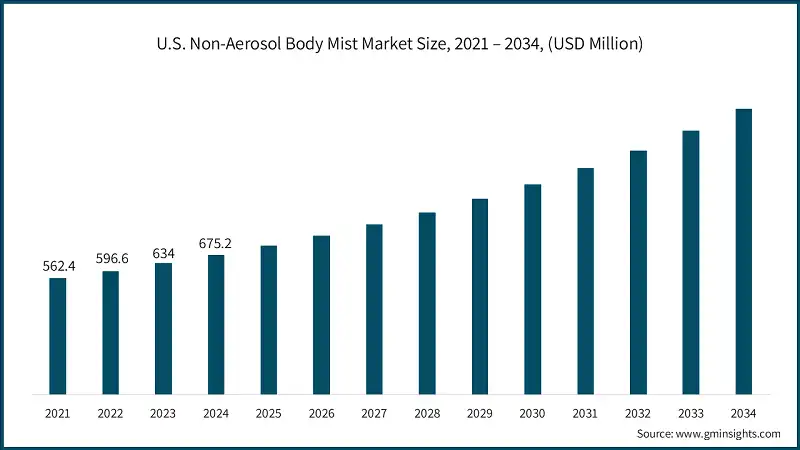
The U.S. dominates an overall North America non-aerosol body mist market and valued at USD 675.2 million in 2024 and is estimated to grow at a CAGR of 7.5% from 2025 to 2034.
- American consumers increasingly favor body mists as part of their daily grooming routines, appreciating their lightweight, refreshing nature and skin-friendly formulations. These products offer a more casual and versatile alternative to traditional perfumes, aligning with the growing trend of scent layering and self-expression. The wellness movement has further elevated body mists, positioning them not just as fragrance products but as tools for emotional well-being and self-care.
In the European non-aerosol body mist market, Germany is expected to experience significant and is expected to witness promising growth from 2025 to 2034.
- German consumers are increasingly favoring lighter, skin-friendly fragrance options that can be used daily, making non-aerosol body mists a popular alternative to traditional perfumes. These products are often formulated with natural ingredients and hydrating elements, which resonate well with the country’s growing demand for clean beauty and dermatologically safe personal care. Moreover, Germany’s emphasis on sustainability and eco-conscious consumption is driving interest in non-aerosol formats, which are perceived as more environmentally friendly due to their lack of propellants and compatibility with recyclable or refillable packaging.
In the Asia Pacific non-aerosol body mist market, the China held 32.4% share in 2024 and is anticipated to grow at a CAGR of 8% from 2025 to 2034.
- Chinese consumers are increasingly embracing personal care products that offer both functional and sensory benefits, and non-aerosol body mists fit perfectly into this trend. These products are seen as lightweight, skin-friendly alternatives to traditional perfumes, often enriched with natural ingredients and moisturizing agents that appeal to health-conscious buyers. The growing influence of wellness culture and self-care routines, especially among younger demographics, has further boosted demand for body mist as part of daily grooming and emotional well-being practices.
In the Middle East and Africa non-aerosol body mist market, Saudi Arabia held 29.4% market share in 2024 promising growth from 2025 to 2034.
- Fragrance plays a deeply rooted role in Saudi culture, where personal grooming and scent are integral to daily life and social norms. Non-aerosol body mists, offering lighter and more skin-friendly alternatives to traditional perfumes, are gaining popularity among both younger and more health-conscious consumers. These products are often infused with natural ingredients and moisturizing agents, aligning with the growing demand for clean beauty and wellness-focused personal care. Moreover, Saudi Arabia’s increasing urbanization and rising disposable income are fueling demand for premium and niche beauty products, including body mists that combine fragrance with skincare benefits.
Non-Aerosol Body Mist Market Share
- In 2024, the prominent manufacturers in non-aerosol body mist industry are Bath & Body Works, Victoria’s Secret, L'Oréal, Estée Lauder and Wottagirl collectively held the market share of ~15%.
- Bath & Body Works introduces over 200 new scents annually, collaborating with top-tier perfumers and global fragrance houses to capture emerging trends with precision. The "Everyday Luxuries" line, inspired by high-end perfumes yet affordably priced, targets younger consumers seeking premium experience without luxury costs. The brand also partners with Accenture to overhaul its technology stack, utilizing AI and MarTech to deliver enhanced personalization and improve operational efficiency. These efforts in scent innovation, premium-inspired products, and digital transformation reinforce Bath & Body Works' leadership in the body mist market.
- Victoria’s Secret has transformed its beauty portfolio, particularly body mists, by shifting from a glam-focused image to one centered on inclusivity, diversity, and authentic consumer representation. With scents priced under $30 and positioned as aspirational yet accessible, the brand appeals to a wide demographic. By leveraging influencer marketing and seasonal pop-culture collaborations, Victoria’s Secret revitalizes consumer engagement while maintaining its iconic aesthetics. This strategic evolution ensures the brand remains relevant and competitive in the mass fragrance market.
Non-Aerosol Body Mist Market Companies
Major players operating in the non-aerosol body mist industry include:
- Bath & Body Works
- Chanel
- Coty Inc.
- Dior
- Estée Lauder
- L’Occitane en Provence
- L'Oréal
- Pacifica Beauty
- Procter & Gamble
- Revlon Inc.
- Shiseido Company, Limited
- Sol de Janeiro
- The Body Shop
- Unilever
- Victoria’s Secret
L’Oréal’s leadership in the fragrance sector is driven by its expansive Research and Innovation network, which includes over 4,000 global experts and hundreds of annual patents. The company emphasizes sustainability through investments in green sciences and biotech, collaborating with startups to develop bio-based and microbial-derived ingredients that combine performance with eco-consciousness. L’Oréal also leads in refillable and recyclable packaging, showcased at industry events, solidifying its position as a pioneer in sustainable and science-driven fragrance innovation.
Estée Lauder redefines fragrance experiences by integrating advanced technology with luxury craftsmanship. Its collaboration with Exuud introduces the Soliqaire smart delivery system, which uses plant-based polymers for controlled, heat-free scent release, enhancing longevity, personalization, and sustainability. The brand’s Maison des Parfums Fragrance Atelier in Paris incorporates AI, neuroscience, and rapid prototyping to reduce development cycles by 30 to 50 percent, driving innovation in premium fragrances. These advancements underscore Estée Lauder's dedication to immersive, high-end, and technologically advanced fragrance solutions.
Non-Aerosol Body Mist Market Report Attributes
| Key Takeaway | Details |
|---|---|
| Market Size & Growth | |
| Base Year | 2024 |
| Market Size in 2024 | USD 2.4 Billion |
| Market Size in 2025 | USD 2.6 Billion |
| Forecast Period 2025 - 2034 CAGR | 7.4% |
| Market Size in 2034 | USD 4.9 Billion |
| Key Market Trends | |
| Drivers | Impact |
| Health- & skin-friendly formulations | Encourages adoption among sensitive-skin consumers, boosting demand for gentle, alcohol-free mists. |
| Wellness & self-care trend | Positions body mist as part of daily rituals, increasing frequency of use and emotional brand connection. |
| Premiumization & multipurpose formulations | Drives value perception and willingness to spend more on mists with added skincare benefits. |
| Pitfalls & Challenges | Impact |
| Market saturation & differentiation difficulties | Intensifies competition, making it harder for brands to stand out without strong innovation or branding. |
| Consumer concerns over skin sensitivity & alcohol use | Limits market reach, pushing brands to reformulate and educate consumers on safety and benefits. |
| Opportunities: | Impact |
| Clean, natural, & eco-friendly innovation | Appeals to sustainability-conscious buyers, opening doors for green product lines and packaging. |
| Expansion through e-commerce & social media | Enables direct consumer engagement, viral marketing, and broader reach for niche and emerging brands. |
| Market Leaders (2024) | |
| Market Leaders |
3% market share |
| Top Players |
Collective market share in 2024 is 15% |
| Competitive Edge |
|
| Regional Insights | |
| Largest Market | North America |
| Fastest Growing Market | Europe & Asia Pacific |
| Emerging Country | U.S., China, India, Saudi Arabia & Brazil |
| Future Outlook |
|
What are the growth opportunities in this market?
Non-Aerosol Body Mist Industry News
- In May 2025, Bath & Body Works, in partnership with Firmenich perfumers, launched the "Sweetest Song" fine fragrance mist, a "neo-gourmand" scent specifically crafted to cater to the evolving preferences of millennials and Gen Z consumers.
- In October 2025, Bath & Body Works expanded its seasonal product portfolio by introducing its 2025 holiday collection, which prominently featured the Strawberry Snowflakes and Cinnamon Sugar Pretzel Cookie fine fragrance mists, designed to enhance the festive experience.
- In July 2025, Victoria’s Secret debuted its "Dear Autumn" seasonal body mist collection, offering captivating scents such as Dreamy Apple Orchard and Cozy Vanilla Cashmere, aimed at evoking the essence of autumn.
- In 2024, L’Oréal launched the Infallible 3 Second Microfine Setting Mist, an innovative lightweight, non-aerosol spray engineered to set makeup for up to 36 hours while ensuring rapid drying for user convenience.
The non-aerosol body mist market research report includes in-depth coverage of the industry, with estimates & forecast in terms of revenue (USD Billion) and volume (Million Units) from 2021 to 2034, for the following segments:
Market, By Type
- Alcohol-based mists
- Water-based mists
- Oil-based mists
Market, By Fragrance
- Floral
- Fruity
- Citrus
- Others (spicy, woody, etc.)
Market, By Pack Size
- 30-60 ml
- 100-150 ml
- 200-300 ml
Market, By Packaging
- Plastic bottles
- Glass bottles
- Refillable bottles
Market, By Price
- Low
- Medium
- High
Market, By End Use
- Women
- Men
- Unisex
Market, by Distribution Channel
- Online
- E-commerce
- Company websites
- Offline
- Supermarkets/hypermarkets
- Specialty stores/ mega retail stores
- Convenience stores (departmental, independent)
The above information is provided for the following regions and countries:
- North America
- U.S.
- Canada
- Europe
- Germany
- UK
- France
- Italy
- Spain
- Asia Pacific
- China
- Japan
- India
- South Korea
- Australia
- Indonesia
- Malaysia
- Latin America
- Brazil
- Mexico
- Argentina
- MEA
- Saudi Arabia
- UAE
- South Africa
Frequently Asked Question(FAQ) :
What is the market size of the non-aerosol body mist in 2024?
The market size was USD 2.4 billion in 2024, with a CAGR of 7.4% expected through 2034 driven by the shift toward health- and skin-friendly products and wellness trends.
What is the projected value of the non-aerosol body mist market by 2034?
The non-aerosol body mist market is expected to reach USD 4.9 billion by 2034, propelled by premiumization, multifunctional formulations, and clean beauty movement.
What is the current non-aerosol body mist market size in 2025?
The market size is projected to reach USD 2.6 billion in 2025.
How much revenue did the alcohol-based mists segment generate in 2024?
Alcohol-based mists generated around USD 1.2 billion in 2024 and is anticipated to grow at a CAGR of 7.3% from 2025 to 2034.
What was the valuation of the women's end-use segment in 2024?
The women's segment held 57.3% of the total market share in 2024 and is anticipated to grow at a CAGR of 7.3% from 2025 to 2034.
What is the growth outlook for offline distribution channel from 2025 to 2034?
Offline distribution channel held 60.1% market share in 2024 and is anticipated to grow at a CAGR of 7.2% through 2034, driven by in-person fragrance testing and personalized assistance.
Which region leads the non-aerosol body mist market?
The U.S. market was valued at USD 675.2 million in 2024 and is estimated to grow at a CAGR of 7.5% from 2025 to 2034. Strong wellness movement and daily grooming routine adoption fuel the region's dominance.
What are the upcoming trends in the non-aerosol body mist market?
Key trends include preference for lighter and fresher products, alcohol-free water-based formulations with natural ingredients, multifunctional mists combining fragrance with skincare benefits, and clean beauty focus on transparent and ethical ingredient sourcing.
Who are the key players in the non-aerosol body mist market?
Key players include Bath & Body Works, Victoria's Secret, L'Oréal, Estée Lauder, Wottagirl, Chanel, Coty Inc., Dior, L'Occitane en Provence, Pacifica Beauty, Procter & Gamble, Revlon Inc., Shiseido Company Limited, Sol de Janeiro, The Body Shop, and Unilever.
Non-Aerosol Body Mist Market Scope
Related Reports