Summary
Table of Content

Neurovascular Devices Market
Get a free sample of this report
Form submitted successfully!
Error submitting form. Please try again.
Thank you!
Your inquiry has been received. Our team will reach out to you with the required details via email. To ensure that you don't miss their response, kindly remember to check your spam folder as well!
Request Sectional Data
Thank you!
Your inquiry has been received. Our team will reach out to you with the required details via email. To ensure that you don't miss their response, kindly remember to check your spam folder as well!
Form submitted successfully!
Error submitting form. Please try again.
Neurovascular Devices Market Size
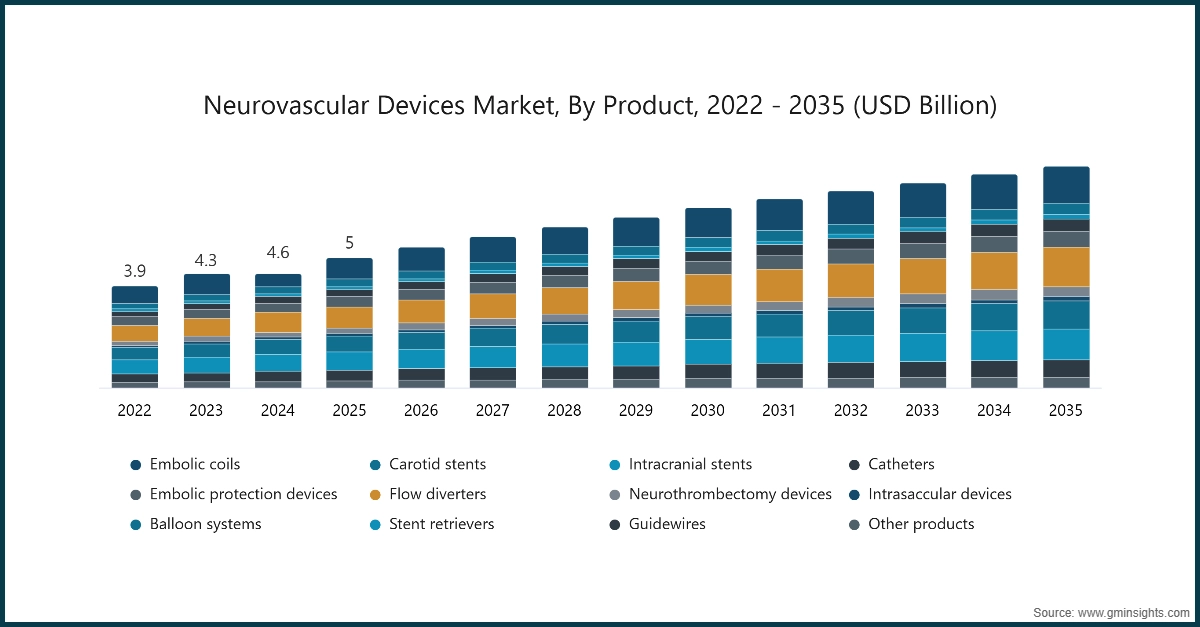
The steady growth of the market is driven by the increasing incidence of neurovascular diseases, an aging population, technological advancements in neurovascular devices, rising demand for minimally invasive surgical procedures, and government initiatives to modernize healthcare infrastructure across the globe. The market grew from USD 3.9 billion in 2022 to USD 4.6 billion in 2024. The rising prevalence of neurovascular diseases such as stroke, aneurysms, and other cerebrovascular disorders are increasing globally, is significantly boosting the demand for advanced neurovascular devices used in diagnosis, treatment, and intervention. For instance, according to the World Health Organization (WHO), approximately 15 million people worldwide suffer a stroke each year, leading to 5 million deaths and another 5 million individuals living with permanent disabilities. This high incidence and alarming mortality rate highlight the urgent need for effective neurovascular interventions.
Neurovascular Devices Market Key Takeaways
Market Size & Growth
- 2025 Market Size: USD 5 Billion
- 2026 Market Size: USD 5.4 Billion
- 2035 Forecast Market Size: USD 8.5 Billion
- CAGR (2026–2035): 5.2%
Regional Dominance
- Largest Market: North America
- Fastest Growing Region: Asia Pacific
Key Market Drivers
- Increasing prevalence of neurological diseases.
- Rising demand for minimally invasive surgical procedures.
- Technological advancement in neurovascular devices.
- Growing geriatric population base.
Challenges
- High cost of devices.
- Stringent regulatory.
Opportunity
- Growing healthcare expansion in emerging economies.
Key Players
- Market Leader: Johnson & Johnson led with over 25% market share in 2025.
- Leading Players: Top 5 players in this market include Medtronic, Johnson & Johnson, MicroPort Scientific, Penumbra, Stryker Corporation, which collectively held a market share of 58% in 2025.
Get Market Insights & Growth Opportunities
Additionally, the growing geriatric population is a significant driver for the neurovascular devices market. As global demographic shifts towards aging population, the prevalence of age-related neurovascular conditions such as stroke, aneurysms, and other cerebrovascular disorders is continuing to rise, creating a substantial demand for advanced treatment and intervention solutions. For instance, according to the World Health Organization (WHO), the global population aged 60 years and above is projected to increase from 1 billion in 2020 to 1.4 billion by 2030 and will double to 2.1 billion by 2050. Moreover, the number of individuals aged 80 years and older is expected to triple by 2050, reaching 426 million. This demographic shift significantly increases the risk of neurovascular diseases, as aging is a major risk factor for conditions such as ischemic stroke and intracranial aneurysms.
Neurovascular devices are specialized medical instruments and implants designed for the diagnosis, treatment, and management of disorders affecting the blood vessels of the brain and central nervous system. These devices are primarily used in minimally invasive procedures to restore normal blood flow, prevent hemorrhage, and reduce the risk of stroke or other cerebrovascular complications.
The global neurovascular devices market size was valued at USD 5 billion in 2025 and is projected to grow from USD 5.4 billion in 2026 to USD 8.5 billion by 2035, expanding at a CAGR of 5.2%, according to the latest report published by Global Market Insights Inc.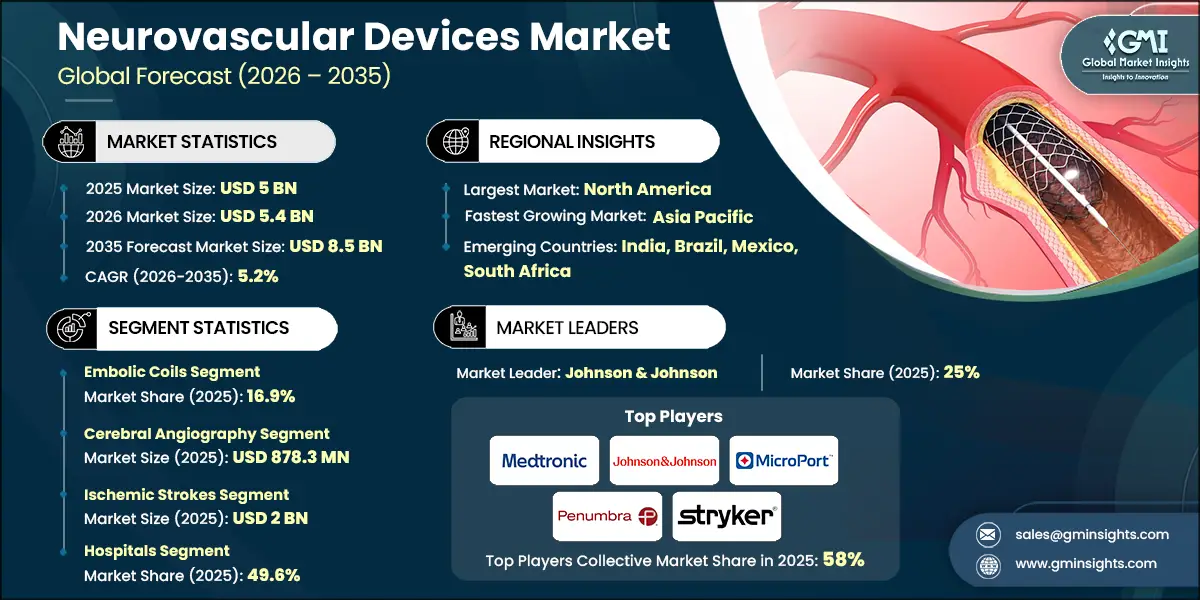
To get key market trends
Neurovascular Devices Market Trends
- Innovations in device design and functionality have transformed neurovascular treatments, enabling safer, faster, and more effective interventions for conditions such as ischemic stroke, aneurysms, and arteriovenous malformations (AVMs). These advancements have improved procedural precision, minimized risks, and enhanced patient outcomes, significantly driving market growth.
- Modern neurovascular devices have evolved from traditional tools to highly sophisticated, minimally invasive systems. For example, stent retrievers and aspiration catheters now incorporate advanced materials and optimized designs, allowing rapid clot retrieval in ischemic stroke patients, reducing treatment time, and improving recovery rates.
- For instance, Medtronic’s Solitaire X Revascularization Device is a next-generation stent retriever. It offers superior deliverability and clot integration, enabling efficient thrombectomy procedures and improving clinical success rates in acute stroke management.
- Flow diversion technology has revolutionized aneurysm treatment. Novel flow diverters feature advanced braided structures and biocompatible coatings that promote vessel healing while minimizing complications. These devices enable the treatment of complex, wide-neck aneurysms that were previously considered inoperable.
- For example, Stryker’s Surpass Evolve Flow Diverter offers exceptional flexibility and optimized pore density to ensure effective aneurysm occlusion while preserving parent vessel integrity.
- Furthermore, advancements in microcatheter and guidewire technology have offered an improved access to intricate neurovascular pathways, expanding treatment options for critically ill patients and driving market adoption.
Neurovascular Devices Market Analysis
Learn more about the key segments shaping this market
Based on product, the market is segmented into embolic coils, carotid stents, intracranial stents, catheters, embolic protection devices, flow diverters, neurothrombectomy devices, intrasaccular devices, balloon systems, stent retrievers, guidewires, and other products. The embolic coils segment was valued at USD 847.4 million in 2025 and held a significant market share of 16.9%.
- Embolic coils are specialized devices used in neurovascular interventions to treat conditions such as intracranial aneurysms and arteriovenous malformations (AVMs). These coils induce controlled thrombosis within the targeted vessel, effectively blocking or reducing blood flow to prevent rupture or hemorrhage.
- The development of embolic coils, including bioresorbable variants and enhanced delivery systems, has significantly improved treatment safety and effectiveness, contributing to market expansion. These innovations have enabled precise placement of coils, better occlusion, and reduced risk of complications.
- Additionally, increasing awareness regarding the neurovascular conditions and available treatment options, along with advancements in diagnostic imaging, has enabled early detection and timely treatment of aneurysms and AVMs. This has led to greater adoption of embolic coils in clinical practice, significantly driving segment growth within the market.
Based on process, the neurovascular devices market is segmented into neurothrombectomy, cerebral angiography, carotid endarterectomy, stenting, microsurgical clipping, coiling, flow diversion, and other processes. The cerebral angiography segment accounted for a revenue of USD 878.3 million in 2025.
- Cerebral angiography is a catheter-based imaging technique designed to visualize the blood vessels in and around the brain. It remains the gold standard for detecting vascular pathologies such as aneurysms, arteriovenous malformations (AVMs), stenoses, and vascular tumors by providing high-resolution, dynamic imaging of cerebral circulation.
- For instance, according to the Brain Aneurysm Foundation, approximately 30,000 people in the U.S. experience a brain aneurysm rupture each year. This high prevalence of neurological conditions highlights the critical need for advanced neurovascular diagnostic tools.
- Additionally, research and development activities focused on enhancing neurovascular devices for angiography result in new product launches, contributing to market expansion.
Based on therapeutic applications, the neurovascular devices market is segmented into brain aneurysm, stenosis, ischemic strokes, and other therapeutic applications. The ischemic strokes segment dominated the market with the largest revenue of USD 2 billion in 2025.
The increasing incidence of ischemic strokes, which account for majority of stroke cases, is driving the demand for neurovascular devices.
- For example, according to the Centers for Disease Control and Prevention, approximately 87% of all strokes are ischemic strokes. Additionally, the American Heart Association reported that in 2020, there were 3.48 million deaths globally due to ischemic strokes. This high prevalence of ischemic strokes highlights the need for advanced neurovascular interventions.
- Technological advancements in neurovascular devices, such as stent retrievers, thrombectomy devices, and imaging systems, are improving treatment outcomes and safety, which is leading to increased adoption in medical facilities.
- Furthermore, stent retrievers are advanced neurovascular devices designed for mechanical thrombectomy in the treatment of acute ischemic strokes. These devices feature a self-expanding, mesh-like structure that is deployed within the occluded vessel to engage and capture the thrombus.
Learn more about the key segments shaping this market
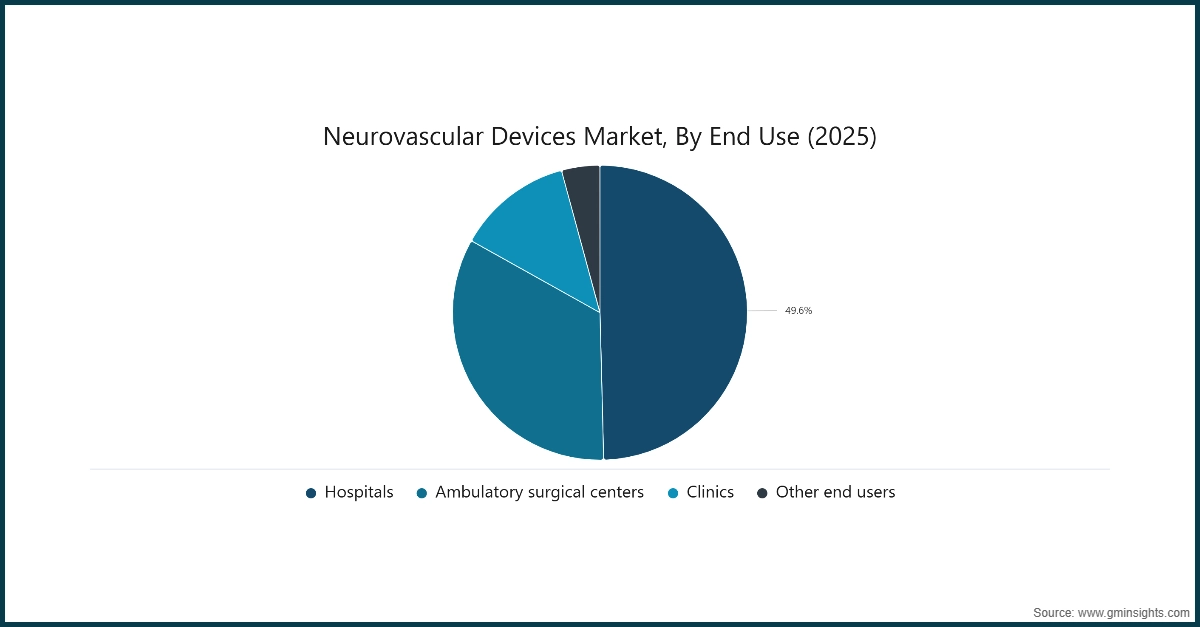
Based on end use, the neurovascular devices market is segmented into hospitals, ambulatory surgical centers, clinics, and other end users. The hospitals segment held a significant market share of 49.6% in 2025.
- Hospitals dominate the market as they serve as the primary centers for performing advanced procedures such as thrombectomy, aneurysm coiling, and stent placement. These procedures are supported by specialized neuro-interventional suites and comprehensive infrastructure designed for complex cerebrovascular treatments.
- Neurovascular devices are essential for the rapid diagnosis and intervention of stroke management, aneurysm repair, and other cerebrovascular conditions. Their ability to provide real-time imaging and precise navigation during minimally invasive procedures makes them indispensable for improving patient outcomes in high-risk cases.
- Furthermore, the rising incidences of ischemic and hemorrhagic strokes, increasing volumes of neuro-interventional procedures, and the growing prevalence of comorbidities are driving the demand for advanced neurovascular solutions. Modern hospitals are transitioning from conventional surgical approaches to digitally integrated neuro-interventional systems.
- These innovations enhance procedural accuracy, reduce treatment delays, and improve patient safety, collectively fueling the growth of neurovascular devices in hospital settings.
North America Neurovascular Devices Market
Looking for region specific data?
The North America region accounted for 34.7% of the global neurovascular devices market in 2025. The market in North America is experiencing robust expansion, driven by the region’s advanced healthcare infrastructure and technological advancements.
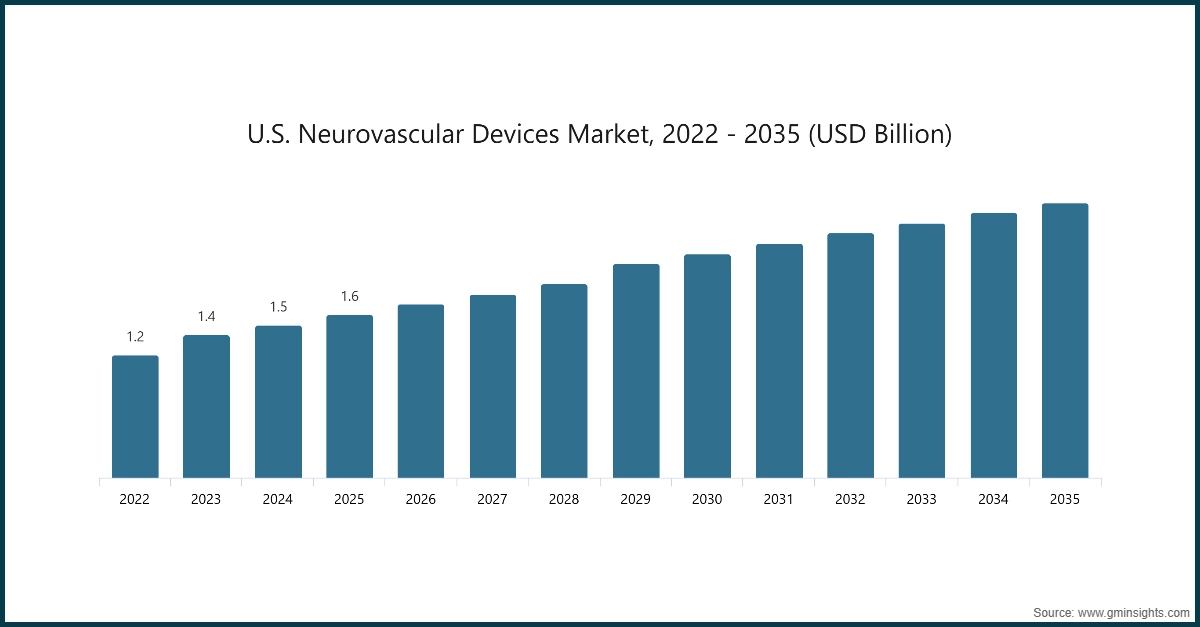
- The U.S. market was valued at USD 1.2 billion and USD 1.4 billion in 2022 and 2023, respectively. In 2025 the market size increased to USD 1.6 billion from USD 1.5 billion in 2024.
- The growth is primarily attributed to the increasing prevalence of neurovascular diseases in the country.
- For instance, according to the American Academy of Neurology and the Institute for Health Metrics and Evaluation, more than half of the U.S. population, approximately 54%, is affected by a neurological disease or disorder.
- The U.S. leads in both the adoption and development of neurovascular devices due to its advanced healthcare infrastructure, high volume of stroke and aneurysm interventions, and continuous investment in neuro-interventional technologies.
Europe Neurovascular Devices Market
Europe market accounted for USD 1.5 billion in 2025 and is anticipated to show lucrative growth over the forecast period.
- The European market is poised for strong growth, driven by advanced healthcare infrastructure and significant investments in hospital modernization. Rising demand for innovative solutions to treat strokes, aneurysms, and other cerebrovascular conditions is accelerating the adoption of neuro-interventional technologies across the region.
- Additionally, European governments are making substantial investments in healthcare infrastructure, further promoting the integration of advanced neurovascular systems. For instance, EU member countries have allocated over USD 11.7 billion (EUR 10 billion) for healthcare modernization between 2021 and 2027, creating strong opportunities for hospitals to deploy AI-assisted imaging, robotic navigation, and digitally integrated neurovascular devices.
Germany's neurovascular devices market is projected to experience steady growth between 2026 and 2035.
- The growing aging population is a key driver for the adoption of neurovascular devices in Germany. According to Statista, in 2024, individuals aged 40–59 represented the largest age group, totalling approximately 22.3 million people, while those aged 65 and older accounted for around 19 million. This demographic trend significantly increases the prevalence of strokes and aneurysms, fuelling the demand for advanced neuro-interventional solutions.
- Germany is emerging as a significant market for neurovascular devices, supported by its advanced healthcare infrastructure, strong clinical expertise, and increasing adoption of minimally invasive technologies for stroke management and aneurysm repair.
- Public-private initiatives and investments in hospital modernization further support the integration of innovative neurovascular technologies, including AI-assisted imaging, robotic navigation, and seamless digital connectivity, ensuring improved procedural accuracy and patient outcomes in cerebrovascular care.
Asia Pacific Neurovascular Devices Market
The Asia Pacific region is projected to show a lucrative growth of about 5.4% during the forecast period.
- The market in the Asia-Pacific region is experiencing rapid growth, driven by the increasing incidence of strokes and aneurysms, growing awareness of early intervention, and continuous advancements in neuro-interventional technologies.
- Countries such as China, India, and Japan are adopting advanced neurovascular solutions at an increasing rate due to the rising demand for minimally invasive procedures and improved access to specialized stroke care.
- Additionally, the growth in the number of hospitals and neuro-interventional centres, combined with supportive government initiatives aimed at strengthening stroke management and emergency care infrastructure, is significantly contributing to the expansion of the market in the region.
China neurovascular devices market is poised to witness lucrative growth between 2026 - 2035.
- China's rapidly aging population is creating a growing need for advanced neurovascular interventions.
- For example, according to WHO estimates (2019), approximately 254 million people aged 65 and above were living in China, and this number is projected to rise significantly, reaching around 402 million individuals over the age of 60 by 2040.
- This demographic is particularly vulnerable to cerebrovascular conditions such as ischemic and hemorrhagic strokes, as well as aneurysms. Thus, there is a rising demand for innovative neurovascular devices, including stent retrievers, flow diverters, and embolization systems. These technologies enable timely intervention, improve procedural outcomes, and support advanced stroke management, driving substantial market growth in China.
Latin America Neurovascular Devices Market
Brazil is experiencing significant growth in the market.
- The growth of the market in Brazil is strongly driven by technological advancements and the introduction of innovative solutions for stroke and aneurysm treatment, along with the rising prevalence of cerebrovascular diseases in the country.
- Healthcare facilities in Brazil are increasingly adopting advanced neurovascular systems that enable faster, more precise, and minimally invasive interventions compared to traditional surgical methods.
- Furthermore, technological innovations are accelerating the growth of Brazil’s neurovascular market by enhancing procedural accuracy, safety, and efficiency. With the increasing integration of AI-powered imaging, robotic-assisted navigation, and cloud-enabled platforms, Brazil is strengthening its neuro-interventional capabilities and supporting improved patient outcomes, ensuring sustained market expansion.
Middle East and Africa Neurovascular Devices Market
- Saudi Arabia is steadily increasing its research and development expenditure, particularly in healthcare. The government and private sector are investing heavily in modernizing healthcare infrastructure and fostering innovation in neuro-interventional technologies.
- As part of its Vision 2030 initiative, the Saudi Arabian government has prioritized healthcare transformation, allocating significant resources to improve access to advanced medical technologies, including neurovascular devices for stroke and aneurysm treatment.
- These initiatives create a strong foundation for adopting cutting-edge neurovascular solutions such as stent retrievers, flow diverters, and embolization systems, which enable timely interventions and improve patient outcomes in complex cerebrovascular cases.
Neurovascular Devices Market Share
- The top five players in the market, Medtronic, Johnson & Johnson, MicroPort Scientific, Penumbra, and Stryker, collectively held approximately 58% of the global market share in 2025. These companies continue to strengthen their position through product innovation, strict adherence to regulatory standards, and strategic partnerships. Leading players are heavily investing in R&D to develop next-generation neurovascular solutions, including advanced thrombectomy systems, flow-diverter stents, and minimally invasive technologies aimed at improving patient outcomes in stroke and aneurysm management.
- Medtronic maintains a dominant position in the neurovascular segment by offering a comprehensive portfolio of devices for stroke intervention, aneurysm treatment, and vessel reconstruction. The company focuses on developing cutting-edge technologies such as AI-assisted imaging, robotic navigation systems, and integrated treatment platforms to enhance procedural accuracy and efficiency. Medtronic is also investing in ergonomic device designs and intuitive delivery systems to improve clinician workflow and reduce procedure time, ultimately supporting better patient recovery.
- Manufacturers in the neurovascular market are adopting value-based pricing strategies to penetrate cost-sensitive regions, particularly in emerging economies. Leading players are addressing clinical needs by introducing compact, easy-to-use thrombectomy devices and advanced embolization systems, ensuring reliability and convenience for both high-volume hospitals and specialized stroke centers. These advancements aim to increase accessibility and improve treatment success rates, supporting better management of acute ischemic stroke and intracranial aneurysms.
- Emerging trends in the market include the integration of AI-powered imaging and navigation systems, as well as remote monitoring platforms for post-procedure care.
Neurovascular Devices Market Companies
Few of the prominent players operating in the neurovascular devices industry include:
- Asahi Intecc
- Acandis
- Blockade Medical
- Balt Extrusion
- Integer Holdings Corporation
- Johnson & Johnson
- Kaneka Medix Corp
- Medtronic
- Merit Medical System
- MicroPort Scientific Corporation
- Penumbra
- Phenox
- Stryker
- Sensome
- Terumo Corporation
- Medtronic
Medtronic is a global leader in neurovascular solutions, offering a comprehensive portfolio for stroke intervention and aneurysm treatment. The product range includes advanced flow-diverter stents, thrombectomy systems, and embolization devices designed to improve procedural efficiency and patient outcomes.
Stryker is a key innovator in the neurovascular market, providing cutting-edge devices for ischemic and hemorrhagic stroke treatment. The portfolio includes stent retrievers, aspiration systems, and coil technologies engineered for minimally invasive interventions.
Johnson & Johnson, through its Cerenovus brand, delivers advanced neurovascular solutions for stroke care and aneurysm management. The company offers a wide range of devices, including embolic coils, stent systems, and aspiration catheters, designed for reliability and ease of use.
Neurovascular Devices Market Report Attributes
| Key Takeaway | Details |
|---|---|
| Market Size & Growth | |
| Base Year | 2025 |
| Market Size in 2025 | USD 5 Billion |
| Market Size in 2026 | USD 5.4 Billion |
| Forecast Period 2026-2035 CAGR | 5.2% |
| Market Size in 2035 | USD 8.5 Billion |
| Key Market Trends | |
| Drivers | Impact |
| Increasing prevalence of neurological diseases | The rising incidence of ischemic and hemorrhagic strokes is driving the demand for neurovascular devices such as stent retrievers, flow diverters, and embolic coils, leading to higher adoption in hospitals and specialized stroke centers. |
| Rising demand for minimally invasive surgical procedures | The surge in preference for endovascular treatments over open surgeries is accelerating the use of catheters, guidewires, and thrombectomy devices, improving patient outcomes and reducing recovery time. |
| Technological advancement in neurovascular devices | Innovations such as AI-assisted imaging, robotic navigation, and next-generation flow diverters are enhancing procedural precision and expanding treatment options for complex cerebrovascular conditions. |
| Growing geriatric population base | The increased prevalence of age-related conditions such as aneurysms and strokes among elderly patients is boosting the utilization of neurovascular devices globally. |
| Pitfalls & Challenges | Impact |
| High cost of devices | Limits adoption in resource-constrained settings and smaller healthcare facilities, slowing penetration in emerging markets. |
| Stringent regulatory | Delays in product approvals and high compliance costs create barriers for new entrants and slow innovation cycles in neurovascular technologies. |
| Opportunities: | Impact |
| Growing healthcare expansion in emerging economies | Opens new markets for affordable neurovascular solutions, particularly in rural regions, fueling global market growth. |
| Market Leaders (2025) | |
| Market Leader |
25% market share |
| Top Players |
Collective market share in 2025 is 58% |
| Competitive Edge |
|
| Regional Insights | |
| Largest Market | North America |
| Fastest growing market | Asia Pacific |
| Emerging countries | India, Brazil, Mexico, and South Africa |
| Future outlook |
|
What are the growth opportunities in this market?
Neurovascular Devices Industry News
- In January 2025, Stryker acquired Inari Medical to strengthen its neurovascular portfolio. This deal added Inari’s advanced mechanical thrombectomy solutions for peripheral vascular diseases, complementing Stryker’s existing offerings and expanding its capabilities in vascular condition treatment.
- In December 2024, Kaneka Corporation acquired EndoStream Medical to strengthen its neurovascular portfolio. The collaboration aims to develop advanced cerebrovascular devices, including the Nautilus aneurysm treatment system, leveraging Kaneka’s manufacturing expertise and EndoStream’s technology.
The neurovascular devices market research report includes in-depth coverage of the industry with estimates and forecast in terms of revenue in USD Million and from 2022 - 2035 for the following segments:
Market, By Product
- Embolic coils
- Carotid stents
- Intracranial stents
- Catheters
- Embolic protection devices
- Flow diverters
- Neurothrombectomy devices
- Intrasaccular devices
- Balloon systems
- Stent retrievers
- Guidewires
- Other products
Market, By Process
- Neurothrombectomy
- Cerebral angiography
- Carotid endarterectomy
- Stenting
- Microsurgical clipping
- Coiling
- Flow diversion
- Other processes
Market, By Therapeutic Application
- Brain aneurysm
- Stenosis
- Ischemic strokes
- Other therapeutic applications
Market, By End Use
- Hospitals
- Ambulatory surgical centers
- Clinics
- Other end users
The above information is provided for the following regions and countries:
- North America
- U.S.
- Canada
- Europe
- Germany
- UK
- France
- Italy
- Spain
- Netherlands
- Asia Pacific
- China
- India
- Japan
- Australia
- South Korea
- Latin America
- Brazil
- Mexico
- Argentina
- Middle East and Africa
- Saudi Arabia
- South Africa
- UAE
Frequently Asked Question(FAQ) :
What was the market size of the neurovascular devices market in 2025?
The market size was USD 5 billion in 2025, with a CAGR of 5.2% expected through 2035, driven by advancements in device design and functionality.
What is the projected value of the neurovascular devices industry by 2035?
The market is expected to reach USD 8.5 billion by 2035, fueled by innovations in minimally invasive systems and increasing demand for effective neurovascular treatments.
What is the projected size of the neurovascular devices market in 2026?
The market is expected to reach USD 5.4 billion in 2026.
How much revenue did the embolic coils segment generate?
The embolic coils segment generated USD 847.4 million in 2025, accounting for a significant 16.9% market share.
What was the valuation of the cerebral angiography segment?
The cerebral angiography segment generated USD 878.3 million in revenue in 2025.
Which region leads the neurovascular devices market?
North America held 34.7% market share in 2025, driven by advanced healthcare infrastructure and technological advancements.
What are the upcoming trends in the neurovascular devices industry?
Key trends include the adoption of flow diversion technology, advancements in stent retrievers and aspiration catheters, and the development of biocompatible coatings for improved patient outcomes.
Who are the key players in the neurovascular devices market?
Key players include Asahi Intecc, Acandis, Blockade Medical, Balt Extrusion, Integer Holdings Corporation, Johnson & Johnson, Kaneka Medix Corp, Medtronic, Merit Medical System, and MicroPort Scientific Corporation.
Neurovascular Devices Market Scope
Related Reports