Summary
Table of Content

Natural Cosmetics Market
Get a free sample of this report
Form submitted successfully!
Error submitting form. Please try again.
Thank you!
Your inquiry has been received. Our team will reach out to you with the required details via email. To ensure that you don't miss their response, kindly remember to check your spam folder as well!
Request Sectional Data
Thank you!
Your inquiry has been received. Our team will reach out to you with the required details via email. To ensure that you don't miss their response, kindly remember to check your spam folder as well!
Form submitted successfully!
Error submitting form. Please try again.
Natural Cosmetics Market Size
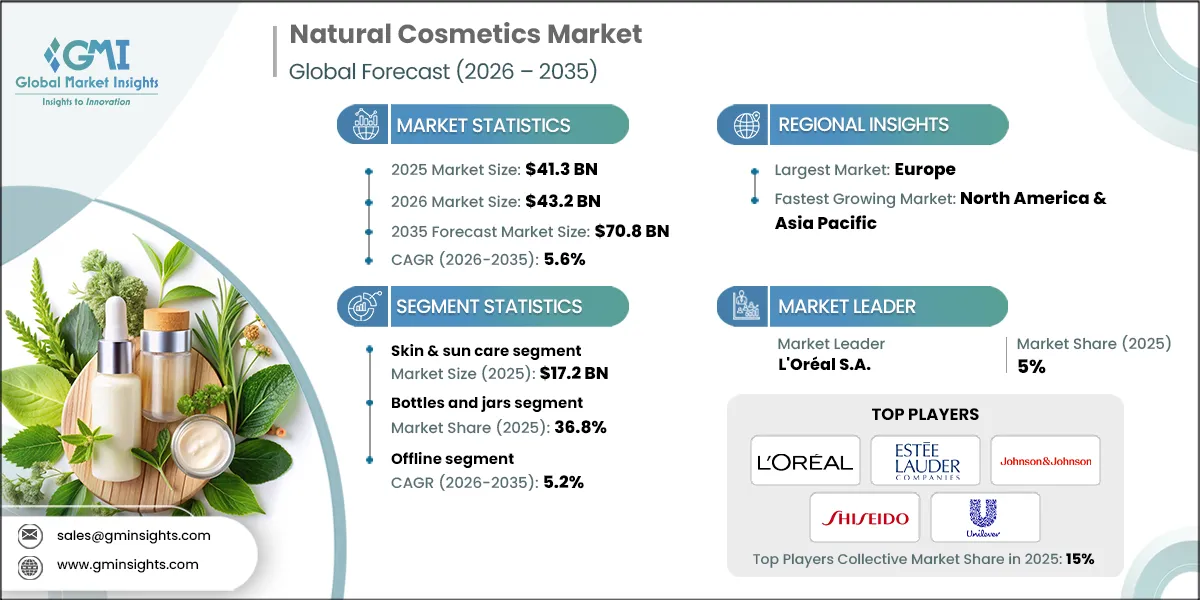
The global natural cosmetics market was estimated at USD 41.3 billion in 2025. The market is expected to grow from USD 43.2 billion in 2026 to USD 70.8 billion in 2035, at a CAGR of 5.6% according to latest report published by Global Market Insights Inc.
Natural Cosmetics Market Key Takeaways
Market Size & Growth
- 2025 Market Size: USD 41.3 Billion
- 2026 Market Size: USD 43.2 Billion
- 2035 Forecast Market Size: USD 70.8 Billion
- CAGR (2026–2035): 5.6%
Regional Dominance
- Largest Market: Europe
- Fastest Growing Region: North America & Asia Pacific
Key Market Drivers
- Heightened awareness of health & wellness.
- Eco-conscious purchasing & sustainability.
- Technological & product innovations.
- Ethical standards & premiumization.
Challenges
- Premium pricing & elevated production costs.
- Preservation issues & limited shelf life.
Opportunity
- Ingredient innovation & biotech.
- Sustainable packaging solutions.
Key Players
- Market Leader: L'Oréal S.A. led with over 5% market share in 2025.
- Leading Players: Top 5 players in this market include L'Oréal S.A., The Estée Lauder Companies Inc., Johnson & Johnson Services, Inc., Shiseido Co., Ltd., Unilever PLC, which collectively held a market share of 15% in 2025.
Get Market Insights & Growth Opportunities
- The natural cosmetics market is growing quickly because people are becoming more aware of their health and wellness, this has made it easier for consumers to choose natural products instead of products containing synthetic chemicals due to safety concerns regarding using synthetic chemicals on their skin. In 2023, organic personal care products were sold at a 12% increase from 2020 according to the Organic Trade Association (OTA). Additionally, because of increased demand for natural products, people are now more likely to seek out clean label (no artificial ingredients), transparent ingredient lists, and certifications such as USDA Organic and COSMOS to verify that the products are safe and authentic.
- Sustainable practices and environmentally responsible purchasing have begun to play a large part in how consumers are making decisions and have opened many opportunities for brands that sell natural beauty products. The modern consumer is placing more emphasis on finding products that reflect their beliefs about the environment. Many consumers will now seek out products in biodegradable packaging and with no testing on animals, while also choosing to buy products made with ethically sourced raw materials.
- According to a report from the United Nations Environment Programme (UNEP), over 60% of the global population would prefer to buy from brands that are committed to using sustainable practices. Legislation is also forcing brands to become more environmentally responsible; for example, the European Union has introduced the European Green Deal (an initiative aimed at reducing the impact of EU products) and the U.S. Food and Drug Administration (FDA) has developed a set of guidelines regarding cosmetic labeling that encourages brands to be more environmentally responsible and reduce their ecological footprint.
- Through innovation in technology and products the Natural Cosmetics market evolves by taking advantage of advances in green chemistry and biomanufacturing; these advances allow brands to create high performance natural, herbal and organic (natural) cosmetics that deliver benefits while at the same time complying with consumer expectations for performance and safety.
- For example, the introduction of waterless formulations, which use less water than traditional formulations and extend the life of products; and the introduction of ethical considerations by offering fair trade-sourced ingredients, vegan or vegetarian formulations, and cruelty free methods of testing, will further increase consumer confidence in the safety and performance of natural cosmetics. A survey published in 2020 by the Global Data Consumer Intelligence Center, shows that 72% of consumers would be willing to pay more for products that align with their values regarding ethics and sustainability.
To get key market trends
Natural Cosmetics Market Trends
- The Natural Cosmetics sector is experiencing tremendous growth fueled by improvements in specialty natural ingredients, such as botanicals and organic materials, coupled with advances in technology which allow brands to bring products to market with the highest performance possible, and provide consumers with the absolute highest purity that they expect. Brands have taken advantage of the wealth of knowledge and innovations available around advanced botanical extracts to create new types of products for consumers, including new types of facial treatments, body scrubs, and oil-based moisturizers. Botanical extracts, including plant stem cells and extracts from algae, provide many naturally occurring antioxidants and anti-aging properties.
- In addition to being used in product formulations, these plant-derived materials are also used as a basis for the development of new, and more efficient, bioavailable forms of active ingredients, allowing brands to deliver the best results possible. The emergence of bio-based alternatives to commonly used synthetically manufactured compounds, such as plant-derived emollients and biodegradable polymers, in place of traditional synthetic ingredients, addresses the growing need for eco-friendly products and provides consumers with access to clean-label formulations.
- Additionally, the continued emergence of microbiome-friendly ingredients, plant-based substitutes for silicones, waterless product formats, and the natural convergence of technology and nature will define and drive product innovation and development in this marketplace.
- The wellness movement, which emphasizes holistic ways of taking care of oneself, has been growing rapidly alongside the rise of "wellness" based cosmetic products and herbal-based formulations in the marketplace. As consumers become more interested in using modified or enhanced herbal ingredients (adaptogens, CBD oil, and other herbal blends), they find themselves interested in products that can provide benefits beyond just aesthetics (for instance, reducing stress, providing moisture/ hydration creating a better barrier to protect the skin). The use of ashwagandha and ginseng as adaptogens to promote resilience against stressors and enhance overall skin resilience is increasing.
- Additionally, there are several products containing CBD oil, which may help with inflammation, as well as reducing irritation and providing an overall calming/soothing effect. Herbal blends such as chamomile and calendula are becoming more popular due to the restorative effects they have on the skin. These changes reflect broader trends toward viewing beauty as a means of improving emotional wellbeing and overall health. Brands are now creating unique multi-sensory experiences that will attract health-conscious and environmentally aware consumers with these more "wellness" aligned offerings.
- Additionally, by incorporating products with functional botanicals and wellness claims, brands are positioning themselves to engage their consumers more deeply in a crowded marketplace, creating a premium product offering that integrates with lifestyle-oriented messaging to meet the ideals of today's consumers.
Natural Cosmetics Market Analysis
Learn more about the key segments shaping this market
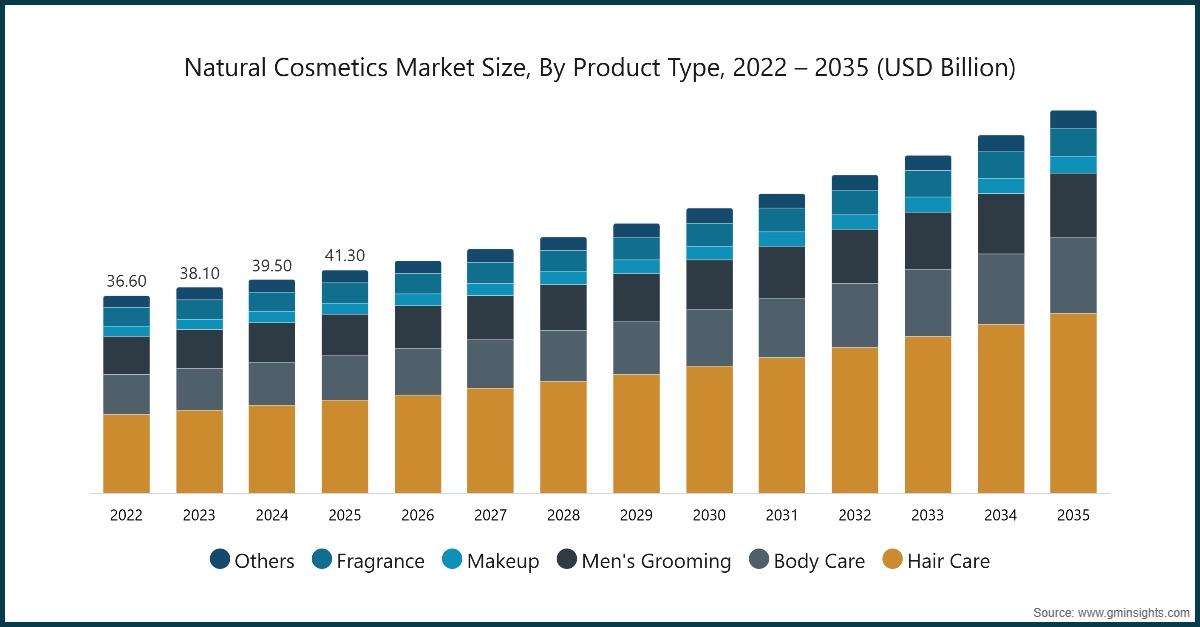
Based on product type, the natural cosmetics market is categorized into skin & sun care, hair care, body care, men's grooming, makeup, fragrance and others. The skin & sun care accounted for revenue of around USD 17.2 billion in 2025 and is anticipated to grow at a CAGR of 6.9% from 2026 to 2035.
- Increasing concerns over issues like premature aging, hyperpigmentation, and UV-related skin damage have driven demand for products formulated with natural, plant-based ingredients that offer gentle yet effective protection. The surge in wellness trends and preventive skincare routines has further boosted interest in natural sunscreens and moisturizers enriched with antioxidants, botanical extracts, and mineral-based UV filters.
- Additionally, regulatory restrictions on chemical sunscreens and growing preference for reef-safe, eco-friendly formulations are accelerating the shift toward natural alternatives. Social media influence and education around clean beauty have also played a pivotal role, as consumers seek transparency and sustainability in their skincare choices.
Based on packaging type of natural cosmetics market consists of bottles and jars, tubes, pencils and sticks, pouches and sachets and others (roll-ons, etc.). The bottles and jars emerged as leader and held 36.8% of the total market share in 2025 and is anticipated to grow at a CAGR of 7.5% from 2026 to 2035.
- These packaging formats are ideal for a wide range of formulations, including creams, lotions, serums, and masks, which are prevalent in natural skincare and body care categories. Bottles and jars also support sustainable initiatives, as they are often made from recyclable glass or high-grade plastics and increasingly feature refillable designs to reduce waste. Their ability to preserve product integrity especially for formulations with natural preservatives and shorter shelf lives makes them a preferred choice among manufacturers.
- Additionally, the aesthetic value of jars and bottles enhances brand positioning in the premium segment, appealing to consumers who associate such packaging with luxury and authenticity. Growing demand for eco-conscious packaging and innovations like airless jars and biodegradable materials further reinforce their leadership, ensuring continued growth in this category through 2035.
Learn more about the key segments shaping this market
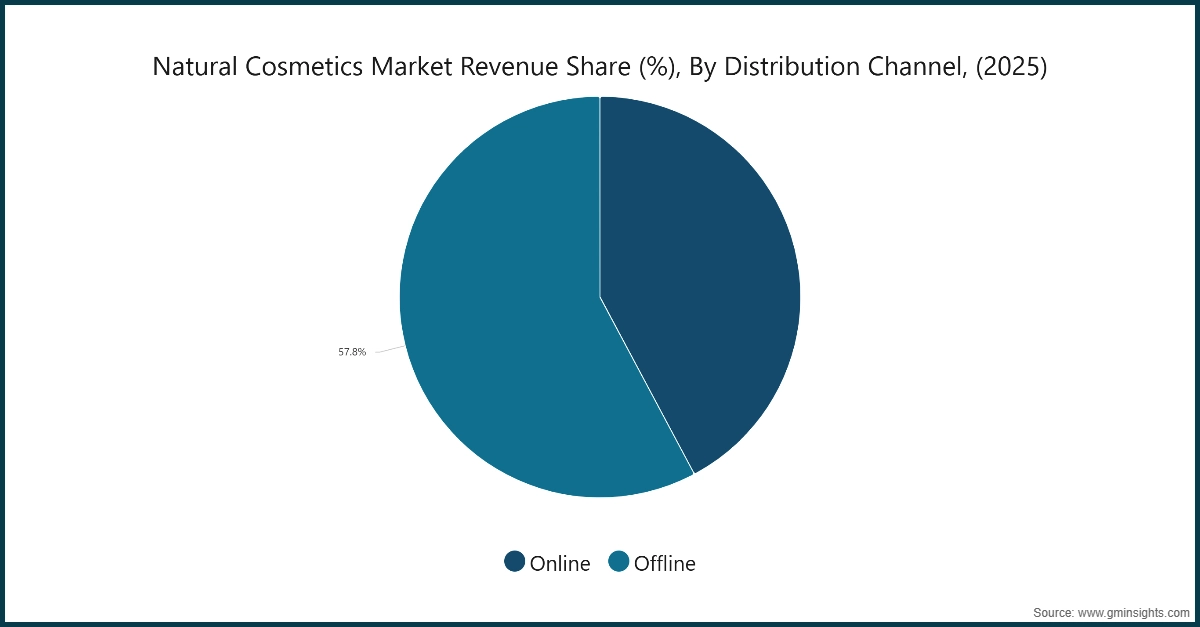
Based on distribution channel of natural cosmetics market consists of online and offline. The offline distribution channel emerged as leader and held 57.8% of the total market share in 2025 and is anticipated to grow at a CAGR of 5.2% from 2026 to 2035.
- Many buyers of natural cosmetics want to examine product texture, fragrance, and packaging before purchase, which is easier in brick-and-mortar stores such as specialty beauty shops, pharmacies, and supermarkets. Offline channels also build trust through in-store consultations, sampling, and expert guidance critical for consumers seeking transparency and authenticity in natural products.
- Additionally, premium natural brands often position themselves in high-end retail environments to reinforce their luxury image, while wellness-focused stores and salons create experiential spaces that align with holistic beauty trends. Despite the rise of e-commerce, offline retail benefits from impulse buying, immediate product availability, and strong brand visibility through attractive displays and promotional events.
North America Natural Cosmetics Market
Looking for region specific data?
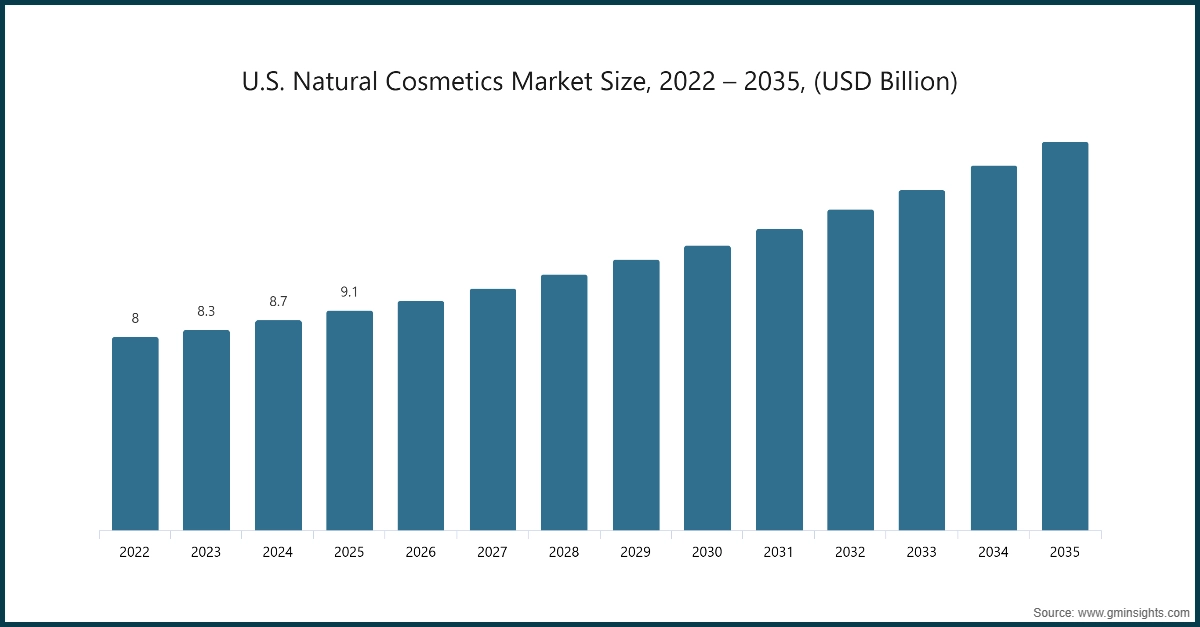
The U.S. dominates an overall North America natural cosmetics market and valued at USD 9.1 billion in 2025 and is estimated to grow at a CAGR of 6% from 2026 to 2035.
- American consumers are increasingly prioritizing health and wellness, driving demand for products free from harmful chemicals and synthetic additives. This shift is reinforced by the popularity of clean-label certifications and transparency initiatives, which have become key purchase drivers.
- Additionally, the U.S. market benefits from a robust e-commerce ecosystem and widespread adoption of direct-to-consumer models, enabling niche and premium natural brands to reach a broad audience efficiently. Social media influence and celebrity endorsements further amplify the appeal of natural cosmetics, while technological innovations such as AI-driven personalization and biotech-derived ingredients enhance product performance and consumer trust.
Europe Natural Cosmetics Market
In the European market, Germany is expected to experience significant and promising growth from 2026 to 2035.
- German consumers are increasingly health-conscious, actively avoiding synthetic ingredients and seeking natural and organic products perceived as safer and more skin-friendly this trend bolsters demand and positions Germany as a leading market within Europe. In parallel, growing environmental and ethical awareness encourages purchases of eco-conscious, cruelty-free, and sustainably produced beauty items, with packaging and ingredient sourcing aligning with consumer values.
- Regulatory frameworks and recognized certifications such as BDIH and COSMOS play a crucial role in building consumer trust. Germany’s stringent standards guarantee product authenticity and safety, enabling brands to claim organic compliance with credibility. These certifications are a key differentiator in a market where transparency and proof of sustainability are essential.
Asia Pacific Natural Cosmetics Market
In the Asia Pacific market, the China held 34% market share in 2025 and is anticipated to grow at a CAGR of 6.7% from 2026 to 2035.
- Rising disposable incomes and rapid urbanization have fueled consumer spending on premium beauty products, with a growing preference for natural and organic formulations perceived as safer and healthier. Increasing awareness of skin health, coupled with concerns over chemical-based cosmetics, has accelerated the shift toward clean beauty.
- Additionally, China’s younger demographic, particularly Millennials and Gen Z, is highly influenced by social media and beauty influencers, driving demand for eco-friendly, cruelty-free, and transparent brands. Government initiatives promoting sustainable practices and stricter regulations on harmful ingredients further support market expansion. The country’s advanced e-commerce infrastructure and dominance of platforms like Tmall and JD.com enable widespread access to natural cosmetics, while local brands and global players invest heavily in R&D to introduce innovative products featuring traditional Chinese botanicals and modern biotech solutions.
Middle East and Africa Natural Cosmetics Market
In the Middle East and Africa market, Saudi Arabia held 32% market share in 2025 promising growth from 2026 to 2035.
- Consumers in Saudi Arabia are showing a strong inclination toward premium beauty products that align with Islamic values, such as halal-certified, cruelty-free, and ethically sourced formulations. The growing influence of social media and beauty influencers, coupled with a younger population seeking modern yet culturally appropriate products, is accelerating demand for natural cosmetics.
- Additionally, government initiatives under Vision 2030, which emphasize diversification and support for local manufacturing, are fostering market development and attracting global brands to invest in the region. The expansion of e-commerce platforms and luxury retail channels further enhances accessibility to natural beauty products, while innovations incorporating traditional Middle Eastern botanicals such as oud, dates, and argan oil appeal to local consumer preferences.
Natural Cosmetics Market Share
- In 2025, the prominent manufacturers in market are L'Oréal S.A., The Estée Lauder Companies Inc., Johnson & Johnson Services, Inc., Shiseido Co., Ltd. and Unilever PLC collectively held the market share of ~15%.
- Johnson & Johnson focuses on operational resilience and sustainable packaging innovation to maintain its competitive standing in the beauty industry. The company’s prominent beauty brands, including Neutrogena and Aveeno, are increasingly adopting eco-friendly packaging solutions, such as refillable systems, compostable materials, and recyclable components, to meet growing consumer demand for sustainable products. Additionally, Johnson & Johnson is strengthening its supply chain infrastructure in emerging markets, ensuring consistent product availability and the ability to respond swiftly to market demands. These initiatives align with the rising consumer preference for clean beauty products that prioritize both safety and sustainability. By integrating these strategies, Johnson & Johnson continues to adapt to evolving market trends while reinforcing its commitment to environmental responsibility and operational excellence.
- Shiseido’s competitive strategy is deeply rooted in sustainability-driven research and development, as well as advanced ingredient innovation. The company actively develops eco-friendly formulations by applying green chemistry principles and collaborates with biotechnology firms to create groundbreaking actives, such as bacteria-based UV filters and microalgae-derived compounds. Shiseido also invests in circular ingredient sourcing practices, ensuring that raw materials are sustainably harvested and reused wherever possible.
- Furthermore, the company prioritizes inclusive packaging designs, incorporating features that cater to diverse consumer needs while adhering to global sustainability standards. These initiatives not only support Shiseido’s commitment to achieving its environmental goals but also enhance its reputation as a premium beauty brand that values innovation, inclusivity, and environmental stewardship. By aligning its strategies with global sustainability trends, Shiseido continues to strengthen its position in the competitive beauty market.
Natural Cosmetics Market Companies
Major players operating in the natural cosmetics industry include:
- 100% Pure
- Amway Corporation
- Arbonne International LLC
- Aveda Corporation
- Avon Products, Inc.
- Bare Escentuals Beauty Inc.
- Beiersdorf AG
- Burt’s Bees
- Coty Inc.
- Estée Lauder Companies Inc.
- Johnson & Johnson
- L'Oréal SA
- Procter & Gamble Co.
- Shiseido Co., Ltd.
- Unilever PLC
L’Oréal maintains its competitive edge by making significant investments in biotechnology and green science, focusing on the development of sustainable and high-performance ingredients. The company collaborates extensively with leading biotech firms to create plant-based and bio-engineered actives through advanced fermentation processes, significantly reducing its dependence on fossil-based raw materials. To further drive innovation, L’Oréal organizes global innovation challenges, fostering partnerships with startups that specialize in cutting-edge solutions such as exosome-based actives, biodegradable emulsifiers, and other advanced formulations.
Additionally, the company has launched a Sustainable Innovation Accelerator, which prioritizes decarbonization efforts, packaging optimization, and the development of eco-friendly product lines. These initiatives not only reinforce L’Oréal’s leadership in the eco-conscious beauty market but also align with its long-term sustainability goals, ensuring its relevance in an increasingly environmentally aware consumer landscape.
Estée Lauder leverages digital transformation and advanced personalization strategies to sustain its competitive position in the beauty market. The company employs AI-powered tools to offer virtual try-ons, precise skin diagnostics, and highly customized product recommendations, significantly enhancing consumer engagement and satisfaction. Strategic collaborations with major technology companies have enabled Estée Lauder to streamline its operational processes, accelerate the development and launch of new products, and expand its presence across e-commerce and social-commerce platforms.
In addition to its technological advancements, Estée Lauder places a strong emphasis on sustainability and transparency, integrating these values into its product offerings and corporate practices. This dual focus on innovation and ethical responsibility resonates particularly well with younger, socially conscious consumers who prioritize environmentally friendly and ethically produced beauty products. These efforts collectively position Estée Lauder as a forward-thinking leader in the global beauty market.
Natural Cosmetics Market Report Attributes
| Key Takeaway | Details |
|---|---|
| Market Size & Growth | |
| Base Year | 2025 |
| Market Size in 2025 | USD 41.3 Billion |
| Market Size in 2026 | USD 43.2 Billion |
| Forecast Period 2026-2035 CAGR | 5.6% |
| Market Size in 2035 | USD 70.8 Billion |
| Key Market Trends | |
| Drivers | Impact |
| Heightened awareness of health & wellness | New skincare launches like Estée Lauder’s Revitalizing Supreme+ Serum and Neutrogena’s Vitamin C Serum strengthen consumer trust in science-backed, natural formulations, fuelling demand for wellness-oriented beauty. |
| Eco-conscious purchasing & sustainability | Unilever’s acquisition of Wild and L’Oréal’s vertical farming partnerships accelerate adoption of refillable packaging and sustainable ingredient sourcing, reinforcing eco-friendly purchasing behaviour. |
| Technological & product innovations | Shiseido’s Skin Visualizer and L’Oréal’s biotech-driven ingredient development showcase advanced personalization and green chemistry, setting new benchmarks for innovation in natural cosmetics. |
| Ethical standards & premiumization | Premium product lines like Dove Regenerative and Estée Lauder’s luxury skincare launches cater to consumers seeking ethical, high-performance beauty, driving growth in the premium segment. |
| Pitfalls & Challenges | Impact |
| Premium pricing & elevated production costs | High-tech innovations like Shiseido’s diagnostic tools and biotech-derived ingredients increase R&D and production costs, reinforcing premium pricing challenges. |
| Preservation issues & limited shelf life | Natural formulations introduced by brands like Neutrogena and Estée Lauder require advanced preservation systems, adding complexity to product stability and shelf life. |
| Opportunities: | Impact |
| Ingredient innovation & biotech | L’Oréal’s green science initiatives and Shiseido’s microalgae-based actives open new avenues for sustainable, high-performance ingredient development. |
| Sustainable packaging solutions | Unilever’s refillable deodorant systems and L’Oréal’s eco-packaging programs create strong opportunities for brands to differentiate through circular packaging models. |
| Market Leaders (2025) | |
| Market Leader |
Market share of 5% |
| Top Players |
Collective market share of 15% |
| Competitive Edge |
|
| Regional Insights | |
| Largest Market | Europe |
| Fastest growing market | North America & Asia Pacific |
| Future outlook |
|
What are the growth opportunities in this market?
Natural Cosmetics Industry News
- In June 2025, L’Oréal unveiled its Longevity Integrative Science platform at Viva Technology, a groundbreaking initiative aimed at addressing the biological mechanisms behind skin aging. The company also announced strategic collaborations with vertical farming startups to leverage AI-driven techniques for cultivating high-quality, plant-based ingredients. This dual approach reinforces L’Oréal's commitment to sustainable sourcing practices and the development of biotech-driven, innovative formulations that align with evolving consumer demands.
- In March 2025, The Estée Lauder Companies expanded its product portfolio with the launch of Revitalizing Supreme+ Sculpting Face Serum, DayWear Glow Boost Gel Cleanser, and Meet Cute Futurist Blushmaker Dewy Cheek Tint. These product launches reflect the brand’s strategic focus on integrating advanced skincare technologies with consumer-centric trends, addressing key concerns such as hydration, enhanced radiance, and multifunctional beauty solutions. This expansion highlights the company’s dedication to delivering science-backed, trend-responsive products to its global consumer base.
- In July 2025, Johnson & Johnson’s Neutrogena introduced two new products to its Collagen Bank collection: a 15% Vitamin C Serum, formulated with exfoliating PHA to enhance skin brightness and texture, and a Reviving Eye Gel Cream, enriched with niacinamide and micro-peptides to target fine lines and puffiness around the eyes. These additions emphasize Neutrogena’s focus on clinically proven, natural ingredient-based solutions designed to promote long-term skin health and address specific consumer needs.
- In January 2025, Shiseido showcased its Skin Visualizer device at CES, a state-of-the-art, non-invasive tool capable of measuring real-time skin parameters such as radiance, smoothness, resilience, and capillary health. This innovation highlights Shiseido’s commitment to advancing personalized beauty technology and offering precise skin diagnostics. The device complements the company’s portfolio of natural and science-backed skincare products, reinforcing its position as a leader in beauty innovation.
- In April 2025, Unilever strengthened its eco-conscious portfolio by acquiring Wild, a UK-based direct-to-consumer brand specializing in refillable deodorants, lip balms, and body washes. This acquisition aligns with Unilever’s sustainability goals and enhances its presence in the eco-friendly personal care market. Additionally, Unilever launched Dove Regenerative in Brazil, its first dermocosmetic facial care range designed to deliver clinically proven results. The range prioritizes sustainability and inclusivity, featuring environmentally friendly packaging and formulations tailored to diverse skin types and needs.
The natural cosmetics market research report includes in-depth coverage of the industry, with estimates & forecast in terms of revenue (USD Billion) and volume (Million Units) from 2022 to 2035, for the following segments:
Market, By Product type
- Skin care and sun care
- Lotions
- Creams
- Balms
- Face oils
- Serums
- Masks
- Others (toners, exfoliators, etc.)
- Hair care
- Shampoo
- Conditioner
- Mask
- Oil
- Others (scrubs, serums, etc.)
- Body care
- Lotion
- Creams
- Body butter
- Oil
- Scrub
- Others (body wash, soaps, bath bombs, etc.)
- Men’s grooming
- Beard oils
- After shave
- Shaving cream
- Others (serums, etc.)
- Makeup
- Facial products
- Foundation
- Concealer
- Primer
- Face powders
- Others (blush, highlighter, contour, etc.)
- Eye products
- Eye shadow
- Eye liner
- Kohl
- Mascara
- Others (eye lashes, eye primer, etc.)
- Lip products
- Lipstick
- Lip balm
- Lip liner
- Lip gloss
- Others (lip tints, primer, etc.)
- Fragrance
- Body mists
- Intense perfumes
- Natural deodorants
- Others (solid perfumes, etc.)
- Others (body shimmers, brushes, etc.)
Market, By Packaging Type
- Bottles and jars
- Tubes
- Pencils and sticks
- Pouches and sachets
- Others (roll-ons, etc.)
Market, By Price range
- Premium range
- Economical range
Market, By Consumer Group
- Male
- Female
- Kids
Market, By Distribution Channel
- Online channels
- E-commerce
- Company websites
- Offline channels
- Specialty stores
- Mega retail stores
- Others (departmental stores, pharmacies, etc.)
The above information is provided for the following regions and countries:
- North America
- U.S.
- Canada
- Europe
- Germany
- UK
- France
- Italy
- Spain
- Asia Pacific
- China
- Japan
- India
- South Korea
- Australia
- Indonesia
- Malaysia
- Latin America
- Brazil
- Mexico
- Argentina
- MEA
- Saudi Arabia
- UAE
- South Africa
Frequently Asked Question(FAQ) :
What was the market size of the natural cosmetics market in 2025?
The market size was USD 41.3 billion in 2025, with a CAGR of 5.6% expected through 2035, driven by advancements in natural ingredients and increasing demand for eco-friendly products.
What is the projected value of the natural cosmetics market by 2035?
The market is expected to reach USD 70.8 billion by 2035, fueled by innovations in botanical extracts, bio-based alternatives, and clean-label formulations.
What was the revenue generated by the skin & sun care segment in 2025?
The skin & sun care segment generated approximately USD 17.2 billion in 2025 and is anticipated to grow at a CAGR of 6.9% from 2026 to 2035.
What was the market share of bottles and jars in the natural cosmetics market in 2025?
Bottles and jars held 36.8% of the total market share in 2025 and are projected to grow at a CAGR of 7.5% from 2026 to 2035.
What was the market share of the offline distribution channel in 2025?
The offline distribution channel accounted for 57.8% of the total market share in 2025 and is expected to grow at a CAGR of 5.2% from 2026 to 2035.
Which region leads the natural cosmetics market?
The U.S. leads the North American market, valued at USD 9.1 billion in 2025, with an estimated CAGR of 6% from 2026 to 2035.
What are the upcoming trends in the natural cosmetics industry?
Key trends include the use of advanced botanical extracts, development of bio-based alternatives to synthetic ingredients, and increasing demand for clean-label and eco-friendly formulations.
Who are the key players in the natural cosmetics market?
Key players include 100% Pure, Amway Corporation, Arbonne International LLC, Aveda Corporation, Avon Products, Inc., Bare Escentuals Beauty Inc., Beiersdorf AG, and Burt’s Bees.
Natural Cosmetics Market Scope
Related Reports