Summary
Table of Content

Monoclonal Antibodies Market
Get a free sample of this report
Form submitted successfully!
Error submitting form. Please try again.
Thank you!
Your inquiry has been received. Our team will reach out to you with the required details via email. To ensure that you don't miss their response, kindly remember to check your spam folder as well!
Request Sectional Data
Thank you!
Your inquiry has been received. Our team will reach out to you with the required details via email. To ensure that you don't miss their response, kindly remember to check your spam folder as well!
Form submitted successfully!
Error submitting form. Please try again.
Monoclonal Antibodies Market Size
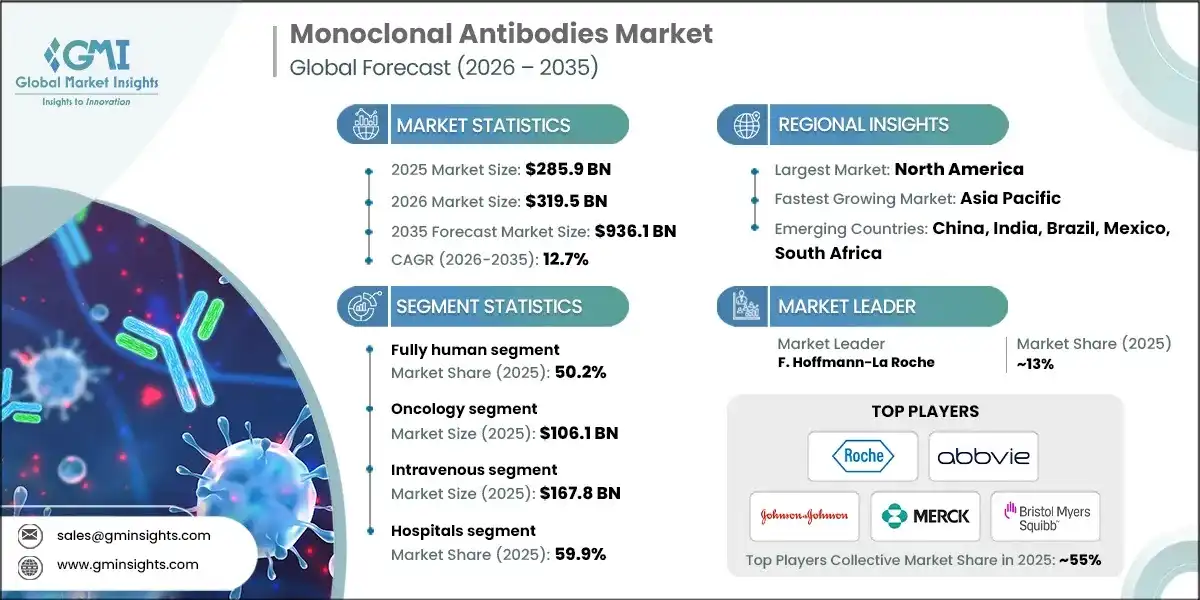
The global monoclonal antibodies market was valued at USD 285.9 billion in 2025. The market is expected to grow from USD 319.5 billion in 2026 to USD 936.1 billion in 2035, at a CAGR of 12.7% during the forecast period, according to the latest report published by Global Market Insights Inc. The market for monoclonal antibodies is witnessing robust growth, primarily driven by the increasing prevalence of chronic and autoimmune diseases, along with rising cancer incidence.
Monoclonal Antibodies Market Key Takeaways
Market Size & Growth
- 2025 Market Size: USD 285.9 Billion
- 2026 Market Size: USD 319.5 Billion
- 2035 Forecast Market Size: USD 936.1 Billion
- CAGR (2026–2035): 12.7%
Key Market Drivers
- Increasing prevalence of chronic and infectious diseases worldwide.
- Growing research and development activities.
- High adoption and accelerated approvals in developed markets.
- The booming biologics market and rising applications of monoclonal antibodies.
Challenges
- High cost of monoclonal antibody therapeutics.
- Stringent regulatory framework and compliance requirements.
Opportunity
- Emergence of next-generation antibody technologies.
- Expansion into emerging markets with improved healthcare infrastructure.
Key Players
- Market Leader: F. Hoffmann-La Roche led with over 13% market share in 2025.
- Leading Players: Top 5 players in this market include F. Hoffmann-La Roche, AbbVie, Johnson & Johnson, Merck & Co., Bristol Myers Squibb, which collectively held a market share of 55% in 2025.
Get Market Insights & Growth Opportunities
Also, the expansion in applications of targeted therapies and immunology is further driving the market growth. For example, as per the WHO, about 1 in 5 people develop cancer in their lifetime, approximately 1 in 9 men and 1 in 12 women die from the disease. In 2022, there were almost 20 million new cases and 9.7 million cancer-related deaths worldwide. This growing burden escalates demand for advanced biologics such as monoclonal antibodies, thus boosting market growth.
Monoclonal antibodies are laboratory-produced molecules designed to mimic the immune system’s ability to fight harmful pathogens such as viruses, bacteria, and cancer cells. They work by targeting specific antigens, offering high precision in treatment and reducing off-target effects compared to conventional therapies. These biologics are widely used in oncology, immunology, infectious diseases, and other conditions, stimulating the market for therapies such as infectious disease therapeutics and others.
Key players in the market include F. Hoffmann-La Roche, AbbVie, Amgen, Johnson & Johnson, and Bristol Myers Squibb, which offer a diverse portfolio of therapeutic mAbs across multiple indications. These companies play critical roles in product innovation, clinical trials, regulatory approvals, and expanding global distribution networks, thereby stimulating the adoption and expansion of monoclonal antibodies worldwide.
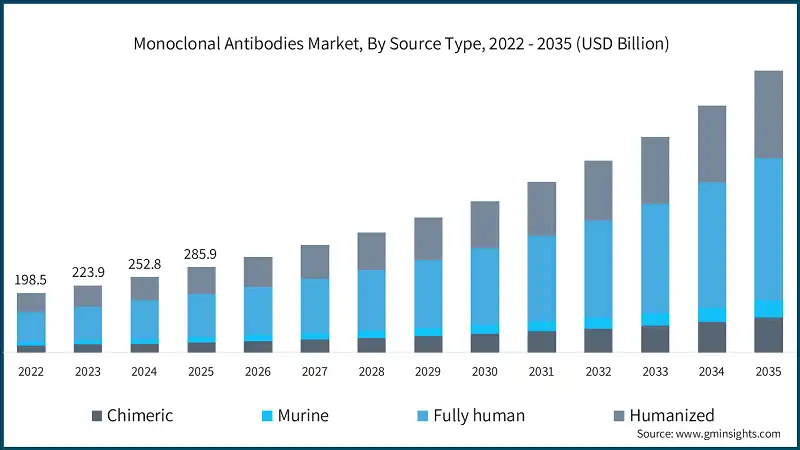
Between 2022 and 2024, the monoclonal antibodies market witnessed considerable growth, escalated by increased biologics approvals, rising prevalence of cancer and autoimmune diseases, and growing access to advanced cancer immunotherapy and other therapies. For instance, the global market was valued at about USD 198.5 billion in 2022 and reached around USD 252.8 billion in 2024, growing at a moderate CAGR of approximately 12.8%. This growth can be largely attributed to the surge in targeted therapies, the rapid adoption of biosimilars, and the availability of improved antibody engineering technologies that enhance efficacy and reduce immune system responses.
The monoclonal antibodies market refers to the global industry focused on biologic drugs designed to target specific antigens for therapeutic purposes. These molecules support precision medicine, improved treatment outcomes, and reduced side effects, often serving as alternatives or adjuncts to traditional small-molecule drugs.
To get key market trends
Monoclonal Antibodies Market Trends
- The market is being reshaped by the rapid clinical and regulatory expansion of antibody-based therapies across oncology, immunology, and infectious diseases.
- For example, according to the U.S. FDA, as of December 31, 2023, the FDA has approved 173 therapeutic mAbs (not including two diagnostic mAb). Among them, 65 were approved for cancer therapy (24 for hematological cancer and 41 for solid tumor).
- Further, the WHO Essential Medicines List has also steadily added antibody therapies—including trastuzumab and rituximab—signaling their increasing importance in standard clinical care globally.
- Another clear trend is the rise of biosimilar monoclonal antibodies, driven by patent expirations and supportive regulatory frameworks. The European Medicines Agency (EMA) reports that the EU has approved more than 80 biosimilars, including multiple trastuzumab, rituximab, infliximab, and adalimumab biosimilars, making Europe the world’s most mature biosimilar market.
- In the U.S., the FDA has approved over 40 biosimilars, with nine adalimumab biosimilars launching in 2023 alone, significantly lowering prices and increasing access.
- Furthermore, strategic collaborations and acquisitions among major players are reshaping the competitive landscape, enabling global expansion and strengthening supply chains. These partnerships are crucial for meeting rising demand in both developed and emerging markets.
Monoclonal Antibodies Market Analysis
Learn more about the key segments shaping this market
Based on the source type, the global monoclonal antibodies market is segmented into chimeric, murine, fully human and humanized. The fully human segment has asserted its dominance in the market by securing a significant market share of 50.2% in 2025 and is anticipated to grow at a CAGR of 12.8% over the forecast years.
- The fully human segment dominates the market as it provides safety, minimal immunogenicity, and high therapeutic efficacy.
- Fully human mAbs closely mimic natural human immunoglobulins, minimizing anti-drug antibody (ADA) responses and enabling sustained therapeutic efficacy, especially in long-term treatment regimens.
- Moreover, major blockbuster therapies, such as adalimumab, nivolumab, pembrolizumab, and evolocumab, derived from fully human sources, have further strengthened this segment’s dominance by setting industry benchmarks for clinical outcomes and commercial success.
- Additionally, they offer the ability to precisely target antigens, resulting in better clinical outcomes and fewer side effects.
- On the other hand, the chimeric monoclonal antibodies segment is anticipated to witness the fastest growth during the forecast period due to their proven clinical efficacy, cost-effectiveness, and established regulatory pathways. These antibodies combine murine variable regions with human constant regions, offering strong antigen-binding capabilities while reducing immunogenicity compared to fully murine antibodies.
Based on the application, the monoclonal antibodies market is classified into oncology, autoimmune diseases, infectious diseases, neurological diseases, and other applications. The oncology segment accounted for the highest market revenue of USD 106.1 billion in 2025 and is projected to grow at a CAGR of 12.5% during the analysis period. The infectious diseases segment, on the other hand, is anticipated to grow with a CAGR of 13.2%, driven by the increasing prevalence of viral and bacterial infections, emergence of drug-resistant pathogens, and heightened global focus on pandemic preparedness.
- The oncology segment leads the market due to the rising global cancer cases, along with increasing adoption of targeted therapies.
- According to NIH, monoclonal antibody-based immunotherapy drugs are now considered to be a main component of cancer therapy, alongside surgery, radiation, and chemotherapy.
- Moreover, monoclonal antibodies have become a major oncology treatment protocol due to their ability to selectively target tumor-associated antigens, minimize off-target toxicity, and improve survival outcomes.
- Additionally, advancements in antibody-drug conjugates (ADCs), bispecific antibodies, and checkpoint inhibitors have reinforced the role of monoclonal antibodies in precision oncology.
- Increasing investments in oncology research, rising patient awareness, and favorable reimbursement policies for biologics in developed markets are further accelerating segment growth.
Based on the route of administration, the monoclonal antibodies market is segmented into intravenous, subcutaneous, and intramuscular. The intravenous segment accounted for the highest market revenue of USD 167.8 billion in 2025 and is projected to grow at a CAGR of 12.5% during the analysis period.
- The intravenous route is a preferable method for administration of monoclonal antibodies as it provides the ability to ensure rapid systemic distribution with precise dosing and immediate therapeutic effect.
- Moreover, this route is important in conditions such as oncology, autoimmune disorders, and other infectious disease treatments, where the requirement of high bioavailability and infusion rates is important for optimal outcomes and patient compliance.
- Additionally, the administration through the intravenous route also supports the delivery of high molecular weight biologics that need stable plasma concentrations, which make them appropriate for complex therapies such as checkpoint inhibitors and antibody-drug conjugates.
- On the other hand, the intramuscular route is anticipated to witness the fastest growth due to its convenience, reduced administration time, and growing suitability for outpatient and home-care settings. Intramuscular injections offer a practical alternative for long-acting monoclonal antibody formulations.
Learn more about the key segments shaping this market
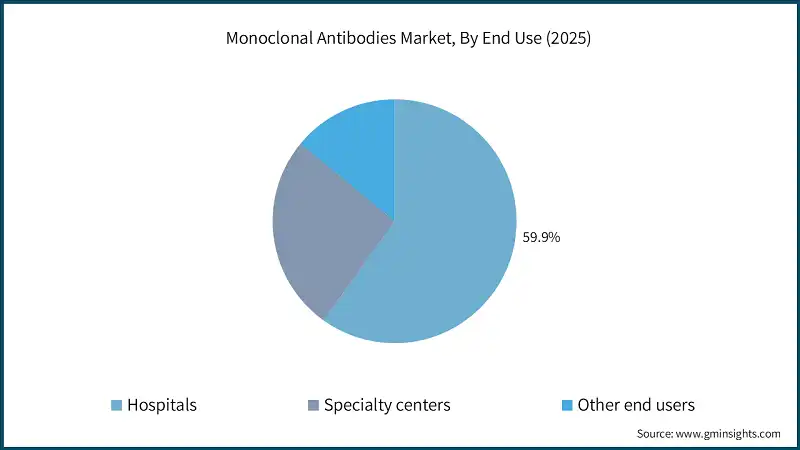
Based on the end use, the monoclonal antibodies market is classified into hospitals, specialty centers, and other end users. The hospitals segment held a market share of 59.9% in 2025 and is projected to grow at a CAGR of 12.6% during the analysis period.
- Hospitals remain the primary centers for administering monoclonal antibody therapies, particularly for oncology, autoimmune disorders, and severe infectious diseases. The dominance is stimulated by high patient volumes, access to advanced infusion infrastructure, and the presence of multidisciplinary teams capable of managing complex biologic treatments.
- Moreover, hospitals also offer comprehensive monitoring and emergency support, which is critical for therapies requiring controlled infusion and observation for adverse reactions.
- The growth is further supported by the rising number of biologic approvals, increasing adoption of inpatient and outpatient infusion services, and expanding hospital-based specialty programs for immunotherapy and targeted biologics.
- Specialty centers, on the other hand, play a growing role in outpatient administration of monoclonal antibodies, offering convenience, cost efficiency, and specialized care for chronic conditions such as rheumatoid arthritis and multiple sclerosis.
Looking for region specific data?
North America Monoclonal Antibodies Market
The North America market dominated the market with a market share of 41.5% in 2025.
- North America holds a dominant share in the market due to its advanced healthcare infrastructure, high prevalence of chronic and infectious diseases, and strong presence of leading biopharmaceutical companies offering innovative biologic therapies.
- The region benefits from early adoption of next-generation antibody technologies, widespread use of targeted and personalized treatments, and significant investments in research and clinical trials.
- Additionally, favorable reimbursement policies, growing biosimilar penetration, and increasing diagnosis rates for infectious diseases further support strong market demand.
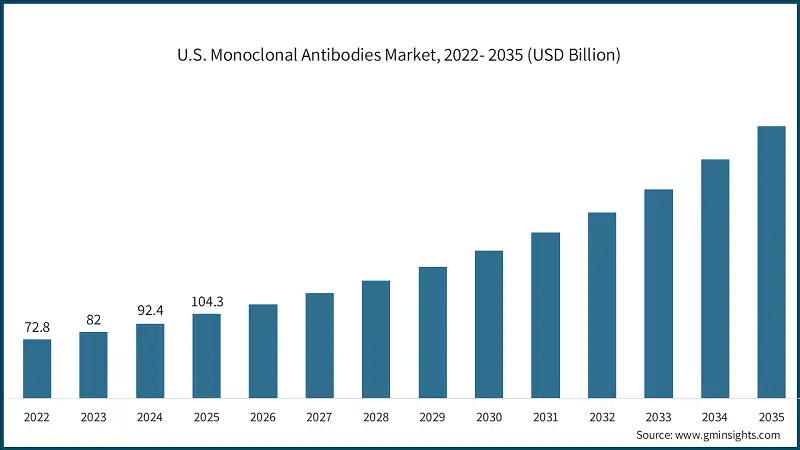
The U.S. monoclonal antibodies market was valued at USD 72.8 billion and USD 82 billion in 2022 and 2023, respectively. The market size reached USD 104.3 billion in 2025, growing from USD 92.4 billion in 2024.
- The U.S. holds a prominent position in the North American market, which is stimulated by the high prevalence of chronic diseases, along with strong adoption of biologic therapies, and also presence of leading pharmaceutical companies.
- The monoclonal antibodies are widely used for oncology, autoimmune disorders, and infectious diseases such as RSV, and HIV, creating demand across multiple therapeutic areas. CDC mentions, RSV affects more than 36.8 million people and includes an estimated 10.8% of the country's population.
- Moreover, the U.S. country benefits from advanced healthcare infrastructure, favourable reimbursement policies, and accelerated FDA approval pathways, reinforcing its leadership in monoclonal antibody adoption and market growth.
Europe Monoclonal Antibodies Market
Europe market accounted for USD 75.5 billion in 2025 and is anticipated to show lucrative growth over the forecast period.
- Europe holds a substantial share of the market, stimulated by a combination of factors such as the aging population, high prevalence of chronic and infectious diseases, and strong adoption of advanced biologic therapies across oncology and immunology.
- The region benefits from a collaborative ecosystem involving leading pharmaceutical companies, academic institutions, and research organizations that stimulates innovation and clinical adoption of monoclonal antibodies.
- Additionally, supportive regulatory frameworks, growing biosimilar penetration, and increasing healthcare investments further strengthen Europe’s position in the global market.
Germany dominates the Europe monoclonal antibodies market, showcasing strong growth potential.
- Germany holds a high market share in the Europe market due to the highest proportions of elderly individuals and strong incidence of infectious diseases.
- The rising shift toward personalized medicine and targeted biologics, escalated by high procedural volumes in oncology and immunology. With one of the largest elderly populations above 65 estimated to reach 24 million by 2050, and cancer incidence exceeding 500,000 new cases annually, demand for monoclonal antibodies continues to surge, supported by strong reimbursement frameworks and advanced hospital infrastructure.
Asia Pacific Monoclonal Antibodies Market
The Asia Pacific market is anticipated to grow at the highest CAGR of 13% during the analysis timeframe.
- The Asia Pacific region is poised for high growth in the monoclonal antibodies market, driven by rapidly aging populations, rising prevalence of diseases, and expanding healthcare infrastructure.
- Moreover, the region is experiencing high growth in monoclonal antibody adoption, escalated by rapidly expanding healthcare infrastructure and increasing investments in biologics manufacturing.
- Additionally, Asia Pacific is the fastest CAGR globally, supported by a large patient base with chronic conditions and government initiatives promoting access to advanced therapies.
China monoclonal antibodies market is estimated to grow with a significant CAGR, in the Asia Pacific market.
- The country is undergoing a transformation in biologics adoption, stimulated by regulatory reforms and increasing approval pathways for innovative therapies.
- Also, with cancer incidence above 4.5 million new cases annually and autoimmune disorders on the rise, with rapid expansion of domestic biopharma capabilities, the country is emerging as the region’s largest monoclonal antibody market.
Latin American Monoclonal Antibodies Market
Brazil leads the Latin American market, exhibiting remarkable growth during the analysis period.
- Brazil is known to be a high-potential market, driven by the rising prevalence of infectious diseases, rapidly rising cancer incidence, and other chronic diseases.
- The country is seeing increasing demand for monoclonal antibodies, stimulated by rising oncology and immunology treatment volumes and expanding access through public healthcare programs. For instance, in Brazil, cancer is ranked as the second leading cause of death, resulting in 227,920 deaths in 2018, as estimated by the World Health Organization.
- Moreover, government-led initiatives to integrate biologics into treatment protocols are further escalating market penetration alongside growing partnerships with global pharmaceutical companies.
Middle East and Africa Monoclonal Antibodies Market
Saudi Arabia market is expected to experience substantial growth in the Middle East and Africa market in 2025.
- Saudi Arabia is witnessing strong growth in monoclonal antibody adoption, supported by rising healthcare investments and expanding specialty care infrastructure. With chronic disease prevalence increasing and healthcare spending exceeding 6% of GDP, the country is prioritizing advanced biologics, creating significant opportunities for global and regional biopharma players.
- Large-scale healthcare investments under Vision 2030 are stimulating the adoption of advanced biologics, while partnerships with global monoclonal antibodies are improving supply chain resilience and treatment accessibility.
Monoclonal Antibodies Market Share
The market is moderately consolidated, with leading biopharmaceutical companies dominating the space while innovation continues to thrive among emerging players. The top 5 companies include F. Hoffmann-La Roche, AbbVie, Johnson & Johnson, Merck & Co., and Bristol Myers Squibb, which collectively hold approximately 55% of the global market share. These industry leaders maintain their dominance through extensive product portfolios in oncology, immunology, and infectious diseases, coupled with strong research and development pipelines and global distribution networks.
These companies are continuously investing in next-generation technologies, such as bispecific antibodies and antibody-drug conjugates, to expand therapeutic applications and improve clinical outcomes. The market also witnesses strategic collaborations, mergers, and acquisitions, aimed at accelerating innovation, expanding biosimilar portfolios, and strengthening regional presence.
At the same time, smaller biotech firms and niche players contribute by focusing on highly specialized monoclonal antibody products and cutting-edge engineering platforms. This dynamic environment fosters rapid technological advancements, competitive differentiation, and diversification, driving sustained growth in the market.
Monoclonal Antibodies Market Companies
Prominent players operating in the monoclonal antibodies industry are as mentioned below:
- AbbVie
- Amgen
- Arcus Biosciences
- AstraZeneca
- BioArctic
- Bristol Myers Squibb
- Eli Lilly and Company
- F. Hoffmann-La Roche
- GlaxoSmithKline
- Johnson & Johnson
- Merck & Co.
- Novartis AG
- Regeneron Pharmaceuticals
- Sanofi
- Takeda Pharmaceutical
- UCB Pharma
- F. Hoffmann-La Roche
Roche holds a leading market share of ~13% driven by its extensive oncology and immunology portfolio, including blockbuster monoclonal antibodies such as Rituxan, Herceptin, and Avastin. The company’s strong global distribution network, continuous research and development investment, and leadership in oncology medicine reinforce its dominance in targeted biologic therapies.
AbbVie maintains a strong position through its top-selling monoclonal antibodies for autoimmune and inflammatory diseases, including Humira and Skyrizi. Its competitive edge lies in advanced biologics expertise, robust clinical pipeline, and strategic expansion into next-generation immunology treatments across major global markets.
Merck stands out for its leadership in immuno-oncology, anchored by Keytruda, one of the highest-selling monoclonal antibodies worldwide. Leveraging breakthrough research in checkpoint inhibitors and expanding indications across multiple cancer types, Merck drives adoption while investing heavily in innovative antibody technologies.
Monoclonal Antibodies Market Report Attributes
| Key Takeaway | Details |
|---|---|
| Market Size & Growth | |
| Base Year | 2025 |
| Market Size in 2025 | USD 285.9 Billion |
| Market Size in 2026 | USD 319.5 Billion |
| Forecast Period 2026-2035 CAGR | 12.7% |
| Market Size in 2035 | USD 936.1 Billion |
| Key Market Trends | |
| Drivers | Impact |
| Increasing prevalence of chronic and infectious diseases worldwide | Rising cases of cancer, autoimmune disorders, and infectious diseases such as COVID-19 are fueling demand for targeted monoclonal antibody therapies. |
| Growing research and development activities | Continuous innovation in antibody engineering, bispecific antibodies, and antibody-drug conjugates accelerate product development and expands therapeutic applications, thus favoring market growth. |
| High adoption and accelerated approvals in developed markets | Streamlined regulatory processes, strong clinical infrastructure, and favorable reimbursement policies in developed economies such as the U.S. and Europe are driving rapid growth. |
| The booming biologics market and rising applications of monoclonal antibodies | Expanding biologics segment and increasing use of mAbs in oncology, immunology, and infectious disease treatment are creating sustained growth opportunities. |
| Pitfalls & Challenges | Impact |
| High cost of monoclonal antibody therapeutics | Complex manufacturing processes and advanced technology requirements make mAbs expensive, limiting accessibility in low-income regions. |
| Stringent regulatory framework and compliance requirements | Extensive clinical trials, safety evaluations, and regulatory approvals can delay product launches and increase development costs. |
| Opportunities: | Impact |
| Emergence of next-generation antibody technologies | Development of antibodies, antibody-drug conjugates, and personalized immunotherapies will open new treatment avenues and improve patient outcomes. |
| Expansion into emerging markets with improved healthcare infrastructure | Rising investments in healthcare across Asia-Pacific, Latin America, and the Middle East will create significant growth potential for monoclonal antibody therapies. |
| Market Leaders (2025) | |
| Market Leaders |
~13% |
| Top Players |
|
| Competitive Edge |
|
| Regional Insights | |
| Largest Market | North America |
| Fastest Growing Market | Asia Pacific |
| Emerging Country | China, India, Brazil, Mexico, South Africa |
| Future Outlook |
|
What are the growth opportunities in this market?
Monoclonal Antibodies Industry News
- In October 2025, the FDA approved Roche’s Gazyva/Gazyvaro (obinutuzumab) for treating lupus nephritis in adults receiving standard therapy, based on positive Phase II and III trial results. This approval strengthened Roche’s immunology portfolio and expanded its presence in autoimmune disease treatment.
- In April 2025, the FDA approved Johnson & Johnson’s IMAAVY, the first FcRn blocker for generalized myasthenia gravis in adults and pediatric patients aged 12 and older. The approval enhanced J&J’s leadership in neurology and rare autoimmune disorders.
- In June 2025, the FDA approved Merck’s ENFLONSIA for preventing RSV lower respiratory tract disease in infants during their first RSV season. This approval expanded Merck’s infectious disease portfolio and reinforced its position in pediatric preventive care.
- In June 2021, Amgen entered into an agreement with Kyowa Kirin Co. Ltd., to develop and commercialize KHK4083, a fully human monoclonal antibody for the treatment of atopic dermatitis. Such partnerships have helped the company in business expansion.
- In May 2021, Roche India announced the Emergency Use Authorization (EUA) for its antibody cocktail by the Central Drugs Standards Control Organization (CDSCO). This authorization has enabled the company to broaden product accessibility in the country.
The monoclonal antibodies market research report includes in-depth coverage of the industry with estimates and forecast in terms of revenue in USD Million from 2022 - 2035 for the following segments:
Market, By Source Type
- Chimeric
- Murine
- Fully human
- Humanized
Market, By Application
- Oncology
- Autoimmune diseases
- Infectious diseases
- Neurological diseases
- Other applications
Market, By Route of Administration
- Intravenous
- Subcutaneous
- Intramuscular
Market, By End Use
- Hospitals
- Specialty centers
- Other end use
The above information is provided for the following regions and countries:
- North America
- U.S.
- Canada
- Europe
- Germany
- UK
- France
- Spain
- Italy
- Netherlands
- Asia Pacific
- China
- India
- Japan
- Australia
- South Korea
- Latin America
- Brazil
- Mexico
- Argentina
- Middle East and Africa
- South Africa
- Saudi Arabia
- UAE
Frequently Asked Question(FAQ) :
What was the market size of the monoclonal antibodies market in 2025?
The market size was valued at USD 285.9 billion in 2025, with a CAGR of 12.7% projected through 2035, driven by the increasing prevalence of chronic diseases, autoimmune disorders, and rising cancer cases.
What is the projected value of the monoclonal antibodies market by 2035?
The market is expected to reach USD 936.1 billion by 2035, fueled by advancements in antibody-based therapies and their growing adoption in oncology, immunology, and infectious diseases.
What was the market share of the fully human segment in 2025?
The fully human segment held a significant market share of 50.2% in 2025 and is anticipated to grow at a CAGR of 12.8% during the forecast period.
How much revenue did the oncology application segment generate in 2025?
The oncology segment generated USD 106.1 billion in 2025, leading the market and is projected to grow at a CAGR of 12.5% during the analysis period.
What was the valuation of the intravenous route of administration segment in 2025?
The intravenous segment accounted for USD 167.8 billion in 2025 and is expected to grow at a CAGR of 12.5% during the forecast period.
Which region dominated the monoclonal antibodies market in 2025?
North America led the market with a 41.5% share in 2025, driven by strong healthcare infrastructure and high adoption of advanced therapies.
What are the key trends in the monoclonal antibodies industry?
Key trends include the rapid regulatory approval of antibody-based therapies, increasing inclusion of monoclonal antibodies in the WHO Essential Medicines List, and growing focus on pandemic preparedness through antibody-based solutions.
Who are the prominent players in the monoclonal antibodies market?
Key players include AbbVie, Amgen, Arcus Biosciences, AstraZeneca, BioArctic, Bristol Myers Squibb, Eli Lilly and Company, F. Hoffmann-La Roche, GlaxoSmithKline, and Johnson & Johnson.
Monoclonal Antibodies Market Scope
Related Reports