Summary
Table of Content

Milk Protein Market
Get a free sample of this report
Form submitted successfully!
Error submitting form. Please try again.
Thank you!
Your inquiry has been received. Our team will reach out to you with the required details via email. To ensure that you don't miss their response, kindly remember to check your spam folder as well!
Request Sectional Data
Thank you!
Your inquiry has been received. Our team will reach out to you with the required details via email. To ensure that you don't miss their response, kindly remember to check your spam folder as well!
Form submitted successfully!
Error submitting form. Please try again.
Milk Protein Market Size
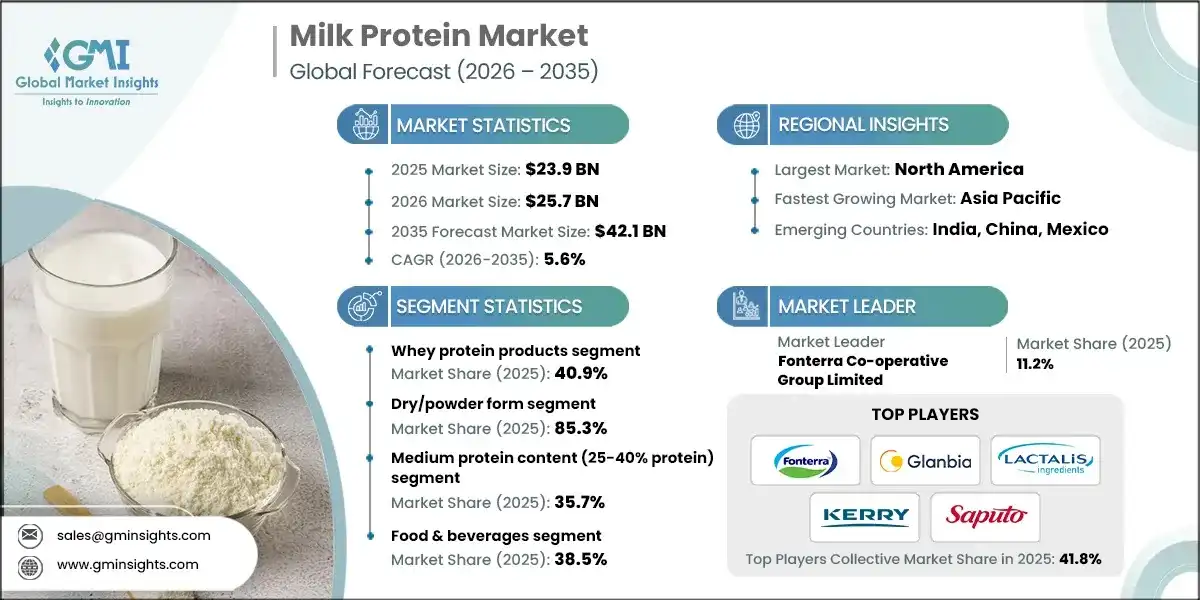
The global milk protein market size was valued at USD 23.9 billion in 2025. The market is expected to grow from USD 25.7 billion in 2026 to USD 42.1 billion in 2035, at a CAGR of 5.6% according to latest report published by Global Market Insights Inc.
Milk Protein Market Key Takeaways
Market Size & Growth
- 2025 Market Size: USD 23.9 Billion
- 2026 Market Size: USD 25.7 Billion
- 2035 Forecast Market Size: USD 42.1 Billion
- CAGR (2026–2035): 5.6%
Regional Dominance
- Largest Market: North America
- Fastest Growing Region: Asia Pacific
Key Market Drivers
- Rising health & wellness consciousness.
- Growing sports & active nutrition market.
- Increasing protein fortification in foods.
Challenges
- Raw milk price volatility.
- Lactose intolerance & dairy allergies.
Opportunity
- Bioactive protein applications expansion.
- Personalized nutrition product development.
Key Players
- Market Leader: Fonterra Co-operative Group Limited led with over 11.2% market share in 2025.
- Leading Players: Top 5 players in this market include Fonterra Co-operative Group Limited, Glanbia plc, Lactalis Ingredients, Kerry Group plc, Saputo Inc., which collectively held a market share of 41.8% in 2025.
Get Market Insights & Growth Opportunities
- Milk protein market is considered among the most essential markets for the food and nutrition sectors worldwide, with its unique functional and nutritional properties underlying the importance of milk proteins as superior sources of essential amino acids, which, in turn, have positioned them as ingredients in many applications, such as sports nutrition, infant formulas, and functional foods. In addition to providing health benefits to the end consumer, milk proteins help in improving texture and stability-demanding attributes for manufacturers interested in developing products meeting the needs of performance-oriented and wellness-centred consumers.
- Consumer awareness concerning protein intake for muscle building, weight management, and general well-being has risen sharply. This very much pushes for increased consumption of milk protein in dietary supplements, ready-to-drink beverages, and high-protein snacks. The clean-label movement for consumers' choice of foods made from natural and minimally processed ingredients further places the market as an honest and transparent option in health-considerate perceptions.
- Technological developments constitute some of the pivotal forces shaping the milk protein market. Advances in processing have improved filtration and fractionation systems, resulting in greater purity, solubility, and bioavailability of milk protein. This allows the formulation of milk protein products with specific dietary goals, such as sports recovery, clinical nutrition, and weight management. Such advancements not only contribute positively to product performance but also open new avenues for applications in a wide variety of consumer segments.
To get key market trends
Milk Protein Market Trends
- Milk protein is reshaping the frameworks of nutritional performance and sustainability. Until recently, it was treated as a mere component of dairy products, but today it is heralded as a strategic precondition for health-oriented innovation. Modern formulations are highlighting durability across functionality, flexibility in application, clean-label acceptance, and eco-friendly standards. This relative evolution stands testimony of a firm deviation from the conventional, high-emission production paradigm toward sustainable processes that optimal deprivation of economic consideration arrangements and social wellness.
- Technological advances act as the main adrenaline in this transformation. The sophisticated art of fractionation and filtration has leveraged the development of highly purified, highly bioavailable milk-protein ingredients. Hybrid formulation and specialty products development comprising improvement in mixed dietary requirements.
- Bioactive protein is on the rise in a pretty fast manner as targeted muscle recovery, immunity, and gut health benefits. In direct line with that, personalized nutrition is emerging as a growth catalyst coupled with customized milk protein products to the health profile of individuals and lifestyle interventions. These perspectives give rise to new value propositions for brands looking to give precision nutrition and holistic wellness.
- This increase is indicative of milk protein's role in maintaining the structural integrity of modern diets, regulatory compliance with the clean label standards, and sustainability-driven innovations across the global nutrition landscape.
Milk Protein Market Analysis
Learn more about the key segments shaping this market
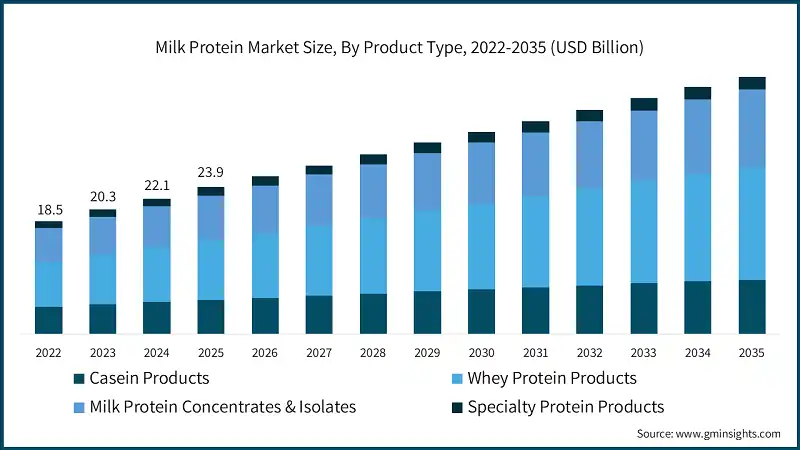
Based on product type, the milk protein market is segmented into casein products, whey protein products, milk protein concentrates & isolates, specialty protein products. Whey protein products dominated the market with an approximate market share of 40.9% in 2025 and is expected to grow with a CAGR of 6.4% by 2035.
- Casein is appreciated for its slow digestion and thus is suited to applications in sustained energy or muscle recovery. Also, its ability to gel and modify texture render it invaluable in formulations for bakery and processed foods. Whey protein products are the market leaders recognized for rapid absorption and high bioavailability, thus being the first choice in sports nutrition and active lifestyle products, while the application areas also extend to ready-to-drink beverages, protein bars, and clinical nutrition, wherein rapid nutrient delivery is vital.
- Milk protein concentrates and isolates present a balanced casein-to-whey ratio that provides both fast and slow release features. These are becoming more widely used in fortified foods and specialized dietary solutions, thus granting an incredible degree of flexibility in formulation for the manufacturers while catering to the consumers' demand for high-protein, clean-label solutions.
Learn more about the key segments shaping this market
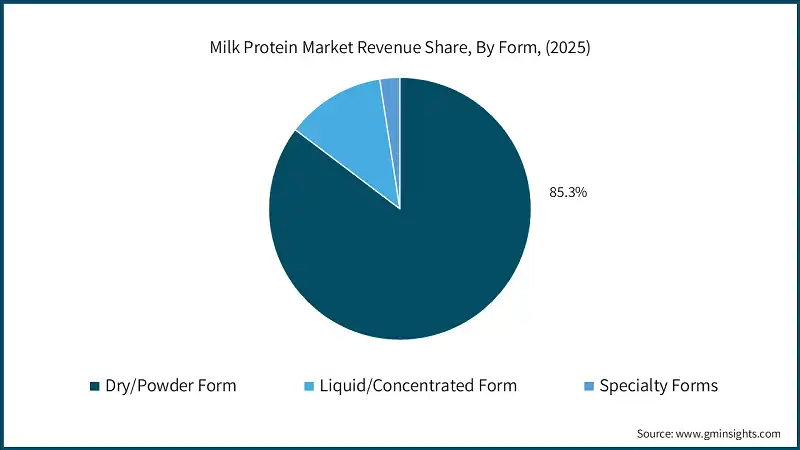
Based on form, the milk protein market is segmented into dry/powder form, liquid/concentrated form, specialty forms. Dry/powder form held the largest market share of 85.3% in 2025 and is expected to grow at a CAGR of 6.3% during 2026 to 2035.
- Dry or powder form is the most versatile among all-also found applications in sports nutrition, infant formula, functional foods, being always stable, easily transportable, and having a long shelf life. More than just being an option for manufacturers of high efficiency in storing the material, it provides flexibility in formulation.
- Consumption of liquid or concentrated format is gaining status in ready-to-drink beverages as well as dairy-based products where solubility and smooth texture are of utmost importance. The format and usage pattern favor convenience and, hence, lend ease in the incorporation of high-protein drinks and clinical nutrition solutions.
- Specialty forms are the most avant-garde forms of innovation. These contain bioactive components and tailor-made blends targeting specific health benefits such as immune support, gut health, and metabolic wellness.
Based on protein content level, the milk protein market is segmented into low protein content (25-40% protein), medium protein (40-70%), high protein (70-85%), ultra-high protein (>85%). Medium protein content (25-40% protein) segment dominated the market with an approximate market share of 35.7% in 2025 and is expected to grow with the CAGR of 5.4% till 2035.
- Products of low protein content (25-40%) are utilized mainly in everyday dairy and bakery systems where cost and mild fortification are key. These products cater for everyday consumption requirements without compromising taste and texture.
- It has been shown that medium protein content (40-70%) is also the most marketable since it achieves the best trade-off between performance and economy. High-protein snacks, ready-to-drink beverages, and meal replacements are all in this category to meet the rising demand for on-the-go nutrition. Its versatility also results in high preference among manufacturers for targeting active and wellness-focused consumers.
- Ultra-high protein (>85%) would thus refer to a premium end of a spectrum designed for advanced formulations with use in personalized nutrition and bioactive applications. These products pave the way for precision health solutions with targeted benefits like immune support and metabolic optimization.
Based on application, the milk protein market is segmented into food & beverages, dietary supplements, sports nutrition, infant formula, clinical nutrition, cosmetics & personal care, animal nutrition. Food & beverages segment dominated the market with an approximate market share of 38.5% in 2025 and is expected to grow with the CAGR of 4.5% through 2035.
- Available for foods and beverages, milk proteins contribute textural, stabilizing, and nutritional properties to a wide array of commercial products such as dairies, baked goods, and ready-to-drink beverages. This segment represents the growing view of consumers for clean label and protein-rich formulations.
- Milk protein is an agent for dietary supplements due to its high-quality amino acid profile that promotes wellness and preventive health. Sports nutrition is a strong growth driver for whey products that allow active consumers and athletes to experience rapid absorption and muscle recovery benefits.
- Infant formulas represent a very specialized application that requires precision in formulation to mirror the nutritional profile of human milk. Thus, milk protein is also being added to clinical nutrition designed for therapeutic diets for patients suffering from targeted diseases, emphasizing digestibility and bioavailability.
Based on distribution channel, the milk protein market is segmented into B2B direct sales (ingredient supply), B2C retail channels, online/e-commerce channels, food service channels, pharmacy & medical channels. B2B direct sales (ingredient supply) dominated the market with an approximate market share of 69.6% in 2025 and is expected to grow with the CAGR of 5.5% by 2035.
- B2B direct sales comprise the major means of supplying ingredients to large food and beverage manufacturers, sports nutrition brands, and clinical nutrition companies. This channel emphasizes consistent quality assurance and long-term partnerships for bulk purchases.
- In contrast, B2C retail channels serve the mainstream consumer through supermarkets and specialty health stores, providing milk protein in ready-to-consume formats such as powders, bars, and fortified dairy products. Functioning online and via e-commerce platforms is rapidly emerging as a highly valued channel for growth of premium and niche formulations-all owing to convenience, product variety, and personalization.
- Food service channels integrate milk proteins into the menu for cafes, fitness centers, and institutional catering to follow the trend of protein-rich meals in out-of-home consumption. Pharmaceutical and medical channels cater to the clinical and therapeutic nutrition needs, complying with stringent healthcare standards, and supporting targeted dietary interventions.
Looking for region specific data?
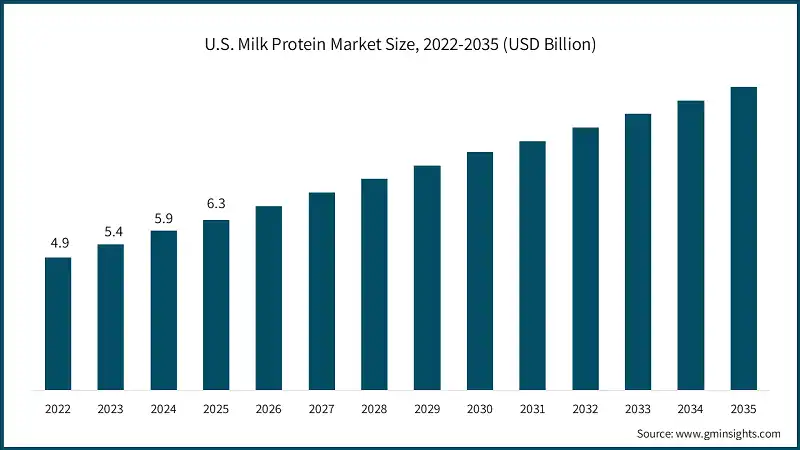
The North America milk protein market is growing rapidly on the global level dominating the marker with a share of 32% in 2025.
- North America is an emerging growth engine in the market due to strong consumer demand for high-protein, clean-label products and advanced manufacturing capabilities. This region possesses a very robust health and wellness culture, which drives innovation in the areas of sports nutrition, functional foods, and clinical dietary solutions.
U.S. dominates the North America milk protein market, showcasing strong growth potential.
- U.S. a powerful player to influence standards and paths of product innovation around the globe. This endowed leadership is further strengthened by solid investments into research and development as well as a vibrant e-commerce ecosystem to hasten consumer access to selective milk protein products.
Europe milk protein market growing in the industry with revenue of USD 7.1 billion in 2025 and is anticipated to show lucrative growth over the forecast period.
- Consumer preferences for clean labels and high protein are driving an innovative and sustainable future for milk protein in Europe. Regulatory frameworks favouring health and environmental accountability have pushed the region toward premium nutrition and functional foods.
Germany dominates the European milk protein market, showcasing strong growth potential.
- The German market in Europe is well entrenched, taking maximum advantage of an established food technology infrastructure and quality standards. Its focus on personalized nutrition and bioactive protein applications could mean setting trends in developing next-generation dairy-based solutions.
The Asia Pacific milk protein market is anticipated to grow at a CAGR of 6.7% during the analysis timeframe.
- Asia Pacific is going up against the growing trends of health and improvements in quality of middle-class consumption, which are both powerful in driving functional nutrition demands, to be the most dynamic growth hub for the market.
China milk protein market is estimated to grow with a significant CAGR in the Asia Pacific region.
- China has the lead in this transformation and is already using its scale and innovation powers to advance frontiers in infant nutrition, clinical diets, and high-performance sports product formulations.
Latin America market accounted for 5.7% market share in 2025 and is anticipated to show highest growth over the forecast period.
- Latin America a potential grower for milk protein as there is already an increasing consumer health interest, as well as a good regulatory environment for quality and sustainability.
Brazil leads the Latin American milk protein market, exhibiting remarkable growth during the analysis period.
- Driving such change is Brazil, which boasts a solid dairy industry with a broad portfolio of nutrition-related product ranges with strong infrastructure laid down against the application of ingenious standards to ensure that Brazil is rightly positioned as the regional core growth engine for Latin America.
Middle East & Africa market accounted for 3.7% market share in 2025 and is anticipated to show lucrative growth over the forecast period.
- Markets for milk proteins demonstrate steady movements calling for a favor toward the Middle East Africa region, with economic diversification, health, and wellness will create a perfect storm for the milk protein market.
Saudi Arabia milk protein industry to experience substantial growth in the Middle East and Africa market in 2025.
- In this respect, another key driver for growth within the region is Saudi Arabia. The nation is focusing its investments toward advanced dairy technologies and premium nutrition solutions within an industrial transformation agenda.
Milk Protein Market Share
The top 5 companies in milk protein industry include Fonterra Co-operative Group Limited, Glanbia plc, Lactalis Ingredients, Kerry Group plc, Saputo Inc. These are prominent companies operating in their respective regions covering approximately 41.8% of the market share in 2025. These companies hold strong positions due to their extensive experience in market. Their diverse product portfolios, backed by robust production capabilities and distribution networks, enable them to meet the rising demand across various regions.
- Fonterra Co-operative Group Limited, a worldwide dairy cooperative, produces and sells ingredients from high-quality milk, making it possible to serve nutritional solutions on an innovative basis, which further enhances its dairy heritage toward serving the food, beverage, and health sectors globally.
- Glanbia Plc is a leading global nutrition company with a mixed portfolio of products that includes dairy and performance nutrition. The ingredients development expertise of the company is complemented by health and wellness trends.
- The Lactalis Ingredients company, which is the largest supplier of dairy-based ingredients, offers a very extensive range of products that includes everything from whey proteins through caseins to some specialty formulations.
- Kerry Group is reputed to be a global leader in taste and nutrition solutions, offering dairy-based and specialty ingredients for food and beverage application.
- Saputo Inc. is one of the leading players in dairy processing and part of the ingredient manufacturing industry for the food and nutrition sectors. The company pursues operational efficiency, product quality, and innovation to meet the specific requirements of divergent market segments.
Milk Protein Market Companies
Major players operating in the milk protein industry include:
- Fonterra Co-operative Group Limited
- Glanbia plc
- Lactalis Ingredients
- Kerry Group plc
- Saputo Inc.
- Arla Foods amba
- Royal FrieslandCampina N.V.
- Nestlé S.A. (Nutrition & Health Science)
- Hilmar Ingredients
- Milk Specialties Global
- Agropur Cooperative
- Carbery Group
- Glanbia Performance Nutrition (Optimum Nutrition Brand)
- Idaho Milk Products
- Arla Foods Ingredients Group P/S
Milk Protein Market Report Attributes
| Key Takeaway | Details |
|---|---|
| Market Size & Growth | |
| Base Year | 2025 |
| Market Size in 2025 | USD 23.9 Billion |
| Market Size in 2026 | USD 25.7 Billion |
| Forecast Period 2026-2035 CAGR | 5.6% |
| Market Size in 2035 | USD 42.1 Billion |
| Key Market Trends | |
| Drivers | Impact |
| Rising health & wellness consciousness | Generates constant demand for milk protein as one of the core ingredients in functional and fortified products |
| Growing sports & active nutrition market | Speeds up innovation in proteins, and has formulated milk protein as a performance enhancer |
| Increasing protein fortification in foods | Widens the scope of application across mainstream food categories and propels the market |
| Pitfalls & Challenges | Impact |
| Raw milk price volatility | Creates cost instability, putting pressure on margins and pricing strategies for manufacturers of milk protein |
| Lactose intolerance & dairy allergies | Limits the consumer base, calling for alternatives and labeling |
| Opportunities: | Impact |
| Bioactive protein applications expansion | Create higher end segments within clinical nutrition and functional health products |
| Personalized nutrition product development | Unique milk protein products developed for particular health objectives |
| Market Leaders (2025) | |
| Market Leaders |
11.2% |
| Top Players |
|
| Competitive Edge |
|
| Regional Insights | |
| Largest Market | North America |
| Fastest growing market | Asia Pacific |
| Emerging countries | India, China, Mexico |
| Future outlook |
|
What are the growth opportunities in this market?
Milk Protein Industry News
- In June 2021, Saputo, a leading dairy processor, announced partnership with DA (Dairy Australia), based on the focus of encouraging farmer suppliers to build their farm business management skills to grow the business in the country.
- In February 2021, Arla Foods launched a win-win formula for manufacturers in dry blend protein which can reduce production costs while not compromising with quality or safety to help infant formula manufacturers.
These milk protein market research report includes in-depth coverage of the industry, with estimates & forecasts in terms of revenue (USD Billion) and volume (Kilo Tons) from 2022 to 2035, for the following segments:
Market, By Product Type
- Casein products
- Acid casein
- Rennet casein
- Sodium caseinate
- Calcium caseinate
- Micellar casein
- Whey protein products
- Whey protein concentrate (WPC)
- Whey protein isolate (WPI) - >90% protein
- Whey protein hydrolysate (WPH)
- Native whey protein
- Milk protein concentrates & isolates
- Milk protein concentrate (MPC 40-85%)
- Milk protein isolate (MPI 85-90%)
- Total milk protein
- Specialty protein products
- Bioactive proteins (lactoferrin, immunoglobulins)
- Hydrolyzed milk proteins
- Organic milk proteins
Market, By Form
- Dry/powder form
- Liquid/concentrated form
- Specialty forms
- Protein crisps & extrudates
- Micro-encapsulated proteins
- Ready-to-mix blends
Market, By Protein Content Level
- Low Protein Content (25-40% Protein)
- Medium Protein (40-70%)
- High Protein (70-85%)
- Ultra-High Protein (>85%)
Market, By Application
- Food & Beverages
- Dietary Supplements
- Sports Nutrition
- Infant Formula
- Clinical Nutrition
- Cosmetics & Personal Care
- Animal Nutrition
Market, By Distribution Channel
- B2B direct sales (ingredient supply)
- B2C retail channels
- Specialty stores & health food retailers
- Supermarkets & hypermarkets
- Convenience stores
- Online/e-commerce channels
- Brand direct websites
- Online marketplaces (amazon, Alibaba)
- Subscription models
- Food service channels
- Restaurants & quick service
- Cafes & juice bars
- Institutional food service
- Pharmacy & medical channels
- Hospital pharmacies
- Retail pharmacies
- Medical nutrition distributors
The above information is provided for the following regions and countries:
- North America
- U.S.
- Canada
- Europe
- Germany
- UK
- France
- Spain
- Italy
- Rest of Europe
- Asia Pacific
- China
- India
- Japan
- Australia
- South Korea
- Rest of Asia Pacific
- Latin America
- Brazil
- Mexico
- Argentina
- Rest of Latin America
- Middle East and Africa
- Saudi Arabia
- South Africa
- UAE
- Rest of Middle East and Africa
Frequently Asked Question(FAQ) :
What was the market size of the milk protein in 2025?
The market size was valued at USD 23.9 billion in 2025, with a CAGR of 5.6% expected through 2035. The market's growth is driven by the increasing demand for functional and nutritional products.
What is the projected value of the milk protein market by 2035?
The market is poised to reach USD 42.1 billion by 2035, fueled by advancements in technology, rising consumer interest in clean-label and sustainable products, and the growing adoption of milk proteins in diverse applications.
What is the expected size of the milk protein industry in 2026?
The market size is projected to reach USD 25.7 billion in 2026.
What was the market share of whey protein products in 2025?
Whey protein products dominated the market with an approximate share of 40.9% in 2025 and is expected to grow at a CAGR of 6.4% till 2035.
What was the valuation of the dry/powder form segment in 2025?
The dry/powder form segment held the largest market share of 85.3% in 2025 and is anticipated to expand at a CAGR of 6.3% from 2026 to 2035.
What is the growth outlook for the food & beverages segment through 2035?
The food & beverages segment dominated the market with a share of 38.5% in 2025 and is set to observe around 4.5% CAGR through 2035.
Which region leads the milk protein sector?
North America leads the market with a 32% share in 2025. The region's growth is driven by strong consumer demand for high-protein, clean-label products, advanced manufacturing capabilities, and a robust health and wellness culture.
What are the emerging trends in the milk protein market?
Key trends include bioactive proteins for health benefits, advanced fractionation technologies, personalized nutrition demand, and sustainable clean-label products.
Who are the key players in the milk protein industry?
Major players include Fonterra Co-operative Group Limited, Glanbia plc, Lactalis Ingredients, Kerry Group plc, Saputo Inc., Arla Foods amba, Royal FrieslandCampina N.V., Nestlé S.A., and Hilmar Ingredients.
Milk Protein Market Scope
Related Reports