Summary
Table of Content

Medical Devices Reimbursement Market
Get a free sample of this report
Form submitted successfully!
Error submitting form. Please try again.
Thank you!
Your inquiry has been received. Our team will reach out to you with the required details via email. To ensure that you don't miss their response, kindly remember to check your spam folder as well!
Request Sectional Data
Thank you!
Your inquiry has been received. Our team will reach out to you with the required details via email. To ensure that you don't miss their response, kindly remember to check your spam folder as well!
Form submitted successfully!
Error submitting form. Please try again.
Medical Devices Reimbursement Market Size
The medical devices reimbursement market is driven by numerous factors such as the growing burden of healthcare costs, increasing prevalence of chronic diseases, supportive government programs, and adoption of value-based healthcare models, among other factors.
The global push for health security and access, minimally invasive surgery growth, and bundled-payment inclusion of devices are key factors expected to fuel industry growth. United Health Group, Allianz, Cigna, Humana, and CVS Health are among the leading players operating in the market. These players mainly focus on geographic expansion, blockchain and fintech integration for transparent billing processes, and collaboration with local or regional healthcare providers, among others.
Medical Devices Reimbursement Market Key Takeaways
Market Size & Growth
- 2025 Market Size: USD 617.6 Billion
- 2026 Market Size: USD 665.1 Billion
- 2035 Forecast Market Size: USD 1.2 Trillion
- CAGR (2026–2035): 6.5%
Regional Dominance
- Largest Market: North America
- Fastest Growing Region: Asia Pacific
Key Market Drivers
- Increasing prevalence of chronic diseases.
- Adoption of value-based healthcare models.
- Growing burden of healthcare cost.
- Supportive government programs.
Challenges
- Complex reimbursement framework.
- Underpayment or denial of claims.
Opportunity
- Growth in remote patient monitoring reimbursement.
- Government & private investment in healthcare.
Key Players
- Leading Players: Top 5 players in this market include Allianz, Cigna, CVS Health, Humana Inc., United Health Group.
Get Market Insights & Growth Opportunities
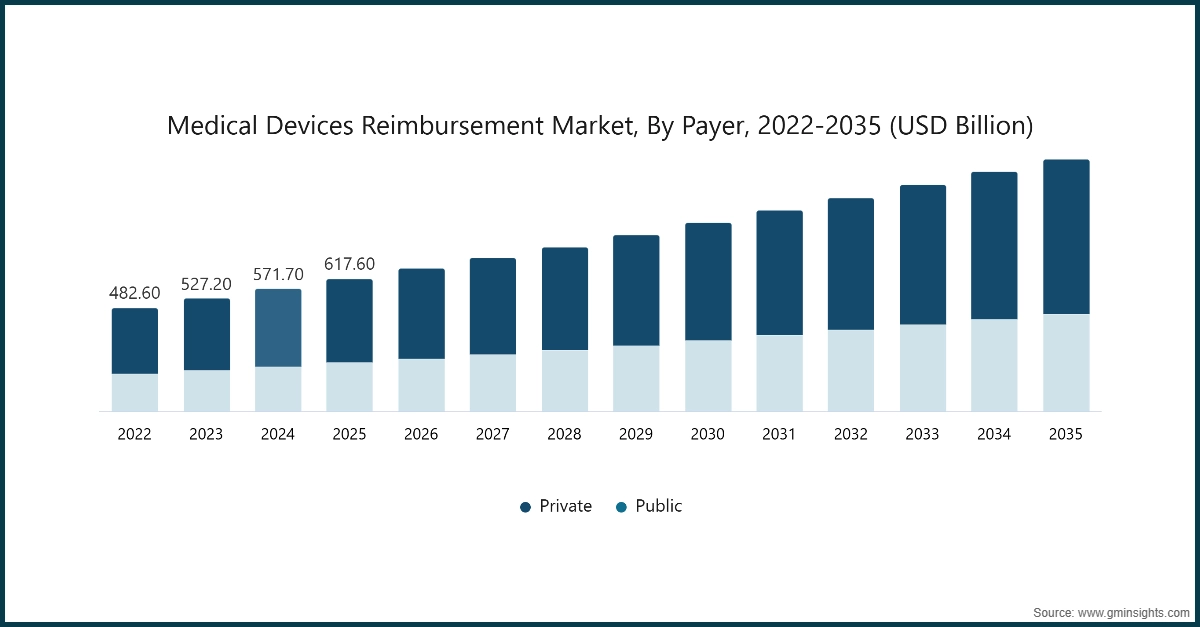
The market increased from USD 482.6 billion in 2022 to USD 571.7 billion in 2024, with a historic growth rate of 8.8%. One of the key factors supporting market growth is the increasing prevalence of chronic diseases. The rising global burden of chronic diseases represents the primary driver of medical device reimbursement market expansion. Various chronic conditions such as cancer, diabetes, cardiovascular disorders, and chronic respiratory diseases account for approximately 80% of premature deaths globally. For example, according to the data published in the 2025 Diabetes Atlas by the International Diabetes Federation (IDF), around 589 million adult patients within the 20-79 years age group were suffering from diabetes. The report also highlights that people living with this condition require continuous glucose monitoring systems, insulin pumps, and related diagnostic devices for proper management. Further, the data published by The Centers for Medicare & Medicaid Services (CMS) show that Medicare spending on diabetes- and cardiac-related devices increased by 23% and 18%, respectively, between 2023 and 2025. Thus, the rising disease burden is fueling the market growth.
Additionally, the implementation of supportive policies within government healthcare programs pledging to provide services or cover costs has helped to establish a reimbursement mechanism for medical devices, leading to market growth. In addition, the CMS also reported that in the U.S., the Inflation Reduction Act of 2022 included provisions expanding Medicare coverage for continuous glucose monitors, home dialysis machines, and cardiac monitoring devices. Similarly, the Chinese Government Healthcare Program has also expanded its Reimbursement List under the National Reimbursement Drug List (NRDL) Expansion for the inclusion of 127 additional devices with government reimbursement rates averaging 65-80% of device costs for 2024-2025.
Further, the transformation from fee-for-service models to value-based payment models have been a key driver changing medical device reimbursement structures, creating pathways for growth through devices that provide better clinical outcomes and demonstrate cost-effectiveness. For instance, as per the CMS guidelines, continuous remote monitoring devices used to prevent diabetic complications can be provided with an outcome-based payment supplement, averaging 15% to 20% in excess of traditional reimbursement levels. The CMS data published in 2023 also highlighted that value-based payment programs accounted for around 45% of all U.S. healthcare payments, up from 29% in 2020. This transformation has resulted in increased investment in generating post-market evidence and establishing outcome registries to support premium reimbursement claims approved by regulatory authorities.
Medical device reimbursement refers to the process through which healthcare providers, such as hospitals, clinics, and ambulatory surgical centers, receive payment or compensation for the use of medical devices in patient care. It involves the reimbursement of costs associated with the acquisition, maintenance, and utilization of medical devices used in diagnosing, monitoring, or treating various medical conditions.
The global medical devices reimbursement market was estimated at USD 617.6 billion in 2025. The market is expected to grow from USD 665.1 billion in 2026 to USD 1.2 trillion in 2035, at a CAGR of 6.5% during the forecast period, according to the latest report published by Global Market Insights Inc.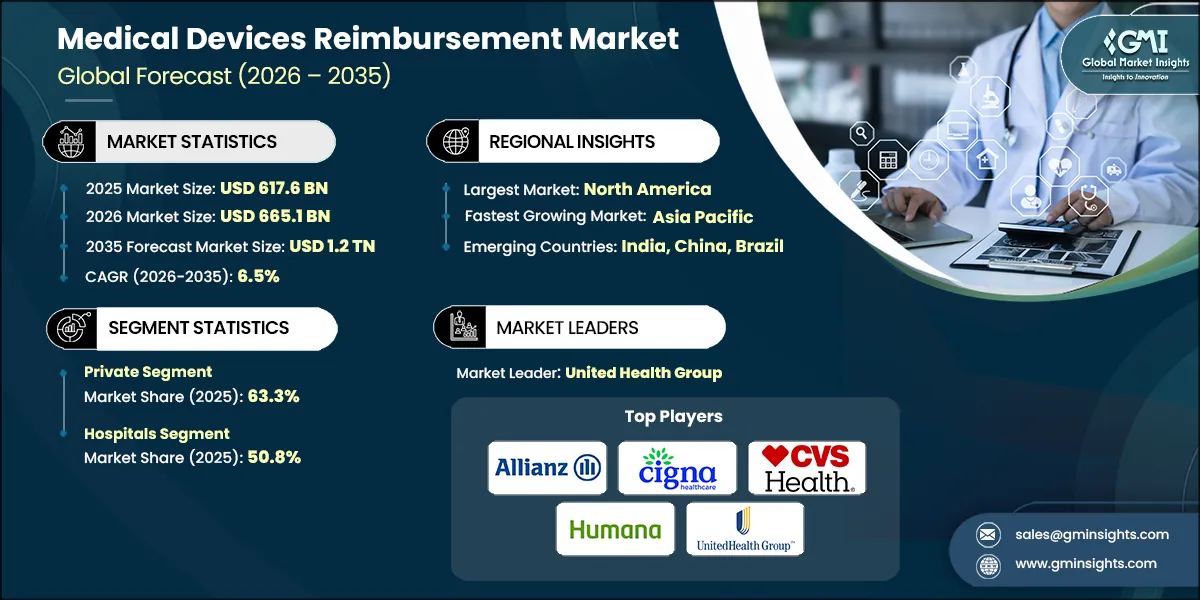
To get key market trends
Medical Devices Reimbursement Market Trends
The medical devices reimbursement industry is experiencing transformative trends that are reshaping payment models, coverage criteria, and market access pathways. Growth in remote patient monitoring reimbursement, bundled-payment inclusion of devices in episode-based reimbursement, and government & private investment in healthcare are among the key trends fueling market growth.
- Remote patient monitoring (RPM) reimbursement is one of the most rapidly evolving trends in the area of medical device reimbursement. The COVID-19 pandemic accelerated a decade of incremental policy changes, with permanent expansions of RPM reimbursement codes and coverage criteria by both public and private payers. As a result, the number of public and private payers who have established permanent RPM reimbursement codes and universally accepted coverage criteria has greatly expanded.
- For example, the Medicare reimbursement for RPM services witnessed a multifold rise from USD 180 million in 2019 to USD 2.8 billion in 2025, registering a 15.5-fold increase. This tremendous growth can be attributed to both an increase in the number of Medicare providers who provide RPM services and a rise in the volume of RPM services that Medicare beneficiaries can access through remote monitoring technologies.
- Additionally, investing in technology, infrastructure, and the expansion of healthcare coverage has significantly changed the reimbursement of medical devices by both the government and the private sector. This can be attributed to both the COVID-19 pandemic's impact and the long-term strategy for modernizing health care systems, increasing capacity, and achieving universal health care coverage.
- Lastly, the combined impact of the government and the private sector manifests in a larger pool of people covered by health insurance, with a more comprehensive range of benefits available to covered individuals, and an increase in reimbursement amounts to providers for medical devices and services. All of these factors are expected to fuel market growth.
Medical Devices Reimbursement Market Analysis
Learn more about the key segments shaping this market
In 2022, the market was valued at USD 482.6 billion and grew to USD 527.2 billion in 2023, reaching USD 571.7 billion by 2024. Expansion in Asia-Pacific & emerging markets due to rising healthcare spending is a key factor contributing to industry growth.
Based on payer, the global medical devices reimbursement market is segmented into public and private. The private segment accounted for a majority share of 63.3% in 2025. Customized payer–manufacturer risk-sharing deals for high-cost innovations are anticipated to fuel segmental growth. The segment is expected to reach USD 723.1 billion by 2035, growing at a CAGR of 6.2% during the forecast period.
- Private payers include commercial medical insurance companies, employer-sponsored health plans, individual policies, and supplemental products providing coverage for medical devices at levels in excess of statutory requirements.
- Additionally, private payers generally have more favorable payment rates and faster coverage decision timelines than public payers when evaluating new and innovative technologies. In addition, private payers are typically more inclined to provide coverage for premium devices and technology than public payers.
- In emerging markets, a significant percentage of patients with middle or upper incomes are covered by private insurance, and a substantial portion of this growth comes from the Asia-Pacific region. The competitive dynamics between public and private payers influence overall market growth and reimbursement policy evolution.
- The public payer segment is projected to grow at a CAGR of 7% through 2035. This is expected to occur due to an increase in governmental funding towards healthcare and multiple countries expanding universal healthcare coverage for their citizens (particularly in developing countries). Examples include Medicare and Medicaid (U.S.), NHS (UK), SHI (Germany and Japan), and similar government programs in emerging markets like India with Ayushman Bharat or National Health Insurance schemes in China.
- Further, publicly funded payer reimbursement typically follows a set fee structure with transparency in pricing, a predictable timeline for payment, and regulatory protection against claim denial.
Learn more about the key segments shaping this market
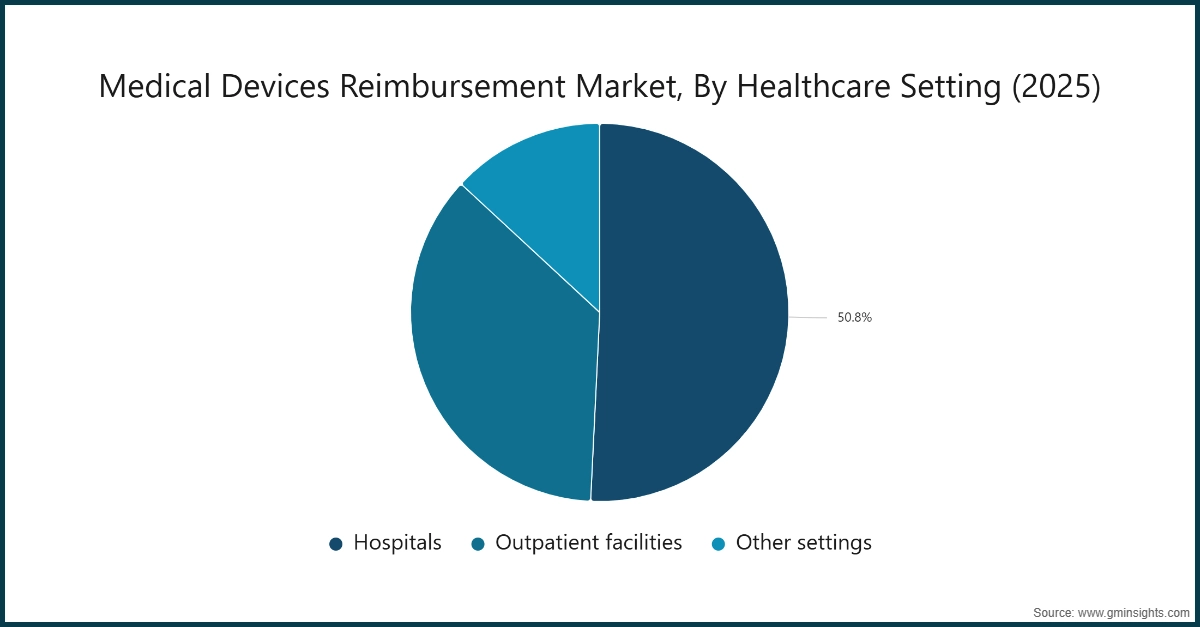
Based on healthcare setting, the medical devices reimbursement market is segmented into hospitals, outpatient facilities, and other settings. The hospitals segment accounted for the leading market share of 50.8% in 2025.
- The hospital payment environment includes devices used in inpatient admissions, outpatient hospital departments, ambulatory surgical centers associated with hospitals, and emergency departments.
- The segmental growth is attributed to growing surgical volumes, advanced technology being adopted in hospital environments, and complex procedures that now have broader reimbursement, with advanced device coverage available for surgical interventions.
- Additionally, devices that hospitals reimburse are typically classified as 'bundled' because they are paid either as a procedure or as a diagnosis-related group (DRG) and not reimbursed for individual device purchases.
- Further, hospitals provide a surgically controlled environment, as well as a professionally trained surgical staff and a range of advanced services (e.g., imaging equipment, operating rooms, etc.), which enables them to receive higher reimbursement than other facilities for the devices used in surgical procedures.
- The outpatient facilities segment is projected to grow at a robust 7.1% CAGR between 2026 and 2035. This increase can be attributed to rising utilization of outpatient services due to incentive payment structures by payers, advances in technology that allow for complex procedures to be performed in an outpatient setting, and increased overall demand for cost-effective alternatives to hospitalization.
- Outpatient facilities include ambulatory surgical centers (ASCs), independent diagnostic testing facilities, and physician office-based procedures, among others.
- Furthermore, key benefits associated with outpatient reimbursement settings include lower overhead expenses that enable facilities to operate sustainably under lower reimbursement rates, quicker patient turnover, which allows for higher volumes of procedures performed, and greater operating flexibility with regard to the selection and use of various medical devices on-site.
Looking for region specific data?
North America Medical Devices Reimbursement Market
The North America accounted for a majority share of 47.2% in 2025 in the global medical devices reimbursement industry and is anticipated to show notable growth over the forecast period.
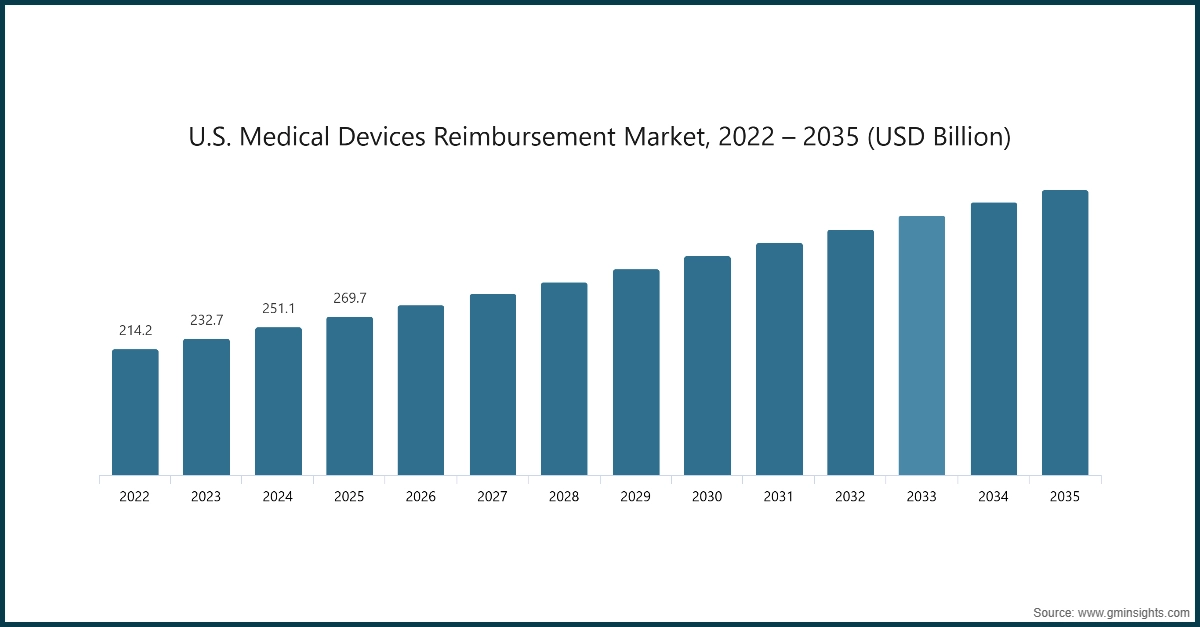
The U.S. medical devices reimbursement market was valued at USD 214.2 billion and USD 232.7 billion in 2022 and 2023, respectively. In 2025 the market size was valued at USD 269.7 billion from USD 251.1 billion in 2024. Growing surgical volume in the country is projected to fuel market growth.
- The North American market is driven by the U.S.'s large healthcare economy, comprehensive reimbursement infrastructure, and advanced medical technology adoption. The region benefits from well-established payment systems, regulatory clarity, and substantial public and private healthcare spending supporting premium medical device coverage.
- For example, the U.S. dominates the regional market leadership with Medicare and Medicaid covering 67 million and 85 million beneficiaries, respectively, and spending USD 77 billion and USD 52 billion on medical device reimbursement. Similarly, private insurance covers around 180 million individuals, generating USD 235 billion through reimbursement.
Europe Medical Devices Reimbursement Market
Europe accounted for a significant share of the global medical devices reimbursement industry and was valued at USD 146.4 billion in 2025.
The notable growth in the European market reflects aging populations, expanding coverage of innovative technologies, and healthcare system modernization investments.
- Germany leads the regional market in medical device reimbursement, covering 73 million people through statutory health insurance, comprehensive coverage of prescription medical devices, and rapid adoption of digital health technologies under DiGA reimbursement frameworks. Other countries, such as the UK and France, provide substantial coverage through universal healthcare plans.
- Further, growing preference and supportive policies for outpatient facilities, along with expanding coverage for home-based devices and telemedicine equipment, are expected to fuel the industry growth.
Asia-Pacific Medical Devices Reimbursement Market
The Asia-Pacific market accounted for a substantial share of the market and was valued at USD 108.5 billion in 2025.
- Asia Pacific represents the fastest-growing regional market owing to expanding universal health coverage, rising middle-class populations, and substantial government healthcare investments in major economies.
- Regional countries, including China, Japan, and India are focused on implementing structured reimbursement systems. Growing traction towards Health Technology Assessments (HTAs), particularly in developed countries like Japan, South Korea, and Australia, is influencing coverage decisions. Japan's market is anticipated to witness growth in medical device reimbursement with centralized pricing negotiations and comprehensive coverage of advanced technologies.
- Further, rising investments in telehealth and remote monitoring systems are opening avenues for innovative reimbursement models.
Latin America Medical Devices Reimbursement Market
The Latin American medical devices reimbursement industry is anticipated to exhibit remarkable growth during the analysis period.
- The reimbursement landscape in Latin America is shifting due to increased pressure from the growing demand for healthcare and supportive government initiatives to increase access to medical care. Brazil and Mexico have public healthcare systems in place to primarily manage the reimbursement of medical devices, with growing adoption of private health insurance in the countries.
- Additionally, partnerships with public health systems, as well as the expanded utilization of telemedicine, present opportunities for manufacturers. The use of health technology assessment (HTA) is becoming more prevalent in Brazil and Argentina in order to establish the cost-effectiveness and clinical value of medical devices before they are approved for use. However, manufacturers face significant barriers to market entry due to fragmented regulatory environments and the absence of uniform coding systems.
- Further, the continued emphasis on universal access to health care and the promotion of preventive care in the region are expected to drive increased reimbursement for innovative and necessary medical technologies in the future.
Middle East and Africa Medical Devices Reimbursement Market
The Middle East and Africa market is expected to experience substantial growth over the analysis timeframe.
- Medical device reimbursement in MEA is a mixed scenario and varies significantly from the more developed Gulf countries to underdeveloped African countries. Regional countries, such as Saudi Arabia and the UAE, have invested substantially in developing health care infrastructure and providing health insurance, resulting in an environment conducive to reimbursing devices.
- In addition, Health Technology Assessments (HTA) are being developed in some MEA markets to support evidence-based cost-effectiveness decisions for device reimbursement, but the overall adoption is minimal. Similarly, telehealth and remote monitoring systems have the potential to create increased access to care due to limited access to traditional care providers, especially in rural locations.
- However, resource-constrained African countries have minimal structured reimbursement processes in place, and many patients need to pay for their care. Government programs aimed at increasing health coverage, coupled with greater participation from the private sector, are helping to create a more equitable access environment.
Medical Devices Reimbursement Market Share
The medical device reimbursement market is fragmented in nature with the presence of numerous global participants, regional insurers, government programs, and specialized payers. The fragmentation underlines the complexity of the various healthcare funding systems that vary considerably based on the location of the payer (public or private) and the specific device category.
United Health Group is a prominent player in the medical device reimbursement payment space due to its extensive, diversified business model. This includes its ability to utilize advanced data analytics for evidence-based coverage decision-making, a large provider network that supports favorable price negotiations with suppliers or distributors, and vertical integration that provides coordination of medical device reimbursement with pharmacy benefit and care management services.
Similarly, CVS Health has a competitive advantage due to its focus on accessibility, affordability, and integrated medical device reimbursement. The organization has created multiple targeted programs to support the diabetic population through comprehensive support that includes CGMs (continuous glucose monitors) provided through pharmacy services, along with clinical counseling, along with chronic disease management programs that incorporate both medication therapy management and devices. CVS also offers post-discharge care programs for patients who were recently discharged from the hospital.
Further, the market has many other large competitors, and most of them are either regional or operate in a specific segment. Competitive dynamics with respect to medical device reimbursement have shifted towards value-based contracting, outcome-based payment arrangements, and risk-sharing agreements among payers, providers, and manufacturers of devices.
Medical Devices Reimbursement Market Companies
Few of the prominent players operating in the global medical devices reimbursement industry include:
- Allianz
- Anthem Insurance Companies, Inc.
- Aviva
- BNP Paribas
- Cigna
- CVS Health
- Experian Health
- Humana Inc.
- Nippon Life Insurance Company
- United Health Group
- WellCare Health Plans, Inc.
United Health Group leverages integrated care platforms, expand digital health solutions, and strengthen value-based reimbursement models to improve patient outcomes, reduce costs, and maintain leadership in diversified healthcare services.
Humana Inc. prioritizes Medicare Advantage growth, expands home-based care services, and leverage predictive analytics to optimize reimbursement processes, improve patient outcomes, and strengthen value-based care initiatives.
CVS Health combines retail health services with insurance offerings, expand chronic disease management programs, and implement advanced digital tools for streamlined reimbursement and improved patient accessibility across care settings.
Medical Devices Reimbursement Market Report Attributes
| Key Takeaway | Details |
|---|---|
| Market Size & Growth | |
| Base Year | 2025 |
| Market Size in 2025 | USD 617.6 Billion |
| Market Size in 2026 | USD 665.1 Billion |
| Forecast Period 2026-2035 CAGR | 6.5% |
| Market Size in 2035 | USD 1.2 Trillion |
| Key Market Trends | |
| Drivers | Impact |
| Increasing prevalence of chronic diseases | Driving higher demand for advanced medical devices, making reimbursement essential for patient access and affordability. |
| Adoption of value-based healthcare models | Encouraging payers to link reimbursement to outcomes, pushing manufacturers to demonstrate clinical and economic benefits. |
| Growing burden of healthcare cost | Intensifying pressure on payers to control spending, influencing stricter reimbursement criteria and cost-effectiveness evaluations. |
| Supportive government programs | Expanding coverage for essential devices, improving patient access and accelerating adoption in public healthcare systems. |
| Pitfalls & Challenges | Impact |
| Complex reimbursement framework | Slowing market entry for new devices due to lengthy coding, coverage, and payment approval processes. |
| Underpayment or denial of claims | Reducing provider willingness to adopt innovative devices, limiting patient access and manufacturer revenue streams. |
| Opportunities: | Impact |
| Growth in remote patient monitoring reimbursement | It will significantly boost adoption of connected devices, enabling proactive care and reducing long-term healthcare costs. |
| Government & private investment in healthcare | It is expected to create structured reimbursement pathways, supporting innovation and improving affordability for advanced medical technologies. |
| Market Leaders (2025) | |
| Market Leader |
|
| Top Players |
|
| Competitive Edge |
|
| Regional Insights | |
| Emerging countries | India, China, Brazil |
| Future outlook |
|
| Largest Market | North America |
| Fastest growing market | Asia Pacific |
What are the growth opportunities in this market?
Medical Devices Reimbursement Industry News:
- In November 2025, United Health Group announced the launch of outcomes-based reimbursement contracts for implantable cardiac defibrillators and cardiac resynchronization therapy devices, linking manufacturer payments to real-world clinical outcomes. The development highlights the company's focus on value-based reimbursement for high-cost medical devices.
- In September 2025, CVS Health launched integrated diabetes management programs combining continuous glucose monitor reimbursement with pharmacy services, clinical counseling, and predictive analytics. It highlights the company's focus on providing comprehensive services to its subscribers, covering a range of innovative care models.
- In June 2023, Optum announced a partnership with Amedisys, a key player in the field of high-acuity care, hospice, and home health. The strategy aimed to offer improved health outcomes and experiences to patients at reduced costs, resulting in continued growth of the company.
The global medical devices reimbursement market research report includes an in-depth coverage of the industry with estimates and forecasts in terms of revenue in (USD Million) from 2022 - 2035 for the following segments:
Market, By Payer
- Public
- Private
Market, By Healthcare Setting
- Hospitals
- Outpatient facilities
- Other settings
The above information is provided for the following regions and countries:
- North America
- U.S.
- Canada
- Europe
- Germany
- UK
- France
- Spain
- Italy
- Netherlands
- Asia Pacific
- China
- Japan
- India
- Australia
- South Korea
- Latin America
- Brazil
- Mexico
- Argentina
- MEA
- South Africa
- Saudi Arabia
- UAE
Frequently Asked Question(FAQ) :
What is the market size of the medical devices reimbursement in 2025?
The market size was USD 617.6 billion in 2025, growing at a CAGR of 6.5% through 2035, driven by increasing chronic disease prevalence, adoption of value-based healthcare models, and supportive government coverage expansion programs.
What is the projected value of the medical devices reimbursement market by 2035?
The market is expected to reach USD 1.2 trillion by 2035, propelled by growth in remote patient monitoring reimbursement, government and private healthcare investments, and bundled-payment inclusion of devices in episode-based reimbursement models.
What is the current medical devices reimbursement market size in 2026?
The market size is projected to reach USD 665.1 billion in 2026.
What market share does the private payer segment hold in 2025?
The private payer segment accounts for 63.3% market share in 2025 and is expected to reach USD 723.1 billion by 2035, driven by favorable payment rates, faster coverage decisions, and customized risk-sharing deals for high-cost innovations.
What is the growth outlook for the outpatient facilities segment through 2035?
The outpatient facilities segment is projected to grow at a robust CAGR of 7.1% through 2035, driven by rising utilization due to incentive payment structures, technological advances enabling complex outpatient procedures, and demand for cost-effective hospitalization alternatives.
Which region leads the medical devices reimbursement market?
North America leads with 47.2% market share in 2025, supported by the U.S.'s large healthcare economy, well-established Medicare and Medicaid programs covering over 150 million beneficiaries, and substantial private insurance generating USD 235 billion in reimbursements.
What are the key trends in the medical devices reimbursement market?
Key trends include rapid expansion of remote patient monitoring reimbursement increasing from USD 180 million to USD 2.8 billion between 2019-2025, adoption of bundled-payment models, value-based contracting with outcome-linked payments, and government-private sector healthcare infrastructure investments.
Who are the key players in the medical devices reimbursement market?
Key players include Allianz, Anthem Insurance, Aviva, BNP Paribas, Cigna, CVS Health, Experian Health, Humana, Nippon Life Insurance, United Health Group, and WellCare Health Plans.
Medical Devices Reimbursement Market Scope
Related Reports