Summary
Table of Content

Medical Bed Market
Get a free sample of this report
Form submitted successfully!
Error submitting form. Please try again.
Thank you!
Your inquiry has been received. Our team will reach out to you with the required details via email. To ensure that you don't miss their response, kindly remember to check your spam folder as well!
Request Sectional Data
Thank you!
Your inquiry has been received. Our team will reach out to you with the required details via email. To ensure that you don't miss their response, kindly remember to check your spam folder as well!
Form submitted successfully!
Error submitting form. Please try again.
Medical Bed Market Size
The market is driven by numerous factors such as a growing geriatric population worldwide, increasing funding for healthcare infrastructure in developing economies, surging hospital admissions due to chronic diseases, and rising volume of hospital beds in private hospitals in developing countries, among other factors. Growth in ICU and critical care infrastructure and rising investments in hospital modernization projects are expected to fuel the industry's growth. Baxter, Stryker, INVACARE, LINET, and Arjo are among the leading players operating in the market. These players mainly focus on product innovation, geographic expansion, integration of advanced technologies in beds, strong R&D, and collaboration with local or regional healthcare providers, among others.
Medical Bed Market Key Takeaways
Market Size & Growth
- 2025 Market Size: USD 4.3 Billion
- 2026 Market Size: USD 4.5 Billion
- 2035 Forecast Market Size: USD 7.4 Billion
- CAGR (2026–2035): 5.6%
Regional Dominance
- Largest Market: North America
- Fastest Growing Region: Asia Pacific
Key Market Drivers
- Growing geriatric population worldwide.
- Increasing funding on healthcare infrastructure in developing economies.
- Surging hospital admissions due to chronic diseases.
- Rising volume of hospital beds in private hospitals in developing countries.
Challenges
- High cost of specialty beds.
Opportunity
- Rapid expansion of home care and remote patient monitoring.
- Integration of IoT and AI in patient beds.
Key Players
- Market Leader: Baxter led with over 14% market share in 2025.
- Leading Players: Top 5 players in this market include Baxter, Stryker, INVACARE, LINET, Arjo, which collectively held a market share of 40% in 2025.
Get Market Insights & Growth Opportunities
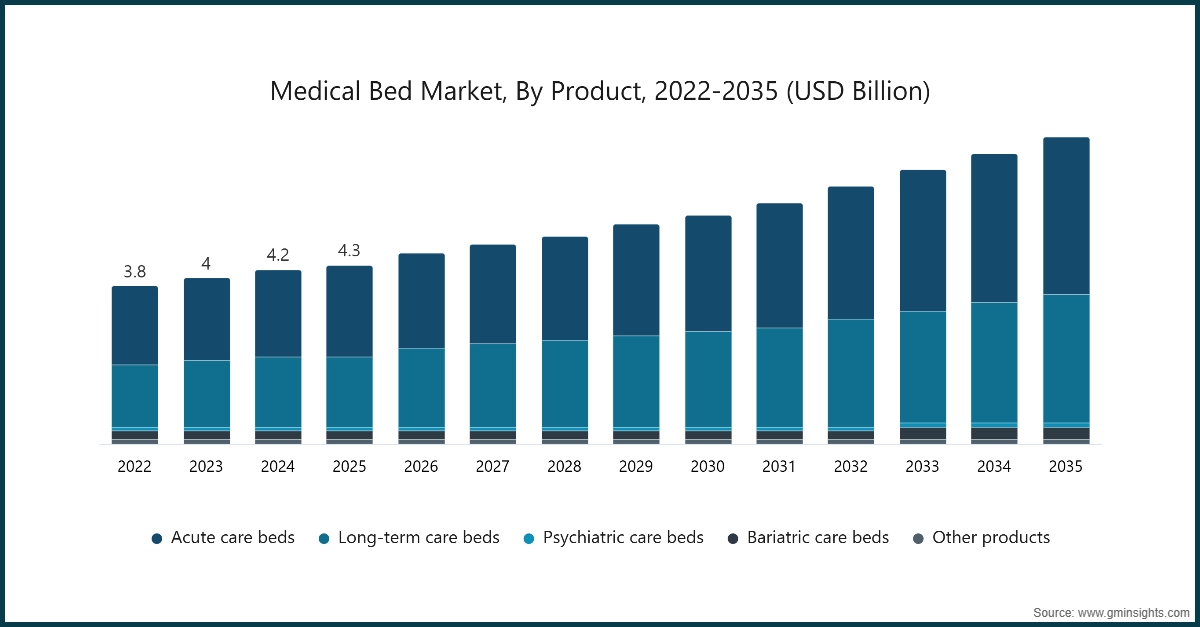
The medical bed market has increased from USD 3.8 billion in 2022 and reached USD 4.2 billion in 2024, with the historic growth rate of 4.1%. Rising investment in healthcare infrastructure across developing economies is accelerating the construction of new hospitals, specialty clinics, and rehabilitation centers. This expansion directly translates into higher demand for medical beds as foundational hospital equipment. Funding initiatives increasingly prioritize modernization, replacing basic manual beds with semi-electric and electric alternatives to improve patient outcomes and caregiver efficiency. Infrastructure upgrades also support ICU expansion, emergency preparedness, and improved inpatient capacity. As healthcare access broadens in urban and semi-urban areas, public and private providers alike are scaling bed inventories, making infrastructure funding a strong catalyst for consistent and volume-driven market growth.
Additionally, private hospitals in developing nations are adding more beds due to rising healthcare demand, increased medical tourism, and a growing middle-income population. With regard to bed solutions, private hospitals have different priorities than public hospitals. They typically focus on providing standardized, timely, and comfortable options for their patients to provide better service and build their brand image. Increased demand for multispecialty hospitals and corporate chains has resulted in private hospitals purchasing large numbers of medical beds throughout their general wards, as well as in their intensive care units and in the recovery areas of their hospitals. For instance, in December 2025, Max Healthcare Institute Ltd., announced an investment of over USD 115 million (INR 1,000 crore) with plans to establish a 450-bed super speciality hospital in Pune, India. This growth is a significant contributor to continued market momentum and growth for medical beds.
A medical bed is a specialized bed designed for use in healthcare settings such as hospitals, nursing homes, and home healthcare environments. These beds are equipped with features that cater to the medical and comfort needs of patients requiring prolonged care, rehabilitation, or recovery.
The global medical bed market was estimated at USD 4.3 billion in 2025. The market is expected to grow from USD 4.5 billion in 2026 to USD 7.4 billion in 2035, at a CAGR of 5.6% during the forecast period, according to the latest report published by Global Market Insights Inc.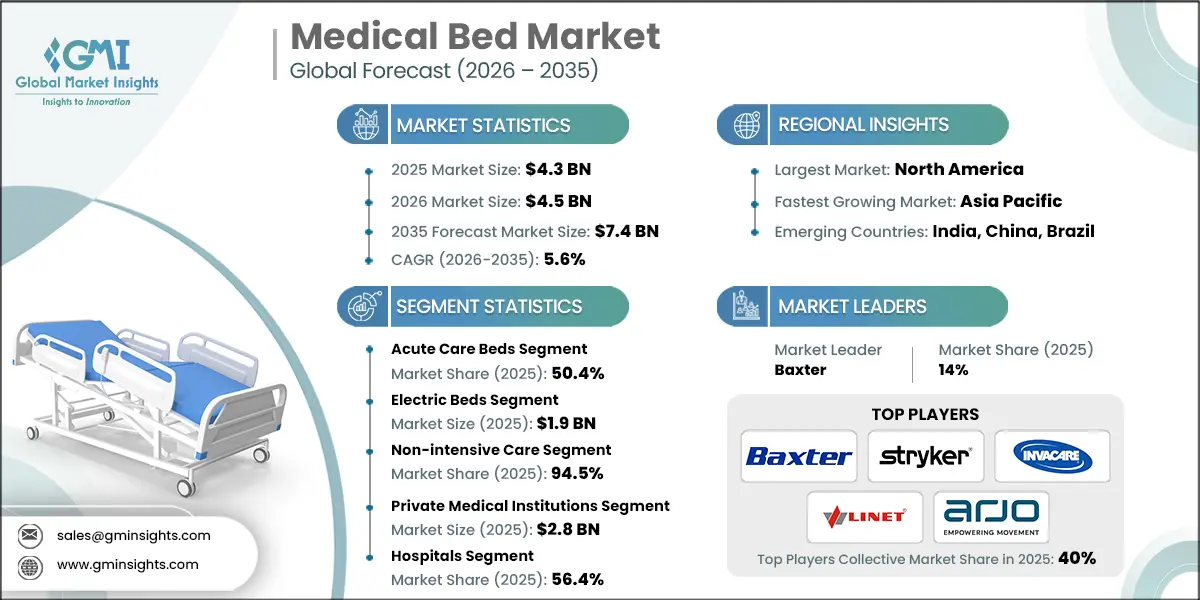
To get key market trends
Medical Bed Market Trends
Rising focus on patient safety and pressure injury prevention, expansion of home healthcare and decentralized care models, shift toward smart and connected medical beds, growth of long-term and elderly care facilities, and adoption of modular and cost-tiered product designs are among the key trends propelling the market growth.
- The healthcare community is focusing on developing beds that help care for patients and reduce the occurrence of falls, skin ulcers, and caregiver stress. Advanced positioning, low-height designs, and pressure redistribution features are becoming key differentiators influencing purchasing decisions.
- Additionally, home and other non-hospital medical service providers are becoming an increasingly popular and convenient way to access care. Therefore, there is a growing demand for portable, lightweight, and inexpensive medical beds capable of providing quality care in non-traditional settings.
- Further, medical beds are increasingly equipped with sensors, connectivity, and digital interfaces, allowing for real-time patient monitoring and automated workflow processes. This is creating a demand for higher-end beds that provide improved safety, efficiency, and support for data-driven clinical decisions.
- Moreover, the growing population within nursing homes, rehabilitation centers, and assisted living facilities has shifted the market towards the development of durable, comfort-oriented beds that can accommodate longer lengths of stay, improve mobility, and support frequent repositioning of patients.
Medical Bed Market Analysis
Learn more about the key segments shaping this market
Based on product, the medical bed market is segmented into acute care beds, long-term care beds, psychiatric care beds, bariatric care beds, and other products. The acute care beds segment accounted for a majority share of 50.4% in 2025. Growth of rehabilitation and elderly care centers is anticipated to fuel the segmental growth. The segment is expected to reach USD 3.8 billion by 2035, growing at a CAGR of 5.8% during the forecast period.
- Acute care beds are a type of hospital bed that is primarily used for short-term treatment of patients. These types of beds are found in medical-surgical units, emergency departments, and intensive care units (ICUs) in hospitals, and are available in many different types and models on the market.
- Many facilities prefer electric, fully adjustable acute care beds because they make it easier for caregivers to reposition patients, provide clinical procedures, and monitor patients 24/7. One of the main selling points for the electric, fully adjustable models is that they reduce caregiver stress and save time.
- Additionally, height adjustment, side rails, Trendelenburg positioning, and the ability to use with monitoring devices are among the key features requested in acute care beds.
- Further, the other factor driving growth in the acute care bed market is the relatively fast replacement cycle driven by advances in technology, safety compliance, and the pursuit of more efficient operations.
- The Long-term care beds segment was valued at USD 1.8 billion in 2025. Long-term care beds are used in nursing homes, rehabilitation centers, assisted living facilities, and home health care environments, providing support for people requiring extended recovery time and those who need chronic care. Long-term care beds have a focus on comfort for the user while also providing durability, preventing pressure injuries, and allowing better accessibility for both the patient and the caregiver.
- Moreover, the primary features of long-term care beds are their height adjustability, pressure relief surfaces, and their use of simple control mechanisms. The need for new long-term care beds may continue to be driven by an increasing number of older people in the population and growing numbers of individuals with chronic illnesses, and a shift toward providing non-acute care in non-hospital settings.
- Furthermore, long-term care beds are designed with a greater emphasis on being cost-effective and have a longer lifespan than equipment used in acute care settings.
Based on bed type, the medical bed market is segmented into manual beds, electric beds, and semi-electric beds. The electric beds segment accounted for a leading share and was valued at USD 1.9 billion in 2025.
- Electric beds have motorized control mechanisms that allow caregivers to adjust the height and position of patients electronically or with hand controls. This convenience provides greater comfort for patients and reduces the effort required by the caregiver. As a result, frequent repositioning and clinical intervention become easier.
- Further, electric beds are used across the healthcare continuum, from acute hospitals and private healthcare facilities to sophisticated long-term care environments, and has proved to be an efficient and safe method of providing care. The clinical value of an electric bed is enhanced by the availability of safety locks, low-height settings, and integration with monitoring systems.
- Moreover, while electric beds have a high cost of acquisition, their operational advantages and better patient outcomes have led to widespread adoption of this technology throughout modern healthcare facilities.
- Manual beds are an extremely cost-effective option for healthcare systems that only need basic patient positioning capability. Manual beds provide many advantages when compared to electric or semi-electric beds, including lower purchase prices for health systems, lower ongoing costs (due to fewer repairs), the ability to use manual beds in high quantity (especially in developing countries), and high durability when compared to electric or semi-electric beds.
- However, limited functionality and higher caregiver effort restrict their use in advanced clinical settings. Manual beds continue to play a role where affordability and basic care delivery are primary priorities.
Based on application, the global medical bed market is segmented into intensive care and non-intensive care. The non-intensive care segment accounted for a dominating share of 94.5% in 2025.
- Non-intensive care beds are primarily used in general wards, recovery rooms, and step-down units where patients require standard medical observation rather than constant critical monitoring.
- Because patients using semi-electric and electric non-intensive care beds often stay longer but need simpler levels of responsive nursing care, these beds play an important part in creating a comfortable environment for both the patient and caregiver; they support the independence of nurse practitioners.
- The demand for these types of non-intensive care beds is directly related to hospital admissions, post-operative patient recovery requirements, and hospitals' expanding inpatient capacity as hospitals' patient population grows. Many hospitals throughout the U.S. and internationally deploy non-intensive care beds in a standard design, therefore representing a key component of hospital bed inventory in both public and private hospitals.
- The intensive care segment was valued at USD 240 million in 2025. Beds used in intensive care settings are engineered to support critically ill patients who require continuous monitoring, frequent repositioning, and rapid clinical intervention.
- Further, safety features such as side rails, brake systems, and patient transfer support are essential design elements.
Based on medical facilities, the medical bed market is segmented into private medical institutions and public medical institutions. The private medical institutions segment accounted for a leading share and was valued at USD 2.8 billion in 2025.
- The ability to provide patients with high-quality medical treatment is important to private healthcare facilities. This significantly impacts the types of beds these facilities purchase, as electric and higher-quality beds tend to be preferred for their ability to offer maximum comfort for patients, require less effort on the part of the caregiver, and allow for quicker recovery times for the patient.
- Additionally, the brand of the bed, the ability to differentiate services offered, and the overall satisfaction of the patient all contribute to the decision about the type of bed to purchase. In addition, private hospitals may typically replace their beds every few years to keep up with the trends and meet modern standards for medical infrastructure.
- Further, the ongoing expansion of companies that operate as corporate healthcare organizations and the establishment of medical centers that serve multiple specialties may continue to create an ongoing need for consistent, dependable, and patient-focused bed solutions for this segment of the healthcare industry.
- The public medical institutions segment was valued at USD 1.5 billion in 2025. Public medical institutions focus on maximizing coverage, durability, and cost efficiency when procuring medical beds.
- Moreover, large-scale deployment across general wards and rural healthcare facilities favors standardized and long-life bed solutions with lower maintenance needs. Budget constraints often influence the adoption of manual and semi-electric beds, particularly in high-volume settings.
Learn more about the key segments shaping this market
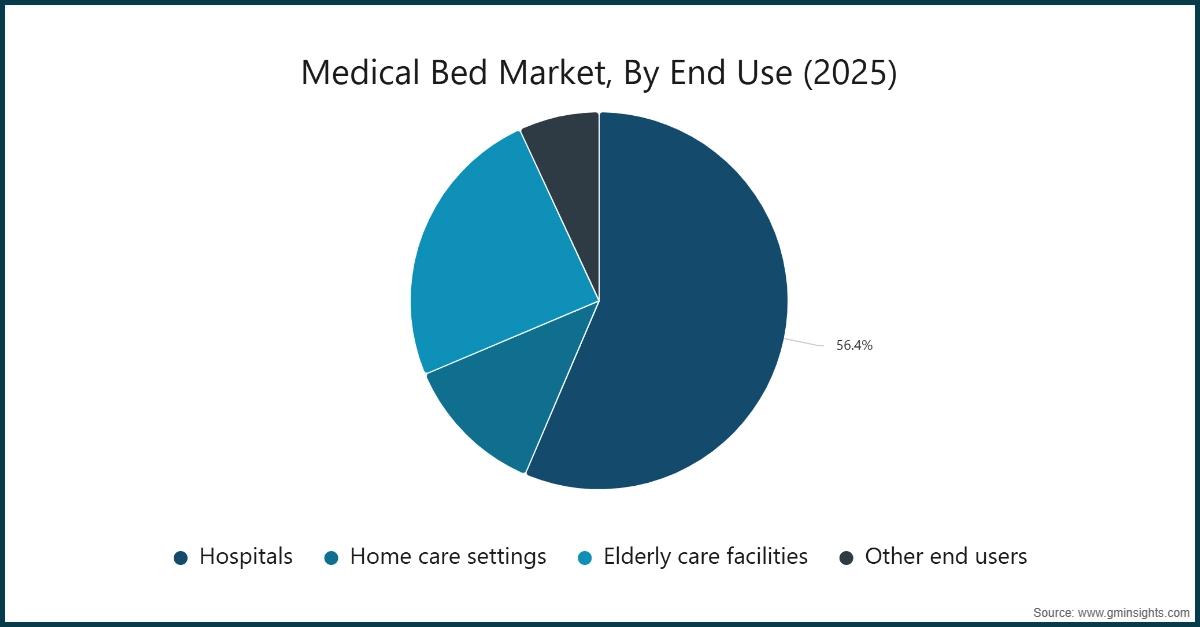
Based on end use, the medical bed market is segmented into hospitals, home care settings, elderly care facilities, and other end-users. The hospitals segment accounted for the leading market share of 56.4% in 2025.
- Hospitals represent the largest end-use segment for medical beds, driven by inpatient admissions, surgical volumes, and critical care needs. Demand spans acute care, intensive care, recovery, and specialty wards, requiring diverse bed configurations.
- Hospitals also frequently replace their medical beds for safety, operational efficiency, and/or increasing electric advanced bed technology.
- In addition, electric/advanced bed usage is growing in part due to the need for caregiver productivity and improved patient outcomes. Medical bed purchasing also goes hand in hand with new hospital construction, infrastructure modernization, and/or specialty service expansion.
- The home care segment was valued at USD 530.8 million in 2025. The home care market is becoming an increasingly important market segment as health care continues moving toward decentralized delivery systems, as well as increased demand for home-based post-acute care.
- Electric hospital beds are preferred over standard medical beds for their adjustability, comfort, and safety. Patients can feel independent while using them, and caregivers and family members can assist patients safely.
- In addition, electric hospital beds are in high demand due to extended recovery times from illnesses, managing chronic illnesses, and decreased hospitalizations.
- Hospital beds for home care have been designed to minimize noise, include safety features, and be user-friendly to help facilitate their growing acceptance in both residential care and temporary home care treatment settings.
- Lastly, in elderly care facilities, such as nursing homes or assisted living centers, medical beds need to accommodate long-term residency and frequent moves for these long-term care occupants. There is an emphasis placed on providing comfort, preventing pressure ulcers, and making the beds accessible to individuals who cannot move due to mobility limitations.
- Medical bed systems designed with a low-height bed frame are equipped with side rails and simple-to-use control mechanisms. The durability and low maintenance requirements of medical bed frames (due to continuous usage) are critical. The growing demand for ergonomic medical bed systems that are both cost-effective and supportive to the elderly care market is pushing the product growth.
Looking for region specific data?
North America Medical Bed Market
North America market accounted for majority share of 39.1% in 2025 in the medical bed industry and is anticipated to show notable growth over the forecast period.
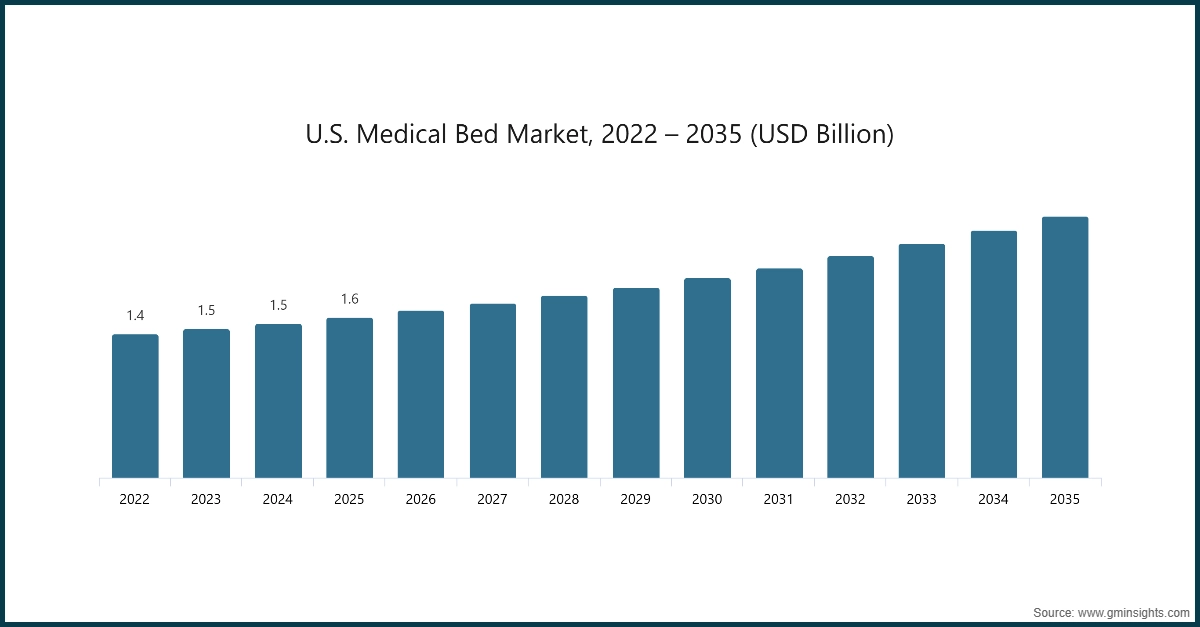
- The U.S. medical bed industry was valued at USD 1.41 billion and USD 1.46 billion in 2022 and 2023, respectively. In 2025 the market size was valued at USD 1.57 billion from USD 1.51 billion in 2024. Demand for bariatric and specialty beds is projected to fuel the market growth.
- Market growth in North America is driven by advanced healthcare infrastructure, high hospital bed replacement rates, and strong adoption of technologically advanced medical equipment. Hospitals and health systems are continuously upgrading beds to improve patient safety, reduce caregiver workload, and support value-based care outcomes.
- The region shows strong demand for electric, ICU, and smart beds, particularly in acute and critical care settings. An aging population and high prevalence of chronic diseases are increasing inpatient stays and long-term care needs, supporting consistent demand.
- Additionally, the expansion of home healthcare is encouraging adoption of premium, monitoring-ready beds for residential use.
Europe Medical Bed Market
Europe accounted for a significant share of the global market and was valued at USD 1.2 billion in 2025.
- Europe’s medical bed industry growth is shaped by the modernization of public healthcare systems and strong focus on elderly and long-term care. Countries are investing in replacing outdated hospital infrastructure with ergonomic, electrically adjustable beds that improve patient comfort and caregiver safety.
- The expanding elderly population is driving demand across nursing homes, rehabilitation centers, and assisted living facilities. Emphasis on infection control, pressure injury prevention, and mobility support is influencing procurement priorities.
- Further, hospitals increasingly favor standardized, modular bed platforms that comply with regulatory and safety requirements while supporting budget efficiency. In addition, sustainability considerations and durable product life cycles are becoming important selection criteria.
Asia Pacific Medical Bed Market
Asia Pacific market accounted for a substantial share of the market and was valued at USD 1 billion in 2025.
- Asia Pacific represents a high-growth region due to rapid healthcare infrastructure expansion, rising hospital construction, and increasing access to medical services. Growing urban populations and expanding middle-income groups are fueling demand for private hospitals and specialty care facilities, directly increasing medical bed procurement.
- Governments are investing heavily in expanding hospital capacity, while private players are scaling multispecialty hospitals and chain-based healthcare models. Demand is strongest for cost-effective manual and semi-electric beds, alongside growing interest in electric beds for tertiary and urban hospitals.
- Moreover, rising chronic disease burden and longer inpatient stays are also increasing utilization. The region is witnessing faster adoption of tiered and localized bed manufacturing, supporting volume growth while gradually transitioning toward advanced bed technologies.
Latin America Medical Bed Market
The Latin American market is anticipated to exhibit remarkable growth during the analysis period.
- Growth in Latin America is supported by gradual improvements in healthcare access, expansion of private healthcare providers, and modernization of existing hospitals.
- Public healthcare systems are focused on increasing bed availability and replacing aging equipment to manage rising patient volumes. At the same time, private hospitals are investing in patient-centric infrastructure, driving demand for reliable and comfortable medical beds.
- Further, chronic disease prevalence and demand for surgical care are increasing inpatient stays, supporting utilization-led growth. In addition, cost sensitivity remains a key factor, favoring standardized and semi-electric bed solutions.
Middle East and Africa Medical Bed Market
The Middle East and Africa market is expected to experience substantial growth over the analysis timeframe.
- Growth in the Middle East & Africa region is driven by healthcare infrastructure development, population growth, and rising investments in hospital capacity.
- Gulf countries are expanding modern hospitals and specialty care centers, creating demand for advanced medical beds in acute and critical care units. In Africa, governments and private providers are focusing on increasing basic hospital capacity, supporting demand for durable and cost-effective bed solutions.
- Further, medical tourism, particularly in parts of the Middle East, is encouraging adoption of premium beds that enhance patient experience. While adoption of advanced technologies varies across countries, overall demand is increasing due to expanding inpatient infrastructure and long-term healthcare capacity building efforts.
Medical Bed Market Share
The global market is moderately fragmented in nature, with multinational healthcare equipment companies as well as specialty regional manufacturers competing within three primary segments: hospitals, long-term care facilities, and home health care. The major competitors in the market are now using technology to provide a unique and comprehensive selection of products and maintain established relationships with hospitals to create a competitive edge. In contrast, medium-sized and regional manufacturers are focusing on providing lower-cost solutions and the ability to customize and provide localized services.
Additionally, competition is increasingly shaped by smart and connected bed capabilities, such as patient monitoring readiness, pressure injury prevention, fall detection, and integration with hospital information systems. This increased reliance on technology has resulted in an increase in investment dedicated to research and development as well as software-based differentiation within a hospital's acute care and critical care settings. Vendors with a more holistic view of the care continuum are leveraging bundling strategies, which include offering beds with surfaces, mobility aids, and patient handling devices as part of their offering to create loyalty from their customers.
Further, manufacturers are facing significant pricing pressure for public healthcare tenders and emerging markets, as there is a need for optimizing manufacturing footprints and developing tiered product lines such as manual, semi-electric, and fully electric models. With increasing demand for compact, user-friendly, and rental-friendly beds in home healthcare and long-term care facilities, competition has led to an influx of new entrants and increased private label participation.
Lastly, strategic partnerships, selective acquisitions, and expansion into high-growth markets are typical competitive strategies, with the transition from product-based competition to solution-based competition continuing, whereby clinical outcomes, caregiver efficiency, life cycle support, and digital readiness will increasingly impact purchase decisions.
Medical Bed Market Companies
Few of the prominent players operating in the medical bed industry include:
- ANTANO Group
- Arjo
- Baxter
- BESCO
- DiaMedical
- DRIVE DEVILBISS HEALTHCARE
- GENDRON
- HARD Manufacturing Company
- INVACARE
- LINET
- MALVESTIO
- Midmark
- PARAMOUNT BED
- Savaria
- STIEGELMEYER
- Stryker
- Umano Medical
Focuses on integrating advanced patient-support technologies into hospital beds, strengthening ICU and acute care offerings, leveraging digital connectivity, and cross-selling through broad hospital equipment portfolios.
Targets differentiation through smart bed innovation, patient safety features, and data-enabled care solutions, while expanding global footprint via hospital partnerships and premium positioning in acute and long-term care.
Centers strategy on mobility, pressure injury prevention, and caregiver safety, aligning medical bed solutions with broader patient handling systems to support hospitals and long-term care efficiency goals.
Medical Bed Market Report Attributes
| Key Takeaway | Details |
|---|---|
| Market Size & Growth | |
| Base Year | 2025 |
| Market Size in 2025 | USD 4.3 Billion |
| Market Size in 2026 | USD 4.5 Billion |
| Forecast Period 2026-2035 CAGR | 5.6% |
| Market Size in 2035 | USD 7.4 Billion |
| Key Market Trends | |
| Drivers | Impact |
| Growing geriatric population worldwide | Increasing demand for long-term, rehabilitative, and pressure-relief beds, driving sustained replacement cycles across hospitals and elderly care facilities. |
| Increasing funding on healthcare infrastructure in developing economies | Accelerating procurement of modern medical beds, particularly electric and semi-electric models, as hospitals expand capacity and upgrade patient care standards. |
| Surging hospital admissions due to chronic diseases | Boosting acute care and intensive care bed utilization, creating consistent demand for durable, adjustable beds supporting prolonged patient stays. |
| Rising volume of hospital beds in private hospitals in developing countries | Driving demand for standardized, cost-efficient medical beds as private providers expand multispecialty hospitals to capture growing patient volumes. |
| Pitfalls & Challenges | Impact |
| High cost of specialty beds | Limiting adoption of advanced ICU, bariatric, and smart beds, particularly among budget-constrained public hospitals and smaller healthcare facilities. |
| Opportunities: | Impact |
| Rapid expansion of home care and remote patient monitoring | Shifts demand toward compact, electric, and monitoring-ready beds, expanding volumes while encouraging rental models and long-term patient-centric product designs. |
| Integration of IoT and AI in patient beds | Enables predictive care, workflow automation, and outcome-driven purchasing, transforming medical beds from static equipment into intelligent clinical platforms supporting value-based healthcare. |
| Market Leaders (2025) | |
| Market Leader |
Market Share 14% |
| Top Players |
Collective market share in 2025 is 40% |
| Competitive Edge |
|
| Regional Insights | |
| Largest Market | North America |
| Fastest growing market | Asia Pacific |
| Emerging countries | India, China, Brazil |
| Future outlook |
|
What are the growth opportunities in this market?
Medical Bed Industry News:
- In September 2025, Invacare announced the launch of its new Accent Medical Profiling Bed to assist in the provision of accessible homecare. It provides a simple and affordable quality solution for both home care and long-term care settings. This development may enable the company to enhance its sales prospects in the targeted end-user segments.
- In February 2025, Stryker announced the launch of the ProCeed hospital bed, offering simplicity while enhancing care across various regions. This new product launch further improved the company's product basket and brand image in the industry.
- In August 2022, Dozee and Midmark India have partnered to launch India's first intelligent connected bed platform. The connected bed can monitor vital parameters such as heart rate, respiration rate, blood pressure, oxygen saturation, ECG, and temperature. This strategic development enabled the involved entities to provide quality healthcare through connected technologies in India.
The global medical bed market research report includes an in-depth coverage of the industry with estimates and forecasts in terms of revenue in (USD Million) and volume (Units) from 2022 - 2035 for the following segments:
Market, By Product
- Acute care beds
- MedSurg beds
- ICU beds
- Pediatric beds
- Birthing beds
- Other acute care beds
- Long-term care beds
- Psychiatric care beds
- Bariatric care beds
- Other products
Market, By Bed Type
- Manual beds
- Electric beds
- Semi-electric beds
Market, By Application
- Intensive care
- Non-intensive care
Market, By Medical Facilities
- Private medical institutions
- Public medical institutions
Market, By End Use
- Hospitals
- Home care settings
- Elderly care facilities
- Other end users
The above information is provided for the following regions and countries:
- North America
- U.S.
- Canada
- Europe
- Germany
- UK
- France
- Spain
- Italy
- Netherlands
- Asia Pacific
- China
- Japan
- India
- Australia
- South Korea
- Latin America
- Brazil
- Mexico
- Argentina
- MEA
- South Africa
- Saudi Arabia
- UAE
Frequently Asked Question(FAQ) :
What is the market size of the medical bed market in 2025?
The global market was estimated at USD 4.3 billion in 2025, driven by growing geriatric population, rising hospital admissions, and increasing healthcare infrastructure investments.
What is the forecasted market size of the medical bed market in 2026?
The market is forecasted to reach USD 4.5 billion in 2026, supported by increased hospital expansion, rising ICU bed demand, and adoption of advanced electric beds for improved patient care.
What is the projected value of the medical bed market by 2035?
The market is expected to reach USD 7.4 billion by 2035, growing at a CAGR of 5.6% during 2026–2035, supported by ICU expansion, hospital modernization, and rising demand for electric and smart beds.
How much revenue did the acute care beds segment generate in the medical bed market and what is its outlook?
The acute care beds segment accounted for 50.4% share of the market in 2025 and is projected to reach USD 3.8 billion by 2035, growing at a CAGR of 5.8%, driven by rising ICU capacity, frequent replacement cycles, and increasing demand for fully adjustable electric beds across hospitals.
What was the valuation of the electric beds segment in the medical bed industry in 2025?
The electric beds segment was valued at USD 1.9 billion in 2025 in the market, leading the industry due to higher adoption across hospitals and long-term care facilities for improved patient comfort, safety, and caregiver efficiency.
Which application segment dominates the medical bed industry?
The non-intensive care segment held a dominant 94.5% market share in 2025, supported by high utilization across general wards, recovery rooms, and expanding inpatient capacity globally.
Which region leads the medical bed market?
North America accounted for 39.1% share of the global market in 2025. The U.S. medical bed industry was valued at USD 1.57 billion in 2025, driven by high hospital bed replacement rates, advanced healthcare infrastructure, and strong adoption of electric and specialty beds.
Who are the key players operating in the medical bed industry?
Key companies in the industry include Baxter, Stryker, INVACARE, LINET, Arjo, PARAMOUNT BED, Midmark, Savaria, STIEGELMEYER, and Umano Medical, focusing on innovation, smart bed integration, and expansion across hospital and home care settings.
Medical Bed Market Scope
Related Reports