Summary
Table of Content

MEA Medical Tourism Market
Get a free sample of this report
Form submitted successfully!
Error submitting form. Please try again.
Thank you!
Your inquiry has been received. Our team will reach out to you with the required details via email. To ensure that you don't miss their response, kindly remember to check your spam folder as well!
Request Sectional Data
Thank you!
Your inquiry has been received. Our team will reach out to you with the required details via email. To ensure that you don't miss their response, kindly remember to check your spam folder as well!
Form submitted successfully!
Error submitting form. Please try again.
MEA Medical Tourism Market Size
Availability of internationally accredited facilities and supportive government initiatives, increasing prevalence of chronic diseases, rising demand for affordable and high‑quality medical care within MEA region coupled with expansion of advanced procedures among other factors are driving the market growth.
Heavy infrastructure investments in hospitals, medical cities, and specialty clinics, and the development of health tourism-focused infrastructure, including hotels, recovery resorts, etc., continue to be the key economic catalyst in the industry's growth. For example, the World Bank analysts have repeatedly highlighted persistent affordability gaps and their impact on household conditions that push consumers toward price-sensitive destinations. At the same time, destination hospitals have scaled to international quality norms, often through JCI accreditation, which improves insurer acceptance and patient confidence.
MEA Medical Tourism Market Key Takeaways
Market Size & Growth
- 2025 Market Size: USD 3.2 Billion
- 2026 Market Size: USD 3.8 Billion
- 2035 Forecast Market Size: USD 9.4 Billion
- CAGR (2026–2035): 10.6%
Regional Dominance
- Largest Market: UAE
- Fastest Growing Country: UAE
Key Market Drivers
- Rising demand for affordable and high‑quality medical care within MEA region.
- Expansion of advanced procedures.
- Availability of internationally accredited facilities and supportive government initiatives.
- Increasing prevalence of chronic diseases.
Challenges
- Issue with patient follow-up and post-surgery complications.
Opportunity
- Growth of wellness and integrative medicine packages.
- Rise of telemedicine.
Key Players
- Leading Players: Top 5 players in this market include American Hospital Dubai, Sheba Medical Center, The Specialty Hospital, Saudi German Hospital, Cleveland Clinic Abu Dhabi.
Get Market Insights & Growth Opportunities
The market has increased from USD 796.4 Million in 2022 and reached USD 2.3 billion in 2024, with the historic growth rate of 70.5%. Patients searching for high-quality yet affordable medical care are being attracted by Middle Eastern and African nations such as the UAE, Saudi Arabia, South Africa, Egypt, and Jordan that offer high-end technology at a competitive price structure versus Western countries. High-quality and affordable medical care with proven clinical outcomes makes these countries a preferable option for many patients going for cosmetic, dental, orthopedic, fertility, and oncology surgery. There is an observable trend in the increasing number of patients traveling to hubs (e.g., Cairo, Abu Dhabi, Dubai) to take advantage of affordability combined with reliable quality of care standards. This further highlights evidence of the competitiveness of the MEA region as patients continue to find price-driven opportunities to receive the care they require, and MEA countries are continually improving their capacity to accommodate the growing demand for cross-border care.
Further, medical treatments in the Middle East and Africa (MEA) are becoming more advanced with the growing number of hospitals and clinical facilities providing specialty services. Major cities have been emerging as large regional service centers. For example, cities such as Dubai, Abu Dhabi, Riyadh, and Amman, among others, have become key centers for medical services because of the growth of new surgical technologies and the availability of medical and surgical expertise. Furthermore, as the MEA facilities continue to increase their offerings of robotic surgery and minimally invasive procedures as well as complex therapeutic services, the region may position itself as a notable player among the world's best destinations for medical tourists seeking advanced medical treatment options.
Moreover, the MEA region faces a rapidly rising burden of chronic illnesses, cardiovascular disease, diabetes, cancer, and respiratory disorders due to aging populations, urban lifestyles, and shifting demographics. For example, Saudi Arabia has a very high cardiovascular disease (CVD) mortality of around 330 to 380 per 100,000. This is significantly higher than the estimates for Western countries, which range between 80 and 199 per 100,000. Thus, the growing chronic patient population is anticipated to fuel the regional industry growth over the forecast timeline.
In medical tourism, the patient travels abroad for various medical treatments covering everything from preventive health treatments and elective surgeries to complex medical procedures and remote rehabilitation services. This practice allows people to receive quality healthcare at lower costs with a minimum waiting period, enhancing the patient’s treatment experience.
The Middle East and Africa medical tourism market was valued at USD 3.2 billion in 2025. The market is expected to grow from USD 3.8 billion in 2026 to USD 9.4 billion in 2035, at a CAGR of 10.6% during the forecast period, according to the latest report published by Global Market Insights Inc.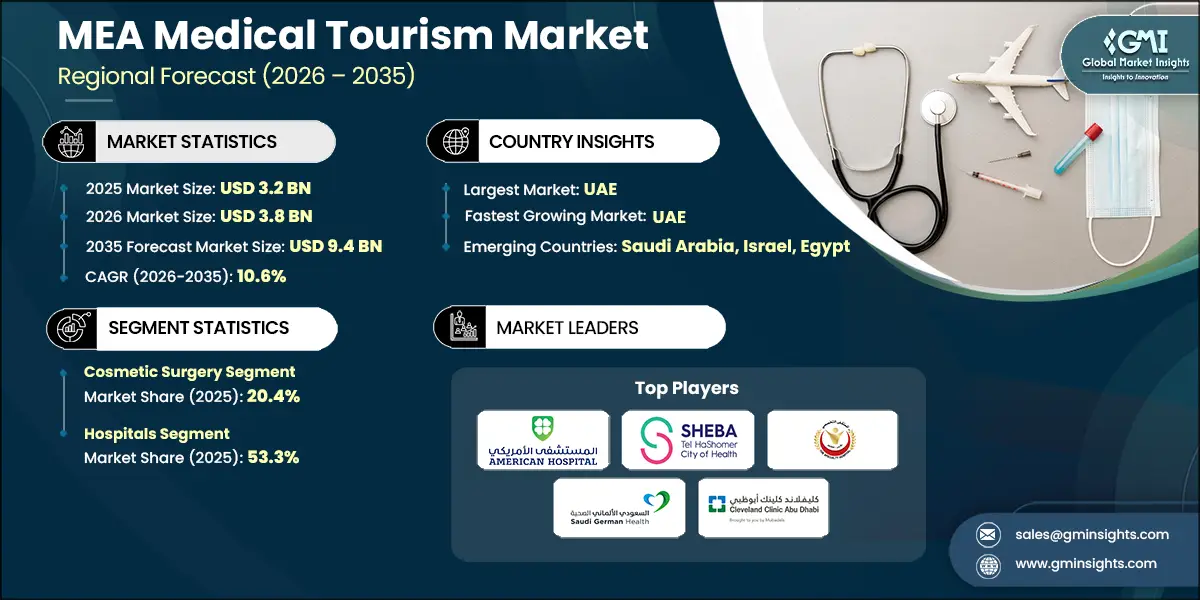
To get key market trends
MEA Medical Tourism Market Trends
Surge in medical infrastructure investment, increasing demand for specialty and advanced procedures, growing integration of wellness and medical tourism, and rise of international accreditation and quality standards are among the key trends shaping the market growth.
- The emerging trend of integrating health-focused recovery and rehabilitation therapies, such as nature-based therapies and rehabilitation through spas, is increasingly seen at clinical and health facilities located especially in the UAE and South Africa. This enables patients to receive medical care and recover from a holistic approach, allowing them to feel more satisfied with their care and recover faster, further supporting the MEA regional growth for medical care.
- Additionally, MEA nations are rapidly growing their capacity and capabilities to treat patients through enhanced hospital systems, specialty centers, and developed-city health systems, primarily in the UAE, Saudi Arabia, South Africa, and Egypt. These investments greatly improve their ability to treat patients and attract patients requiring complex treatment procedures, resulting in a large increase in the total number of patients coming into the region for high-quality health care, further increasing the competitiveness of the region in providing high-quality care.
- Further, hospitals throughout the Middle East and North Africa have gained international certifications verifying both their quality of care and patient safety and their ability to provide culturally sensitive services to patients. The availability of accredited hospitals helps to create trust between foreign nationals, making the Middle East and Africa region a preferable option for high-risk and elective procedures.
MEA Medical Tourism Market Analysis
 Learn more about the key segments shaping this market
Learn more about the key segments shaping this market
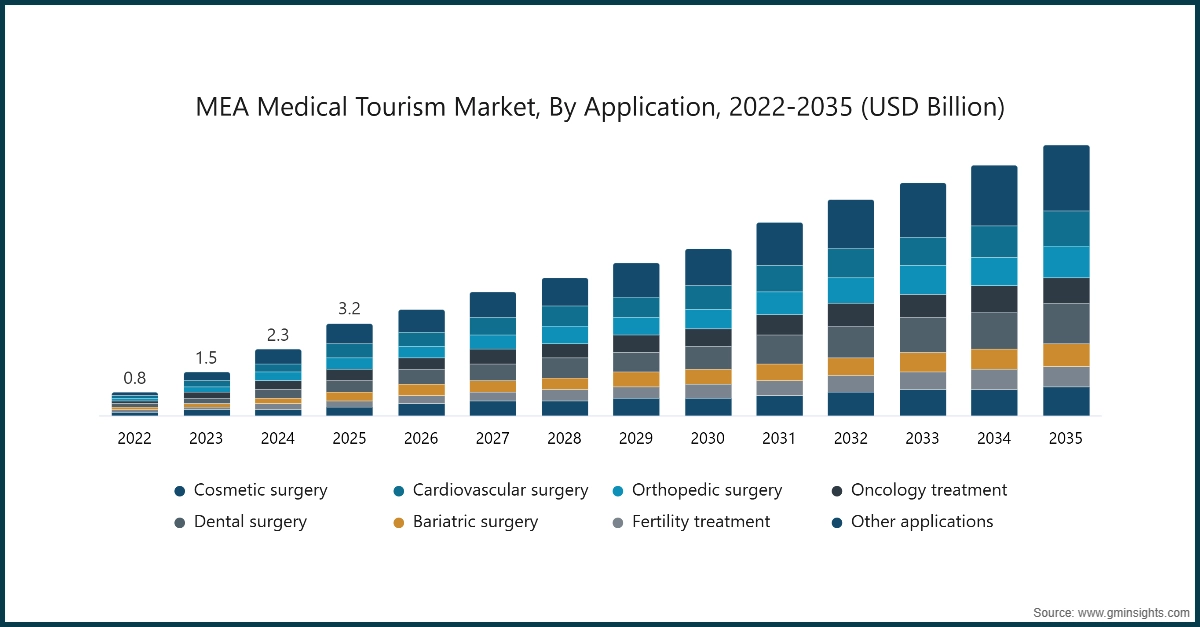
In 2022, the market was valued at USD 0.8 billion and grew to USD 1.5 billion in 2023, reaching USD 2.3 billion by 2024. Rising demand for personalized and precision treatments along with growing prevalence of chronic diseases are among the key variables contributing to industry growth.
Based on application, the market is segmented into cosmetic surgery, cardiovascular surgery, orthopedic surgery, oncology treatment, dental surgery, bariatric surgery, fertility treatment, and other applications. The cosmetic surgery segment accounted for a leading share of 20.4% in 2025. Growing focus of younger adults on aesthetics is a key factor fueling the segmental growth. The segment is expected to reach USD 2.3 billion by 2035, growing at a CAGR of 12.7% during the forecast period.
- Cosmetic surgery is among the top requests within the MEA medical tourism market due to increased demand for aesthetic procedures at lower prices compared to western regions.
- Additionally, the quality of hospitals, trained doctors, and inclusion of wellness tourism contribute to a positive patient experience and successful recovery after undergoing a surgical procedure.
- Furthermore, the major MEA hubs are attractive as post-operation recovery locations; therefore, cosmetic surgery constitutes a large proportion of inbound medical tourism into the MEA region.
- The cardiovascular surgery segment was valued at USD 455.8 million in 2025. Cardiovascular application has shown substantial growth in the Middle East and Africa due to aging populations, and increased resources dedicated to developing cardiovascular facilities have driven a rise in the number of cardiac surgeries performed.
- Further, healthcare systems in the UAE, Saudi Arabia, Jordan, and South Africa now offer advanced procedures for patients, such as bypass surgery, valve surgery, and cardiology interventions, with the help of advanced diagnostic equipment and facilities. Patients looking for timely and specialized cardiovascular care come from different parts of the GCC and Africa and tend to travel around the region to receive care.
- The dental segment was valued at USD 430.7 million in 2025. Dental surgery is among the most sought-after applications of medical tourism in the MEA region, which is experiencing robust growth due to a steady influx of patients from around the world who are looking for high-quality, low-cost dentistry such as dental implants, veneers, crowns, full mouth reconstruction, and orthodontics.
- In addition, countries such as Egypt, Morocco, South Africa, the UAE, and Jordan provide regional and international patients with dental surgery services at lower costs, modern clinics, and competitive prices than their developed counterparts.
- Moreover, patients can combine dental surgery with tourism activities in many MEA countries, making them more attractive to visitors. With an increase in the overall awareness of oral health and the advancement of dental technology within the region, the demand for
dental surgery continues to grow as a significant area of opportunity.
Learn more about the key segments shaping this market
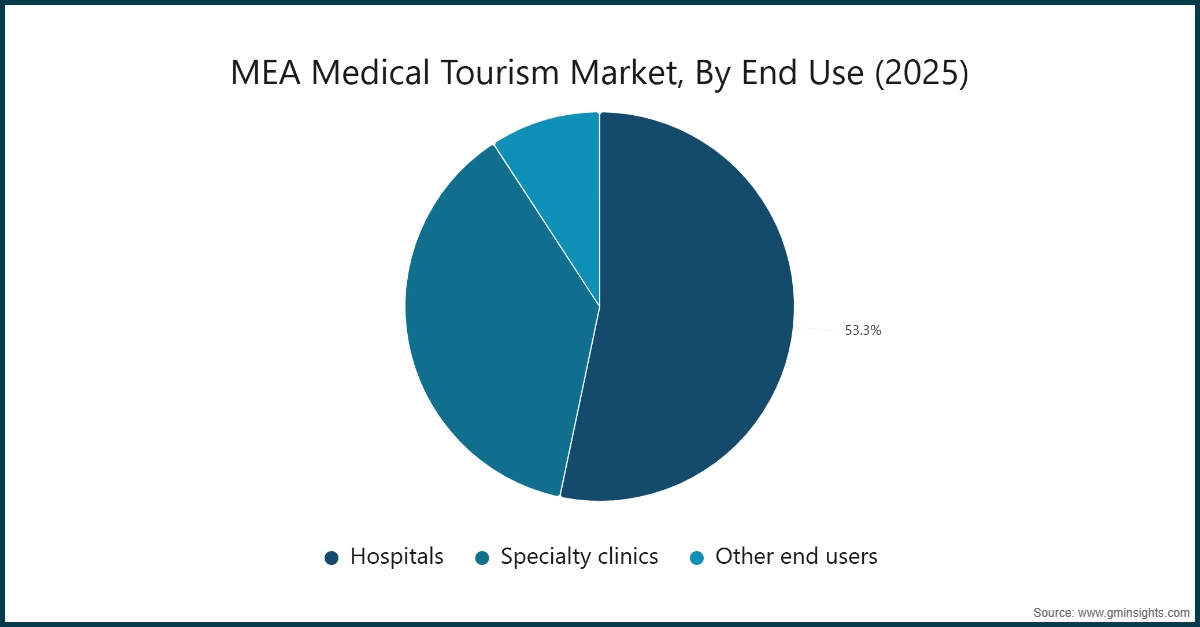
Based on end use, the MEA medical tourism market is segmented into specialty clinics, hospitals and other end users. The hospitals segment accounted for the leading market share of 53.3% in 2025.
- Hospitals continue to play a vital role in the region's medical tourism industry by offering advanced, specialized healthcare services, with significant investments in supporting facilities throughout the region. Several facilities are accredited by international organizations, ensuring that they meet the global standards for safety, cardiac care, oncology, orthopedics, and surgical specialties for patients.
- In addition, multiple governmental initiatives, including Saudi Arabia's establishment of medical cities and the UAE's mandatory requirement for all hospitals to obtain accreditation, increase both the hospitals' credibility and their capacity to treat patients.
- Patients are attracted to hospitals because they offer a variety of services, including advanced diagnostics, multilingual staff, and consolidated treatment packages, thus making it a go-to location for patients who wish to receive high-level, all-inclusive healthcare services.
- The specialty clinics segment was valued at USD 1.2 billion in 2025 and is anticipated to witness higher growth over the forecast period. The role of specialty clinics in the field of medical tourism is increasing as their clinic models provide high-level services focused on a particular expertise (e.g., dentistry, cosmetic procedures, fertility, orthopedic procedures, and dermatology).
- Specialty clinics are rapidly growing to meet the increasing demand from patients for high-tech, moderately priced, and minimally invasive procedures. Patients can often take advantage of cutting-edge technology, shorter wait times for medical or surgical services, and customized care pathways when using specialty clinics, which makes them a preferable option for both local and international patients.
- In addition, many of the specialty clinics in MEA are incorporating post-surgical wellness recovery services, increasing the satisfaction level and outcomes associated with all types of specialty patient treatments.
Looking for region specific data?
UAE Medical Tourism Market
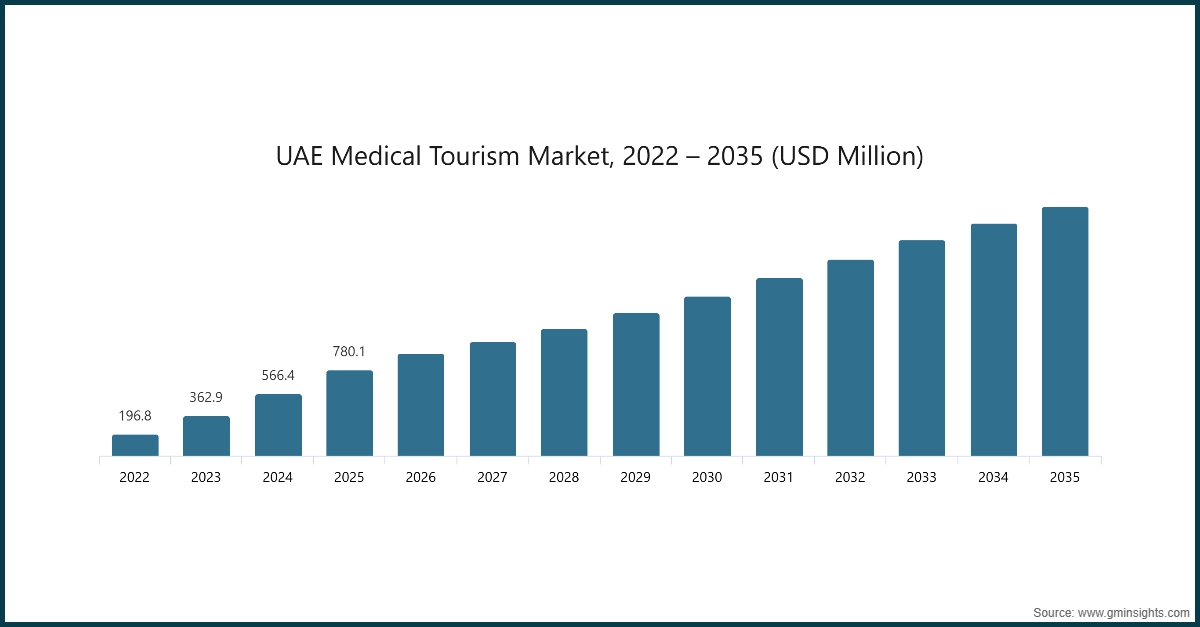
The UAE medical tourism market was valued at USD 196.8 million and USD 362.9 million in 2022 and 2023, respectively. In 2025 the market size was valued at USD 780.1 million from USD 566.4 million in 2024. Availability of highly skilled professionals for range of treatments in the country is projected to fuel the market growth.
- Strong growth in medical tourism within the UAE is supported by the availability of excellent healthcare infrastructure, internationally recognized healthcare facilities, and the supportive government's strategies.
- Dubai and Abu Dhabi have become the major centers for medical tourism, with hundreds of thousands of patients from all over the world visiting the region to access advanced diagnostic technology, robotic surgical procedures, and speciality care. In 2023, Dubai received more than 691,000 international patients for medical care.
- Additionally, the UAE also benefits from other elements, such as its key geographic location, luxury accommodation for recovery, and bilingual staff to make the region an enjoyable and accessible place for all patients.
- Finally, as a result of the government's commitment to improve medical tourism, including developing more centers of excellence and creating synergies between medical tourism and wellness tourism, the UAE is among the go-to destinations for all types of cosmetic, orthopedic, fertility, dental, and cardiovascular treatments in the Middle East and Africa.
Jordan Medical Tourism Market
Jordan accounted for a significant share of the MEA medical tourism market and was valued at USD 538.9 million in 2025.
- With a reputation for better quality health care, excellent medical professionals, and a long history of treating international patients, Jordan has continued to establish itself as one of the premier medical tourism destinations in the Middle Eastern region.
- In 2025, Jordan received over 235,000 medical tourists, showing consistent growth over prior years. Jordan is well known for being a center of excellence in treating cardiology patients, cancer patients, orthopedic patients, infertility patients, and cosmetic surgery patients with many modern facilities and natural healing places such as the Dead Sea and Ma’in Hot Springs.
- Further, Jordan's relatively low prices for medical care and large number of patients in need of treatment from the Gulf Cooperation Council region further support Jordan's continued growth in the medical tourism market.
Saudi Arabia Medical Tourism Market
The Saudi Arabia medical tourism market accounted for a notable share of the market and was valued at USD 325.9 million in 2025.
- The medical tourism industry in Saudi Arabia is witnessing tremendous growth as the kingdom is investing heavily in upgrading its healthcare infrastructure as part of Vision 2030. Adding many new medical cities, internationally accredited hospitals, and advanced centers for oncology, cardiology, organ transplantation, and fertility treatment is transforming the kingdom from a primarily outbound destination for medical travel towards a more inbound destination.
- Additionally, facilities such as King Faisal Specialist Hospital are capable of attracting international patients based on having high clinical standards and global accreditation from agencies like the Joint Commission International (JCI).
- Lastly, the government's push for private-sector partnerships, streamlined regulations regarding medical tourism, and integration of digital healthcare further supported this growth.
MEA Medical Tourism Market Share
The MEA market is shaped by a mix of high‑performing regional hubs, each competing through infrastructure strength, accreditation, specialization, and service quality. The ability to deliver a whole range of health and wellness services within an overall tourist experience in the UAE is due to their high standards of hospital care, internationally accredited hospitals, and short waiting lists that allow for a seamless experience in the country.
Additionally, Saudi Arabia's transformation from a provider of medical tourism services into a recipient of medical tourism services is attributed majorly to the kingdom's considerable investment in specialized hospitals and medical cities. The country's other Vision 2030 reforms also provide improved regulatory support, enhanced quality standards, and better organized services, which may enable Saudi Arabia to continue to be a key player in the regional industry.
Further, Jordan maintains a strong competitive presence due to its reputation for high‑quality physicians, cost‑effective care, and strong demand from GCC and regional patients. Further, South Africa, Egypt, and several other countries compete through affordability, established clinical expertise, and diverse specialty offerings, especially in cosmetic, dental, and orthopedic procedures. Together, these countries create a dynamic, multi‑hub competitive environment that continues to elevate MEA’s position as a growing global medical tourism destination.
MEA Medical Tourism Market Companies
A few of the prominent players operating in the MEA medical tourism industry include:
- American Hospital Dubai
- Clemenceau Medical Center
- Cleveland Clinic Abu Dhabi
- Hadassah Medical Center
- King Fahd Medical City
- King Faisal Specialist Hospital & Research Centre
- King Hussein Cancer Center (KHCC)
- Mediclinic Middle East
- Saudi German Hospital
- Sheba Medical Center
- Tel Aviv Sourasky Medical Center
- The Specialty Hospital
- Thumbay University Hospital
- American Hospital Dubai
Focuses on leveraging Dubai’s medical tourism framework (DXH), investing in advanced technologies, expanding international partnerships, and offering personalized, telemedicine‑supported patient pathways to attract global patients seeking premium, innovative care.
Strengthens global presence through comprehensive international patient services, advanced treatment planning, and cross‑border collaborations while promoting clinical excellence, innovation, and humanitarian outreach to position itself as a global referral destination.
Builds competitive advantage through strong accreditation, advanced technology investments, high‑quality surgical outcomes, and comprehensive care packages, serving diverse international patients with culturally aligned, cost‑efficient, and trusted medical services.
MEA Medical Tourism Market Report Attributes
| Key Takeaway | Details |
|---|---|
| Market Size & Growth | |
| Base Year | 2025 |
| Market Size in 2025 | USD 3.2 Billion |
| Market Size in 2026 | USD 3.8 Billion |
| Forecast Period 2026-2035 CAGR | 10.6% |
| Market Size in 2035 | USD 9.4 Billion |
| Key Market Trends | |
| Drivers | Impact |
| Rising demand for affordable and high‑quality medical care within MEA region | Growing patient inflow into UAE, South Africa, Egypt, and Jordan as travelers seek cost‑effective, reliable treatment, boosting regional medical tourism volumes |
| Expansion of advanced procedures | High‑complexity treatments in cardiology, oncology, orthopedics, and fertility attract regional patients seeking specialized care unavailable or expensive at home |
| Availability of internationally accredited facilities and supportive government initiatives | Internationally accredited hospitals and government‑backed reforms in UAE and Saudi Arabia enhance patient trust and strengthen MEA’s reputation for safe, high‑quality care |
| Increasing prevalence of chronic diseases | Rising cardiovascular, cancer, and diabetes cases drive cross‑border travel for advanced specialist care within MEA’s expanding treatment hubs |
| Pitfalls & Challenges | Impact |
| Issue with patient follow-up and post-surgery complications | Inconsistent post‑treatment coordination across MEA facilities increases risk of care gaps, reducing patient confidence and complicating long‑term recovery |
| Opportunities: | Impact |
| Growth of wellness and integrative medicine packages | Expansion of wellness‑driven recovery services will position MEA destinations as holistic healing hubs, boosting patient experience and diversifying medical tourism offerings |
| Rise of telemedicine | Teleconsultations and remote treatment planning will streamline international patient pathways, reduce pre‑travel barriers, and widen MEA hospitals’ global reach |
| Market Leaders (2025) | |
| Top Players |
|
| Competitive Edge |
|
| Regional Insights | |
| Largest Market | UAE |
| Fastest growing market | UAE |
| Emerging countries | Saudi Arabia, Israel, Egypt |
| Future outlook |
|
What are the growth opportunities in this market?
MEA Medical Tourism Industry News:
- In February 2026, the Armenian Tourism Committee is investing notably with a focus on setting up the country as a medical tourism destination. The country boosts medical tourism growth with new digital platforms and international cooperation to offer high-quality healthcare services to global visitors. In 2026, the Armenian Tourism Committee collaborated with the United Nations for various upcoming developments in Armenia.
- In December 2024, Saudi Arabia invested around USD 69.3 billion to set open five new hospitals in the country by 2025. The five facilities will add 963 beds across key provinces in the kingdom. This underscores Saudi Arabia’s holistic approach, recognizing the interconnectedness of health and social development.
The MEA medical tourism market research report includes an in-depth coverage of the industry with estimates and forecasts in terms of revenue in (USD Million) from 2022 - 2035 for the following segments:
Market, By Application
- Cosmetic surgery
- Hair transplant
- Breast augmentation
- Other cosmetic surgeries
- Cardiovascular surgery
- Orthopedic surgery
- Knee replacement
- Hip replacement
- Spinal surgeries
- Shoulder replacement
- Ankle replacement
- Other orthopedic surgeries
- Oncology treatment
- Surgery
- Radiation therapy
- Chemotherapy
- Other therapies
- Dental surgery
- Dental implants
- Orthodontics
- Dental cosmetics
- Dental prosthetics
- Other dental services
- Bariatric surgery
- Fertility treatment
- Other applications
Market, By End Use
- Hospitals
- Specialty clinics
- Other end users
The above information is provided for the following countries:
- Egypt
- Israel
- UAE
- Qatar
- Saudi Arabia
- South Africa
- Jordan
- Rest of MEA
Frequently Asked Question(FAQ) :
What is the market size of the MEA medical tourism market in 2025?
The market size was USD 3.2 billion in 2025, with a CAGR of 10.6% expected through 2035, driven by internationally accredited facilities, government initiatives, and rising demand for affordable, high-quality care.
What is the projected value of the MEA medical tourism market by 2035?
The MEA medical tourism market is expected to reach USD 9.4 billion by 2035, propelled by the expansion of advanced procedures and increasing prevalence of chronic diseases.
What is the current MEA medical tourism market size in 2026?
The market size is projected to reach USD 3.8 billion in 2026.
What was the valuation of the hospitals segment in 2025?
The hospitals segment held 53.3% market share and generated USD 1.7 billion in 2025, supported by investments in advanced healthcare services and international accreditations.
What is the growth outlook for the cosmetic surgery segment from 2026 to 2035?
The cosmetic surgery segment is projected to grow at a CAGR of 12.7% till 2035, reaching USD 2.3 billion, driven by rising focus on aesthetics and affordability in the MEA region.
Which country leads the MEA medical tourism market?
The UAE leads the market, with a valuation of USD 780.1 million in 2025, supported by excellent healthcare infrastructure, government strategies, and advanced diagnostic technologies.
Who are the key players in the MEA medical tourism market?
Key players include American Hospital Dubai, Sheba Medical Center, The Specialty Hospital, Saudi German Hospital, and Cleveland Clinic Abu Dhabi.
MEA Medical Tourism Market Scope
Related Reports