Summary
Table of Content

Latin America Pet Therapeutic Diet Market
Get a free sample of this report
Form submitted successfully!
Error submitting form. Please try again.
Thank you!
Your inquiry has been received. Our team will reach out to you with the required details via email. To ensure that you don't miss their response, kindly remember to check your spam folder as well!
Request Sectional Data
Thank you!
Your inquiry has been received. Our team will reach out to you with the required details via email. To ensure that you don't miss their response, kindly remember to check your spam folder as well!
Form submitted successfully!
Error submitting form. Please try again.
Latin America Pet Therapeutic Diet Market Size
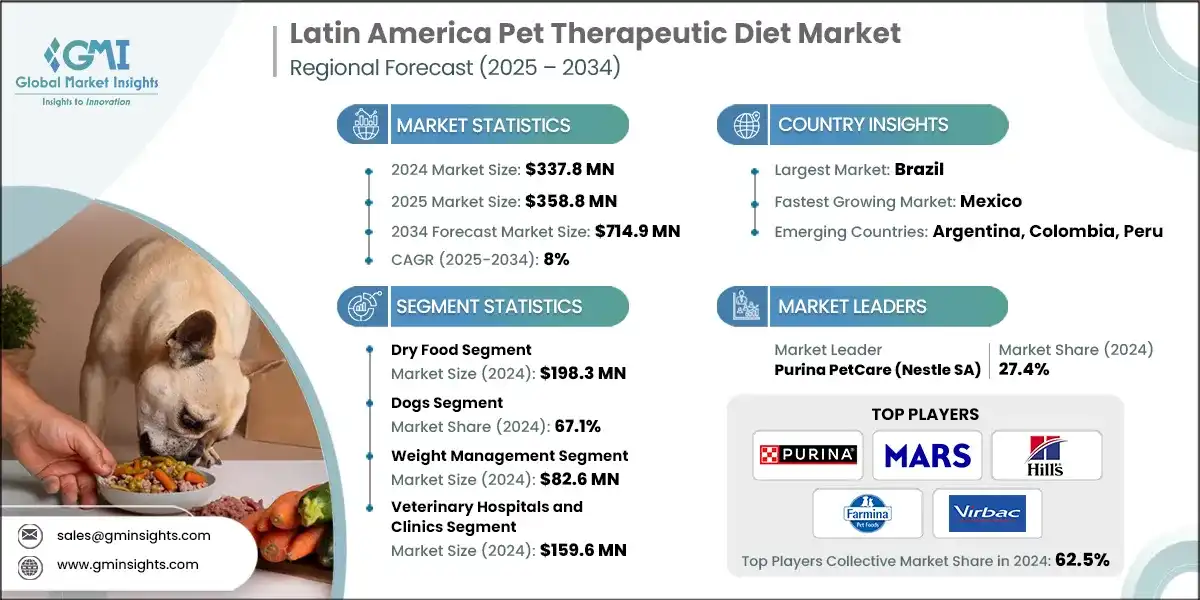
The Latin America pet therapeutic diet market size was estimated at USD 337.8 million in 2024. The market is expected to grow from USD 358.8 million in 2025 to USD 714.9 million in 2034, at a CAGR of 8%, according to the latest report published by Global Market Insights Inc.
Latin America Pet Therapeutic Diet Market Key Takeaways
Market Size & Growth
- 2024 Market Size: USD 337.8 Million
- 2025 Market Size: USD 358.8 Million
- 2034 Forecast Market Size: USD 714.9 Million
- CAGR (2025–2034): 8%
Regional Dominance
- Largest Market: Brazil
- Fastest Growing Country: Mexico
Key Market Drivers
- Rising pet population and growing trend of pet humanization.
- Rise in chronic health issues among pets.
- Improved access through diverse sales channels.
- Premiumization and innovation in formulations.
Challenges
- High product cost relative to income levels.
- Uneven veterinary infrastructure and awareness.
Opportunity
- Launch of affordable, locally adapted product lines.
- Growth of tele-veterinary and digital veterinary platforms.
Key Players
- Market Leader: Purina PetCare (Nestle SA) led with over 27.4% market share in 2024.
- Leading Players: Top 5 players in this market include Purina PetCare (Nestle SA), Mars, Incorporated, Hill's Pet Nutrition (Colgate Palmolive), Farmina Pet Foods, Virbac, which collectively held a market share of 62.5% in 2024.
Get Market Insights & Growth Opportunities
One of the major growth drivers for Latin America's pet therapeutic diet market is the robust increase in pet ownership and the pet humanization trend. For instance, as per Statista, in 2022, there were approximately 187 million pets in Latin America. This represents a growth of 17% in the pet population compared to the number in 2017, which stood at 160 million pets throughout the region. Pets are being increasingly treated as part of the family by individuals and families from all over the region, driving more expenditure on premium care, health, and wellness products.
Pet therapeutic diet, also known as prescription diet, is specialized pet food designed to be fed to pets with specific health conditions or diseases. They help to treat, prevent, or manage several health conditions such as kidney diseases, diabetes, gastrointestinal issues, skin conditions, and urinary tract issues, among others. They are distinct from regular pet food as they are specially formulated with targeted nutrient profiles and are typically prescribed or recommended by veterinarians to improve pets’ quality of life and aid in medical treatment.
Key players such as Purina PetCare (Nestle SA), Mars, Hill's Pet Nutrition (Colgate Palmolive), Farmina Pet Foods, and Virbac lead the market with their wide product portfolio and robust R&D. These players benefit from strong veterinarian recommendations, brand recognition, and extensive R&D capabilities to introduce science-backed therapeutic diets. Collectively, these players drive innovation, grow veterinary partnerships, and increase awareness, positioning therapeutic diets as a rapidly expanding category in the pet nutrition market.
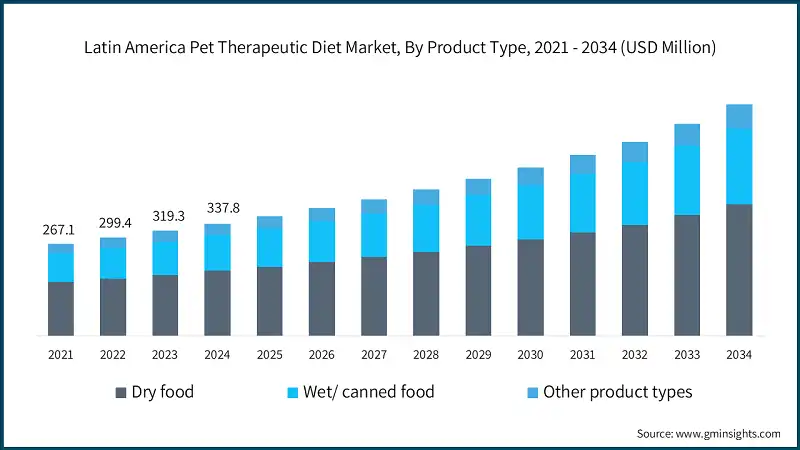
The Latin America pet therapeutic diet market witnessed steady growth, growing from USD 267.1 million in 2021 to USD 319.3 million in 2023. Between 2021 and 2023, the market experienced a phase of robust growth as pet ownership surged, and health-focused nutrition became a greater concern for pet parents. In addition, the market witnessed growth owing to a surge in pet adoption during the COVID period, which translated directly into increasing demand for niche diets used to treat obesity, digestive diseases, kidney disorders, and allergies.
During the COVID-19 pandemic, pet ownership increased globally, especially in Latin America, according to the USDA FAS. In 2023, Latin America imported USD 259 million worth of dog and cat food, a 75% increase since 2020. This shift led to a surge in the overall pet care market as new pet parents began spending more on their pets' health and overall well-being.
To get key market trends
Latin America Pet Therapeutic Diet Market Trends
- Growing pet humanization and health awareness are major trends driving the adoption of pet therapeutic diets in the region. Pet owners in the region are increasingly treating pets as family members, leading to higher attention to diet and overall health.
- The humanization of pets has grown over the past few years, especially in the post-pandemic period, with consumers spending time at home helping to strengthen their emotional bond with pets.
- As per a survey, in Latin America, 74% of owners consider their pets beloved family members, marking the highest share for any region. This is increasing the demand for therapeutic diets that control chronic diseases, promote longevity, and enhance quality of life.
- Traditionally, therapeutic diets were primarily available through veterinary clinics, but this is changing rapidly. Online platforms and pet specialty retailers are now important sales avenues, giving pet owners easier access to prescription and non-prescription therapeutic diets.
- Availability of pet therapeutic diets through online websites and e-commerce platforms has increased the accessibility of these products, thereby increasing their adoption rates.
- Moreover, owing to the growing demand for clean-label and natural products, manufacturers are investing in diets that marry clinical advantages with natural or functional ingredients. Probiotic, omega-3 fatty acid, or antioxidant-enriched products are on the rise, since they speak to owners seeking "food as medicine."
- Limited-ingredient and chemical-free formulations are also gaining importance, corresponding with consumer values of transparency and safer nutrition.
- Lastly, demand for breed and age-specific diets is on the rise. The consumers are increasingly educated and seek products that meet their pet's individual health requirements. This trend gives R&D a boost to invest in novel formulation development that is effective, palatable, and compliant with local taste preferences.
Latin America Pet Therapeutic Diet Market Analysis
Learn more about the key segments shaping this market
Based on the product type, the Latin America market is classified into dry food, wet/canned food, and other product types. The dry food segment dominated the market in 2024 and was valued at USD 198.3 million. On the other hand, the wet/canned food segment was valued at USD 96.9 million in 2024 and is poised to witness high growth over the coming years. Wet/canned therapeutic diets are favored for their high moisture content, palatability, and ease of consumption. Increasing knowledge of the health advantages linked with water-dense diets, coupled with increased availability through online stores and veterinary clinics, is leading to steady expansion in the wet food category throughout the region.
- The dry food segment dominates the Latin America market owing to its ease of use, longer shelf life, and ease of storage. This convenience has fueled widespread acceptance of dry pet foods as effective feeding solutions without sacrificing pets' dietary requirements.
- Companies offer a wide range of offerings of dry formulas for weight control, gastrointestinal function, kidney health, and dermatological conditions. This has diversified the product's use in veterinary-recommended nutrition.
- Moreover, the low cost and wide availability of dry therapeutic diets in pet stores, veterinary clinics, and online retailers contribute to their high adoption rates.
Learn more about the key segments shaping this market
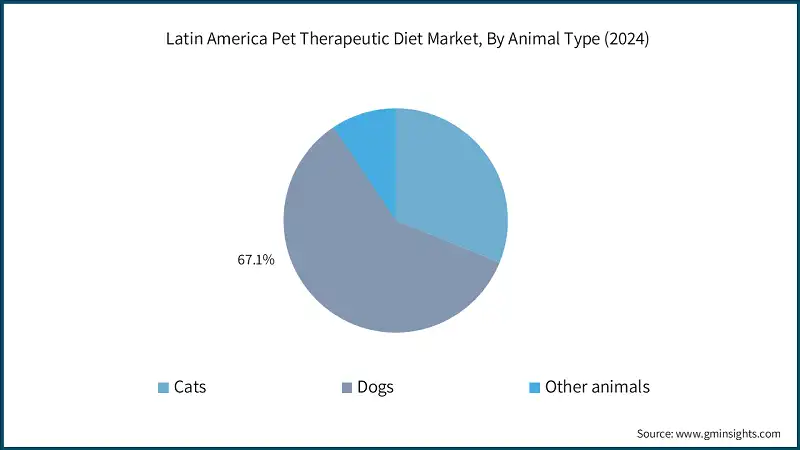
Based on the animal type, the Latin America pet therapeutic diet market is segmented into cats, dogs, and other animal types. In 2024, the dogs segment accounted for the largest share of 67.1% in the Latin America market.
- The dog population is notably larger than that of cats and other pets, which creates a stronger market for therapeutic nutrition.
- For example, in 2018, Brazil was the country with the highest number of dogs among the Latin American countries, with 52.2 million dogs. Mexico followed, with 21.3 million.
- In addition, dogs face a notably higher incidence of chronic conditions such as obesity, arthritis, kidney disease, digestive disorders, and skin allergies. These health challenges increase the need for specialized diets.
- Moreover, given their larger size and caloric requirements, dogs require more food for complete nutrition compared to cats and other small mammals, which further strengthens their market share in the market.
- The cat’s segment, on the other hand, is anticipated to witness robust growth at a CAGR of 8.4% over the analysis period, supported by steadily increasing cat ownership and awareness of specialized nutritional needs.
- In recent years, Latin America has witnessed a significant rise in cat ownership. This shift is fueled by several factors, including lower ownership costs compared to dogs, greater adaptability to smaller living spaces and the independent nature of cats. While dogs remain the dominant pet across the region, the steadily growing cat population will increase the demand for pet therapeutic diets for the feline population.
Based on the health condition, the Latin America pet therapeutic diet market is categorized into renal health, gastrointestinal health, skin and coat health, cardiovascular health, weight management, joint care, and other health conditions. The weight management segment dominated the market in 2024 with a revenue of USD 82.6 million.
- The weight management segment dominates the Latin America market, as there is an increasing number of cases of obesity in companion animals.
- As per a 2020 study conducted by the NIH on a large sample of dogs in São Paulo, the combined prevalence of overweight and obesity was found to be 40.5%, with 14% of dogs being outright obese and 34% overweight.
- As awareness grows among pet owners about the health risks associated with obesity, such as diabetes, joint disorders, and reduced life expectancy, the demand for specialized therapeutic diets aimed at weight reduction and maintenance has accelerated.
- On the other hand, the gastrointestinal health segment was valued at USD 68.5 million in 2024 and is anticipated to grow at 8% CAGR over the analysis period.
- The rising prevalence of gastrointestinal health issues, such as animal gastroesophageal reflux disease is the major factor to stimulate the market of gastrointestinal therapeutics diets.
- Digestive issues such as vomiting and diarrhea, constipation, food intolerance and allergies, and inflammatory bowel disease are common in pets, especially as they age. Such conditions affect their overall nutrient absorption as well as overall health, leading to discomfort; thus, pet owners include such specialized therapeutic diets to effectively manage these conditions.
Based on the distribution channel, the Latin America pet therapeutic diet market is categorized into veterinary hospitals and clinics, e-commerce, retail pharmacies, and other distribution channels. The veterinary hospitals and clinics segment dominated the market in 2024 and was valued at USD 159.6 million.
- Veterinary hospitals and clinics serve as a primary point of contact for pet owners seeking medical interventions for their pets, making them a major channel responsible for prescribing and recommending therapeutic diets.
- Additionally, the ability of veterinarians to accurately diagnose and recommend appropriate therapeutic diets as per the specific health requirements of the animals further supports the growth of this segment.
- Thus, the trust in veterinarian’s recommendations and availability of a broader range of both wet and dry therapeutic diets in these facilities contributes to the growth of this segment.

Looking for region specific data?
The Brazil pet therapeutic diet market was valued at USD 107.6 million and USD 121.1 million in 2021 and 2022, respectively. The market size reached USD 137.8 million in 2024, growing from USD 129.7 million in 2023.
- Growth is supported by high pet ownership and a well-established veterinary network in the country.
- As per data published by GlobalPets, Brazil has the third-largest pet population in the world, following China and the U.S. In Brazil, there are four pets for every five people.
- In addition, the growing prevalence of conditions such as obesity, digestive disease, and skin allergy among pet animals has further increased the adoption of therapeutic diets.
- Pet owners are increasingly opting for veterinary-prescribed diets as part of corrective and preventive veterinary healthcare for their pets, and therapeutic nutrition has thus become an important component of veterinary offerings.
Mexico pet therapeutic diet market is anticipated to grow at a significant CAGR over the analysis period, driven by rising pet ownership, urbanization, and greater awareness of pet health.
- Steady advancement of veterinary care in the country is a major factor driving market growth.
- According to Statista, as of November 2023, the State of Mexico reported more than 2,000 economic units in the veterinary services industry, making it the state with the highest number of veterinary establishments. Mexico City ranked second, with nearly 1,900 units.
- With more clinics offering modern diagnostic tools and preventive health programs, veterinarians are recommending therapeutic diets as part of treatment regimens for common conditions such as obesity, renal disorders, digestive issues, and skin sensitivities.
- Furthermore, the growing adoption of online distribution channels and e-commerce is contributing to market growth.
Argentina's pet therapeutic diet market is expanding rapidly, supported by the country’s strong culture of pet ownership and rising emphasis on pet wellness.
- Argentina is witnessing a robust expansion of the pet therapeutic diet market as a result of the country's established pet culture and increasing focus on pet wellness and health.
- Argentine households increasingly view pets as family members, which is encouraging spending on premium nutrition and specialized diets that address medical needs.
- Further, rising awareness of chronic health conditions in companion animals, combined with pet humanization trends, is creating steady demand for therapeutic diets designed to support long-term health.
Latin America Pet Therapeutic Diet Market Share
The Latin America market is characterized by intense competition, with participation from multinational companies, specialized pet nutrition companies, and emerging niche brands. Top 5 players such as Purina PetCare (Nestle SA), Mars, Incorporated, Hill's Pet Nutrition (Colgate Palmolive), Farmina Pet Foods, and Virbac account for 62.5% of the market share. These players emphasize mergers and acquisitions, partnerships, and collaboration for expanding their business. They leverage a strong reputation, extensive R&D capabilities, and a significant distribution network to provide science-backed therapeutic diets addressing specific health conditions in pets.
Meanwhile, emerging and specialty brands such as Affinity Petcare, Animonda, Stella & Chewy’s, Champion Petfoods, and Diamond Pet Foods are differentiating through transparency in sourcing, customized nutrition plans, and sustainability-driven approaches. This dynamic competitive landscape is shaped by innovation, veterinary partnerships, and growing consumer preference for health-focused diets that enhance pet’s health.
Latin America Pet Therapeutic Diet Market Companies
Few of the prominent players operating in the Latin America pet therapeutic diet industry include:
- Affinity Petcare
- Animonda
- Blue Buffalo (General Mills)
- Champion Petfoods
- Diamond Pet Foods (Schell & Kampeter, Inc.)
- Farmina Pet Foods
- Hill's Pet Nutrition (Colgate Palmolive)
- Mars, Incorporated
- Purina PetCare (Nestle SA)
- Stella and Chewy’s
- Virbac
- VNG
- Purina PetCare (Nestle SA)
Purina leads the Latin America market with a share of 27.4% in 2024, leveraging its strong R&D infrastructure, veterinary partnerships, and consumer trust to deliver diets that combine high therapeutic efficacy with optimal taste and digestibility. Its products are supported by extensive clinical testing, peer-reviewed studies, and continuous innovation in nutrient bioavailability and formulation precision.
Through its renowned brands, including Royal Canin, the company offers clinically formulated nutritional solutions designed to address a wide range of health conditions such as renal disorders, gastrointestinal sensitivities, dermatological issues, and weight management. Mars integrates cutting-edge R&D, veterinary science, and clinical trials via its Waltham Petcare Science Institute, ensuring evidence-based diet formulations that meet both therapeutic efficacy and palatability standards.
Hill’s works closely with veterinarians globally, integrating its solutions into professional practice. The company’s commitment to nutritional precision is supported by collaboration with academic research institutions and pet health networks, enabling the continuous refinement of therapeutic formulations.
Latin America Pet Therapeutic Diet Market Report Attributes
| Key Takeaway | Details |
|---|---|
| Market Size & Growth | |
| Base Year | 2024 |
| Market Size in 2024 | USD 337.8 Million |
| Market Size in 2025 | USD 358.8 Million |
| Forecast Period 2025 - 2034 CAGR | 8% |
| Market Size in 2034 | USD 714.9 Million |
| Key Market Trends | |
| Drivers | Impact |
| Rising pet population and growing trend of pet humanization | High adoption of pets for companionship has boosted the demand for various pet care products. Families in Latin America increasingly treat pets as members of the household, which encourages higher spending on specialized nutrition aimed at improving health and longevity. |
| Rise in chronic health issues among pets | Conditions such as obesity, digestive problems, and joint disorders are becoming more common, leading veterinarians to recommend therapeutic diets as part of treatment. |
| Improved access through diverse sales channels | The availability of specialized diets is expanding beyond veterinary clinics into e-commerce and modern retail, making these products more visible and easier to purchase. |
| Premiumization and innovation in formulations | Pet owners are increasingly willing to spend more on high-quality, natural, and tailored diets for pets. Manufacturers are responding with innovative formulations, such as grain-free, hypoallergenic, and breed- or age-specific diets, expanding consumer choice and supporting long-term market expansion. |
| Pitfalls & Challenges | Impact |
| High product cost relative to income levels | Therapeutic diets are priced at a premium, which makes them less affordable for a large section of pet owners in Latin America. |
| Uneven veterinary infrastructure and awareness | Limited access to veterinarians in rural or less-developed areas restricts both awareness and adoption of prescription-based pet diets. |
| Opportunities: | Impact |
| Launch of affordable, locally adapted product lines | Launching cost-effective formulations or smaller pack sizes tailored to regional needs can attract budget-conscious consumers without compromising nutritional value. |
| Growth of tele-veterinary and digital veterinary platforms | Leveraging digital platforms for veterinary consultations, combined with subscription or direct-to-consumer delivery models, can significantly widen market reach. |
| Market Leaders (2024) | |
| Market Leaders |
27.4% market share. |
| Top Players |
Collective Market Share 62.5% |
| Competitive Edge |
|
| Regional Insights | |
| Largest Market | Brazil |
| Fastest Growing Market | Mexico |
| Emerging Countries | Argentina, Colombia, Peru |
| Future outlook |
|
What are the growth opportunities in this market?
Latin America Pet Therapeutic Diet Industry News:
- In May 2025, Nestlé acquired a minority stake in Drools Pet Food Private Limited, citing the move as a financial investment. According to Nestlé’s statement, Drools will continue to operate independently, both strategically and operationally. The investment provided Drools with access to additional capital and global expertise, supporting its expansion and innovation in India’s growing pet food market.
- In April 2025, Hill’s Pet Nutrition introduced an enhancement of its Science Diet adult and senior dry food range by introducing ActivBiome+ Multi-Benefit—a blend of prebiotic fibers and antioxidants that supports digestive, immune, and organ health. This innovation strengthened its competitive edge in the premium pet nutrition market by aligning with growing consumer demand for gut health-focused products.
- In July 2021, as part of its 2030 strategic vision, Virbac successfully acquired iVet LLC, a specialty pet food company. This acquisition not only expanded Virbac’s product portfolio but also brought valuable expertise in distribution, logistics, and e-commerce, key components for achieving its pet food growth ambitions in the U.S. market.
The Latin America pet therapeutic diet market research report includes an in-depth coverage of the industry with estimates and forecast in terms of revenue in USD Million from 2021 - 2034 for the following segments:
Market, By Product Type
- Dry food
- Wet/ canned food
- Other product types
Market, By Animal Type
- Cats
- Dogs
- Other animals
Market, By Health Condition
- Renal health
- Gastrointestinal health
- Skin and coat health
- Cardiovascular health
- Weight management
- Joint care
- Other health conditions
Market, By Distribution Channel
- Veterinary hospitals and clinics
- E-commerce
- Retail pharmacies
- Other distribution channels
The above information is provided for the following countries:
- Brazil
- Mexico
- Argentina
- Colombia
- Chile
- Peru
Frequently Asked Question(FAQ) :
What is the market size of the Latin America pet therapeutic diet in 2024?
The market size was USD 337.8 million in 2024, supported by rising pet ownership and growing awareness of health-focused pet nutrition.
What is the projected value of the Latin America pet therapeutic diet market by 2034?
The market is expected to reach USD 714.9 million by 2034, growing at a CAGR of 8% during 2025–2034.
What is the market value forecast for 2025?
The Latin America pet therapeutic diet market is expected to be valued at USD 358.8 million in 2025.
How much revenue did the dry food segment generate in 2024?
The dry food segment generated USD 198.3 million in 2024, dominating the market due to convenience, affordability, and longer shelf life.
What was the valuation of the wet/canned food segment in 2024?
The wet/canned food segment was valued at USD 96.9 million in 2024, favored for its high moisture content and palatability.
Which country leads the Latin America pet therapeutic diet market?
Brazil led the region with USD 137.8 million in 2024, supported by high pet ownership and a well-established veterinary care infrastructure.
What is the growth outlook for the cat segment from 2025 to 2034?
The cat segment is expected to grow at a CAGR of 8.4% through 2034, driven by rising cat ownership and increasing awareness of feline-specific health nutrition.
Who are the key players in the Latin America pet therapeutic diet market?
Key players include Purina PetCare (Nestlé SA), Mars Incorporated, Hill’s Pet Nutrition (Colgate Palmolive), Farmina Pet Foods, and Virbac. Collectively, the top five players hold 62.5% market share.
Latin America Pet Therapeutic Diet Market Scope
Related Reports