Summary
Table of Content

Kidney Stone Management Market
Get a free sample of this report
Form submitted successfully!
Error submitting form. Please try again.
Thank you!
Your inquiry has been received. Our team will reach out to you with the required details via email. To ensure that you don't miss their response, kindly remember to check your spam folder as well!
Request Sectional Data
Thank you!
Your inquiry has been received. Our team will reach out to you with the required details via email. To ensure that you don't miss their response, kindly remember to check your spam folder as well!
Form submitted successfully!
Error submitting form. Please try again.
Kidney Stone Management Market Size
The high market growth is attributed to the rising prevalence of kidney stone disease, advancements in minimally invasive treatment technologies, and a growing geriatric population, among other contributing factors.
Kidney Stone Management Market Key Takeaways
Market Size & Growth
- 2025 Market Size: USD 2.9 Billion
- 2026 Market Size: USD 3.1 Billion
- 2035 Forecast Market Size: USD 4.8 Billion
- CAGR (2026–2035): 4.9%
Regional Dominance
- Largest Market: North America
- Fastest Growing Region: Asia Pacific
Key Market Drivers
- Increasing prevalence and recurrence rate of kidney stones.
- Technological advancements in minimally invasive treatments.
- Favourable reimbursement for lithotripsy procedures.
- Rising awareness regarding overall kidney health.
Challenges
- High cost of advanced treatment devices.
- Potential long-term adverse effects of lithotripsy.
Opportunity
- Expansion in emerging markets.
- Growth of telemedicine and remote patient monitoring.
Key Players
- Market Leader: Boston Scientific led with over 21% market share in 2025.
- Leading Players: Top 5 players in this market include Boston Scientific, COOK MEDICAL, Becton, Dickinson and Company, OLYMPUS, Dornier MedTech, which collectively held a market share of 57% in 2025.
Get Market Insights & Growth Opportunities
Kidney stone management entails the detection, treatment, and prevention of renal calculi through imaging, medical therapy, and minimally invasive or surgical procedures. The goal is to alleviate symptoms, remove or dissolve stones, prevent recurrence, and restore normal urinary function.
The major players in the kidney stone management market are Boston Scientific, COOK MEDICAL, Becton, Dickinson and Company, OLYMPUS, and Dornier MedTech. These companies maintain their competitive position through ongoing product innovation, global market presence, and substantial investment in research and development.
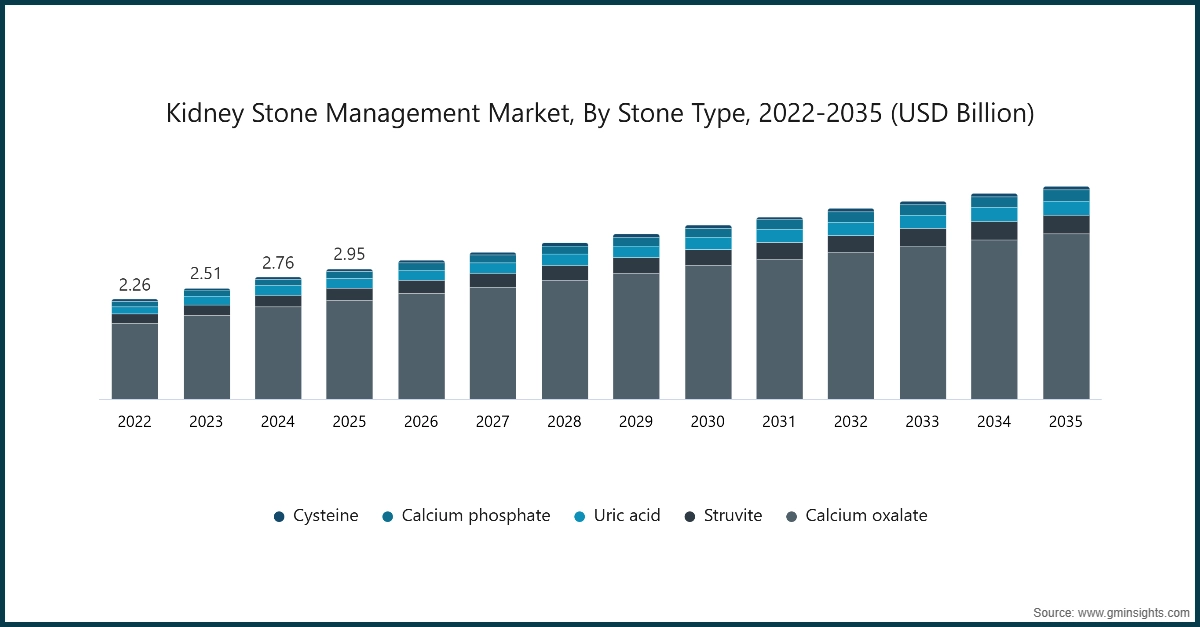
The market has increased from USD 2.3 billion in 2022 and reached USD 2.8 billion in 2024, with the historic growth rate of 10.8%. The market growth was driven by dietary and lifestyle changes increasing stone incidence, expansion of outpatient urology procedures, greater availability of advanced imaging, rising healthcare spending, and improved patient awareness and early diagnosis.
Moreover, the rising cases of urolithiasis, fuelled by dehydration, sedentary habits, sodium-rich diets, and metabolic disorders, are broadening the patient base. For instance, according to the National Kidney Foundation, approximately 1 in 10 people in the U.S. will develop kidney stones during their lifetime, with over 500,000 emergency room visits reported annually as of 2025.
Additionally, the Centers for Disease Control and Prevention (CDC) highlights that high-sodium diets remain a significant contributor to, with sodium consumption in the U.S. exceeding recommended levels by 90% as of 2023. Given the high recurrence rates of kidney stones, there is a steady demand for long-term preventive measures, diagnostics, and treatment interventions.
Furthermore, technological progress in ureteroscopy, laser lithotripsy devices, extracorporeal shock wave lithotripsy (ESWL), and percutaneous nephrolithotomy has improved treatment success rates. Reduced hospital stays, faster recovery, and lower complication risks are accelerating adoption.
The global kidney stone management market was valued at USD 2.9 billion in 2025. The market is expected to reach from USD 3.1 billion in 2026 to USD 4.8 billion in 2035, growing at a CAGR of 4.9% during the forecast period, according to the latest report published by Global Market Insights Inc.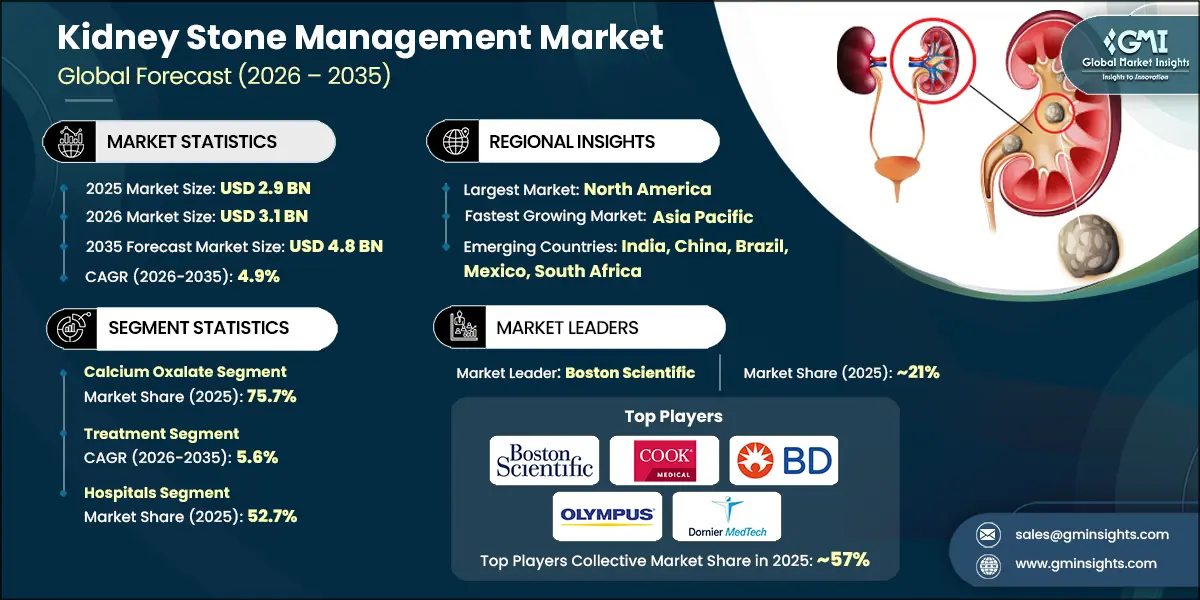
To get key market trends
Kidney Stone Management Market Trends
The kidney stone management industry is growing considerably with the expansion of minimally invasive and ambulatory surgical solutions, technological evolution in laser lithotripsy, integration of advanced imaging and digital diagnostics, among other factors collectively driving industry growth.
- Minimally invasive procedures such as ureteroscopy with laser lithotripsy and percutaneous nephrolithotomy are becoming preferred due to improved outcomes. Innovations in instruments and imaging guidance have reduced procedural complications. These techniques lower patient recovery times and hospital costs. As a result, clinicians and patients increasingly favour them over open surgery.
- The use of next-generation lasers, particularly thulium fiber lasers (TFL), is increasing due to improved stone ablation efficiency and reduced retropulsion. These lasers enable finer dusting of stones, reducing procedure times and improving clinical outcomes. Leading urology centers are making significant investments in these platforms. This trend encourages both new device sales and upgrades to existing systems.
- Furthermore, there is a significant shift in kidney stone procedures from hospitals to ASCs for cost savings and increased patient convenience. ASCs provide streamlined care pathways and present lower reimbursement burdens for payers. This shift increases procedure volume and promotes decentralized delivery of stone management services. Providers are also implementing compact, procedure-specific technologies designed for the ASC setting, thereby sustaining market growth.
Kidney Stone Management Market Analysis
Learn more about the key segments shaping this market
Based on stone type, the kidney stone management market is segmented into calcium oxalate, struvite, uric acid, calcium phosphate, and cysteine. The calcium oxalate segment has asserted its dominance in the market by securing a significant market share of 75.7% in 2025 owing to its high prevalence as the most common kidney stone type, strong association with dietary and metabolic risk factors, and frequent need for clinical intervention and recurrence management. The segment is expected to exceed USD 3.7 billion by 2035, growing at a CAGR of 5.1% during the forecast period.
On the other hand, the calcium phosphate segment is expected to grow with a CAGR of 4.7%. The growth of this segment is driven by the rising incidence of metabolic disorders and renal tubular acidosis, increasing use of calcium-based supplements, and improved diagnostic differentiation of stone composition.
- The calcium oxalate segment continues to dominate the market. Diets rich in oxalate (e.g., spinach, nuts, tea) combined with insufficient dietary calcium increase oxalate absorption in the gut, promoting stone formation. This dietary imbalance drives demand for nutritional counselling and preventive therapies.
- Moreover, conditions such as hyperoxaluria and genetic factors elevate oxalate or calcium levels in urine, leading to recurrent stone formation. This necessitates personalized diagnostic evaluations and long-term management plans.
- The struvite segment held a revenue of USD 278.6 million in 2025, with projections indicating a steady expansion at 4.2% CAGR from 2026 to 2035. The segment is driven by the rising prevalence of recurrent urinary tract infections, particularly among the elderly and catheterized patients, as well as the growing need for complete stone clearance to avoid serious complications like sepsis and renal damage.
- The uric acid segment accounted for significant revenue in 2025 and is anticipated to grow at a CAGR of 3.8% over the forecast period. The rising prevalence of metabolic disorders such as obesity and diabetes, combined with purine-rich dietary habits, is increasing demand for targeted dissolution therapies.
Based on category, the kidney stone management market is classified into treatment and diagnostics. The treatment segment dominated the market in 2025, accounting for USD 1.7 billion, and is anticipated to grow at a CAGR of 5.6% during the forecast period.
- The rising global prevalence of kidney stones, particularly recurring cases, raises the need for effective treatment options. Higher recurrence necessitates both immediate treatment and long-term management. This trend boosts procedure volume and treatment utilization.
- Additionally, the widespread use of high-resolution imaging methods like CT and ultrasound enables early stone detection and precise localization. Better diagnostics enable better results and more customized treatment options. As a result, procedure efficiency and clinician confidence both increase.
- The diagnostics segment accounted for significant revenue in 2025 and is anticipated to grow at a CAGR of 3.8% over the forecast period. The segment is being driven by rising demand for early and accurate kidney stone detection, increased use of advanced imaging technologies, and a greater emphasis on preventive healthcare and routine kidney health screenings.
Learn more about the key segments shaping this market
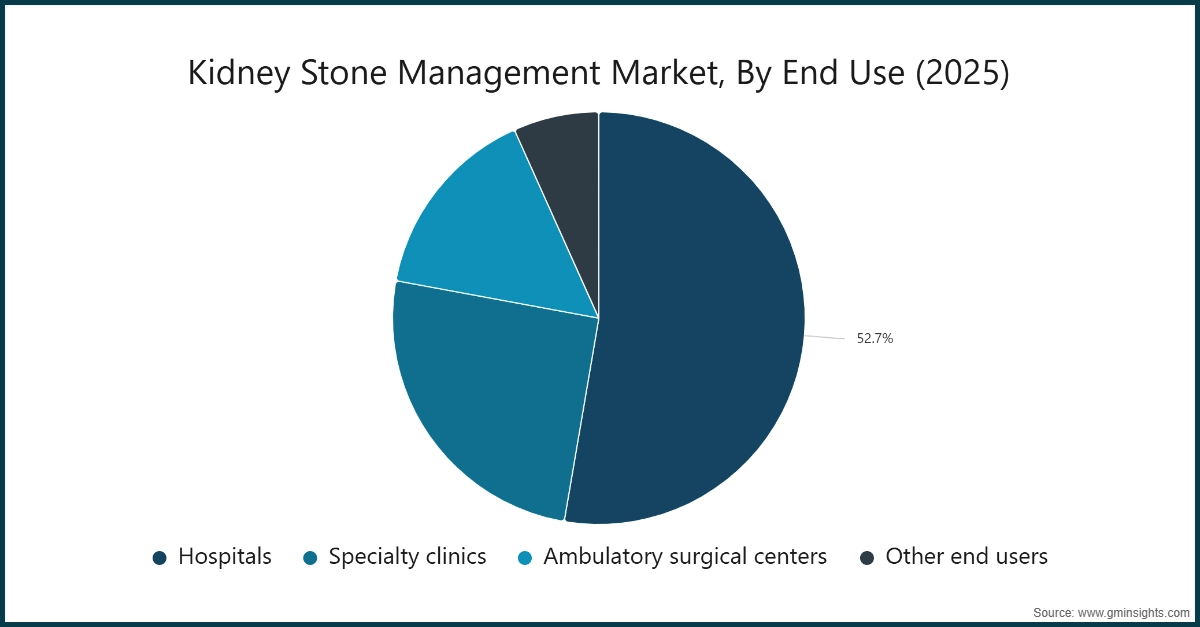
Based on end use, the kidney stone management market is classified into hospitals, specialty clinics, ambulatory surgical centers, and other end users. The hospitals segment dominated the market with a revenue share of 52.7% in 2025 and is expected to reach USD 2.5 billion within the forecast period.
- Hospitals treat a significant number of kidney stone patients, including complex and high-risk cases that require multidisciplinary care. This increases the demand for comprehensive treatment suites and advanced diagnostic tools. This reinforces hospitals’ role as primary referral centers.
- Hospitals frequently buy modern medical devices like flexible ureteroscopes, sophisticated lithotripters, and imaging systems. Large or complex stones can be effectively treated with these technologies. Offering comprehensive treatment portfolios appeals to more patients and specialists.
- The specialty clinics segment accounted for significant revenue in 2025 and is anticipated to grow at a CAGR of 5.6% over the forecast period. The availability of minimally invasive procedures, quicker treatment turnaround times compared to general hospitals, and an increasing demand for specialized urology care are the driving forces behind this market.
- The ambulatory surgical centers segment accounted for significant revenue in 2025 and is anticipated to grow at a CAGR of 4.5% over the forecast period. The segment is being propelled by rising demand for low-cost outpatient stone removal procedures, as well as the growing use of minimally invasive technologies for faster patient recovery.
Looking for region specific data?
North America Kidney Stone Management Market
North America dominated the kidney stone management industry with the highest market share of 42.5% in 2025.
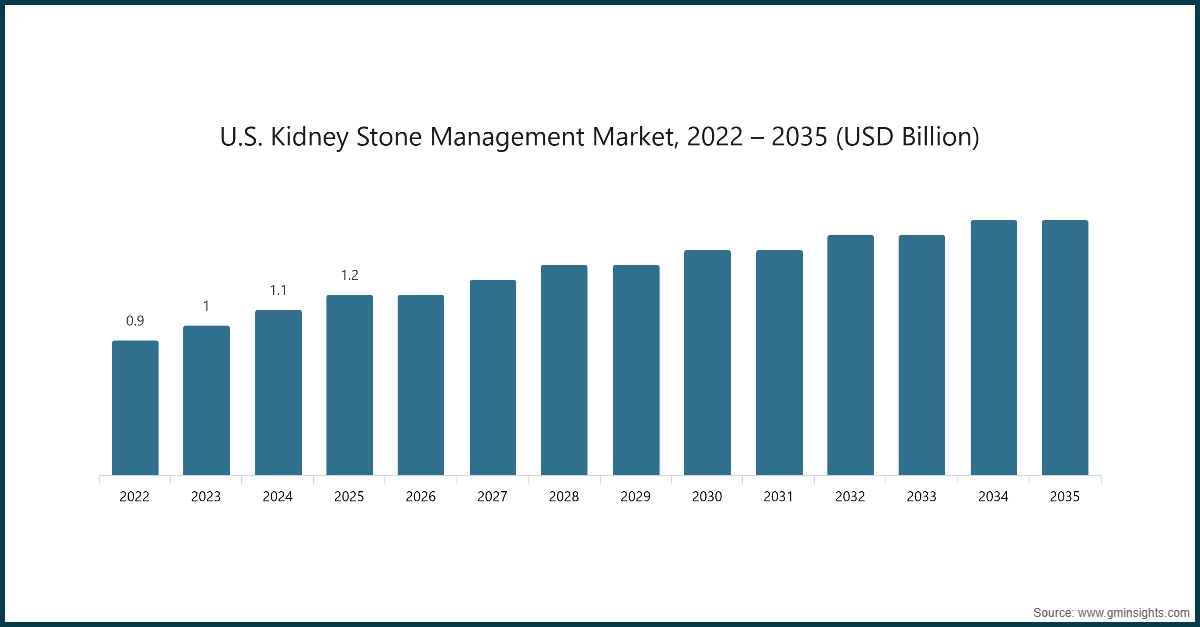
- The U.S. kidney stone management industry was valued at USD 919.3 million and USD 1 billion in 2022 and 2023, respectively. The market size reached USD 1.2 billion in 2025, growing from USD 1.1 billion in 2024, and is anticipated to grow at a CAGR of 3.9% between 2026 to 2035.
- The U.S. dietary habits, obesity, and metabolic disorders contribute to one of the highest prevalence rates of kidney stones globally.This creates a consistent demand for both surgical interventions and preventive management. Recurrence rates are also high, resulting in multiple treatments and increased market activity.
- Moreover, the region has well-established hospitals and ambulatory surgical centers equipped with cutting-edge lithotripsy, ureteroscopy, and laser technologies. Access to advanced imaging tools like dual-energy CT facilitates early diagnosis. Providers are increasingly adopting minimally invasive solutions, increasing treatment efficiency and patient throughput.
Europe Kidney Stone Management Market
Europe kidney stone management industry accounted for USD 795.6 million in 2025 and is anticipated to show lucrative growth over the forecast period.
- European healthcare systems increasingly support outpatient and day-care surgical models to optimize costs and resources. The shift from inpatient to minimally invasive outpatient procedures is driving adoption of portable lithotripsy devices and advanced endoscopic tools.
- The use of top-notch surgical and diagnostic instruments is guaranteed by adherence to EU medical device regulations and CE marking. In order to comply with regulations, hospitals invest in certified and cutting-edge technologies, which indirectly increases demand for complex treatment options.
Asia Pacific Kidney Stone Management Market
The Asia Pacific kidney stone management industry is anticipated to grow at the highest CAGR of 6.5% during the analysis timeframe.
- Urbanization and dietary changes that favour high-salt, high-oxalate diets increase kidney stone incidence, particularly among middle-aged adults. When combined with sedentary lifestyles, this surge increases demand for both hospital-based interventions and outpatient services.
- Countries like China, India, and Japan are rapidly expanding hospital networks, specialty urology centers, and diagnostic imaging facilities. Enhanced accessibility to modern treatment technologies supports adoption of minimally invasive procedures.
Latin America Kidney Stone Management Market
The Latin America kidney stone management industry is experiencing robust growth over the analysis timeframe.
- High consumption of salt, sugar, and processed foods, coupled with low fluid intake, contributes to increasing kidney stone cases. Urbanization and rising obesity rates amplify prevalence, stimulating demand for hospital-based and outpatient treatments.
- Further, the growing private healthcare market is introducing advanced stone management technologies in urban centers. Patients increasingly prefer private hospitals for better infrastructure and shorter waiting times, driving technology adoption.
Middle East & Africa Kidney Stone Management Market
The Middle East & Africa (MEA) market is experiencing robust growth over the analysis timeframe.
- Public health programs and initiatives are expanding coverage for diagnostics and treatment, especially in urban areas. This ensures timely interventions and promotes adoption of minimally invasive procedures.
- Countries like the UAE and Turkey are emerging as medical tourism hubs for kidney stone treatment due to advanced infrastructure and skilled specialists. Hospitals are attracting international patients, creating additional revenue streams and incentivizing technology adoption.
Kidney Stone Management Market Share
The kidney stone management industry is competitive, characterized by the presence of several global and regional players offering advanced surgical devices, lithotripsy systems, diagnostic tools, and consumables. Key market participants are increasingly focusing on product innovation, acquisitions, and strategic collaborations to strengthen their portfolios and expand geographical presence.
Key players include Boston Scientific, COOK MEDICAL, Becton, Dickinson and Company, OLYMPUS, and Dornier MedTech, collectively accounting for ~57% of the total market share. These companies are leveraging minimally invasive technologies, laser lithotripsy systems, and digital imaging solutions to maintain a competitive edge.
In addition, mid-sized and regional players are gaining traction by offering cost-effective alternatives and targeting emerging markets with high unmet needs. Companies are also investing in research and development to enhance procedural efficiency, reduce complications, and improve patient outcomes.
The competitive landscape is further shaped by growing demand for outpatient procedures, increased patient awareness, and technological advancements, which collectively drive continuous innovation and market expansion across both developed and developing regions.
Kidney Stone Management Market Companies
A few of the prominent players operating in the kidney stone management industry include:
- Allengers
- Becton, Dickinson and Company
- Boston Scientific
- Coloplast
- COOK MEDICAL
- DirexGroup
- Dornier MedTech
- ELMED Medical Systems
- EMS ELECTRO MEDICAL SYSTEMS
- KARL STORZ
- MEDISPEC
- OLYMPUS
- PolyDiagnost
- Richard Wolf
- SIEMENS Healthineers
Offers a comprehensive portfolio of ureteroscopes, laser lithotripsy systems, and stone retrieval devices, enabling complete end-to-end kidney stone management. Strong global distribution and clinician training programs enhance adoption and procedural efficiency across hospitals and outpatient centers.
· OLYMPUS
Leverages high-precision imaging and advanced endoscopic platforms to ensure accurate diagnosis and effective minimally invasive stone treatment. Its durable, high-performance devices and visualization expertise support improved patient outcomes and procedural reliability.
· Becton, Dickinson and Company
Provides innovative surgical and interventional solutions, including catheters and ancillary devices, supporting safe and efficient stone removal. Focus on device quality, infection control, and compatibility with hospital systems strengthens clinical adoption and workflow integration.
Kidney Stone Management Market Report Attributes
| Key Takeaway | Details |
|---|---|
| Market Size & Growth | |
| Base Year | 2025 |
| Market Size in 2025 | USD 2.9 Billion |
| Market Size in 2026 | USD 3.1 Billion |
| Forecast Period 2026-2035 CAGR | 4.9% |
| Market Size in 2035 | USD 4.8 Billion |
| Key Market Trends | |
| Drivers | Impact |
| Increasing prevalence and recurrence rate of kidney stones | This is directly expanding the patient pool, leading to higher demand for repeat diagnostic imaging and interventional treatment procedures globally. |
| Technological advancements in minimally invasive treatments | Improved safety, efficacy, and shorter recovery times are accelerating adoption of ureteroscopy, ESWL, and PCNL across hospitals and ambulatory settings. |
| Favourable reimbursement for lithotripsy procedures | Supportive reimbursement in developed markets is sustaining procedure volumes and encouraging healthcare providers to invest in advanced lithotripsy systems. |
| Rising awareness regarding overall kidney health | Greater public and clinical awareness is driving early diagnosis and timely intervention, increasing utilization of both diagnostic and treatment services. |
| Pitfalls & Challenges | Impact |
| High cost of advanced treatment devices | Elevated capital and maintenance costs are limiting adoption in smaller hospitals and price-sensitive emerging markets. |
| Potential long-term adverse effects of lithotripsy | Concerns around renal damage and repeat exposure are prompting cautious use, slightly shifting preference toward alternative minimally invasive procedures. |
| Opportunities: | Impact |
| Expansion in emerging markets | Improving healthcare infrastructure, rising disposable incomes, and increasing access to urology services are expected to significantly boost procedure volumes and device adoption. |
| Growth of telemedicine and remote patient monitoring | Remote consultation and follow-up care will enhance early detection, treatment adherence, and recurrence prevention, supporting sustained market growth beyond acute interventions. |
| Market Leaders (2025) | |
| Market Leader |
~ 21% market share |
| Top Players |
Collective Market Share is ~ 57% |
| Competitive Edge |
|
| Regional Insights | |
| Largest Market | North America |
| Fastest growing market | Asia Pacific |
| Emerging countries | India, China, Brazil, Mexico, South Africa |
| Future outlook |
|
What are the growth opportunities in this market?
Kidney Stone Management Industry News:
- In January 2026, Ventaris Surgical, Inc. completed a USD 30 million Series A financing led by Longitude Capital, with participation from Vensana Capital and existing investors. The funding is expected to support the development of a ureteroscopic system to enable more complete stone clearance during kidney stone procedures. This advancement enhances the market by improving treatment outcomes and promoting adoption of minimally invasive interventions.
- In April 2024, Olympus received U.S. FDA 510(k) clearance for its first single-use ureteroscope system, RenaFlex, used to access and visualize the urinary tract. The device was designed to diagnose and treat urinary diseases and disorders, including kidney stones. This development supports the market by offering a disposable, high-precision solution that reduces infection risk and encourages wider adoption of minimally invasive procedures.
- In February 2023, Boston Scientific received U.S. FDA 510(k) clearance for the LithoVue Elite Single-Use Digital Flexible Ureteroscope System with real-time intrarenal pressure monitoring. The device enhanced safety and precision during ureteroscopy procedures for kidney stone treatment. This development strengthened the market by promoting adoption of advanced, minimally invasive single-use technologies.
The kidney stone management market research report includes an in-depth coverage of the industry with estimates and forecast in terms of revenue in USD Million from 2022 – 2035 for the following segments:
Market, By Stone Type
- Calcium oxalate
- Struvite
- Uric acid
- Calcium phosphate
- Cysteine
Market, By Category
- Treatment
- Extracorporeal shock wave lithotripsy (ESWL)
- Ureteroscopy
- Percutaneous nephrolithotomy (PCNL)
- Other treatments
- Diagnostics
- Computed tomography
- Ultrasound
- Abdominal x-ray
- Intravenous pyelography
- Abdominal MRI
- Other diagnostics
Market, By End Use
- Hospitals
- Specialty clinics
- Ambulatory surgical centers
- Other end users
The above information is provided for the following regions and countries:
- North America
- U.S.
- Canada
- Europe
- Germany
- UK
- France
- Spain
- Italy
- Netherlands
- Asia Pacific
- China
- Japan
- India
- Australia
- South Korea
- Latin America
- Brazil
- Mexico
- Argentina
- Middle East and Africa
- South Africa
- Saudi Arabia
- UAE
Frequently Asked Question(FAQ) :
What was the market size of the kidney stone management in 2025?
The market size was USD 2.9 billion in 2025, with a CAGR of 4.9% expected through 2035. The growth is driven by the rising prevalence of kidney stone disease, advancements in minimally invasive technologies, and an aging population.
What is the projected value of the kidney stone management market by 2035?
The market is poised to reach USD 4.8 billion by 2035, supported by technological advancements, increased adoption of ambulatory surgical centers, and innovations in laser lithotripsy.
What is the expected size of the kidney stone management industry in 2026?
The market size is projected to reach USD 3.1 billion in 2026.
How much revenue did the treatment segment generate in 2025?
The treatment segment generated USD 1.7 billion in 2025 and is anticipated to grow at a CAGR of 5.6% till 2035.
What was the market share of the calcium oxalate segment in 2025?
The calcium oxalate segment held a 75.7% market share in 2025, led by its high prevalence, association with dietary and metabolic risk factors.
What is the growth outlook for the hospitals segment during the forecast period?
The hospitals segment, which accounted for 52.7% of the market share in 2025, is set to reach USD 2.5 billion by 2035.
What was the valuation of the U.S. kidney stone management sector in 2025?
The U.S. market was valued at USD 1.2 billion in 2025 and is expected to observe around 3.9% CAGR up to 2035.
What are the upcoming trends in the kidney stone management market?
Key trends include minimally invasive stone treatments, advancements in thulium fiber laser technology, growing adoption of ambulatory surgical centers, and rising demand for compact, procedure-specific solutions.
Who are the key players in the kidney stone management industry?
Key players include Allengers, Becton, Dickinson and Company, Boston Scientific, Coloplast, COOK MEDICAL, DirexGroup, Dornier MedTech, ELMED Medical Systems, EMS ELECTRO MEDICAL SYSTEMS, and KARL STORZ.
Kidney Stone Management Market Scope
Related Reports