Download free PDF

Gynecomastia Procedures Market Size & Share 2026-2035

Market Size By Procedure Type (Liposuction, Excision), By Age Group (18-40 years, Above 40 years), By End Use (Hospitals, Cosmetic surgical centers, Other end users) – Growth Forecast. The market forecasts are provided in terms of value (USD).

Report ID: GMI6451
   |
Published Date: February 2026
 | 
Report Format: PDF

Download Free PDF

Gynecomastia Procedures Market Size

The global gynecomastia procedures market was valued at USD 1 billion in 2025 and is projected to grow from USD 1.1 billion in 2026 to USD 2.3 billion by 2035, expanding at a CAGR of 8.6%, according to the latest report published by Global Market Insights Inc. This steady growth is driven by.increasing prevalence of obesity, rising number of men affected by hormonal imbalances and upsurge in technological advancements.

Gynecomastia Procedures Market Key Takeaways

Market Size & Growth

  • 2025 Market Size: USD 1 Billion
  • 2026 Market Size: USD 1.1 Billion
  • 2035 Forecast Market Size: USD 2.3 Billion
  • CAGR (2026–2035): 8.6%

Regional Dominance

  • Largest Market: North America
  • Fastest Growing Region: Asia Pacific

Key Market Drivers

  • Increasing prevalence of obesity.
  • Rising number of men affected by hormonal imbalances.
  • Upsurge in technological advancements.
  • Increasing awareness regarding gynecomastia.

Challenges

  • High cost of procedures.
  • Lack of reimbursement scenario.

Opportunity

  • Rising demand for minimally invasive procedures.

Key Players

  • Leading Players: Some of the top players in this market include AbbVie, Cynosure, Candela Corporation, Aesthetic Group, MicroAire Surgical Instruments.

The market increased from USD 868.8 million in 2023 to USD 934.6 million in 2024. The rising global prevalence of obesity is a key driver for the growth of the gynecomastia procedures market. Obesity is strongly associated with hormonal imbalances, particularly increased conversion of androgens to estrogens in adipose tissue, which significantly elevates the risk of developing gynecomastia. Excess fat deposition in the chest area also leads to pseudo‑gynecomastia, often prompting patients to seek surgical correction for both functional and aesthetic reasons.The scale of the obesity burden underscores its impact on demand for gynecomastia procedures.  According to the World Health Organization (WHO), in 2022, approximately 2.5 billion adults aged 18 years and older were classified as overweight, of whom 890 million were living with obesity. During the same year, 43% of the global adult population was overweight and 16% was obese, highlighting the widespread nature of this condition. As obesity rates continue to rise across both developed and emerging economies, the number of individuals experiencing obesity‑related breast enlargement is expected to increase correspondingly.This growing patient pool, combined with heightened awareness of available surgical solutions, is driving higher consultation rates and procedural volumes, stimulating the market growth.
 

Additionally, the increasing incidence of hormonal imbalances among men is a significant growth driver for the gynecomastia procedures market. Factors such as aging, stress, obesity, endocrine disorders, use of certain medications, and lifestyle-related disruptions to testosterone estrogen balance are contributing to a larger affected male population. As hormonal irregularities directly stimulate abnormal breast tissue development, demand for corrective surgical interventions continues to rise. Improved diagnostic awareness and referrals from endocrinologists are translating into higher procedure volumes, particularly among middle-aged and older men seeking definitive, long-term treatment solutions that restore physical appearance and quality of life.
 

Gynecomastia surgery, or male breast reduction, is a procedure designed to reduce overdeveloped or enlarged male breast tissue to create a flatter, firmer, and more masculine chest contour. It often combines liposuction and excision techniques to remove excess fat, tissue, and skin, providing permanent results for conditions caused by hormones, genetics, or medications. 
 

Gynecomastia Procedures Market Research Report

Gynecomastia Procedures Market Trends

  • Technological advancements in surgical techniques and medical devices are playing a pivotal role in driving market growth. Innovations such as ultrasound‑assisted liposuction (VASER), laser‑assisted lipolysis, and power‑assisted liposuction have significantly improved precision in fat and glandular tissue removal. These technologies allow surgeons to achieve more consistent contouring outcomes while minimizing trauma to surrounding tissues.
     
  • Moreover, advancements in surgical planning and intraoperative tools such as improved imaging, refined cannula designs, and enhanced hemostatic techniques have reduced procedure time and complication rates. The shift toward minimally invasive and combination approaches has lowered recovery periods, reduced postoperative discomfort, and improved scar outcomes, making procedures more appealing to a broader patient base.
     
  • These innovations are expanding the addressable patient pool by increasing procedural safety and enabling treatment of a wider range of gynecomastia grades. Improved outcomes are also strengthening patient confidence and driving higher acceptance rates, particularly among working professionals seeking quick recovery and discreet treatment options.
     
  • As a result, continuous technological progress is not only enhancing clinical efficacy but also strengthening the commercial viability of gynecomastia procedures. As device manufacturers and clinics invest in next‑generation technologies and surgeon training, technological advancement will remain a core for sustained market expansion.
     

Gynecomastia Procedures Market Analysis

Gynecomastia Procedures Market, By Procedure Type, 2022 – 2035 (USD Million)

Based on procedure type, the market is divided into liposuction and excision. The excision segment held significant share in the market with the revenue of USD 558.7 million in 2025.
 

  • Excision involves the surgical removal of firm glandular breast tissue through a small incision, typically around the areola or chest fold. This approach is essential for patients with true gynecomastia where dense glandular tissue cannot be adequately treated with liposuction alone. It delivers definitive tissue removal and predictable contour correction.
     
  • The procedure supports market growth by addressing moderate to severe gynecomastia cases, including long‑standing or fibrotic conditions. Surgeons often combine excision with liposuction, increasing procedural value and treatment customization. Its ability to deliver permanent results strengthens patient confidence and drives higher procedure uptake.
     
  • For instance, according to American Society of Plastic Surgery male breast reduction (gynecomastia surgery) accounting for over 90% of male breast cosmetic procedures in 2023, with year‑on‑year growth. Such data reflect sustained clinical reliance on excisional approaches.
     
  • Excision dominates the market due to its wide clinical indication range and consistent outcomes across gynecomastia grades. It remains the preferred option for advanced cases, revision surgeries, and patients seeking complete tissue removal. Strong surgeon preference, higher procedural pricing, and reliable aesthetic results continue to reinforce excision’s leading market position.
     

Based on age group, the gynecomastia procedures market is divided into 18-40 years and above 40 years. The above 40-year segment dominated the market with the largest revenue of USD 621.7 million in 2025.
 

  • Men above 40 years exhibit a greater prevalence of gynecomastia driven by age‑related hormonal shifts, particularly declining testosterone levels and relative estrogen dominance.
     
  • This demographic is also more susceptible to metabolic disorders that directly contribute to true glandular enlargement rather than transient adipose accumulation.
     
  • The dominance of this segment is reinforced by obesity trends. According to CDC, In 2024, middle‑aged adults aged 40–59 years were approximately 30% more likely to have obesity than individuals aged 18–39 years, significantly increasing the likelihood of both true gynecomastia and pseudo‑gynecomastia. Higher obesity prevalence translates into a larger addressable patient pool requiring surgical correction.
     

Men in this age group are also more inclined toward definitive, long‑term treatment solutions. Greater financial stability, increased health awareness, and willingness to pursue corrective procedures for functional and psychosocial improvement support higher procedure uptake. These combined factors solidify the above‑40 age group as the leading contributor to overall market volume.
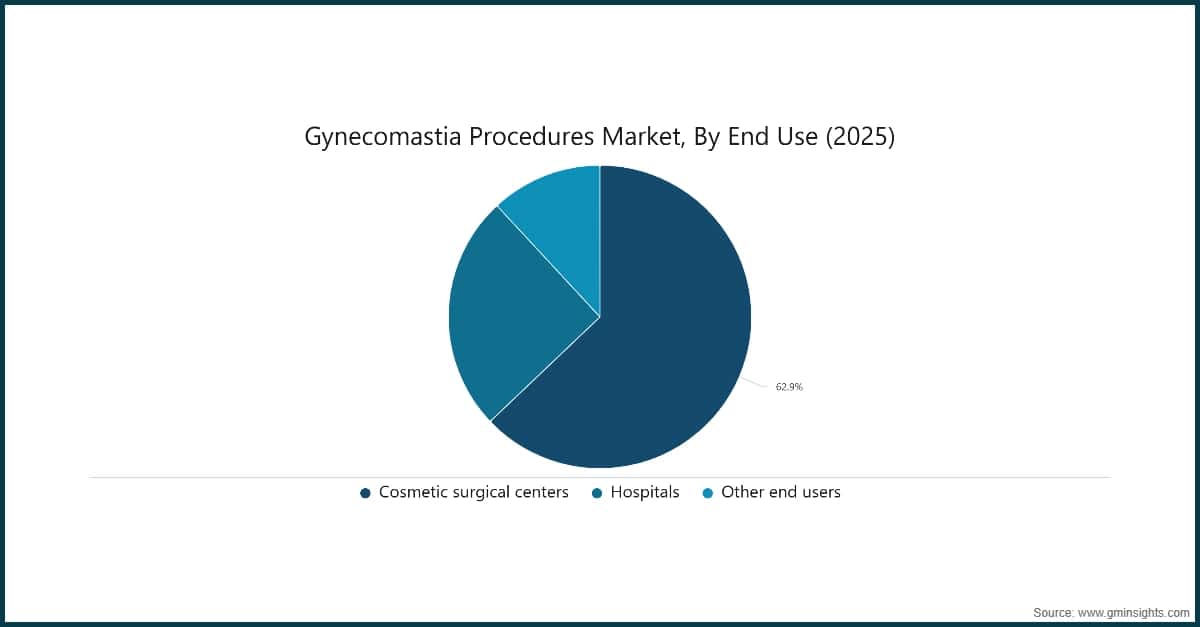
Gynecomastia Procedures Market, By End Use (2025)

Based on end use, the gynecomastia procedures market is segmented into hospitals, cosmetic surgical centers, and other end users. The cosmetic surgical centers segment accounted for the highest market share of 62.9%
 

  • Cosmetic surgical centers are purpose‑built for elective aesthetic procedures, offering focused expertise in male breast reduction surgeries. These centers are equipped with advanced surgical technologies and staffed by experienced plastic surgeons, enabling high procedural volumes and consistent clinical outcomes. Their specialization enhances patient trust and procedural preference.
     
  • The cosmetic surgical centers offers cost efficiency and operational flexibility. Compared to hospitals, cosmetic surgical centers typically offer shorter waiting times, lower procedural costs, and streamlined patient pathways. This makes them particularly attractive for self‑pay patients, who represent most gynecomastia procedure candidates.
     
  • Cosmetic surgical centers also play a key role in expanding market demand through targeted marketing, male‑focused aesthetic services, and bundled treatment offerings. Their ability to combine consultation, surgery, and follow‑up care within a single setting improves patient experience and drives repeat referrals.
     
  • Additionally, gynecomastia surgeries increasingly require minimal hospitalization, positioning cosmetic surgical centers as the preferred treatment setting. High patient throughput, revenue scalability, and strong surgeon preference continue to set their leading position in the market.
     

U.S. Gynecomastia Procedures Market, 2022 – 2035 (USD Million)

North America Gynecomastia Procedures Market

The North America region accounted for over 40.5% share of the global gynecomastia procedures industry in 2025, driven by the increasing prevalence of obesity.
 

  • Rising awareness of gynecomastia as a treatable medical and aesthetic condition is a key driver of the U.S. gynecomastia procedures industry. Greater visibility through digital health platforms, plastic surgery consultations, and patient education initiatives has reduced stigma and encouraged men to seek professional evaluation rather than ignore symptoms. Increased discussion around male body image and health has further normalized treatment adoption.
     
  • This growing awareness is clearly reflected in procedural volumes. According to Statista in 2024, U.S. plastic surgery practices performed 26,430 breast reduction surgeries for gynecomastia, making it the most commonly performed cosmetic surgery among male patients. The procedure surpassed other popular male aesthetic treatments, demonstrating strong recognition of gynecomastia as a primary concern requiring surgical correction.
     
  • The fact that liposuction with 21,082 procedures highlights how gynecomastia surgery has emerged as a dominant male-focused intervention. Collectively, these trends indicate that increased patient awareness, coupled with clinical validation, is translating directly into higher procedure uptake and sustained market growth in the U.S.
     

Europe Gynecomastia Procedures Market

Europe market accounted for USD 223.4 million in 2025 and is anticipated to show lucrative growth over the forecast period.
 

  • The increasing prevalence of obesity across Europe is a significant driver of growth in the gynecomastia procedures industry. Excess adipose tissue contributes to hormonal imbalance by increasing peripheral estrogen production, which promotes the development of both true and pseudo‑gynecomastia. As obesity rates rise, a larger male population becomes clinically predisposed to abnormal breast tissue enlargement, directly expanding the treatment‑eligible base.
     
  • This trend is particularly pronounced at the regional level. According to European food information council, In the European Union, 53% of adults are classified as overweight, with prevalence rates notably higher among men and older age groups. These demographics overlap closely with the primary gynecomastia patient population, reinforcing a sustained and structurally growing demand for corrective procedures.
     
  • Obesity‑linked gynecomastia often persists despite weight‑loss efforts, increasing reliance on surgical intervention for definitive correction. Patients increasingly seek gynecomastia procedures to address functional discomfort and aesthetic concerns that cannot be resolved through lifestyle modification alone.
     
  • Collectively, the high and growing obesity burden in Europe is strengthening long‑term procedural demand, supporting higher consultation volumes and reinforcing obesity prevalence as a core demand driver for the Europe  gynecomastia procedures industry.
     

Germany's gynecomastia procedures market is projected to experience steady growth between 2026 and 2035.
 

  • Increasing awareness of gynecomastia as a diagnosable and treatable condition is a key driver supporting market growth in Germany. Greater dissemination of information through urology and endocrinology clinics, plastic surgery associations, digital health platforms, and patient advocacy channels has reduced social stigma and encouraged men to seek timely medical consultation. Awareness campaigns emphasizing the clinical, psychological, and quality‑of‑life impacts of gynecomastia have further strengthened acceptance of surgical treatment.
  • In Germany’s well‑structured healthcare environment, improved awareness has also led to earlier diagnosis and clearer differentiation between cosmetic and medically indicated cases. This has increased referral rates to specialized surgery centers and supported steady growth in procedural volumes. As male aesthetic procedures gain normalization, rising awareness continues to translate into higher demand for definitive gynecomastia correction across the country.
     

Asia Pacific Gynecomastia Procedures Market

The Asia Pacific region is projected to show a lucrative growth of about 9.3% during the forecast period.
 

  • The rising prevalence of obesity across the Asia‑Pacific (APAC) region is a major driver accelerating market growth. Increasing urbanization, sedentary lifestyles, and dietary shifts toward high‑calorie foods are contributing to higher body fat levels, which are closely linked to hormonal imbalance and abnormal male breast tissue development.
     
  • According to Wiley, obesity trends in APAC are becoming increasingly pronounced, with approximately 20–40% of adults classified as overweight across several countries in the region. This growing burden is particularly significant among middle‑aged men, a demographic that aligns closely with the core gynecomastia patient population. Elevated adipose tissue increases estrogen production, heightening the risk of both true and pseudo‑gynecomastia.
     
  • In many APAC countries, obesity‑related gynecomastia persists despite weight management efforts, driving demand for surgical correction as a definitive solution. Combined with rising awareness and improving access to aesthetic surgery, the expanding overweight population is directly contributing to higher consultation rates and procedure volumes.
     
  • Overall, the escalating obesity prevalence across APAC is structurally expanding the addressable patient base, positioning it as a key demand driver for sustained growth in the Asia Pacific market.
     

Japan gynecomastia procedures market is poised to witness lucrative growth between 2026 – 2035.
 

  • The upsurge in technological advancements is a key driver supporting growth of the gynecomastia procedures in Japan. The country’s strong emphasis on medical innovation and precision healthcare has accelerated adoption of advanced surgical technologies, including ultrasound‑assisted and laser‑assisted liposuction systems. These techniques enable more accurate removal of glandular and fatty tissue while minimizing trauma and scarring.
     
  • Japanese cosmetic and plastic surgery centers increasingly leverage minimally invasive approaches that align with patient preferences for shorter recovery times and discreet aesthetic outcomes. Continuous improvements in surgical instrumentation, anesthesia techniques, and postoperative care protocols have enhanced procedural safety and predictability, making gynecomastia correction more acceptable to a broader male population.
     
  • In addition, Japan’s highly trained surgeon base and rapid integration of next‑generation medical devices support consistent clinical outcomes. The availability of technologically advanced solutions has increased patient confidence and encouraged higher procedure uptake. As innovation remains central to Japan’s healthcare ecosystem, technological advancements will continue to act as a strong catalyst for sustained expansion of the gynecomastia procedures.
     

Latin America Gynecomastia Procedures Market

Brazil is experiencing significant growth in the gynecomastia procedures industry.
 

  • Brazil is witnessing a marked escalation in obesity levels, which is creating demand for gynecomastia procedures. Excess weight alters endocrine function in men, increasing estrogen activity and promoting persistent breast tissue enlargement. This physiological link is expanding the population requiring clinical and surgical intervention.
     
  • Long‑term projections reinforce the scale of this challenge. According to findings presented at the International Congress on Obesity, it is estimated that by 2044 nearly half of Brazil’s adult population (48%) will be living with obesity, while an additional 27% will be classified as overweight. This trajectory signals a substantial rise in obesity‑related male health complications, including gynecomastia.
     
  • In Brazil’s highly developed aesthetic surgery ecosystem, men increasingly pursue surgical correction when lifestyle changes fail to address chest contour abnormalities. Cultural acceptance of cosmetic procedures and access to specialized plastic surgery centers further accelerate treatment adoption.
     

Middle East and Africa Gynecomastia Procedures Market

  • The increasing incidence of hormonal imbalances among men is emerging as a significant driver for the gynecomastia procedures in Saudi Arabia. Factors such as rising obesity rates, metabolic syndrome, thyroid disorders, and lifestyle‑related endocrine disruptions are contributing to altered testosterone estrogen balance across the male population. In addition, long‑term use of certain medications and age‑related hormonal decline are increasing susceptibility to persistent breast tissue enlargement.
     

  • Saudi Arabia’s expanding healthcare infrastructure and improved access to specialized endocrinology and plastic surgery services have led to better identification and management of hormonally induced gynecomastia. As awareness grows regarding the medical nature of the condition and its long‑term physical and psychological impact, more patients are opting for surgical correction when hormonal treatment alone proves insufficient.
     

Gynecomastia Procedures Market Share

  • Leading players in the gynecomastia procedures industry are increasingly prioritizing procedural optimization and technique refinement to improve clinical outcomes, safety, and patient satisfaction. Investments are focused on advanced surgical methods, minimally invasive approaches, improved anesthesia protocols, and post‑operative care pathways that reduce complications, scarring, and recovery time while enhancing aesthetic consistency.
     
  • Market participants are strengthening collaborations with hospitals, cosmetic surgical centers, and ambulatory care facilities to expand access to gynecomastia procedures across both developed and emerging regions. These partnerships support surgeon training, technology adoption, and standardized care delivery, particularly in high‑growth markets across Asia‑Pacific, Latin America, and the Middle East.
     
  • With rising procedure volumes and increasing regulatory scrutiny, providers and device manufacturers are aligning practices with stringent clinical safety standards, accreditation requirements, and quality assurance protocols. Enhanced compliance with surgical guidelines, infection control measures, and outcome monitoring is reinforcing physician confidence and supporting broader adoption of gynecomastia procedures in both hospital and outpatient settings.
     
  • Regional and emerging market players are increasingly focusing on specialized procedural delivery and surgeon‑led care models to strengthen their presence in the gynecomastia procedures market. Emphasis is placed on enhancing surgical expertise, improving patient consultation pathways, and offering customized treatment approaches based on gynecomastia severity. These providers prioritize clinical outcomes, aesthetic precision, and patient confidentiality, while selectively adopting cost‑efficient technologies to maintain accessibility without compromising procedural quality or safety.
     

Gynecomastia Procedures Market Companies

Few of the prominent players operating in the gynecomastia procedures industry include:

  • MicroAire Surgical Instruments
  • Lumenis
  • Aesthetic Group
  • Candela Corporation
  • Johnson & Johnson
  • Cutera
  • Cynosure (Hologic, Inc.)
  • AbbVie Inc.
  • Solta Medical
  • Sientra
     

Cynosure, a subsidiary of Hologic, Inc., strengthens its presence in the gynecomastia procedures market through its portfolio of energy‑based laser and radiofrequency platforms used in fat reduction and skin tightening applications. The company’s technologies are frequently deployed in non‑surgical gynecomastia cases and as adjuncts to surgical procedures to improve chest contouring outcomes. Backed by Hologic’s clinical credibility and global distribution network, Cynosure benefits from strong penetration in aesthetic practices and multi‑specialty clinics. Its emphasis on evidence‑based innovation and combination therapy approaches supports its growing relevance in comprehensive gynecomastia management.
 

Aesthetic Group contributes to the gynecomastia procedures market through its focus on aesthetic medical devices and clinic‑oriented solutions that support male body contouring procedures. The company targets private aesthetic clinics and outpatient centers, where demand for minimally invasive gynecomastia treatments continues to rise. By emphasizing affordability, accessibility, and streamlined device integration, Aesthetic Group enables broader adoption of gynecomastia‑related procedures in cost‑sensitive and emerging markets. Its market positioning aligns with the growing shift toward outpatient and clinic‑based management of aesthetic male breast reduction.
 

Solta Medical holds a focused position in the global gynecomastia procedures market through its portfolio of energy‑based body contouring and skin‑tightening technologies. The company’s strengths lie in addressing non‑invasive fat reduction and post‑procedural skin laxity, which are critical components in the management of mild gynecomastia and in optimizing outcomes following surgical intervention. Solta Medical’s solutions are widely adopted across aesthetic clinics and outpatient surgical centers, supported by structured physician training programs and a broad international distribution network. By enabling improved chest contouring and enhancing procedural results, the company reinforces its role as a specialized adjunct technology provider within comprehensive gynecomastia treatment workflows.
 

Gynecomastia Procedures Market News:

  • In January 2025, MicroAire Surgical Instruments announced that it had acquired NEOSYAD, a specialist in adipose tissue engineering technologies. The acquisition was aimed at strengthening MicroAire’s position in fat removal and adipose tissue processing solutions used across aesthetic and reconstructive procedures. By integrating NEOSYAD’s expertise, MicroAire expanded its capabilities in advanced liposuction and tissue handling workflows that are commonly applied in gynecomastia surgeries. The move enhanced support for combination procedures involving liposuction and chest contouring, while reinforcing MicroAire’s long‑term strategy to advance innovation and efficiency in male breast reduction treatments.

The gynecomastia procedures market research report includes an in-depth coverage of the industry with estimates and forecast in terms of revenue in USD Billion and from 2022 – 2035 for the following segments:

Market, By Procedure Type

  • Liposuction
  • Excision

Market, By Age group

  • 18-40 years
  • Above 40 years

Market, By End Use

  • Hospitals
  • Cosmetic surgical centers
  • Other end users

The above information is provided for the following regions and countries:

  • North America
    • U.S.
    • Canada
  • Europe
    • Germany
    • UK
    • France
    • Italy
    • Spain
    • Netherlands
  • Asia Pacific
    • China
    • India
    • Japan
    • Australia
    • South Korea
  • Latin America
    • Brazil
    • Mexico
    • Argentina
  • Middle East and Africa
    • Saudi Arabia
    • South Africa
    • UAE
Authors: Mariam Faizullabhoy, Om Waje
Frequently Asked Question(FAQ) :
What is the market size of the gynecomastia procedures in 2025?
The market size was USD 1 billion in 2025, with a CAGR of 8.6% expected through 2035 driven by increasing prevalence of obesity, rising hormonal imbalances among men, and upsurge in technological advancements.
What is the projected value of the gynecomastia procedures market by 2035?
The gynecomastia procedures market is expected to reach USD 2.3 billion by 2035, propelled by rising demand for minimally invasive procedures and continuous technological innovation in surgical techniques.
What is the current gynecomastia procedures market size in 2026?
The market size is projected to reach USD 1.1 billion in 2026.
What was the market value of the excision segment in 2025?
The excision segment generated USD 558.7 million in 2025, holding significant market share due to its effectiveness in treating moderate to severe gynecomastia cases.
What was the market value of the above 40 years age segment in 2025?
The above 40 years segment dominated with USD 621.7 million in 2025, driven by age-related hormonal shifts and higher obesity prevalence in this demographic.
What was the market share of the cosmetic surgical centers segment in 2025?
The cosmetic surgical centers segment held 62.9% market share in 2025, leading due to specialized expertise, cost efficiency, and streamlined patient pathways.
Which region leads the gynecomastia procedures market?
North America leads with 40.5% global market share in 2025, while Asia Pacific is the fastest-growing region projected to show 9.3% CAGR during the forecast period.
What are the upcoming trends in the gynecomastia procedures market?
Key trends include advancement of ultrasound-assisted and laser-assisted liposuction technologies, increasing adoption of minimally invasive combination approaches, and development of refined surgical planning tools and improved hemostatic techniques.
Who are the key players in the gynecomastia procedures market?
Key players include AbbVie Inc., MicroAire Surgical Instruments, Cynosure (Hologic Inc.), Candela Corporation, Aesthetic Group, Lumenis, Johnson & Johnson, Cutera, Solta Medical, and Sientra.
Gynecomastia Procedures Market Scope
  • Gynecomastia Procedures Market Size
  • Gynecomastia Procedures Market Trends
  • Gynecomastia Procedures Market Analysis
  • Gynecomastia Procedures Market Share
Authors: Mariam Faizullabhoy, Om Waje
Explore Our Licensing Options:
Premium Report Details:

Base Year: 2025

Companies covered: 10

Tables & Figures: 85

Countries covered: 25

Pages: 145

Download Free PDF

We use cookies to enhance user experience. (Privacy Policy)
