Summary
Table of Content

Immunoglobulin Market
Get a free sample of this report
Form submitted successfully!
Error submitting form. Please try again.
Thank you!
Your inquiry has been received. Our team will reach out to you with the required details via email. To ensure that you don't miss their response, kindly remember to check your spam folder as well!
Request Sectional Data
Thank you!
Your inquiry has been received. Our team will reach out to you with the required details via email. To ensure that you don't miss their response, kindly remember to check your spam folder as well!
Form submitted successfully!
Error submitting form. Please try again.
Immunoglobulin Market Size
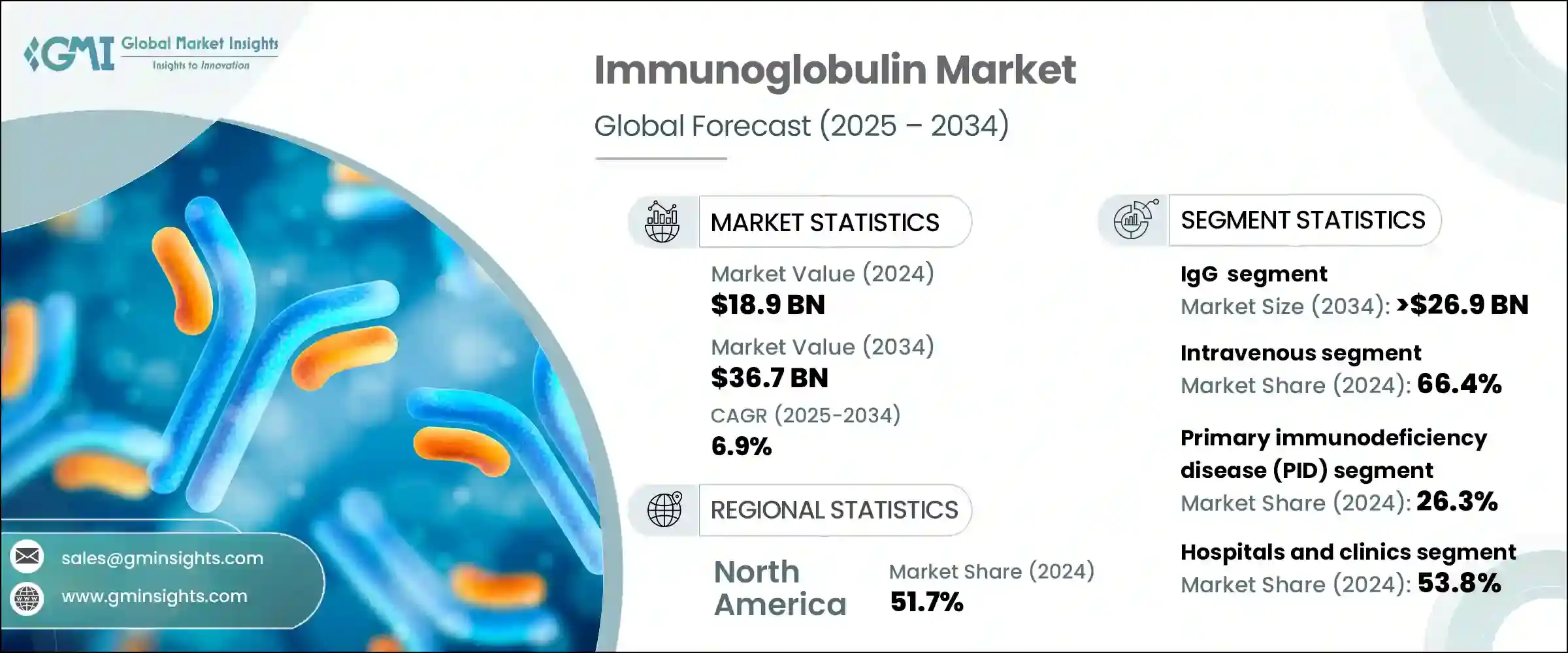
The global immunoglobulin market was estimated at USD 18.9 billion in 2024. The market is expected to grow from USD 20.1 billion in 2025 to USD 36.7 billion in 2034, growing at a CAGR of 6.9%. One of the key drivers for growth in the market is the increasing incidence of immunodeficiency disorders, both primary and secondary.
Immunoglobulin Market Key Takeaways
Market Size & Growth
- 2024 Market Size: USD 18.9 Billion
- 2034 Forecast Market Size: USD 36.7 Billion
- CAGR (2025–2034): 6.9%
Key Market Drivers
- Rising incidence of immunodeficiency disorders.
- Expanding applications in neurological and autoimmune diseases.
- Global aging population.
- Improved diagnostic awareness and screening programs.
Challenges
- High cost of therapy.
- Plasma supply constraints.
Opportunity
- Development of recombinant immunoglobulins.
- Rising demand in emerging economies.
Key Players
- Market Leader: CSL Behring led with over 22.5% market share in 2024.
- Leading Players: Top 5 players in this market include CSL Behring, Grifols SA, Takeda Pharmaceutical Company, Kedrion Biopharma, Octapharma AG, which collectively held a market share of 75% in 2024.
Get Market Insights & Growth Opportunities
As per the NIH, over 6 million people are affected by primary immunodeficiency disorders globally, with more than 430 distinct forms identified, each restricting from genetic defects affecting one or more components of the immune system. With improving diagnostic technologies and enhanced awareness, there has been a corresponding increase in the identification of disorders such as chronic inflammatory demyelinating polyneuropathy (CIDP) and multifocal motor neuropathy (MMN). These conditions necessitate long-term immunoglobulin treatment in order to avoid infections and control symptoms, substantially driving the steady demand for immunoglobulin products.
Immunoglobulins, also referred to as antibodies, are glycoproteins manufactured by B cells (white blood cells) to respond to foreign objects known as antigens, i.e., bacteria, viruses, or toxins. Immunoglobulins play a major role in the immune system by identifying, neutralizing, and facilitating the elimination of these unwanted agents. These are usually administered intravenously (IVIg) or subcutaneously (SCIg) and serve to augment or modulate the immune response of the patient. Major players in the market include CSL Behring, Grifols SA, and Takeda Pharmaceutical Company. These players manufacture therapeutic immunoglobulins to cure immune deficiency, autoimmune diseases, and certain infections.
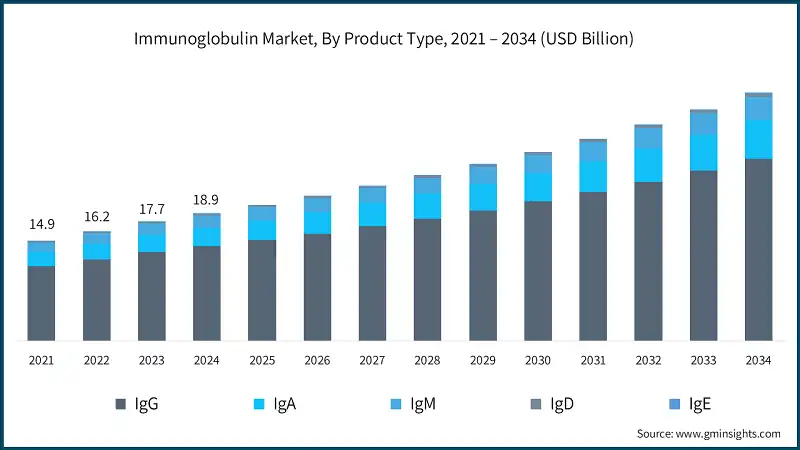
The immunoglobulin market experienced steady growth, increasing from USD 14.9 billion in 2021 to USD 17.7 billion in 2023. A key trend in these years has been the transition from intravenous (IVIg) to subcutaneous immunoglobulin (SCIg) infusion. SCIg has become increasingly popular among patients because it can be infused at home and has fewer systemic side effects. Increased technology for recombinant immunoglobulins and more advanced purification technologies have enhanced safety levels and effectiveness, making the treatments increasingly popularity among both clinicians and patients.
The immunoglobulin market is also expanding into new therapeutic areas, particularly autoimmune and neurological disorders such as myasthenia gravis, Guillain-Barre syndrome, and CIDP. Clinical evidence supporting immunoglobulin’s immunomodulatory effects has led to greater physician preference for these therapies in managing complex, chronic conditions. This diversification has broadened the market’s scope beyond traditional immunodeficiency applications.
The aging global population represents another major growth catalyst. Older individuals are more susceptible to immune dysfunction, autoimmune conditions, and chronic inflammatory diseases, conditions for which immunoglobulin therapy is often indicated. Additionally, the rising number of organ transplants and cancer treatments that compromise the immune system has contributed to increasing reliance on immunoglobulin to prevent infections in immunocompromised patients.
There are five main classes of immunoglobulins that include IgG, IgA, IgM, IgE, and IgD, each with distinct functions in immune system. They are essential for protecting the body against infections and diseases by identifying and attaching specific antigens to harmful pathogens, which either neutralize their effects or marks them for elimination by other immune cells.
To get key market trends
Immunoglobulin Market Trends
- Growing clinical acceptance in autoimmune and neurological diseases, including chronic inflammatory demyelinating polyneuropathy (CIDP), Guillain-Barre syndrome, and myasthenia gravis, has helped extend the market base. This diversification of indications is playing an important role in driving the demand for both intravenous and subcutaneous immunoglobulin products globally.
- Another key trend is the increasing demand for subcutaneous immunoglobulin (SCIg) over conventional intravenous products. SCIg has the benefit of home-based self-injection, fewer infusion-related side effects, and greater patient control. In response to these patient-centric needs, manufacturers are actively expanding their SCIg portfolios.
- For example, in July 2024, Grifols announced that the U.S. Food and Drug Administration (FDA) has approved an expanded label for XEMBIFY, the company's 20% subcutaneous immunoglobulin (SCIg), to include treatment-naïve patients with primary humoral immunodeficiencies (PI). With this approval, XEMBIFY became the first 20% SCIg with this extended label, allowing patients to begin SCIg therapy without first having intravenous administration.
- Furthermore, to address growing worldwide demand, leading players are expanding plasma collection and fractionation capacity at a fast pace. The reliance on human plasma has spurred investments in donor centers, cutting-edge plasmapheresis equipment, and regional plasma sourcing models.
- For instance, in December 2022, CSL inaugurated a plasma manufacturing in Australia with the opening of its Plasma Fractionation Facility in Victoria. The new state-of-the-art facility allows CSL's manufacturing site to process up to 9.2 million plasma equivalent liters per annum. This is a nine-fold increase on current capacity for the site and will help meet the increasing demand for plasma-based, life-saving therapies for patients around the world.
- Firms are also entering into partnerships with local governments and health authorities to provide supply chain stability and mitigate geographic bottlenecks.
- Simultaneously, emerging markets, including countries across Asia-Pacific, Latin America, and the Middle East. are playing an increasingly vital role in market growth. Rising healthcare spending, improved diagnostic rates, and better access to biologics are driving demand. Government-backed health initiatives, greater disease awareness, and market entry by global players via partnerships or local production are accelerating immunoglobulin adoption in these regions.
- Innovation remains a core focus of the market. A strong pipeline of next-generation immunoglobulins, including engineered and recombinant antibodies, is under development. These products aim to deliver improved efficacy, extended half-life, and enhanced safety profiles.
- Additionally, ongoing clinical research is exploring immunoglobulin's potential in new therapeutic areas, such as viral infections and neurodegenerative diseases, further increasing its clinical and commercial relevance in the years ahead.
Immunoglobulin Market Analysis
Learn more about the key segments shaping this market
Based on the product type, the market is segmented into IgG, IgA, IgM, IgD, and IgE. The IgG segment dominated the market with a market share of 74.1% in 2024. IgG is the largest selling immunoglobulin attributed to its broad clinical acceptance. The segment is expected to exceed USD 26.9 billion by 2034, growing at a CAGR of 6.8% during the forecast period. On the other hand, the IgA segment is expected to grow with a CAGR of 7.7%. IgA is witnessing rapid expansion in the global market for immunoglobulins, fueled mainly by its newly emerging function in mucosal immunity as well as its possible role in therapeutics.
- IgG constitutes the largest percentage of overall immunoglobulin concentration in circulation and plays a key role in immune defense. Its ability to neutralize pathogens, modulate immune responses, and provide passive immunity has made IgG the primary therapeutic class in the treatment of both primary and secondary immunodeficiency disorders.
- The broad clinical utility of IgG has ensured sustained demand across multiple medical disciplines, including immunology, neurology, hematology, and internal medicine, reinforcing its dominant share within the market.
- Apart from its clinical adaptability, the well-established regulatory and manufacturing procedures for IgG products have also reinforced the segment's market position. A majority of intravenous (IVIg) and subcutaneous (SCIg) IgG formulations have been approved across the world over the years, making physicians well familiar and patients confident about the products.
- Further, the increasing prevalence of immunodeficiencies and autoimmune disorders throughout both developed and developing countries continues to drive demand for IgG treatments.
Based on the route of administration, the immunoglobulin market is segmented into intravenous (IVIg) and subcutaneous (SCIg). The intravenous segment accounted for the highest market share of 66.4% in 2024 due to its long-standing clinical history, widespread spectrum of applications, and established effectiveness in both acute and chronic immune-mediated diseases.
- IVIg has been the gold standard for treating primary immunodeficiency disorders, autoimmune diseases, and neurological illnesses like Guillain-Barre syndrome and CIDP for decades. This widespread clinical acceptance and physician experience have solidified IVIg's status as a first-line treatment.
- The segment adoption is further supported by its quick action and efficacy in treating flare-ups and severe immune dysregulation. In the acute management of hospital settings, IVIg is also commonly utilized, where swift immune modulation is needed.
- Intravenous administration ensures instant bioavailability, making rapid therapeutic effects possible, which is particularly important in life-threatening or rapidly advancing situations. All these make it the preferred choice among healthcare practitioners, particularly in critical care and neurology units.
- On the other hand, the subcutaneous immunoglobulin (SCIg) segment is expected to witness rapid growth at a CAGR of 7.2% over the forecast period.
- This growth is primarily driven by its patient-friendly delivery and long-term therapy compatibility. SCIg provides a less painful and more convenient option compared to intravenous delivery, enabling patients to take the treatment at home with ease without seeking hospital visits or infusion centers.
- This movement towards home-based treatment is particularly attractive for those with chronic illnesses necessitating constant dosing.
- Developmental advances in formulation and infusion devices have further optimized the safety, tolerability, and flexibility of SCIg products to enhance greater patient compliance and satisfaction.
- As healthcare systems focus on decentralizing care and empowering patients, the SCIg segment is going to grow considerably, especially in markets with robust home healthcare infrastructure.
Based on the application, the immunoglobulin market is segmented into chronic inflammatory demyelinating polyneuropathy (CIDP), multifocal motor neuropathy (MMN), primary immunodeficiency disease (PID), secondary immunodeficiency disease (SID), Guillain-Barre syndrome, immune thrombocytopenic purpura (ITP), and other applications. The primary immunodeficiency disease (PID) segment accounted for the highest market share of 26.3% in 2024 and is anticipated to grow at a CAGR of 7.1% over the analysis period.
- The primary immunodeficiency disease (PID) segment is the major contributor to the market because these conditions are chronic and lifelong, and immunoglobulin therapy has a pivotal role in their treatment.
- Individuals with PID are unable to generate adequate functional antibodies and are extremely susceptible to repeated, serious infections. Immunoglobulin replacement therapy, provided either intravenously or subcutaneously, is the mainstay of treatment and serves to augment immune function and decrease infection-related complications, hospitalizations, and mortality.
- In contrast to certain autoimmune or neurologic diseases that necessitate sporadic therapy, patients with PID generally receive frequent infusions of immunoglobulin during their lifespan. This continuous therapy creates consistent demand. The chronicity of PID guarantees a stable patient pool that continuously depends on immunoglobulin therapy for survival and patient outcome.
- The chronic inflammatory demyelinating polyneuropathy (CIDP) segment stands at the second-largest position in the market with a market share of 19.1% due to the proven efficacy of immunoglobulin treatment for this disabling neurologic disorder.
- Immunoglobulin treatment, specifically intravenous immunoglobulin (IVIg), is now a routine first-line therapy in CIDP, providing considerable clinical benefit through the modulation of the immune system and lessening nerve inflammation. Increased awareness and diagnosis of CIDP, in addition to its relapsing and chronic course, frequently requires extended treatment, thereby further leading to constant demand for immunoglobulin products within this segment.
Learn more about the key segments shaping this market
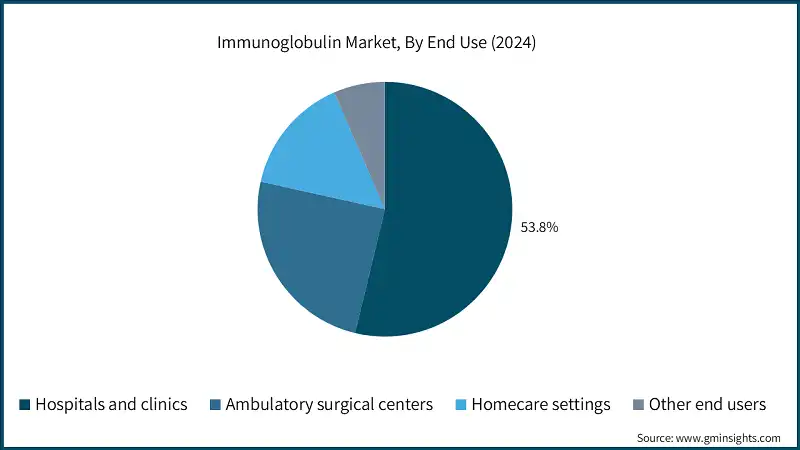
Based on the end use, the immunoglobulin market is segmented into hospitals and clinics, ambulatory surgical centers, homecare settings, and other end users. The hospitals and clinics segment accounted for the highest market share of 53.8% in 2024, owing to its function as the first point of care for immunoglobulin administration.
- Professional supervision, specialized apparatus, and controlled conditions are required for intravenous immunoglobulin (IVIg) therapy, all of which are present in hospitals and clinics. These healthcare institutions are optimally suited to handle probable infusion-related reactions, observe patient response in real-time, and deliver multidisciplinary management. Given that immunoglobulin treatments often require long-term, repeat dosing, hospitals and clinics continue to serve as the most reliable and practical delivery channels for IVIg therapy.
- Clinics and hospitals offer supportive reimbursement schemes for immunoglobulin therapy. National health programs as well as private insurance companies in most nations now reimburse in-clinic IVIg infusions fully or partially, and hence these centers are made accessible to a larger group of patients.
- Hospitals also engage in clinical trials and research new uses for immunoglobulins. Their participation in such research usually leads to early uptake of newer immunoglobulin products, thereby consolidating their market position even more.
Looking for region specific data?
North America dominated the global immunoglobulin market with the highest market share of 51.7% in 2024.
- North America holds a strong market position in the overall market on account of developed healthcare infrastructure, high prevalence of autoimmune and immunodeficiency diseases, and adequate reimbursement.
- A developed network of plasma collection facilities in the region facilitates an adequate supply of raw material for immunoglobulin manufacturing.
- The presence of prominent pharmaceutical players, ongoing clinical research, and the early implementation of new treatment regimens also add to the maturity of the market.
- Accompanied by the increasing rate of diagnosis and an increasingly elderly population susceptible to chronic diseases, North America is anticipated to maintain its top ranking in the market in the next few years.
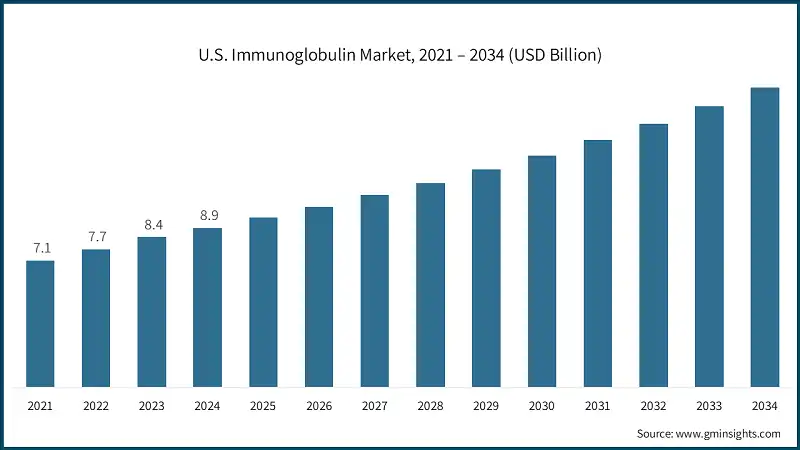
The U.S. immunoglobulin market was valued at 7.1 billion and USD 7.7 billion in 2021 and 2022, respectively. In 2024, the market size reached USD 8.9 billion from USD 8.4 billion in 2023.
- The U.S. has the highest global share of the market due to its sophisticated healthcare infrastructure and high rate of plasma collection.
- The nation is home to one of the global largest and most robust network of plasma donation centers, which provides a steady and active source of raw material used to make immunoglobulins. This local supply chain resilience provides the U.S. with a huge manufacturing and distribution advantage, providing for the continuous supply of both intravenous (IVIg) and subcutaneous (SCIg) immunoglobulin products throughout the country.
- The growing incidence of chronic and autoimmune diseases among the elderly population, together with high awareness rates and early diagnosis, has resulted in increasing numbers of patients on long-term immunoglobulin therapies. This trend supports a consistent and recurring demand for immunoglobulin therapies.
Europe immunoglobulin market accounted for USD 3.5 billion in 2024.
- Europe holds a considerable market share in the market due to robust public healthcare networks, an expanding patient base with immunological and neurological conditions, as well as rising adoption of IVIg and SCIg therapies.
- Several European countries have reimbursement policies in place and highly developed plasma collection networks, allowing widespread access to immunoglobulin therapy.
- Europe's emphasis on patient-centered care and demand for home-based therapies are driving the trend toward subcutaneous immunoglobulin therapy, further reinforcing its position in the market.
- Germany has the largest market share in the European market for immunoglobulins, due to its highly developed healthcare infrastructure and established clinical practices for treating immunodeficiency and autoimmune diseases.
- The country has an excellent network of specialist hospitals and infusion units, which facilitate extensive use of intravenous as well as subcutaneous immunoglobulin treatment.
- Further, Germany's strong plasma collection and fractionation capacity supports a stable local supply, thus minimizing import dependence and maintaining a uniform availability of immunoglobulin products for the treatment of acute as well as chronic diseases.
The Asia Pacific region is poised for accelerated growth in the immunoglobulin market due to increasing awareness of immunological and neurological disorders, growing healthcare infrastructure, and rising healthcare spending in developing nations.
- Countries such as China, India, and South Korea are seeing increased demand for immunoglobulin therapy, driven by advancements in diagnostic technologies and a rising number of identified cases of primary and secondary immunodeficiency disorders.
- Another key driver of growth in Asia Pacific is the improvement in blood plasma collection and processing capacity. Nations are strategically investing in developing local plasma fractionation capacities and bolstering regulations to guarantee quality and safety.
- Further, government funding of rare disease treatment, improved insurance coverage, and growth in income levels are making expensive treatments such as immunoglobulins more affordable for larger patient bases.
- With rapid advancements in healthcare infrastructure and improving treatment standards aligning more closely with those in Western countries, the Asia Pacific region is poised to become one of the fastest-growing markets in the global immunoglobulin industry.
China maintains the biggest market share among the Asia Pacific immunoglobulin market, fueled by its high patient pool, growing number of cases of immunodeficiency and autoimmune diseases, and increasing availability of healthcare services.
- China continues to experience a rising demand for intravenous (IVIg) and subcutaneous (SCIg) immunoglobulin therapies, driven by a large population affected by chronic and immune-related conditions such as primary immunodeficiencies, immune thrombocytopenia, and Kawasaki disease. These conditions often require ongoing immunoglobulin treatment, contributing to sustained market expansion.
- Moreover, government-led healthcare reforms, including the National Reimbursement Drug List (NRDL), inclusion of certain immunoglobulin therapies and increased public health funding, have significantly improved accessibility and affordability across provinces. These policy changes have enabled wider adoption of immunoglobulin treatments within both urban and rural healthcare systems.
Latin America is growing as a highly potential region for the immunoglobulin market based on growing healthcare infrastructure and rising awareness of immune-related diseases.
- Brazil, Mexico, and Argentina are stepping up their diagnostic capabilities, resulting in higher rates of detection of primary immunodeficiencies, autoimmune diseases, and neurological diseases. For example, in Brazil, the launch of the National Policy for Rare Diseases (Politica Nacional de Atençao Integral as Pessoas com Doenças Raras) has prioritized early diagnosis and treatment access, resulting in better identification of primary immunodeficiency cases and wider use of immunoglobulin-based therapies in public hospitals.
- As more national healthcare systems start to include advanced biologic therapies in their coverage, more patients are accessing intravenous as well as subcutaneous immunoglobulin therapy, thereby augmenting the regional market growth.
The Middle East and Africa region is anticipated to witness steady growth in the immunoglobulin market, driven by rapid advancements in healthcare infrastructure and growing awareness of immune disorders.
- Countries such as Saudi Arabia, UAE, and South Africa are among the nations that have invested in high-quality diagnostic equipment and specialty treatment facilities, making it possible to identify and treat primary and secondary immunodeficiency diseases more effectively.
- Governments are actively increasing public health insurance coverage and forging alliances with multinational pharmaceutical corporations, expanding access to both intravenous (IVIg) and subcutaneous (SCIg) treatments.
- With expanding economies and healthcare priorities moving toward chronic and rare diseases, MEA has the potential to become a dynamic market for the use of immunoglobulin in the next few years.
Immunoglobulin Market Share
Leading companies like CSL Behring, Grifols SA, and Takeda Pharmaceutical Company together hold between 50% - 60% of the market share in the consolidated global market. These businesses keep their dominance by combining strong product lines, business alliances, legal clearances, and ongoing innovation. CSL holds a strong competitive advantage owing to its expertise in plasma collection and fractionation, which enables consistent supply and product quality, strengthening its leadership in the immunoglobulin segment.
In addition, players are now shaping the market, notably in geographies such as Asia-Pacific and Latin America. Vendors like ADMA Biologics in the U.S. are finding success by streamlining processes and targeting niche indications. Other regional companies are looking at recombinant technologies or other production systems to decrease dependency on plasma-derived sources. In January 2022, Octapharma announced that the indication for cutaquig, a human immunoglobulin for subcutaneous administration, had been expanded in the European Union (EU). This indication provides flexible treatment options to a far-wide range of patients with acquired immune deficiencies (AID). This strategy helped the company to expand and grow.
Immunoglobulin Market Companies
Few of the prominent players operating in the immunoglobulin industry include:
- ADMA Biologics
- Baxter international
- Bio Products Laboratory
- CSL Behring
- Emergent BioSolutions
- Grifols SA
- Johnson & Johnson (Omrix Biopharmaceuticals)
- Kedrion Biopharma
- LFB Group
- Octapharma AG
- Pfizer
- Shanghai RAAS Blood Products
- Takeda Pharmaceutical Company
- CSL Behring
CSL Behring is the leading player in the market, supported by its broad understanding of plasma-derived therapies and an established international network. With an extensive network of plasma plasmapheresis centers and sophisticated manufacturing facilities, the company delivers a consistent supply and quality. CSL Behring's lead IVIG product, Privigen, and its subcutaneous variant Hizentra have broad applications in the treatment of immunodeficiency and neurological disorders, solidifying its leadership.
- Grifols S.A.
Grifols S.A. has established a strong presence in the market for immunoglobulins through extensive global reach. The firm maintains one of the world's largest networks of plasma collections that drives its manufacturing of immunoglobulin products. Grifols' continued emphasis on innovation and growth such as new plants and expansion into up-and-coming markets, has enabled it to grow cost-effectively and meet changing healthcare requirements. Its strategic acquisitions and collaborations also continue to strengthen its competitiveness and worldwide reach in the immunoglobulin space.
- Takeda Pharmaceutical Company
Takeda is a key player in the immunoglobulin market, especially after it acquired Shire, bringing key plasma-derived products to its portfolio. The company has leading immunoglobulin treatments that are well-established on the market, such as Gammagard Liquid, which is widely used for primary immunodeficiency as well as other immune disorders. Takeda has been investing in research and making accessibility better by investing in its production capacity as well as international distribution. With a robust pipeline and focus on immunology, Takeda continues to grow its presence in the global market.
Immunoglobulin Market Report Attributes
| Key Takeaway | Details |
|---|---|
| Market Size & Growth | |
| Base Year | 2024 |
| Market Size in 2024 | USD 18.9 Billion |
| Forecast Period 2025 – 2034 CAGR | 6.9% |
| Market Size in 2034 | USD 36.7 Billion |
| Key Market Trends | |
| Drivers | Impact |
| Rising incidence of immunodeficiency disorders | Increasing diagnoses of primary immunodeficiencies (PIDs) and secondary conditions like HIV/AIDS and cancer-related immune suppression are driving demand for immunoglobulin therapies. |
| Expanding applications in neurological and autoimmune diseases | Growing clinical use of IVIG in diseases like CIDP, myasthenia gravis, and multiple sclerosis has significantly expanded the patient base beyond traditional immunodeficiency. |
| Global aging population | An increasing global elderly population, more prone to chronic and immune-related illnesses, is fueling long-term demand for immunoglobulin products. |
| Improved diagnostic awareness and screening programs | Governments and healthcare systems promoting rare disease screening and better diagnostic tools have resulted in more patients being accurately diagnosed and treated with immunoglobulins. |
| Pitfalls & Challenges | Impact |
| High cost of therapy | Immunoglobulin products are expensive, limiting access to low-income populations and putting pressure on healthcare systems and insurers. |
| Plasma supply constraints | Dependence on human plasma donations makes the supply chain vulnerable, especially during public health crises or donation shortages. |
| Opportunities: | Impact |
| Development of recombinant immunoglobulins | Ongoing R&D in non-plasma-derived or synthetic immunoglobulins could reduce dependence on donor plasma and improve scalability. |
| Rising demand in emerging economies | Improved healthcare access and rising incomes in Asia Pacific, Latin America, and Africa present significant growth potential for immunoglobulin therapies. |
| Market Leaders (2024) | |
| Market Leaders |
22.5% Market Share of CSL Behring |
| Top Players |
75% Collective market share in 2024 is |
| Competitive Edge |
|
| Regional Insights | |
| Largest Market | North America |
| Fastest growing market | Asia Pacific |
| Emerging countries | China, India, Brazil, Mexico, South Africa |
| Future outlook |
|
What are the growth opportunities in this market?
Immunoglobulin Industry News:
- In May 2025, Grifols announced that the USFDA cleared the company’s Investigational New Drug (IND) application to initiate a Phase 2 trial evaluating its immunoglobulin (IG) drops – GRF312 Ophthalmic Solution. These drops could become the first-ever ocular surface indication for an IG and a potential new treatment for dry eye disease (DED).
- In June 2024, Grifols announced that Biotest, a Grifols Group company, has received approval from the United States Food and Drug Administration (FDA) for Yimmugo, an innovative intravenous immunoglobulin (Ig) therapeutic, to treat primary immunodeficiencies (PID). This helped the company expand its product range.
- In April 2023, FDA approved CSL Behring's 50mL/10gm prefilled syringe for immune subcutaneous immunoglobulin (Hizentra) for patients living with primary immunodeficiency (PI) or chronic inflammatory demyelinating polyneuropathy (CIDP). The treatment is the first and only immune globulin (Ig) available in a ready-to-use prefilled syringe and comes in a full range of sizes to meet the needs of the patient.
- In March 2022, Grifols, a leading global producer of plasma-derived medicines, announced that its innovative 20% subcutaneous immunoglobulin (SCIG), XEMBIFY has been approved by several European Union state health authorities as well as the UK for treat of primary and secondary immunodeficiencies. This strategy helped the company to expand their customer base.
The immunoglobulin market research report includes an in-depth coverage of the industry with estimates and forecast in terms of revenue in USD Million and from 2021 – 2034 for the following segments:
Market, By Product Type
- IgG
- IgA
- IgM
- IgD
- IgE
Market, By Route of Administration
- Intravenous (IVIg)
- Subcutaneous (SCIg)
Market, By Application
- Chronic inflammatory demyelinating polyneuropathy (CIDP)
- Multifocal motor neuropathy (MMN)
- Primary immunodeficiency disease (PID)
- Secondary immunodeficiency disease (SID)
- Guillain-Barre syndrome
- Immune thrombocytopenic purpura (ITP)
- Other applications
Market, By End Use
- Hospitals and clinics
- Ambulatory surgical centers
- Homecare settings
- Other end use
The above information is provided for the following regions and countries:
- North America
- U.S.
- Canada
- Europe
- Germany
- UK
- France
- Italy
- Spain
- Netherlands
- Asia Pacific
- China
- Japan
- India
- Australia
- South Korea
- Latin America
- Brazil
- Mexico
- Argentina
- Middle East and Africa
- South Africa
- Saudi Arabia
- UAE
Frequently Asked Question(FAQ) :
What is the market size of the immunoglobulin market in 2024?
The market size was USD 18.9 billion in 2024, with a CAGR of 6.9% expected through 2034, driven by the rising prevalence of immunodeficiency disorders and increased clinical use in autoimmune and neurological diseases
What is the expected value of the immunoglobulin industry in 2025?
The global market is projected to reach USD 20.1 billion in 2025, reflecting steady demand driven by improved diagnostics, expanded treatment indications, and greater awareness of rare immune disorders.
What is the estimated size of the immunoglobulin market by 2034?
The market is projected to grow to USD 36.7 billion by 2034, driven by rising prevalence of immunological diseases, expanded clinical use of subcutaneous therapies, and demand in emerging markets.
How much revenue did the IgG segment generate in 2024?
IgG immunoglobulins accounted for 74.1% market share in 2024 and are projected to exceed USD 26.9 billion by 2034, supported by their broad clinical acceptance across multiple disease types.
What are the major growth drivers of the immunoglobulin market?
Key growth drivers include rising incidence of immunodeficiency disorders, broader applications in autoimmune and neurological conditions like CIDP and myasthenia gravis, and expanding diagnostic and screening programs.
What route of administration led the immunoglobulin industry?
Intravenous immunoglobulin (IVIg) accounted for 66.4% of the global market in 2024, favored for its fast action and established use in acute care and chronic immune-related conditions.
What is the growth outlook for the subcutaneous (SCIg) segment from 2025 to 2034?
The SCIg segment is projected to grow at a 7.2% CAGR till 2034, as home-based self-infusion, fewer side effects, and improved patient convenience fuel adoption.
Which region held the largest share in the global immunoglobulin industry?
North America led the market with a 51.7% share in 2024, due to robust healthcare infrastructure, high diagnosis rates, and a strong network of plasma collection and manufacturing facilities.
Immunoglobulin Market Scope
Related Reports