Summary
Table of Content

Home Infusion Therapy Market
Get a free sample of this report
Form submitted successfully!
Error submitting form. Please try again.
Thank you!
Your inquiry has been received. Our team will reach out to you with the required details via email. To ensure that you don't miss their response, kindly remember to check your spam folder as well!
Request Sectional Data
Thank you!
Your inquiry has been received. Our team will reach out to you with the required details via email. To ensure that you don't miss their response, kindly remember to check your spam folder as well!
Form submitted successfully!
Error submitting form. Please try again.
Home Infusion Therapy Market Size
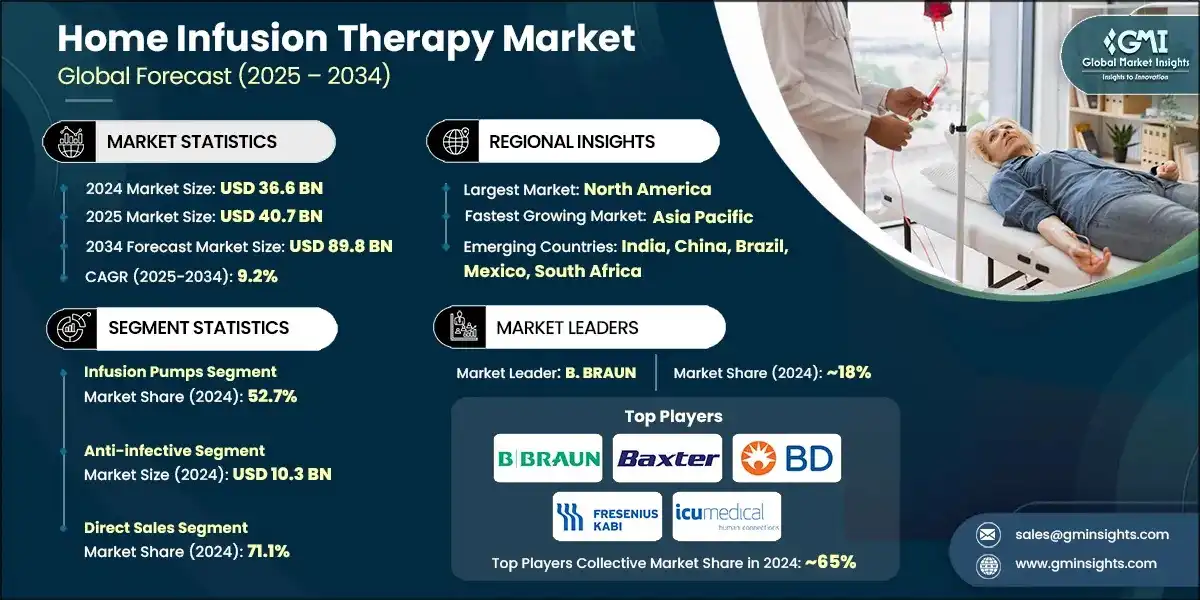
The global home infusion therapy market size was valued at USD 36.6 billion in 2024. The market is expected to reach from USD 40.7 billion in 2025 to USD 89.8 billion in 2034, growing at a CAGR of 9.2% during the forecast period, according to the latest report published by Global Market Insights Inc. The high market growth is attributed to the increasing prevalence of chronic diseases, shift toward cost-effective healthcare delivery, ongoing advancements in infusion devices and technology, and growing geriatric population, among other contributing factors.
 To get key market trends
Home infusion therapy is the process of delivering drugs or nutrients directly into a patient's blood via intravenous (IV) or subcutaneous methods at home. This therapy is generally associated with the use of antibiotics, chemotherapy, pain alleviation, and parenteral nutrition for a prolonged period.
Leading players in the home infusion therapy market include B. BRAUN, Baxter, Becton Dickinson and Company, FRESENIUS KABI, and ICU Medical. These companies maintain their competitive edge through continuous product innovation, global market presence, and significant investments in research and development.
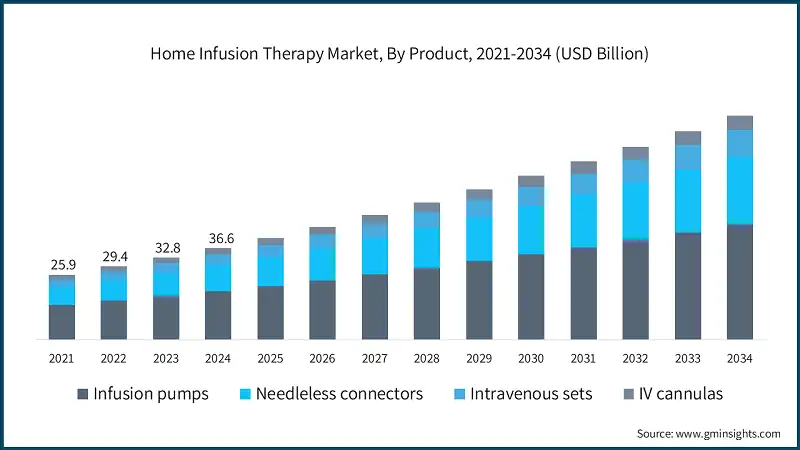
The market has increased from USD 25.9 billion in 2021 and reached USD 32.8 billion in 2023, with the historic growth rate of 12.6%. The market growth was driven by the growing shift toward cost-effective treatment alternatives, expanding reimbursement coverage for home infusion services, rising hospital congestion encouraging outpatient care, and improved safety and portability of infusion pumps.
Moreover, the increasing incidence of chronic conditions such as cancer, diabetes, gastrointestinal disorders, immune deficiencies, and heart failure is a major driver of market growth. For instance, according to the World Health Organization (WHO), cancer accounted for nearly 10 million deaths globally in 2021, while the International Diabetes Federation (IDF) reported that approximately 589 million adults were living with diabetes in 2021 a number projected to rise to 853 million by 2050.
These patients often require long-term intravenous (IV) therapies such as antibiotics, chemotherapy, and parenteral nutrition. Home infusion therapy enables safe and continuous treatment outside hospital settings, reducing the burden on healthcare facilities while improving patient comfort and convenience.
Furthermore, the development of portable, user-friendly infusion pumps and smart infusion systems is enhancing therapy safety and accuracy at home. Remote monitoring features also enable real-time communication between patients and healthcare providers.
Home Infusion Therapy Market Report Attributes
| Key Takeaway | Details |
|---|---|
| Market Size & Growth | |
| Base Year | 2024 |
| Market Size in 2024 | USD 36.6 Billion |
| Market Size in 2025 | USD 40.7 Billion |
| Forecast Period 2025 – 2034 CAGR | 9.2% |
| Market Size in 2034 | USD 89.8 Billion |
| Key Market Trends | |
| Drivers | Impact |
| Growing hospital acquired infections | The rising risk of HAIs is accelerating the shift of patients from hospitals to safer home-based treatment alternatives, significantly boosting demand for home infusion therapy. |
| Rising prevalence of chronic diseases | Increasing cases of cancer, diabetes, immune disorders, and cardiovascular diseases are driving long-term infusion needs, creating consistent demand for home-based therapy solutions. |
| Advancements in technology | Smart infusion pumps, remote monitoring systems, and user-friendly infusion devices are enhancing safety and ease of use, encouraging broader adoption of home infusion therapy. |
| Growing geriatric population | The rising elderly population requiring long-term care for chronic illnesses is increasing demand for convenient and cost-effective home-based infusion services. |
| Increasing preference towards at-home healthcare solutions | Patients and healthcare providers are favoring home care due to reduced treatment costs and improved comfort, strengthening market growth. |
| Pitfalls & Challenges | Impact |
| Dearth of reimbursement | Limited insurance coverage and inconsistent reimbursement policies across regions are restricting patient access to home infusion services, hindering market expansion. |
| Safety concerns and risk of failure associated with home infusion devices | Safety concerns and risk of failure associated with home infusion devices |
| Opportunities: | Impact |
| Increasing adoption of intravenous immunoglobulin (IVIG) therapy | Rising use of IVIG for autoimmune and immunodeficiency disorders is expected to create strong future demand for home infusion services, as patients increasingly opt for long-term treatment outside hospitals. |
| Growing demand for personalized care | The shift toward customized treatment plans and patient-centric home healthcare models will drive innovation in infusion delivery and expand market opportunities for tailored therapy solutions. |
| Market Leaders (2024) | |
| Market Leaders |
~18% Market Share |
| Top Players |
Collective market share in 2024 is ~65% |
| Competitive Edge |
|
| Regional Insights | |
| Largest Market | North America |
| Fastest growing market | Asia Pacific |
| Emerging countries | India, China, Brazil, Mexico, South Africa |
| Future outlook |
|
What are the growth opportunities in this market?
Home Infusion Therapy Market Trends
The market is growing considerably with the growing use of telehealth and remote monitoring, rapid adoption of specialty infusion services, rising demand for ambulatory infusion centers, and technological evolution of infusion pumps, among other factors collectively driving industry growth.
- Integration of telemedicine platforms with infusion therapy is improving patient supervision at home. Smart infusion pumps now transmit real-time data to clinicians, enabling dose adjustments and early detection of complications. This trend enhances treatment safety and reduces emergency visits.
- There is increasing demand for complex therapies such as biologics and immunoglobulins delivered through home infusion. These high-value therapies are especially prevalent in oncology, neurology, and immunology. Specialty pharmacies and infusion providers are expanding their service portfolios to capture this market.
- Further, the market is experiencing consolidation as major home healthcare providers and pharmacies acquire regional infusion service companies. Strategic collaborations between device manufacturers, payers, and pharmacies are expanding service networks and improving patient access, thereby sustaining market growth.
Home Infusion Therapy Market Analysis
Learn more about the key segments shaping this market
The global market was valued at USD 25.9 billion in 2021. The market size reached USD 32.8 billion in 2023, from USD 29.4 billion in 2022.
Based on the product, the market is segmented into infusion pumps, needleless connectors, intravenous sets, and IV cannulas. The infusion pumps segment has asserted its dominance in the market by securing a significant market share of 52.7% in 2024 owing to their widespread use in home care, advanced safety features, and rising demand for chronic disease management. The segment is expected to exceed USD 46.1 billion by 2034, growing at a CAGR of 8.9% during the forecast period.
On the other hand, the needleless connectors segment is expected to grow with a CAGR of 9.8%. The growth of this segment is driven by increasing emphasis on infection prevention, rising need to reduce needlestick injuries among healthcare providers, and growing adoption of safe intravenous access devices in home care settings.
- The infusion pumps segment continues to dominate the market. Home-based patients require precise dosing for therapies such as pain management, cardiac drugs, and hormone therapies. Infusion pumps deliver consistent and programmable flow rates, reducing the risk of under-orover-infusion. Their accuracy and reliability make them essential for safe therapy at home.
- Additionally, modern infusion pumps are equipped with drug libraries, dose-error reduction systems (DERS), and alarms for occlusion or air-in-line issues. These safety enhancements significantly reduce medication errors, making pumps a preferred option to manual IV methods. Regulatory focus on infusion safety is supporting their wider adoption.
- The needleless connectors segment held a revenue of USD 10.5 billion in 2024, with projections indicating a steady expansion at 9.8% CAGR from 2025 to 2034. The segment is driven by their ease of use, compatibility with multiple infusion systems, and ability to maintain closed IV systems that minimize contamination risk. Regulatory emphasis on safe vascular access and product innovations enhancing flow efficiency further support their adoption.
- The intravenous sets segment held a revenue of USD 4.3 billion in 2024, with projections indicating a steady expansion at 9.4% CAGR from 2025 to 2034. The intravenous sets segment is driven by their essential role in administering medications and fluids, increasing use in long-term therapies, and growing demand for cost-effective, disposable infusion supplies in homecare settings.
- The IV cannulas segment accounted for significant revenue in 2024, with projections indicating a steady expansion at 8.5% CAGR from 2025 to 2034. The segment is driven by their necessity for vascular access in home-based treatments, rising prevalence of chronic conditions requiring repeated infusions, and growing demand for user-friendly, minimally invasive cannulation solutions.
Based on application, the home infusion therapy market is segmented into anti-infective, enteral nutrition, specialty pharmaceuticals, parenteral nutrition, hydration therapy, chemotherapy, and other applications. The anti-infective segment dominated the market in 2024, accounting for USD 10.3 billion and is anticipated to grow at a CAGR of 8.8% during the forecast period.
- Infections such as osteomyelitis, sepsis, cellulitis, and endocarditis require long-term intravenous antibiotic treatment. Hospitals increasingly discharge stable patients early to continue IV antibiotics at home. This trend is accelerating demand for home-based anti-infective infusion therapy.
- Moreover, patients recovering from orthopedic, cardiac, and abdominal surgeries are prone to post-operative infections. Home-administered anti-infective infusion therapy allows prolonged treatment without hospital readmission. It supports faster recovery and reduces pressure on inpatient care facilities.
- The enteral nutrition segment accounted for significant revenue in 2024 and is anticipated to grow at a CAGR of 9% over the forecast period. The segment is driven by the rising prevalence of malnutrition and gastrointestinal disorders, along with increasing preference for home-based nutritional support for elderly and post-surgical patients.
- The specialty pharmaceuticals segment accounted for significant revenue in 2024 and is anticipated to grow at a CAGR of 9.4% over the forecast period. The growth of the segment is driven by the rising use of biologics and high-cost injectable therapies for complex diseases such as cancer and autoimmune disorders, fuelling demand for home-based administration.
- The parenteral nutrition segment accounted for significant revenue in 2024 and is anticipated to grow at a CAGR of 10.6% over the forecast period. The parenteral nutrition segment is driven by increasing cases of severe malabsorption and gastrointestinal failure, along with growing preference for long-term IV nutritional support in homecare settings.
Learn more about the key segments shaping this market
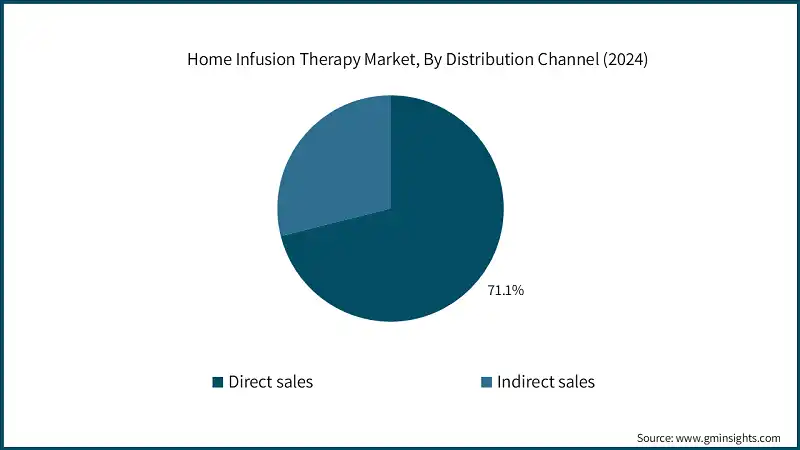
Based on distribution channel, the home infusion therapy market is classified into direct sales and indirect sales. The direct sales segment dominated the market with a revenue share of 71.1% in 2024 and is expected to reach USD 62.7 billion within the forecast period.
- Hospitals, clinics, and home healthcare agencies prefer direct procurement from manufacturers to ensure product authenticity and faster order fulfilment. Direct sales allow manufacturers to provide tailored product training and support, increasing brand loyalty and repeat purchases.
- Direct sales eliminate distributor margins, enabling manufacturers to offer competitive pricing to high-volume buyers. Bulk purchase discounts and long-term contracts attract healthcare providers aiming to reduce procurement costs, boosting the adoption of infusion pumps, IV kits, and related disposables.
- The indirect sales segment held a revenue of USD 10.6 billion in 2024, with projections indicating a steady expansion at 9.6% CAGR from 2025 to 2034. The segment is driven by strong partnerships between manufacturers and third-party distributors, expanding distribution networks in emerging regions, and the growing role of home healthcare service providers in delivering infusion products to patients.
Looking for region specific data?
North America Home Infusion Therapy Market
North America dominated the global market with the highest market share of 44.2% in 2024.
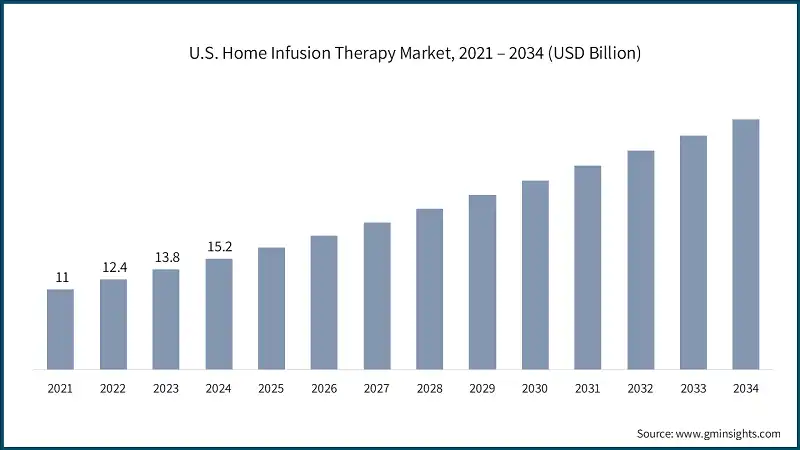
- The U.S. market was valued at USD 11 billion and USD 12.4 billion in 2021 and 2022, respectively. The market size reached USD 15.2 billion in 2024, growing from USD 13.8 billion in 2023, and is anticipated to grow at a CAGR of 8.3% between 2025 to 2034.
- North America has one of the highest rates of chronic diseases globally, including cancer, diabetes, Crohn’s disease, and immune deficiencies. Long-term IV therapies are a major component of treatment for these conditions. This rising patient pool is driving steady demand for home infusion services across the U.S. and Canada.
- Hospital-based treatments in the U.S. are significantly more expensive compared to home settings. Home infusion therapy reduces inpatient costs by up to 50–70% and minimizes hospital readmissions. This cost advantage is pushing healthcare providers and insurers to promote home-based infusion services.
- Further, the region is rapidly adopting smart infusion pumps, connected drug delivery devices, and telehealth monitoring systems. Real-time patient monitoring and remote clinical guidance have made home infusions safer and more reliable, increasing acceptance among physicians and patients.
Europe Home Infusion Therapy Market
Europe market accounted for USD 11.4 billion in 2024 and is anticipated to show lucrative growth over the forecast period.
- European healthcare systems are increasingly prioritizing infection prevention and patient safety. Hospitals in Europe face strict regulations to reduce nosocomial infections, especially among immunocompromised patients. Home infusion therapy minimizes exposure to hospital environments, significantly lowering infection risks and improving patient outcomes. This shift is accelerating the preference for safe home-based IV care.
- In addition, many Western European countries, including the UK, Germany, Sweden, and France, are promoting decentralization of healthcare. National health policies emphasize reducing hospital pressure through community-based services. Public health systems like the NHS and statutory health insurers support home healthcare to improve resource efficiency and reduce clinical burden.
Asia Pacific Home Infusion Therapy Market
The Asia Pacific market is anticipated to grow at the highest CAGR of 10.7% during the analysis timeframe.
- Rapid healthcare infrastructure development in China, India, Vietnam, and Malaysia is increasing access to advanced medical treatments. As home healthcare models gain government support, infusion services are being extended to urban and semi-urban populations. This emerging healthcare accessibility is expanding market potential.
- Countries like Thailand, India, and Singapore are major medical tourism hubs. Patients undergoing surgeries or complex treatments often require post-acute infusion care such as pain management, hydration, or nutrition therapy. Home infusion services are increasingly being integrated into post-discharge care plans to improve recovery.
Latin America Home Infusion Therapy Market
The Latin America market is experiencing robust growth over the analysis timeframe.
- The Latin America market is driven by increasing healthcare decentralization and the growing adoption of home-based medical care due to limited hospital infrastructure in countries such as Brazil, Mexico, and Argentina. Rising healthcare costs are encouraging patients and providers to shift toward affordable treatment alternatives outside hospitals.
- Additionally, the expansion of private healthcare providers and specialized home care service companies is improving access to infusion therapy in remote and semi-urban regions. Growing awareness of advanced home care solutions, along with government efforts to improve chronic disease management and reduce hospital readmissions, further supports market growth in the region.
Middle East & Africa Home Infusion Therapy Market
The Middle East & Africa (MEA) market is experiencing robust growth over the analysis timeframe.
- The regional growth is driven by improving healthcare infrastructure and the growing adoption of advanced medical services in countries such as Saudi Arabia, the UAE, and South Africa. Increasing investments in home healthcare by both governments and private players are enabling better access to infusion services for patients with chronic and post-surgical care needs.
- The rising prevalence of infectious diseases and malnutrition in parts of Africa also increases demand for intravenous therapies. Additionally, growing medical tourism in Gulf countries and the adoption of telehealth-supported home care models are accelerating market expansion across the MEA region.
Home Infusion Therapy Market Share
Key players in the market include B. Braun, Baxter, Becton Dickinson and Company, Fresenius Kabi, and ICU Medical, collectively accounting for around ~65% of the total market share. The market is moderately competitive, characterized by the presence of global medical device manufacturers as well as specialized home infusion service providers.
Large multinational companies dominate the market through extensive product portfolios covering infusion pumps, IV sets, and parenteral nutrition solutions. Regional service providers, on the other hand, focus on patient-centric offerings, including home nursing support and therapy coordination, to strengthen their market position.
Competition is driven by innovation, service integration, and long-term partnerships with healthcare providers and payers. Companies are increasingly adopting digital health tools such as connected infusion pumps and remote monitoring platforms to differentiate their offerings.
Strategic mergers, acquisitions, and collaborations are common as market leaders aim to expand their service networks and geographic presence. Increasing focus on value-based healthcare delivery is also pushing players to enhance safety, efficiency, and outcomes in home-based infusion therapy.
Home Infusion Therapy Market Companies
A few of the prominent players operating in the home infusion therapy industry include:
- AMSINO
- B. BRAUN
- Baxter
- Becton Dickinson and Company
- Contec Medical Systems
- ERENLER MEDIKAL
- FRESENIUS KABI
- Halyard Health (AVANOS)
- ICU Medical
- JMS
- Mindray
- Moog
- NIPRO
- POLYMED
- TERUMO
- B. Braun
Offers a comprehensive portfolio of infusion pumps, IV administration sets, and safety catheters designed specifically for home-based therapy. Strong focus on safety infusion technologies and integrated therapy services through B. Braun HomeCare.
Leader in parenteral nutrition and IV solutions, widely used for long-term home care patients. Strong global distribution and service infrastructure support reliable product availability for chronic infusion therapies.
Specializes in advanced IV access devices, catheters, and needleless connectors that enhance safety in home infusion settings. Known for infection prevention technologies that reduce catheter-related bloodstream infections in home care patients.
Home Infusion Therapy Industry News:
- In April 2024, Baxter International Inc. received U.S. FDA 510(k) clearance for its Novum IQ large volume infusion pump (LVP) integrated with Dose IQ Safety Software. This approval enhanced Baxter’s product portfolio with a safer, more precise infusion solution. The launch strengthened the company’s competitiveness in the growing market by addressing the rising demand for smart and reliable infusion technologies.
- In February 2023, Mindray launched its BeneFusion i Series and u Series infusion systems to improve medication safety with advanced precision and customization, strengthening its portfolio. This launch enhanced its market presence and supported growing demand for safe and efficient home infusion solutions.
The home infusion therapy market research report includes an in-depth coverage of the industry with estimates and forecast in terms of revenue in USD Million from 2021 – 2034 for the following segments:
Market, By Product
- Infusion pumps
- Syringe
- Volumetric
- Ambulatory
- Insulin
- Other infusion pumps
- Needleless connectors
- Intravenous sets
- IV cannulas
Market, By Application
- Anti-infective
- Enteral nutrition
- Specialty pharmaceuticals
- Parenteral nutrition
- Hydration therapy
- Chemotherapy
- Other applications
Market, By Distribution Channel
- Direct sales
- Indirect sales
The above information is provided for the following regions and countries:
- North America
- U.S.
- Canada
- Europe
- Germany
- UK
- France
- Spain
- Italy
- Netherlands
- Asia Pacific
- China
- Japan
- India
- Australia
- South Korea
- Latin America
- Brazil
- Mexico
- Argentina
- Middle East and Africa
- South Africa
- Saudi Arabia
- UAE
Frequently Asked Question(FAQ) :
Who are the key players in the global home infusion therapy market?
Key players include B. Braun, Baxter, Becton Dickinson and Company, Fresenius Kabi, ICU Medical, AMSINO, Contec Medical Systems, Erenler Medikal, Halyard Health (Avanos), JMS, Mindray, Moog, Nipro, Polymed, and Terumo.
Which distribution channel held the largest share in 2024?
The direct sales segment led the market with a 71.1% share (USD 26 billion) in 2024, as hospitals and home healthcare agencies preferred direct procurement from manufacturers for product authenticity, technical support, and competitive pricing.
Which region is expected to be the fastest growing in the global home infusion therapy industry?
The Asia Pacific region is projected to grow at the fastest CAGR of 10.7% through 2034, driven by rapid healthcare infrastructure development, growing medical tourism, and government support for decentralized healthcare delivery.
Which region leads the global home infusion therapy market?
North America dominated the market with a 44.2% share (USD 16.2 billion) in 2024, supported by high chronic disease prevalence, favorable reimbursement policies, and widespread adoption of advanced homecare technologies.
Which application segment generated the highest revenue in 2024?
The anti-infective therapy segment dominated the market with USD 10.3 billion revenue in 2024, driven by rising incidences of infections such as osteomyelitis and endocarditis requiring prolonged IV antibiotic treatments at home.
Which product segment dominated the global market in 2024?
The infusion pumps segment held the largest share of 52.7% (USD 19.3 billion) in 2024, owing to their accuracy, safety features such as dose-error reduction systems (DERS), and essential role in long-term chronic disease management at home.
What is the estimated market size of the global home infusion therapy market in 2025?
The market is projected to reach USD 40.7 billion in 2025, supported by growing demand for specialty infusion therapies and technological advancements in portable and connected infusion pumps.
What is the projected market value of the global market by 2034?
The market is expected to reach USD 89.8 billion by 2034, growing at a CAGR of 9.2%, fueled by the adoption of smart infusion devices, expansion of home healthcare infrastructure, and integration of telehealth and remote monitoring technologies.
What is the market size of the global home infusion therapy market in 2024?
The market size was USD 36.6 billion in 2024, driven by the increasing prevalence of chronic diseases, growing geriatric population, and rising preference for cost-effective home-based healthcare solutions.
Home Infusion Therapy Market Scope
Related Reports