Summary
Table of Content

Health Check-up Market
Get a free sample of this report
Form submitted successfully!
Error submitting form. Please try again.
Thank you!
Your inquiry has been received. Our team will reach out to you with the required details via email. To ensure that you don't miss their response, kindly remember to check your spam folder as well!
Request Sectional Data
Thank you!
Your inquiry has been received. Our team will reach out to you with the required details via email. To ensure that you don't miss their response, kindly remember to check your spam folder as well!
Form submitted successfully!
Error submitting form. Please try again.
Health Check-up Market Size
The high market growth is attributed to surging investments in population screening, rising disease prevalence, and increasing awareness of preventive healthcare, among other factors.
Health Check-up Market Key Takeaways
Market Size & Growth
- 2025 Market Size: USD 61.5 Billion
- 2026 Market Size: USD 65.6 Billion
- 2035 Forecast Market Size: USD 116 Billion
- CAGR (2026–2035): 6.5%
Regional Dominance
- Largest Market: North America
- Fastest Growing Region: Asia Pacific
Key Market Drivers
- Surging investments in population screening.
- Increasing prevalence of diseases.
- Rising awareness of preventive healthcare.
- Increasing adoption of digital technology/telemedicine & home-care services.
Challenges
- High cost associated with screening.
- Lack of awareness and proper infrastructure in under-developed regions.
Opportunity
- AI‑driven diagnostic tools and digital health platforms.
Key Players
- Market Leader: Labcorp led with over 5% market share in 2025.
- Leading Players: Top 5 players in this market include ARUP Laboratories, Eurofins, Quest Diagnostics, Labcorp, Trinity Biotech, which collectively held a market share of 21% in 2025.
Get Market Insights & Growth Opportunities
A health check-up is also referred to as a health examination, and it is an assessment of an individual’s health status by an expert. It is usually carried out by a healthcare provider, which may include a physician, a nurse, or any other authorized personnel. The main aim of a health checkup is to appraise the health condition of a person, note any alarming health issues, and offer appropriate preventative measures.
The health check‑up market includes leading diagnostic service providers such as Quest Diagnostics, Labcorp, Eurofins, ARUP Laboratories, and Trinity Biotech, all of whom compete through comprehensive testing portfolios, nationwide and global laboratory networks, and strong capabilities in high‑complexity diagnostics.
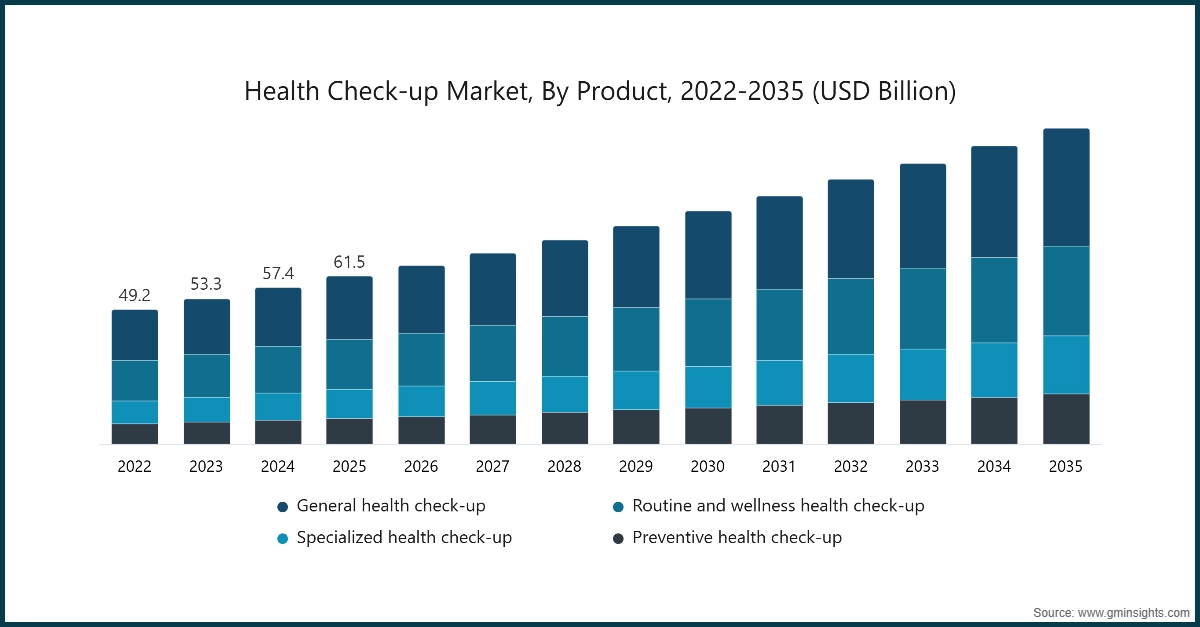
The market has increased from USD 49.2 billion in 2022 to USD 57.4 billion in 2024, with a historic growth rate of 8%. The market growth is driven by rising chronic‑disease prevalence, greater emphasis on preventive healthcare, and expanding government‑led screening initiatives worldwide.
The number of cases related to cancer, diabetes, and cardiovascular diseases is consistently increasing. For example, according to the World Cancer Research Fund International, there were about 18.1 million cases of cancer all over the globe. These disorders, when unchecked, are burdensome and problematic. Hence, regular health check-ups play a crucial part in such situations as they allow for the capture and management of these diseases at preemptive stages. Advancements in technology, an aging population, initiatives, and policies made by the government in the healthcare sector greatly contribute to the health checkup market.
Moreover, public authorities in several nations are formulating health strategies that aim at promoting preventive health care. This is done by providing regular health examinations, which help in dealing with the economic implications caused by advanced-stage diseases. Also, many companies have started to provide employee wellness programs, which include regular health examinations. These programs are intended to improve the health and reduce absenteeism of employees to increase productivity. Therefore, all these factors are likely to contribute towards the growth of the market during the forecast period.
The global health check-up market was valued at USD 61.5 billion in 2025. The market is expected to reach from USD 65.6 billion in 2026 to USD 116 billion in 2035, growing at a CAGR of 6.5% during the forecast period, according to the latest report published by Global Market Insights Inc.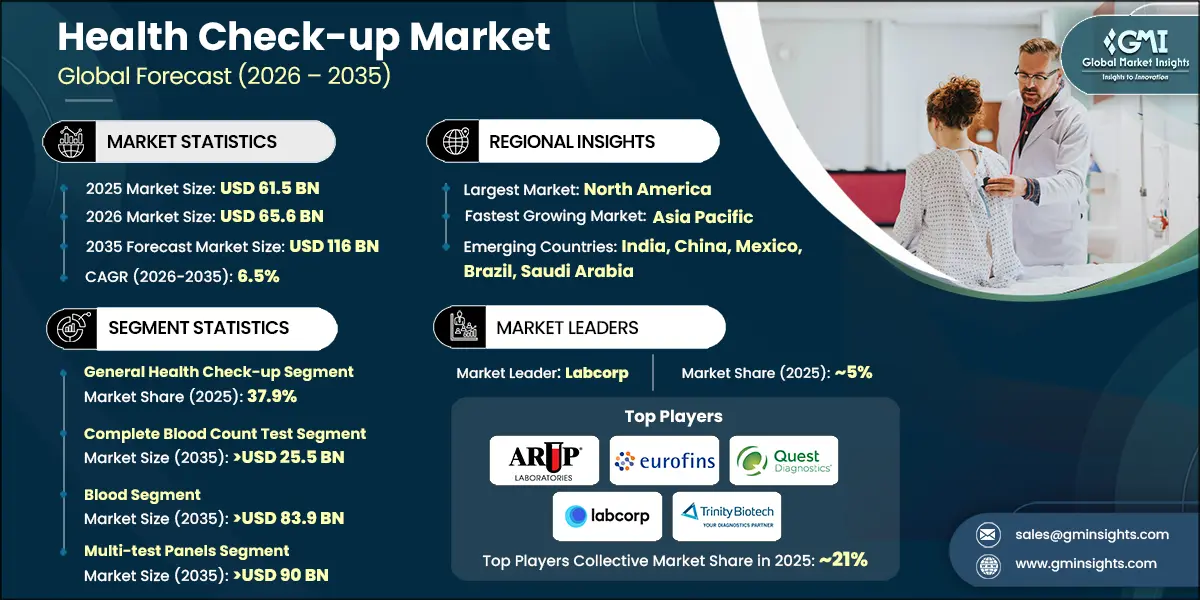
To get key market trends
Health Check-up Market Trends
The growth of the healthcare industry is significantly driven by the adoption of digital technologies, telemedicine, and home-care services. The adoption of digital technologies, as well as telemedicine, is accelerating not just the efficacy of health check-ups, but also the general paradigm of health care from being reactive-focused to patient-centered and preventive.
- The advancement of technology allows services to be provided digitally from a distant place. For instance, telehealth technology permits patients to communicate with health specialists for a routine check-up while staying at home.
- With the advent of wearable medical tools and health tracking technologies, patients can now take an active role in managing their healthcare. These devices can automatically and continuously monitor vital metrics like blood pressure, glucose, and pulse.
- The whole system is now integrated into a single network where patients, telemedicine physicians, and all other diagnostic departments form one family. Such systems frequently allow patients to schedule virtual checkups, pull their medical card presets with a finger, or ask for advice on other health-related issues.
Health Check-up Market Analysis
Learn more about the key segments shaping this market
Based on type, the health check‑up market is segmented into general health check-up, routine and wellness health check-up, specialized health check-up, and preventive health check-up. The general health check-up segment has asserted its dominance in the market by securing a significant market share of 37.9% in 2025, owing to its broad diagnostic coverage, affordability, and growing consumer emphasis on preventive healthcare and early disease detection. The segment is expected to exceed USD 43.3 billion by 2035, growing at a CAGR of 6.4% during the forecast period.
- Severe health complications can be prevented with regular health check-ups, allowing for timely intervention and management. Early identification can prevent the progression of diseases and improve treatment outcomes.
- A good number of medical aid packages motivate, or in some cases, compel their clients to undergo periodic medical examinations. This is done so as to prevent risks or in order to mitigate or compensate for the burden on the coverage allocated under the policy.
- With advancing age, the probability of an individual suffering from specific ailments becomes greater. Routine check-ups are now essential for monitoring health shifts due to aging and for managing problems related to senescence.
- The routine and wellness health check-up segment was valued at USD 18.3 billion in 2025 and is expected to reach USD 33.1 billion by 2035. Growth in this segment is driven by increasing consumer awareness of lifestyle-related disorders and the rising emphasis on regular screening to maintain overall health and detect potential risks at an early stage. Additionally, expanding availability of affordable wellness packages, digital booking platforms, and personalized preventive health programs is expected to support sustained demand over the forecast period.
- The specialized health check-up segment was valued at USD 10.7 billion in 2025 and is expected to reach USD 21.5 billion by 2035. The segment is gaining momentum due to rising demand for targeted diagnostic packages focused on areas such as cardiac health, oncology screening, diabetes management, and organ-specific evaluations. Advancements in diagnostic technologies, increasing physician recommendations for risk-based screening, and growing consumer willingness to invest in personalized health assessments are expected to drive steady segment growth over the forecast period.
- The preventive health check-up segment was valued at USD 9.2 billion in 2025 and is expected to reach USD 18.2 billion by 2035. Growth is driven by increasing awareness of early disease detection and the rising prevalence of lifestyle-related conditions such as obesity, hypertension, and diabetes, which encourage proactive health monitoring. Furthermore, government-led screening initiatives, insurance incentives for preventive care, and the growing adoption of annual health check-up packages are expected to support the sustained expansion of this segment over the forecast period.
Based on test type, the health check‑up market is segmented into complete blood count test, blood glucose test, electrolyte test, lipid profile test, hormones & vitamins, tumor markers, liver function test, cardiac biomarkers, kidney function test, bone profile test, and other test types. The complete blood count test segment is expected to drive business growth and expand at a CAGR of 6.1%, reaching over USD 25.5 billion by 2035.
- The CBC test provides critical details about the types and count of blood cells, red blood cells, white blood cells, and platelets. CBC tests also include the hemoglobin and hematocrit parameters, which are important for evaluating a person's nutritional condition and the presence of iron deficiency anemia. It assists healthcare professionals with evaluating multiple aspects of a person’s well-being.
- CBC tests can be used to detect infections or inflammatory conditions from the changes in the white blood cell count. This is important when assessing the infection and its subsequent management.
- Abnormal blood cell counts may be suggestive of other medical problems such as anemia, infection, leukemia, or disorders of blood clotting. These conditions can be diagnosed early and managed appropriately with the aid of CBC tests.
- The blood glucose test segment was valued at USD 9.8 billion in 2025 and is expected to reach USD 19.9 billion by 2035. The segment’s growth is primarily driven by the increasing global prevalence of diabetes and the need for regular monitoring to support effective disease management and complication prevention. Additionally, rising adoption of advanced glucose testing technologies, expanding home-based monitoring practices, and growing awareness of metabolic health are expected to sustain strong demand throughout the forecast period.
- The electrolyte test segment was valued at USD 7 billion in 2025 and is expected to reach USD 13 billion by 2035. Growth in this segment is supported by the increasing use of electrolyte panels for assessing hydration status, kidney function, and metabolic balance in routine and specialized health check-ups. Additionally, rising hospital admissions, growing prevalence of chronic conditions, and expanding integration of electrolyte testing in preventive screening packages are expected to drive steady demand over the forecast period.
- The lipid profile test segment was valued at USD 5.9 billion in 2025 and is expected to reach USD 11.3 billion by 2035. The segment is driven by the increasing prevalence of cardiovascular diseases and growing awareness of cholesterol management as a key component of preventive healthcare. Furthermore, routine inclusion of lipid profiling in annual health check-up packages and rising physician emphasis on early risk assessment are expected to support sustained segment growth over the forecast period.
- The hormones & vitamins segment was valued at USD 5.2 billion in 2025 and is expected to reach USD 9.3 billion by 2035. Growth is driven by rising awareness of nutritional deficiencies, hormonal imbalances, and their impact on overall health, fertility, and metabolic function. Additionally, increasing physician recommendations, expanding preventive screening packages, and growing consumer interest in personalized wellness insights are expected to support steady demand for hormone and vitamin testing over the forecast period.
- The tumor markers segment was valued at USD 5.1 billion in 2025 and is expected to reach USD 10.7 billion by 2035. The segment is gaining traction due to rising awareness of cancer screening and the increasing use of tumor marker tests for early detection, treatment monitoring, and recurrence assessment. Advancements in biomarker research, growing physician recommendations for risk-based screening, and inclusion of oncology panels in specialized health check-up packages are expected to drive steady growth over the forecast period.
- The liver function test segment was valued at USD 3.7 billion in 2025 and is poised to witness growth over the coming years. Growth is supported by the rising prevalence of liver disorders, including fatty liver disease, hepatitis, and alcohol-related liver conditions, which necessitate routine monitoring. Additionally, increasing inclusion of liver panels in preventive and routine health check-up packages, along with growing awareness of metabolic health, is expected to contribute to steady segment expansion.
- The cardiac biomarkers segment was valued at USD 3.5 billion in 2025 and is poised to witness growth over the coming years. The segment is driven by the increasing burden of cardiovascular diseases and the growing need for early detection and risk assessment through markers such as troponin and BNP. Furthermore, rising adoption of cardiac screening in routine health check-ups and expanding physician emphasis on preventive heart health are expected to support gradual segment growth.
- The kidney function test segment was valued at USD 2.5 billion in 2025 and is poised to witness growth over the coming years. Growth is supported by the rising prevalence of chronic kidney disease, diabetes, and hypertension, which necessitate routine monitoring of renal health indicators. Additionally, increasing inclusion of kidney panels in preventive health check-up packages and growing awareness of early-stage renal impairment are expected to contribute to steady segment expansion.
- The bone profile test segment was valued at USD 0.7 billion in 2025 and is poised to witness growth over the coming years. The segment is benefiting from rising awareness of bone health, particularly among aging populations and postmenopausal women at risk of osteoporosis and mineral deficiencies. Additionally, increasing physician recommendations for calcium, vitamin D, and mineral screening as part of preventive health check-ups are expected to support gradual segment growth.
- The other test types segment was valued at USD 3.9 billion in 2025 and is poised to witness growth over the coming years. This segment includes a diverse range of diagnostic assessments, such as inflammatory markers, allergy panels, infectious disease screening, and genetic tests, that are increasingly incorporated into comprehensive health check-up packages. Growing demand for personalized diagnostics, advancements in laboratory technologies, and the expansion of bundled screening programs are expected to support steady growth across these additional test categories.
Based on sample type, the health check‑up market is categorized into blood, urine, saliva, and other sample types. The blood segment is expected to drive business growth and expand at a CAGR of 6.6%, reaching over USD 83.9 billion by 2035.
- Blood tests provide tremendous information about a person’s health, from blood cell counts to hormones, metabolism, and biochemical markers. These tests are insightful because, with the results, the organs or systems within the body that require more attention can be determined.
- Proteins, glucose, cholesterol, and enzymes are just a few of the many analytes that can be measured during a blood test. The wide variety of options helps in diagnosing and treating different medical problems, some of which are still not curable in the medical field.
- There are also more specific advanced blood tests for certain conditions and risk factors, including many genetic tests, tumor markers, and specific antibody assays. Each of these adds more knowledge that is important for personalized medicine. Therefore, all such reasons account for the growth of the blood segment in the focus of analysis.
- The urine segment was valued at USD 13.3 billion in 2025 and is poised to witness growth over the coming years. The segment is widely utilized in routine health check-ups for assessing kidney function, metabolic disorders, urinary tract infections, and hydration status due to its non-invasive and cost-effective nature. Additionally, ease of sample collection, rapid laboratory processing, and the inclusion of urinalysis in standard screening packages are expected to support sustained segment demand.
- The saliva segment was valued at USD 1.3 billion in 2025 and is expected to reach USD 2.3 billion by 2035. Growth in this segment is supported by the increasing use of saliva-based diagnostics for hormone analysis, infectious disease detection, and genetic testing due to their non-invasive and convenient sample collection. Advancements in molecular testing technologies and growing adoption of home-based and wellness-focused screening solutions are expected to further drive segment expansion over the forecast period.
- The other sample types segment was valued at USD 2.8 billion in 2025 and is poised to witness growth over the coming years. This segment includes samples such as stool, hair, and tissue, which are increasingly used in specialized screenings, microbiome analysis, and targeted diagnostic evaluations. Growing demand for advanced and personalized health assessments, along with improvements in laboratory testing capabilities, is expected to support the gradual expansion of these alternative sample-based tests.
Based on panel type, the health check‑up market is bifurcated into multi-test panels and single-test panels. The multi-test panels segment is expected to drive business growth and expand at a CAGR of 6.7%, reaching over USD 90 billion by 2035.
- Doing several examinations separately can be costly and time-consuming. Using multi-panel tests as a diagnostic tool reduces the number of samples and tests needed. This improves efficiency and lowers costs for both providers and patients.
- Multi-panel tests provide a wider scope of health information by assessing several analytes at the same time. This consolidation further enhances the evaluation of various bodily systems, thus giving a great deal of information with respect to health conditions.
- The tests are more beneficial in screening patients for various diseases at once, like diabetes, cardiovascular disease, liver and kidney problems. This increases the scope of their use in general health screening programs.
- The single-test panels segment was valued at USD 14.3 billion in 2025 and is expected to reach USD 26.1 billion by 2035. Growth in this segment is driven by the continued need for targeted diagnostic assessments, particularly when physicians recommend specific tests for monitoring existing conditions or investigating symptoms. Additionally, affordability, quick turnaround times, and easy accessibility through diagnostic labs and home collection services are expected to support steady demand for single-test panels over the forecast period.
Learn more about the key segments shaping this market
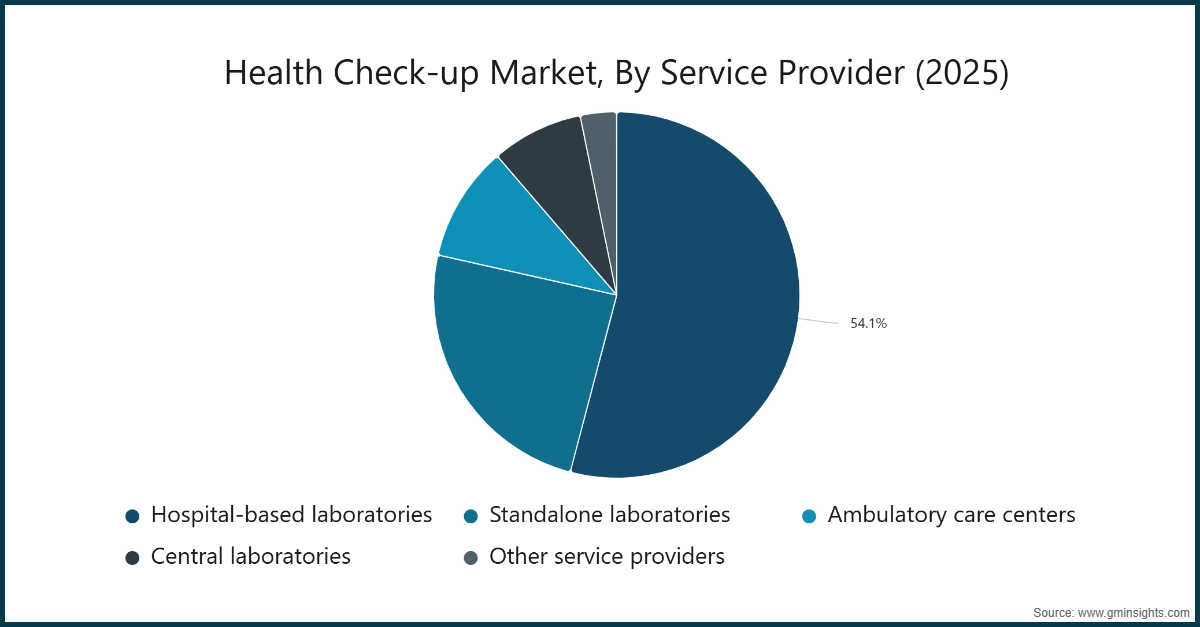
Based on service provider, the health check‑up market is segmented into hospital-based laboratories, standalone laboratories, central laboratories, ambulatory care centers, and other service providers. The hospital-based laboratories segment dominated the market with a revenue share of 54.1% in 2025.
- A variety of tests and screenings are also a portion of the diagnostic services offered by hospital-based laboratories. This enables people to have complete health examinations that address numerous components of their health in one single place.
- In addition, most hospital-based laboratories are connected to other clinical services within the hospital. This setup makes it easier for professionals to communicate with each other, ensuring that test results are sent to the right specialists for further analysis and action.
- Hospitals are also equipped to handle emergencies and critical care cases. Doing a health check-up in a hospital allows for immediate attention to an emergency situation when there are unexpected health problems that require immediate attention during the evaluation.
- The standalone laboratories segment was valued at USD 15 billion in 2025 and is expected to reach USD 29.5 billion by 2035. The segment continues to grow due to its strong presence in routine and preventive diagnostics, offering cost-effective testing services, walk-in convenience, and home sample collection options. Furthermore, expanding laboratory networks, digital report delivery, and partnerships with corporate wellness programs and healthcare providers are expected to support sustained segment expansion over the forecast period.
- The ambulatory care centers segment was valued at USD 6.3 billion in 2025 and is expected to reach USD 12.1 billion by 2035. The segment is expanding as outpatient facilities increasingly incorporate diagnostic services to support same-day evaluations and coordinated patient care. Rising preference for convenient, time-efficient healthcare services and growing integration of point-of-care testing within ambulatory settings are expected to drive steady growth over the forecast period.
- The central laboratories segment was valued at USD 4.9 billion in 2025 and is expected to reach USD 8.8 billion by 2035. Growth in this segment is driven by high testing volumes, advanced automation capabilities, and the ability to process complex and specialized diagnostic panels with greater efficiency and accuracy. Additionally, increasing collaborations with hospitals, diagnostic chains, and home sample collection providers are expected to strengthen the role of central laboratories in supporting large-scale health screening programs.
- The other service providers segment was valued at USD 2 billion in 2025 and is expected to reach USD 3.3 billion by 2035. This segment includes telehealth-enabled diagnostic services, home healthcare providers, and corporate wellness platforms that are increasingly offering integrated health check-up solutions. Growing demand for at-home sample collection, digital health management, and personalized screening programs is expected to support gradual expansion of these alternative service channels over the forecast period.
Looking for region specific data?
North America Health Check-up Market
North America dominated the health check-up industry with the highest market share of 35.7% in 2025.
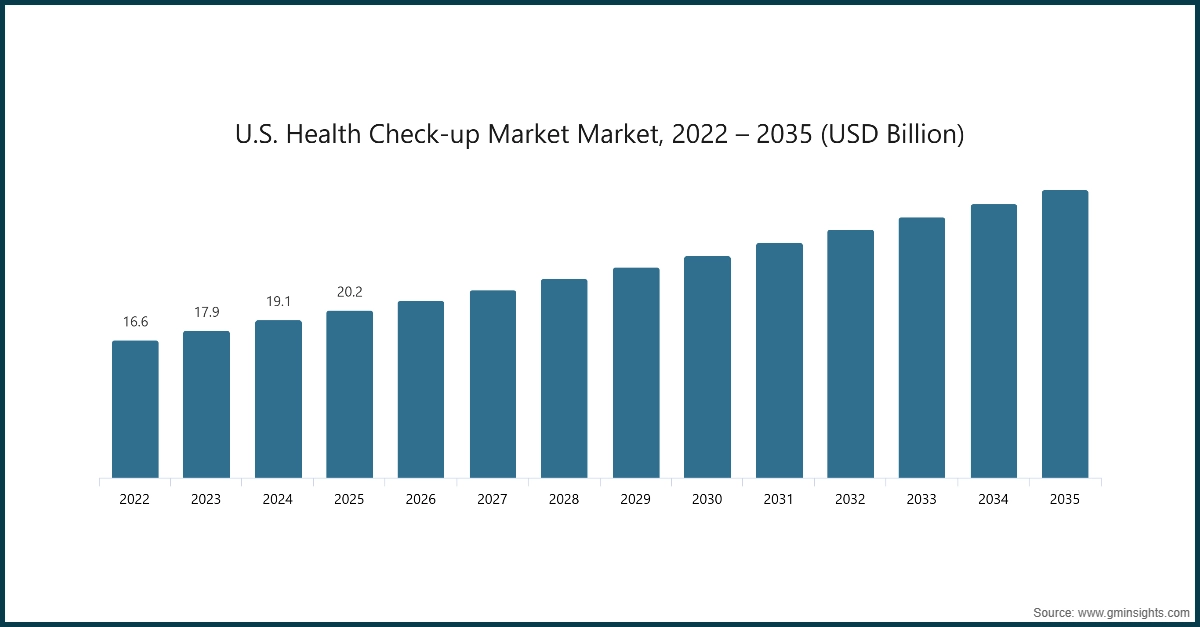
- The U.S. health check-up industry was valued at USD 16.6 billion and USD 17.9 billion in 2022 and 2023, respectively. The market size reached USD 20.2 billion in 2025, growing from USD 19.1 billion in 2024, and is anticipated to grow at a CAGR of 5.6% from 2026 to 2035.
- The U.S. preventive healthcare services market is expected to grow significantly due to a general increase in awareness about taking proactive steps to maintain health. There is an increase in check-up visits by patients and doctors because of the rising rates of diabetes, hypertension, and heart-related complications.
- Routine check-ups are on the increase due to the elderly population, which requires frequent and more thorough examination. Additionally, the progressive nature of diagnostic devices has made it easier for patients to undergo health assessments as the procedures are performed with greater precision and lower pain, thus increasing the number of participants.
- Additionally, market growth has been driven by employer-sponsored health programs as well as incentive plans for regular check-ups, which have encouraged employees to monitor their health constantly. At the same time, the growing use of telemedicine and mobile health clinics has made health check-ups more accessible in remote and underserved areas. Policies like the Affordable Care Act (ACA), which provide coverage for preventive services, have made essential routine screenings available to a larger population.
- The COVID-19 pandemic has highlighted the importance of regular health assessments to monitor individual health and wellness. This has boosted preventive healthcare activities. With the increasing focus on health and wellness, the U.S. health check-up industry is expected to grow steadily in the coming years.
Europe Health Check-up Market
Europe health check-up industry accounted for USD 16.8 billion in 2025 and is anticipated to show lucrative growth over the forecast period.
- Multi-functional industry drivers such as government funding, increasing chronic illnesses, and growing health consciousness are predicted to accelerate the growth of the UK health check-up industry in the forthcoming years. The National Health Service (NHS) has been expanding its preventive health strategy through initiatives like the NHS Health Check program, which provides free screenings for cardiovascular disorders, diabetes, and kidney diseases for persons aged 40 to 74.
- Further, the increase in lifestyle diseases, for instance, obesity and hypertension, is also propelling the demand for routine health checks by patients prompted by the need for early diagnosis and treatment. Another important consideration is the aging population in the UK, who require regular evaluations to control a plethora of ailments associated with old age.
- The private sector is also contributing to this growth. Leading diagnostic providers are offering comprehensive screening packages. These include genetic and cancer screenings, as well as full-body evaluations for different health conditions.
- The adoption of digital health technologies, like AI diagnostics and telemedicine, has made health check-ups more accessible and efficient. In addition, these days, there is more emphasis on workforce wellness programs as companies provide employee health check-ups in order to boost work absenteeism and productivity.
- The UK is strategically positioned as a growth leader in the European health check-up industry due to the rise in disposable income and increased cognizance about tailored preventive care.
Asia Pacific Health Check-up Market
The Asia Pacific health check-up industry is anticipated to grow at the highest CAGR of 8% during the analysis timeframe.
- Asia Pacific is emerging as a high-growth region in the health check-up industry, driven by rising healthcare awareness, a large population base, and increasing prevalence of lifestyle-related diseases such as diabetes and cardiovascular disorders. Rapid urbanization, improving disposable incomes, and expanding access to diagnostic services are encouraging individuals to adopt routine and preventive health screenings across countries, including China, India, and Japan.
- Furthermore, government-led screening initiatives and the expansion of private diagnostic chains are improving accessibility to comprehensive health check-up packages. The growing popularity of digital health platforms, home sample collection services, and corporate wellness programs is also supporting regional market expansion.
Latin America Health Check-up Market
The Latin America health check-up industry accounted for USD 3.6 billion in 2025 and is anticipated to show lucrative growth over the forecast period.
- Latin America holds a notable position in the health check-up market, supported by gradual improvements in healthcare infrastructure and increasing emphasis on preventive care. Countries such as Brazil and Mexico are witnessing rising demand for routine diagnostic screening due to growing awareness of chronic disease risks and the benefits of early detection.
- In addition, the expansion of private healthcare providers and diagnostic laboratories is enhancing service availability in urban centers. While affordability constraints may limit widespread adoption in certain areas, ongoing public health campaigns and partnerships with employers are expected to support moderate market growth.
Middle East and Africa Health Check-up Market
The Middle East and Africa health check-up industry accounted for USD 2.3 billion in 2025 and is anticipated to show lucrative growth over the forecast period.
- The Middle East & Africa region is gradually expanding in the health check-up industry, driven by increasing investments in healthcare infrastructure and growing awareness of preventive health management. Demand is particularly strong in urban areas and Gulf Cooperation Council (GCC) countries, where routine screening and executive health check-up packages are gaining popularity.
- Moreover, rising medical tourism, corporate wellness initiatives, and digital health adoption are contributing to the growth of diagnostic services across the region. Although disparities in healthcare access persist in parts of Africa, improving diagnostic capabilities and government efforts to strengthen primary healthcare systems are expected to create long-term growth opportunities.
Health Check-up Market Share
Health Check-up industry is fragmented, characterized by the strong presence of leading diagnostic laboratory networks alongside hospital‑based laboratories, regional diagnostic chains, and emerging digital‑health screening providers. Market competition is shaped by factors including test accuracy, breadth of diagnostic panels, turnaround time, pricing models, payer relationships, and geographic laboratory network density, as well as growing integration with telemedicine platforms and home‑based sample‑collection services. Increasing preventive‑healthcare awareness and the rising burden of chronic diseases continue to influence consumer and institutional purchasing behavior, especially across high‑volume test categories like cardiovascular screening, metabolic panels, and cancer‑related biomarkers.
Collectively, major players, ARUP Laboratories, eurofins, Quest Diagnostics, labcorp, and Trinity Biotech, account for a 21% share of the global diagnostic testing industry due to their advanced laboratory automation, extensive test menus, and nationwide or multinational logistics networks. Their leadership is supported by robust investment in high‑complexity testing, AI‑driven analytics, and specialty diagnostics, enabling high accuracy, faster turnaround times, and scalable preventive‑screening programs. These companies also maintain strong partnerships with hospitals, employers, insurers, and government health agencies, positioning them as central providers within the health check‑up ecosystem. Labcorp and Quest, in particular, dominate the U.S. diagnostics landscape, each holding substantial market presence and large patient‑service‑center networks, while Eurofins and ARUP maintain strong positions in specialized/reference testing and esoteric diagnostics.
Health Check-up Market Companies
A few of the prominent players operating in the health check-up industry include:
- ARUP Laboratories
- Cerba Healthcare
- Eurofins
- Exact Sciences
- GRAIL
- INNOVA
- Labcorp
- Natera, Inc.
- OPKO
- Q2 Solutions
- Quest Diagnostics
- Sonic Healthcare
- SYNLAB
- Trinity Biotech
- UNILABS
- GRAIL
A pioneer of multi-cancer early detection (MCED) tests, most notably the Galleri test, which seeks and identifies cancer signals in blood samples. It uses next-generation sequencing (NGS) and AI-powered analytics to locate cancers of over 50 types during their early stages. The company uses aggressive advertising towards healthcare practices and insurance firms to expand its reach.
A world leader in point-of-care diagnostics, specializing in the development and distribution of rapid tests for infectious diseases, including antigen and antibody tests. The company has knowledge and experience in mass testing programs for COVID-19 using rapid testing kits that have been widely adopted across the globe. Its dependable supply chain and manufacturing flexibility allow rapid scale-up of production to meet sudden high demand.
Health Check-up Market Report Attributes
| Key Takeaway | Details |
|---|---|
| Market Size & Growth | |
| Base Year | 2025 |
| Market Size in 2025 | USD 61.5 Billion |
| Market Size in 2026 | USD 65.6 Billion |
| Forecast Period 2026-2035 CAGR | 6.5% |
| Market Size in 2035 | USD 116 Billion |
| Key Market Trends | |
| Drivers | Impact |
| Surging investments in population screening | Expands early‑detection programs and increases demand for large‑scale, routine health check‑ups. |
| Increasing prevalence of diseases | Drives higher uptake of regular screenings as individuals seek early diagnosis and risk monitoring. |
| Rising awareness of preventive healthcare | Encourages consumers to proactively opt for routine check‑ups to avoid late‑stage disease and costly treatments. |
| Increasing adoption of digital technology/telemedicine & home-care services | Enhances accessibility and convenience, accelerating shift toward remote and hybrid health check‑up models. |
| Pitfalls & Challenges | Impact |
| High cost associated with screening | Limits adoption among low‑income populations and constrains uptake in regions with poor insurance coverage. |
| Lack of awareness and proper infrastructure in under-developed regions | Restricts market expansion and reduces participation in preventive health programs. |
| Opportunities: | Impact |
| AI‑driven diagnostic tools and digital health platforms | Improve accuracy, reduce turnaround times, and enable scalable, technology‑enabled screening services. |
| Market Leaders (2025) | |
| Market Leader |
Market share ~5% |
| Top Players |
Collective market share of ~21% |
| Competitive Edge |
|
| Regional Insights | |
| Largest Market | North America |
| Fastest growing market | Asia Pacific |
| Emerging countries | India, China, Mexico, Brazil, Saudi Arabia |
| Future outlook |
|
What are the growth opportunities in this market?
Health Check-up Industry News:
- In November 2023, Universal DX announced a strategic partnership with Quest Diagnostics, a U.S.-based supplier of diagnostic information services, to improve colorectal cancer screening in the U.S. Under the commercial agreement, Quest plans to perform and provide clinical laboratory services to providers and patients in the U.S. using UDX's Signal-C, an advanced colorectal cancer screening blood test.
- In September 2023, GRAIL, LLC, and Point32Health announced the expansion of their pilot project to offer GRAIL's groundbreaking Galleri multi-cancer early detection screening test. This development could create new opportunities for the company and strengthen its presence in the industry.
The health check-up market research report includes an in-depth coverage of the industry with estimates and forecasts in terms of revenue in USD Million from 2022 – 2035 for the following segments:
Market, By Type
- General health check-up
- Routine and wellness health check-up
- Specialized health check-up
- Preventive health check-up
Market, By Test Type
- Complete blood count test
- Blood glucose test
- Electrolyte test
- Lipid profile test
- Hormones & vitamins
- Tumor markers
- Liver function test
- Cardiac biomarkers
- Kidney function test
- Bone profile test
- Other test types
Market, By Sample Type
- Blood
- Urine
- Saliva
- Other sample types
Market, By Panel Type
- Multi-test panels
- Single-test panels
Market, By Service Provider
- Hospital-based laboratories
- Standalone laboratories
- Ambulatory care centers
- Central laboratories
- Other service providers
The above information is provided for the following regions and countries:
- North America
- U.S.
- Canada
- Europe
- Germany
- UK
- France
- Spain
- Italy
- Netherlands
- Asia Pacific
- China
- Japan
- India
- Australia
- South Korea
- Latin America
- Brazil
- Mexico
- Argentina
- Middle East and Africa
- South Africa
- Saudi Arabia
- UAE
Frequently Asked Question(FAQ) :
What was the market size of the health check-up in 2025?
The market size was USD 61.5 billion in 2025, with a CAGR of 6.5% expected through 2035. Growth is driven by increasing investments in population screening, rising disease prevalence, and growing awareness of preventive healthcare.
What is the projected value of the health check-up market by 2035?
The market is poised to reach USD 116 billion by 2035, fueled by advancements in digital technologies, telemedicine, and wearable health devices.
What is the expected size of the health check-up industry in 2026?
The market size is projected to reach USD 65.6 billion in 2026.
What was the market share of the general health check-up segment in 2025?
The general health check-up segment held a 37.9% market share in 2025, dominating the market due to rising demand for routine preventive screenings.
What is the growth outlook for the complete blood count test segment?
The complete blood count test segment is expected to grow at a CAGR of 6.1%, reaching over USD 25.5 billion by 2035.
What is the projected growth of the blood segment by 2035?
The blood segment is anticipated to expand at a CAGR of 6.6%, reaching over USD 83.9 billion by 2035.
What was the valuation of the U.S. health check-up sector in 2025?
The U.S. health check-up market was valued at USD 20.2 billion in 2025 and is expected to grow at a CAGR of 5.6% from 2026 to 2035.
What are the upcoming trends in the health check-up market?
Key trends include the adoption of telemedicine, wearable health devices, integrated healthcare systems, and a shift toward patient-centered and preventive healthcare models.
Who are the key players in the health check-up industry?
Key players include ARUP Laboratories, Cerba Healthcare, Eurofins, Exact Sciences, GRAIL, INNOVA, Labcorp, Natera, Inc., OPKO, and Q2 Solutions.
Health Check-up Market Scope
Related Reports