Summary
Table of Content

Gastrointestinal Stromal Tumor Treatment Market
Get a free sample of this report
Form submitted successfully!
Error submitting form. Please try again.
Thank you!
Your inquiry has been received. Our team will reach out to you with the required details via email. To ensure that you don't miss their response, kindly remember to check your spam folder as well!
Request Sectional Data
Thank you!
Your inquiry has been received. Our team will reach out to you with the required details via email. To ensure that you don't miss their response, kindly remember to check your spam folder as well!
Form submitted successfully!
Error submitting form. Please try again.
Gastrointestinal Stromal Tumor Treatment Market Size
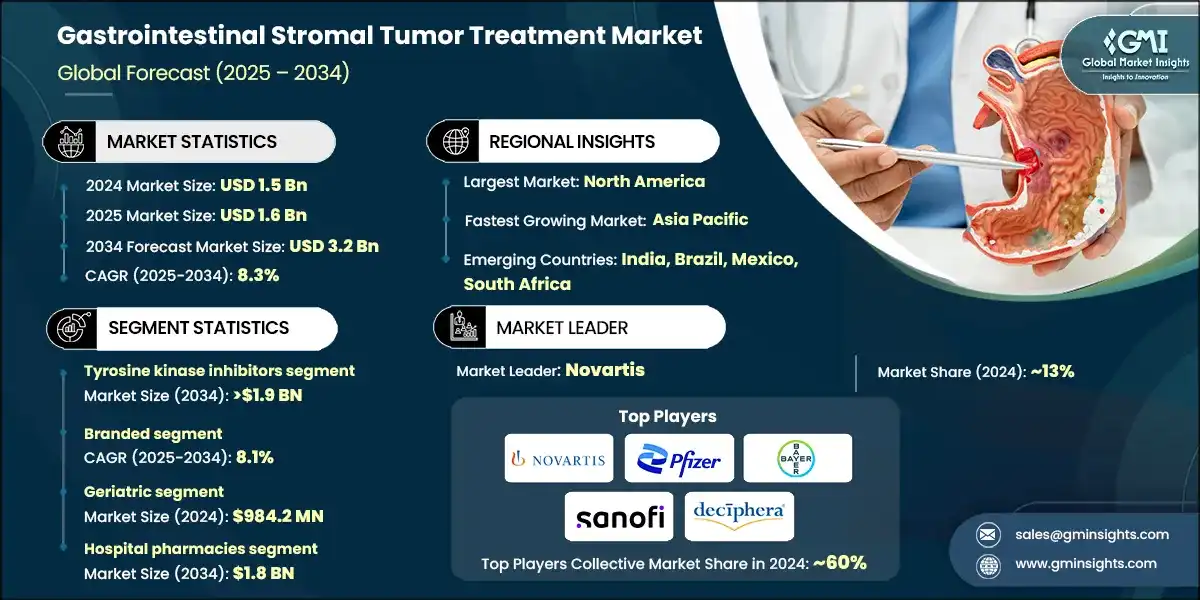
The global gastrointestinal stromal tumor treatment market was estimated at USD 1.5 billion in 2024. The market is expected to grow from USD 1.6 billion in 2025 to USD 3.2 billion in 2034, at a CAGR of 8.3%, according to the latest report published by Global Market Insights Inc. This growth is stimulated by the rising global prevalence of gastrointestinal cancers and increasing awareness of rare tumor types.
To get key market trends
According to NIH, the gastrointestinal cancers account for about 26% of all global cancer incidences, with 35% death rate among same, stimulating the market demand for gastrointestinal therapeutics. Additionally, Journal of Advances in Medicine and Medical Research mentions, incidence rate varies between 6.5 and 14.5 per million people globally per year.
Moreover, advancements in targeted therapies, particularly tyrosine kinase inhibitors, are significantly improving treatment outcomes and survival rates. Additionally, the growing incidence of metastatic and treatment-resistant tumors is stimulating demand for innovative therapies such as ripretinib, avapritinib and regorafenib. These drugs are increasingly used to manage disease progression and improve quality of life for patients across various stages of the condition.
Gastrointestinal stromal tumor treatments include medications administered orally, available through hospital pharmacies, retail pharmacies, and online platforms. These therapies span categories such as tyrosine kinase inhibitors, multikinase inhibitors, and combination therapies, and are used to treat both primary and metastatic tumors. The market is characterized by the presence of several global pharmaceutical companies. The top players include Novartis, Pfizer, Bayer, Deciphera Pharmaceuticals and Sanofi collectively accounting for a significant share of the market.
The market has seen investment in research and development, leading to the approval of novel therapies and expanding indications. Precision oncology and mutation-specific treatments are reshaping the therapeutic landscape, with drugs tailored to specific genetic mutations showing increased efficacy and reduced side effects.
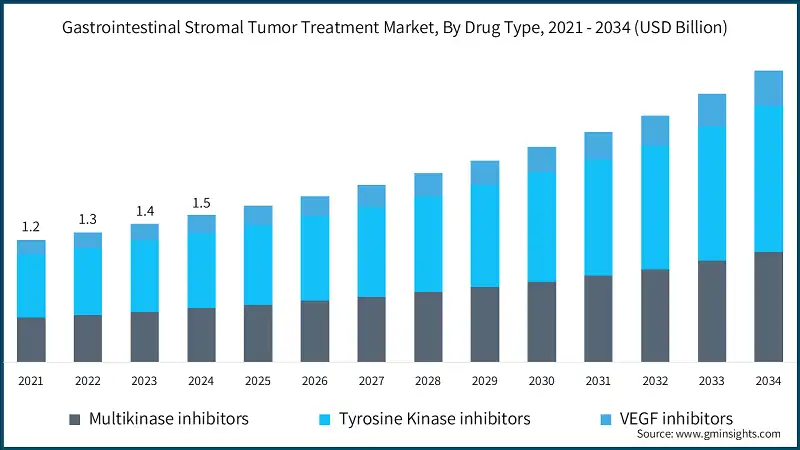
The global gastrointestinal stromal tumor treatment market has witnessed consistent growth, rising from USD 1.2 billion in 2021 to USD 1.4 billion in 2023, escalated by improved diagnostic capabilities, early detection, and the adoption of personalized medicine. The increasing focus on targeted therapies and the integration of companion diagnostics are further accelerating market expansion.
These treatment solutions are regulated by global health authorities to ensure safety, efficacy, and quality. They are available in various dosage forms including tablets, capsules, and syrup solutions, allowing for flexible administration based on patient needs and tumor stage.
Gastrointestinal Stromal Tumor Treatment Market Report Attributes
| Key Takeaway | Details |
|---|---|
| Market Size & Growth | |
| Base Year | 2024 |
| Market Size in 2024 | USD 1.5 Billion |
| Market Size in 2025 | USD 1.6 Billion |
| Forecast Period 2025 - 2034 CAGR | 8.3% |
| Market Size in 2034 | USD 3.2 Billion |
| Key Market Trends | |
| Drivers | Impact |
| Increasing prevalence gastrointestinal stromal tumors | Rising global incidence of gastrointestinal cancers is driving demand for targeted therapies and early diagnosis. |
| Advancing age and genetic predisposition | Older adults and individuals with inherited mutations are more susceptible, expanding the treatment base. |
| Breakthroughs in targeted therapy | Development of mutation-specific drugs like avapritinib and ripretinib. |
| Growing awareness of recurrence and resistance | Recognition of tumor relapse and drug resistance is increasing demand for multi-line therapies and long-term management. |
| Pitfalls & Challenges | Impact |
| Adverse effects and resistance to therapy | Side effects and resistance to first-line treatments may limit efficacy and patient adherence. |
| Limited access in low-income regions | High cost and lack of specialized oncology care restrict access to advanced therapies in developing countries. |
| Opportunities: | Impact |
| Development of mutation-specific and combination therapies | Innovations targeting rare mutations and combining TKIs with immunotherapies are enhancing clinical outcomes. |
| Expansion of genomic testing and personalized medicine | Integration of molecular diagnostics is enabling tailored treatment plans and improving therapeutic success. |
| Market Leaders (2024) | |
| Market Leaders |
~13% market share |
| Top Players |
Collective Market Share is ~60% |
| Competitive Edge |
|
| Regional Insights | |
| Largest Market | North America |
| Fastest Growing Market | Asia Pacific |
| Emerging Countries | India, Brazil, Mexico, South Africa |
| Future outlook |
|
What are the growth opportunities in this market?
Gastrointestinal Stromal Tumor Treatment Market Trends
- The increasing shift towards the precision oncology and personalized medicine is changing the way of growing market of the global gastrointestinal stromal tumor treatment, with patients increasingly seeking for mutation-specific cancer immunotherapy that offer improved outcomes and reduced side effects.
- Additionally, the integration of AI-powered diagnostics and molecular profiling is escalating the market by enabling earlier detection and more accurate treatment planning for gastrointestinal stromal tumors.
- Furthermore, the rising cost of traditional chemotherapy and hospital-based care is encouraging patients to adopt targeted oral therapies that are more affordable and manageable for long-term use.
- The market is also witnessing a rising focus on rare cancer research, which stimulates the demand for innovative therapies and supports the development of orphan drugs specifically for gastrointestinal stromal tumors.
- Moreover, the emergence of combination therapy strategies is appealing to oncologists seeking to overcome resistance and enhance treatment efficacy, thereby driving adoption in advanced and metastatic cases.
- Increasing investment in tele-oncology platforms and remote monitoring is improving access to specialized care, especially in underserved regions, and supporting adherence to long-term treatment regimens.
- Growing awareness of recurrence and resistance risks is prompting oncologists and patients to explore multi-line therapies and extended treatment plans, further expanding the market.
- Development of patient-centric formulations such as extended-release tablets and mutation-specific dosing regimens is improving convenience and compliance, supporting broader adoption of gastrointestinal stromal tumor therapies.
Gastrointestinal Stromal Tumor Treatment Market Analysis
Learn more about the key segments shaping this market
Based on drug type, the gastrointestinal stromal tumor treatment market is categorized into multikinase inhibitors, tyrosine kinase inhibitors and VEGF inhibitors. The tyrosine kinase inhibitors segment accounted for 62.3% of the market in 2024 which is stimulated due to their targeted mechanism of action and proven clinical efficacy. The segment is expected to exceed USD 1.9 billion by 2034, growing at a CAGR of 8% during the forecast period.
- The tyrosine kinase inhibitors segment dominates the market, due to a shift trend towards personalized medicine. According to Annals of Oncology, Imatinib which is a tyrosine kinase inhibitor, is a standard first line treatment for the condition especially for the metastatic gastrointestinal stromal tumor stage.
- Additionally, as NIH mentions, tyrosine kinase inhibitors show higher efficacy for the treatment of gastrointestinal stromal tumor, further escalating the segment domination.
- Moreover, regulatory approvals, inclusion in global oncology guidelines, and strong reimbursement frameworks have further accelerated their adoption across hospital and specialty care settings.
- Rising awareness among oncologists and patients regarding mutation-specific therapies is expected to sustain the growth.
- The multikinase inhibitors segment is expected to grow at a CAGR of 8.6%, driven by the increasing complexity of tumor biology and the emergence of resistance to single-pathway inhibitors.
- Moreover, the VEGF inhibitors segment accounted for a market share of 9.1%, which is primarily used to inhibit angiogenesis in GIST tumors. The rising focus on tumor microenvironment modulation has led to increased interest in VEGF-targeting agents, especially in combination with TKIs.
Based on type, the gastrointestinal stromal tumor treatment market is segmented into branded and generics. The branded segment dominated the market in 2024 with the CAGR of 8.1% driven by the clinical efficacy, regulatory approvals, and innovation associated with branded therapies.
- Branded drugs have become important in gastrointestinal stromal tumor treatment due to their targeted action on KIT and PDGFRA mutations, which are common in gastrointestinal stromal tumor patients.
- Moreover, these therapies are supported by long clinical trial data, FDA approvals, and inclusion in global treatment guidelines, making them the preferred choice among oncologists.
- The branded segment benefits from ongoing research and development investments, leading to the development of next-generation TKIs and combination therapies that address drug resistance and improve patient outcomes.
- Additionally, branded drugs are often covered under government and private insurance programs, especially in hospital settings, ensuring accessibility despite their higher cost.
- Additionally, the generic segment is also expected to grow steadily, the segment is dominated by cost-effective alternative, particularly in low- and middle-income countries and for long-term maintenance therapy.
Based on age group, the gastrointestinal stromal tumor treatment market is segmented into adults and geriatric. The geriatric segment dominated the market with USD 984.2 million in 2024, the segment domination is stimulated due to their lower immunity and prone to infections and diseases.
- The geriatric population dominates the gastrointestinal stromal tumor treatment market as gastrointestinal stromal tumor are more commonly diagnosed in individuals aged 60 and above. According to Pathology and Oncology Research, gastrointestinal stromal tumor cases were more prevalent in old-aged group with 50.4% prevalence further followed by middle-aged people with 44% prevalence, stimulating the market demand for innovative solutions.
- Moreover, the geriatric population the primary demographic for targeted therapies such as tyrosine kinase inhibitors, American Cancer Society mentions, gastrointestinal stromal tumor is most found in people over the age of 50, these tumors are rare in people younger than 40.
- Older patients often present with comorbidities that require integrated care, which is more readily available in hospital settings and specialized cancer centers.
- The geriatric segment benefits from government healthcare programs and insurance coverage that prioritize early diagnosis and access to high-cost therapies, ensuring better treatment adherence and outcomes.
- Whereas, the adult segment holds a significant share of the gastrointestinal stromal tumor treatment market, stimulated by factors such as sedentary lifestyles, obesity, and increased surgical procedures. While adults generally face fewer health complications than the elderly, they still require effective treatment options, especially in cases related to surgery or cancer.
Learn more about the key segments shaping this market
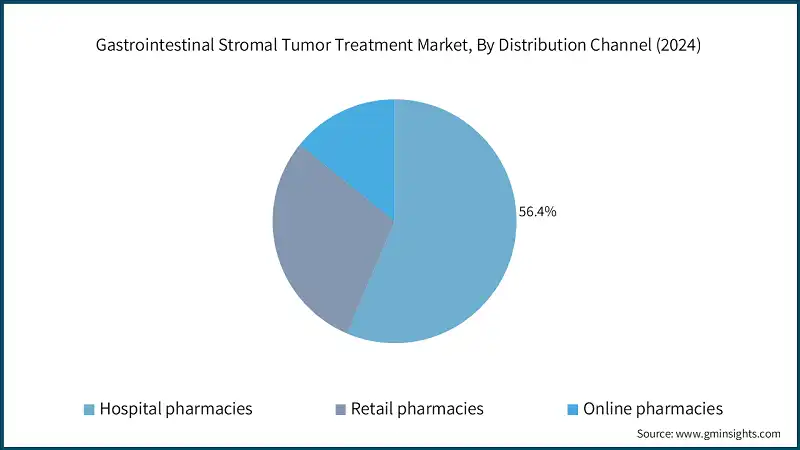
Based on distribution channel, the gastrointestinal stromal tumor treatment market is categorized into hospital pharmacies, retail pharmacies and online pharmacies. The hospital pharmacies segment is anticipated to reach USD 1.8 billion by 2034, growing with a significant CAGR of 8.3% during the analysis period due to the increasing reliance on specialized oncology care and the availability of advanced diagnostic and therapeutic services within hospital settings.
- Hospitals dominated the gastrointestinal stromal tumor treatment market due to rising prevalence of gastrointestinal stromal tumors, particularly among aging populations, has led to a growing preference for hospital-based treatment where patients can access multidisciplinary care, including oncologists, pathologists, and genetic testing facilities.
- Moreover, hospital pharmacies play a central role in dispensing mutation-specific therapies such as tyrosine kinase inhibitors, ensuring accurate dosing and monitoring. The complexity of GIST treatment, which often involves multi-line therapy and management of drug resistance, makes hospital pharmacies the preferred location for initiating and adjusting treatment regimens.
- Government healthcare programs and insurance providers often route high-cost cancer therapies through hospital systems to ensure proper administration and compliance. This is a key node in the cancer treatment supply chain, especially for therapies requiring close monitoring and specialist oversight.
- However, retail pharmacies serve as a convenient access point for patients undergoing maintenance therapy or those patients in stable condition post-hospital treatment. Their role is growing in regions with strong outpatient care systems.
- Also, online pharmacies are emerging as a cost-effective and discreet channel for GIST treatment, particularly in urban and tech-savvy populations, as they offer home delivery of oral medications, which is beneficial for patients with mobility issues.
Looking for region specific data?
North America Gastrointestinal Stromal Tumor Treatment Market
The North America market dominated the market with a market share of 43.5% in 2024. The market is stimulated by the rising prevalence of gastrointestinal cancer and increased investment for innovative solutions.
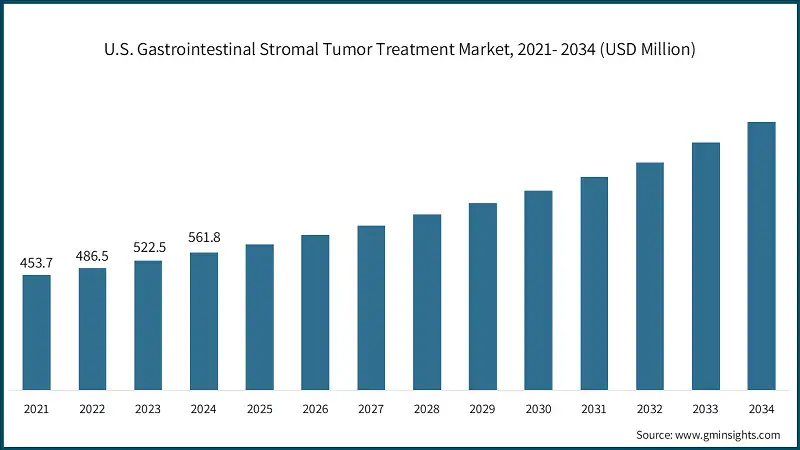
The U.S. market was valued at USD 453.7 million and USD 486.5 million in 2021 and 2022, respectively. The market size reached USD 561.8 million in 2024, growing from USD 522.5 million in 2023.
- The U.S. experiences a high number of cases for gastrointestinal stromal tumor, found especially in stomach. According to American Cancer Society, every year the cases vary from 4,000 to 6,000 in U.S. per year and of all cases about 60% of the cases are caused in stomach, stimulating the market demand for stomach cancer treatment solutions.
- Additionally, with advancements in diagnostic imaging and molecular testing, more cases of GIST are being accurately identified in the U.S., leading to a higher number of patients entering the treatment pathway.
- Moreover, FDA regulatory that support disease drug production and reimbursement policies accelerate the approval and adoption of both branded and generic gastrointestinal stromal tumor treatment products.
Europe Gastrointestinal Stromal Tumor Treatment Market
Europe market accounted for USD 381.5 million in 2024 and is anticipated to show lucrative growth over the forecast period.
- In countries such as Germany and France, rising cancer screening rates and access to advanced molecular diagnostics are leading to earlier detection of gastrointestinal stromal tumors, increasing the number of patients eligible for targeted therapies.
- Moreover, European-based companies such as Sanofi and Bayer are expanding gastrointestinal stromal tumor treatment portfolios through acquisitions and innovation, contributing to greater availability of mutation-specific therapies across the region.
- Countries such as UK, Italy, and Spain are strengthening national cancer care programs, improving access to high-cost therapies such as avapritinib and regorafenib for eligible patients.
Germany gastrointestinal stromal tumor treatment market is anticipated to witness considerable growth over the analysis period.
- The advancing age population is contributing to the rise in cancer cases, including gastrointestinal stromal tumor, with indicating an increase in per capita cancer-related healthcare spending by 2050 due to age-related risk factors and longer treatment durations. According to Statistisches Bundesamt, by 2030 the population above 67 years and old will increase to at least 20 million.
- Moreover, the men population in Germany is found to be more susceptible to the disease, stimulating the market demand. According to a study by Springer, 92.1% people were older than 50 years old, and 54.1% patients were male.
- The country has a strong healthcare infrastructure and emphasis on early cancer detection are enabling broader access to molecular diagnostics and targeted therapies, which is escalating earlier intervention and increasing demand for mutation-specific treatments.
Asia Pacific Gastrointestinal Stromal Tumor Treatment Market
The Asia Pacific market is anticipated to grow at the highest CAGR of 8.6% during the analysis timeframe.
- Key markets in the region include China, India, Japan, South Korea, and Australia, where rising cases and growing healthcare investments are stimulating demand for advanced treatment solutions.
- Additionally, increasing growth in the number of hospitals, diagnostic centers, and respiratory care clinics particularly in urban areas is stimulating the expansion of the market.
China gastrointestinal stromal tumor treatment market is predicted to grow significantly over the forecast period.
- The country has a higher aging population as compared to other countries that contribute to a higher incidence of gastrointestinal cancers, including gastrointestinal stromal tumor, as people over the age of 60 are more susceptible to tumor development and require long-term treatment and monitoring.
- Moreover, high levels of air and water pollution in industrial and urban regions have been linked to increased cancer incidence, particularly in areas with co-exposure to multiple pollutants, which is stimulating demand for advanced cancer diagnostics and therapies.
- Additionally, urbanization and population density in major cities such as Beijing, Shanghai, and Guangzhou have led to improved access to healthcare infrastructure, enabling earlier diagnosis and increasing uptake of targeted therapies for GIST.
Latin America Gastrointestinal Stromal Tumor Treatment Market
Brazil is experiencing significant growth in the Latin America market due to the increasing demand for gastrointestinal stromal tumor solutions and long-term care.
- The rising case of gastrointestinal stromal tumor in Brazil is stimulating the market demand. According to NIH, 58% cases of gastrointestinal stromal tumor were found in male and about 63% cases were found in stomach. in Brazil, and southern Brazil had high prevalence.
- Brazilian government programs are changing gastrointestinal care through national innovative solutions and public hospital protocols, promoting consistent demand for advanced therapies in gastrointestinal stromal tumor management.
Middle East and Africa Gastrointestinal Stromal Tumor Treatment Market
Saudi Arabia market is poised to witness substantial growth in Middle East and Africa market during the forecast period.
- The vision 2030 set by the government is stimulating expansion of cancer care infrastructure, including specialized clinics, mobile health units, and diagnostic labs.
- Moreover, national programs for cancer control reflect strong support for tyrosine inhibitors therapies, contributing to market.
- Rising incomes and evolving health awareness have led to increased demand for chronic disease management, including therapy for conditions such as gastrointestinal stromal tumor.
Gastrointestinal Stromal Tumor Treatment Market Share
Leading companies such as Pfizer, Novartis, Bayer, Sanofi, and Deciphera Pharmaceuticals collectively hold approximately 60% of the market share in the market. These companies maintain dominance through robust portfolios of tyrosine kinase inhibitors, strategic acquisitions, regulatory expertise, and continued investment in mutation-specific therapies.
Pfizer holds a strong competitive advantage with Sutent, a widely used second-line treatment for patients resistant to imatinib. Novartis leads with Gleevec, the first approved therapy for GIST, and continues to benefit from its early-mover advantage and global reach. Bayer supports the market with Stivarga, a third-line therapy for advanced cases, backed by extensive clinical validation. Sanofi strengthened its position through the acquisition of Blueprint Medicines, gaining access to Ayvakit, a targeted therapy for PDGFRA-mutated GIST. Deciphera Pharmaceuticals contributes with Qinlock, a fourth-line treatment designed to address resistance mutations, reinforcing its role in late-stage management.
Emerging players Takeda Pharmaceuticals F. Hoffmann-La Roche Sun Pharmaceutical and niche players such as Glenmark, Natco Pharma, Shorla Oncology, and others are gaining traction with generic formulations, mutation-specific therapies, and regional market strategies. These companies contribute to market growth through cost-effective alternatives, localized distribution networks, and innovation in advanced-stage treatment options.
Gastrointestinal Stromal Tumor Treatment Market Companies
Few prominent players operating in the gastrointestinal stromal tumor treatment industry includes:
- AngioDynamics
- Argon Medical Products
- Bayer
- Deciphera Pharma
- F. Hoffmann-La Roche
- Glenmark
- Natco Pharma
- Novartis
- Pfizer
- Sanofi
- Shorla Oncology
- Sun Pharma
- Takeda Pharmaceuticals
- Novartis
Novartis leads the gastrointestinal stromal tumor treatment market with 13% market share due to its flagship drug Gleevec, which has set the standard for first-line therapy by targeting KIT mutations and maintaining long-term disease control across global markets. The company’s strong clinical legacy, extensive research infrastructure, and global distribution network continue to reinforce its leadership in this therapeutic area.
Pfizer plays a critical role in the market through Sutent, a second-line treatment for patients who develop resistance to imatinib, offering a well-established option supported by robust clinical data. Its global oncology presence, investment in real-world evidence, and integration of patient support programs contribute to its sustained relevance in advanced-stage treatment.
Bayer maintains a strong position with Stivarga, a third-line therapy used in advanced and metastatic gastrointestinal stromal tumors, particularly after failure of prior TKIs. The company’s focus on multikinase inhibition, combined with its commitment to expanding access and ongoing clinical development, supports its continued impact in later-line treatment settings.
Gastrointestinal Stromal Tumor Treatment Industry News
- In July 2025, Sanofi completed the acquisition of Blueprint Medicines, gaining access to its commercialized drug Ayvakit/Ayvakyt. This acquisition enhanced Sanofi’s capabilities in the gastrointestinal stromal tumor treatment segment.
- In January 2025, GSK acquired IDRx, a clinical-stage biopharmaceutical company focused on precision therapeutics for gastrointestinal stromal tumors. This acquisition strengthened GSK’s oncology pipeline and expanded its presence in gastrointestinal cancer therapeutics.
The gastrointestinal stromal tumor treatment market research report includes in-depth coverage of the industry with estimates and forecast in terms of revenue in USD Million from 2021 - 2034 for the following segments:
Market, By Drug Type
- Multikinase inhibitors
- Tyrosine kinase inhibitors
- VEGF inhibitors
Market, By Type
- Branded
- Generics
Market, By Age Group
- Adult
- Geriatric
Market, By Distribution Channel
- Hospital pharmacies
- Retail pharmacies
- Online pharmacies
The above information is provided for the following regions and countries:
- North America
- U.S.
- Canada
- Europe
- Germany
- UK
- France
- Italy
- Spain
- Netherlands
- Asia Pacific
- China
- Japan
- India
- Australia
- South Korea
- Latin America
- Brazil
- Mexico
- Argentina
- Middle East and Africa
- South Africa
- Saudi Arabia
- UAE
Frequently Asked Question(FAQ) :
Who are the key players in the gastrointestinal stromal tumor treatment market?
Key players include Novartis, Pfizer, Bayer, Sanofi, Deciphera Pharmaceuticals, F. Hoffmann-La Roche, Takeda Pharmaceuticals, Sun Pharma, Glenmark, Natco Pharma, and Shorla Oncology.
What are the upcoming trends in the gastrointestinal stromal tumor treatment industry?
Key trends include adoption of mutation-specific therapies, AI-powered molecular diagnostics, integration of tele-oncology, expansion of precision medicine, and development of orphan drugs for rare cancer subtypes.
Which region leads the gastrointestinal stromal tumor treatment market?
North America held 43.5% share in 2024, valued at USD 561.8 million, driven by high GIST prevalence, advanced diagnostic infrastructure, and strong regulatory and reimbursement support.
What is the market size of the gastrointestinal stromal tumor treatment in 2024?
The market size was USD 1.5 billion in 2024, with a CAGR of 8.3% expected through 2034 driven by the rising prevalence of gastrointestinal cancers, awareness of rare tumor types, and advancements in targeted therapies.
How much revenue did the tyrosine kinase inhibitors (TKIs) segment generate?
The tyrosine kinase inhibitors segment accounted for 62.3% of the market in 2024 and is projected to exceed USD 1.9 billion by 2034, driven by their targeted mechanism of action and clinical efficacy.
What is the projected size of the gastrointestinal stromal tumor treatment industry in 2025?
The gastrointestinal stromal tumor treatment market is expected to reach USD 1.6 billion in 2025.
What is the projected value of the gastrointestinal stromal tumor treatment market by 2034?
The market is expected to reach USD 3.2 billion by 2034, supported by mutation-specific drugs, precision oncology, and growing access to innovative treatments.
Gastrointestinal Stromal Tumor Treatment Market Scope
Related Reports