Summary
Table of Content

Functional Foods Market
Get a free sample of this report
Form submitted successfully!
Error submitting form. Please try again.
Thank you!
Your inquiry has been received. Our team will reach out to you with the required details via email. To ensure that you don't miss their response, kindly remember to check your spam folder as well!
Request Sectional Data
Thank you!
Your inquiry has been received. Our team will reach out to you with the required details via email. To ensure that you don't miss their response, kindly remember to check your spam folder as well!
Form submitted successfully!
Error submitting form. Please try again.
Functional Foods Market Size
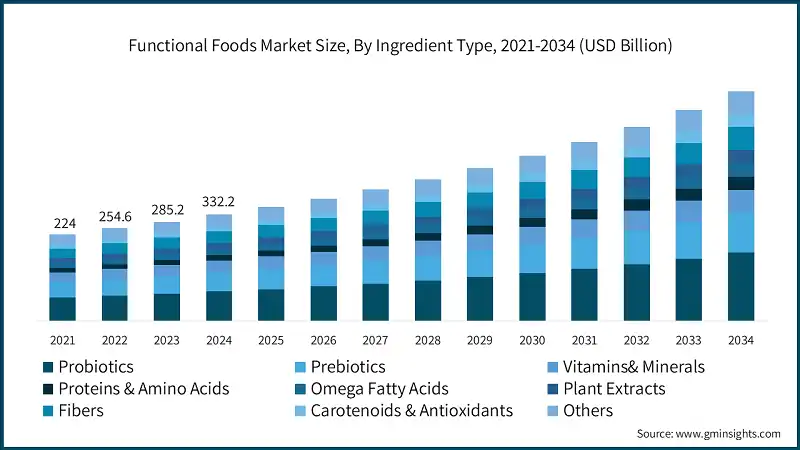
The global functional foods market size was estimated at USD 332.2 billion in 2024. It is expected to grow from USD 350 billion in 2025 to USD 638 billion by 2034, at a CAGR of 6.9%, according to latest report published by Global Market Insights Inc.
Functional Foods Market Key Takeaways
Market Size & Growth
- 2024 Market Size: USD 332.2 Billion
- 2025 Market Size: USD 350 Billion
- 2034 Forecast Market Size: USD 638 Billion
- CAGR (2025–2034): 6.9%
Key Market Drivers
- Rising health consciousness & preventive healthcare adoption.
- Aging population & age-related health concerns.
- Government health initiatives & dietary guidelines.
Challenges
- High Production Costs & Complex Formulation.
- Regulatory Compliance & Health Claim Restrictions.
Opportunity
- Rising Popularity of Plant-Based and Clean-Label Functional Foods.
- Integration of Digital Health and Personalized Nutrition Platforms.
Key Players
- Market Leader: Nestle S.A. led with over 14.6% market share in 2024.
- Leading Players: Top 5 players in this market include Nestle S.A., Danone SA, PepsiCo Inc, Abbott, General Mills Inc., which collectively held a market share of 46.5% in 2024.
Get Market Insights & Growth Opportunities
- Consumer behavior towards functional foods is being greatly affected by the growing awareness regarding the connection between diet and health. According to a study published in Frontiers in Nutrition, health consciousness has a positive influence on the attitude of consumers to functional foods, and people act as active tenders of nutritional information, as well as can critically assess health claims. This increased health consciousness is creating a rise in the demand for foods with such extra health benefits as improved immune support and digestive capability on top of the basic nutrition.
- The aging population in the world is increasing the demand of functional foods that would meet the health conditions of the aging population. It has been established that aged people usually encounter such disorders as high blood pressure, diabetes, and heart diseases, which affect their eating habits. In a study published by SAGE Open Medicine, the health needs of the seniors had a significant influence on their intention of consuming functional foods because they have a direct correlation between these foods and their health conditions.
- The policies of the government are important in encouraging people to consume functional foods. The article by the U.S. Department of Health and Human Services titled Food Is Medicine Landscape Summary addresses the issue of the impact of unhealthy dietary consumption on chronic diseases, discussing the necessity to switch to better nutrition. The report has indicated that poor diet is the cause of almost one-fifth of the total costs of heart disease, stroke, and diabetes, and thus the significance of interventions based on diet.
- Functional foods are gradually being promoted as healthcare preventive in the world by governments and health organizations. To elaborate, the United States Centers of Disease Control and Prevention (CDC) identify the importance of nutrient-enriched diets in immune-promoting those individuals who are at risk, e.g., older people and those with chronic diseases. Similarly, other countries such as the United Kingdom and Canada also run awareness programs in their population on the benefits of fortified foods and supplements to prevent nutrient deficiencies and wellness.

To get key market trends
Functional Foods Market Trends
- Functional drinks are on a massive developmental path, and this is due to the demand by the consumer to take drinks that contain health benefits and not just simple hydration. Developing products like probiotic-enriched drinks, fortified waters and functional teas are on the rise because consumers are looking to find easy means of boosting their health. This trend is transforming into the beverage market with firms dedicating themselves to innovation to satisfy the changing needs of health-conscious consumers.
- Functional mushrooms which have cognitive and nutritional benefits are gaining popularity in different food and beverage products. The addition of mushrooms, such as lion’s mane and reishi, into products, such as coffee, snacks, and supplements, is a larger movement toward functional ingredients that promote mental health. This trend is widening the functional foods, which are bringing new ingredients that are attractive to consumers who desire holistic health advantages.
- There is a growing trend among consumers to seek products that have clean labels with natural and minimally processed products being preferred. This favor is also making manufacturers re-engineer their productions to exclude artificial additives and work towards transparency in the sourcing of ingredients. Clean label movement is making changes to product development in different categories, such as snacks as well as beverages, as firms are attempting to satisfy customer demands towards simplicity and naturalness in edible items.
- The development of functional foods developed on personal health requirements is being caused by advancements in personalized nutrition. Businesses are using data analytics and consumer insights to produce products to meet a specific health need, like digestive health or immunity. This is a trend whereby innovation in product offerings is being enhanced, enabling the consumer to make their own choices based on their special health objectives of what they wish to consume as functional food.
Functional Foods Market Analysis
Learn more about the key segments shaping this market
Based on ingredient type, the market is segmented into probiotics, prebiotics, vitamins & minerals, proteins & amino acids, omega fatty acids, plant extracts, fibers, carotenoids & antioxidants, and others. Vitamins & minerals hold a significant share at a valuation of USD 90.4 billion in 2024.
- Vitamins and minerals dominate the functional foods market, with the highest market share as most consumers are aware of the health benefits of these products. These are the ingredients used in drinks, cereals, snacks and milk items to help with body strength, immunity and wellbeing. Both developed and emerging markets are at a high level of adoption due to preventative health habits and a growing concern with the contents of healthy diets, with fortified products becoming a fundamental element of most functional food lines.
- Besides this, products with gut health, protein enrichment and heart-related benefits are recording fast growth. Probiotics, prebiotics, protein-enriched functional foods are becoming more popular among those who want to be healthy in the digestive system, recover faster, and feel active throughout the day. Vegetarian and more antioxidant products are also on the rise particularly with health conscious and lifestyle-oriented consumers. Collectively these trends are contributing to the innovation of products and broadening the functional foods of mere nutrition.
Based on product, the functional foods market is segmented into Functional dairy Products, Bakery & Cereals, Functional Beverages, Confectionary, Infant & Baby Foods, Meat & Fish Products, and Others. Functional dairy products hold a significant share at a valuation of USD 103.6 billion in 2024.
- The market functional foods are divided in terms of product category, where functional dairy products are predominant among the market, because they are widely consumed in the marketplace and are rich in nutrients. Vitamins, minerals, probiotics and protein are added to dairy products including fortified milk, yoghurts and cheese to meet the requirements of immunity, digestive and bone strengthening. It has good consumer trust, distribution channels, and high penetration in both developed and emerging markets; hence, the segment is the foundation of the functional food portfolios.
- Other product lines such as cereals, bakery and functional beverages are also recording a stable growth rate due to the convenience, fortified formulas, and lifestyle-oriented nutrition trends. Brands that focus on children, athletes, and health-conscious adults are growing in popularity, and brands based on plants and protein additions are making inroads with the niche consumer segments. Collectively, the segments complement the dairy products which encourage innovation and spread the market of the overall functional foods.
Learn more about the key segments shaping this market
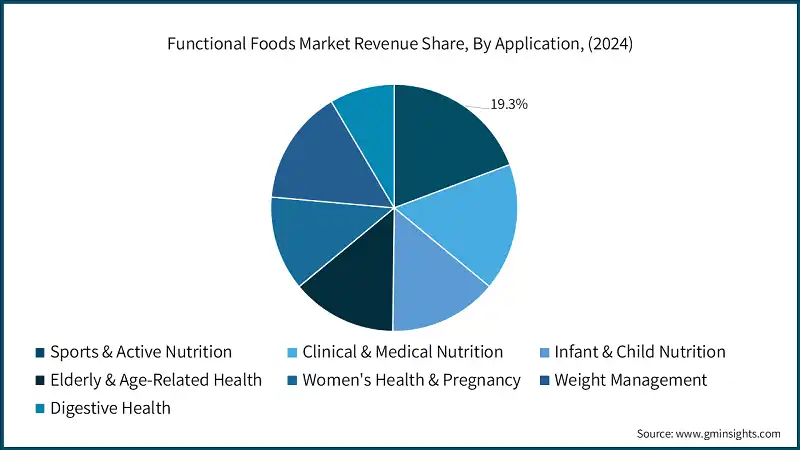
Based on application, the market is segmented into sports & active nutrition, clinical & medical nutrition, infant & child nutrition, elderly & age-related health, women's health & pregnancy, weight management, and digestive health. Sports & active nutrition is estimated to grasp a value of USD 68.3 billion in 2025 and is expected to grow at 8.2% of CAGR during the forecast period.
- Sports and active nutrition dominate the segment, as the consumers are becoming increasingly interested in fitness, muscle recovery, and sustained energy. Protein bars, protein fortified drinks and electrolyte drinks are the most common products among sports people, gymsters and other consumers with active lifestyles. The growth of the segment can be attributed to the growing health awareness, the popularity of sporting activities, and the need to have convenient nutrition therapy that promotes performance and recovery.
- Clinical and medical nutrition, infant and child nutrition and digestive health are other applications that are under steady growth thanks to targeted health benefits. Customized products with the senior population, women and weight are on the rise following the aging population, maternal health consciousness, and obesity issues. All these applications are creating innovation, customized solutions, and differentiation in the market.
Looking for region specific data?
North America market accounted for USD 126.9 billion in 2024 and is anticipated to show lucrative growth over the forecast period.
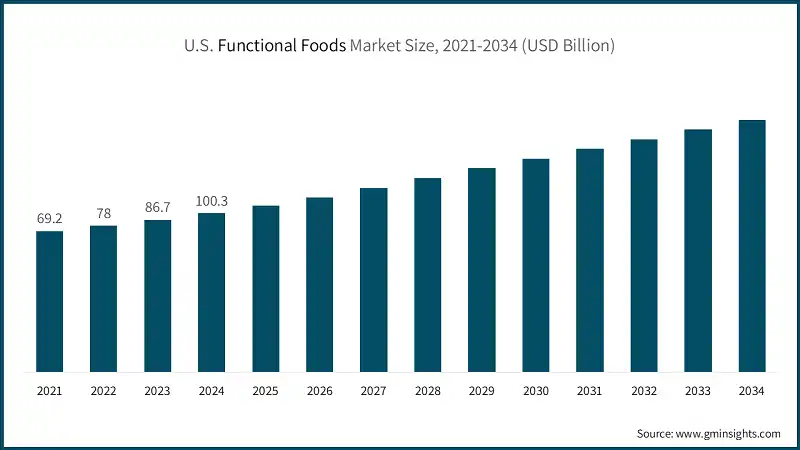
- North America is the largest region contributor to the global functional foods market, with an approximation of 38.2% share in 2024. In this area, the United States has the largest share, after which there is Canada and Mexico. The U.S. is the top market leader since it has high consumer awareness of health, wellness and preventive nutrition besides the fact that it has major players in the multinational industry like PepsiCo, General Mills, Abbott and Kellogg.
- The report by the International Food Information Council (IFIC) shows that more than 65% of consumers in the US in 2024 are investing money in foods or beverages with a functional ingredient like probiotics, vitamins, or adaptogen, which is the clear indication of a significant change to functional eating habits.
- The rising popularity of lifestyle-related health disorders like obesity, diabetes, and cardiovascular diseases, which have driven the consumers toward nutrient-rich substitutes, have contributed to the rapid development of this market. In reaction, firms are pumping large amounts of their resources into research and development and product diversification by launching new formulations that meet the requirements of heart health, digestive wellness, and boosting immunity.
Europe accounted for USD 97.7 billion in 2024 and is anticipated to show lucrative growth over the forecast period.
- Europe has about 29% market share in 2024, and the rate of growth is expected to slowly increase at a CAGR of 6.3% in the forecasted period due to the high level of awareness of health, wellness, and sustainable nutrition. In Europe, Germany, France, and the United Kingdom are the most dominant in the market with high disposable incomes, well established retail infrastructure and functional food culture.
- In Germany, most importantly, there is an overlap of health-conscious customers, an aging market that is keen on medical food, and the presence of large competitors such as Nestle, Danone and Abbott, which is a strong domestic presence of major players.
- The increasing consumer interest towards preventative health care and their functional ingredients like probiotics, vitamins, minerals, and omega-3 fatty acids, contributes to the growth of the region. The clear guidelines of health claims established by the European Food Safety Authority (EFSA) through regulatory support have been an incentive to product development. Firms produce reinforced dairy, functional drinks, high-protein snacks and gut-health solutions to meet the needs of various ages and lifestyles.
Asia Pacific market accounted for USD 80.1 billion in 2024 and is anticipated to show lucrative growth over the forecast period.
- The Asian-Pacific market comprises about 24.1% market share of the functional foods market in 2024 and is the rapidly growing market with the growth in health awareness, urbanization, and disposable income among major countries. China, Japan and India have the highest shares in the region.
- The dominance of China can be explained by its high population, rising middle-income, and intensive use of fortified and functional foods to fill the immunity, digestive, and nutrition requirements of the ageing population. Japan is still important with its developed functional food culture (FOSHU-certified products) and greying population that seeks clinical nutrition options, whereas the Indian market is still growing fast with more consumers looking to eat fortified food, buy protein-enhanced foods, and drink immunity-promoting drinks.
Latin America market accounted for 5.2% market share in 2024 and is anticipated to show steady growth over the forecast period.
- The market of functional foods has a significant presence in Latin America due to the increasing popularity of health and wellness and urbanization. The most powerful markets in the region are Brazil and Mexico, as they have high population and increasing levels of the middle-class income. The consumers in such nations are increasingly moving to fortified foods, protein-enriched snacks as well as functional beverages that help in supporting immunity, digestive health, and overall wellness.
- This is due to the growth of distribution by health-conscious urban consumers through the modern retail channels and e-commerce by major players in the market. Indicatively, fortified dairy and protein-fortified beverages have been rapidly adopting in Brazil and Mexico, as the most people prefer convenient products with a nutrition orientation.
Middle East and Africa market accounted for 3.1% market share in 2024 and is anticipated to show steady growth over the forecast period.
- Middle East & Africa (MEA) is an emerging market in functional foods market and is faced by an accelerating urbanization, increasing disposable income, and growing awareness of preventive care. In the region, Saudi Arabia, UAE, and South Africa have large shares because they have developed retailing systems and have more consumers who are health conscious.
- There is a rapidly increasing usage of functional drinks, fortified dairy and products that boost immunity, especially among the urban population who are desiring the convenience of nutrition. The interest in premium and imported health-oriented foods also contributes to the growth in the region, as well as the growing popularity of lifestyle-related health-related issues like diabetes and obesity.
Functional Foods Market Share
The market of the functional foods is highly concentrated with the top five players, Nestle S.A., Danone S.A., PepsiCo Inc., Abbott Laboratories and General Mills Inc. having 46.5 % of the market share in 2024. Their diversified product lines, worldwide distribution capabilities, as well as continuous innovation in health-friendly food lines make these companies dominate.
Their competitive position cuts across several segments, such as fortified dairy, functional drinks, nutritional supplements, and snacks that are high in protein. All the companies use their brand value, scientific development and local approach to enhance their presence in both the developed and the emerging markets to remain on top of an ever health-conscious consumer base.
The major players in the functional foods industry are focusing on continuous innovations, reformulation, and integration of sustainability as a way of maintaining their competitiveness. They are investing in personalized nutrition technologies, plant-based and probiotic, and leveraging AI-based R&D to come up with specific health solutions. Many of them are seeking strategic mergers, takeovers, and partnerships to take niche categories and enhance regional supply chains.
Also, companies are improving the transparency of their products by clean-label efforts, lowered sugar and fat levels, and the inclusion of functional ingredients, like adaptogens, omega-3s, and prebiotics. The synergy of this science-supported nutrition, consumer confidence and sustainability is helping them to maintain market leadership in the face of stiff competition in the global market.
Functional Foods Market Companies
Major players operating in the functional foods industry are:
- Nutri-Nation
- BASF SE
- Amway
- General Mills Inc.
- GFR Pharma
- The Coca-Cola Company
- Arla Foods amba
- Amway Corp.
- Herbalife International of America, Inc.
- Cargill, Incorporated
- Standard Functional Foods Group Inc.
- Kellogg's
- Danone SA
- PepsiCo Inc
- Abbott
- Nestle S.A.
Nestle S.A. has a significant presence in the international market of functional foods and drinks with a diversified portfolio which incorporates nutrition, health and wellness. The company is always concerned with creating science-based nutrition products in the following categories, infant formula, dairy products, cereals, and medical nutrition. It focuses its innovation approach on gut health, immunity support, and cognitive wellness to capitalize on its advanced research and development by the Nestle Institute of Health Sciences. The sustainability plan of the firm includes becoming carbon neutral and responsible in sourcing which also contributes to its positioning in the market.
Danone S.A. continues to lead the functional and fortified foods market based on its two-fold interest in health using food and sustainability. The firm has a presence in crucial dairy, plant-based drinks, special purpose medical nutrition, and infant nutrition. Its core brands like Activia, Actimel and HiPRO focus on digestive health, high protein and probiotic advantage. Danone is a heavy investor in research partnerships and consumer-focused innovation, aiming at such functional benefits as gut health, metabolic wellness, and immunity.
PepsiCo Inc. has diversified the portfolio with beverage and snack products to meet the growing preference of functional and better-for-you products. The innovativeness of the company is based on nutrient-enriched, lower-sugar, and fibre-enriched formulations in categories. Such significant actions as the introduction of its Gatorade and Propel brands in the form of electrolyte-plus-protein products and the purchase of Poppi, a popular prebiotic soda brand, are important.
Abbott is a large competitor in the functional nutrition and medical foods industry and has an excellent reputation of medical-grade nutritional innovations. Its brands such as Ensure, PediaSure and Glucerna are focused on a particular health requirement like muscle recovery, children nutrition, and diabetes control. The requirement to target the evidence-based formulations demonstrated by the ongoing clinical trials enhances the credibility of the company in the healthcare-nutrition interface.
General Mills Inc. is a major food company in the world and has increased presence in functional and healthy product market segments. The company focuses on high-fibre, protein fortified and probiotic enriched formulations using its brands, which include Cheerios, Nature Valley, and Ratio Food. The innovation strategy of General Mills focuses on the Accelerate- framework which is a combination of digital transformation, clean-label innovation and healthy product development. The company has increased resources in the form of R&D centers and pilot plants to have quick product trials on the changing nutrition demands such as heart health, gut wellness, and energy control.
Functional Foods Market Report Attributes
| Key Takeaway | Details |
|---|---|
| Market Size & Growth | |
| Base Year | 2024 |
| Market Size in 2024 | USD 332.2 Billion |
| Market Size in 2025 | USD 350 Billion |
| Forecast Period 2025 - 2034 CAGR | 6.9% |
| Market Size in 2034 | USD 638 Billion |
| Key Market Trends | |
| Drivers | Impact |
| Rising health consciousness & preventive healthcare adoption | Drives demand nutrient-rich, functional foods as consumers prioritize wellness and disease prevention |
| Aging population & age-related health concerns | Fuels growth in products targeting bone health, immunity, and cognitive support for seniors |
| Government health initiatives & dietary guidelines | Encourages industry compliance and innovation in fortified and clean-label products to meet regulatory standards |
| Pitfalls & Challenges | Impact |
| High Production Costs & Complex Formulation | Limits affordability and scalability, making functional foods less accessible to price-sensitive consumers and slowing adoption in emerging markets |
| Regulatory Compliance & Health Claim Restrictions | Increase time-to-market and R&D expenses, as companies must validate claims and meet stringent labeling standards, reducing innovation speed |
| Opportunities: | Impact |
| Rising Popularity of Plant-Based and Clean-Label Functional Foods | Drives innovation in natural, sustainable formulations, attracting health-conscious consumers and strengthening brand trust. |
| Integration of Digital Health and Personalized Nutrition Platforms | Enables brands to deliver tailored functional food solutions through apps and AI-driven recommendations, boosting customer engagement and premium product adoption. |
| Market Leaders (2024) | |
| Market Leaders |
14.6% |
| Top Players |
Collective market share in 2024 is 46.5% |
| Competitive Edge |
|
| Regional Insights | |
| Largest Market | North America |
| Fastest Growing Market | Asia Pacific |
| Emerging Country | Japan, China, India, U.S. |
| Future Outlook |
|
What are the growth opportunities in this market?
Functional Foods Industry News
- In July 2025, PepsiCo Inc. released its new drink, in the U.S., called Pepsi® Prebiotic Cola, in its mainstream cola category, the first innovation of this category in 20 years. The new product will have the same Pepsi flavour but with 5 g cane sugar and 30 calories in 12-oz cans and contains 3 g of prebiotic fibre - no artificial sweeteners.
- In May 2025, Danone S.A. launched the first refrigerated yoghurt company to launch the first shelf-stable version of its Oikos protein shake in the U.S., a major step forward. The 12 oz bottle contains 30 g of protein, 5 g prebiotic fibre, 1 g sugar, and vitamins A and D to help support the immune system and is offered in vanilla, chocolate and salted caramel.
- In March 2025, PepsiCo bought the prebiotic soda Poppi in the United States of America to expedite its operations in the functional beverage segment. This acquisition underscores the point of M&A being a major strategic instrument of reaching new functional food/ beverage growth points.
The functional foods Market research report includes in-depth coverage of the industry with estimates & forecast in terms of revenue (USD Billion) & volume (Kilo Tons) from 2021 to 2034, for the following segments:
Market, By Ingredient Type
- Probiotics
- Prebiotics
- Vitamins & Minerals
- Proteins & Amino Acids
- Omega Fatty Acids
- Plant Extracts
- Fibers
- Carotenoids & Antioxidants
- Others
Market, By Product
- Functional dairy products
- Yogurt
- Fortified milk
- Cheese
- Bakery & cereals
- Fortified bread
- Cereals
- Snacks bar
- Functional beverages
- Energy drinks
- Juices
- Enhanced water
- Functional teas/coffee
- Confectionary
- Protein bares
- Sugar free chocolates
- Nutraceutical candies
- Infants & baby foods
- Meat & Fish products
- Omega 3 Enriched meat
- Fortified seafood
- Others
- Soups
- Condiments
Market, By Application
- Sports & active nutrition
- Clinical & medical nutrition
- Infant & child nutrition
- Elderly & age-related health
- Women's health & pregnancy
- Weight management
- Digestive health
The above information is provided for the following regions and countries:
- North America
- U.S.
- Canada
- Europe
- UK
- Germany
- France
- Italy
- Spain
- Rest of Europe
- Asia Pacific
- China
- India
- Japan
- South Korea
- Australia
- Rest of Asia Pacific
- Latin America
- Brazil
- Mexico
- Argentina
- Rest of Latin America
- MEA
- UAE
- Saudi Arabia
- South Africa
- Rest of Middle East and Africa
Frequently Asked Question(FAQ) :
What is the market size of the functional foods in 2024?
The market size was USD 332.2 billion in 2024, with a CAGR of 6.9% expected through 2034. Increasing health consciousness and demand for foods with added health benefits are driving market growth.
What is the projected value of the functional foods market by 2034?
The market is poised to reach USD 638 billion by 2034, driven by innovations in personalized nutrition, clean label trends, and the rising popularity of functional ingredients.
What is the expected size of the functional foods industry in 2025?
The market size is projected to reach USD 350 billion in 2025.
How much revenue did the vitamins and minerals segment generate in 2024?
The vitamins and minerals segment generated approximately USD 90.4 billion in 2024, dominating the market due to widespread consumer awareness of their health benefits.
What was the valuation of the functional dairy products segment in 2024?
The functional dairy products segment was valued at USD 103.6 billion in 2024, led by the inclusion of probiotics, vitamins, and proteins in products like fortified milk, yogurts, and cheese.
What is the growth outlook for the sports & active nutrition segment?
The sports & active nutrition segment is set to expand at a CAGR of 8.2% till 2034, reaching USD 68.3 billion in 2025.
Which region leads the functional foods sector?
North America leads the market with a 38.2% share in 2024. The United States dominates the region due to high consumer awareness of health and wellness, along with the presence of major industry players.
What are the upcoming trends in the functional foods market?
Trends include functional drinks, mushroom ingredients, clean labels, and personalized nutrition driving new product innovation and consumer demand.
Who are the key players in the functional foods industry?
Key players include Nutri-Nation, BASF SE, Amway, General Mills Inc., GFR Pharma, The Coca-Cola Company, Arla Foods amba, Amway Corp., Cargill, Incorporated, Standard Functional Foods Group Inc., and Kellogg's.
Functional Foods Market Scope
Related Reports