
Food Flavor Market Size & Share 2026-2035
Market Size By Type (Natural Flavor, Synthetic Flavor), By Flavor (Fruit, Chocolate, Vanilla, Nut, Caramel, Other Flavors), and By Application (Beverages, Dairy Products, Bakery and Confectionery, Savory and Snacks, Other Applications).The market forecasts are provided in terms of value (USD) & (Kilo Tons).
Report ID: GMI13070
|
Published Date: March 2026
|
Report Format: PDF
Download Free PDF
Authors:
Kunal Ahuja, Sagar Hadawale


Food Flavor Market Size
The global food flavor market was valued at USD 12.5 billion in 2025. The market is expected to grow from USD 13 billion in 2026 to USD 19 billion in 2035, at a CAGR of 4.3% according to latest report published by Global Market Insights Inc.
Food Flavor Market Key Takeaways
Market Size & Growth
Regional Dominance
Key Market Drivers
Challenges
Opportunity
Key Players
The market is experiencing steady growth driven by increasing demand for natural and clean-label ingredients across multiple food and beverage applications. Food flavors, encompassing both natural varieties (derived from plant and animal sources) and synthetic flavors (chemically formulated), are gaining prominence due to evolving consumer preferences for authentic taste experiences, health-conscious formulations, and innovative product development. The market trends indicate a significant shift toward natural flavors and sustainable sourcing practices, with consumers and manufacturers increasingly prioritizing transparency, quality, and wellness-oriented ingredients.
In the beverages sector, food flavors play a critical role in product differentiation and consumer appeal, with applications ranging from carbonated soft drinks and energy beverages to functional drinks and flavored waters. The segment demands innovative flavor profiles that deliver refreshing taste experiences while meeting consumer expectations for reduced sugar, natural ingredients, and functional benefits. Fruit flavors dominate the beverage category due to their natural sweetness and versatility, while exotic and tropical flavor combinations are gaining traction driven by global culinary influences and adventurous consumer palates.
The versatility of food flavors extends beyond beverages into bakery and confectionery, dairy products, savory snacks, and prepared foods. In bakery applications, flavors enhance the sensory appeal of breads, cakes, cookies, and pastries, with chocolate, vanilla, and fruit flavors leading the category. The dairy segment benefits from flavor innovation in yogurts, ice creams, flavored milk, and cheese products, where natural flavors are particularly valued for their clean-label appeal. Emerging applications in plant-based foods, functional nutrition products, and ethnic cuisines showcase the material's adaptability. The growing demand for convenience foods, ready-to-eat meals, and snacking occasions is driving flavor innovation to replicate home-cooked taste profiles and deliver consistent quality across packaged food categories.
Food Flavor Market Trends
The food flavor industry is evolving rapidly, shaped by several transformative trends that reflect the industry's commitment to natural ingredients and innovation. The most significant development is the advancement of natural flavor extraction and production technologies, particularly in biotechnology and fermentation-based processes. Companies are investing heavily in methods that utilize microbial fermentation, enzymatic processes, and plant cell culture technologies to produce natural flavors more sustainably and cost-effectively. These innovations enable the creation of authentic taste profiles while addressing supply chain constraints associated with traditional agricultural sourcing.
Regulatory frameworks and certification standards are playing an increasingly important role in shaping market dynamics. Organizations such as the Natural Products Association, USDA Organic, and various international food safety authorities provide guidelines for natural flavor classification and labeling. Regulations regarding clean-label claims, allergen declarations, and ingredient transparency are driving accountability throughout the value chain. The European Union's stringent regulations on flavor substances and the FDA's GRAS (Generally Recognized as Safe) status requirements in the United States create competitive advantages for companies with robust compliance programs while raising barriers for less compliant producers.
Product innovation remains a cornerstone of market development as manufacturers explore new flavor sources and delivery systems. Alternative botanical sources, including exotic fruits, herbs, and spices from diverse geographic regions, are being investigated to create unique taste experiences. Microencapsulation technologies that protect flavor compounds and enable controlled release are gaining traction, particularly in applications requiring heat stability or extended shelf life. In terms of flavor profiles, developments include multisensory flavor experiences combining taste, aroma, and mouthfeel; functional flavors that mask bitter notes in health supplements; and authentic ethnic flavors catering to multicultural consumer bases.
The clean-label movement continues to reshape product formulations across all food categories. Consumers are increasingly scrutinizing ingredient lists and demanding recognizable, pronounceable ingredients. This trend has accelerated the replacement of artificial flavors with natural alternatives, even in traditionally synthetic-dominated categories. Manufacturers are responding by reformulating products, investing in natural flavor R&D, and communicating sourcing transparency through packaging and digital platforms.
Sustainability and ethical sourcing have emerged as critical differentiators in the flavor industry. Companies are implementing traceability systems to verify the origin of botanical raw materials, ensuring compliance with environmental and social responsibility standards. Initiatives to support smallholder farmers, protect biodiversity, and reduce carbon footprints in flavor production are becoming standard practice among leading manufacturers. The circular economy concept is being applied through waste valorization, where by-products from food processing are converted into valuable flavor compounds.
Digitalization and artificial intelligence are transforming flavor development processes. Predictive modeling, sensory analysis databases, and machine learning algorithms are being employed to accelerate flavor creation, optimize formulations, and predict consumer preferences. Virtual tasting technologies and digital sensory platforms enable remote collaboration and faster time-to-market for new flavor innovations.
Food Flavor Market Analysis
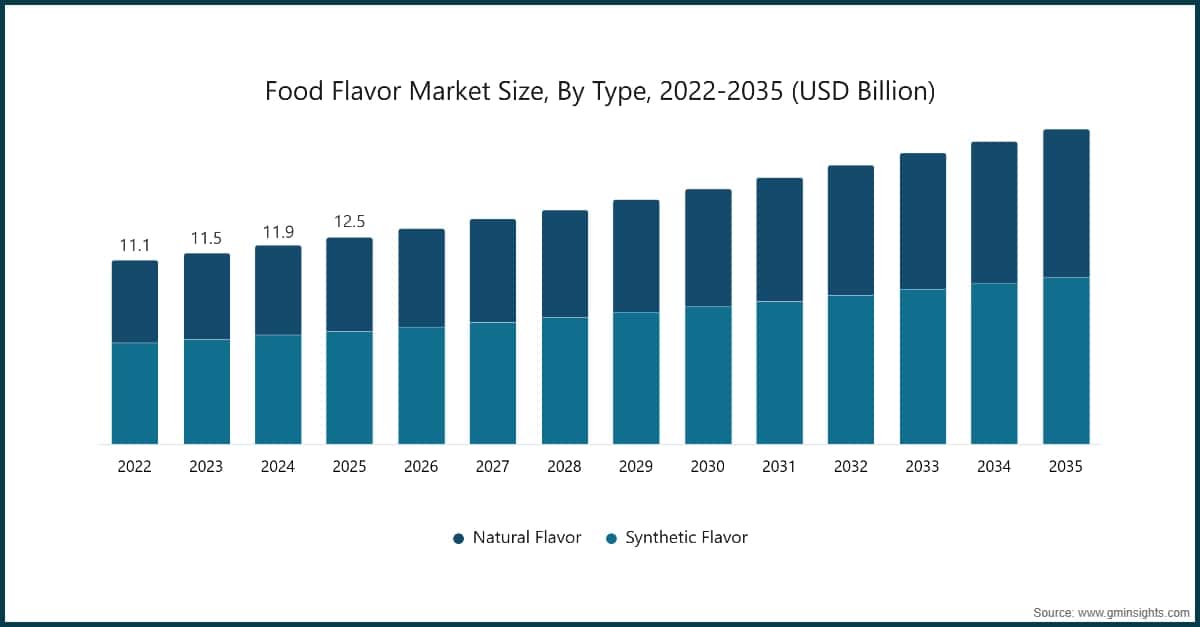
Based on type, the market is segmented into natural flavor and synthetic flavor. Synthetic flavor segment dominated the market with an approximate market share of 54.4% in 2025 and is expected to grow with a CAGR of 4% by 2035.
Synthetic flavors play a significant role in the food flavor market due to their cost-effectiveness, consistency, and longer shelf life compared to natural counterparts. These flavors are chemically formulated to replicate natural tastes and are widely used in processed foods, beverages, confectionery, and snacks. Synthetic flavors offer manufacturers several advantages including standardized quality, year-round availability without seasonal constraints, and scalability for large-volume production. They provide precise control over flavor intensity and profile, enabling consistent taste across production batches. Despite their affordability and technical advantages, growing consumer preference for clean-label and natural products is creating headwinds for synthetic flavor adoption, prompting manufacturers to explore innovative synthetic-natural hybrids and nature-identical compounds that bridge the gap between cost efficiency and consumer perception.
Natural flavors, representing 45.6% market share in 2025 with a robust CAGR of 4.7% through 2035, are experiencing accelerated growth driven by the clean-label movement and health-conscious consumer trends. Natural flavors, derived from plant sources (fruits, vegetables, herbs, spices) and animal sources (dairy, meat), are perceived as healthier, more authentic alternatives to synthetic options. The segment benefits from increasing consumer awareness about ingredient transparency, rising prevalence of food sensitivities and allergies, and regulatory encouragement for natural ingredients. Premium food and beverage brands are increasingly positioning natural flavors as key differentiators, particularly in developed markets where consumers demonstrate willingness to pay premium prices for clean-label products.
The natural flavor segment is being transformed by technological innovations including supercritical CO2 extraction, cold-press methods, and biotechnology-based production through fermentation and enzymatic processes. These advancements are addressing traditional challenges of cost, consistency, and supply chain stability. Applications span across organic foods, premium beverages, artisanal bakery products, and functional foods where natural flavor profiles complement nutritional positioning. The segment is further supported by the growth of plant-based and vegan products, where natural flavors play a crucial role in replicating traditional taste profiles and enhancing palatability.
Based on flavor, the food flavor market is segmented into fruit, chocolate, vanilla, nut, caramel, and other. Fruit holds a dominant market share of 34.4% in 2025 and is expected to grow with a CAGR of 3.9% by 2035.
Fruit flavors are the dominant segment in the food flavor market, driven by their natural sweetness, versatility, and universal consumer appeal. They are extensively used in beverages (juices, carbonated drinks, flavored waters, energy drinks), confectionery (candies, gummies, chewing gum), dairy products (yogurts, ice creams, flavored milk), and bakery applications (fruit-filled pastries, cakes, cookies). As consumers increasingly seek healthier options, fruit-based flavors are favored for their natural appeal and the perception of added nutritional value.
The demand for exotic and tropical fruit flavors (mango, passion fruit, dragon fruit, lychee) has risen significantly, influenced by global culinary trends, travel experiences, and diverse consumer tastes. Berry flavors (strawberry, blueberry, raspberry) maintain strong positions in traditional applications, while citrus flavors (orange, lemon, lime) are valued for their refreshing profiles in beverages and confections. Innovation in fruit flavor combinations, such as fusion profiles blending multiple fruits or pairing fruits with herbs and spices, is creating new taste experiences that appeal to adventurous consumers.
Chocolate flavors represent a substantial segment driven by universal consumer preference for chocolate taste across multiple applications. Chocolate flavors dominate in confectionery, bakery products, dairy desserts, and beverage applications including chocolate milk, protein shakes, and coffee drinks. The segment encompasses various profiles from milk chocolate and dark chocolate to specialty variants like white chocolate, cocoa, and chocolate-mint combinations. Premium and artisanal chocolate flavors are gaining traction in developed markets, while cost-effective chocolate flavor solutions serve mass-market applications in emerging economies.
Based on application, the market is segmented into beverages, dairy products, bakery and confectionery, savory and snacks, and other. Beverages hold a dominant market share of 33.1% in 2025 and is expected to grow with a CAGR of 4% by 2035.
Beverages represent a key application segment for food flavors, with flavors playing a vital role in enhancing taste and consumer experience across diverse beverage categories. The segment encompasses carbonated soft drinks, energy and sports drinks, fruit juices and nectars, flavored waters, ready-to-drink teas and coffees, alcoholic beverages, and functional drinks. Flavors are crucial for product differentiation in the highly competitive beverage market, where unique and refreshing taste profiles drive consumer choice and brand loyalty. As health-conscious consumers demand lower sugar formulations, natural ingredients, and functional benefits, the beverage flavor market is shifting toward natural fruit flavors, botanical extracts, and flavor systems that enhance sweetness perception while reducing sugar content. Innovations in flavor combinations, exotic taste profiles, and customized regional flavors are driving growth in the beverage sector, catering to diverse consumer preferences across age groups and geographic markets.
Bakery and confectionery represents the largest application segment, driven by the extensive use of flavors in breads, cakes, pastries, cookies, biscuits, candies, chocolates, and chewing gums. Flavors enhance the sensory appeal of baked goods and confections, with chocolate, vanilla, fruit, and nut flavors leading the category. The segment benefits from premiumization trends, artisanal bakery growth, and innovation in indulgent confectionery products. Clean-label demands are driving natural flavor adoption in bakery applications, while heat-stable flavor technologies address processing challenges in baking applications.
Dairy products constitute a substantial market segment encompassing yogurts, ice creams, flavored milk, cheese products, dairy desserts, and cream-based products. Flavors are essential for creating variety and enhancing palatability in dairy applications, with fruit flavors dominating yogurt and ice cream categories. The segment is experiencing growth driven by functional dairy products, probiotic beverages, and premium dairy desserts. Natural flavors are particularly valued in dairy applications for their clean-label appeal and compatibility with health positioning. The rise of plant-based dairy alternatives is creating new opportunities for flavor innovation to replicate traditional dairy taste profiles and enhance the palatability of non-dairy products.
The North America food flavor industry is growing steadily on the global level with a market share of 29.6% in 2025.
The United States represents the dominant market within North America, accounting for approximately 83.8% of the regional market with a valuation of USD 3.1 billion in 2025, projected to reach USD 4.6 billion by 2035 at a CAGR of 4%. The U.S. market is characterized by strong consumer demand for natural and clean-label flavors, robust regulatory frameworks governing flavor safety and labeling, and major food and beverage brands driving innovation in taste experiences. The country's advanced food processing industry creates diverse demand for specialized flavor solutions across beverages, snacks, convenience foods, and premium artisanal products. The clean-label movement is particularly strong in the U.S., with consumers actively seeking products with recognizable ingredients and transparent sourcing. Major flavor houses maintain significant R&D facilities in the United States, collaborating with food manufacturers to develop customized flavor solutions. The growing plant-based food sector is creating substantial opportunities for flavor innovation to enhance the taste and consumer acceptance of meat and dairy alternatives.
North America is witnessing robust demand for food flavors driven by increasing consumer awareness regarding health and wellness, the shift toward natural ingredients, and innovation in convenience foods. The established food and beverage industry in the region is actively adopting natural flavor alternatives, with major brands implementing ambitious clean-label commitments and sustainability goals. The region's focus on functional foods, protein-enriched products, and better-for-you snacking is encouraging manufacturers to incorporate sophisticated flavor systems that enhance taste while supporting nutritional positioning. Growing demand for ethnic and global flavors, driven by multicultural demographics and adventurous eating habits, is expanding the market beyond traditional flavor profiles. The craft beverage movement, including craft sodas, artisanal coffee drinks, and premium functional beverages, is creating opportunities for unique and authentic flavor solutions.
Europe food flavor market leads the industry with revenue of USD 2.5 billion in 2025 and is anticipated to show steady growth over the forecast period at a CAGR of 4%, reaching USD 3.7 billion by 2035.
The Asia Pacific food flavor market is anticipated to grow at a CAGR of 3.8% during the analysis timeframe, representing 32.8% global market share in 2025 with a valuation of USD 4.1 billion, projected to reach USD 6 billion by 2035.
Latin America food flavor market accounted for 10.4% market share in 2025 with a valuation of USD 1.3 billion and is anticipated to show the fastest growth over the forecast period at a CAGR of 6.1%, reaching USD 2.4 billion by 2035.
Middle East & Africa food flavor market accounted for USD 800 million market size in 2025 representing 6.4% market share and is anticipated to show strong growth over the forecast period at a CAGR of 5.8%, reaching USD 1.5 billion by 2035.
Food Flavor Market Share
The top 5 companies in the food flavor industry include Givaudan S.A., International Flavors and Fragrances (IFF), Symrise AG, Kerry Group plc, and Sensient Technologies. These are prominent companies operating in their respective regions covering approximately 45.2% of the market share in 2025. These companies hold strong positions due to their extensive experience in the food flavor market. Their diverse product portfolios, backed by robust production capabilities, R&D infrastructure, and global distribution networks, enable them to meet the rising demand across various regions and applications.
Givaudan S.A. specializes in comprehensive flavor and fragrance solutions with production facilities across Europe, North America, Asia Pacific, and Latin America. The company markets a wide range of natural and synthetic flavors for beverages, dairy, savory, confectionery, and bakery applications. Givaudan has established its competitive edge through industry-leading R&D capabilities, extensive sensory science expertise, proprietary flavor technologies, and strong partnerships with global food and beverage brands. The company's TasteSolutions™ platform and natural flavor portfolio including PureCircle stevia solutions position it at the forefront of clean-label and natural flavor innovation.
International Flavors and Fragrances (IFF) is one of the world's largest flavor and fragrance companies, significantly strengthened by its merger with DuPont Nutrition & Biosciences. Operating integrated facilities globally, IFF produces flavors for all major food and beverage categories with particular strength in natural ingredients, taste modulation, and functional solutions. Its competitive advantage lies in vertical integration combining flavors, enzymes, cultures, and functional ingredients; extensive natural ingredient sourcing networks; biotechnology capabilities; and comprehensive customer collaboration through its Nourish division serving food, beverage, and pharmaceutical markets.
Symrise AG engages in flavor and fragrance production with strong emphasis on natural ingredients and sustainable sourcing. The company operates facilities across Europe, Americas, and Asia, serving global food and beverage manufacturers. Symrise has competitive advantages in natural flavor extraction technologies, vertical integration through its DIANA Food division for natural ingredients, sustainability certifications and responsible sourcing programs, and innovation in taste and nutrition solutions. The company's focus on natural, sustainable, and health-oriented flavor solutions aligns with evolving consumer preferences.
Kerry Group plc develops comprehensive taste and nutrition solutions with global manufacturing presence and strong positions in both flavors and functional ingredients. Operating through its Taste & Nutrition division, Kerry serves food and beverage manufacturers with customized flavor systems, clean-label solutions, and application expertise. The company's competitive advantages include integrated taste and nutrition capabilities, extensive application laboratories and culinary expertise, strong presence in both developed and emerging markets, and focus on clean-label, natural, and health-positioned solutions.
Sensient Technologies focuses on colors, flavors, and fragrances with particular strength in natural color and flavor solutions. The company serves food, beverage, pharmaceutical, and personal care industries through its Flavors & Extracts division. Sensient's competitive positioning emphasizes natural and clean-label solutions, proprietary extraction and processing technologies, vertical integration in natural ingredient sourcing, and specialized expertise in natural colors and flavors that meet regulatory requirements across global markets.
Food Flavor Market Companies
Major players operating in the food flavor industry include:
8.5% Market Share
Collective Market Share of 45.2% in 2025
Food Flavor Industry News
This food flavor market research report includes in-depth coverage of the industry, with estimates & forecasts in terms of revenue (USD Billion) and volume (Kilo Tons) from 2026 to 2035, for the following segments:
Click here to Buy Section of this Report
Market, By Type
Market, By Flavor
Market, By Application
The above information is provided for the following regions and countries:
Research methodology, data sources & validation process
This report draws on a structured research process built around direct industry conversations, proprietary modelling, and rigorous cross-validation and not just desk research.
Our 6-step research process
1. Research design & analyst oversight
At GMI, our research methodology is built on a foundation of human expertise, rigorous validation, and complete transparency. Every insight, trend analysis, and forecast in our reports is developed by experienced analysts who understand the nuances of your market.
Our approach integrates extensive primary research through direct engagement with industry participants and experts, complemented by comprehensive secondary research from verified global sources. We apply quantified impact analysis to deliver dependable forecasts, while maintaining complete traceability from original data sources to final insights.
2. Primary research
Primary research forms the backbone of our methodology, contributing nearly 80% to overall insights. It involves direct engagement with industry participants to ensure accuracy and depth in analysis. Our structured interview program covers regional and global markets, with inputs from C-suite executives, directors, and subject matter experts. These interactions provide strategic, operational, and technical perspectives, enabling well-rounded insights and reliable market forecasts.
3. Data mining & market analysis
Data mining is a key part of our research process, contributing nearly 20% to the overall methodology. It involves analysing market structure, identifying industry trends, and assessing macroeconomic factors through revenue share analysis of major players. Relevant data is collected from both paid and unpaid sources to build a reliable database. This information is then integrated to support primary research and market sizing, with validation from key stakeholders such as distributors, manufacturers, and associations.
4. Market sizing
Our market sizing is built on a bottom-up approach, starting with company revenue data gathered directly through primary interviews, alongside production volume figures from manufacturers and installation or deployment statistics. These inputs are then pieced together across regional markets to arrive at a global estimate that stays grounded in actual industry activity.
5. Forecast model & key assumptions
Every forecast includes explicit documentation of:
✓ Key growth drivers and their assumed impact
✓ Restraining factors and mitigation scenarios
✓ Regulatory assumptions and policy change risk
✓ Technology adoption curve parameter
✓ Macroeconomic assumptions (GDP growth, inflation, currency)
✓ Competitive dynamics and market entry/exit expectations
6. Validation & quality assurance
The final stages involve human validation, where domain experts manually review filtered data to identify nuances and contextual errors that automated systems might miss. This expert review adds a critical layer of quality assurance, ensuring data aligns with research objectives and domain-specific standards.
Our triple-layer validation process ensures maximum data reliability:
✓ Statistical Validation
✓ Expert Validation
✓ Market Reality Check
Trust & credibility
Verified data sources
Trade publications
Security & defense sector journals and trade press
Industry databases
Proprietary and third-party market databases
Regulatory filings
Government procurement records and policy documents
Academic research
University studies and specialist institution reports
Company reports
Annual reports, investor presentations, and filings
Expert interviews
C-suite, procurement leads, and technical specialists
GMI archive
13,000+ published studies across 30+ industry verticals
Trade data
Import/export volumes, HS codes, and customs records
Parameters studied & evaluated
Every data point in this report is validated through primary interviews, true bottom-up modelling, and rigorous cross-checks. Read about our research process →