Summary
Table of Content

Flaxseed Products Market
Get a free sample of this report
Form submitted successfully!
Error submitting form. Please try again.
Thank you!
Your inquiry has been received. Our team will reach out to you with the required details via email. To ensure that you don't miss their response, kindly remember to check your spam folder as well!
Request Sectional Data
Thank you!
Your inquiry has been received. Our team will reach out to you with the required details via email. To ensure that you don't miss their response, kindly remember to check your spam folder as well!
Form submitted successfully!
Error submitting form. Please try again.
Flaxseed Products Market Size
The flaxseed product industry has experienced significant growth because of increasing demand for plant-based nutritional products. Consumers who adopt sustainable vegan diets are choosing flaxseed as their preferred option because it contains high omega-3 content and protein-rich nutritional profile. The trend is driving its use in various food and drink products which include energy bars and smoothies and plant-based milk.
Flaxseed Products Market Key Takeaways
Market Size & Growth
- 2025 Market Size: USD 4.5 Billion
- 2026 Market Size: USD 4.7 Billion
- 2035 Forecast Market Size: USD 7.3 Billion
- CAGR (2026–2035): 4.9%
Regional Dominance
- Largest Market: North America
- Fastest Growing Region: Latin America
Key Market Drivers
- Rising demand for plant-based foods.
- Increasing health consciousness.
- Versatility in food products.
Challenges
- Digestive discomfort.
- Oxidation and rancidity.
Opportunity
- Expansion into functional foods.
- Growing demand for sustainable ingredients.
- Health and wellness trends.
Key Players
- Market Leader: ADM (Archer Daniels Midland) led with over 9.3% market share in 2025.
- Leading Players: Top 5 players in this market include ADM (Archer‑Daniels‑Midland), Hain Celestial, Scoular, Bioriginal, Barlean’s, which collectively held a market share of 28.9% in 2025.
Get Market Insights & Growth Opportunities
- Flaxseed oil plays a crucial role in developing both functional foods and dietary supplements. Flaxseed oil provides health advantages because it helps maintain heart health while decreasing inflammation which makes it a popular ingredient in supplements aimed at health-oriented customers. The product has gained traction as a functional food ingredient which manufacturers use to create products like fortified spreads and salad dressings.
- The personal care industry has incorporated flaxseed-based products into its growing product offerings. Flaxseed oil and extracts consist of antioxidant and moisturizing properties that makes them suitable for use in skin and hair care products. The beauty product market experiences rising demand for natural and sustainable products which leads to increased consumer interest in flaxseed-based personal care products.
The global flaxseed product market was valued at USD 4.5 billion in 2025. The market is expected to grow from USD 4.7 billion in 2026 to USD 7.3 billion in 2035, at a CAGR of 4.9% according to the latest report published by Global Market Insights Inc.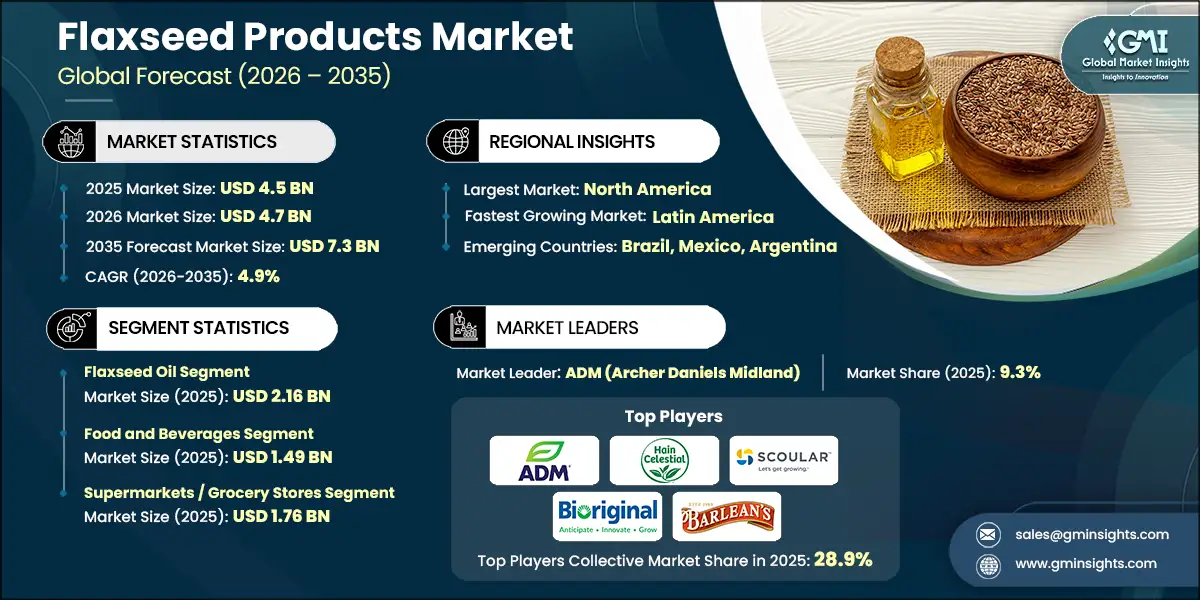
To get key market trends
Flaxseed Products Market Trends
- The market is experiencing steady growth because consumers prefer plant-based products which also contain clean-label ingredients. Developed and emerging markets show increasing flaxseed usage because people are now aware of its benefits for omega-3 fatty acids and digestive health and heart health.
- Market trends show product format innovations, which lead to manufacturers launching milled flaxseed, cold-pressed oils, protein powders, and ready-to-eat snack blends. Microencapsulation technology and advanced milling methods enable better processing which improves shelf life and product taste while maintaining nutrient stability for flaxseed use in beverages and baked goods and fortified food items.
- The global demand for flaxseed will grow because more people adopt vegan and flexitarian diets. People who eat less animal products now use flaxseed as an egg substitute and plant protein booster and omega-3 replacement. The shift supports its use in plant-based dairy alternatives and meat substitutes and clean-label bakery items.
- The flaxseed market changes because e-commerce and direct-to-consumer channels now dominate distribution. Online retail platforms enable smaller brands to reach health-conscious customers globally, increasing product visibility and accessibility. Brands create consumer trust and brand loyalty through transparent labeling and organic certifications and sustainability claims which now serve as vital marketing techniques.
- Flaxseed companies now deploy sustainability and traceability as their primary competitive strategies. Buyers show preference for ingredients which have responsible sourcing methods that cause the least environmental damage.
Flaxseed Products Market Analysis
Learn more about the key segments shaping this market
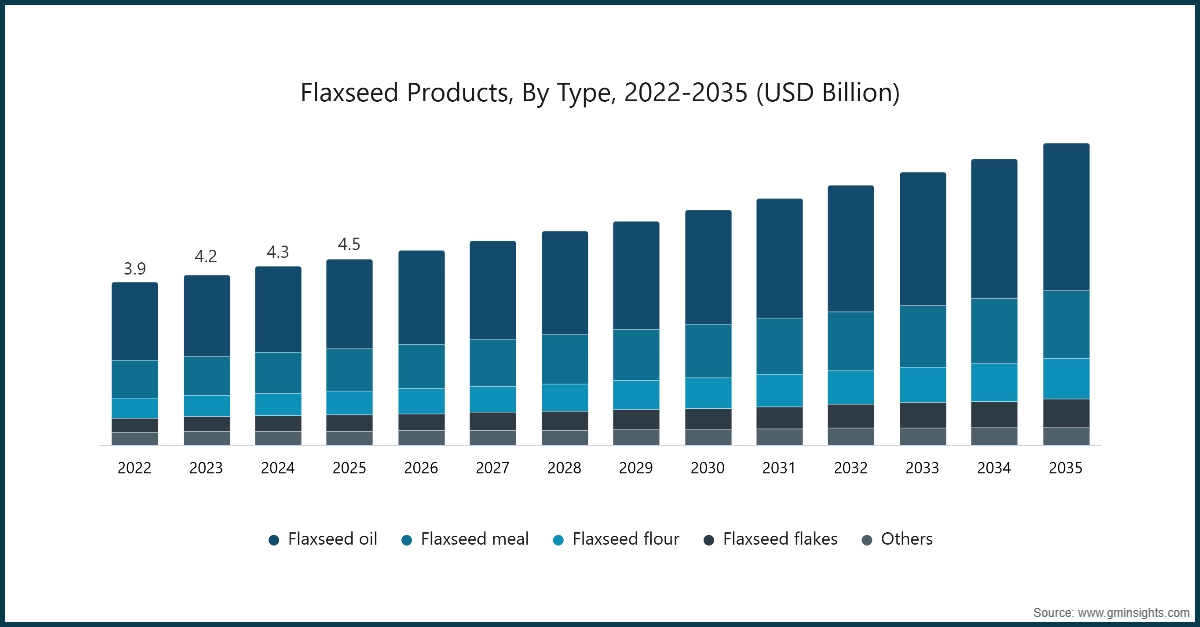
The flaxseed products market by type is segmented into flaxseed oil, flaxseed meal, flaxseed flour, flaxseed flakes and others. Flaxseed oil holds the largest market value of USD 2.16 billion in 2025.
- Flaxseed oil is experiencing rising demand because it consists of omega-3 fatty acids which increases its functional and nutraceutical value. The bakery and cereal industry embrace flaxseed meal because of its high fiber and protein content that helps in digestive health and meets clean-label product requirements.
- Flaxseed flour and flakes are experiencing rising adoption in gluten-free, plant-based, and high-protein food applications. Flour is used in breads and muffins and snacks to improve their texture and nutritional value while breakfast blends and toppings use flakes. The specialty market is now introducing new value-added products which include roasted and fortified flax ingredients.
Learn more about the key segments shaping this market
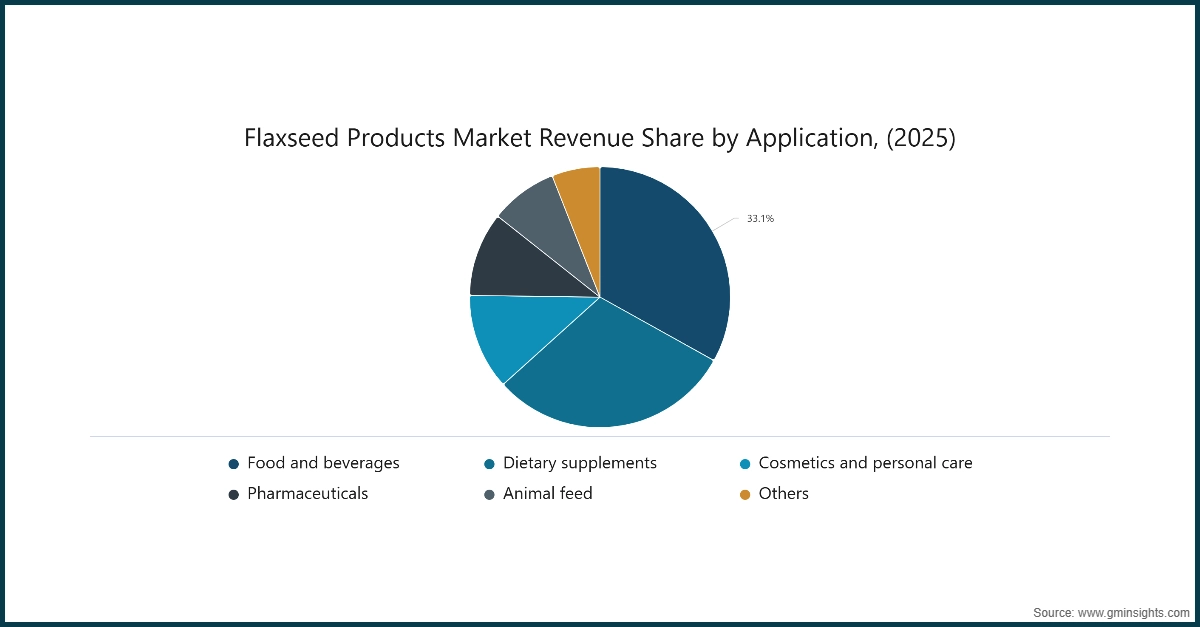
The flaxseed products market by application is segmented into food and beverages, dietary supplements, cosmetics and personal care, pharmaceuticals, animal feed and others. Food and beverages hold the largest market value of USD 1.49 billion in 2025.
- Flaxseed is becoming more popular as an ingredient in plant-based dairy products and baked goods and snack bars and fortified beverages. The rising demand for natural products and functional foods has led manufacturers to use flaxseed in all their product lines which helps them create new products in both standard and upscale health markets.
- The dietary supplement market is growing through the introduction of flaxseed oil capsules and powdered products which help customers maintain heart and digestive health.
Flaxseed oil is now used in skin and hair care products because it provides effective moisturizing benefits. The research on its nutritional and functional advantages has created new possibilities for its use in pharmaceutical products and animal feed.
The flaxseed products market by distribution channel is segmented into supermarkets / grocery stores, convenience stores, online marketplaces, direct sales / brand website, wholesale distributors and others. Supermarkets / Grocery stores holds the largest market value of USD 1.76 billion in 2025.
- Supermarkets / Grocery stores are the main distribution channels for flexfood products which customers buy at their stores. Customers can purchase flexfood products through convenience stores which now sell ready-to-eat meals and snacks although their product selection remains limited. Health-conscious buyers are turning to online marketplaces which flexfood operates for their vegan and frozen food needs, choosing home delivery and subscription box services as their preferred shopping method.
- Flexfood uses direct sales through brand websites to connect with customers while providing special deals and product bundles that include recipe suggestions to create customer loyalty. Wholesale distributors help reach restaurants and cafes and small retail stores in cities which have rising demand for vegan and health products. Other channels like specialty organic stores and pop-up shops introduce its products to niche customers who want sustainable plant-based and convenient options.
Looking for region specific data?
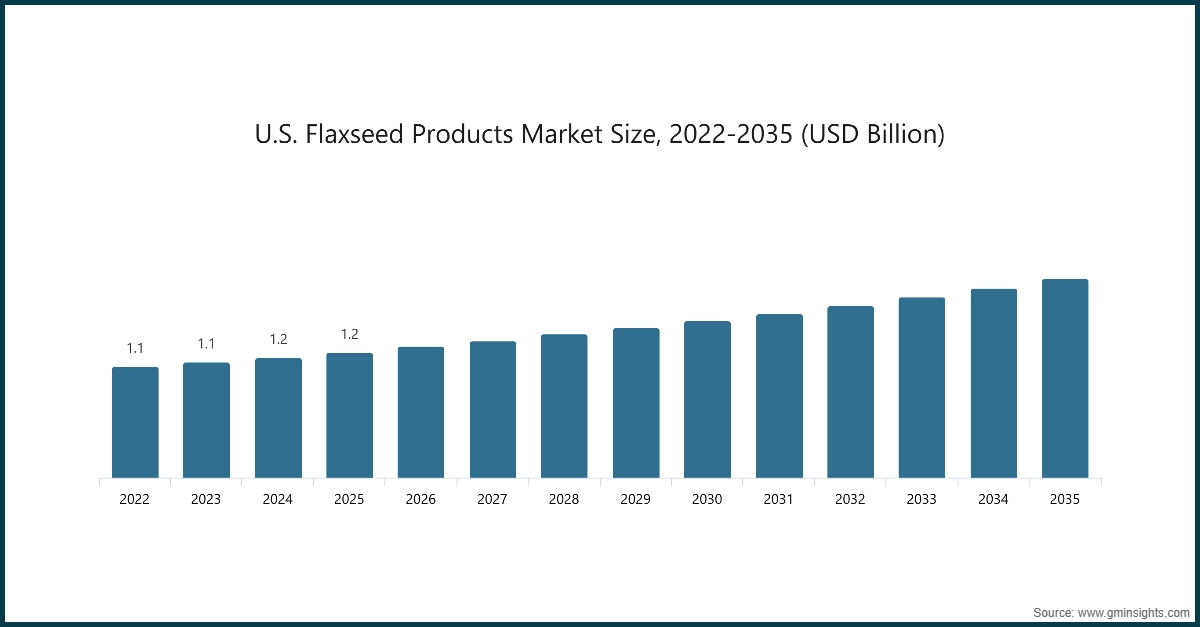
The market in the North America is expected to experience significant and promising growth from USD 1.49 billion in 2025 to USD 2.35 billion in 2035. The U.S. flaxseed products market accounted for USD 1.2 billion in 2025.
- The North American market for flaxseed continues to increase because people adopt health-focused eating habits and plant-based diets and demand functional foods. The market sees rising demand from consumers who want to consume ingredients that contain both high fiber and omega-3 fatty acids for their daily health and wellness needs. The United States market uses flaxseed oil and meal and bakery products as functional additives in various food products including dietary supplements and snacks and fortified foods because consumers want preventive health solutions and clean-label products.
The market in the Europe is expected to experience significant and promising growth from USD 1.35 billion in 2025 to USD 2.15 billion in 2035.
- European consumers are becoming more aware of heart health and digestive health and nutritional advantages which leads to increased flaxseed use in baking products and breakfast cereals and fortified beverages. The demand for functional nutrition among urban health-conscious consumers who seek natural nutrient-dense products has led to increased popularity of flaxseed-enriched breads and granola bars and plant-based snacks in Germany.
The flaxseed products market in Asia Pacific is expected to experience increasing growth from USD 1.21 billion in 2025 to USD 2.03 billion in 2035.
- Asian Pacific markets for flaxseed are growing because more people want to consume plant-based diets which support digestive health and cardiovascular wellness. The market sees growing demand from consumers who want to consume foods that contain both fiber and omega-3 fatty acids. The Indian market sees increasing adoption of flaxseed powder and oil and seeds in traditional snacks and beverages and dietary supplements. The demand for flaxseed products that provide health benefits and convenience comes from urban and semi-urban populations.
Middle East & Africa market is expected to experience significant and promising growth from USD 210 million in 2025 to USD 330 million in 2035.
- The Middle East & Africa flaxseed market is expanding with growing interest in functional foods and plant-based diets and wellness products. People now know about the health advantages that omega-3 and fiber provide. The UAE market uses flaxseed oil and meal and bakery products as smoothie and snack and dietary supplement ingredients. Urban populations who care about health drive the demand for products that provide both health benefits and natural attributes and convenient usage.
Latin America is expected to experience significant and increasing growth from USD 240 million in 2025 to USD 430 million in 2035.
- Latin America is seeing gradual growth in flaxseed usage because people now understand the health advantages that functional nutrition and dietary fiber and omega-3 fatty acids provide. The market for flaxseed products in health-focused diets and bakery applications sees increasing demand from consumers. The Brazilian market for flaxseed-enriched cereals and breads and snacks and nutritional supplements is gaining popularity. Urban educated consumers drive product adoption because they want brands to provide them with products that offer both convenience and health claims and natural ingredient positionin.
Flaxseed Products Market Share
- The markets are moderately consolidated with players like ADM (Archer‑Daniels‑Midland), Hain Celestial, Scoular, Bioriginal, Barlean’s holding 28.9% market share and ADM (Archer‑Daniels‑Midland) being the market leader holding the market share of 9.3% in 2025.
- Product innovation helps companies to maintain their market position by creating new flaxseed products which include cold-pressed oils and milled flour and protein powders and fortified snacks. Continuous research on nutrient stability and bioavailability and taste enhancement enables the development of products which achieve customer satisfaction while distinguishing themselves from other functional food and supplement products in the market.
- Companies achieve market success through their ability to maintain product excellence while sourcing environmentally friendly flaxseed. Companies build consumer trust through their investment in traceable supply chains and organic certifications and their use of eco-friendly packaging which establishes product differences while attracting customers who value health and sustainability.
- Branding strength and specific marketing strategies help companies to maintain their market position. Social media and online campaigns and influencer partnerships work together to promote health benefits and clean-label products and natural ingredients which boost product visibility and customer loyalty and product recognition in the competitive flaxseed market.
- Companies use advanced processing technologies which include microencapsulation and extrusion and cold-press extraction to improve their products' shelf life and nutrient preservation and their ability to create diverse product lines. The use of new manufacturing techniques enables companies to deliver products with consistent quality while they create functional foods which outperform their industry rivals.
- Companies increase their market presence through partnerships with retailers and e-commerce platforms and ingredient suppliers. Companies use their distribution networks and global supply agreements and health brand partnerships to protect market share while reaching new customer groups at quicker speeds.
Flaxseed Products Market Companies
Major players operating in the flaxseed products industry are:
- ADM
- AG Organica
- AgMotion
- Barlean’s
- Bioriginal
- Connoils
- Fengchen
- GFR Ingredients
- Hain Celestial
- Linwoods Health Foods
- Scoular
- Silverline Chemicals
- Spack International
Archer-Daniels-Midland (ADM) operates as a worldwide company which processes agricultural products and engages in commodities trading by handling oilseeds and corn and wheat and all other agricultural products. Through its global supply chain network the company transforms raw commodities into food and beverage ingredients which it uses for animal feed and biofuels and industrial products while connecting farmers to manufacturing facilities and customers throughout the world.
The Hain Celestial Group operates as a consumer-packaged goods company which specializes in developing natural food and beverage products that promote better health. The company develops organic and health-oriented branded products which it markets and sells through category channels that include snacks and beverages and pantry staples and personal care products for North American and European retail markets.
Scoular operates as a worldwide agribusiness company through its grain merchandising activities and its ingredient processing operations and its supply chain management services. The company functions as a link between agricultural producers and end users through its operations which include grain sourcing and storage and handling and distribution of both grains and value-added ingredients intended for food and feed and renewable energy production.
Bioriginal Food & Science Corp operates as a nutritional ingredients supplier which develops plant and marine-based oils and proteins and specialty ingredients for food and beverage and dietary supplement and animal nutrition products. The company provides global customers with their needs through its sourcing and formulation and manufacturing service offerings.
Barlean’s Organic Oils functions as a family-owned health and wellness company that creates dietary supplements and functional food products which use natural and organic ingredients. The company offers omega-3 oils and flax oils and fish oils along with other nutrient-dense formulations which promote health and wellness benefits.
Flaxseed Products Market Report Attributes
| Key Takeaway | Details |
|---|---|
| Market Size & Growth | |
| Base Year | 2025 |
| Market Size in 2025 | USD 4.5 Billion |
| Market Size in 2026 | USD 4.7 Billion |
| Forecast Period 2026-2035 CAGR | 4.9% |
| Market Size in 2035 | USD 7.3 Billion |
| Key Market Trends | |
| Drivers | Impact |
| Rising demand for plant-based foods | Flaxseed’s status as a plant-based source of omega-3 fatty acids and protein appeals to vegan, vegetarian, and flexitarian consumers, boosting its popularity. |
| Increasing health consciousness | Consumers are increasingly prioritizing heart health, digestive well-being, and anti-inflammatory benefits, which flaxseed offers. |
| Versatility in food products | With innovations in processing, flaxseed can be easily incorporated into diverse food and beverage categories like snacks, cereals, and supplements. |
| Pitfalls & Challenges | Impact |
| Digestive discomfort | High intake of flaxseed may cause bloating or digestive issues, especially if not properly introduced into the diet. |
| Oxidation and rancidity | Flaxseed oil is highly sensitive to light and heat, leading to oxidation, which reduces its nutritional value and shelf life if not stored properly. |
| Opportunities: | Impact |
| Expansion into functional foods | Flaxseed’s inclusion in functional foods like energy bars, smoothies, and fortified snacks offers growing market potential. |
| Growing demand for sustainable ingredients | As consumers increasingly seek eco-friendly and sustainable food sources, flaxseed’s minimal environmental footprint makes it an attractive choice. |
| Health and wellness trends | With rising consumer awareness about the benefits of omega-3 fatty acids, flaxseed's role in supporting heart health, skin care, and inflammation is becoming more recognized. |
| Market Leaders (2025) | |
| Market Leader |
Market share 9.3% |
| Top Players |
Collective market share of 28.9% in 2025 |
| Competitive Edge |
|
| Regional Insights | |
| Largest Market | North America |
| Fastest growing market | Latin America |
| Emerging countries | Brazil, Mexico, Argentina |
| Future outlook |
|
What are the growth opportunities in this market?
Flaxseed Products Industry News
- On September 2025, Louis Dreyfus Company (LDC) announced the acquisition of Viterra’s former grains and oilseeds activities in Hungary and parts of Poland from Bunge.
- In October 2022, Archer Daniels Midland (ADM) launched its consumer brand Knwble Grwn, featuring flaxseed and flaxseed oil grown with regenerative farming practices in North Dakota and South Dakota.
The flaxseed products market research report includes an in-depth coverage of the industry with estimates and forecast in terms of revenue in USD Billion and volume in terms of kilo tons from 2022–2035 for the following segments:
Market, By Type
- Flaxseed oil
- Flaxseed meal
- Flaxseed flour
- Flaxseed flakes
- Others
Market, By Application
- Food and beverages
- Dietary supplements
- Cosmetics and personal care
- Pharmaceuticals
- Animal feed
- Others
Market, By Distribution Channel
- Supermarkets / Grocery stores
- Convenience stores
- Online marketplaces
- Direct sales / Brand website
- Wholesale distributors
- Others
The above information is provided for the following regions and countries:
North America
- U.S.
- Canada
Europe
- Germany
- UK
- France
- Spain
- Italy
- Rest of Europe
Asia Pacific
- China
- India
- Japan
- Australia
- South Korea
- Rest of Asia Pacific
Latin America
- Brazil
- Mexico
- Argentina
- Rest of Latin America
Middle East and Africa
- Saudi Arabia
- South Africa
- UAE
- Rest of Middle East & Africa
Frequently Asked Question(FAQ) :
What was the market size of the flaxseed products market in 2025?
The market size was USD 4.5 billion in 2025, with a CAGR of 4.9% expected through 2035, driven by increasing consumer preference for plant-based products and clean-label ingredients.
What is the projected value of the flaxseed products industry by 2035?
The market is expected to reach USD 7.3 billion by 2035, supported by innovations in product formats and rising demand for vegan and flexitarian diets.
What is the projected size of the flaxseed products market in 2026?
The market is expected to reach USD 4.7 billion in 2026.
How much revenue did the flaxseed oil segment generate?
Flaxseed oil generated USD 2.16 billion in 2025, making it the largest segment by type.
What was the valuation of the food and beverages application segment?
The food and beverages segment held the largest market value of USD 1.49 billion in 2025.
Which region leads the flaxseed products market?
North America led the market with USD 1.49 billion in 2025, driven by increasing consumer awareness and demand for plant-based products. The U.S. accounted for USD 1.2 billion of this share.
What are the upcoming trends in the flaxseed products market?
Key trends include product format innovations such as milled flaxseed, cold-pressed oils, and ready-to-eat blends, along with advancements in microencapsulation and milling technologies to enhance shelf life and nutrient stability.
Who are the key players in the flaxseed products market?
Key players include ADM, AG Organica, AgMotion, Barlean’s, Bioriginal, Connoils, Fengchen, GFR Ingredients, Hain Celestial, and Linwoods Health Foods.
Flaxseed Products Market Scope
Related Reports