Summary
Table of Content

Fermented Food Market
Get a free sample of this report
Form submitted successfully!
Error submitting form. Please try again.
Thank you!
Your inquiry has been received. Our team will reach out to you with the required details via email. To ensure that you don't miss their response, kindly remember to check your spam folder as well!
Request Sectional Data
Thank you!
Your inquiry has been received. Our team will reach out to you with the required details via email. To ensure that you don't miss their response, kindly remember to check your spam folder as well!
Form submitted successfully!
Error submitting form. Please try again.
Fermented Food Market Size
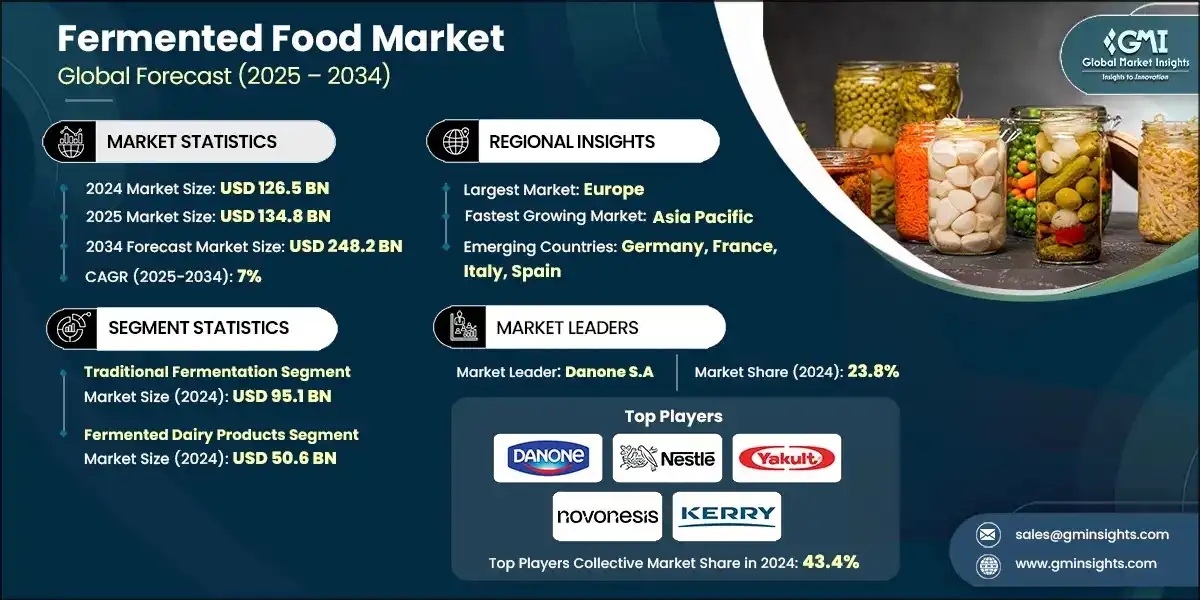
The global fermented food market size was valued at USD 126.5 billion in 2024. The market is expected to grow from USD 134.8 billion in 2025 to USD 248.2 billion in 2034, at a CAGR of 7% according to the latest report published by Global Market Insights Inc.
Fermented Food Market Key Takeaways
Market Size & Growth
- 2024 Market Size: USD 126.5 Billion
- 2025 Market Size: USD 134.8 Billion
- 2034 Forecast Market Size: USD 248.2 Billion
- CAGR (2025–2034): 7%
Regional Dominance
- Largest Market: Europe
- Fastest Growing Region: Asia Pacific
Key Market Drivers
- Rising health and wellness awareness.
- Shift toward plant based and functional foods.
- Innovation and product diversification.
Challenges
- Short shelf life and storage increase costs.
- Complex regulations complicate marketing and labeling.
Opportunity
- Shift towards convenient fermented snacks.
- Rising demand for plant-based & allergen-friendly options.
- Emerging trend of ethnic & global fermented flavors.
Key Players
- Leading Players: Top 5 players in this market include Danone S.A, Nestlé S.A, Yakult Group, Novonesis, Kerry Group plc, which collectively held a market share of 43.4% in 2024.
Get Market Insights & Growth Opportunities
- Fermented food are the products that are developed through microbiological processes and enzyme processes under controlled conditions. The process includes the activity of certain beneficial bacteria or yeast or a combination of bacteria and yeast or mold, which break down complex molecules into simpler compounds, thus advancing the taste, texture, and nutrient value.
- Fermentation process preserves food and fermented products helps to improve gut health and boosts immunity. Hence, these products are on demand now among health-conscious people. For example, yogurt, kimchi, sauerkraut, kefir, kombucha, and tempeh.
- The recent technological improvements changed the entire fermented food market. Methods such as precision fermentation, controlled bioprocessing, and starter cultures with targeted probiotic strains have made fermented food products safer, more consistent, and more scalable in production.
- The fermentation process for producers has been enhanced using digital monitoring systems, enabling them to maintain the fermentation environment and conditions optimal for the product, leading to reduced spoilage and greater quality assurance, including the development of plant-based fermented alternatives through biotechnology.
To get key market trends
Fermented Food Market Trends
- The market for fermented food is undergoing a huge transformation, with industries worldwide embracing new technologies. Fermentation technique results in new innovations, automation, and precision processing that allowed producers to maintain consistency and flavours strength although even flavour and nutrient enhancement. The innovation in probiotic-rich and plant-based fermented options has also resulted from the increasing consumer demand for functional foods.
- Awareness about health and wellness keeps on rising and this growth has been a major growth factor for the fermented foods market. The consumers these days are looking for foods that aid digestion, build immunity, and support overall wellbeing.
- Fermented foods are probiotic and bioactive compound-rich natural choices considered functional in promoting gut health and nutrition enhancement. The increasing health consciousness is steadily pushing the demand for products. This consumer awareness is forcing brands to develop products that offer nutritional benefits.
- Consumers are developing an increasing curiosity with traditional and exotic fermented foods like, kimchi, miso, sauerkraut, and kombucha. They want these flavours mainly for their novelty, cultural authenticity, and that consider to be healthier substitutes. This results in increasing the adoption of fermented food.
- The increasing urbanization and a busy lifestyle are creating an additional demand for easy ready-to-eat fermented product options. An increase in personalized nutrition and foods for specific health purposes is prompting companies to bring forth targeted formulations. Social media and influencer awareness are also educating customers about the benefits of fermentation and market trends. In this way, there is expansion of the consumer base and the increase of market uptake on the global front.
Fermented Food Market Analysis
Learn more about the key segments shaping this market
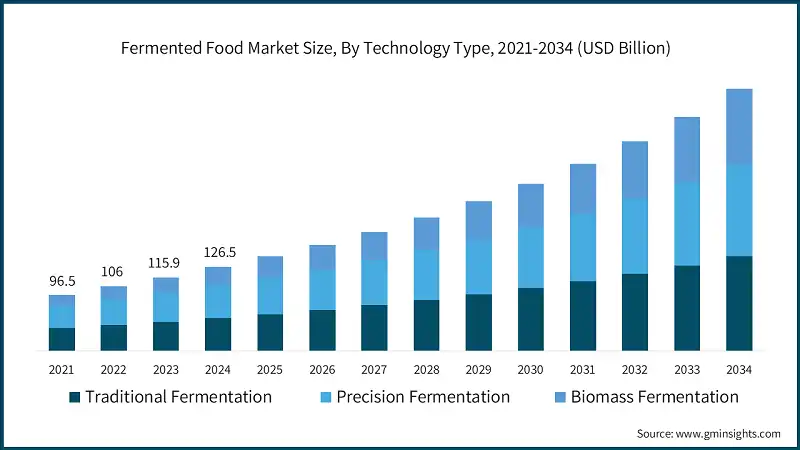
The fermented food market by technology type is segmented into traditional fermentation, precision fermentation, biomass fermentation. Traditional fermentation holds the largest market value of USD 95.1 billion in 2024.
- Traditional fermentation technology prevails in the domain of fermented foods, due to long term user over generation. It is widely used in many products like dairy or vegetables and beverages as it increases the flavour, texture, and nutritional profiles. Familiar heritage and cultural importance connected with traditional fermentation traditions sustain its bulk share of the market, especially in regions rich in culinary heritage tied to fermented foods.
- The emerging markets are precision and biomass fermentations, as they are the gaining innovations and sustainability's major themes. Precision fermentation would lead to producing certain proteins, enzymes, and probiotics nutrients so that manufacturers can develop highly functional but consistent ingredients to meet the increasing demand for plant-based and specialty foods. Biomass fermentation is growing as they develop sustainable food ingredients through microbial biomass production.
Learn more about the key segments shaping this market
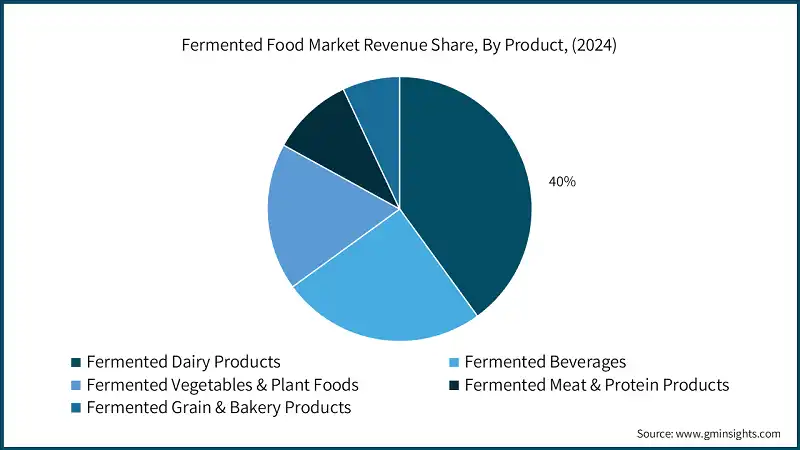
The fermented food market by product, is segmented into fermented dairy products, fermented beverages, fermented vegetables & plant foods, fermented meat & protein products and fermented grain & bakery products. Fermented dairy products hold the largest market value of USD 50.6 billion in 2024.
- Fermented dairy product are widely accepted by consumers due to availability of different product such as yoghurts, kefirs, and cheeses. These products generally benefit from having established manufacturing processes and strong consumer trust concerning their health benefits, especially probiotics for gut health. Fermented beverages segment is also showing steady growth due to rising demand for functional drinks such as kombucha and probiotic juices targeting health-conscious people.
- Fermented vegetables and plant foods-e.g., sauerkraut and kimchi are growing rapidly with awareness of plant-based diets and interest in global flavors. Fermented meat and protein products are holding smaller share but still growing due to innovation in fermentation, that caters palatability and digestibility for protein nutrition. Finally, fermented grains and bakery products were the smallest but developing segments, with consumers appreciating the impact of natural fermentation on taste and shelf life.
Looking for region specific data?
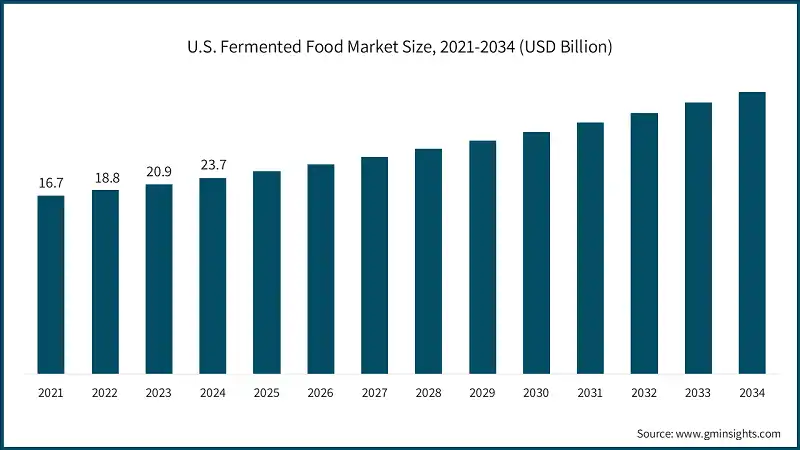
The U.S. fermented food market accounted for USD 23.7 billion in 2024.
- U.S. and Canada are rapidly expanding the fermented-foods market in North America, owing to consumer interest in gut health and wellness. The U.S. is at the forefront, with strong demand for fermented dairy products such as yogurts and kefir, along with functional beverages, like kombucha. The trend toward clean-label, plant-based, and organic is motivating innovation in fermented vegetables and plant Convenience and natural ingredients provide a strong push toward ready-to-eat fermented snack.
The fermented food market in the Germany is expected to experience significant and promising growth from 2025 to 2034.
- Europe show a strong preference for traditional fermented products such as sauerkraut, cheese, and yogurt. Here consumers appreciate traditional values pertaining to authenticity and therefore fermented dairy and vegetable products have continued to dominate over the centuries. Germany's inclination towards organic and clean-label products is in keeping with trends toward sustainability and minimal processing. The popularity of functional fermented beverages is increasing, especially among urban socio-demographics and health-conscious groups.
The fermented food market in China is expected to experience significant and promising growth from 2025 to 2034.
- In the Asia Pacific region along with China market for fermented foods have grown and thus serve as a strong driving force for the global market. Fermented products such as soy-based products, fermented vegetables, or sources of native dairy alternatives are gaining demand. This is fueled by an increase in health consciousness and the emergence of urban, middle-class consumers, who have more interest in the functional and probiotic qualities of fermented foods. Another benefit from e-commerce is the increasing adoption of new platforms enabling wider accessibility to niche and artisanal fermented products, thereby further extending the customer base.
UAE market is expected to experience significant and promising growth from 2025 to 2034.
- The fermented food market is growing in the Middle East and Africa region as consumers increasingly aware of their health and showing interest in global trends. Countries such as the UAE and South Africa have rising demand for probiotic dairy products, fermented beverages, and plant-based fermented options. International and functional fermented foods are in demand due to increasing disposable incomes. These all-overall results in growth of fermented food market.
Brazil is expected to experience significant and promising growth from 2025 to 2034.
- In Latin America, Brazil and Mexico witness the rising consumer awareness of the health benefits of fermented foods, especially with respect to digestive health. Traditional products such as fermented dairy and vegetables are growing, while fermented beverages gain more popularity. Fast urbanizations are stimulating the demand for fermented products that are convenient to use, tasty and economical. Brazil’s evolving food culture embraces experimentation with local fermented products, whereas in Mexico, consumers prefer the natural and artisanal. This mix of tradition with innovation continues to pave the way for steady market growth in the region.
Fermented Food Market Share
- Fermented Food industry is moderately consolidated with players like Danone S.A., Nestlé S.A., Yakult Group, Novonesis, Kerry Group plc 42.4% market share and Danone S.A. being the market leader holding the market share of 23.8 % in 2024.
- Top competitors constantly update and increase their product portfolios with various innovations such as flavours and ingredient bases in fermented products. They don't limit the portfolio to conventional dairy-ferments but also consider plant-based substitutes, fortified drinks, ethnic-style ferments, and snack formats.
- Another way in which market leaders distinguish themselves is compliance with ever-changing environmental regulations, thus maintaining a competitive edge. Such compliance with the rising trend of safety assessments, clean labelling and eco-packaging that reflects a sense of credibility towards consumers while easing market entry through acceptance in the global domain.
- Transparency and proactiveness in managing risks while aligning regulatory frameworks foster smooth transition in growth of the market.
- Fermentation is an industry that involves live culture, activity by microorganisms, and process complexity therefore players investing in R&D have a significant lead. They work on improved starter cultures, consistency in probiotic content, shelf-life extension, better flavor profiles, and scalable production processes.
Fermented Food Market Companies
Major players operating in the fermented food industry are:
- Angel Yeast Co., Ltd.
- Chobani, LLC
- Danone S.A.
- Formo
- Geltor
- Helain
- Impossible Foods Inc.
- Kerry Group plc
- Lallemand Inc.
- Lifeway Foods, Inc.
- Nature's Fynd
- Nestlé S.A
- Novonesis
- Perfect Day, Inc.
- Solar Foods
- The EVERY Company
- TurtleTree
- Yakult Group
Danone S.A. is a French multinational manufacturer of dairy and fermented products. It also has an outlet in plant-based nutrition, waters, and medical nutrition. In the fermented-food arena of its operations, Danone relies significantly on its heritage in yogurt and live-culture dairy while broadening into plant-derived fermented alternatives. The company also invests in cutting-edge research on microbial cultures both in the dairy sector and in plant-based fermented systems as an all-around player in the market for fermented dairy products and in advancement activities in fermentation science.
Nestlé S.A. the Swiss-based multinational food and beverage company, encompasses a vast range of categories, including dairy, nutrition for infants, prepared foods, and beverage products. It participated in the yogurt and fermented dairy business as part of a wider milk products and nutrition business. The extensive reach results from its capacities in R&D and strong brand portfolio and serves numerous markets, including many where fermented dairy has a vital role within it. Furthermore, Nestlé's orientation around nutrition, health and wellness also includes fermented and functional dairy formats that help improve digestive health, immunity, or convenience.
Kerry Group plc is an Irish-based global ingredient and flavor company that provides food manufacturers with effective taste, nutrition, fermentation, and bioprocessing solutions. Its "Taste & Nutrition" segment includes all technologies such as probiotics, enzymes, bio-preservation, and fermentation. Kerry is enhancing precision fermentation and enzyme manufacturing through acquisitions while playing a major role in the development of fermented foods offering culture systems, enzymes, and functional ingredients.
Yakult Group Yakult Group is a Japanese company focusing on probiotic and fermented dairy-drink products. It sells a drink with its proprietary strain of Lactobacillus casei Shirota that it promotes for digestive health and preventive wellness. Life-sciences, microorganism-based research and global distribution in about 40 countries are the key parameters of the company. Yakult represents a small but neatly defined business in the fermented-food space, focusing on fermented milk drinks.
Novonesis deals in developing biosolutions in microbial cultures, enzymes, and fermentation technologies. In the context of an ingredient and technology supplier for fermented foods and dairy, Novonesis builds a strong profile for manufacturers who wants to create fermented dairy, cheese, plant-based alternatives, and similar other systems.
Fermented Food Market Report Attributes
| Key Takeaway | Details |
|---|---|
| Market Size & Growth | |
| Base Year | 2024 |
| Market Size in 2024 | USD 126.5 Billion |
| Market Size in 2025 | USD 134.8 Billion |
| Forecast Period 2025 - 2034 CAGR | 7% |
| Market Size in 2034 | USD 248.2 Billion |
| Key Market Trends | |
| Drivers | Impact |
| Rising health and wellness awareness | Increasing consumer understanding of the link between gut health and overall wellness is driving demand for probiotic-rich fermented foods like yogurt, kimchi, kefir, and kombucha. |
| Shift toward plant based and functional foods | The rise of vegan and flexitarian lifestyles has fueled demand for plant-based fermented options like tempeh and kombucha. These products also serve as functional foods, offering health benefits beyond basic nutrition. |
| Innovation and product diversification | Companies are experimenting with new flavors, plant-based options, and ready-to-eat fermented snacks, making these products more appealing and convenient for a wider audience. |
| Pitfalls & Challenges | Impact |
| Short shelf life and storage increase costs | Fermented products often require controlled storage conditions (refrigeration, proper packaging) to maintain live cultures and prevent spoilage, which can complicate distribution and increase costs. |
| Complex regulations complicate marketing and labeling | Different countries have varying rules on probiotic claims, fermentation labeling, and health benefits. Navigating these regulations can delay product launches and increase compliance costs. Mislabeling risks legal penalties and can harm brand reputation. |
| Opportunities: | Impact |
| Shift towards convenient fermented snacks | Consumers are seeking portable, ready-to-eat foods that support gut health. Fermented vegetables, legumes, and grains can be transformed into snackable formats. |
| Rising demand for plant-based & allergen-friendly options | More people are moving towards plant-based or allergen-free diets for health and ethical reasons. Fermentation enhances the taste, nutrition, and digestibility of plant-based foods. Products like non-dairy yogurts, tempeh, and fermented nut-based items can capture this growing demand. |
| Emerging trend of ethnic & global fermented flavors | Consumers are exploring new tastes and international cuisines, creating demand for unique fermented foods. Fermented kimchi, miso, sauerkraut, and regional condiments are gaining popularity. Innovating with fusion flavors or ready-to-eat formats can capture adventurous foodies. |
| Market Leaders (2024) | |
| Market Leaders |
23.8 % |
| Top Players |
Collective market share of 43.4% in 2024 |
| Competitive Edge |
|
| Regional Insights | |
| Largest Market | Europe |
| Fastest growing market | Asia Pacific |
| Emerging country | Germany, France, Italy, Spain |
| Future outlook |
|
What are the growth opportunities in this market?
Fermented Food Industry News
- In October 2025, Lifeway Foods, the supplier of kefir and other fermented probiotic products in the U.S., partnered with Joe & The Juice, the international chain of juices, to launch the limited-time smoothie called Trust Your Gut. The functional beverage blends Lifeway Kefir with strawberries, banana, beetroot, pea protein, and fiber for gut health, energy, and overall vitality. This partnership takes Lifeway into food service, proof of its different nutrient-dense, convenient options to digestive wellness seekers. The smoothie is now available at all Joe & The Juice U.S. locations.
- In November 2024, Lifeway Foods has recently developed a new product from the range of kefir and fermented probiotic products it offers Probiotic Smoothie + Collagen is one of Lifeway's newest functional beverages made with kefir cultures. Matcha Latte, Berry Blast, Tropical Fruit, and Plain are available in packs of 25-30 billion CFUs and 5 grams collagen per serving. The lactose-free product will support gut and skin health, using the gut-skin axis - an important link in the lines of localization regarding health benefits.
- In October 2023, Lesaffre, a French firm specializing in fermentation, took a 70% interest in Biorigin, Zilor's business unit. This acquisition aims at promoting the joint venture to provide yeast derivatives and savory ingredient solutions for the food and feed markets. Biorigin's expertise will be combined with that of Lesaffre's Biospringer to improve the worldwide supply of natural yeast-based ingredients.
The fermented food market research report includes an in-depth coverage of the industry with estimates and forecast in terms of revenue in USD Billion and volume in terms of kilo tons from 2021–2034 for the following segments:
Market, By Technology Type
- Traditional Fermentation
- Bacterial Fermentation
- Yeast-Based Fermentation
- Mold Fermentation
- Mixed Culture Fermentation
- Precision Fermentation
- Genetically Modified Microorganism
- Protein Production
- Enzyme & Vitamin
- Flavor & Aroma Compound Production
- Biomass Fermentation
- Single Cell Protein Production
- Mycoprotein & Fungal Biomass
- Algae & Microalgae
- Waste-to-Biomass Conversion Technologies
Market, By Product
- Fermented dairy products
- Yogurt & cultured milk products
- Cheese & aged dairy products
- Kefir & probiotic beverages
- Plant-based dairy alternatives
- Fermented beverages
- Kombucha & functional beverages
- Fermented fruit & vegetable juices
- Alcoholic fermented beverages
- Fermented vegetables & plant foods
- Sauerkraut & fermented cabbage products
- Kimchi & asian fermented vegetables
- Pickled & acidified vegetables
- Fermented soy products
- Novel plant-based fermented foods
- Fermented meat & protein products
- Traditional cured & fermented meats
- Fermented sausages & salamis
- Hybrid meat-plant fermented products
- Fermented grain & bakery products
- Sourdough & fermented breads
- Tempeh & fermented legumes
- Fermented cereal products
- Gluten-free fermented alternatives
The above information is provided for the following regions and countries:
- North America
- U.S.
- Canada
- Europe
- Germany
- UK
- France
- Spain
- Italy
- Rest of Europe
- Asia Pacific
- China
- India
- Japan
- Australia
- South Korea
- Rest of Asia Pacific
- Latin America
- Brazil
- Mexico
- Argentina
- Rest of Latin America
- Middle East and Africa
- Saudi Arabia
- South Africa
- UAE
- Rest of Middle East & Africa
Frequently Asked Question(FAQ) :
What is the market size of the fermented food in 2024?
The market size was valued at USD 126.5 billion in 2024, with a CAGR of 7% expected through 2034. The growth is driven by increasing consumer demand for functional foods, health awareness, and innovations in probiotic-rich and plant-based fermented options.
What is the projected value of the fermented food market by 2034?
The market is poised to reach USD 248.2 billion by 2034, fueled by advancements in fermentation technologies, rising urbanization, and demand for ready-to-eat and personalized nutrition products.
What is the expected size of the fermented food industry in 2025?
The market size is projected to reach USD 134.8 billion in 2025.
How much revenue did the traditional fermentation segment generate in 2024?
The traditional fermentation segment generated approximately USD 95.1 billion in 2024, due to its long-standing use in enhancing flavor, texture, and nutritional profiles of products like dairy, vegetables, and beverages.
What was the valuation of the fermented dairy products segment in 2024?
The fermented dairy products segment was valued at USD 50.6 billion in 2024.
Which region leads the fermented food sector?
North America leads the market, with the U.S. accounting for USD 23.7 billion in 2024. The region's growth is propelled by consumer interest in gut health, wellness, and clean-label, plant-based, and organic products.
What are the upcoming trends in the fermented food market?
Trends include probiotic-rich and plant-based fermented foods, rising interest in traditional and exotic options like kimchi and kombucha, personalized nutrition, and growing social media influence on fermentation awareness.
Who are the key players in the fermented food industry?
Key players include Angel Yeast Co., Ltd., Chobani, LLC, Danone S.A., Formo, Geltor, Helain, Impossible Foods Inc., Kerry Group plc, Lallemand Inc., Lifeway Foods, Inc., Nature's Fynd, and Nestlé S.A.
Fermented Food Market Scope
Related Reports