Summary
Table of Content

Endometriosis Treatment Market
Get a free sample of this report
Form submitted successfully!
Error submitting form. Please try again.
Thank you!
Your inquiry has been received. Our team will reach out to you with the required details via email. To ensure that you don't miss their response, kindly remember to check your spam folder as well!
Request Sectional Data
Thank you!
Your inquiry has been received. Our team will reach out to you with the required details via email. To ensure that you don't miss their response, kindly remember to check your spam folder as well!
Form submitted successfully!
Error submitting form. Please try again.
Endometriosis Treatment Market Size
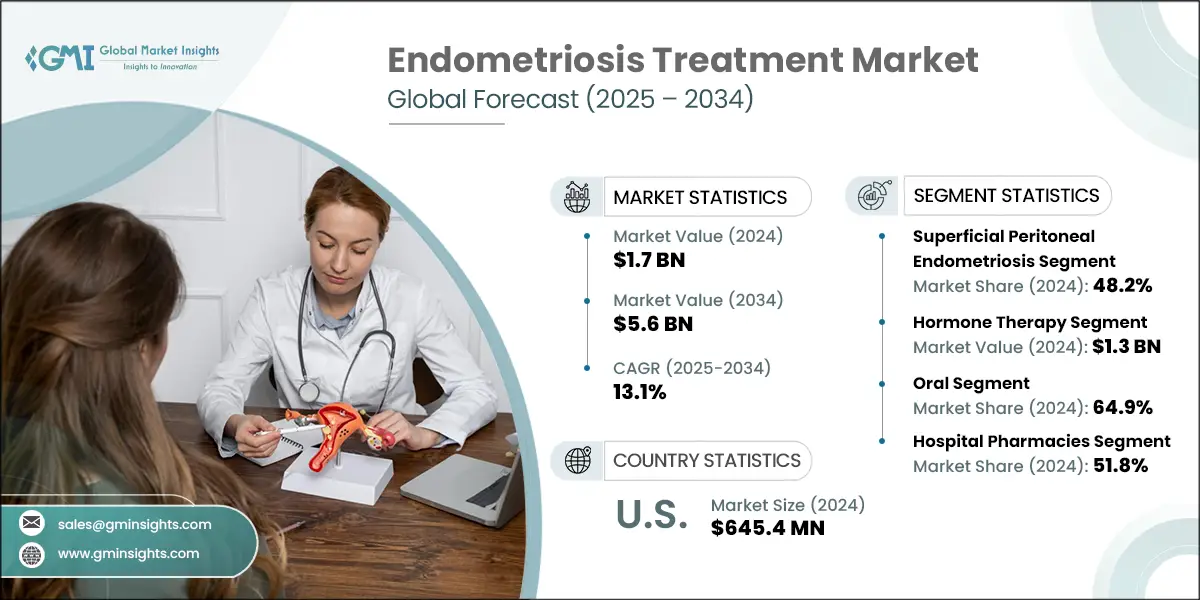
The global endometriosis treatment market was estimated at USD 1.7 billion in 2024. The market is expected to grow from USD 1.9 billion in 2025 to USD 5.6 billion in 2034, at a CAGR of 13.1%, according to Global Market Insights Inc.
Endometriosis Treatment Market Key Takeaways
Market Size & Growth
- 2024 Market Size: USD 1.7 Billion
- 2034 Forecast Market Size: USD 5.6 Billion
- CAGR (2025–2034): 13.1%
Regional Dominance
- Largest Market: North America
- Fastest Growing Region: Asia Pacific
Key Market Drivers
- Rising prevalence and awareness of endometriosis.
- Advancement in diagnostic techniques.
- Increased government funding and initiatives.
Challenges
- High cost of advanced treatment.
Opportunity
- Development of non-hormonal therapies.
- Expansion in emerging markets.
Key Players
- Market Leader: AbbVie led with over 31.8% market share in 2024.
- Leading Players: Top 5 players in this market include AbbVie, Bayer, Pfizer, AstraZeneca, Gedeon Richter, which collectively held a market share of 62% in 2024.
Get Market Insights & Growth Opportunities
According to the World Health Organization, 190 million (10%) women of reproductive age globally are affected by endometriosis, equating to millions of potential patients requiring medical intervention. This significant increase in patient population, coupled with growing awareness about the condition and its impact on fertility among patients, supports market’s growth.
Endometriosis treatment involves medical and supportive interventions to relieve pain, control the growth of endometrial-like tissue outside the uterus, and preserve or restore fertility. Common medical treatments include painkillers, hormonal treatments with progestins, combined oral contraceptives, and GnRH modulators, to reduce menstruation and inflammation. Key players such as AbbVie, Bayer, Pfizer, AstraZeneca, and Gedeon Richter lead the market with their wide product portfolios and strong research and development capabilities. These players drive market growth by innovative hormonal therapies, non-hormonal pain management alternatives, next-generation oral GnRH antagonists development, and broadening indications for treatment.
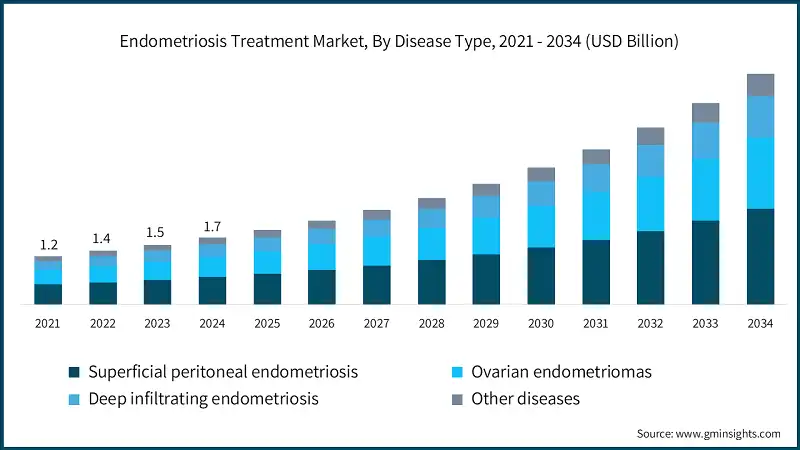
The endometriosis treatment market witnessed steady growth, growing from USD 1.2 billion in 2021 to USD 1.5 billion in 2023 driven by rising diagnosis rates, greater awareness of women's health conditions, and the launch of next-generation therapeutic drugs. The market shifted significantly from traditional hormonal therapies to next-generation oral GnRH antagonists, which offer better symptom control, more convenient dosing, and fewer long-term side effects. Pharmaceutical firms increased their R&D spending, generating to successive product launches and expanded approvals in major markets. On the reimbursement front, supportive policies in developed economies, along with increasing advocacy and education campaigns, reduced underdiagnosis and promoted earlier treatment. This convergence of innovation, improved access, and changing clinical guidelines fueled a steady market growth.
Further, the growing emphasis on women’s health has led to increased healthcare expenditure and efforts towards improving women’s health. This has resulted in improved accessibility to endometriosis diagnostics and treatment. For instance, the Endometriosis Association conducts the Teen Outreach Program that aims to educate teenage girls regarding the importance of early diagnosis and timely interventions for endometriosis. The organization has distributed 2,577 Teen Outreach educational packages across 34 states. Such initiatives by health organizations and pharmaceutical companies are encouraging more women to seek treatment. Additionally, advancements in drug development, minimally invasive therapies, and the introduction of hormone therapies are expected to further propel the growth of this market.
Endometriosis is a condition where tissue similar to the uterine lining grows outside the uterus, causing pain, particularly during menstruation, and can lead to serious issues like infertility. The treatment aims at managing symptoms and slowing disease progression. Common treatment approaches include pain management drugs such as non-steroidal anti-inflammatory drugs (NSAIDs) and hormonal therapies.
To get key market trends
Endometriosis Treatment Market Trends
- The endometriosis treatment market is experiencing significant growth driven by several key trends. One primary trend is the increasing prevalence of endometriosis and growing awareness about the condition through government and health organizations.
- In the U.S., 6.5 million women and girls as young as eight years old have endometriosis, with global prevalence reaching approximately 89 million. This growing disease prevalence is driving increased adoption of endometriosis treatments.
- Additionally, due to increased prevalence and awareness, there is a rise in healthcare expenditure and growing investments in women’s health, thus fostering the market’s growth. For instance, in February 2025, the Federal Government announced an investment of USD 573 million for addressing the healthcare needs of women living with endometriosis and chronic pelvic pain in Australia.
- Further, there is an increasing shift toward non-invasive and patient-centric solutions. Patients are not only seeking effective treatment but are also looking for convenient and less invasive treatment options, thus driving the market growth.
- Furthermore, oral GnRH antagonists are gaining popularity on account of their rapid onset of action, dose flexibility, and enhanced safety profile over traditional injectables. Their ease of use and reversibility make them ideal for long-term treatment, while combination products with low-dose estrogen are widening their application among a broader patient population. With strong clinical evidence and strategic marketing, these agents are witnessing accelerated uptake in developed and emerging markets.
- Another key trend is the shift toward non-hormonal drugs, as patients and clinicians looking for treatments that address pain and inflammation without compromising hormonal balance. Market players are increasingly focusing on the development of immune-modulating and neuroinflammation-targeting medications to provide sustainable symptom control to women who cannot tolerate or prefer to avoid hormonal therapies. Such developments are shaping the market.
Endometriosis Treatment Market Analysis
Learn more about the key segments shaping this market
The global market was valued at USD 1.2 billion in 2021. The market size reached USD 1.5 billion in 2023, from USD 1.4 billion in 2022.
Based on the disease type, the global endometriosis treatment market is segmented into superficial peritoneal endometriosis, ovarian endometriomas, deep infiltrating endometriosis, and other disease types. The superficial peritoneal endometriosis segment dominated the global market with 48.2% market share in 2024. On the other hand, ovarian endometriomas segment was valued at USD 473.6 million in 2024 and is anticipated to grow at a CAGR of 13.2% over the analysis period. Ovarian endometriomas hold a considerable market share in the market, as they are common and significantly impact fertility, pain, and quality of life. Their complicated nature usually requires long-term medical care, driving sustained demand for drug-based therapies.
- Superficial peritoneal endometriosis is the most common form of the disease and is characterized by lesions. According to an article published by the National Institutes of Health, approximately 80% of women with endometriosis have superficial lesions. It affects a large proportion of women diagnosed with endometriosis, making it the dominant disease type in this market.
- It is diagnosed more easily because it occurs on the peritoneal surface compared to deeper infiltrating forms. This early diagnosis of superficial peritoneal endometriosis enables timely intervention.
- Additionally, for managing superficial peritoneal endometriosis, a broader range of treatment approaches is available, including pain management and hormonal therapies. Thus, the availability of a variety of treatment options facilitates adoption.
Based on the treatment type, the global endometriosis treatment market is categorized into hormone therapy and pain medication. The hormone therapy segment was valued at USD 1.3 billion in 2024.
- Oral contraceptives, GnRH agonists, and progestins are hormone therapies that are widely used as first-line treatments for managing symptoms like pelvic pain, heavy menstrual bleeding, and dysmenorrhea.
- Additionally, their proven efficacy, ease of administration, and increased patient preference contribute to growing demand for hormone therapy in the endometriosis market.
- Moreover, continuous research and development have led to advancements in hormonal treatments, such as GnRH antagonists with reduced side effects and selective progesterone receptor modulators, which are broadening the therapeutic options and fuelling market growth.
- For instance, the launch of Orilissa for managing moderate to severe endometriosis pain marked the first oral endometriosis medication using a gonadotropin-releasing hormone (GnRH) antagonist. Such product approvals are expanding the availability of hormone therapies.
- The pain medication segment is anticipated to witness stable growth, growing at a CAGR of 11.4% over the forecast period. Pain medications are widely adopted for endometriosis management due to their ability to provide fast symptom relief and their universal availability for chronic pelvic pain management. Their role as first-line therapy before or alongside hormonal treatments supports their strong market presence.
Based on the drug class, the global endometriosis treatment market is divided into gonadotropin-releasing hormone, NSAIDs, oral contraceptives, and other drug classes. The gonadotropin-releasing hormone segment is expected to grow at 13.5% CAGR over the analysis period.
- The gonadotropin-releasing hormone (GnRH) commands a high market share in the market because of its established effectiveness in reducing estrogen production, thereby alleviating symptoms such as chronic pelvic pain and heavy menstrual bleeding.
- These treatments come in agonist and antagonist forms and are commonly prescribed as first-line or adjunct therapy, especially in patients who do not respond to conventional pain management.
- These drugs benefit from a strong clinical track record, diverse product availability, and continuous improvements in formulations that minimize side effects.
- The oral contraceptive segment holds the second-largest market share in the endometriosis treatment market, owing to its dual advantage of symptom relief and disease prevention.
- These pills regulate menstrual cycles, decrease menstrual flow, and reduce estrogen levels, thus relieving pain and inflammation of endometriosis.
- Their wide accessibility, cost-effectiveness, and familiarity among both patients and clinicians contribute to strong adoption rates.
Learn more about the key segments shaping this market
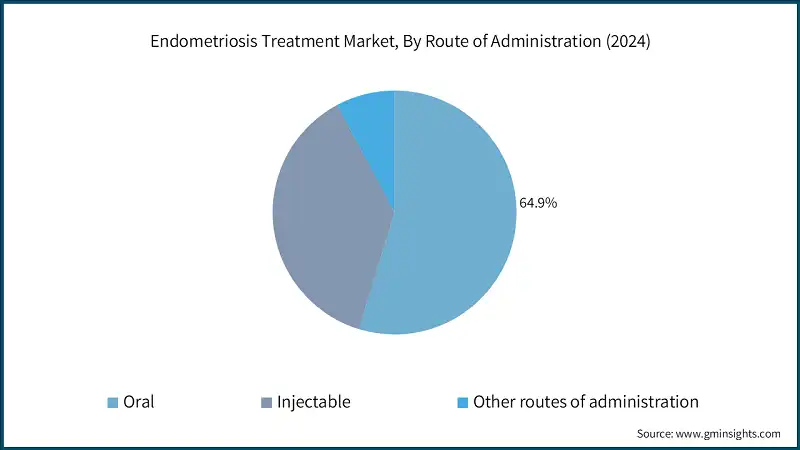
Based on the route of administration, the global endometriosis treatment market is bifurcated into oral, injectable, and other routes of administration. The oral segment dominated the market in 2024 with a market share of 64.9% and is projected to reach USD 3.6 billion by 2034.
- Oral treatments, including oral contraceptives, progestins, and NSAIDs, are commonly used for managing endometriosis symptoms such as pain and heavy bleeding owing to their ease of administration.
- Additionally, the growing availability of oral treatments like GnRH antagonists, which are more effective and have fewer side effects, is further boosting demand.
- Compared to other treatments, oral therapies are more cost-effective, making them easier to access in both developed and developing countries.
- Moreover, due to increased awareness of endometriosis, early diagnosis, and preference for non-invasive treatments are expected to significantly drive the growth of the oral segment.
Based on the distribution channel, the global endometriosis treatment market is classified into hospital pharmacies, retail pharmacies, and online pharmacies. The hospital pharmacies segment held the highest market share of 51.8% in 2024.
- Hospital pharmacies hold a dominant share as key distribution channels in the market due to their significant role in providing immediate access to medications following diagnosis or surgical intervention.
- These pharmacies provide access to newly launched treatments that other retail pharmacies may not yet have procured. They provide the most advanced therapeutic options for patients, thereby holding a dominant share in the endometriosis treatment market.
- The online pharmacies segment is anticipated to witness high growth in the market, growing at a CAGR of 14.2% between 2025 and 2034. These platforms provide patients with convenient access to therapies of all types, including hormonal therapy, painkillers, and combined treatment at reasonable prices.
- Growing internet penetration, user-friendly mobile apps, and government support for e-pharmacy services in most countries are driving further adoption, making online pharmacies a rapidly emerging distribution channel.
Looking for region specific data?
North America dominated the global endometriosis treatment market in 2024, holding a market share of 42.7%, driven by high disease prevalence, strong healthcare infrastructure, and increasing adoption of fertility-preserving therapies.
- According to the Office on Women’s Health, endometriosis affects over 11% of women aged 15–44 in the U.S., particularly those in their 30s and 40s.
- The NIH estimates the incidence at 5–15% among reproductive-age women and 2–5% in postmenopausal women in both the U.S. and Canada. This high incidence of endometriosis in the region drives demand for effective treatments.
- Further, the region benefits from a strong clinical and commercial ecosystem, with major pharmaceutical firms and academic institutions accelerating trials and therapeutic developments.
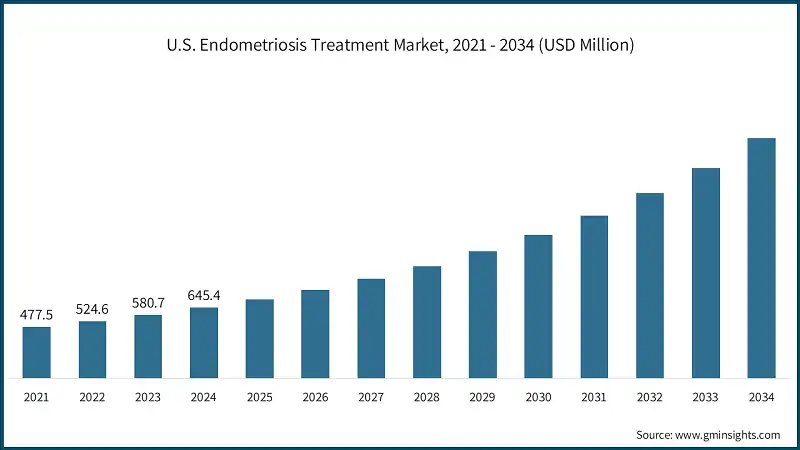
The U.S. endometriosis treatment market was valued at USD 477.5 million and USD 524.6 million in 2021 and 2022, respectively. The market size reached USD 645.4 million in 2024 from USD 580.7 million in 2023.
- In the U.S., heightened awareness and early diagnosis, driven by educational initiatives such as the Teen Outreach Program and the ENPOWR Project, are expected to drive growth in the market.
- The growing prevalence of endometriosis is driving demand for endometriosis treatment. According to the Endometriosis Foundation of America, approximately 1 in 10 women in the U.S. are affected by endometriosis during their reproductive years, highlighting the significant need for effective treatments.
- This program helps reduce stigma and promotes positive treatment behaviors, resulting in earlier treatments and increased treatment demand.
- Improvements in treatment, emphasis on reproductive health protection, and better access to healthcare services have also enhanced market expansion.
Europe endometriosis treatment market was valued at USD 491.4 million in 2024 and is projected to reach USD 1.6 billion by 2034, supported by improved awareness, earlier diagnosis, and access to specialized care.
- Universal healthcare systems across the region enable timely access to first-line treatments, such as oral contraceptives, NSAIDs, and progestins.
- The region's robust R&D landscape is attracting pharmaceutical investments and accelerating the development of targeted therapies.
- The rising demand for treatment is driven by increased focus on women's health, which further accelerates spending on research and patient care treatment.
Germany is expected to experience high growth during the forecast period.
- According to data from German Hospital Statistics, there were around 32,000 endometriosis-related hospital stays recorded in German hospitals in 2022, equating to about 0.8 cases per 1,000 residents.
- This growing number of hospitalizations shows increasing awareness and diagnosis of the disease, which increases the need for better treatment options.
- The market is expected to grow further due to Germany's well-developed healthcare system that provides patients with various treatment options and access to effective, advanced care.
- Growth is also driven by Germany's leadership in medical innovation and research, which has led to new treatment options for endometriosis.
The Asia Pacific region is expected to witness high growth in the endometriosis treatment market, growing at a CAGR of 13.6 % over the analysis years.
- A high concentration of reproductive-age women, with over 140 million having unmet contraceptive needs according to UNFPA, is driving treatment demand.
- Rising awareness, improved access to gynecological care, and enhanced public health outreach in countries like China, India, and Japan are boosting diagnosis rates.
India endometriosis treatment market is projected to experience substantial growth throughout the forecast period.
- According to a research article published by the National Institutes of Health, endometriosis affects an estimated 10% of reproductive-age women, approximately 42 million women in India.
- The availability of advanced diagnostic techniques and growing healthcare accessibility in the country are leading to more patients being diagnosed with endometriosis. This rise in diagnosis contributes to increased demand for medical interventions.
- India's high prevalence of endometriosis, combined with increased healthcare spending and growth in scientific research, creates high demand for effective treatments, fostering market growth.
Latin America endometriosis treatment market projected to witness considerable growth over the analysis period.
- Growing understanding of endometriosis among health practitioners and the general population has resulted in higher diagnosis rates in the region.
- More women becoming aware of the consequences and symptoms of endometriosis leads to greater willingness to seek medical care, driving market growth.
- Rapid infrastructure development in countries such as Brazil and Mexico and growing healthcare access will drive treatment adoption rates, boosting regional market growth.
Middle East and Africa endometriosis treatment market was valued at USD 40.8 million in 2024, with growth constrained by underreporting, limited diagnostic capabilities, and cultural stigma.
- The market in the Middle East and Africa (MEA) is in its initial stages, with limited awareness and healthcare access in many regions.
- However, countries such as Saudi Arabia, the UAE, and South Africa are seeing gradual growth due to rising awareness, government healthcare initiatives, and improving healthcare infrastructure.
Endometriosis Treatment Market Share
The market features a diverse competitive landscape driven by several factors, including technological advances, patient demand for effective treatments, and increasing disease awareness. The top 5 players in this market include AstraZeneca, Bayer, Gedeon Richter, Pfizer, and AbbVie, which account for approximately 62% of the market share. Leading pharmaceutical companies dominate the market due to their comprehensive product portfolios, established brand recognition, and large-scale distribution networks. These companies hold significant market share by offering a range of hormonal therapies, pain management options, and non-hormonal treatments.
The market is experiencing growth due to rising global awareness of endometriosis, improved healthcare access, and advances in diagnostic technologies. The growing emphasis on personalized treatment solutions and digital health innovations further drives market expansion, creating opportunities for both large and small industry players.
Endometriosis Treatment Market Companies
Few of the prominent players operating in the endometriosis treatment industry include:
- AbbVie
- AstraZeneca
- Bayer
- Debiopharm
- Gedeon Richter
- Kissei Pharmaceutical
- Pfizer
- Sanofi
- Teva Pharmaceutical
- Zydus
- AbbVie
AbbVie maintains a leading position in the global endometriosis treatment market through its established expertise in hormone-based therapies and sustained investment in clinical research. Its product portfolio includes elagolix (marketed as Orilissa), a GnRH receptor antagonist approved for managing moderate to severe endometriosis-associated pain. AbbVie's approach combines therapeutic development with a robust clinical evidence base to address both symptom relief and disease progression. The company continues to advance combination therapies and explore next-generation formulations that minimize hypoestrogenic side effects while maintaining effectiveness.
- Pfizer
Pfizer maintains a significant presence in the endometriosis treatment landscape by leveraging its long-standing experience in reproductive health, hormone modulation, and chronic disease management. The company's once-daily combination therapy, MYFEMBREE (relugolix, estradiol, norethindrone acetate), developed in partnership with Myovant Sciences, received U.S. FDA approval in August 2022, expanding Pfizer's presence in non-surgical treatment pathways for endometriosis-related pain. The approval of MYFEMBREE reflects Pfizer's ongoing commitment to developing scalable, patient-friendly therapies that reduce dependency on invasive interventions.
Endometriosis Treatment Market Report Attributes
| Key Takeaway | Details |
|---|---|
| Market Size & Growth | |
| Base Year | 2024 |
| Market Size in 2024 | USD 1.7 Billion |
| Forecast Period 2025 - 2034 CAGR | 13.1% |
| Market Size in 2034 | USD 5.6 Billion |
| Key Market Trends | |
| Drivers | Impact |
| Rising prevalence and awareness of endometriosis | Growing recognition of endometriosis as a significant womens health issue, coupled with improved public and clinical awareness, has led to higher diagnosis rates and increased demand for effective treatment options. |
| Advancement in diagnostic techniques | Innovations in imaging technologies, biomarker research, and minimally invasive diagnostic procedures have shortened the time to diagnosis and improved accuracy, enabling earlier treatment initiation. |
| Increased government funding and initiatives | Supportive government policies, funding for womens health research, and inclusion of endometriosis in national health programs are boosting market growth. |
| Pitfalls & Challenges | Impact |
| High cost of advanced treatment | The premium pricing of novel hormonal agents, oral GnRH antagonists, and advanced surgical procedures limits accessibility for patients in low- and middle-income regions. This cost barrier can lead to delayed treatment, reduced adherence, and persistent unmet medical needs. |
| Opportunities: | Impact |
| Development of non-hormonal therapies | There is a significant unmet need for effective non-hormonal treatment options, especially for patients who cannot tolerate or do not respond well to hormonal interventions, creating space for innovative pain management and anti-inflammatory drugs. |
| Expansion in emerging markets | Rising healthcare awareness, improving diagnostic infrastructure, and increasing access to womens health services in regions such as Asia-Pacific, Latin America, and the Middle East present substantial growth potential for treatment providers. |
| Market Leaders (2024) | |
| Market Leaders |
31.8% market share. |
| Top Players |
Collective Market Share in 2024 is 62% |
| Competitive Edge |
|
| Regional Insights | |
| Largest Market | North America |
| Fastest growing market | Asia Pacific |
| Emerging countries | China, India, Brazil, Mexico, South Africa |
| Future outlook |
|
What are the growth opportunities in this market?
Endometriosis Treatment Industry News:
- In October 2021, Debiopharm and Dexa Medica launched Triptorelin in Indonesia for treating gynecological disorders, especially endometriosis. The drug, marketed as Pamorelin, is a GnRH agonist that reduces pain by lowering estrogen levels. This collaboration expanded treatment options for endometriosis in Southeast Asia.
- In July 2021, Ryeqo (relugolix/estradiol/norethisterone acetate) received marketing authorization from the European Commission for treating moderate-to-severe symptoms of uterine fibroids in adult women of reproductive age. This approval followed a positive opinion from the European Medicines Agency's Committee for Medicinal Products for Human Use (CHMP) on May 21, 2021.
- In June 2024, Kissei Pharmaceutical signed a licensing agreement with JW Pharmaceutical Corporation for the development and commercialization of linzagolix in Korea. JWP took responsibility for clinical development and sales, while Kissei received upfront, milestone, and royalty payments. This agreement strengthened Kissei's global presence and contributed to its fiscal 2025 earnings forecast.
The endometriosis treatment market research report includes an in-depth coverage of the industry with estimates and forecast in terms of revenue in USD Million and from 2021 – 2034 for the following segments:
Market, By Disease Type
- Superficial peritoneal endometriosis
- Ovarian endometriomas
- Deep infiltrating endometriosis
- Other diseases
Market, By Treatment Type
- Hormone therapy
- Pain medication
Market, By Drug Class
- Gonadotropin-releasing hormone
- NSAIDs
- Oral contraceptive
- Other drug classes
Market, By Route of Administration
- Oral
- Injectable
- Other routes of administration
Market, By Distribution Channel
- Hospital pharmacies
- Retail pharmacies
- Online pharmacies
The above information is provided for the following regions and countries:
- North America
- U.S.
- Canada
- Europe
- Germany
- UK
- France
- Italy
- Spain
- Netherlands
- Asia Pacific
- China
- Japan
- India
- Australia
- South Korea
- Latin America
- Brazil
- Mexico
- Argentina
- Middle East and Africa
- South Africa
- Saudi Arabia
- UAE
Frequently Asked Question(FAQ) :
What was the market size of the endometriosis treatment in 2024?
The market size was USD 1.7 billion in 2024, with a CAGR of 13.1% expected through 2034. Increasing disease prevalence, awareness initiatives, and investments in women's health are driving market growth.
What is the projected value of the endometriosis treatment market by 2034?
The market is projected to reach USD 5.6 billion by 2034, driven by advancements in treatment options, rising healthcare expenditure, and growing adoption of fertility-preserving therapies.
What is the expected size of the endometriosis treatment market in 2025?
The market is expected to reach USD 1.9 billion in 2025.
What was the market share of the oral route of administration in 2024?
The oral route of administration dominated the market with a 64.9% share in 2024 and is projected to reach USD 3.6 billion by 2034.
What was the growth outlook for the gonadotropin-releasing hormone segment during the analysis period?
The gonadotropin-releasing hormone segment is expected to grow at a CAGR of 13.5% over the analysis period.
Which region dominated the endometriosis treatment market in 2024?
North America led the market in 2024, holding a 42.7% share, driven by high disease prevalence, robust healthcare infrastructure, and increasing adoption of fertility-preserving therapies.
What are the key trends in the endometriosis treatment market?
Key trends include rising disease prevalence, growing awareness through government and health organizations, increased healthcare spending, and investments in women's health.
Who are the key players in the endometriosis treatment market?
Key players include AbbVie, AstraZeneca, Bayer, Debiopharm, Gedeon Richter, Kissei Pharmaceutical, Pfizer, and Sanofi.
Endometriosis Treatment Market Scope
Related Reports