Summary
Table of Content

Durable Medical Equipment Market
Get a free sample of this report
Form submitted successfully!
Error submitting form. Please try again.
Thank you!
Your inquiry has been received. Our team will reach out to you with the required details via email. To ensure that you don't miss their response, kindly remember to check your spam folder as well!
Request Sectional Data
Thank you!
Your inquiry has been received. Our team will reach out to you with the required details via email. To ensure that you don't miss their response, kindly remember to check your spam folder as well!
Form submitted successfully!
Error submitting form. Please try again.
Durable Medical Equipment Market Size
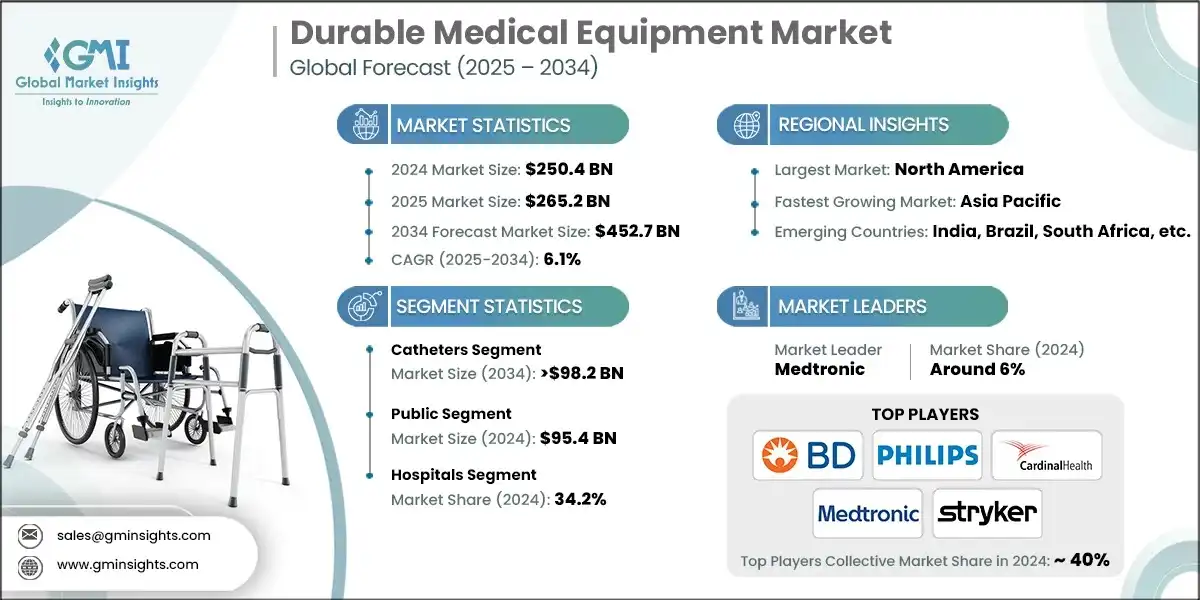
The global durable medical equipment market was estimated at USD 250.4 billion in 2024. The market is expected to grow from USD 265.2 billion in 2025 to USD 452.7 billion in 2034, at a CAGR of 6.1% during the forecast period, according to the latest report published by Global Market Insights Inc. The durable medical equipment market is driven by increasing prevalence of chronic diseases across the globe, technological advancements in products, preference for the home healthcare model, and favorable reimbursement policies, among other factors.
Durable Medical Equipment Market Key Takeaways
Market Size & Growth
- 2024 Market Size: USD 250.4 Billion
- 2025 Market Size: USD 265.2 Billion
- 2034 Forecast Market Size: USD 452.7 Billion
- CAGR (2025–2034): 6.1%
Regional Dominance
- Largest Market: North America
- Fastest Growing Region: Asia Pacific
Key Market Drivers
- Rising patient preference for home-based care.
- Increasing prevalence of chronic diseases across the globe.
- Growing geriatric population.
- Technological advancements in products.
Challenges
- High device costs and affordability challenges.
- Growing demand for pediatric-focused products.
Opportunity
- AI/ML integration and predictive analytics.
- Emerging markets expansion and infrastructure development.
Key Players
- Market Leader: Medtronic led with over 6% market share in 2024.
- Leading Players: Top 5 players in this market include BD, Koninklijke Philips, Cardinal Health, Medtronic, Stryker, which collectively held a market share of 40% in 2024.
Get Market Insights & Growth Opportunities
Increased focus on rehabilitation and recovery care, demand for user-friendly, ergonomic, and patient-specific equipment, and an aging population are among the key factors propelling the product demand. BD, Koninklijke Philips, Cardinal Health, Medtronic, and Stryker are among the leading players operating in the market. These players mainly focus on product innovation, adoption of novel materials in consumables, and collaboration with local or regional players to further their geographical expansion plans, among others.
The market reached USD 236.2 billion in 2023 from USD 209.2 billion in 2021. The growing preference for the home healthcare model is expected to have a substantial impact on this industry. More patients are choosing to recover from illness and manage chronic conditions at home, where they can enjoy the convenience of being at home, save money, and minimize hospital exposure. This has spurred the demand for portable, easy-to-use equipment such as oxygen concentrators, walkers and wheelchair mobility aids, or dialysis machines. Healthcare providers are also facilitating this shift by integrating remote monitoring and telehealth services into practice, leveraging durable medical equipment.
The global incidence of chronic diseases, such as diabetes, cardiovascular diseases (CVDs), respiratory diseases, and arthritis, is rising due to an aging population, inactive lifestyles, and other factors. For instance, according to the World Heart Federation data, over 1 billion people are affected by cardiovascular diseases globally. Similarly, the World Health Organization (WHO)'s report highlighted that more than 20.5 million deaths across the world were due to CVDs. Chronic diseases can often require long-term, sometimes lifelong, management with durable medical equipment, ranging from glucose monitors to CPAP machines to mobility devices. As health systems work to reduce the burden of chronic disease by managing them in outpatient settings, demand for long-term, durable, reliable, and consumable medical devices is expected to rise in the coming years.
Moreover, the landscape of durable medical equipment is becoming increasingly innovative, adding functionality, connectivity, and user experience to devices. Durable medical equipment includes devices that are capable of wireless monitoring, diagnostic capabilities powered by artificial intelligence, and mobile health app connectivity, which allows patients to share data in real-time and receive more personalized care. In addition, as healthcare transitions to digital-based or value-based models technology-enhanced durable medical equipment is becoming increasingly valuable to ensure efficient patient-centered care and provides even more market opportunities and differentiation.
Durable medical equipment (DME) includes medical devices and supplies that are intended to be used on a long-term basis for the purpose of treating medical conditions or assisting in the activities of daily living for people with disabilities or chronic illnesses. This equipment is reusable and is prescribed by the healthcare provider.
To get key market trends
Durable Medical Equipment Market Trends
Sustainability and reusability in medical equipment, integration of digital health and remote monitoring, and a shift toward preventive care are among the key trends driving the market’s upward trajectory.
- Due to environmental concerns and cost pressures, the industry movement is toward sustainable and reusable DME solutions. Manufacturers are investing in recyclable materials, modular designs, and refurbishing programs. For instance, in 2023, as part of a pilot project, Baxter successfully illustrated the proof of concept by recycling intravenous (IV) bags for a hospital facility in the U.S. It highlights the ongoing commitment and focus of the company toward sustainability.
- Additionally, digital transformation is remodeling the delivery of DME by incorporating sensors, wireless networks, and cloud-based systems into devices. These devices allow for real-time monitoring and sharing of data with healthcare providers, allowing them to be tracked and used for early intervention. Remote monitoring systems in particular have been shown to be useful in providing chronic care management for patients to decrease readmissions and provide a more person-centered approach.
- Furthermore, healthcare systems are making a transition from volume-based models of care to value-based models with a focus on enhanced outcomes and patient satisfaction. Durable medical equipment (DME) manufacturers are adopting and creating products for users that are ergonomic and outcome-focused. This trend promotes innovation in areas related to usability, durability, and product compatibility with digital platforms for enhanced user experience.
Durable Medical Equipment Market Analysis
Learn more about the key segments shaping this market
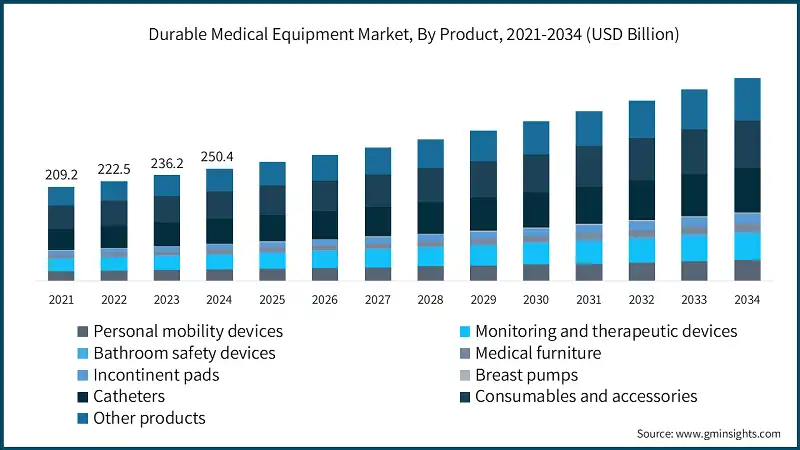
In 2021, the market was valued at USD 209.2 billion and grew to USD 222.5 billion in 2022, reaching USD 236.2 billion by 2023. Increased hospital admissions, technological advancements in products and growing geriatric population are among the key variables contributing to industry growth.
Based on product, the global durable medical equipment market is segmented into personal mobility devices, monitoring and therapeutic devices, bathroom safety devices, medical furniture, incontinent pads, breast pumps, catheters, consumables and accessories, and other products. The catheters segment accounted for a leading share of 22.3% in 2024. Rise in number of surgical procedures especially for urology related disorders is anticipated to fuel the product demand. The segment is expected to exceed USD 98.2 billion by 2034, growing at a CAGR of 5.8% during the forecast period.
- Catheters are vital medical instruments utilized for several purposes, such as draining fluids, administering medicines, or gaining access to the circulatory system. They are significantly used in the hospital, long-term care, and home settings, especially among patients with urinary retention, cardiovascular disease, and those undergoing dialysis.
- The need for catheters is driven majorly by an increasing prevalence of chronic conditions, surgical interventions, and an aging population. Recent progress in antimicrobial coatings and minimally invasive designs have resulted in improved comfort and safety, pushing the segmental growth in the DME market.
- The monitoring and therapeutic devices segment was valued at USD 31.6 billion in 2024. This segment includes products such as blood pressure devices, glucose monitoring devices, CPAP devices, and nebulizers that are necessary for the management of chronic conditions like hypertension, diabetes, and conditions that may affect breathing.
- The adoption of smart health devices integrated with digital technologies such as cloud connectivity is becoming a necessary tool for preventive care and outside traditional healthcare settings.
- Further, personal mobility devices are anticipated to record robust growth with a CAGR of 6.3% through the analysis timeframe. Examples of personal mobility devices are wheelchairs, walkers, canes, and scooters used by individuals with mobility impairment. They play an important role in fostering independence and improving quality of life for all individuals, particularly older adults who would benefit from mobility assistance either due to disability or injury.
- Moreover, improvements in lightweight materials, ergonomics, and powered mobility have positively impacted personal mobility devices by providing solutions that are not only lighter and easier to use but are also more diverse to meet patient needs.
Based on payer, the global durable medical equipment market is segmented into public, private, and out-of-pocket. The public segment accounted for a leading share and was valued at USD 95.4 billion in 2024.
- Public payers comprise government-sponsored health programs and insurance contracts that provide medical payments for insured individuals. Public payers frequently negotiate bulk purchasing prices and emphasize low-cost essential DME.
- Public payers are significant in the expansion of access to durable medical equipment, particularly in low-income and rural areas. In particular, they play a key role in countries that offer universal healthcare, which links reimbursement policies and purchasing decisions directly to the level of demand and availability of products in the market.
- The private payers’ segment was valued at USD 89.9 billion in 2024. Commercial insurers and employer-sponsored plans are a key aspect of private payers. They often provide more expansive coverage options and quicker reimbursement timeliness, which further drives the adoption of more varied and expensive DME.
- In addition, private payers often enter into arrangements with providers and manufacturers that offer packages based on value-based care. Private payers are generally flexible in determining coverage for novel and patient-centered devices, which makes them a key driver of adoption of premium products, especially in developed markets where private insurance penetration is high.
Learn more about the key segments shaping this market
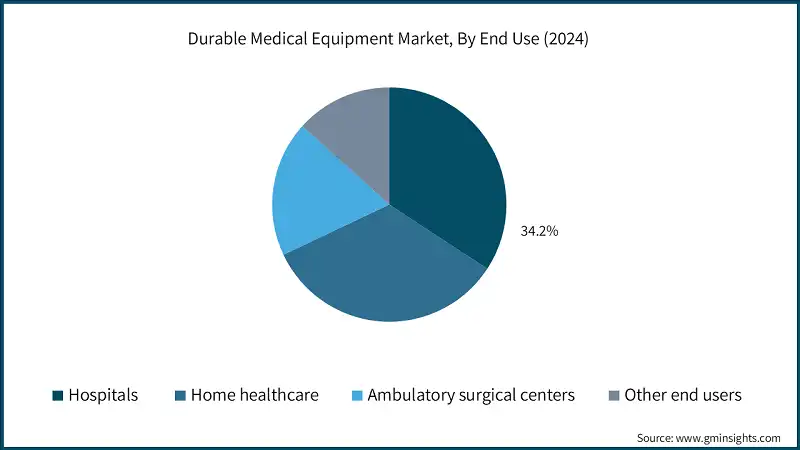
Based on end use, the durable medical equipment market is segmented into hospitals, home healthcare, ambulatory surgical centers, and other end users. The hospitals segment accounted for the leading market share of 34.2% in 2024 as it records high patient footfall including both public and private hospital settings.
- Hospitals represent a significant end-user segment for DME that requires various equipment for diagnostics, treatment, and patient assistance. These facilities make large purchases of different devices, such as surgical tables, infusion pumps, respiratory devices, patient monitors etc. which cover multiple clinical interventions, including inpatient and outpatient services.
- Hospitals prefer equipment that is safe, reliable, and of high quality, especially in the case of intensive and acute care. Increasing rates of hospital admissions and surgical procedures also directly drive demand in this segment.
- Additionally, the home healthcare segment was valued at USD 84.3 billion in 2024. Home healthcare represents a rapidly growing segment driven by patient preferences to manage their chronic conditions at home and the associated convenience and comfort of treatment while minimizing costs.
- Home healthcare equipment includes items such as oxygen concentrators, hospital beds, mobility and transfer devices, and remote telemonitoring equipment, along with regulatory-required devices. As telehealth increases and populations continue to age, home healthcare demand is expected to increase, and patients may complete their recovery and continue care in a home healthcare environment. In addition, manufacturers are focusing on economical, compact, easy-to-use, and connected devices while also developing products for non-clinical users.
- On the other hand, the ambulatory surgical centers segment is anticipated to record the highest growth with a CAGR of 6.9% over the forecast period. ASCs are growing rapidly, particularly in urban areas, as care shifts to decentralized healthcare settings and minimally invasive procedures.
Looking for region specific data?
- The DME market in North America is steadily growing due to the region's sophisticated healthcare infrastructure, high healthcare expenditure, and significant geriatric population. The prevalence of chronic diseases such as diabetes, cardiovascular disease, and respiratory disease promotes the long-term use of medical equipment. For example, according to data reported by the American Diabetes Association in 2021, around 11.6% of the American population was suffering from diabetes.
- Increasing trends toward home-based healthcare and the early adoption of digital health technologies have led to greater demand for portable and connected devices. Government support programs such as Medicare and Medicaid subsidize access to necessary DME products, especially for geriatric and disabled populations.
- North America is home to major manufacturers with wide distribution networks. The region also benefits from increased investment in telehealth and remote monitoring products, which complement the appropriate use of smart DME.
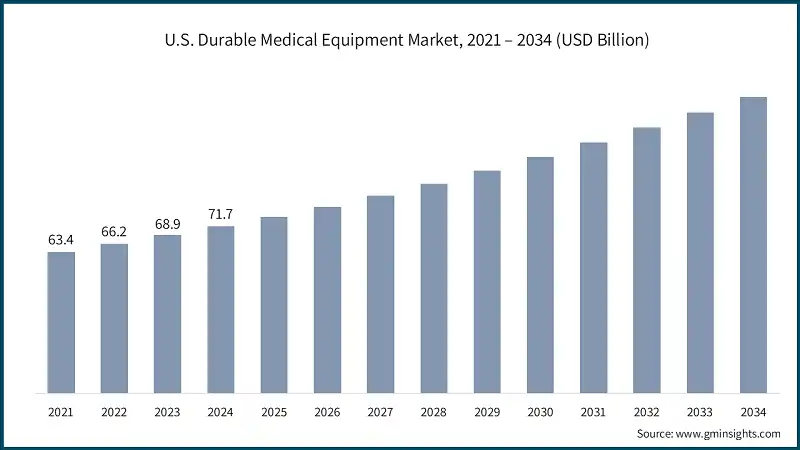
The U.S. durable medical equipment market was valued at USD 63.4 billion and USD 66.2 billion in 2021 and 2022, respectively. In 2024 the market size was valued at USD 71.7 billion from USD 68.9 billion in 2023. The significant focus on infection prevention practices along with high hospitalization rate in the country is projected to fuel market growth.
- The U.S. is the largest and most developed durable medical equipment market, owing to its combination of highly developed healthcare infrastructure, high healthcare spending, and a large aging population. Chronic conditions such as heart disorders and respiratory conditions are highly prevalent in the country and create consistent demand for long-term care equipment such as CPAPs, mobility devices, and home monitoring devices.
- The U.S. healthcare system increases access to DME for the elderly and disabled population through Medicare, Medicaid, and private insurance. The U.S. also leads trends in home-based care, supported by telehealth and remote patient monitoring technology.
- Innovation is an important component of DME, with U.S. companies leading the market in smart, connected, and AI-enabled devices. In addition, to further support product demand in the country, the regulatory environment enhances the safety and quality of products while also improving access to innovative equipment through supportive regulatory approvals.
- Moreover, with an emphasis on preventive care, digital health, and patients as engaged decision-making consumers, the U.S. DME market is expected to continue growing.
Europe Durable Medical Equipment Market
Europe accounted for a substantial share in the global durable medical equipment industry and was valued at USD 54.9 billion in 2024.
- Europe’s market is experiencing continued growth, spurred by an aging population, increasing rates of chronic disease, and strong public health systems. Countries such as Germany, France, and the UK are at the forefront of adoption due to established reimbursement processes and high levels of health expenditure.
- The region is also experiencing a shift toward care in the home setting as patients age or require post-operative care. Demand for mobility aids, respiratory devices, and home monitoring equipment is expected to support this trend. Technological innovation is supported by European Union–wide regulations that advocate safety and interoperability. Additionally, economic sustainability is propelling the use of reusable and modular equipment. As healthcare systems work to reduce length of hospital stays while optimizing patient outcomes, durable, connected, and patient-centered medical equipment is expected to record a substantial adoption rate.
- Further, the market is also benefiting from the shift toward digital health and collaborative relationships across borders to enhance access to advanced medical technologies.
UK held significant share of the European durable medical equipment market, showcasing strong growth potential.
- Due to the increasing aging population, growing burden of chronic diseases in the UK, and a continued trend toward home-based care, the DME market is characterized by consistent growth. The National Health Service (NHS) plays a key role in ensuring access to essential medical equipment for conditions that require long-term management, such as chronic obstructive pulmonary disease (COPD), arthritis, and diabetes.
- There is a shift toward minimizing hospital admissions and providing patients with opportunities for self-care at home, leading to increased demand for portable and easily operated devices. The uptake of digital health and remote monitoring technologies in the UK is advancing as they are integrated with DME for prevention.
- Additionally, private healthcare procurement and the availability of customized equipment are increasing to support the growing demand in the country. Finally, given the combination of public sector support and private sector innovation, the UK is well-positioned to continue experiencing steady growth in the DME market.
Asia Pacific Durable Medical Equipment Market
The Asia Pacific market accounted for the significant share in the market and was valued at USD 74.3 billion in 2024.
- The Asia Pacific region is expected to witness the fastest growth in the DME market, driven by rapid urbanization, growing investments in healthcare, a large aging population, and an increasing middle-class population, which are contributing to the demand for mobility devices, home care, and diagnostic devices.
- Regional governments are encouraging local manufacturing of DME devices and promoting the adoption of digital health since it can help accelerate access to affordable, technologically advanced medical products. Telemedicine and home healthcare are also widely accepted in rural and underserved communities.
- In addition, the increasing number of both international and domestic manufacturers in the DME segment is expanding product variety and intensifying competition.
- With favorable policies, increased health awareness, and rising interest in delivering affordable care, the Asia Pacific region is projected to remain an important and key growth market in the global DME landscape during the forecast period.
China durable medical equipment market is estimated to grow with a healthy CAGR, in the Asia Pacific market.
- The rapidly growing DME market in China is attributed to the aging population and supportive healthcare reforms. The government is investing heavily in healthcare to expand access, especially in rural populations, and to promote care in the home environment to reduce the burden on hospitals.
- With the increased prevalence of chronic diseases, specifically diabetes, hypertension, and respiratory diseases, there is growing demand for durable medical equipment in the country.
- China continues to focus on domestically manufactured and innovative medical equipment, and many local companies are producing high-quality and affordable durable medical equipment.
- Moreover, advancements in digital health technology, including AI and IoT, are transforming traditional medical equipment into smart and connected devices.
- Further, the expansion of health insurance coverage and private healthcare providers is improving access to modern equipment.
Latin America Durable Medical Equipment Market
Brazil leads the Latin American market, exhibiting remarkable growth during the analysis period.
- Brazil's durable medical equipment (DME) market is progressing at a consistent rate because of a growing elderly population, rising incidence of chronic disease, and expanding accessibility to healthcare. The universal public healthcare system (Sistema Único de Saúde) is the main source of access to medically necessary equipment, especially among the low-income segment of the population.
- At the same time, Brazil's private healthcare providers are also investing in more advanced and specialized DME solutions to accommodate increased demand. The COVID-19 pandemic has accelerated the shift toward home-based care and telehealth.
- Further, Brazil’s large population, ongoing need for improvements in the healthcare system, and state capacity offer a notable opportunity for both domestic and international DME manufacturers, particularly those providing solutions that improve cost efficiency and scalability for local markets.
Middle East and Africa Durable Medical Equipment Market
Saudi Arabia market to experience substantial growth in the Middle East and Africa durable medical equipment industry in 2024.
- The durable medical equipment market in Saudi Arabia is growing at a robust pace, driven by modernization efforts in the healthcare sector under Vision 2030. The government is investing significant resources into the development of infrastructure, digital healthcare, and local manufacturing in an effort to lessen dependence on imported goods.
- Additionally, an aging population and an increasing prevalence of chronic diseases (e.g., diabetes and cardiovascular illnesses) are creating considerable demand for devices related to long-term care.
- Moreover, regulatory reforms are in place to expedite product approvals, and incentives are being established to foster key innovations. The continued focus on preventive care and patient-centered services is reshaping the durable medical equipment market, as there is increasing interest in smart monitoring technology, mobility aids, and rehabilitation equipment. As the country diversifies its economy and improves healthcare quality, the DME market is expected to grow in both urban and rural areas.
Durable Medical Equipment Market Share
The durable medical equipment (DME) marketplace is highly competitive, comprising both industry-leading companies and smaller businesses that rely on innovation, economies of scale, and strategic partnerships to attract customers. Global firms such as Medtronic, Philips, Cardinal Health, Stryker, and BD hold strong positions due to their extensive product portfolios, robust distribution networks, and continued investment in research and development. These companies also prioritize high-growth categories such as mobility aids, respiratory therapy devices, and patient monitoring equipment.
Competition is intensifying with the rising adoption of home healthcare and telemedicine, driving market participants to develop smart, connected DME solutions. Mergers and acquisitions remain a key strategic priority for multinational firms seeking to expand capabilities and enter new market segments. For instance, Stryker’s acquisition of Vocera strengthened its digital health portfolio, while Medtronic continues to invest in AI-driven care technologies.
Additionally, new entrants and local manufacturers are gaining traction by offering cost-effective and localized solutions, especially across APAC and LATAM. Regulatory compliance, reimbursement frameworks, and the ability to integrate advanced technologies remain critical differentiators. Overall, the DME market is shifting toward value-based care, patient-centered product design, and digitally integrated solutions, fundamentally reshaping competitive dynamics and the delivery of durable medical equipment worldwide.
Durable Medical Equipment Market Companies
Few of the prominent players operating in the global durable medical equipment industry include:
- B Braun
- Baxter
- BD
- Cardinal Health
- CAREX
- Coloplast
- COMPASS HEALTH
- convaTec
- drive DeVilbiss Healthcare
- Getinge
- graham-field
- INTCO MEDICAL
- INVACARE
- Koninklijke Philips
- MEDLINE
- Medtronic
- ResMed
- Stryker
- SUNRISE MEDICAL
- BD
BD is focusing on high-growth adjacencies through strategic M&A, investing more than USD 2 billion annually in connected care and smart devices. Its “BD 2025” strategy emphasizes innovation, global expansion, and the launch of over 100 new products to support durable, long-term growth.
Cardinal Health is transforming its business with a focus on specialty care, supply chain modernization, and digital platforms. It is expanding its Specialty Alliance and investing in logistics automation to enhance efficiency and strengthen integration with healthcare providers.
Medtronic is driving growth through innovation in robotics, AI, and emerging markets. It is restructuring its operations for greater agility, investing in high-growth platforms such as cardiac ablation, and pursuing value-based healthcare partnerships to strengthen long-term profitability and global reach.
Durable Medical Equipment Market Report Attributes
| Key Takeaway | Details |
|---|---|
| Market Size & Growth | |
| Base Year | 2024 |
| Market Size in 2024 | USD 250.4 Billion |
| Market Size in 2025 | USD 265.2 Billion |
| Forecast Period 2025 – 2034 CAGR | 6.1% |
| Market Size in 2034 | USD 452.7 Billion |
| Key Market Trends | |
| Drivers | Impact |
| Rising patient preference for home-based care | Increasing demand for portable, user-friendly equipment is reshaping product design and distribution, especially in post-acute and chronic care management. |
| Increasing prevalence of chronic diseases across the globe | Sustains consistent demand for monitoring and therapeutic devices, particularly for diabetes, cardiovascular, and respiratory conditions. |
| Growing geriatric population | Drives long-term care needs, especially for mobility aids, respiratory support, and home-based monitoring systems. |
| Technological advancements in products | Enhances device efficiency, connectivity, and patient compliance, making DME more appealing to both providers and consumers. |
| Pitfalls & Challenges | Impact |
| High device costs and affordability challenges | Limits adoption in low- and middle-income regions; reimbursement gaps further restrict access for underinsured populations. |
| Growing demand for pediatric-focused products | Current product portfolios are largely adult-centric, creating a gap in specialized pediatric DME solutions. |
| Opportunities: | Impact |
| AI/ML integration and predictive analytics | Will enable proactive care, early diagnosis, and personalized treatment, transforming DME into intelligent health management tools. |
| Emerging markets expansion and infrastructure development | Offers significant growth potential as healthcare access improves and governments invest in medical infrastructure and insurance coverage. |
| Market Leaders (2024) | |
| Market Leaders |
Around 6% |
| Top Players |
Collective market share in 2024 is ~ 40% |
| Competitive Edge |
|
| Regional Insights | |
| Largest Market | North America |
| Fastest growing Market | Asia Pacific |
| Emerging countries | India, Brazil, South Africa, etc. |
| Future outlook |
|
What are the growth opportunities in this market?
Durable Medical Equipment Industry News
- In June 2025, Cardinal Health launched a new medical device for the continuous monitoring of cardiac activity, blood oxygen levels, and temperature in the U.S. The device is a multi-parameter, single-patient-use cable monitoring and lead-wire system that tracks three essential vital signs in one unit. This development is expected to support the company's business growth in the U.S.
- In March 2024, Stryker launched two new products: the ‘LIFEPAK CR2 automated external defibrillator (AED)’ for cardiac care and an ‘Evacuation Chair’ for emergency patient evacuation. These product launches enabled the company to expand its product portfolio and strengthen its customer base across different geographies.
- In June 2024, Ottobock launched the advanced power wheelchair model Juvo B7 to support users with complex needs. This development improved the company’s competitiveness in the market and enhanced its sales prospects.
The global durable medical equipment market research report includes in-depth coverage of the industry with estimates and forecasts in terms of revenue in (USD Million) from 2021 - 2034 for the following segments:
Market, By Product
- Personal mobility devices
- Wheelchair and scooter
- Crutches and canes
- Walkers
- Other personal mobility devices
- Monitoring and therapeutic devices
- Oxygen equipment
- Blood glucose analyzers
- Vital sign monitors
- Infusion pumps
- Continuous positive airway pressure (CPAP) devices
- Nebulizers
- Other monitoring and therapeutic devices
- Bathroom safety devices
- Medical furniture
- Incontinent pads
- Breast pumps
- Catheters
- Consumables and accessories
- Other products
Market, By Payer
- Public
- Private
- Out-of-pocket
Market, By End Use
- Hospitals
- Home healthcare
- Ambulatory surgical centers
- Other End Use
The above information is provided for the following regions and countries:
- North America
- U.S.
- Canada
- Europe
- Germany
- UK
- France
- Spain
- Italy
- Asia Pacific
- China
- Japan
- India
- Australia
- South Korea
- Latin America
- Brazil
- Mexico
- Argentina
- MEA
- South Africa
- Saudi Arabia
- UAE
Frequently Asked Question(FAQ) :
What is the market size of the durable medical equipment industry in 2024?
The market size was USD 250.4 billion in 2024, with a 6.1% CAGR expected through 2034 driven by rising chronic disease prevalence, an expanding geriatric population, and growing adoption of home-based care models.
What is the current durable medical equipment market size in 2025?
The market size is projected to reach USD 265.2 billion in 2025.
What is the projected value of the durable medical equipment market by 2034?
The market size for durable medical equipment is expected to reach USD 452.7 billion by 2034, driven by technological advancements, rapid digital health integration, and growing demand for smart, connected long-term care equipment.
How much revenue did the catheters segment generate in 2024?
The catheters segment held a leading 22.3% share in 2024, driven by rising surgical volumes, growth in urology-related procedures, and increasing need for long-term chronic disease management.
What was the valuation of the public payer segment in 2024?
The public payer segment was valued at USD 95.4 billion in 2024, supported by government-funded healthcare programs, bulk procurement practices, and strong emphasis on essential DME accessibility.
What is the growth outlook for personal mobility devices from 2025 to 2034?
Personal mobility devices are projected to grow at a 6.3% CAGR through 2034, supported by the aging population, rising incidence of mobility impairments, and technological enhancements in lightweight and powered mobility solutions.
Which region leads the durable medical equipment market?
The U.S. leads the North America market with USD 71.7 billion in 2024. Growth is driven by strong healthcare infrastructure, high chronic disease burden, expanding home healthcare adoption, and increased use of AI- and digitally enabled monitoring devices.
What are the upcoming trends in the durable medical equipment industry?
Key trends include digital health integration, remote patient monitoring, AI- and ML-enabled predictive analytics, sustainability-driven equipment design, and increased adoption of ergonomic and patient-centric DME solutions.
Who are the key players in the durable medical equipment market?
Major players include Medtronic, BD, Koninklijke Philips, Cardinal Health, Stryker, Baxter, B Braun, ResMed, Invacare, Drive DeVilbiss Healthcare, Coloplast, and Sunrise Medical.
Durable Medical Equipment Market Scope
Related Reports