Summary
Table of Content

Digital Stethoscope with AI Analysis Market
Get a free sample of this report
Form submitted successfully!
Error submitting form. Please try again.
Thank you!
Your inquiry has been received. Our team will reach out to you with the required details via email. To ensure that you don't miss their response, kindly remember to check your spam folder as well!
Request Sectional Data
Thank you!
Your inquiry has been received. Our team will reach out to you with the required details via email. To ensure that you don't miss their response, kindly remember to check your spam folder as well!
Form submitted successfully!
Error submitting form. Please try again.
Digital Stethoscope with AI Analysis Market Size
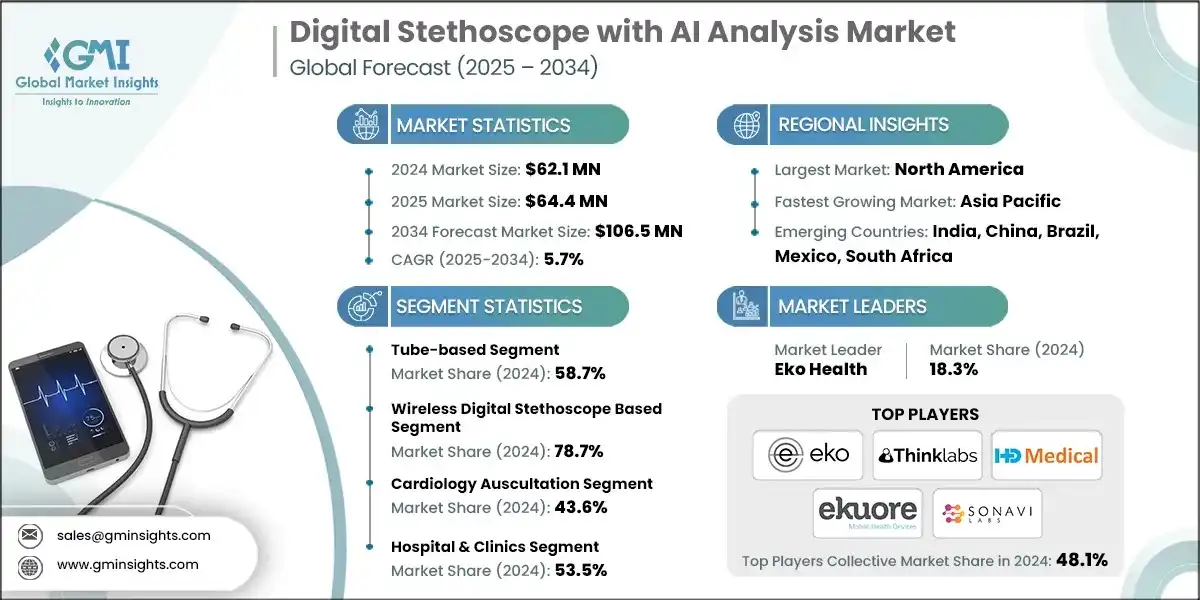
The global digital stethoscope with AI analysis market size was valued at USD 62.1 million in 2024. The market is expected to reach from USD 64.4 million in 2025 to USD 106.5 million in 2034, growing at a CAGR of 5.7% during the forecast period, according to the latest report published by Global Market Insights Inc. Growing incidences of cardiovascular and respiratory diseases, along with the integration of AI, the expansion of telemedicine, rising adoption of handheld devices, and a surging focus on preventive care are driving the adoption of digital stethoscope.
Digital Stethoscope with AI Analysis Market Key Takeaways
Market Size & Growth
- 2024 Market Size: USD 62.1 Million
- 2025 Market Size: USD 64.4 Million
- 2034 Forecast Market Size: USD 106.5 Million
- CAGR (2025–2034): 5.7%
Regional Dominance
- Largest Market: North America
- Fastest Growing Region: Asia Pacific
Key Market Drivers
- Rising prevalence of cardiovascular and pulmonary diseases.
- Integration of AI for automated sound analysis and clinical decision support.
- Expansion of telemedicine and remote patient monitoring.
- Technological advancements in acoustics and noise cancellation.
Challenges
- High cost of AI-integrated digital stethoscopes.
- Limited clinical validation and regulatory standardization for AI algorithms.
Opportunity
- Integration with multi-parameter AI diagnostic platforms.
- Emergence of low-cost, smartphone-compatible AI stethoscopes.
Key Players
- Market Leader: Eko Health led with over 18.3% market share in 2024.
- Leading Players: Top 5 players in this market include Eko Health, Thinklabs, HD Medical, eKuore Medical, Sonavi Labs, which collectively held a market share of 48.1% in 2024.
Get Market Insights & Growth Opportunities
The international digital stethoscope with AI-based analysis market provides sophisticated diagnostic products for patients, providers, and healthcare professionals, including early detection, ongoing monitoring, and AI-informed clinical decision support. Products encompass tube-type and tubeless stethoscopes that are wired or wireless, using cloud or on-device AI for cardiology, pulmonary, and other uses. Major players like Eko Health, Thinklabs, HD Medical, eKuore Medical, and Sonavi Labs strive to keep their competitive advantage by ongoing innovation, strategic collaborations, increasing global distribution, and major R&D investments, catering to the increasing need for connected, personalized, and real-time healthcare solutions.
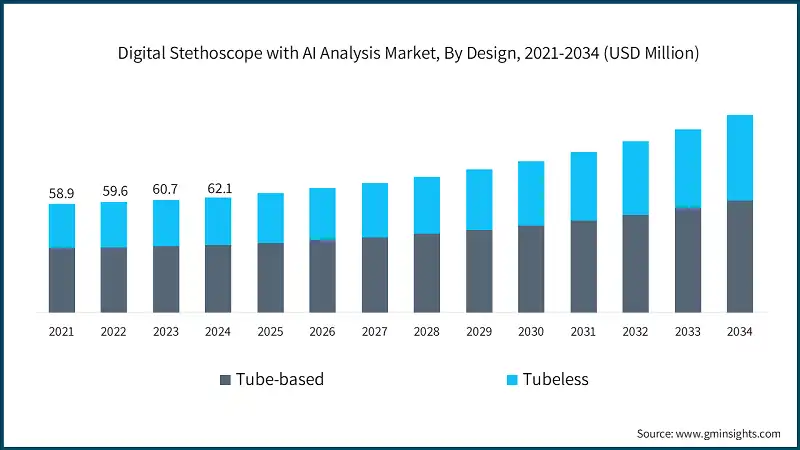
The market has increased from USD 58.9 million in 2021 and reached USD 60.7 million in 2023. The global digital stethoscope with AI analysis market is primarily driven by the rising prevalence of cardiovascular and respiratory diseases worldwide. Conditions such as heart valve disorders, arrhythmias, chronic obstructive pulmonary disease (COPD), asthma, and pneumonia are contributing to increased demand for accurate, early, and continuous diagnostic solutions. AI-enabled digital stethoscopes enhance traditional auscultation by providing automated sound analysis, enabling early detection of abnormalities, and supporting timely clinical decision-making.
The rapid expansion of telemedicine and remote patient monitoring devices and programs is another significant driver. Healthcare providers and primary care centers increasingly rely on connected, AI-integrated stethoscopes for remote consultations, homecare monitoring, and chronic disease management. Devices with wireless connectivity, such as Bluetooth or Wi-Fi-enabled stethoscopes, allow seamless data transfer to cloud platforms, enabling physicians to access patient information in real-time and make informed decisions. Technological advancements in acoustics, signal processing, and noise cancellation have improved the precision and reliability of digital stethoscopes, making them more efficient than traditional devices. The integration of on-device and cloud-based AI algorithms allows for multi-parameter analysis, predictive diagnostics, and enhanced clinical workflows, further accelerating adoption.
Additionally, the growing focus on preventive healthcare and early intervention is pushing healthcare institutions to adopt innovative diagnostic tools. AI-powered stethoscopes facilitate proactive screening programs and continuous patient monitoring, reducing hospital readmissions and improving patient outcomes.
A digital stethoscope with AI analysis is an electronic auscultation device that captures heart, lung, and other bodily sounds, processes them digitally, and leverages artificial intelligence algorithms to detect abnormalities, support clinical decision-making, enable remote monitoring, and enhance diagnostic accuracy in hospitals, primary care, and telehealth settings.
To get key market trends
Digital Stethoscope with AI Analysis Market Trends
The rising incidence of cardiovascular and pulmonary diseases worldwide is a key driver of the market. Conditions such as arrhythmias, valvular disorders, and heart failure, along with pulmonary diseases like chronic obstructive pulmonary disease (COPD), asthma, and pneumonia, are fueling demand for accurate and early diagnostic solutions.
- Early diagnosis and ongoing monitoring are essential to minimizing mortality and morbidity, making AI-powered digital stethoscopes necessary pieces of equipment in hospitals, primary care facilities, and homecare.
- In addition, technological developments are further driving market growth. New digital stethoscopes incorporate high-fidelity microphones, sophisticated signal processing, and AI-based algorithms that can identify faint heart murmurs, irregular rhythms, and respiratory abnormalities.
- Noise-cancellation technology, cloud connectivity, and on-device AI enable remote monitoring and telemedicine applications, allowing healthcare providers to deliver precise diagnostics in real time, even in low-resource settings. The development of tubeless and wireless devices improves portability, accessibility, and patient compliance, increasing adoption rates in both clinical and homecare environments.
- From a macroeconomic perspective, rising healthcare expenditure, increasing government investment in digital health, and the growing burden of chronic diseases are driving the demand. Aging populations and rising disposable incomes in developed and emerging economies further support the adoption of AI-enabled medical devices.
- At the microeconomic level, hospitals and clinics are increasingly adopting advanced diagnostic technologies to improve workflow efficiency and patient outcomes. Primary care providers and telehealth platforms seek cost-effective, reliable solutions that enhance remote monitoring capabilities, reduce readmissions, and improve preventive care.
- Collectively, factors such as rising disease prevalence, technological innovation, favorable macroeconomic conditions, and healthcare providers’ operational needs position the increasing incidence of cardiovascular and pulmonary diseases as a key driver of the continued growth and adoption of digital stethoscopes with AI analysis.
Digital Stethoscope with AI Analysis Market Analysis
Learn more about the key segments shaping this market
The global market was valued at USD 58.9 million in 2021. The market size reached USD 60.7 million in 2023, from USD 59.6 million in 2022.
Based on the design, the market is segmented into tube-based and tubeless. The tube-based segment has asserted its dominance in the market by securing a significant market share of 58.7% in 2024, driven by trusted acoustic performance, widespread clinical adoption, and integration with AI algorithms drive continued preference in hospitals and established healthcare facilities. The segment is expected to exceed USD 60.4 million by 2034, growing at a CAGR of 5.4% during the forecast period.
On the other hand, the tubeless segment is expected to grow with a CAGR of 6.2%. The growth of this segment can be attributed its portability, wireless connectivity, and compatibility with telemedicine and homecare monitoring accelerate adoption, especially in remote and emerging healthcare markets.
- The engineering design of tubeless stethoscopes preserves classical acoustic principles while integrating digital signal processing and AI-driven analysis, combining reliability with innovation. These devices are widely used across hospitals, primary care facilities, and specialty clinics, where high-fidelity sound quality is critical for diagnosing cardiovascular and pulmonary diseases.
- The tube-based segment, meanwhile, continues to benefit from strong brand reputation and established players such as 3M Littmann, supported by robust R&D, extensive distribution networks, and clinically proven performance. These devices now feature on-device AI and cloud-based processing, enhancing diagnostic accuracy and workflow efficiency. Their adoption remains steady due to healthcare institutions preference for trusted, high-quality equipment, leading to consistent investments in upgrading legacy devices with AI-enabled functionalities.
- In 2024, the tubeless digital stethoscope segment generated USD 25.6 million in revenue, with forecasts indicating steady expansion at a 6.2% CAGR through 2034. Growth is driven by rising demand for portability, convenience, and telemedicine integration. The compact, lightweight design enables clinicians to carry the devices easily during home visits, mobile clinics, and emergency settings, supporting point-of-care diagnostics.
- AI-enabled tubeless stethoscopes often feature wireless connectivity (Bluetooth/Wi-Fi) and smartphone integration, facilitating real-time data transmission, remote monitoring, and cloud-based analysis. The segment appeals strongly to emerging markets, telehealth providers, and primary care practitioners seeking scalable and cost-effective diagnostic solutions.
- Ongoing advancements in battery life, noise cancellation, and AI algorithm accuracy further strengthen adoption. Additionally, the increasing prevalence of cardiovascular and pulmonary diseases, combined with a growing focus on preventive healthcare and home-based monitoring, positions the tubeless segment as a high-potential growth area within the global digital stethoscope market.
Based on connectivity, the digital stethoscope with AI analysis market is classified into wireless digital stethoscope and wired digital stethoscope. The wireless digital stethoscope based segment dominated the market with a revenue share of 78.7% in 2024 and is expected to reach USD 80.7 million within the forecast period.
- The digital wireless stethoscope segment dominates the market owing to its compatibility with Bluetooth, Wi-Fi, and hybrid connections, enabling seamless transmission of data to cloud platforms, mobile devices, and AI analytics systems. This connectivity supports telemedicine, remote patient monitoring, and continuous care capabilities that have become critical amid the growing burden of cardiovascular and pulmonary diseases.
- Wireless stethoscopes offer portability, ease of use, and patient-centric design, making them ideal for hospitals, primary care facilities, and homecare programs. Technological advancements such as real-time AI-aided sound analysis, active noise reduction, and multi-parameter integration enhance diagnostic precision and streamline clinical workflows.
- Furthermore, the adoption of cloud-based solutions enables clinicians to store, share, and analyze patient data remotely, promoting predictive diagnostics and preventive care. Collectively, these advantages position wireless stethoscopes as the fastest-growing and most preferred connectivity option in the market.
- The wired digital stethoscope segment accounted for USD 13.2 million in revenue in 2024 and is projected to expand steadily at a 7.1% CAGR from 2025 to 2034. Despite the growing shift toward wireless technologies, wired devices remain relevant due to their reliability, stable signal quality, and low latency features essential in hospital and clinical settings.
- Healthcare facilities with legacy infrastructure often prefer wired models for their uninterrupted power supply, secure data transmission, and reduced susceptibility to wireless connectivity or cybersecurity issues. They are also more cost-effective, making them suitable for budget-constrained institutions and regions with limited digital infrastructure.
- Integration with AI-assisted diagnostic software allows wired stethoscopes to deliver accurate cardiology and pulmonary sound analyses even in high-volume healthcare environments.
Based on application, the digital stethoscope with AI analysis market is classified into cardiology auscultation, pulmonary auscultation, pediatrics, abdominal auscultation, and other applications. The cardiology auscultation segment dominated the market with a revenue share of 43.6% in 2024 and is expected to reach USD 47.5 million within the forecast period.
- The digital stethoscope segment that is wireless leads the market owing to its support for Bluetooth, Wi-Fi, and hybrid connectivity to facilitate easy data transfer to mobile devices, cloud platforms, and AI analytics systems. Telemedicine, remote patient monitoring, and ongoing care are supported by the connectivity, which has emerged as imperative in the wake of the increasing incidence of cardiovascular and pulmonary diseases.
- Wireless stethoscopes offer portability, convenience, and patient-centered design, which makes them appropriate for hospitals, primary care facilities, and homecare programs. Improved technologies like real-time AI-powered sound analysis, noise cancellation, and multi-parameter integration further improve diagnostic effectiveness and clinical workflow.
- The pulmonary auscultation segment held a revenue of USD 19.7 million in 2024, with projections indicating a steady expansion at 6.4% CAGR from 2025 to 2034. Pulmonary auscultation benefits from the global increase in respiratory conditions, including COPD, asthma, and pneumonia. AI-enabled stethoscopes detect abnormal lung sounds, crackles, and wheezes, facilitating early intervention.
- Integration with telemedicine and remote patient monitoring enables continuous respiratory assessment at home or in rural areas. Improved signal processing, wireless connectivity, and portable tubeless designs allow clinicians to capture accurate data even in noisy environments.
- Preventive screening programs and chronic disease management initiatives further support the segment’s growth, particularly amid rising respiratory disease prevalence and hospital readmission reduction strategies.
- The abdominal auscultation segment held a revenue of USD 2.7 million in 2024, with projections indicating a steady expansion at 2.6% CAGR from 2025 to 2034.
- The abdominal auscultation segment is driven by the need for early detection of gastrointestinal disorders, bowel obstructions, and other internal conditions. AI-assisted digital stethoscopes provide real-time sound analysis, enhancing accuracy compared to conventional auscultation.
- Portable and wireless devices enable continuous monitoring in hospitals and outpatient care, while cloud-based analytics support telehealth applications.
Learn more about the key segments shaping this market
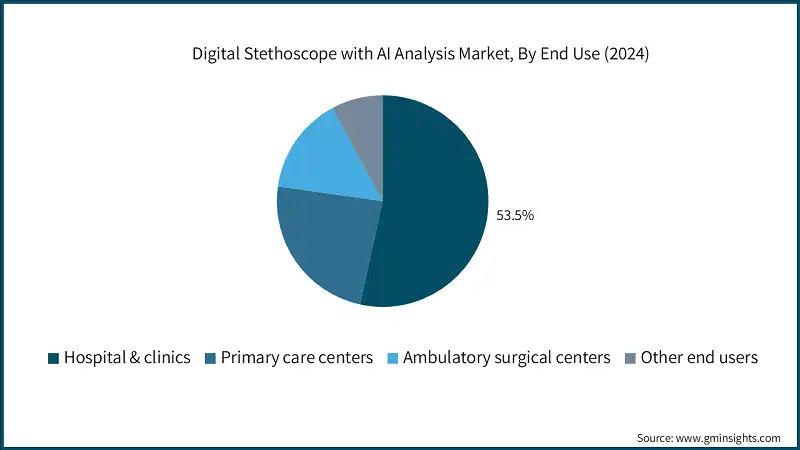
Based on end use, the digital stethoscope with AI analysis market is classified into hospital & clinics, primary care centers, ambulatory surgical centers, and other end users. The hospital & clinics segment dominated the market with a revenue share of 53.5% in 2024 and is expected to reach USD 55.3 million within the forecast period.
- Hospitals and clinics dominate the market due to their high patient volumes, need for accurate diagnostics, and integration of advanced healthcare technologies. The rising prevalence of cardiovascular and pulmonary diseases necessitates continuous patient monitoring and early detection, driving adoption of AI-enabled stethoscopes.
- Technological advancements, including high-fidelity sound capture, noise cancellation, and cloud or on-device AI analysis, enhance workflow efficiency and diagnostic accuracy, making these devices indispensable in clinical settings. Hospitals also benefit from operational efficiencies, reduced readmissions, and improved patient outcomes.
- Macro factors such as increasing healthcare expenditure, aging populations, and government investment in digital health infrastructure further support adoption.
- The primary care centers segment held a revenue of USD 14.8 million in 2024, with projections indicating a steady expansion at 6.7% CAGR from 2025 to 2034. Primary care centers are adopting digital stethoscopes with AI analysis to improve early detection of heart and lung conditions in routine checkups and preventive care. Telemedicine integration allows remote monitoring, bridging gaps in rural or underserved regions.
- The portability of wireless, tubeless devices supports patient convenience and home-based care programs. Lower-cost AI-enabled devices make adoption economically feasible for smaller clinics, while predictive analytics assist general practitioners in identifying abnormalities without specialist intervention.
- Increasing patient awareness of preventive healthcare, chronic disease management, and AI-assisted diagnostics drives the segment’s growth.
- Furthermore, favorable macroeconomic trends, such as rising disposable income and government incentives for digital health adoption, combined with microeconomic factors like streamlined workflows, enhanced patient satisfaction, and reduced diagnostic errors, encourage primary care centers to implement these innovative stethoscopes, positioning the segment as a fast-growing market contributor.
Looking for region specific data?
North America Digital Stethoscope with AI Analysis Market
North America dominated the global market with the highest market share of 35.5% in 2024.
- The region benefits from advanced healthcare infrastructure, high adoption of innovative medical technologies, and a well-established telemedicine ecosystem. Rising prevalence of cardiovascular and pulmonary diseases, including heart failure, arrhythmias, COPD, and asthma, fuels demand for accurate and early diagnostic tools.
- Technological advancements such as high-fidelity microphones, AI-based auscultation algorithms, noise cancellation, and wireless connectivity support enhanced diagnostics across hospitals, primary care centers, and homecare. Increasing government and private sector investments in digital health, along with favorable reimbursement policies, incentivize adoption of AI-enabled devices.
- Moreover, strong presence of leading manufacturers like Eko Health and 3M Littmann, coupled with extensive research and clinical validation programs, reinforces market dominance.
- North America’s high awareness of preventive healthcare and continuous monitoring solutions further drives widespread integration of digital stethoscopes in patient care workflows.
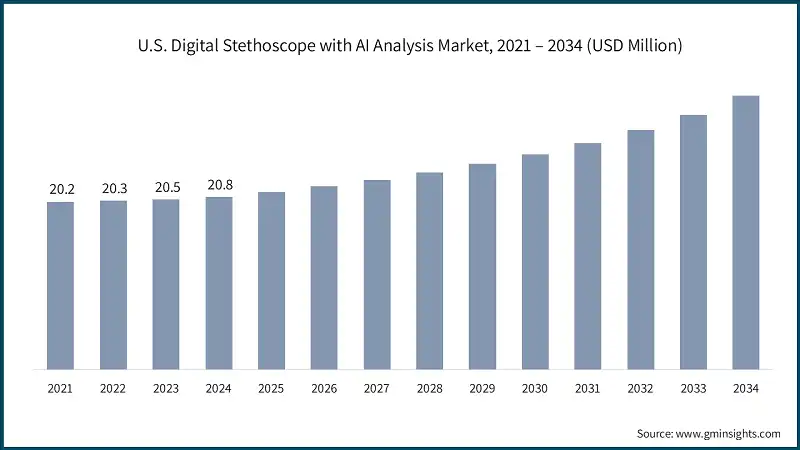
The U.S. digital stethoscope with AI analysis market was valued at USD 20.2 million and USD 20.3 million in 2021 and 2022, respectively. In 2024, the market size grew to USD 20.8 million from USD 20.5 billion in 2023.
- The U.S. represents the largest single market within North America for AI-powered digital stethoscopes, driven by advanced healthcare infrastructure, robust telemedicine adoption, and a high prevalence of cardiovascular and respiratory diseases. Growing incidences of heart disease, COPD, and chronic respiratory illnesses create an urgent need for accurate and continuous monitoring solutions.
- Healthcare providers increasingly adopt AI-enabled digital stethoscopes that leverage cloud and on-device analytics, enabling real-time detection of murmurs, arrhythmias, and abnormal lung sounds.
- Technological innovation, including wireless, tubeless, and smartphone-compatible devices, enhances portability, usability, and remote patient monitoring capabilities. Macroeconomic factors such as substantial healthcare expenditure, government incentives for digital health solutions, and supportive regulatory frameworks encourage adoption.
- On a microeconomic level, hospitals, primary care centers, and telehealth providers seek AI-integrated devices to improve operational efficiency, reduce readmissions, and enhance patient outcomes. The presence of key players with strong distribution networks and R&D investment further accelerates market growth in the U.S.
Europe Digital Stethoscope with AI Analysis Market
Europe market accounted for USD 17.1 million in 2024 and is anticipated to show lucrative growth over the forecast period.
- The Europe market is driven by the rising prevalence of cardiovascular and pulmonary diseases across the region. Increasing incidences of heart failure, arrhythmias, COPD, and asthma are prompting hospitals, primary care centers, and telemedicine providers to adopt advanced diagnostic solutions for early detection and continuous monitoring.
- Technological advancements, including AI-assisted sound analysis, cloud-based platforms, and portable wireless stethoscopes, enhance diagnostic accuracy and support remote patient monitoring, fueling adoption across clinical and homecare settings.
- Additionally, Europe’s favorable healthcare policies, growing government investments in digital health, and initiatives promoting AI-driven diagnostics encourage healthcare providers to integrate these innovative devices.
- Rising awareness of preventive healthcare and the shift toward personalized medicine are also significant factors. Increased funding for research and development, partnerships between AI solution providers and stethoscope manufacturers, and the expansion of telehealth infrastructure further strengthen market growth across the European region.
Germany dominates the European digital stethoscope with AI analysis market, showcasing strong growth potential.
- Germany represents one of the largest markets for digital stethoscopes with AI analysis in Europe, driven by its advanced healthcare infrastructure and high adoption of digital health technologies. The country faces a growing burden of cardiovascular and pulmonary diseases, particularly among its aging population, creating demand for early diagnostic and continuous monitoring solutions.
- Hospitals, primary care clinics, and telehealth providers increasingly rely on AI-enabled stethoscopes to enhance diagnostic accuracy, reduce clinical errors, and improve patient outcomes.
- Technological advancements, such as wireless connectivity, cloud-based AI, and edge computing, facilitate real-time analysis and remote consultations, supporting Germany’s strong telemedicine ecosystem.
- Moreover, government initiatives promoting digital health adoption, reimbursement schemes for AI-assisted medical devices, and significant R&D investments by local and multinational companies further accelerate market growth.
Asia Pacific Digital Stethoscope with AI Analysis Market
The Asia Pacific market is anticipated to grow at the highest CAGR of 6.8% during the analysis timeframe.
- The Asia Pacific market is experiencing significant growth, primarily driven by the rising prevalence of cardiovascular and pulmonary diseases, increasing healthcare awareness, and expanding telemedicine infrastructure.
- The growing population, particularly the aging demographic, is contributing to a higher incidence of heart and lung disorders, thereby increasing the demand for early diagnosis and continuous monitoring. Technological advancements such as high-fidelity digital stethoscopes integrated with AI algorithms, cloud-based analytics, and portable wireless designs are enhancing accessibility and diagnostic accuracy.
- Rising government healthcare expenditure, investments in digital health initiatives, and favorable reimbursement policies are facilitating adoption across hospitals, primary care centers, and community health programs. Additionally, increasing disposable incomes and rapid urbanization in emerging economies like India, Malaysia, and Thailand support market expansion.
- Telehealth and remote monitoring initiatives further enhance penetration in rural and underserved regions, making Asia Pacific the fastest-growing regional market in the global digital stethoscope segment.
China digital stethoscope with AI analysis market is estimated to grow with a significant CAGR, in the Asia Pacific market.
- China’s market is witnessing robust growth, fueled by the country’s rising burden of cardiovascular and pulmonary diseases. Increasing prevalence of hypertension, heart valve disorders, COPD, and respiratory infections drives demand for advanced diagnostic solutions.
- The government’s strong focus on digital health transformation, smart hospital initiatives, and telemedicine expansion is promoting the adoption of AI-enabled medical devices. Technological advancements, including cloud-based AI, wireless and tubeless stethoscopes, and portable designs, enhance diagnostic accuracy and facilitate remote patient monitoring.
- Urbanization, growing healthcare infrastructure, and rising disposable incomes are encouraging hospitals, primary care centers, and private clinics to adopt innovative digital solutions. Additionally, partnerships between local startups and global medical device manufacturers are accelerating product availability and awareness.
Latin American Digital Stethoscope with AI Analysis Market
Brazil leads the Latin American market, exhibiting remarkable growth during the analysis period.
- Brazil leads the Latin American market due to a combination of rising healthcare demand, technological adoption, and supportive government initiatives. The country faces a growing prevalence of cardiovascular and pulmonary diseases, including hypertension, heart failure, COPD, and asthma, creating an urgent need for early diagnostic and monitoring tools.
- Technological advancements in AI-powered auscultation devices, including wireless connectivity, cloud-based analytics, and high-fidelity noise cancellation, enhance diagnostic accuracy, enabling healthcare providers to deliver better patient care.
- The expansion of telemedicine and remote patient monitoring programs, accelerated by COVID-19, further supports adoption, particularly in underserved regions with limited access to specialists. Economic factors, such as increasing healthcare expenditure and growing private sector investment in digital health infrastructure, contribute to market growth.
Middle East and Africa Digital Stethoscope with AI Analysis Market
Saudi Arabia market to experience substantial growth in the Middle East and Africa market in 2024.
- Saudi Arabia’s market is driven by a rapidly expanding healthcare ecosystem, rising chronic disease prevalence, and strong government investment in digital health technologies. The country faces increasing cases of cardiovascular diseases, diabetes-related complications, and respiratory illnesses, creating significant demand for early detection and continuous monitoring solutions.
- The government’s Vision 2030 initiative emphasizes modernization of healthcare infrastructure, integration of AI technologies, and promotion of telemedicine, encouraging adoption of AI-enabled stethoscopes across hospitals, primary care centers, and remote clinics.
- Technological innovations, including wireless connectivity, AI-assisted sound analysis, and cloud-based data management, support precise diagnostics and enhance operational efficiency.
- Macro factors such as high healthcare expenditure, public-private partnerships, and economic diversification strategies further accelerate market growth.
Digital Stethoscope with AI Analysis Market Share
The global market is highly competitive, with leading medical device and digital health companies emphasizing product innovation, AI integration, and strategic collaborations to consolidate their market positions. Rising prevalence of cardiovascular and pulmonary diseases, increasing awareness of early diagnosis, and growing adoption of telemedicine and remote monitoring solutions are motivating companies to invest in R&D, develop AI-enabled diagnostic platforms, and launch connected stethoscope systems that provide real-time auscultation, predictive insights, and personalized healthcare support. The global shift toward preventive, patient-centric, and value-based care further encourages players to introduce user-friendly, portable, and cost-effective devices while expanding their reach in both developed and emerging markets.
Key players include Eko Health, 3M Littmann, Thinklabs, eKuore Medical, and Sonavi Labs, collectively accounting for 48.1% of the global market. These companies sustain leadership through comprehensive product portfolios, robust distribution networks, advanced AI algorithms for cardiology and pulmonary applications, and collaborations with hospitals, clinics, and telehealth providers to enhance accessibility and clinical adoption.
Smaller and niche players are gaining traction by offering tubeless, wireless, and app-integrated stethoscopes that combine portability, accuracy, and AI-assisted diagnostics. Competitive differentiation increasingly relies on technological sophistication, real-time connectivity, and affordability. As the market matures, competition is expected to intensify, with both established leaders and emerging innovators pursuing digital health integration, strategic partnerships, and continuous product development to capture a greater share of the growing global market.
Digital Stethoscope with AI Analysis Market Companies
A few of the prominent players operating in the digital stethoscope with AI analysis industry include:
- Aevice Health
- Ai Health Highway
- Eko Health
- eKuore Medical
- HD Medical
- Lapsi Health
- M3DICINE
- Minttihealth
- Sensi Cardiac
- Solventum
- Sonavi Labs
- Steth IO
- StethoMe
- Thinklabs
- Eko Health
Eko Health leads the market with a share of 18.3% in 2024. Eko Health’s digital stethoscopes combine AI-powered murmur detection, real-time cardiac and pulmonary analysis, cloud connectivity, and telehealth integration. Their devices enable early diagnosis, continuous patient monitoring, predictive insights, and seamless integration with electronic health records, offering clinicians a reliable, data-driven, and user-friendly solution for both hospital and remote care settings.
eKuore Medical’s USP lies in its wireless Bluetooth electronic stethoscope design that enables remote auscultation, drastically reducing infection risk (especially important in pandemics) while allowing real-time sound recording, sanitizable interchangeable chest pieces, and integration with telemedicine platforms.
Digital Stethoscope with AI Analysis Market Report Attributes
| Key Takeaway | Details |
|---|---|
| Market Size & Growth | |
| Base Year | 2024 |
| Market Size in 2024 | USD 62.1 Million |
| Market Size in 2025 | USD 64.4 Million |
| Forecast Period 2025 – 2034 CAGR | 5.7% |
| Market Size in 2034 | USD 106.5 Million |
| Key Market Trends | |
| Drivers | Impact |
| Rising prevalence of cardiovascular and pulmonary diseases | Rising prevalence of cardiovascular and pulmonary diseases |
| Integration of AI for automated sound analysis and clinical decision support | AI algorithms enhance auscultation accuracy, assist non-specialist clinicians, reduce diagnostic errors, and streamline workflows, improving healthcare efficiency and fostering wider adoption of digital stethoscopes. |
| Expansion of telemedicine and remote patient monitoring | Connected digital stethoscopes facilitate remote consultations, chronic disease management, and homecare monitoring, enhancing accessibility, patient engagement, and real-time clinical decision-making across diverse healthcare settings. |
| Technological advancements in acoustics and noise cancellation | High-fidelity microphones, signal processing, and AI-driven noise reduction improve sound clarity, diagnostic precision, and usability, increasing clinician confidence and promoting adoption in hospitals and primary care centers. |
| Pitfalls & Challenges | Impact |
| High cost of AI-integrated digital stethoscopes | Premium pricing limits adoption in small clinics and cost-sensitive markets, slowing market penetration despite technological advantages and restricting access in emerging economies. |
| Limited clinical validation and regulatory standardization for AI algorithms | Lack of large-scale validation and standardized guidelines creates hesitation among clinicians and hospitals, delaying adoption and hindering trust in AI-assisted auscultation devices. |
| Opportunities: | Impact |
| Integration with multi-parameter AI diagnostic platforms | Combining stethoscope data with ECG, oximetry, or respiratory sensors enables comprehensive patient monitoring, advanced analytics, and predictive diagnostics, expanding use cases in hospitals and remote care programs. |
| Emergence of low-cost, smartphone-compatible AI stethoscopes | Affordable, portable devices broaden accessibility for primary care, home monitoring, and emerging markets, driving mass adoption, early screening, and integration into telehealth platforms globally. |
| Market Leaders (2024) | |
| Market Leaders |
18.3% Market Share |
| Top Players |
Collective market share in 2024 is 48.1% |
| Competitive Edge |
|
| Regional Insights | |
| Largest Market | North America |
| Fastest growing market | Asia Pacific |
| Emerging countries | India, China, Brazil, Mexico, South Africa |
| Future outlook |
|
What are the growth opportunities in this market?
Digital Stethoscope with AI Analysis Industry News:
- In April 2025, Eko Health launched its CORE 500 digital stethoscope and Eko Membership in the UK, providing clinicians access to AI-powered diagnostic tools via EkoHealth.com and Amazon UK, enabling earlier detection and monitoring of cardiovascular and respiratory conditions across hospitals, primary care centers, and telemedicine platforms.
- In October 2024, AMD Global Telemedicine (US) partnered with Carefluence to enhance its telehealth offerings, integrating digital stethoscope data and AI-driven analytics. This collaboration aims to improve remote patient monitoring, clinical decision-making, and value delivery for healthcare providers and patients in the evolving digital health ecosystem.
- In April 2024, Eko Health received FDA clearance for an AI program embedded in digitally enhanced stethoscopes, capable of capturing heart performance indicators. The approval validates clinical accuracy, supports real-time diagnostics, and reinforces adoption of AI-enabled auscultation tools in hospitals, primary care, and telehealth applications globally.
- In July 2023, Astellas Pharma (Japan) and Eko Health (US) signed a global license and supply agreement for the Core 500 digital stethoscope and AI cardiovascular detection software. The partnership expands distribution, accelerates global adoption, and integrates advanced AI auscultation tools into clinical workflows for cardiovascular disease management.
The digital stethoscope with AI analysis market research report includes an in-depth coverage of the industry with estimates and forecast in terms of revenue in USD Million from 2021 - 2034 for the following segments:
Market, By Design
- Tube-based
- Tubeless
Market, By Connectivity
- Wireless digital stethoscope
- Wired digital stethoscope
Market, By Application
- Cardiology auscultation
- Pulmonary auscultation
- Pediatrics
- Abdominal auscultation
- Other applications
Market, By End Use
- Hospital & clinics
- Primary care centers
- Ambulatory surgical centers
- Other End Use
The above information is provided for the following regions and countries:
- North America
- U.S.
- Canada
- Europe
- Germany
- UK
- France
- Spain
- Italy
- Netherlands
- Asia Pacific
- China
- Japan
- India
- Australia
- South Korea
- Latin America
- Brazil
- Mexico
- Argentina
- Middle East and Africa
- South Africa
- Saudi Arabia
- UAE
Frequently Asked Question(FAQ) :
What is the market size of the global digital stethoscope with AI analysis market in 2024?
The market size was USD 62.1 million in 2024, driven by the rising incidence of cardiovascular and pulmonary diseases, growing telemedicine adoption, and advancements in AI-based diagnostic technologies.
What is the projected market value of the global digital stethoscope with AI analysis industry by 2034?
The market is expected to reach USD 106.5 million by 2034, growing at a CAGR of 5.7%, fueled by technological innovation, increasing demand for connected healthcare, and expansion of remote monitoring systems.
What is the estimated market size of the global digital stethoscope with AI analysis industry in 2025?
The market is projected to reach USD 64.4 million in 2025, supported by the rising use of AI-enabled diagnostic tools across hospitals, telemedicine platforms, and homecare programs.
Which design segment dominated the global digital stethoscope with AI analysis market in 2024?
The tube-based design segment led the market with a 58.7% share in 2024, valued at USD 36.4 million, due to its trusted acoustic performance, widespread clinical adoption, and integration with AI algorithms for enhanced diagnostic accuracy.
Which connectivity segment held the largest market share in 2024?
The wireless digital stethoscope segment dominated with a 78.7% share (USD 48.9 million) in 2024, driven by seamless Bluetooth/Wi-Fi integration, real-time cloud analytics, and compatibility with telemedicine and remote monitoring systems.
Which application segment generated the highest revenue in 2024?
The cardiology auscultation segment accounted for the largest share at 43.6% (USD 27.1 million) in 2024, driven by the growing prevalence of cardiovascular disorders and demand for early diagnosis and continuous monitoring.
Which end-use segment dominated the global digital stethoscope with AI analysis market in 2024?
The hospitals and clinics segment led the market with a 53.5% share (USD 33.2 million) in 2024, supported by high patient volumes, advanced diagnostic infrastructure, and integration of AI-based auscultation systems in clinical workflows.
Which region leads the global digital stethoscope with AI analysis market?
North America led the market with a 35.5% share (USD 22 million) in 2024, driven by advanced healthcare infrastructure, widespread telemedicine adoption, and high prevalence of cardiovascular and pulmonary diseases.
Who are the key players in the global digital stethoscope with AI analysis market?
Key players include Eko Health, 3M Littmann, Thinklabs, eKuore Medical, HD Medical, Sonavi Labs, Ai Health Highway, M3DICINE, Sensi Cardiac, Minttihealth, StethoMe, Solventum, Lapsi Health, and Aevice Health.
Digital Stethoscope with AI Analysis Market Scope
Related Reports