Summary
Table of Content

Digital Phenotyping Market
Get a free sample of this report
Form submitted successfully!
Error submitting form. Please try again.
Thank you!
Your inquiry has been received. Our team will reach out to you with the required details via email. To ensure that you don't miss their response, kindly remember to check your spam folder as well!
Request Sectional Data
Thank you!
Your inquiry has been received. Our team will reach out to you with the required details via email. To ensure that you don't miss their response, kindly remember to check your spam folder as well!
Form submitted successfully!
Error submitting form. Please try again.
Digital Phenotyping Market Size
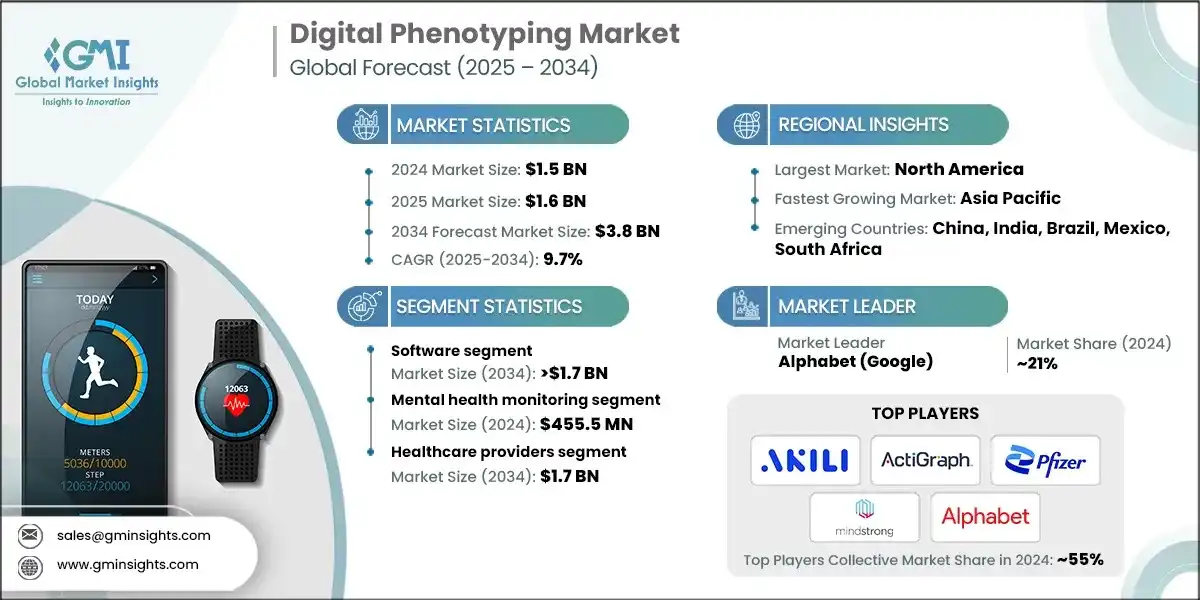
The global digital phenotyping market size was valued at USD 1.5 billion in 2024. The market is expected to grow from USD 1.6 billion in 2025 to USD 3.8 billion in 2034, at a CAGR of 9.7% during the forecast period according to the latest report published by Global Market Insights Inc.
Digital Phenotyping Market Key Takeaways
Market Size & Growth
- 2024 Market Size: USD 1.5 Billion
- 2025 Market Size: USD 1.6 Billion
- 2034 Forecast Market Size: USD 3.8 Billion
- CAGR (2025–2034): 9.7%
Regional Dominance
- Largest Market: North America
- Fastest Growing Region: Asia Pacific
Key Market Drivers
- Rising prevalence of mental health and chronic conditions.
- Increasing proliferation of smartphones and wearables.
- Growing shift toward value-based and preventive care.
- Increasing expansion of telehealth and remote monitoring.
Challenges
- Data privacy concerns, regulatory challenges.
- Lack of standardization.
Opportunity
- Expansion into clinical trials and pharma.
- Growing focus on behavioral research and population health analytics.
Key Players
- Market Leader: Alphabet (Google) led with over 21% market share in 2024.
- Leading Players: Top 5 players in this market include Akili Interactive Labs, ActiGraph, Pfizer, Mindstrong, Alphabet (Google), which collectively held a market share of 55% in 2024.
Get Market Insights & Growth Opportunities
This growth is attributed to the rising prevalence of mental health and chronic conditions and increasing proliferation of smartphones and wearable medical devices. Smartphones and wearable devices have become ubiquitous, enabling passive data collection such as GPS, accelerometer, heart rate, and sleep patterns. These devices form the backbone of digital phenotyping platforms, that further contribute to the growth of the market. In North America, the market is leading due to high device penetration and advanced healthcare infrastructure. For instance, companies such as Biovotion and Neurotrack Technologies are integrating wearable tech with phenotyping platforms to enhance real-time health monitoring.
Additionally, the integration of artificial intelligence and machine learning are revolutionizing digital phenotyping by enabling the extraction of actionable insights from vast datasets. These technologies support predictive analytics, early disease detection, and personalized treatment strategies. Natural Language Processing (NLP) is also used to analyze speech and text for emotional tone and cognitive decline. This integration is transforming clinical trials and behavioral research. For instance, Cambridge Cognition and Cognito Therapeutics are using AI-driven platforms to improve neuropsychiatric diagnostics and treatment personalization.
Digital phenotyping involves capturing continuous behavioral data via digital smartphone devices to monitor human behavior and can potentially identify milder symptoms before they become serious. Digital phenotyping uses smartphone sensors, voice, and human-computer interaction to measure how people function in their world, reflecting their life. Major players in the industry are Akili Interactive Labs, ActiGraph, Pfizer, Mindstrong and Alphabet. These players dominated the market by adopting various strategies such as product expansion and establishing global distribution networks.
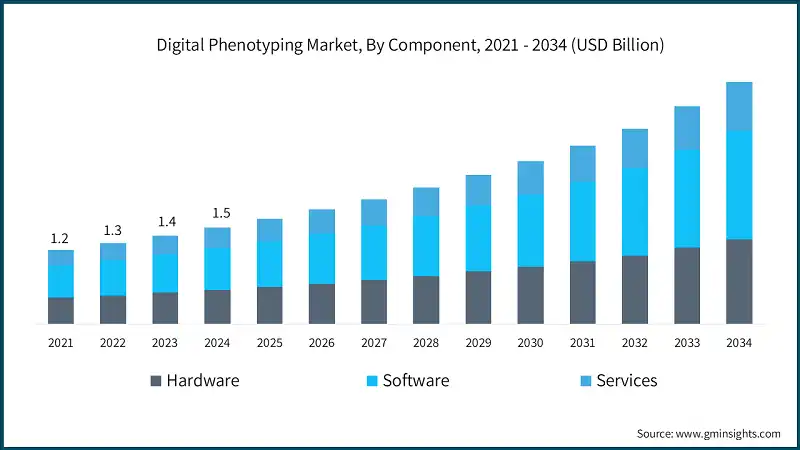
Digital phenotyping market has witnessed steady growth, growing from USD 1.2 billion in 2021 to USD 1.4 billion in 2023. The increasing shift toward value-based and preventive care leads to healthcare systems transitioning from episodic care to continuous, preventive models. Digital phenotyping supports this shift by enabling remote monitoring and early intervention, thereby accelerated the growth of the market. In addition, regulatory bodies are establishing frameworks for ethical data use and privacy, boosting stakeholder confidence. Moreover, strategic partnerships and VC funding are also fueling innovation that further contributes to market growth.
To get key market trends
Digital Phenotyping Market Trends
- Global healthcare systems are transitioning from reactive to preventive models. Digital phenotyping enables continuous, real-time monitoring of behavioral and physiological data, supporting early diagnosis and personalized interventions. This shift is driven by rising chronic disease prevalence and mental health awareness. Companies like Mindstrong Health and SilverCloud Health are leveraging phenotyping for scalable mental health solutions.
- Moreover, digital phenotyping is increasingly combined with digital biomarkers quantifiable data from wearables and sensors to enhance diagnostic precision. This synergy supports real-time monitoring of conditions like diabetes, cardiovascular disease, and neurodegenerative disorders. For instance, companies such as AliveCor and Fitbit are integrating biomarker analytics into phenotyping platforms for improved clinical outcomes, that further drives the growth of the market.
- Further, next generation phenotyping uses AI to detect disease-specific phenotypic patterns, such as facial features in rare genetic disorders. In addition, tools like GestaltMatcher and Face2Gene are revolutionizing rare disease diagnosis, used in over 10,000 medical centers globally. These platforms enhance diagnostic speed and accuracy, support genetic testing, and accelerate clinical trial recruitment. AI-driven phenotyping is expanding into skeletal and retinal imaging, offering broader diagnostic capabilities.
- Regulatory bodies are evolving frameworks to support digital phenotyping. The ITU’s Global Digital Regulatory Outlook benchmarks readiness across 193 countries, promoting collaborative digital regulation. In the EU, the AI Act classifies facial recognition-based phenotyping as high-risk, requiring transparency and human oversight. The UK’s Online Safety Act and Digital Markets Competition Act also influence data governance and consumer protection in digital health.
- Digital phenotyping platforms are evolving into cloud-based, modular systems that integrate with EHRs and mobile apps. Software dominates the market due to its role in analytics and interoperability. Companies such as Cambridge Cognition and Cognito Therapeutics are developing scalable platforms for mental health and clinical trials.
- Lastly, manufacturing of phenotyping devices is embracing digital twins, AI-driven automation, and sustainability. These technologies enable predictive maintenance, agile production, and eco-friendly design. Platforms like Autodesk Fusion Operations support real-time production tracking and MES integration. Wearables and sensors are being miniaturized and enhanced with multi-modal capabilities, improving data fidelity and user comfort, thereby driving the growth of the market.
Digital Phenotyping Market Analysis
Learn more about the key segments shaping this market
In 2021, the global market was valued at USD 1.2 billion. The following year, it saw an increase to USD 1.3 billion, and by 2023, the market further climbed to USD 1.4 billion.
Based on component, the global market is divided into hardware, software and services. The software segment accounted for 43.3% of the market in 2024. The segment is expected to exceed USD 1.7 billion by 2034, growing at a CAGR of 10.1% during the forecast period. The software segment is further sub-segmented into cloud-based and on-premises.
- Software platforms in digital phenotyping are increasingly powered by AI and ML, enabling real-time analysis of vast behavioral and physiological datasets. These technologies support predictive modelling, anomaly detection, and personalized treatment planning.
- Cloud-based software solutions offer scalability, remote access, and seamless integration with electronic health records (EHRs) and mobile apps. This flexibility supports real-time monitoring and data sharing across healthcare ecosystems. The software segment benefits from lower deployment costs and faster updates compared to hardware. As digital health adoption accelerates, cloud-native platforms are becoming essential for continuous patient engagement and data-driven care.
- Moreover, software enables passive data collection and real-time behavioral analysis using smartphone sensors, app usage, and voice/text patterns. This capability is crucial for mental health monitoring and chronic disease management. The software segment is growing due to its ability to deliver actionable insights outside clinical settings.
- The hardware segment of the digital phenotyping market is projected to grow significantly with a CAGR of 9.6%. The widespread adoption of wearable devices such as smartwatches, fitness trackers, and biosensors is a major driver of hardware growth in digital phenotyping. These devices enable passive, continuous monitoring of physiological metrics like heart rate, sleep, and movement.
- Moreover, smartphones and connected devices serve as hubs for hardware-based data collection. Accelerometers, GPS, microphones, and gyroscopes embedded in phones enable passive tracking of movement, location, and speech. The smartphone segment is the fastest-growing device category, contributing significantly to hardware growth.
Based on the application, the digital phenotyping market is segmented into mental health monitoring, chronic disease management, behavioral research, sleep and movement analysis, neurodegenerative disorders, and other applications. The mental health monitoring segment dominated the market in 2024 with a revenue of USD 455.5 million.
- Mental health conditions such as depression, anxiety, and bipolar disorder are increasing globally. According to the WHO, nearly 1 in 8 people live with a mental disorder. This surge, intensified by the COVID-19 pandemic, has created a demand for scalable, accessible mental health solutions. Digital phenotyping apps provide continuous, objective monitoring using smartphone sensors and user interaction data.
- Further, digital phenotyping bridges gaps in mental health services, especially in underserved regions. Traditional therapy often involves long wait times and high costs. Digital platforms offer remote, stigma-free access to licensed therapists and self-guided tools.
- Digital phenotyping provides more complete and reliable data than traditional self-report methods. For example, an 18-month study using the Beiwe app demonstrated high data completion rates and feasibility for long-term monitoring in adolescents with bipolar disorder. Passive data collection remained consistent, offering a low-burden alternative to clinical interviews. This supports the clinical utility of digital phenotyping in tracking symptom progression and tailoring interventions over time, thereby driving the growth of the market.
- The chronic disease management segment of the digital phenotyping market is projected to grow significantly during the analysis period owing to rising global burden of chronic diseases such as diabetes, cardiovascular disorders, and hypertension. This surge is driving demand for digital phenotyping tools that enable continuous, remote monitoring and early intervention. Platforms such as Philips virtual care management are being adopted to support patients from home, reducing hospital visits and improving outcomes.
Learn more about the key segments shaping this market
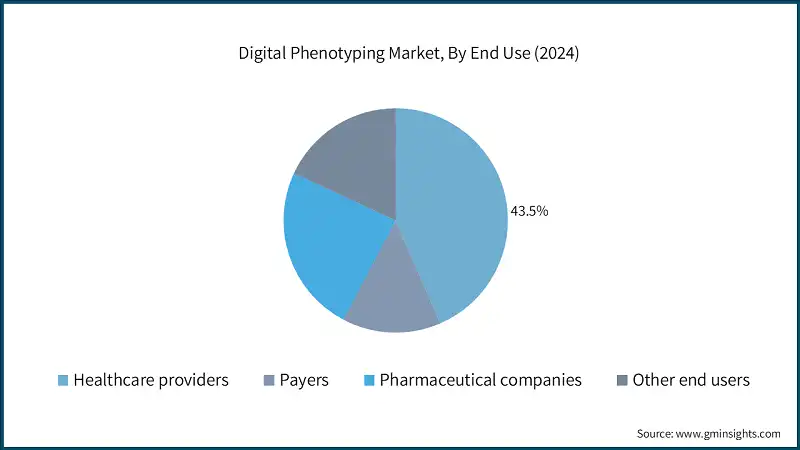
- Healthcare providers are increasingly adopting digital phenotyping to monitor patients in real time, especially for chronic and mental health conditions. This enables proactive care, reduces hospital readmissions, and improves treatment adherence. Providers such as Mayo Clinic and Cleveland Clinic are integrating digital phenotyping into remote care platforms to enhance patient outcomes and operational efficiency.
- Healthcare providers are increasingly adopting AI-powered digital phenotyping platforms to enhance clinical decision-making. These tools analyze behavioral and physiological data to detect early signs of disease progression and optimize treatment plans. Providers such as Mount Sinai Health System are using AI-driven phenotyping to support mental health and chronic disease management, reducing clinician workload and improving care delivery.
- Moreover, governments and health organizations are supporting digital health adoption through favorable regulations and funding. For example, the FDA’s Digital Health Software Precertification Program and WHO’s eHealth initiatives are encouraging providers to integrate digital phenotyping into care models, that drives the growth of the market.
Looking for region specific data?
North America Digital Phenotyping Market
The North America market dominated the global market with a market share of 44.6% in 2024.
- North America leads in digital health adoption due to advanced infrastructure, high smartphone penetration, and widespread use of wearables. Companies such as Apple, Fitbit, and Oura are integrating phenotyping capabilities into consumer devices, enabling real-time behavioral and physiological tracking.
- North American companies are at the forefront of integrating AI and ML into digital phenotyping platforms. These technologies enable predictive analytics, anomaly detection, and personalized treatment planning. This is revolutionizing clinical trials, behavioral research, and remote care. For example, Cambridge Cognition and Cognito Therapeutics are using AI to improve neuropsychiatric diagnostics and treatment personalization.
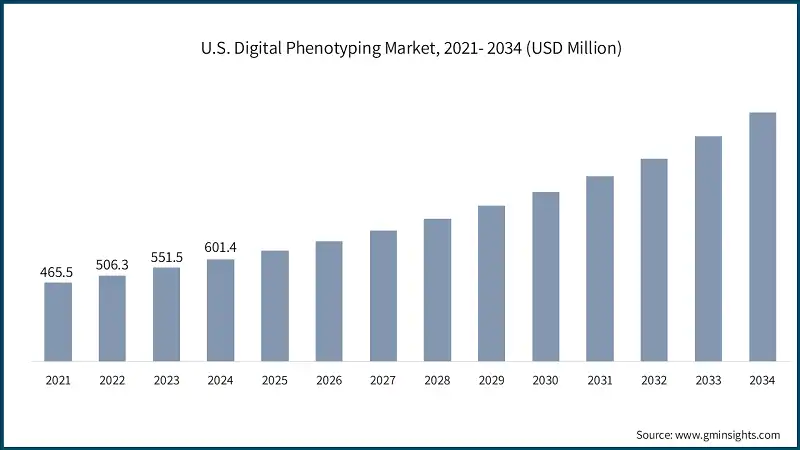
The U.S. digital phenotyping market was valued at USD 465.5 million and USD 506.3 million in 2021 and 2022, respectively. The market size reached USD 601.4 million in 2024, growing from USD 551.5 million in 2023.
- With one of the world's highest rates of smartphone and wearable adoption, the U.S. stands out as a prime candidate for digital phenotyping. According to the Pew Research Center, as of 2021, 85% of Americans owned a smartphone, and wearable device adoption reached 30% of adults. These devices facilitate the passive collection of vital data such as GPS, accelerometer readings, heart rate, and sleep patterns essential for monitoring both behavior and physiology. The adoption rates are projected to grow further through 2025, driven by advancements in technology and increasing consumer demand.
- In the U.S., mental health disorders and chronic diseases such as diabetes and cardiovascular conditions are on the rise. According to the report published by National Alliance on Mental Illness, as of 2024, 23.4% of U.S. adults experienced mental illness in 2024 (61.5 million people). This represents more than 1 in 5 adults. Additionally, the CDC projects that by 2025, the prevalence of diabetes could increase by 12%, and mental health conditions are expected to remain a significant public health concern. Digital phenotyping emerges as a solution, providing scalable and real-time monitoring to facilitate early diagnosis and tailored care.
Europe Digital Phenotyping Market
Europe market accounted for USD 398.4 million in 2024 and is anticipated to show lucrative growth over the forecast period.
- Europe is witnessing a surge in mental health awareness, with governments and health systems prioritizing early intervention and continuous monitoring. Digital phenotyping enables real-time behavioral tracking, supporting mental health care outside clinical settings.
- Pharmaceutical companies and research institutes in Europe are leveraging digital phenotyping for clinical trials, patient recruitment, and real-world evidence generation. These tools improve adherence tracking and outcome prediction. The integration of digital biomarkers and phenotyping is enhancing drug development timelines and precision medicine efforts.
Germany dominates the European digital phenotyping market, showcasing strong growth potential.
- Germany faces a significant chronic disease burden, with over 35% of the population affected by conditions like diabetes, cardiovascular disease, and respiratory disorders. By 2050, nearly 30% of Germans will be over 65, increasing demand for remote monitoring and digital health solutions. Digital phenotyping enables continuous, real-time tracking of health metrics, supporting early intervention and personalized care.
- German startups such as CardioSecur are deploying smartphone-based ECG monitoring, while platforms like mySugr help manage diabetes, showcasing the country’s growing reliance on digital tools for chronic care.
- Germany is placing a growing emphasis on mental health and tailored care. Digital phenotyping, which utilizes passive data collection, provides scalable tools to monitor mood, cognition, and social behavior. According to the German Federal Ministry of Health, mental health disorders accounted for approximately 17% of the total disease burden in 2023, highlighting the need for innovative solutions.
- Healthcare providers and research institutions across the nation are embracing platforms that facilitate early detection and personalized treatment approaches. This move is in harmony with the EU's overarching objectives for a digital health overhaul, notably the European Health Data Space initiative, which aims to be fully operational by 2025.
Asia Pacific Digital Phenotyping Market
The Asia Pacific market is anticipated to grow at the highest CAGR of 10.1% during the analysis timeframe.
- With the rising incidence of chronic illnesses such as diabetes, cardiovascular diseases, and respiratory conditions across the Asia-Pacific region, mental health challenges like depression and anxiety are also becoming increasingly prevalent. Government health data indicates that diabetes is expected to affect 11.3% of the population by 2025, while cardiovascular diseases already account for nearly 30% of all deaths as of 2023.
- Additionally, mental health disorders are projected to impact 15% of the population by 2025. This growing health burden is driving strong demand for scalable, real-time health monitoring technologies, including digital phenotyping platforms that enable early detection and personalized care.
- Asia Pacific’s mobile-first approach to healthcare, especially in countries like India, China, and Indonesia, supports the growth of digital phenotyping. High smartphone penetration and increasing use of mobile health apps enable passive data collection and real-time analytics. This infrastructure allows for scalable deployment of phenotyping tools in both urban and rural settings, improving access to care and supporting public health initiatives.
China digital phenotyping market is estimated to grow with a significant CAGR, in the Asia Pacific market.
- China's digital infrastructure is among the most advanced globally, with 4.042 million 5G base stations serving 970 million users as of August 2024. This robust connectivity supports seamless data collection from smartphones and wearables, which are central to digital phenotyping. The average monthly internet usage per person reached 164.7 hours, reflecting a 4.3% year-on-year increase. This surge in digital engagement enables real-time behavioral and physiological monitoring, making China a fertile ground for scalable phenotyping applications in healthcare and wellness.
- China’s strategic initiatives like “Made in China 2025” and digital health subsidies are accelerating the adoption of AI, IoT, and cloud computing in healthcare. These policies foster innovation and create a favorable environment for digital phenotyping platforms.
- China is a global leader in AI development, with companies such as SenseTime, and YITU applying machine learning to healthcare analytics. These technologies enhance digital phenotyping by enabling predictive modeling and personalized treatment strategies. AI-driven platforms are being used in clinical trials, behavioral research, and chronic disease management, improving patient outcomes and operational efficiency.
Latin American Digital Phenotyping Market
Brazil leads the Latin American market, exhibiting remarkable growth during the analysis period.
- Brazil’s National AI Plan, launched in 2024, allocates USD 4 billion to support AI infrastructure and innovation, including healthcare applications. This initiative encourages the development of secure, ethical AI systems for digital phenotyping, enhancing diagnostics and personalized care.
- The proposed AI regulation (PL 2338/2023) aims to protect data rights and ensure safe deployment of AI in clinical settings. These policies are fostering a favorable environment for digital phenotyping adoption among healthcare providers and research institutions.
- Brazil is the world’s fifth-largest internet economy, with over 177 million users and 94% mobile internet penetration. This connectivity enables widespread use of smartphones and wearables for passive data collection, a core component of digital phenotyping.
- The country’s first mobile approach supports remote monitoring and behavioral analytics, especially in underserved regions. This infrastructure is crucial for deploying scalable phenotyping solutions across diverse demographics.
Middle East and Africa Digital Phenotyping Market
Saudi Arabia market to experience substantial growth in the Middle East and Africa market in 2024.
- Saudi Arabia’s Vision 2030 is a cornerstone for digital health innovation, aiming to diversify the economy and modernize healthcare. The Kingdom’s digital economy reached SAR 495 billion, contributing 15% to GDP, with the ICT sector surpassing SAR 180 billion by 2024.
- Government initiatives such as the National Transformation Program and Saudi Data and AI Authority (SDAIA) are accelerating the adoption of AI, cloud computing, and smart health platforms. These efforts are creating a robust ecosystem for digital phenotyping, especially in mental health and chronic disease management.
- Saudi Arabia’s smart city initiatives NEOM, Qiddiya, and the Red Sea Project are embedding digital phenotyping into urban design and healthcare delivery. These cities use AI, IoT, and mixed reality to create intelligent environments that support continuous health tracking and personalized care. The integration of digital phenotyping into smart infrastructure is enhancing public health surveillance, chronic disease management, and mental wellness programs, positioning Saudi Arabia as a regional leader in tech-enabled healthcare.
Digital Phenotyping Market Share
The global market is undergoing rapid transformation, marked by a dynamic and moderately fragmented competitive landscape. Leading players such as Akili Interactive Labs, ActiGraph, Pfizer, Mindstrong, and Alphabet collectively command approximately 55% of the global market share, shaping the industry through innovation, strategic expansion, and technological integration.
These companies maintain a competitive edge by deploying multi-pronged growth strategies, including direct-to-consumer transitions, AI-powered platforms, wearable sensor innovation, and clinical collaborations. Akili, for instance, is redefining cognitive health with FDA-cleared digital therapeutics like EndeavorRx, while Alphabet’s Verily is advancing behavioral analytics through smartphone-based data streams.
Pfizer and ActiGraph are leveraging digital biomarkers and biosensors to support decentralized trials and chronic disease management, enhancing real-world evidence generation. Meanwhile, Mindstrong is pioneering mental health monitoring using passive data collection and machine learning, enabling early detection and personalized care.
Emerging startups and research-driven platforms are complementing this growth by introducing next-gen phenotyping technologies, including voice-based diagnostics, text analytics, and multi-modal sensor fusion. Their impact is particularly strong in Asia-Pacific, Latin America, and the Middle East, where increasing smartphone penetration and healthcare digitization are accelerating adoption.
As competition intensifies, market leaders are expanding their portfolios to deliver scalable, personalized solutions across mental health, chronic disease, and neurodegenerative conditions. This innovation-led approach is fueling sustained growth and reshaping the future of data-driven, patient-centric healthcare.
Digital Phenotyping Market Companies
Prominent players operating in the digital phenotyping industry are as mentioned below:
- Akili Interactive Labs
- ActiGraph
- AliveCor
- Alphabet (Google)
- F. Hoffmann-La Roche
- Fitbit
- GlaxoSmithKline
- HumanAPI
- Mindstrong
- Novartis
- Onnela lab
- Pfizer
- Sanofi
- Takeda Pharmaceuticals
- Alphabet (Google)
Alphabet leads the market with a share of ~21% in 2024. Alphabet, via Google and Verily, leads in AI-powered digital phenotyping. With strong cloud infrastructure and wearable integration, it supports scalable behavioral analytics and predictive health monitoring. Its Gemini AI models enhance real-time insights across healthcare and research applications.
ActiGraph specializes in wearable-based phenotyping for clinical trials and behavioral research. Its LEAP device and acquisition of Biofourmis Connect enable comprehensive remote monitoring. Collaborations with AI firms like Hyfe enhance its capabilities in cough and mobility tracking, making it a preferred platform for decentralized studies.
Pfizer integrates digital phenotyping into clinical trials and chronic care through AI, wearables, and blockchain. With strong pharma sector influence and global infrastructure, it supports real-world evidence generation and personalized treatment strategies, reinforcing its leadership in digital health innovation.
Digital Phenotyping Market Report Attributes
| Key Takeaway | Details |
|---|---|
| Market Size & Growth | |
| Base Year | 2024 |
| Market Size in 2024 | USD 1.5 Billion |
| Market Size in 2025 | USD 1.6 Billion |
| Forecast Period 2025 - 2034 CAGR | 9.7% |
| Market Size in 2034 | USD 3.8 Billion |
| Key Market Trends | |
| Drivers | Impact |
| Rising prevalence of mental health and chronic conditions | Increasing disease burden drives demand for continuous, data-driven monitoring to support early diagnosis and personalized care. |
| Increasing proliferation of smartphones and wearables | Widespread device adoption enables passive data collection, making digital phenotyping scalable and accessible across populations. |
| Growing shift toward value-based and preventive care | Healthcare systems prioritize proactive interventions, boosting adoption of phenotyping tools for real-time behavioral and physiological tracking. |
| Increasing expansion of telehealth and remote monitoring | Digital phenotyping complements virtual care by offering real-time insights outside clinical settings, enhancing remote patient management. |
| Pitfalls & Challenges | Impact |
| Data privacy concerns, regulatory challenges | Sensitive health data collection raises compliance risks, limiting adoption due to strict privacy laws and ethical concerns. |
| Lack of standardization | Inconsistent data formats and methodologies hinder interoperability, clinical validation, and scalability across platforms and healthcare systems. |
| Opportunities: | Impact |
| Expansion into clinical trials and pharma | Digital phenotyping enhances patient monitoring, adherence tracking, and real-world evidence generation in drug development and clinical research. |
| Growing focus on behavioral research and population health analytics | Phenotyping enables large-scale behavioral data analysis, supporting public health strategies and targeted mental health interventions. |
| Market Leaders (2024) | |
| Market Leaders |
21% market share |
| Top Players |
Collective market share in 2024 is ~55% |
| Competitive Edge |
|
| Regional Insights | |
| Largest Market | North America |
| Fastest growing market | Asia Pacific |
| Emerging countries | China, India, Brazil, Mexico, South Africa |
| Future outlook |
|
What are the growth opportunities in this market?
Digital Phenotyping Industry News
- In October 2025, NeuroKaire, a pioneer in precision psychiatry and neurology, launched an research and development collaboration with Compass Pathways, a leading biotechnology company dedicated to transforming mental health care. This collaboration aims to deepen the mechanistic understanding of psychedelic compounds by testing the structure of and connectivity between neurons (brain cells) using patient-derived neurons with known clinical phenotypes. The study will make use of stem cell derived-neurons from individuals with treatment-resistant depression (TRD) and major depressive disorder (MDD).
- In May 2024, OM1 introduces three new products: OM1 Orion, OM1 Lyra, and OM1 Polaris powered by PhenOMTM - an artificial intelligence-powered digital phenotyping platform for personalized medicine and clinical research. OM1 is the leader in providing Real-World Evidence (RWE) insights from bench to bedside, leveraging advanced predictive and generative AI platforms coupled with deep clinical data to empower healthcare stakeholders.
- In April 2023, OM1 launches AI-based platform for personalized medicine. PhenOM collects details from a huge set of patients’ data to separate unique patterns of patients. OM1 has rolled out its new artificial intelligence-driven platform to provide personalized information on diagnosis, treatment, risk, use and clinical trials. PhenOM leverages AI to recognise specific digital phenotypes related to conditions and outcomes, as well as comparing patients’ records to them for highlighting risks and options.
The digital phenotyping market research report includes in-depth coverage of the industry with estimates and forecast in terms of revenue in USD Million from 2021 - 2034 for the following segments:
Market, By Component
- Hardware
- Wearables
- Biosensors
- Other connected devices
- Software
- Cloud-based
- On-premises
- Services
Market, By Application
- Mental health monitoring
- Chronic disease management
- Behavioral research
- Sleep and movement analysis
- Neurodegenerative disorders
- Other applications
Market, By End Use
- Healthcare providers
- Payers
- Pharmaceutical companies
- Other End Use
The above information is provided for the following regions and countries:
- North America
- U.S.
- Canada
- Europe
- Germany
- UK
- France
- Spain
- Italy
- Netherlands
- Asia Pacific
- China
- India
- Japan
- Australia
- South Korea
- Latin America
- Brazil
- Mexico
- Argentina
- Middle East and Africa
- South Africa
- Saudi Arabia
- UAE
Frequently Asked Question(FAQ) :
What is the market size of the global digital phenotyping market in 2024?
The market size was USD 1.5 billion in 2024, driven by the rising prevalence of mental health and chronic conditions, widespread smartphone and wearable adoption, and the growing shift toward preventive and value-based care models.
What is the projected market value of the global digital phenotyping industry by 2034?
The market is expected to reach USD 3.8 billion by 2034, growing at a CAGR of 9.7%, fueled by increasing AI and machine learning integration, expansion of telehealth, and adoption of data-driven healthcare for real-time behavioral monitoring.
What is the estimated market size of the global digital phenotyping industry in 2025?
The market is projected to reach USD 1.6 billion in 2025, supported by growing use of AI-driven analytics in mental health monitoring, chronic disease management, and personalized treatment solutions.
Which component segment dominated the global digital phenotyping market in 2024?
The software segment led the market with a 43.3% share in 2024, driven by the adoption of cloud-based phenotyping platforms enabling real-time analytics, interoperability with EHRs, and scalable integration with mobile health applications.
Which application segment generated the highest revenue in 2024?
The mental health monitoring segment accounted for USD 455.5 million revenue in 2024, driven by the rising prevalence of depression and anxiety disorders and the growing adoption of smartphone-based continuous behavioral tracking.
Which end-use segment dominated the global market in 2024?
The healthcare providers segment held the largest share and is expected to reach USD 1.7 billion by 2034, as hospitals and clinics integrate AI-powered phenotyping platforms to improve early diagnosis, treatment adherence, and patient outcomes.
Which region leads the global digital phenotyping market?
North America led the global market with a 44.6% share (USD 670 million) in 2024, driven by strong healthcare digitalization, high smartphone and wearable penetration, and early adoption of AI-enabled mental health monitoring tools.
Who are the key players in the global digital phenotyping market?
Key players include Akili Interactive Labs, ActiGraph, Alphabet (Google), Pfizer, Mindstrong, F. Hoffmann-La Roche, Fitbit, AliveCor, Novartis, Takeda Pharmaceuticals, HumanAPI, GlaxoSmithKline, Sanofi, and Onnela Lab.
Digital Phenotyping Market Scope
Related Reports