Summary
Table of Content

Dental Sterilization Market
Get a free sample of this report
Form submitted successfully!
Error submitting form. Please try again.
Thank you!
Your inquiry has been received. Our team will reach out to you with the required details via email. To ensure that you don't miss their response, kindly remember to check your spam folder as well!
Request Sectional Data
Thank you!
Your inquiry has been received. Our team will reach out to you with the required details via email. To ensure that you don't miss their response, kindly remember to check your spam folder as well!
Form submitted successfully!
Error submitting form. Please try again.
Dental Sterilization Market Size
The high market growth is attributed to the rising incidence of dental procedures, stringent infection control regulations, technological advancements in sterilization devices, and growing awareness of cross-contamination risks, among other contributing factors.
Dental Sterilization Market Key Takeaways
Market Size & Growth
- 2025 Market Size: USD 1.7 Billion
- 2026 Market Size: USD 1.8 Billion
- 2035 Forecast Market Size: USD 3.6 Billion
- CAGR (2026–2035): 7.9%
Regional Dominance
- Largest Market: North America
- Fastest Growing Region: Asia Pacific
Key Market Drivers
- Increasing prevalence of dental disorders.
- Growth in dental procedures & cosmetic dentistry.
- Technological advancements in sterilization equipment.
- Rising awareness about cross-contamination risks.
Challenges
- High cost associated with advanced equipment.
- Risk of material damage due to sterilization.
Opportunity
- Development of portable/compact sterilization devices.
- Integration of IoT and digital sterilization tracking.
Key Players
- Market Leader: GETINGE led with over 14% market share in 2025.
- Leading Players: Top 5 players in this market include GETINGE, Tuttnauer, ECOLAB, STERIS, COLTENE, which collectively held a market share of 54% in 2025.
Get Market Insights & Growth Opportunities
Dental sterilization is the process of eliminating all forms of microbial life, including bacteria, viruses, fungi, and spores, from dental instruments and equipment. It ensures a sterile environment to prevent cross-contamination and infection during dental procedures. This process typically involves autoclaving, chemical disinfectants, or other approved sterilization methods.
The major players in the global dental sterilization market are GETINGE, Tuttnauer, ECOLAB, STERIS, and COLTENE. These companies maintain their competitive position through ongoing product innovation, global market presence, and substantial investment in research and development.
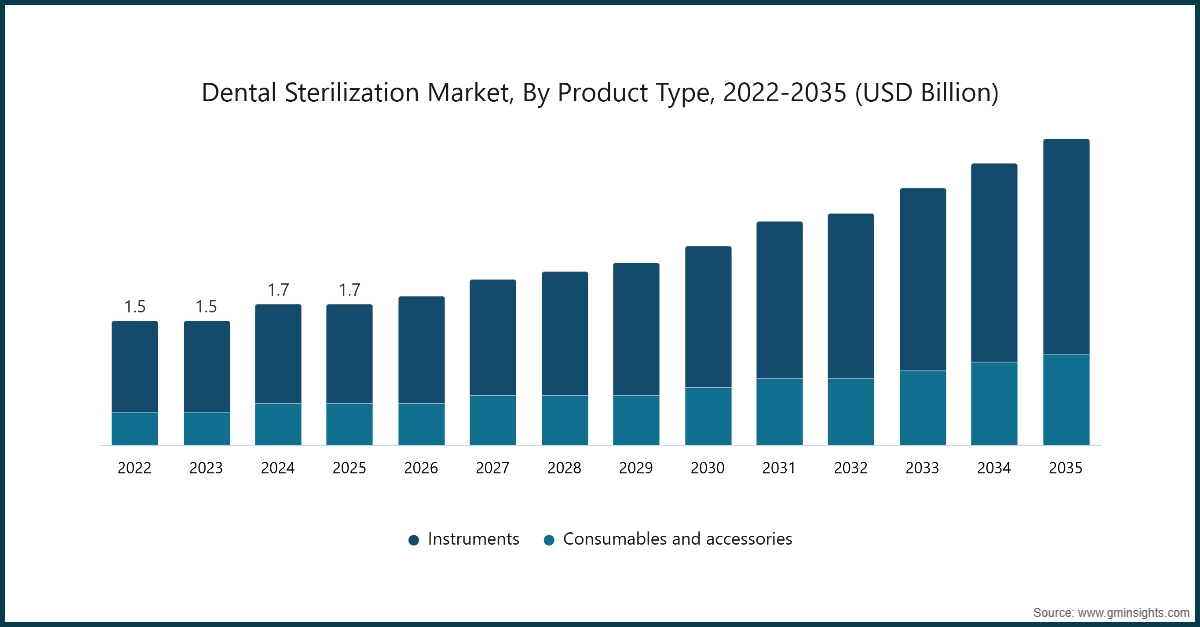
The market has increased from USD 1.5 billion in 2022 and reached to USD 1.6 billion in 2024, with a historic growth rate of 6.1%. The market growth was driven by the expansion of dental clinics and hospitals, rising patient volumes, stringent regulatory standards for hygiene, and increasing demand for rapid and reliable sterilization solutions.
Moreover, the rising prevalence of dental caries treatment, periodontal diseases, and oral infections is substantially increasing the demand for sterilization. For instance, in 2023, the WHO reported that approximately 3.5 billion people worldwide suffered from oral maladies, with untreated dental caries being the most common condition.
The CDC also reported that in 2022, 47.2% of individuals above the age of 30 in the U.S. had some form of periodontal disease. Moreover, as people age, they are more prone to dental problems and may require additional dental surgeries, contributing to the projected global elderly population of 771 million by 2023, according to the United Nations.
Further, innovations such as fast-cycle autoclaves, low-temperature sterilizers, and automated cleaning systems enhance efficiency and reduce operational time. These advanced devices are increasingly preferred, supporting market growth.
The global dental sterilization market was valued at USD 1.7 billion in 2025. The market is expected to reach from USD 1.8 billion in 2026 to USD 3.6 billion in 2035, growing at a CAGR of 7.9% during the forecast period, according to the latest report published by Global Market Insights Inc.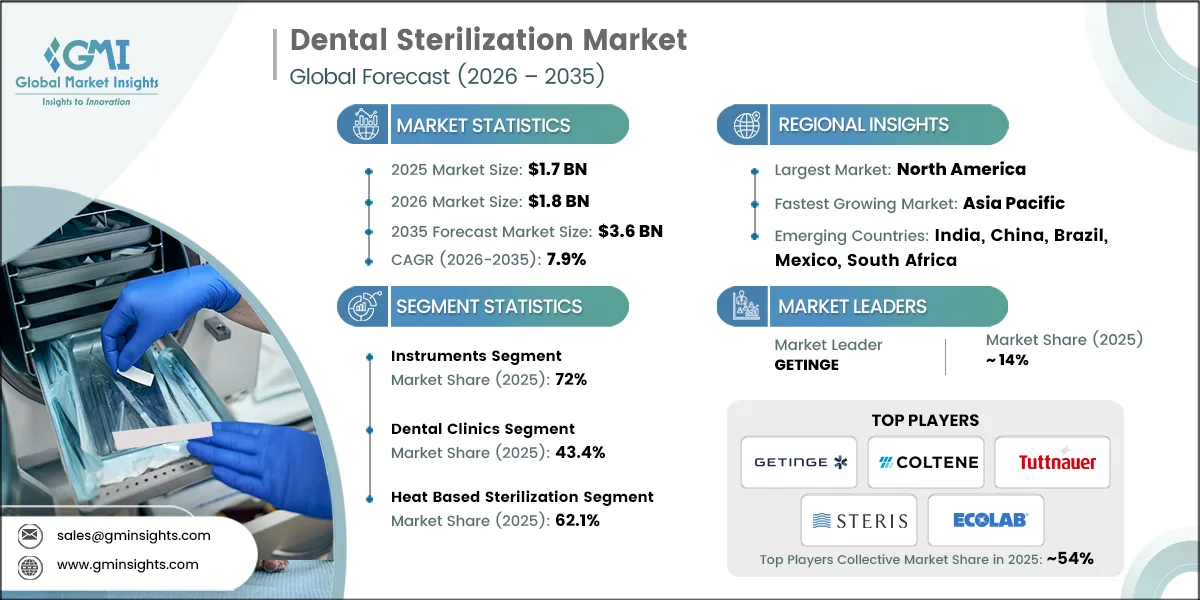
To get key market trends
Dental Sterilization Market Trends
Factors supporting the development of the dental sterilization industry include advancements in sterilization technologies, growing demand for eco-friendly and chemical-free sterilization products, increased spending on dental tourism, and the rise of corporate dental practices and DSOs, all of which are driving industry growth.
- To minimize the spread of airborne pathogens, dental practices are increasingly investing in UV-C sterilizers, HEPA filters, and air purifiers. According to a 2023 survey by the American Dental Association (ADA), 78% of dental practices reported having enhanced air filtration systems, up from 45% in 2021. In addition, antimicrobial surface coatings developed for dental chairs, workstations, and instruments are further enhancing infection control.
- These innovations complement standard protocols for instrument sterilization, ensuring strict adherence to hygiene norms in dental practices. For instance, the FDA reported a 40% increase in certifications for UV-C sterilization of dental equipment between 2022 and 2024.
- AI-powered sterilization systems are improving infection prevention by managing and monitoring sterilization cycles and correcting errors in real time. Some hospitals and large dental chains are even testing robotic sterilization, where robots handle loading, unloading, sorting, and sterilizing instruments, thereby increasing efficiency, consistency, and minimizing manual handling.
- Furthermore, growing investor interest in oral healthcare infrastructure is leading to the establishment of new dental clinics in developing countries. Greater awareness of dental hygiene and the rise of affordable dental care providers are also increasing the demand for sterilization equipment. To capitalize on this trend, international manufacturers are expanding their presence in Asia-Pacific, Latin America, and Africa, further driving market growth.
Dental Sterilization Market Analysis
Learn more about the key segments shaping this market
Based on product type, the dental sterilization market is segmented into instruments and consumables and accessories. The instruments segment has asserted its dominance in the market by securing a significant market share of 72% in 2025 owing to the high frequency of dental procedures requiring sterilized tools, widespread adoption of advanced autoclaves, and the critical need to maintain strict infection control standards across clinics and hospitals. The segment is expected to exceed USD 2.6 billion by 2035, growing at a CAGR of 7.7% during the forecast period.
- The increasing number of dental treatments, including restorative, surgical, and orthodontic procedures, has escalated the use of dental instruments. To ensure patient safety and avoid infection transmission, sterilization of these instruments has become critical. This demand for sterilization drives the market for autoclaves, medical ultrasonic cleaners, and chemical sterilizers specifically designed for dental instruments.
- Dental professionals and patients are increasingly aware of risks associated with contaminated instruments, including bacterial and viral infections. This heightened awareness compels dental clinics to adopt reliable sterilization methods, leading to higher demand for instrument-specific autoclaves, washer-disinfectors, and chemical sterilants.
- The consumables and accessories segment held a revenue of USD 485.7 million in 2025, with projections indicating a steady expansion at a CAGR of 8.4% from 2026 to 2035. The segmental growth is driven by the increasing use of disposable sterilization pouches, wraps, and chemical indicators to ensure safe instrument handling. Additionally, rising demand for maintenance kits and replacement parts to support frequent sterilization cycles is boosting market adoption.
Based on sterilization method, the dental sterilization market is classified into heat based sterilization, chemical based sterilization, gas sterilization, and radiation sterilization. The heat based sterilization segment dominated the market with a revenue share of 62.1% in 2025 and is expected to reach USD 2.2 billion within the forecast period.
- Heat-based sterilization, such as autoclaving and dry heat sterilization, is highly effective at eliminating bacteria, viruses, fungi, and spores on dental instruments. This proven reliability makes it the preferred method for critical and semi-critical dental tools, driving widespread adoption in clinics and hospitals globally.
- Agencies like the CDC, ADA, and WHO recommend heat-based sterilization as the standard for reusable dental instruments. Compliance with these protocols is mandatory for infection control, encouraging dental practices to invest in autoclaves and other heat-based devices to meet safety requirements.
- The chemical based sterilization segment accounted for significant revenue in 2025 and is anticipated to grow at a CAGR of 8.6% over the forecast period. The segment is propelled by the need for low-temperature sterilization for heat-sensitive instruments and the growing preference for rapid, portable, and environmentally friendly chemical sterilants in clinics with limited space or resources.
- The gas sterilization segment held a revenue of USD 200 million in 2025, with projections indicating a steady expansion at a CAGR of 7.5% from 2026 to 2035. The growth of this segment is supported by its effectiveness in sterilizing delicate and heat-sensitive dental instruments without causing material damage. Additionally, strict regulatory standards and the need for high-level sterilization in specialized dental procedures are boosting adoption.
- The radiation sterilization segment accounted for significant revenue in 2025 and is anticipated to grow at a CAGR of 6.9% over the forecast period. The segment is driven by its ability to achieve rapid, uniform sterilization for pre-packaged dental instruments and consumables. Additionally, the growing emphasis on reducing chemical residues and minimizing cross-contamination risks is fuelling adoption in modern dental practices.
Learn more about the key segments shaping this market
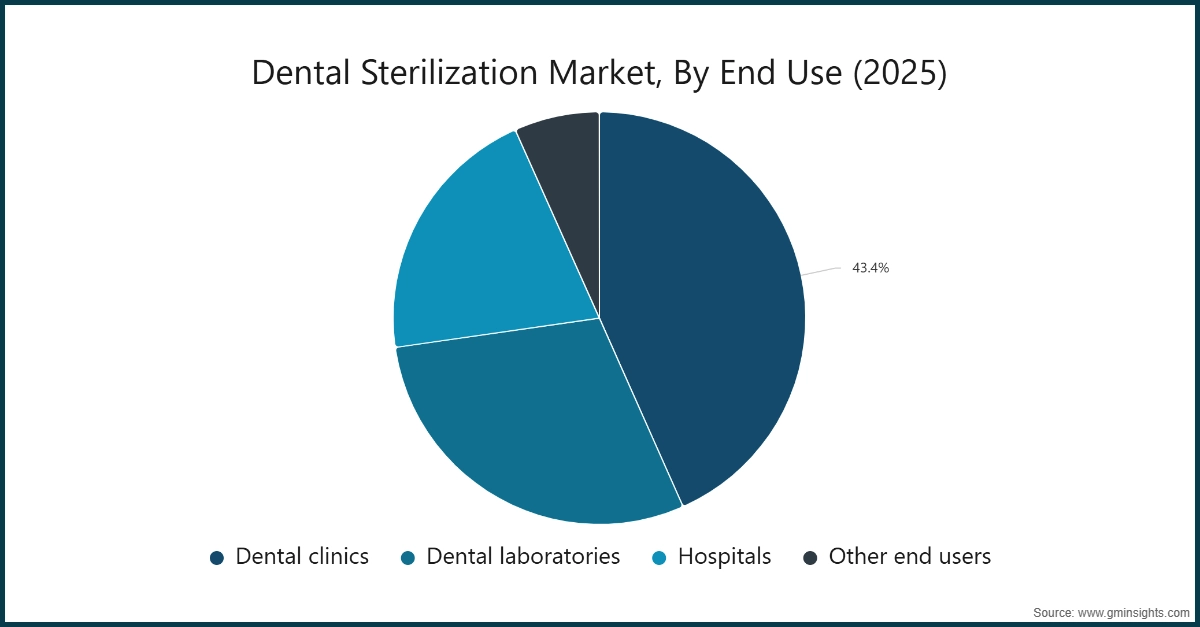
Based on end use, the dental sterilization market is classified into dental clinics, dental laboratories, hospitals, and other end users. The dental clinics segment dominated the market with a revenue share of 43.4% in 2025 and is expected to reach USD 1.6 billion within the forecast period.
- The rapid growth of private dental clinics and multi-specialty practices worldwide has increased the volume of patients requiring treatments. This expansion necessitates a robust sterilization infrastructure to manage instrument decontamination efficiently, ensuring patient safety and compliance with regulatory standards.
- Clinics must comply with infection control guidelines set by organizations like the CDC, WHO, and local health authorities. These regulations mandate the use of certified sterilization methods for reusable instruments, leading clinics to adopt modern sterilization systems to avoid penalties and safeguard their reputation.
- The dental laboratories segment accounted for significant revenue in 2025 and is anticipated to grow at a CAGR of 7.3% over the forecast period. The growth is supported by the increasing number of outsourced dental labs handling crowns, bridges, and prosthetics that require strict sterilization protocols. Additionally, rising adoption of advanced sterilization systems to ensure compliance with hygiene and regulatory standards is driving market demand.
- The hospitals segment accounted for significant revenue in 2025 and is anticipated to grow at a CAGR of 8.6% over the forecast period. The segment is driven by the high patient volume and diverse dental procedures performed in hospital settings, necessitating reliable and large-capacity sterilization systems. Additionally, stringent hospital infection control protocols and regulatory requirements are boosting the adoption of advanced sterilization solutions.
Looking for region specific data?
North America Dental Sterilization Market
North America dominated the dental sterilization industry with the highest market share of 43.3% in 2025.
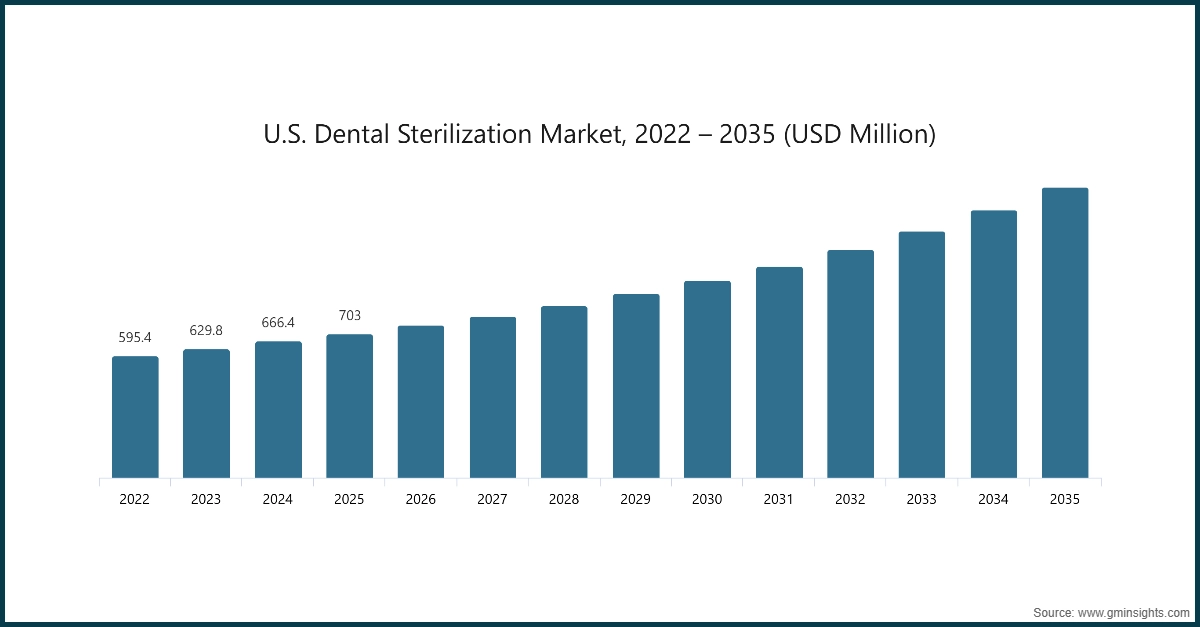
- The U.S. market was valued at USD 595.4 million and USD 629.8 million in 2022 and 2023, respectively. The market size reached USD 703 million in 2025, growing from USD 666.4 million in 2024, and is anticipated to grow at a CAGR of 7.5% from 2026 to 2035.
- North American dental clinics operate under strict guidelines from the CDC, FDA, and OSHA for infection control. These regulations mandate sterilization of all critical and semi-critical instruments, driving the adoption of high-quality autoclaves, ultrasonic cleaners, and chemical sterilizers. Non-compliance can lead to penalties, license suspension, or reputational damage, making sterilization investment a top priority for clinics and hospitals.
- North American dental clinics are early adopters of digital and automated sterilization systems. Innovations such as rapid-cycle autoclaves, low-temperature sterilizers, and smart monitoring systems enhance operational efficiency and reduce turnaround time for instruments, driving market growth.
Europe Dental Sterilization Market
Europe dental sterilization industry accounted for USD 418.3 million in 2025 and is anticipated to show lucrative growth over the forecast period.
- European Union countries enforce stringent hygiene standards through directives from the European Commission and local health authorities. Compliance with sterilization protocols is mandatory, pushing dental facilities to use certified autoclaves and heat-based sterilizers. These regulations are often stricter than in other regions, encouraging widespread adoption.
- Increasing dental awareness, preventive care initiatives, and cosmetic dentistry trends across Europe are driving demand for dental procedures. Clinics must sterilize instruments efficiently and consistently, leading to higher investments in sterilization equipment and consumables.
Asia Pacific Dental Sterilization Market
The Asia Pacific dental sterilization industry is anticipated to grow at the highest CAGR of 8.9% during the analysis timeframe.
- Asia Pacific countries, including India, China, and Southeast Asia, are witnessing growth in dental clinics, hospitals, and diagnostic centers. This rapid expansion increases the demand for sterilization solutions to handle high patient volumes and maintain hygiene standards.
- National oral health programs and preventive care initiatives are promoting dental checkups and treatments. These programs create indirect demand for sterilization equipment as clinics upgrade their facilities to comply with regulatory and hygiene standards.
Latin America Dental Sterilization Market
The Latin America dental sterilization industry is experiencing robust growth over the analysis timeframe.
- Increasing prevalence of oral diseases and cosmetic dentistry adoption is driving dental treatment volumes. Clinics require effective sterilization solutions to prevent infections, particularly in densely populated urban centers, stimulating market growth.
- Many countries, including Brazil and Mexico, are tightening infection control norms. Clinics adopting sterilization-compliant equipment gain a competitive advantage, encouraging broader adoption of heat-based and chemical sterilizers.
Middle East & Africa Dental Sterilization Market
The Middle East & Africa (MEA) market is experiencing robust growth over the analysis timeframe.
- Gulf countries like the UAE, Saudi Arabia, and Qatar are investing heavily in modern healthcare and dental facilities. New clinics integrate sterilization equipment into design planning, driving the adoption of autoclaves, ultrasonic cleaners, and heat sterilizers.
- Accreditation by bodies like JCI and national health authorities requires dental clinics to comply with sterilization and infection control protocols. This pushes private and hospital-based clinics to adopt advanced sterilization systems.
Dental Sterilization Market Share
The global dental sterilization industry is competitive, characterized by the presence of global players offering a wide range of sterilization solutions, including autoclaves, ultrasonic cleaners, chemical sterilizers, and low-temperature sterilizers. Companies are focusing on product innovation, advanced technology integration, and compliance with international infection control standards to differentiate themselves. The market also witnesses mergers, partnerships, and distribution network expansions as key strategies to increase regional penetration, particularly in emerging economies where dental infrastructure is rapidly growing.
Key players include GETINGE, Tuttnauer, ECOLAB, STERIS, and COLTENE, collectively accounting for ~52% of the total market share. These companies leverage strong brand recognition, extensive product portfolios, and global distribution networks to maintain their leadership positions. In addition, mid-sized and regional players compete by offering cost-effective solutions, customized services, and localized support, intensifying competitive pressures and driving overall market growth.
The competitive landscape is further influenced by technological advancements such as automated sterilization systems, digital monitoring, and IoT-enabled devices. Players are increasingly focusing on providing integrated sterilization solutions that combine safety, efficiency, and ease of use to meet the rising demand from private dental clinics, hospitals, and multi-specialty dental centers. As a result, innovation, regulatory compliance, and customer-centric solutions remain the primary levers shaping market competition.
Dental Sterilization Market Companies
Few of the prominent players operating in the dental sterilization industry include:
- GETINGE
- A-dec
- Belimed
- CODYSON
- COLTENE
- DURR DENTAL
- ECOLAB
- HuFriedy Group
- MELAG
- Midmark Corporation
- PLANMECA
- SciCan
- STERIS
- Tuttnauer
- W&H
- GETINGE
It offers a wide range of high-quality autoclaves and sterilization solutions tailored for both dental clinics and broader healthcare settings. Its USP lies in advanced technological features, regulatory compliance, and scalable systems that cater to large practices and institutional clients.
It is recognized for its Class B autoclaves and robust product portfolio, widely adopted across dental clinics globally. Its USP includes automation, reliability, and smart sterilization tracking, ensuring efficient infection control and workflow optimization.
Ecolab provides comprehensive infection prevention solutions, including chemical sterilants and cleaning agents for dental instruments. Its expertise in hygiene, eco-friendly formulations, and integrated support services, enhancing safety and compliance in dental practices.
Dental Sterilization Market Report Attributes
| Key Takeaway | Details |
|---|---|
| Market Size & Growth | |
| Base Year | 2025 |
| Market Size in 2025 | USD 1.7 Billion |
| Market Size in 2026 | USD 1.8 Billion |
| Forecast Period 2026-2035 CAGR | 7.9% |
| Market Size in 2035 | USD 3.6 Billion |
| Key Market Trends | |
| Drivers | Impact |
| Increasing prevalence of dental disorders | The surge in dental diseases such as caries and periodontal conditions is directly boosting demand for sterilization solutions across clinics and hospitals. This ensures a higher utilization rate of autoclaves and disinfectors. |
| Growth in dental procedures & cosmetic dentistry | Rising patient volumes and elective dental procedures are expanding the market, as each treatment requires stringent instrument sterilization to maintain safety standards. |
| Technological advancements in sterilization equipment | Innovations like rapid-cycle autoclaves and digital monitoring systems are improving efficiency and reliability, encouraging adoption among dental practices globally. |
| Rising awareness about cross-contamination risks | Heightened knowledge among dental professionals and patients about infection control is driving consistent investment in sterilization devices to prevent infections. |
| Pitfalls & Challenges | Impact |
| High cost associated with advanced equipment | Expensive sterilization systems can limit adoption among smaller clinics or budget-constrained practices, slowing market penetration in certain regions. |
| Risk of material damage due to sterilization | Concerns about instrument wear or degradation from repeated sterilization cycles may restrict usage frequency, affecting overall demand for high-end equipment. |
| Opportunities: | Impact |
| Development of portable/compact sterilization devices | Rising demand for space-efficient and mobile sterilization solutions will expand adoption in small clinics and remote locations, driving market growth. |
| Integration of IoT and digital sterilization tracking | Smart monitoring and real-time tracking of sterilization cycles will enhance efficiency, compliance, and safety, creating new revenue streams for advanced equipment providers. |
| Market Leaders (2025) | |
| Market Leader |
Market share is ~ 14% |
| Top Players |
Collective market share is ~ 54% |
| Competitive Edge |
|
| Regional Insights | |
| Largest Market | North America |
| Fastest growing market | Asia Pacific |
| Emerging countries | India, China, Brazil, Mexico, South Africa |
| Future outlook |
|
What are the growth opportunities in this market?
Dental Sterilization Industry News:
- In November 2024, W&H has launched the Lexa Mini dental sterilizer, the latest addition to its sterilizer lineup, available exclusively in the U.S. and Canada. This versatile device offers a wide range of applications, including fast sterilization of hand pieces and serving as an emergency backup to tabletop sterilizers. With this launch, W&H expands its product offering, strengthening its presence in the dental sterilization market while meeting the growing demand for efficient and reliable sterilization solutions in dental practices.
- In March 2024, STERIS unveiled the verafit sterilization bags and covers, featuring a patent-pending viewing window for visual inspection and confirmation of sterilized part dryness. This design helped biopharmaceutical manufacturers meet the latest EU GMP requirements for dryness verification in the sterilization cycle. The launch reinforced STERIS's leadership in advanced sterilization solutions while enhancing its compliance offerings for the biopharmaceutical sector.
The dental sterilization market research report includes an in-depth coverage of the industry with estimates and forecast in terms of revenue in USD Million from 2022 – 2035 for the following segments:
Market, By Product Type
- Instruments
- Sterilization equipment
- High-temperature sterilizers
- Low- temperature sterilizers
- Cleaning and disinfectant equipment
- Washer disinfectants
- Ultrasonic cleaners
- Packaging equipment
- Sterilization equipment
- Consumables and accessories
- Instrument disinfectants
- Surface disinfectants
- Sterilization packaging accessories
- Sterilization indicators
- Lubrication and cleaning solutions
Market, By Sterilization Method
- Heat based sterilization
- Chemical based sterilization
- Gas sterilization
- Radiation sterilization
Market, By End Use
- Dental clinics
- Dental laboratories
- Hospitals
- Other end users
The above information is provided for the following regions and countries:
- North America
- U.S.
- Canada
- Europe
- Germany
- UK
- France
- Spain
- Italy
- Netherlands
- Asia Pacific
- China
- Japan
- India
- Australia
- South Korea
- Latin America
- Brazil
- Mexico
- Argentina
- Middle East and Africa
- South Africa
- Saudi Arabia
- UAE
Frequently Asked Question(FAQ) :
What was the market size of the dental sterilization in 2025?
The market size was USD 1.7 billion in 2025, with a CAGR of 7.9% expected through 2035. Factors such as rising dental procedures, stringent infection control regulations, and technological advancements are driving market growth.
What is the projected value of the dental sterilization market by 2035?
The market is poised to reach USD 3.6 billion by 2035, driven by increased awareness of cross-contamination risks, advancements in sterilization technologies, and growing demand for eco-friendly products.
What is the expected size of the dental sterilization industry in 2026?
The market size is projected to reach USD 1.8 billion in 2026.
How much revenue is the instruments segment expected to generate by 2035?
The instruments segment is expected to exceed USD 2.6 billion by 2035, growing at a CAGR of 7.7% till 2035.
What was the revenue share of the heat-based sterilization segment in 2025?
The heat-based sterilization segment dominated the market with a revenue share of 62.1% in 2025 and is expected to reach USD 2.2 billion by 2035.
What was the market share of the dental clinics segment in 2025?
The dental clinics segment held a 43.4% revenue share in 2025 and is projected to reach USD 1.6 billion by 2035.
Which region dominated the dental sterilization sector in 2025?
North America led the market with a 43.3% share in 2025, led by strict infection control regulations from the CDC, FDA, and OSHA, which mandate sterilization of critical and semi-critical instruments.
What are the upcoming trends in the dental sterilization market?
Trends include UV-C sterilizers, HEPA filtration, antimicrobial coatings, AI-powered and robotic sterilization systems, and rising dental infrastructure investments in developing regions.
Who are the key players in the dental sterilization industry?
Key players include GETINGE, A-dec, Belimed, CODYSON, COLTENE, DURR DENTAL, ECOLAB, HuFriedy Group, and MELAG.
Dental Sterilization Market Scope
Related Reports