Your inquiry has been received. Our team will reach out to you with the required details via email. To ensure that you don't miss their response, kindly remember to check your spam folder as well!
Request Sectional Data
Thank you!
Your inquiry has been received. Our team will reach out to you with the required details via email. To ensure that you don't miss their response, kindly remember to check your spam folder as well!
Form submitted successfully!
Error submitting form. Please try again.
Cosmetic Wax Market Size
The cosmetic wax market was estimated at USD 16.9 billion in 2025. The market is expected to grow from USD 17.8 billion in 2026 to USD 31.3 billion in 2035, at a CAGR of 6.5%, according to latest report published by Global Market Insights Inc.
To get key market trends
The increasing demand for hair removal and skin care products has caused the cosmetic wax market to expand significantly. Customers search for easy-to-use and effective products to help keep their skin feeling smooth and healthy at home or in professional settings. As customers’ expectations increase, salons and spas are finding ways to incorporate wax-based treatments into their services. New wax formulations have been developed to address various skin types and sensitivities, providing users with improved experience. People are becoming more aware of how important personal grooming and cleanliness are, which results in more frequent use of hair removal products. E-commerce and retail channels are improving the availability of many different types of cosmetic wax products. The introduction of innovative products, such as those containing calming ingredients or that have been formulated to be low temperature, continues to attract both new and repeat purchasers. Beauty professionals use high-quality waxes to guarantee effective and safe results from their clients' treatments.
The cosmetic wax market is growing due to the increased availability of professional salon and spa services. Consumer demand for these types of services has led to a rise in the number of salon and spa services offering various types of hair removal, skin care and other cosmetic treatments, thus, driving the growth of the cosmetic wax industry. Professional salons and spas depend on using quality wax products to provide their customers with safe, effective and consistent results. Growth in the areas of wellness and beauty services are adding to regular utilization of cosmetic wax products. There are several products and techniques offered by training academies and national salon chain operators that allow for consistency in quality of service from location to location. Rising levels of urbanization and disposable income have led to an abundance of salon and spa businesses. Along with professional salon services, retail and online retail have added to the demand for the use of cosmetic wax products at home. Current innovations in wax formulations, including options that are hypoallergenic and low temperature, are attracting both professionals and consumers alike.
Rising demand for organic and skin-friendly products has caused the natural waxes segment of the cosmetic wax market to grow. Natural waxes include beeswax, carnauba wax, and candelilla wax. They provide a gentler alternative for removing hair than synthetic waxes, as well as moisturizing benefits. The demand for chemical-free and sustainable beauty products has led to an increase in demand for these products in both the professional beauty salon sector and for home use. Natural waxes are well-suited to use in sensitive skin types and have applications in hair removal, skincare and therapeutic uses.
Cosmetic Wax Market Report Attributes
Key Takeaway
Details
Market Size & Growth
Base Year
2025
Market Size in 2025
USD 16.9 Billion
Market Size in 2026
USD 17.8 Billion
Forecast Period 2026-2035 CAGR
6.5%
Market Size in 2035
USD 31.3 Billion
Key Market Trends
Drivers
Impact
Rising demand for hair removal and skincare solutions
Growing personal grooming habits increase consumption of cosmetic wax products.
Expansion of professional salons and spa services
Commercial demand supports bulk purchase of high-quality cosmetic waxes.
Growing awareness of natural and skin-friendly ingredients
Skin sensitivity and allergic reactions associated with some wax formulations
Safety concerns reduce repeat usage and affect consumer confidence
Price sensitivity in emerging and mass-market segments
Cost constraints restrict adoption of premium or specialized wax products.
Opportunities:
Impact
Development of organic, vegan, and hypoallergenic wax formulations
Eco-friendly and skin-safe products attract health-conscious consumers
Rising demand for portable and ready-to-use wax products
Convenience-focused offerings expand sales in retail and e-commerce channels.
Market Leaders (2025)
Market Leader
Dow
Market share of ~12%
Top Players
Dow
Koster Keunen
Starpil Wax
Cirepil
Rica Group
The collective market share is ~47%
Competitive Edge
Leading cosmetic wax companies enjoy competitive advantage by using innovations to produce cosmetic waxes, building strong brand reputation, and expanding distribution channels through partnerships with other beauty companies and retailers. These businesses can create a varied product line that includes wax beads, wax strips, roll-on kits, specialty waxes for sensitive skin, and other types of products to satisfy consumer demand across both the professional and home segmentation markets. By partnering with beauty salons/spas, retail chains, etc., the visibility of their products, as well as the way consumers purchase products from them, are both improved. The innovative formulations include features that reduce pain during treatment, increasing ease of application, and incorporating natural or skin-soothing components. In addition, companies that provide customers with after-sales support, guides on how to use the products, and free samples of products will create after-sales support, will enhance the customer's confidence in the product and lead to increased loyalty to the company. Companies that focus on sustainability also provide a benefit to environmentally sensitive consumers. Companies that have stringent quality assurance, the ability to certify that their products are safe to use, provide customers with continuous performance, and have an ongoing commitment to providing superior service can position themselves as market leaders in a continually evolving industry.
Companies that combine innovative product development, a strong market presence, and a commitment to providing exceptional customer relations will continue to expand their share of the developing cosmetic wax market. Companies that focus on sustainability also provide a benefit to environmentally sensitive consumers. Companies that have stringent quality assurance, the ability to certify that their products are safe to use, provide customers with continuous performance, and have an ongoing commitment to providing superior service can position themselves as market leaders in a continually evolving industry. Companies that combine innovative product development, a strong market presence, and a commitment to providing exceptional customer relations will continue to expand their share of the developing cosmetic wax market.
Regional Insights
Largest Market
North America
Fastest growing market
Asia-Pacific
Emerging countries
China, India, Japan, South Korea, Indonesia
Future outlook
As more people take an interest in their personal grooming and appearance, demand for cosmetic wax is growing steadily. More people are turning to professional wax services and home-use alternatives like waxing strips and warm-wax kits for hair removal options - this trend has created an opportunity for salons and retail outlets to offer new products and services that were not previously available. Increased consumer's income level and growing interest in beauty and cosmetics are leading many consumers to try using wax strips, kits, and other specialty cosmetic products more. Improvements made to the formulation of wax products, including formulations for people with sensitive skin and those with natural ingredients have improved user experience. Continued technological innovations as well as the continued growth of beauty services are likely to provide additional growth opportunities for the wax market over the next ten years.
What are the growth opportunities in this market?
Cosmetic Wax Market Trends
At-home waxing is growing in popularity because it's convenient and saves money; this has led to increased sales of pre-waxed strips, roll on kits and low mess formulas being used by people who want to remove body hair at home. Online tutorials, social media and other resources are making it easy for customers to see how to wax safely and effectively from their own homes, as well as giving them access to information about new product innovations. Retailers are also increasing their distribution channels through retail locations as well as e-commerce, due to the growing demand for at home waxing products.
As more consumers become aware of the choices available in natural, hypoallergenic and organic waxes, these types of products are becoming the preferred option. The use of all natural ingredients such as beeswax, essential oils and plant extracts are being promoted by manufacturers because they reduce the likelihood of skin irritation occurring. The increased awareness surrounding exposure to chemicals and the sensitivity of many users' skin are leading to growing adoption rates of these products. Retailers and e-commerce businesses are promoting their certifications as organic and providing transparency when listing the ingredients used to make their waxes. Manufacturers are also developing eco-friendly packaging to align with the trend towards using organic products.
Professional salons and wellness centers continue to influence consumer preferences for professional and high-performance hair removal waxes. Full body waxing services and specialized waxing services are growing in popularity, particularly in urban and suburban areas. Salon owners are opting for specific types of wax formulations because they allow a smooth, irritation-free application with quick results, ensuring client satisfaction. Salons are opting for standardized wax formulations to maintain consistency in quality, client care and satisfaction. State of the art salon equipment and applicators increase efficiency and make the client’s experience more comfortable.
There is an increase in the popularity of wax products that combine hair removal function with skin care benefits. Products formulated with the addition of moisturizers and vitamins and soothing extracts are most appealing to the health-conscious consumer. The addition of the integrated benefits to wax products will serve to reduce post-wax skin irritation and enhance the texture of the skin. Manufacturers of wax products are marketing their products to serve as dual purpose grooming & skin care products. Consumers today want a product that makes their grooming routine easier.
Social media trends and influencer marketing campaigns influence the way that consumers use cosmetic wax products. With tutorials, product reviews, and waxing challenges created through social media, consumers have increased their exposure to waxing products that they may not have otherwise been aware of. Additionally, social media provides an avenue for brand new products & techniques to be introduced to consumers. Consumers want to visually see a safe & effective product and have positive results. Brands are currently collaborating with influencers to promote their products as a means of educating and informing potential customers on the products available to them.
Cosmetic Wax Market Analysis
Learn more about the key segments shaping this market
Based on type, the market is categorized into natural waxes, synthetic waxes, mineral waxes, and others. The natural waxes segment accounted for revenue of around USD 6.7 billion in 2025 and is anticipated to grow at a CAGR of 7.5% from 2026 to 2035.
The natural waxes segment dominates the market due to growing consumer preference for organic, skin-friendly, and environmentally sustainable products. Waxes such as beeswax, carnauba, and candelilla offer gentle hair removal, moisturizing benefits, and lower risk of skin irritation. High adoption in professional salons and home-use waxing products is driven by increasing awareness of chemical-free and safe beauty solutions.
Natural waxes are also valued for their biodegradability and compatibility with sensitive skin, making them suitable for a wide range of cosmetic and therapeutic applications. Rising demand for clean-label and eco-conscious personal care products reinforces the prominence of natural waxes in the market.
Based on price, cosmetic wax market consists of low, medium, and high. The medium emerged as leader and held 44.71% of the total market share in 2025 and is anticipated to grow at a CAGR of 6.9% from 2026 to 2035.
The medium-price segment holds a significant share in the market due to its balance of quality, effectiveness, and affordability. Products in this range offer reliable hair removal performance, skin-friendly formulations, and consistent results suitable for both professional salons and home use. Consumers perceive medium-priced waxes as providing better value compared to low-cost options while remaining accessible compared to premium brands.
Growing awareness of personal grooming, rising disposable incomes, and increased adoption of salon and home waxing routines are driving demand. The combination of performance, safety, and reasonable pricing reinforces the popularity of medium-priced cosmetic wax products in the market.
Learn more about the key segments shaping this market
Based on distribution channel, cosmetic wax market consists of offline and online. The offline segment is expected to grow at a CAGR of 5% between 2026 and 2035.
The offline distribution channel holds a significant share in the market due to consumer preference for physically assessing product quality before purchase. Salons, beauty stores, and pharmacies provide opportunities to evaluate texture, formulation, and suitability for different skin types. In-store demonstrations and professional guidance help customers select appropriate wax products for personal or salon use.
Immediate product availability and after-sales support enhance purchasing confidence. Growing presence of branded outlets, specialized beauty shops, and partnerships with professional salons further drive sales through offline channels, maintaining their importance in the global market.
North America Cosmetic Wax Market
Looking for region specific data?
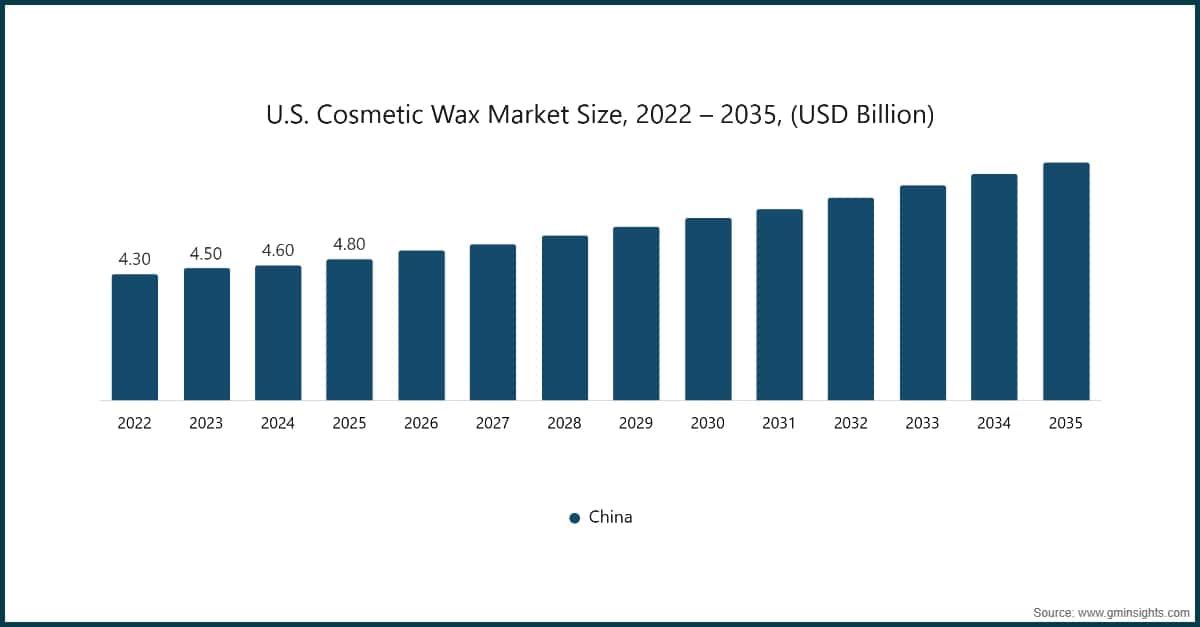
The U.S. dominates an overall North America cosmetic wax market and valued at USD 4.8 billion in 2025 and is estimated to grow at a CAGR of 5.3% from 2026 to 2035.
The U.S. market is driven by growing demand from personal care, beauty salons, and spa services. Consumers increasingly prefer professional-grade waxes for hair removal, skincare, and body treatments. Both natural and synthetic waxes are used in salons and home-use kits, depending on skin sensitivity and application type. Rising popularity of at-home grooming and DIY beauty routines supports adoption of convenient, easy-to-use wax products. Specialty salons focus on hypoallergenic and skin-nourishing formulations to attract health-conscious clients.
E-commerce and modern retail channels expand accessibility to a variety of international and domestic brands. Innovations in low-mess, quick-melt, and reusable wax strips enhance usability and performance. Professional training programs for estheticians encourage the use of high-quality wax products in commercial settings, sustaining steady demand across both residential and commercial segments in the U.S.
Europe Cosmetic Wax Market
In the Europe market, Germany held 41.3% market share in 2025 and is anticipated to grow at a CAGR of 5.2% from 2026 to 2035.
The Europe cosmetic wax industry is shaped by strong emphasis on quality, sustainability, and skin-safe formulations. Countries such as Germany, France, and the UK see high adoption of natural and hypoallergenic waxes in professional salons. Demand is driven by waxing services in beauty studios and spas, particularly for sensitive skin and specialized treatments. Eco-friendly and cruelty-free products are increasingly preferred to align with European environmental and consumer protection regulations.
Professional salons and training academies encourage the use of premium waxes to ensure consistency and client satisfaction. Modern retail channels, including online stores and specialty cosmetic shops, enhance accessibility to both domestic and imported wax products. Urban populations with higher disposable incomes drive adoption of professional and at-home waxing solutions.
Asia Pacific Cosmetic Wax Market
In the Asia Pacific market, China is expected to experience significant grow at a CAGR of 9.1% from 2026 to 2035.
The China market is expanding due to rising urbanization and increasing disposable incomes in major cities. Beauty salons and spa chains drive demand for professional-grade waxes used in hair removal and skincare treatments. Home-use wax kits are becoming popular, particularly among young consumers influenced by social media and beauty trends.
Natural waxes such as beeswax and botanical blends are preferred for sensitive skin applications. E-commerce platforms provide easy access to international brands, enhancing variety and choice for consumers. Professional training institutes support the adoption of specialized wax formulations, ensuring proper technique and safety in commercial use. Rising awareness of personal grooming and skincare routines further stimulates demand across both residential and commercial segments.
Middle East and Africa Cosmetic Wax Market
In the Middle East and Africa market, UAE held a significant market share in 2025 promising growth from 2026 to 2035.
The MEA market is influenced by strong demand from professional beauty salons and luxury spas, particularly in urban centers such as Dubai, Riyadh, and Johannesburg. Consumers prefer high-performance waxes that withstand high temperatures and are suitable for different skin types, including sensitive and dry skin. Imported premium wax products dominate due to limited domestic manufacturing, while e-commerce platforms expand access across the region.
Hair removal and skincare services in professional settings drive bulk consumption of commercial-grade waxes. Awareness of personal grooming and wellness trends encourages the use of specialized wax formulations enriched with natural oils and skin-soothing ingredients. Luxury and high-end spa services continue to push demand for advanced cosmetic wax products in MEA markets.
Cosmetic Wax Market Share
In 2025, the prominent manufacturers in cosmetic wax industry are Dow, Koster Keunen, Starpil Wax, Cirepil, and Rica Group collectively held the market share of ~47%.
Dowis a leading global chemical and wax ingredients provider, supplying paraffin, microcrystalline and synthetic waxes used extensively in cosmetic applications (lipsticks, creams, hair removal waxes). The company emphasises product performance, formulation flexibility and consistent quality. Broad global supply chains and long‑term OEM partnerships help support its market leadership.
Koster Keunenis a specialist wax manufacturer focusing on waxes and derivatives for cosmetics and personal care, including natural and synthetic waxes tailored for texture, stability and performance. The firm’s R&D investments support customizable formulations that enhance product feel and stability in premium cosmetics.
Cosmetic Wax Market Companies
Major players operating in the cosmetic wax industry include:
Body Wax Brazil
CALWAX
Cirepil
Depileve
Dow
Foncepi
GiGi
KahlWax
Koster Keunen
Paramelt
Rica Group
Siwax Group
Starpil Wax
Strahl & Pitsch Inc.
Xanitalia
Starpil Wax is a well‑known depilatory wax brand with strong recognition among salons and beauty professionals. Its product range includes soft, hard and strip waxes designed for effective hair removal with minimal discomfort. Starpil emphasizes quality formulations and consistent performance.
Cirepilspecializes in professional waxing products, particularly hard and soft depilatory waxes. The brand invests in high‑performance formulations that appeal to beauty salons and spas. Cirepil has also expanded into organic and natural wax variants to meet sustainability trends.
Rica Groupmanufactures a range of cosmetic wax products, particularly in the hair removal segment. The company focuses on innovative wax technologies designed to improve ease of use and effectiveness for salons and individual consumers. Rica’s broad distribution supports its competitive position.
Cosmetic Wax Industry News
In April 2025, Koster Keunen launched Kester Wax K‑70P, a natural polyester‑based plasticizer derived from rice wax designed to optimize texture, stability, and crystallization control in cosmetic formulations. It is intended to improve product consistency and support smooth, creamy textures in personal care applications.
In April 2024, ExxonMobil launched the Prowaxx wax product line. that includes a range of refined wax products relevant to cosmetic and personal care applications. Prowaxx introduces a structured naming system across wax types for improved clarity in formulation sourcing.
In 2024, Foncepi scaled eco‑certified carnauba wax production to meet demand from premium cosmetic manufacturers. The expanded output targets traceable, sustainably sourced wax supply for personal care applications. Foncepi’s initiative aligns with increased buyer requirements for certified natural waxes in cosmetic products.
Koster Keunen introduced micro‑refined carnauba wax tailored for cream systems and other cosmetic formulations. This new grade focuses on improved spreadability and texture control in personal care products. The company’s development reflects an innovation in cosmetic‑grade wax products designed to meet evolving formulation needs.
The cosmetic wax market research report includes in-depth coverage of the industry, with estimates & forecast in terms of revenue (USD Billion) and volume (Thousand Units) from 2022 to 2035, for the following segments:
to Buy Section of this Report
Market, By Type
Natural waxes
Synthetic waxes
Mineral waxes
Others
Market, By Price
Low
Medium
High
Market, By Form
Solid
Liquid
Flakes
Market, By Distribution Channel
Offline
Online
The above information is provided for the following regions and countries:
North America
U.S.
Canada
Europe
Germany
UK
France
Italy
Spain
Asia Pacific
China
Japan
India
South Korea
Australia
Latin America
Brazil
Mexico
Argentina
MEA
Saudi Arabia
UAE
South Africa
Author: Avinash Singh, Sunita Singh
Frequently Asked Question(FAQ) :
Who are the key players in the cosmetic wax market?+
Key players include Dow, Koster Keunen, Starpil Wax, Cirepil, Rica Group, Body Wax Brazil, CALWAX, Depileve, Foncepi, GiGi, KahlWax, Paramelt, Siwax Group, Strahl & Pitsch Inc., and Xanitalia.
What are the upcoming trends in the cosmetic wax market?+
Key trends include rising demand for at-home waxing, growing preference for natural and hypoallergenic waxes, salon-driven consumer choices, multifunctional waxes with skincare benefits, and strong influence of social media and influencers.
What is the growth outlook for the natural waxes segment from 2026 to 2035?+
Natural waxes are anticipated to grow at a CAGR of 7.5% from 2026 to 2035, driven by increasing awareness of chemical-free and safe beauty solutions, and demand for clean-label and eco-conscious personal care products.
Which region leads the cosmetic wax market?+
The U.S. dominates an overall North America cosmetic wax market with USD 4.8 billion in 2025 and is estimated to grow at a CAGR of 5.3% from 2026 to 2035.
What was the market share of the medium-price segment in 2025?+
The medium-price segment held 44.71% of the total market share in 2025, offering a balance of quality, effectiveness, and affordability suitable for both professional salons and home use.
How much revenue did the natural waxes segment generate in 2025?+
Natural waxes generated around USD 6.7 billion in 2025, dominating the market due to growing consumer preference for organic, skin-friendly, and environmentally sustainable products.
What is the current cosmetic wax market size in 2026?+
The market size is projected to reach USD 17.8 billion in 2026.
What is the projected value of the cosmetic wax market by 2035?+
The cosmetic wax market is expected to reach USD 31.3 billion by 2035, propelled by increased personal grooming habits, continued technological innovations, and the growth of beauty services.
What is the market size of the cosmetic wax in 2025?+
The market size was USD 16.9 billion in 2025, with a CAGR of 6.5% expected through 2035 driven by rising demand for hair removal and skincare solutions, expansion of professional salons and spa services, and growing awareness of natural and skin-friendly ingredients.