Summary
Table of Content

Coronary Stents Market
Get a free sample of this report
Form submitted successfully!
Error submitting form. Please try again.
Thank you!
Your inquiry has been received. Our team will reach out to you with the required details via email. To ensure that you don't miss their response, kindly remember to check your spam folder as well!
Request Sectional Data
Thank you!
Your inquiry has been received. Our team will reach out to you with the required details via email. To ensure that you don't miss their response, kindly remember to check your spam folder as well!
Form submitted successfully!
Error submitting form. Please try again.
Coronary Stents Market Size
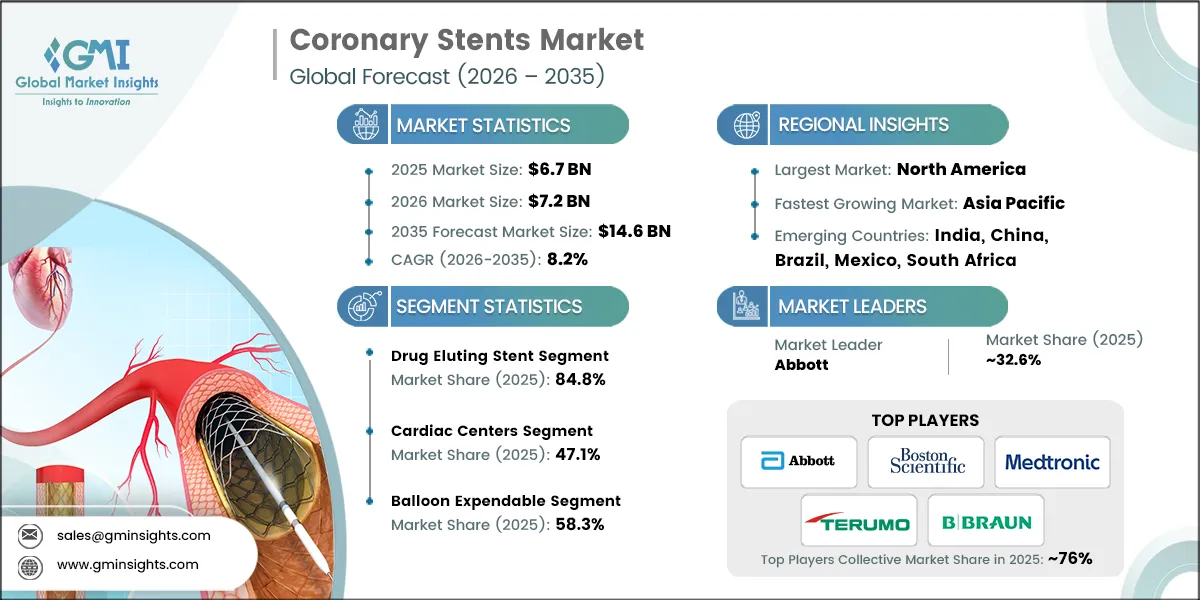
The global coronary stents market was valued at USD 6.7 billion in 2025. The market is expected to reach from USD 7.2 billion in 2026 to USD 14.6 billion in 2035, growing at a CAGR of 8.2% during the forecast period, according to the latest report published by Global Market Insights Inc.
Coronary Stents Market Key Takeaways
Market Size & Growth
- 2025 Market Size: USD 6.7 Billion
- 2026 Market Size: USD 7.2 Billion
- 2035 Forecast Market Size: USD 14.6 Billion
- CAGR (2026–2035): 8.2%
Regional Dominance
- Largest Market: North America
- Fastest Growing Region: Asia Pacific
Key Market Drivers
- Rising prevalence of coronary artery disease.
- Increasing demand for minimally invasive procedures.
- Technological advancement in developing economies.
- Increasing awareness and focus on preventive cardiac care.
Challenges
- Product failure and recall.
- Stringent regulatory approvals.
- Dearth of skilled healthcare professional in developing economies.
Opportunity
- Development of bioresorbable and next-generation stents.
- Integration of digital health & imaging technologies.
Key Players
- Market Leader: Abbott led with over 32.6% market share in 2025.
- Leading Players: Top 5 players in this market include Abbott, Boston Scientific, Medtronic, B. Braun, Terumo, which collectively held a market share of 76% in 2025.
Get Market Insights & Growth Opportunities
The high market growth is attributed to the rising prevalence of cardiovascular diseases, continuous advancements in technology, a growing geriatric population, and an increase in minimally invasive procedures, among other contributing factors.
Coronary stents are small, tube-like devices placed in narrow or blocked coronary arteries to keep them open, improving blood flow to the heart. They are commonly used in patients with coronary artery disease to prevent heart attacks.
The major players in the global coronary stents market are Abbott, Boston Scientific, Medtronic, B. Braun, and Terumo. These companies maintain their competitive position through ongoing product innovation, global market presence, and substantial investment in research and development.
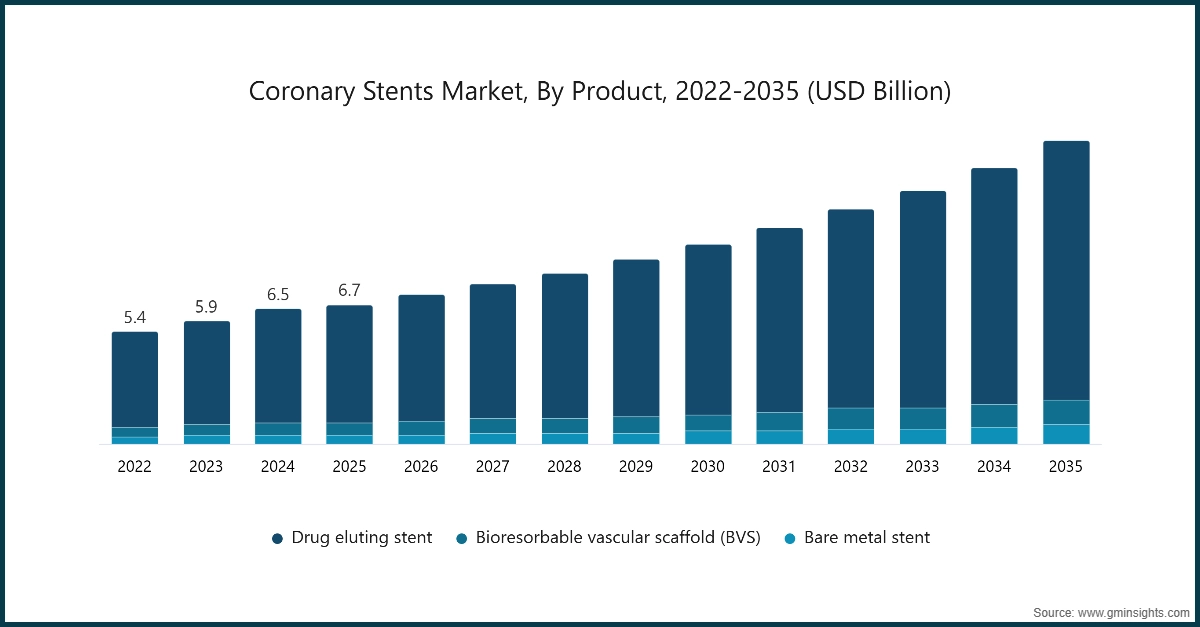
The market has increased from USD 5.4 billion in 2022 and reached to USD 6.5 billion in 2024, with a historic growth rate of 9.8%. The growth was driven by rising prevalence of coronary artery disease, increasing adoption of drug-eluting stents, technological advancements in stent design, and expansion of healthcare infrastructure in emerging markets.
Moreover, the rising prevalence of coronary artery disease (CAD), a leading cause of mortality worldwide, is fueling the demand for coronary stents. For instance, according to the World Health Organization (WHO), cardiovascular diseases account for an estimated 17.9 million deaths each year.
Similarly, the Centers for Disease Control and Prevention (CDC) reports that approximately 18.2 million adults aged 20 and older in the U.S. have CAD. Factors such as sedentary lifestyles, poor dietary habits, tobacco use, and aging populations are contributing to the increase in cardiovascular disease cases, making stents an essential intervention for affected patients.
Furthermore, technological innovations, such as drug-eluting stents (DES), bioresorbable scaffolds, and polymer-free stents, improve patient outcomes by reducing the risks of restenosis and thrombosis. As these technologies continue to refine, patient and clinician confidence in stent efficacy grows, driving adoption.
To get key market trends
Coronary Stents Market Trends
The coronary stents industry is experiencing several trends that are shaping its growth and development. Factors such as the rising popularity of drug-eluting stents (DES), the growth of bioabsorbable and biodegradable stents, and the expansion of the revascularization patient pool, among other factors are boosting industry growth.
- Bioabsorbable stents, which dissolve naturally over time, are gaining traction as they minimize long-term risks of stent thrombosis and reduce the need for prolonged antiplatelet therapy. Bioresorbable vascular scaffolds (BVS) offer a temporary support structure, dissolving after the artery heals, which is appealing in cases where long-term metal stents are not ideal.
- Moreover, as stent technology advances and clinical success rates improve, more patients, including those with complex artery lesions or co-morbidities, are becoming eligible for stent procedures. These advancements have expanded the market by making minimally invasive procedures possible for high-risk patients. Therefore, the aforementioned factors are expected to drive market growth.
Coronary Stents Market Analysis
Learn more about the key segments shaping this market
Based on product, the coronary stents market is segmented into drug eluting stent, bioresorbable vascular scaffold (BVS), and bare metal stent. The drug eluting stent segment has asserted its dominance in the market by securing a significant market share of 84.8% in 2025 owing to its ability to reduce restenosis rates, improve long-term patient outcomes, and the growing preference for minimally invasive coronary interventions. The segment is expected to exceed USD 12.5 billion by 2035, growing at a CAGR of 8.3% during the forecast period.
On the other hand, the bare metal stent segment is expected to grow with a CAGR of 7.8%. The growth of this segment is driven by its lower cost and widespread availability, making it a preferred option for patients at high risk of bleeding or those unable to take long-term antiplatelet therapy.
- The drug eluting stent segment continues to dominate the market. One of the main advantages of drug-eluting stents (DES) over bare-metal stents is their ability to significantly reduce restenosis (re-narrowing of the artery) by releasing medication that prevents excessive tissue growth. This leads to better long-term outcomes, making DES the preferred option in most coronary artery disease treatments.
- Moreover, DES has a lower rate of restenosis, meaning fewer follow-up interventions or repeat procedures are required to be compared to bare-metal stents. This lower recurrence rate is attractive to patients, healthcare providers, and insurers, as it reduces healthcare costs and improves patient outcomes.
- The bioresorbable vascular scaffold (BVS) segment held a revenue of USD 613.7 million in 2025, with projections indicating a steady expansion at a CAGR of 7.3% from 2026 to 2035. The segment is driven by its potential to restore natural vessel function and reduce long-term complications associated with permanent stents. Increasing clinical adoption and ongoing innovations in scaffold materials further support its market growth.
Based on type, the coronary stents market is classified into balloon expendable stent and self-expendable stent. The balloon expendable stent segment dominated the market with a revenue share of 58.3% in 2025 and is expected to reach USD 8.2 billion within the forecast period.
- Balloon-expandable stents offer high precision during placement, allowing for accurate positioning and controlled deployment. This control minimizes the risk of damaging surrounding blood vessels and makes balloon-expandable stents an effective choice in complex or narrow artery cases where precise stent placement is essential.
- Additionally, balloon-expandable stents are particularly beneficial for patients with complex or calcified lesions. The ability to deploy stents at high pressure using balloon expansion is advantageous in treating hardened plaque or difficult arterial blockages, which would be challenging for other stent types. This is anticipated to boost the segment's growth in the market.
- The self-expendable stent segment accounted for significant revenue in 2025 and is anticipated to grow at a CAGR of 8.7% over the forecast period. The growth of the segment is driven by its flexibility and ability to adapt to complex or tortuous arteries, improving procedural success in challenging cases. Additionally, its suitability for peripheral and small vessel applications is expanding clinical adoption.
Based on material, the coronary stents market is classified into cobalt-chromium alloy, stainless steel, and other materials. The cobalt-chromium alloy segment dominated the market in 2025 and is anticipated to reach USD 7.5 billion by the end of forecast period.
- Cobalt-chromium alloy is known for its high tensile strength and durability, making it ideal for withstanding the pressure of artery walls while maintaining lumen (inner diameter) expansion. This strength allows stents made of cobalt-chromium to remain durable over time, reducing the likelihood of fractures or failures and enhancing patient outcomes.
- Furthermore, the high strength of cobalt-chromium allows manufacturers to create stents with thinner struts without compromising structural integrity. Thin-strut designs reduce the risk of artery injury, improve blood flow, and promote faster healing. These key advantages help reduce restenosis (re-narrowing of arteries) and thrombosis risks, leading to segmental growth.
- The stainless steel segment accounted for significant revenue in 2025 and is anticipated to grow at a CAGR of 8.9% over the forecast period. The segment is driven by its proven biocompatibility, durability, and cost-effectiveness, making it a reliable choice for a wide range of coronary interventions. Its mechanical strength and ease of deployment further support sustained adoption in clinical practice.
Learn more about the key segments shaping this market
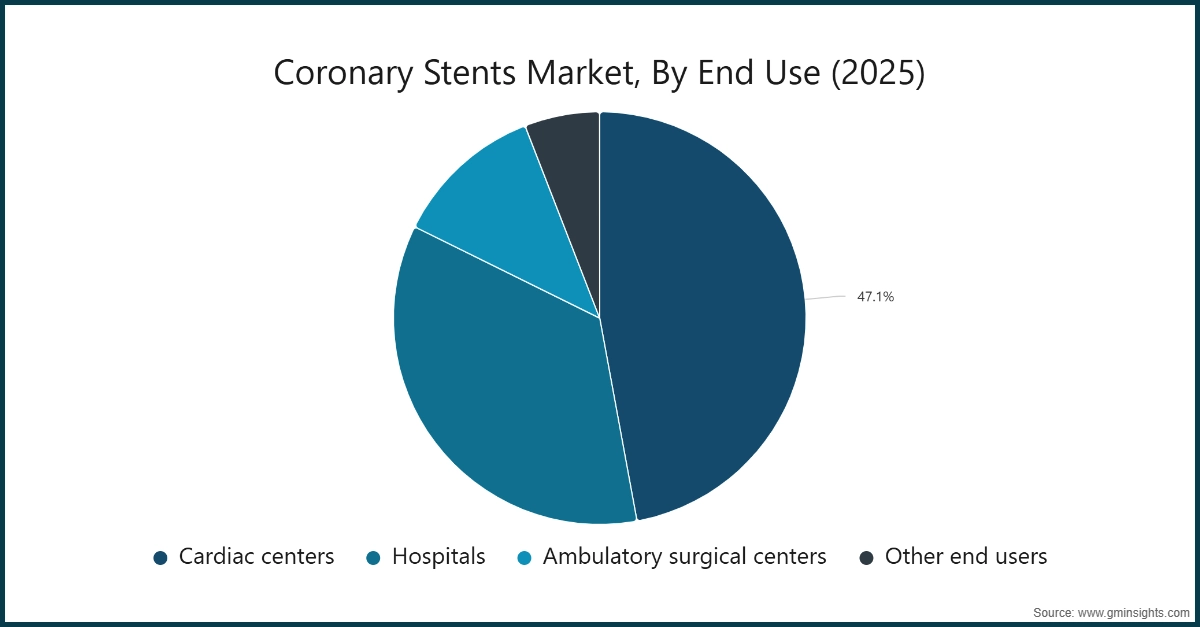
Based on end use, the coronary stents market is classified into cardiac centers, hospitals, ambulatory surgical centers, and other end users. The cardiac centers segment dominated the market with a revenue share of 47.1% in 2025 and is expected to reach USD 6.7 billion within the forecast period.
- Cardiac centers are staffed with specialized cardiologists, interventional radiologists, and cardiac surgeons trained to perform complex procedures, such as stent placements and angioplasties. This level of expertise is vital for high-risk patients and complex cases, making cardiac centers a trusted choice for stent procedures.
- Additionally, these centers are equipped with advanced diagnostic and interventional technologies, such as intravascular ultrasound (IVUS), optical coherence tomography (OCT), and robotic-assisted systems. These technologies enhance procedural precision, allowing for accurate stent placement and reducing the risk of complications.
- The hospitals segment accounted for significant revenue in 2025 and is anticipated to grow at a CAGR of 8.4% over the forecast period. Hospitals drive the coronary stents market by offering advanced cardiac care facilities and skilled interventional cardiologists, enabling high-volume percutaneous coronary interventions. Their established infrastructure and comprehensive post-procedure care encourage stent adoption and improve patient outcomes.
- The ambulatory surgical centers segment accounted for significant revenue in 2025 and is anticipated to grow at a CAGR of 8.8% over the forecast period. The segment's drive the market by providing cost-effective, convenient, and quick minimally invasive procedures. Their streamlined operations and shorter patient stay attract both physicians and patients, increasing procedural volumes and market penetration.
Looking for region specific data?
North America Coronary Stents Market
North America dominated the global coronary stents industry with the highest market share of 39.6% in 2025.
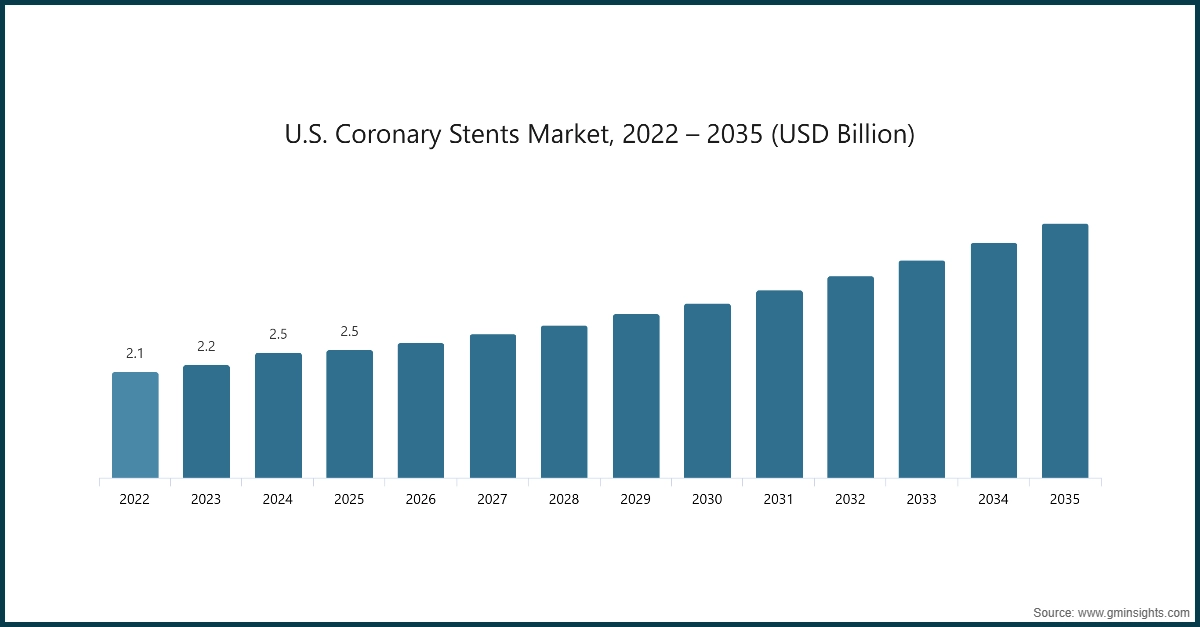
- The U.S. coronary stents industry reached USD 2.5 billion in 2025 and is anticipated to grow at a CAGR of 7.3% from 2026 to 2035.
- North America, particularly the U.S., faces a significant burden of cardiovascular diseases, including coronary artery disease (CAD). Lifestyle factors such as sedentary behaviour, high-fat diets, and stress contribute to a high incidence of CVDs, which, in turn, drives demand for coronary stent procedures to manage and treat these conditions.
- Further, the region boasts a well-developed healthcare system with state-of-the-art medical facilities, skilled healthcare providers, and easy access to advanced cardiac care. This robust infrastructure enables the widespread availability of coronary stent procedures and supports the adoption of innovative stent technologies across hospitals and cardiac centers, thereby driving regional growth.
Europe Coronary Stents Market
Europe coronary stents industry accounted for USD 1.9 billion in 2025 and is anticipated to show lucrative growth over the forecast period.
- Europe has one of the highest proportions of elderly individuals globally. Ageing arteries with increasing incidence of atherosclerosis drive a higher demand for coronary stents, particularly drug-eluting and polymer-coated stents designed to minimize restenosis in older patients.
- European regulatory frameworks, such as the EU Medical Device Regulation (MDR), promote safety and efficacy, which pushes manufacturers to introduce high-performance stents. Compliance with these standards ensures market entry for technologically advanced stents, which boosts adoption among hospitals and cardiac centers.
- Further, several EU nations have active campaigns to reduce cardiovascular mortality through early diagnosis and timely intervention. Increased screenings and early stenting procedures directly translate into higher stent utilization rates across the region.
Asia Pacific Coronary Stents Market
The Asia Pacific coronary stents industry is anticipated to grow at the highest CAGR of 9.4% during the analysis timeframe.
- Countries like China and India are experiencing a sharp rise in coronary artery disease due to urbanization, changing diets, and sedentary lifestyles. High incidence among middle-aged populations drives demand for both low-cost and premium stent solutions, expanding the market rapidly.
- Nations such as India, Thailand, and Malaysia are popular destinations for cardiac procedures due to cost-effective treatment options. This influx of international patients encourages hospitals to invest in state-of-the-art stent technologies, contributing significantly to market expansion.
- APAC governments are investing heavily in hospital networks, interventional cardiology units, and cath labs. The growth in the number of healthcare facilities equipped for PCI procedures directly fuels stent adoption in urban and semi-urban areas.
Latin America Coronary Stents Market
The Latin America coronary stents industry is experiencing robust growth over the analysis timeframe.
- Investment in specialized cardiac care centers and modern cath labs has accelerated, particularly in metropolitan areas. This infrastructure development supports a shift toward minimally invasive procedures, increasing the preference for drug-eluting stents over traditional surgical approaches.
- Moreover, international partnerships and imports have facilitated the introduction of second-generation DES and bioresorbable scaffolds. Hospitals increasingly adopt these advanced solutions to improve patient outcomes, boosting market growth.
Middle East & Africa Coronary Stents Market
The Middle East & Africa (MEA) market is experiencing robust growth over the analysis timeframe.
- GCC nations, South Africa, and other urban centers are investing in modern hospitals and interventional cardiology units. The availability of cath labs equipped for drug-eluting and bioresorbable stent implantation supports market growth.
- Further, awareness programs targeting early diagnosis of heart disease and risk management have expanded. As patients opt for timely interventional procedures, the demand for both conventional and advanced stent technologies grows steadily across the region.
Coronary Stents Market Share
The global coronary stents industry is competitive, driven by continuous technological innovations and the presence of several established global players. Companies are focusing on developing next-generation drug-eluting and bioresorbable stents, improving procedural efficiency, and enhancing patient outcomes.
Key players including Abbott, Boston Scientific, Medtronic, B. Braun, and Terumo, collectively accounting for ~76% of the total market share. The competition also extends to pricing strategies, clinical trial data, and physician relationships, which are critical for maintaining market leadership.
Regional expansion, strategic collaborations, and acquisitions are common strategies among market participants to strengthen their global footprint. Additionally, companies are investing in digital health technologies and imaging-guided interventions to differentiate their product portfolios.
Emerging markets present lucrative growth opportunities, prompting players to focus on affordability, distribution networks, and awareness campaigns. Overall, the market remains dynamic, with innovation, clinical evidence, and strategic partnerships serving as the key factors shaping competitive positioning.
Coronary Stents Market Companies
Few of the prominent players operating in the coronary stents industry include:
- Abbott
- Andramed
- B. Braun
- Biosensors International Group
- Biotronik
- Boston Scientific
- Cook Medical
- Elixir Medical
- GENOSS
- Medtronic
- Meril Life Science
- MicroPort Scientific
- Sahajanand Laser Technology Limited
- Stryker
- Terumo
- Abbott
It offers a strong portfolio of drug-eluting and bioresorbable stents with extensive clinical validation. Its focus on real-world data and physician training enhances adoption and trust globally.
Boston Scientific emphasizes innovative stent designs and minimally invasive delivery systems. Its integration of imaging-guided interventions improves procedural precision and patient outcomes.
Medtronic provides durable and versatile stent solutions with proven long-term safety and efficacy. The company leverages global distribution networks and R&D capabilities to drive market penetration and innovation.
Coronary Stents Market Report Attributes
| Key Takeaway | Details |
|---|---|
| Market Size & Growth | |
| Base Year | 2025 |
| Market Size in 2025 | USD 6.7 Billion |
| Market Size in 2026 | USD 7.2 Billion |
| Forecast Period 2026-2035 CAGR | 8.2% |
| Market Size in 2035 | USD 14.6 Billion |
| Key Market Trends | |
| Drivers | Impact |
| Rising prevalence of coronary artery disease | The increasing number of CAD cases is directly boosting demand for coronary stents, driving procedure volumes globally. Healthcare providers are witnessing higher patient inflow for interventions, sustaining market growth. |
| Increasing demand for minimally invasive procedures | Patients and clinicians are favoring percutaneous coronary interventions over open-heart surgeries, increasing adoption of stents. This trend supports faster recovery times and higher procedure acceptance rates. |
| Technological advancement in developing economies | Emerging markets are seeing improved access to next-generation stents, enhancing procedural safety and efficacy. Local healthcare facilities are upgrading infrastructure, expanding market penetration. |
| Increasing awareness and focus on preventive cardiac care | Rising awareness of heart health encourages early diagnosis and timely stent interventions. Preventive care programs are stimulating procedural adoption and influencing market expansion. |
| Pitfalls & Challenges | Impact |
| Product failure and recall | Incidences of stent failure or recalls can reduce physician confidence and limit adoption in certain regions. They also create financial and reputational challenges for manufacturers. |
| Stringent regulatory approvals | Complex approval processes delay market entry for new stent models, particularly in developed countries. This can slow innovation adoption and limit competitive advantage. |
| Dearth of skilled healthcare professional in developing economies | Limited trained interventional cardiologists restrict stent procedures in emerging regions. This constraint slows market growth despite rising disease prevalence. |
| Opportunities: | Impact |
| Development of bioresorbable and next-generation stents | Next-generation stents, including bioresorbable types, are expected to reduce long-term complications and improve patient outcomes, driving higher adoption globally. |
| Integration of digital health & imaging technologies | Advanced imaging and digital tools will enhance procedural precision and monitoring, boosting clinician confidence and expanding market penetration. |
| Market Leaders (2025) | |
| Market Leader |
Market share is ~ 32.6% |
| Top Players |
Collective market share is ~ 76% |
| Competitive Edge |
|
| Regional Insights | |
| Largest Market | North America |
| Fastest growing market | Asia Pacific |
| Emerging countries | India, China, Brazil, Mexico, South Africa |
| Future outlook |
|
What are the growth opportunities in this market?
Coronary Stents Industry News:
- In May 2024, Abbott announced the launch of its XIENCE sierra everolimus-eluting coronary stent system in India. As one of the latest-generation stents in the XIENCE family, XIENCE sierra became available to patients with blocked coronary arteries. Designed for use in complex cases, the stent offers interventional cardiologists a high level of safety and reliability.
- In August 2022, Medtronic announced the launch of its latest drug-eluting coronary stent, the Onyx Frontier DES, following recent CE Mark approval. It introduced an advanced delivery system, enhancing upon the proven performance and clinical data of the Resolute Onyx DES. This stent leverages the same high-performing platform as the Resolute Onyx, with an optimized delivery system designed to improve ease of use and deliver superior acute performance, even in complex cases.
The coronary stents market research report includes an in-depth coverage of the industry with estimates and forecast in terms of revenue in USD Million from 2022 – 2035 for the following segments:
Market, By Product
- Drug eluting stent
- Bioresorbable vascular scaffold (BVS)
- Bare metal stent
Market, By Type
- Balloon expendable stent
- Self-expendable stent
Market, By Material
- Cobalt-chromium alloy
- Stainless steel
- Other materials
Market, By End Use
- Cardiac centers
- Hospitals
- Ambulatory surgical centers
- Other end users
The above information is provided for the following regions and countries:
- North America
- U.S.
- Canada
- Europe
- Germany
- UK
- France
- Spain
- Italy
- Netherlands
- Asia Pacific
- China
- Japan
- India
- Australia
- South Korea
- Latin America
- Brazil
- Mexico
- Argentina
- Middle East and Africa
- South Africa
- Saudi Arabia
- UAE
Frequently Asked Question(FAQ) :
What was the market size of the coronary stents in 2025?
The market size was USD 6.7 billion in 2025, with a CAGR of 8.2% expected through 2035. The growth is driven by the rising prevalence of cardiovascular diseases, advancements in technology, and an increase in minimally invasive procedures.
What is the projected value of the coronary stents market by 2035?
The market is projected to reach USD 14.6 billion by 2035, fueled by the adoption of drug-eluting stents, bioabsorbable stents, and the expansion of the revascularization patient pool.
What is the expected size of the coronary stents industry in 2026?
The market size is projected to reach USD 7.2 billion in 2026.
How much revenue did the balloon-expandable stent segment generate in 2025?
The balloon-expandable stent segment dominating the market with a 58.3% revenue share in 2025, and is expected to reach USD 8.2 billion by 2035.
What was the valuation of the cardiac centers segment in 2025?
The cardiac centers segment holding a 47.1% revenue share, and is projected to reach USD 6.7 billion by 2035.
What is the growth outlook for the drug-eluting stent segment from 2026 to 2035?
The drug-eluting stent segment is projected to grow at a CAGR of 8.3% from 2026 to 2035, with an expected valuation exceeding USD 12.5 billion by 2035.
Which region leads the coronary stents sector?
North America leads the market with a 39.6% share in 2025. The U.S. drives this dominance due to a high prevalence of cardiovascular diseases, influenced by sedentary lifestyles, high-fat diets, and stress.
What are the upcoming trends in the coronary stents market?
Trends include the growing adoption of bioabsorbable stents, advancements in drug-eluting stents, increased eligibility for stent procedures among high-risk patients, and the development of minimally invasive technologies.
Who are the key players in the coronary stents industry?
Key players include Abbott, Andramed, B. Braun, Biosensors International Group, Biotronik, Boston Scientific, Cook Medical, Elixir Medical, GENOSS, Medtronic, and Meril Life Science.
Coronary Stents Market Scope
Related Reports