Summary
Table of Content

Conjugate Vaccine Market
Get a free sample of this report
Form submitted successfully!
Error submitting form. Please try again.
Thank you!
Your inquiry has been received. Our team will reach out to you with the required details via email. To ensure that you don't miss their response, kindly remember to check your spam folder as well!
Request Sectional Data
Thank you!
Your inquiry has been received. Our team will reach out to you with the required details via email. To ensure that you don't miss their response, kindly remember to check your spam folder as well!
Form submitted successfully!
Error submitting form. Please try again.
Conjugate Vaccine Market Size
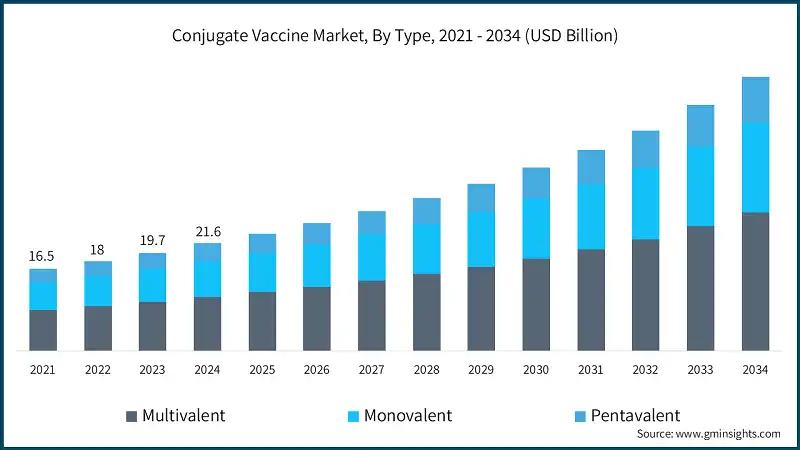
The global conjugate vaccine market was estimated at USD 21.6 billion in 2024. The market is expected to grow from USD 23.5 billion in 2025 to USD 55 billion in 2034, at a CAGR of 9.9% from 2024 to 2034, according to the latest report published by Global Market Insights Inc. The increasing prevalence of infectious diseases and the growing demand for disease-specific immunization solutions are driving the growth of the conjugate vaccines market.
Conjugate Vaccine Market Key Takeaways
Market Size & Growth
- 2024 Market Size: USD 21.6 Billion
- 2025 Market Size: USD 23.5 Billion
- 2034 Forecast Market Size: USD 55 Billion
- CAGR (2025–2034): 9.9%
Regional Dominance
- Largest Market: North America
- Fastest Growing Region: Asia Pacific
Key Market Drivers
- Increasing prevalence of infectious diseases.
- Growing geriatric and paediatric populations.
- Enhanced clinical awareness and immunization guidelines.
- Expansion of digital health and telemedicine platforms.
Challenges
- High cost of branded and biologic therapies.
- Safety concerns and side effects.
Opportunity
- Rising demand in emerging markets.
- Shift toward personalized and combination therapies.
Key Players
- Market Leader: Sanofi led with over 15% market share in 2024.
- Leading Players: Top 5 players in this market include Sanofi, Pfizer, GlaxoSmithKline, Merck, Novartis, which collectively held a market share of 65% in 2024.
Get Market Insights & Growth Opportunities
According to the National Institute of Health (NIH), infectious diseases are the leading cause of death globally, accounting for more than 52 million deaths annually. The disease burden significantly affects both adults and children. NIH reports that infectious diseases are responsible for 10 million deaths in children under age 5. Furthermore, vaccine-preventable diseases contribute substantially to global child mortality, with the NIH reported 5.3 million child deaths from these preventable infectious diseases.
Conjugate vaccine is defined as pharmaceutical agents that together combine a weak antigen with a strong antigen to produce a stronger immune response. Such vaccines are beneficial to prevent bacterial infections and are effective in both infants and young children. Common conjugate vaccine include haemophilus, pneumococcal, and meningococcal vaccines. The market has several major players that include Pfizer, Sanofi, GlaxoSmithKline, Merck and Serum Institute of India. These vaccines are administered through different parenteral routes that include intramuscular or subcutaneous routes.
The market grew from USD 16.5 billion in 2021 to USD 19.7 billion in 2023. The market growth is driven by the increasing prevalence of infectious diseases, growing awareness about vaccine immunization, and the expansion of vaccination programs. The integration of digital health technologies, including AI-powered vaccination systems and patient databases, is further supporting market expansion.
The higher incidence of recurrent infections and antibiotic resistance is further stimulating the demand for long-term immunization strategies. Global immunization coverage remained at 83% in 2022, according to the World Health Organization (WHO), with significant disparities in low-income regions. Vaccine hesitancy and incomplete immunization schedules affect population immunity, particularly in areas with limited healthcare infrastructure. UNICEF data indicates that over 25 million children missed their routine vaccinations in 2022, highlighting the persistent challenges in vaccine delivery and acceptance.
Additionally, the market is driven through technological advancements in vaccine delivery systems and the increased adoption of multivalent vaccines from manufacturers like Pfizer. The rising prevalence of chronic conditions, including diabetes, HIV, and respiratory diseases, has increased the demand for conjugate vaccines inclusive of multivalent vaccines. Enhanced diagnostic tools and early screening programs enable better intervention and patient outcomes. For instance, as per the 2024, WHO reports, approximately 40.8 million people were living with HIV, with 3.2 million new cases.
Thus, the persistent burden of HIV and other infectious diseases has heightened global awareness of the importance of preventive healthcare, including vaccination. Conjugate vaccines, which are highly effective against bacterial pathogens like Haemophilus influenzae type B (Hib), Streptococcus pneumoniae, and Neisseria meningitidis, are increasingly being integrated into immunization programs to protect immunocompromised populations, such as those living with HIV, thereby contributing to market expansion.
Infectious diseases are more prevalent in pediatric populations due to underdeveloped immune systems and limited access to early vaccination. Adult populations demonstrate higher responsiveness to vaccines due to existing immunological memory. Additionally, emerging economies experiencing improvements in healthcare infrastructure and increasing awareness of vaccine-preventable diseases contribute to market growth.
The integration of artificial intelligence and machine learning in vaccine development is increasing the efficiency of solution discovery for infectious diseases. The rising demand for personalized immunization schedules, along with digital health records, is changing the market. Innovations in patient-centric novel vaccine delivery systems are improving compliance and coverage. Government initiatives and public-private partnerships focused on expanding immunization programs are further supporting market expansion.

To get key market trends
Conjugate Vaccine Market Trends
The conjugate vaccines market is going through a transformation driven by both macro-level and micro-level shifts in global market with public health priorities in immunization technologies. The increasing burden of infections, particularly in vulnerable populations, is driving the demand for targeted vaccines that provide long-term protection and enhanced immune responses. The market continues to develop through next-generation conjugate formulations and immunization strategies, while digital health integration aims to expand and improve vaccination outcomes.
- The adoption of conjugate vaccines targeting bacteria such as Streptococcus pneumoniae, Haemophilus influenzae, and Neisseria meningitidis is increasing due to their ability to induce strong and long-lasting immunity. These vaccines demonstrate high effectiveness for infants, elderly individuals, and immunocompromised patients. Clinical trials are expanding to include broader age groups and populations with comorbidities, including chronic and cardiovascular conditions. Hospitals and public health agencies across North America, Europe, and Asia-Pacific regions are incorporating conjugate vaccines into routine immunization programs, thereby contributing to market growth.
- The emergence of new bacterial strains is driving the demand for advanced vaccine strategies. Research in conjugate vaccine development is focusing on multi-valent formulations that provide protection against multiple serotypes. These formulations reduce dosing frequency and improve protective coverage, which leads to better patient outcomes and lower healthcare costs.
- Moreover, the growing adoption of personalized immunization strategies, which are based on patient age, risk factors, geographic exposure, and immune profiles, drives market growth. The integration of biomarkers, digital vaccination records, and AI-driven risk assessments enhances vaccine selection and scheduling processes. This targeted approach improves outbreak management and response effectiveness in regions with high disease prevalence.
- Lastly, the integration of telehealth and mobile health tools for vaccine delivery is changing the access and adherence. Digital platforms are used to schedule vaccinations, reminders and track any adverse events, particularly in remote areas. These tools are important to improve vaccination coverage and continuity of care, in regions with limited healthcare infrastructure.
Conjugate Vaccine Market Analysis
Learn more about the key segments shaping this market
Based on type, the conjugate vaccine market is categorized into multivalent, monovalent and pentavalent. The multivalent segment accounted for 50.3% of the market in 2024. The growth of multivalent segment is driven by the rising prevalence of infectious diseases, enhanced clinical guidelines, and effective administration, conjugate vaccines have become a critical tool in preventing bacterial infections across age groups. The segment is expected to reach USD 27.8 billion by 2034, growing at a CAGR of 10% during the forecast period.
- The multivalent segment dominates the global conjugate vaccine market through its ability to provide broad-spectrum protection against multiple serotypes in a single formulation. This characteristic proves essential for pediatric and adult immunization programs, where reducing the number of injections improves patient compliance and health outcomes.
- National immunization programs and outbreak control strategies prioritize multivalent conjugate vaccines as they align with WHO and CDC guidelines for disease prevention. These vaccines effectively target co-infections and reduce the burden of separate vaccine administration, making them particularly valuable in resource-limited settings.
- The segment's expansion continues through advancements in vaccine formulation and scalable production technologies. The integration of digital health systems and enhanced inventory management improves operational efficiency and patient monitoring capabilities throughout healthcare systems.
- The pentavalent segment demonstrates a projected CAGR of 10.2%, driven by increasing infant immunization requirements, support from global health organizations, and proven clinical effectiveness in protecting against five major diseases.
- The monovalent segment exhibits an expected CAGR of 9.6%, with growth attributed to precision immunization needs, increased focus on outbreak control measures, and expanding accessibility to single-serotype vaccines in targeted healthcare settings.
Based on the indication, the conjugate vaccine market is segmented into pneumococcal, haemophilus, meningococcal and other indications. The haemophilus segment accounted for the highest market share of 45.6% in 2024.
- This dominance is driven by its high prevalence in children under five years of age and its potential to cause severe infections. According to BMC Infectious Diseases, the global prevalence for beta-lactamases producing H. influenzae was 34.9% in 2024. Similarly, as per the WHO estimates Hib causes 3 million episodes of serious disease and 400,000 deaths annually worldwide. Government initiatives for immunization programs and global health initiatives have made Hib vaccines a routine part of pediatric schedules, that helps in reducing disease incidence globally.
- Hib vaccines demonstrate compatibility with early childhood immunization protocols and effectively prevent life-threatening bacterial infections. Their incorporation into combination vaccines, along with support from WHO and UNICEF, reinforces their market position, particularly in low-income and middle-income countries.
- The pneumococcal segment demonstrates growth due to increasing antibiotic resistance and the requirement for broader serotype coverage. Healthcare systems widely implement conjugate vaccines for pneumococcal infections across pediatric and adult populations, supported by clinical guidelines and national immunization programs.
- WHO data indicates that in developing countries, young children and elderly populations face high susceptibility, with approximately 1 million children dying from pneumococcal disease annually. The National Institutes of Health (NIH) projects that vaccine development will prevent an estimated 7 million deaths by 2030.
- The meningococcal segment shows consistent expansion due to increased awareness of meningitis outbreaks and demand for effective, long-term protection. These vaccines serve adolescent and travel-related immunization programs, providing protection against multiple meningococcal serogroups.
Based on age group, the conjugate vaccine market is segmented into pediatrics and adults. The pediatrics segment accounted for the highest market share of 61.5% in 2024.
- The segment is driven by the high vulnerability of children to bacterial infections such as haemophilus influenzae type b, pneumococcal, and meningococcal diseases. Early immunization is critical in this age group, as their developing immune systems are less capable for fighting invasive pathogens, making conjugate vaccines for long-term protection.
- Immunization programs and global health initiatives have made pediatric conjugate vaccines a routine part of national vaccination schedules. These vaccines are often administered in combination with others, reducing the number of injections and improving compliance among caregivers. Such inclusion in early childhood care protocols ensures wide coverage and contributes to the decline in vaccine-preventable diseases.
- Additionally, increasing health concerns related to childhood lifestyle factors, including obesity and poor nutrition, emphasize the importance of robust immunization. These factors can weaken immune responses, making them more susceptible to infections.
- On the other hand, the adult segment is gaining momentum due to the growing elderly population, rising incidence of chronic diseases, and increasing awareness of adult immunization. Conjugate vaccines for adults, particularly pneumococcal and meningococcal, are being adopted in clinical and travel-related settings to prevent severe complications and hospitalizations.
Learn more about the key segments shaping this market
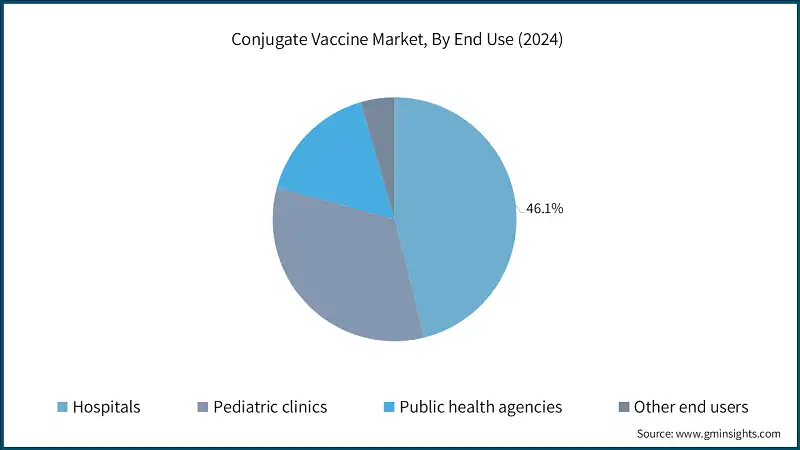
Based on end use, the conjugate vaccine market is categorized into hospitals, pediatric clinics, public health agencies and other end users. The hospitals segment accounted for the highest market share of 46.1% in 2024 Due to their easy availability and convenience, hospitals are a primary channel in the market.
- Hospitals represent a major end use segment in the conjugate vaccine market due to their centralized infrastructure, access to trained medical staff, and ability to manage large-scale immunization programs.
- Moreover, hospitals play a critical role in both routine and emergency vaccination, offering timely administration and follow-up care for pediatric and adult populations.
- Hospitals serve as primary distribution points for conjugate vaccines through government initiatives and public health campaigns. Their electronic health record systems and clinical protocols enable accurate tracking, reporting, and compliance, contributing to high vaccination coverage rates. The network of 6,090 hospitals in the U.S. and over 165,000 hospitals worldwide provide extensive vaccine access and outreach capabilities.
- Pediatric clinics enhance market growth by providing specialized immunization services for children. These facilities offer dedicated environments for early-age vaccinations, which helps build caregiver confidence and ensures adherence to vaccination schedules, particularly in urban and suburban areas.
- Public health agencies strengthen market expansion through mass immunization programs, community outreach, and improved vaccine access in underserved areas. Their functions in disease monitoring, public education, and policy implementation help achieve comprehensive vaccination coverage and support global health objectives, especially in low- and middle-income countries.
Looking for region specific data?
North America Conjugate Vaccine Market
The North America conjugate vaccine market dominated the global conjugate vaccine drugs market with a market share of 39.9% in 2024. The market is stimulated by the rising prevalence of bacterial infections and increased spending on immunization programs. Advancements in vaccine technology and a growing focus on immunization efficiency also support market growth.
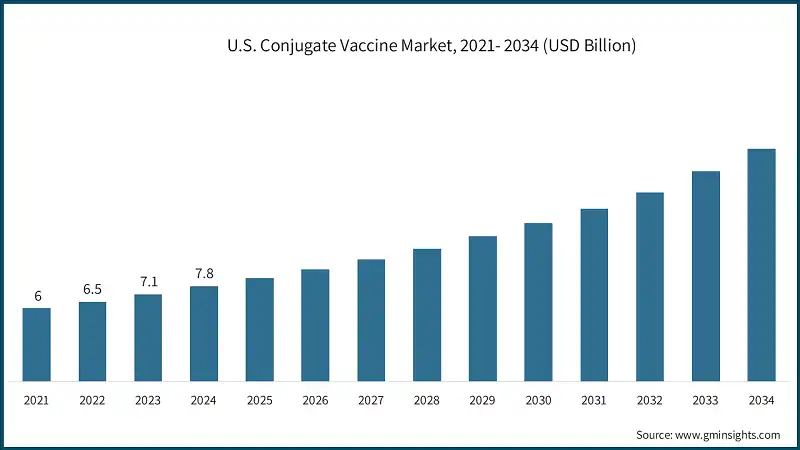
The U.S. conjugate vaccine market was valued at USD 6 billion and USD 6.5 billion in 2021 and 2022, respectively. The market size reached USD 7.8 billion in 2024, growing from USD 7.1 billion in 2023.
- The rising prevalence of bacterial infections in the U.S. is increasing the demand for conjugate vaccines. According to CDC, 2.8 million antimicrobial resistant infections occur each year in U.S. The growing patient burden and increasing need for effective immunization strategies, especially against pathogens.
- Moreover, the increasing incidence of chronic conditions such as diabetes and cardiovascular disease that increase the vulnerability to infections further stimulates market growth. The approval of broader-spectrum conjugate vaccines reflects the need for long-term protection in high-risk populations.
- The elderly population and healthcare spending increases, immunization has become central to preventive care, escalating demand for advanced conjugate vaccines.
Europe Conjugate Vaccine Market
Europe market accounted for USD 6 billion in 2024 and is anticipated to show lucrative growth over the forecast period.
- Rising awareness and adoption of advanced immunization strategies in the region, along with increasing government initiatives to strengthen healthcare infrastructure, are anticipated to spur growth in the conjugate vaccine market in Europe.
- Moreover, advancements in vaccine technologies, such as multi-valent conjugate formulations and combination immunization schedules, along with the introduction of scalable and cost-effective vaccine options, are boosting the requirement for conjugate vaccines across the European region.
- Additionally, the presence of key pharmaceutical companies in the region strengthens the market. These companies actively participate in innovation through the development of next-generation conjugate vaccines, expanded clinical research, and partnerships with infectious disease and public health organizations, thereby advancing market growth.
Germany conjugate vaccine market is anticipated to witness considerable growth over the analysis period.
- The growing burden of infectious diseases such as pneumonia, meningitis, and haemophilus influenzae type B is stimulating the market for conjugate vaccines in Germany. The increasing incidence of these diseases, especially among children and the elderly, highlights the need for effective immunization strategies.
- Moreover, the rising elderly population, is more susceptible to bacterial infections due to weakened immunity, further stimulates market demand. The aging demographic is contributing to higher vaccine uptake, particularly for pneumococcal and meningococcal conjugate vaccines.
- Additionally, the presence of leading pharmaceutical companies and research institutions in Germany strengthens the market. These organizations are actively involved in developing next-generation conjugate vaccines, conducting clinical trials, and collaborating with public health authorities to improve vaccine access and innovation.
Asia Pacific Conjugate Vaccine Market
The Asia Pacific market is anticipated to grow at the highest CAGR of 10.4% during the analysis timeframe.
- The market in the Asia-Pacific region is growing rapidly due to the rise in infectious disease cases, increasing public health awareness, and the improvement of healthcare infrastructure across both urban and rural hospitals and clinics.
- Countries such as China, India, and Japan are adopting conjugate vaccine solutions at a faster rate due to enhanced demand for efficient immunization delivery, government-led vaccination initiatives, and the rise in cloud-based platforms supporting multi-specialty healthcare practices.
- Additionally, the rapid rise in the number of immunization centers and healthcare providers, along with government policies aimed at expanding digitalization and integrating vaccination into national health strategies, contributes to the rapid growth of the market in the region.
China conjugate vaccine market is predicted to grow significantly over the forecast period.
- The rapid urbanization and healthcare modernization in the country contributed to an increase in infectious disease cases, particularly among children and the elderly, driving the demand for conjugate vaccines that provide long-term protection.
- Government investments in immunization programs and expansion of public health infrastructure support market growth. National vaccination initiatives improve the accessibility of conjugate vaccines across urban and rural regions.
- Growing concerns about antibiotic resistance and the long-term effects of untreated bacterial infections increase the adoption of conjugate vaccines. According to ScienceDirect, antimicrobial resistance (AMR) caused 160,268 deaths in China in 2021.
Brazil Conjugate Vaccine Market
Brazil is experiencing significant growth in the Latin America market due to the increasing demand for obesity care management and long-term care.
- The increasing incidence of infectious diseases in Brazil, particularly affecting children and elderly populations, is driving the demand for conjugate vaccines. The growing patient volumes in hospitals and clinics have necessitated the implementation of long-term immunization programs to improve patient outcomes.
- The Brazilian government's initiatives to digitize healthcare services, increase vaccine accessibility, and strengthen regulatory frameworks are accelerating conjugate vaccine adoption in both public and private healthcare sectors. These measures are improving vaccine access and expanding immunization coverage across the country.
Middle East and Africa Conjugate Vaccine Market
Saudi Arabia market is poised to witness substantial growth in Middle East and Africa market during the forecast period.
- The rising incidence of infectious diseases and the growing need for preventive care are escalating market demand in Saudi Arabia. Government-led immunization campaigns and increased healthcare access are driving the adoption of conjugate vaccines, especially among paediatric and elderly populations stimulating the market for pediatric vaccines.
- Government initiatives under Vision 2030, along with the expansion of digital health infrastructure and local vaccine production, are boosting demand across public and private healthcare sectors. These efforts are modernizing healthcare delivery and improving vaccine availability nationwide.
Conjugate Vaccine Market Share
Leading companies such as Sanofi, Pfizer, GlaxoSmithKline, Merck, and Novartis collectively hold between 60-65% of the market share in the global conjugate vaccine market. These companies maintain dominance through extensive vaccine portfolios, strategic collaborations, regulatory strength, and continuous innovation. Sanofi holds a strong competitive advantage with its conjugate vaccine offerings, which are widely adopted across hospitals and immunization programs.
Pfizer, with its robust vaccine pipeline, supports global immunization efforts and maintains a strong presence in the conjugate vaccine segment. GlaxoSmithKline has gained market traction with its innovative formulations targeting both pediatric and adult populations, making it a preferred choice for long-term immunization strategies.
Companies such as Merck and Novartis offer cost-effective conjugate vaccines, catering to budget-conscious healthcare providers and public health agencies. These firms are addressing market gaps by expanding access to generic therapies and integrating digital tools for patient adherence and monitoring.
New entrants and niche players such as Bharat Biotech, Biological E, Bio-Med, and Serum Institute of India are disrupting the market with innovative formulations and targeted therapies. Their focus on combination vaccines and regional distribution networks positions them as agile competitors in the evolving digital-first and personalized care segment. Meanwhile, SK Bioscience and Taj Pharmaceuticals contribute to the broader vaccine categories, supporting expanded therapeutic options.
Conjugate Vaccine Market Companies
Few prominent players operating in the conjugate vaccines industry includes:
- Bharat Biotech
- Bio-Med
- GlaxoSmithKline
- Merck
- Novartis
- Pfizer
- Sanofi
- Serum Institute of India
- SK Bioscience
- Taj Pharmaceuticals
- Sanofi
Sanofi leads the conjugate vaccine market with its robust portfolio targeting paediatric and adult immunization. Its flagship vaccines, backed by strong clinical data and global health partnerships, offer broad protection against invasive diseases. Sanofi’s leadership in vaccine innovation, and integration with digital health platforms make it a trusted partner for public health agencies and hospitals worldwide.
GlaxoSmithKline holds a strong position with its advanced conjugate vaccine technologies, targeting both pediatric and adult populations. Its unique approach to long-term immunization, supported by strategic marketing and patient engagement tools, makes it a standout in the segment. GSK’s emphasis on disease prevention and personalized care models enhances its appeal among healthcare providers and global health organizations.
Pfizer brings scale and accessibility to the conjugate vaccine market through its globally recognized vaccine programs. Its strength lies in affordability, widespread distribution, and clinical support. Pfizer’s focus on real-world evidence, patient adherence tools, and integration with telehealth platforms positions it as a preferred provider for clinics and immunization centers managing large-scale vaccination efforts.
Merck is advancing the market with next-generation conjugate vaccines focused on sustainable immunization and public health outcomes. Its innovation lies in its biologic pipeline, AI-enhanced clinical research, and strategic investments in vaccine-related therapeutics. Merck’s scalable delivery systems and commitment to precision medicine make it a key player in long-term vaccine development and deployment.
Conjugate Vaccine Market Report Attributes
| Key Takeaway | Details |
|---|---|
| Market Size & Growth | |
| Base Year | 2024 |
| Market Size in 2024 | USD 21.6 Billion |
| Market Size in 2025 | USD 23.5 Billion |
| Forecast Period 2025 - 2034 CAGR | 9.9% |
| Market Size in 2034 | USD 55 Billion |
| Key Market Trends | |
| Drivers | Impact |
| Increasing prevalence of infectious diseases | Rising global rates of bacterial infections are driving demand for conjugate vaccines targeting pathogens. |
| Growing geriatric and paediatric populations | Older adults and children are more vulnerable to vaccine-preventable diseases, expanding the target demographic for conjugate vaccine programs. |
| Enhanced clinical awareness and immunization guidelines | Improved understanding of disease prevention and updated vaccination schedules are encouraging broader use of conjugate vaccines in public health initiatives. |
| Expansion of digital health and telemedicine platforms | Remote consultations and electronic health records are improving vaccine tracking, outreach, and adherence for conjugate immunization programs. |
| Pitfalls & Challenges | Impact |
| High cost of branded and biologic therapies | Premium pricing of advanced conjugate vaccines limits affordability and access, especially in underserved and low-income regions. |
| Safety concerns and side effects | Adverse reactions and limited long-term safety data may affect patient trust, regulatory approvals, and widespread adoption. |
| Opportunities: | Impact |
| Rising demand in emerging markets | Expanding healthcare infrastructure in Asia-Pacific and Latin America is creating new demand for cost-effective conjugate vaccines. |
| Shift toward personalized and combination therapies | Growing interest in tailored immunization schedules and dual-action vaccines is boosting innovation in conjugate vaccine formulations. |
| Market Leaders (2024) | |
| Market Leaders |
15% market share |
| Top Players |
collective market share in 2024 is 65% |
| Competitive Edge |
|
| Regional Insights | |
| Largest Market | North America |
| Fastest Growing Market | Asia Pacific |
| Emerging Countries | India, Brazil, Mexico, South Africa |
| Future outlook |
|
What are the growth opportunities in this market?
Conjugate Vaccine Industry News
- In November 2024, VALANX Biotech and FinaBio signed a joint licensing agreement to commercialize ClickCRM, a ready-to-conjugate version of CRM197 for conjugate vaccine development. The partnership strengthened both companies positions in the conjugate vaccines market by enabling faster and more efficient vaccine development.
- In October 2024, SK bioscience acquired a stake in Fina Biosolutions, collaboration aimed to enhance conjugate vaccine development and site-specific conjugation technologies. This supported SK bioscience’s growth in the conjugate vaccines market by improving vaccine effectiveness.
- In June 2024, the U.S. FDA approved Merck’s CAPVAXIVE, a 21-valent pneumococcal conjugate vaccine for adults, targeting serotypes responsible for most invasive pneumococcal disease cases. This expanded Merck’s presence with broader serotype coverage.
- In March 2024, Intravacc and Primrose Bio partnered to enhance conjugate vaccine development by combining expertise in antigen conjugation and carrier protein production. The collaboration improved access to integrated solutions for third-party developers in the conjugate vaccines market.
- In April 2023, the U.S. FDA approved Pfizer’s PREVNAR 20 for use in infants and children, expanding protection to 20 pneumococcal serotypes. This approval strengthened Pfizer’s position in the pediatric conjugate vaccines.
The conjugate vaccine drugs market research report includes in-depth coverage of the industry with estimates and forecast in terms of revenue in USD Million from 2021 - 2034 for the following segments:
Market, By Type
- Multivalent
- Monovalent
- Pentavalent
Market, By Indication
- Pneumococcal
- Haemophilus
- Meningococcal
- Other indications
Market, By Age Group
- Pediatrics
- Adults
Market, By End Use
- Hospitals
- Pediatric clinics
- Public health agencies
- Other end use
The above information is provided for the following regions and countries:
- North America
- U.S.
- Canada
- Europe
- Germany
- UK
- France
- Italy
- Spain
- Netherlands
- Asia Pacific
- China
- Japan
- India
- Australia
- South Korea
- Latin America
- Brazil
- Mexico
- Argentina
- Middle East and Africa
- South Africa
- Saudi Arabia
- UAE
Frequently Asked Question(FAQ) :
What is the market size of the conjugate vaccine in 2024?
The market size was USD 21.6 billion in 2024, with a CAGR of 9.9% expected through 2034, driven by the increasing prevalence of infectious diseases and demand for disease-specific immunization solutions.
What is the projected value of the conjugate vaccine market by 2034?
The market is expected to reach USD 55 billion by 2034, supported by advancements in vaccine formulations and integration of digital health technologies to improve immunization outcomes.
What is the projected size of the conjugate vaccine market in 2025?
The conjugate vaccine market is expected to reach USD 23.5 billion in 2025.
How much revenue did the multivalent segment generate?
The multivalent segment accounting for 50.3% of the market share, driven by its effectiveness in preventing bacterial infections across age groups.
What was the valuation of the haemophilus segment?
The haemophilus segment held the highest market share of 45.6% in 2024.
Which region leads the conjugate vaccine market?
North America led the market with a 39.9% share in 2024. The region's dominance is attributed to the rising prevalence of bacterial infections, increased immunization spending, and advancements in vaccine technology.
What are the upcoming trends in the conjugate vaccine market?
Key trends include the development of next-generation conjugate formulations, expansion of clinical trials to broader populations, and integration of digital health technologies to enhance vaccination outcomes.
Who are the key players in the conjugate vaccine market?
Key players include Bharat Biotech, Bio-Med, GlaxoSmithKline, Merck, Novartis, Pfizer, Sanofi, Serum Institute of India, SK Bioscience, and Taj Pharmaceuticals.
Conjugate Vaccine Market Scope
Related Reports