Summary
Table of Content

Congestive Heart Failure Drugs Market
Get a free sample of this report
Form submitted successfully!
Error submitting form. Please try again.
Thank you!
Your inquiry has been received. Our team will reach out to you with the required details via email. To ensure that you don't miss their response, kindly remember to check your spam folder as well!
Request Sectional Data
Thank you!
Your inquiry has been received. Our team will reach out to you with the required details via email. To ensure that you don't miss their response, kindly remember to check your spam folder as well!
Form submitted successfully!
Error submitting form. Please try again.
Congestive Heart Failure Drugs Market Size
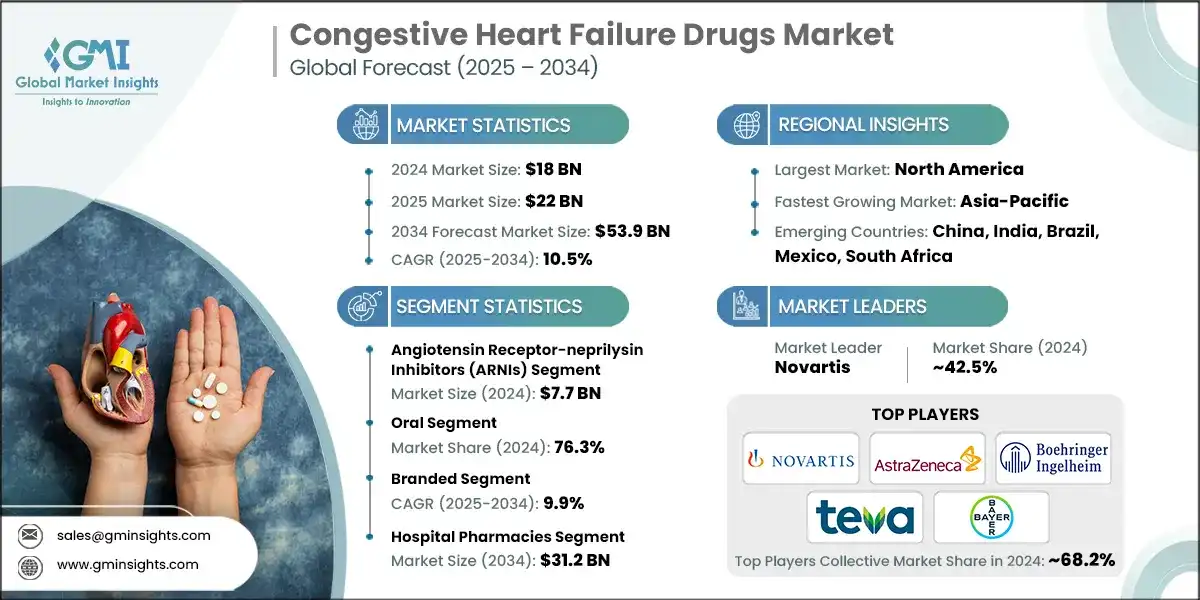
The global Congestive Heart Failure Drugs market was valued at USD 18 billion in 2024. The market is expected to grow from USD 22 billion in 2025 to USD 53.9 billion in 2034, at a CAGR of 10.5% during the forecast period, according to the latest report published by Global Market Insights Inc.
Congestive Heart Failure Drugs Market Key Takeaways
Market Size & Growth
- 2024 Market Size: USD 18 Billion
- 2025 Market Size: USD 22 Billion
- 2034 Forecast Market Size: USD 53.9 Billion
- CAGR (2025–2034): 10.5%
Regional Dominance
- Largest Market: North America
- Fastest Growing Region: Asia Pacific
Key Market Drivers
- Rising prevalence of heart failure.
- Advancements in drug development.
- Increasing awareness and screening.
Challenges
- Stringent regulatory approval.
- High cost of advanced medications.
Opportunity
- Development of novel drug classes.
- Integration of telemedicine and remote monitoring for CHF management.
Key Players
- Market Leader: Novartis led with over 42.5% market share in 2024.
- Leading Players: Top 5 players in this market include Novartis, AstraZeneca, Boehringer Ingelheim, Teva Pharmaceuticals, Bayer, which collectively held a market share of 68.2% in 2024.
Get Market Insights & Growth Opportunities
The market expansion is driven by the increasing worldwide prevalence of heart failure, particularly in the aging population and people with comorbidities such as diabetes, hypertension, and obesity. For instance, according to the World Heart Federation, heart failure is the most common cause of hospitalization globally, with over 64 million people affected by it. The rising prevalence of such lifestyle-related cardiovascular diseases escalates the demand for more effective and cost-efficient treatment for heart failure.
Another primary driver in this market is innovation in pharmacological therapies. Traditional treatment modalities, including ACE inhibitors, angiotensin receptor-neprilysin inhibitors (ARNIs), beta-blockers, and diuretics, remain foundational, however, new treatments are improving clinical outcomes. Supported by innovations and successful clinical trials, these drugs are broadening the therapeutic options and reshaping the management of CHF.
Congestive Heart Failure Drugs are medications that help the heart to pump more efficiently, alleviate symptoms such as shortness of breath and edema, slow disease progression, and improve survival. The global congestive heart failure drugs market is moderately consolidated, with prominent pharmaceutical companies such as AstraZeneca, Novartis, and Boehringer Ingelheim leading the space, while innovation continues to flourish among emerging biotech firms and cardiovascular-focused startups. These major players are at the forefront, leveraging strategic initiatives including acquisitions, clinical collaborations, portfolio expansion, and global market penetration to strengthen their positions and maintain a competitive edge.
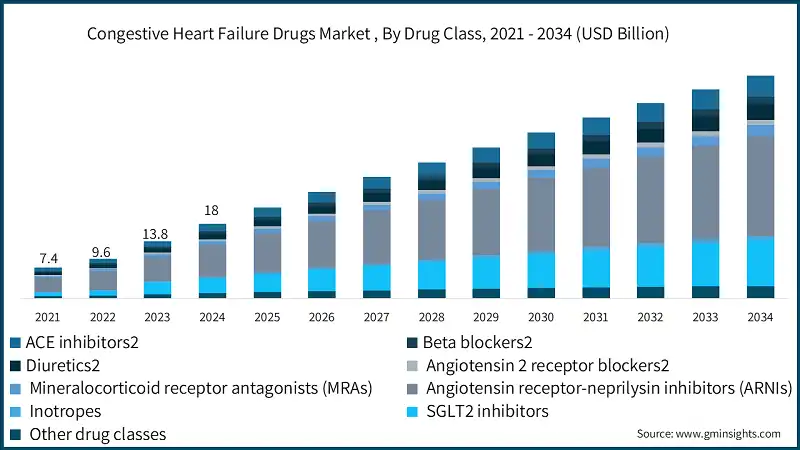
The congestive heart failure drugs market was valued at USD 7.4 billion in 2021 and reached USD 13.8 billion by 2023. The growth during this period can be attributed to the increased global focus on cardiovascular well-being, along with improved CHF diagnostic capabilities and access to healthcare services, especially in developing nations. Furthermore, pharmaceutical companies are now focusing on developing new medications for both acute and chronic heart failure, thus increasing their investment towards research and development.
Congestive Heart Failure Drugs focus on managing and treating the chronic heart failure condition. The heart does not pump blood properly in this condition. Medications do alleviate symptoms and delay the progression of the disease. ACE inhibitors, beta blockers, diuretics, ARNIs and SGLT2 inhibitors are some important classes of drugs. These cardiovascular drugs control high blood pressure, congestion, and the workload on the heart, thereby enabling better performance and efficiency as well as increased effectiveness of the heart.
To get key market trends
Congestive Heart Failure Drugs Market Trends
- The growth of the market is significantly impacted by the rising prevalence of heart failure.
- For instance, an article published by the National Institutes of Health (NIH) states that about 6.7 million Americans over 20 years of age have heart failure, and the figure is expected to come up to 8.5 million by 2030. Furthermore, the lifetime risk of developing heart failure has increased to 24%, which means that approximately one in every four people will get the condition in their lifetime.
- This growing health burden is creating an ongoing need for drug therapies that treat symptoms, diminish the rate of disease progression, and reduce hospitalizations.
- In response, healthcare systems are concentrating on the global need for early detection and ongoing treatment. The paradigm shift has boosted the implementation of pharmacological treatment during all stages of CHF.
- Furthermore, the improved diagnostic capabilities and the routine incorporation of CHF screening into cardiovascular care have enhanced its detection, particularly among the high-risk populations, which in turn is increasing the utilization of CHF treatment among patients.
- Rising investment in research and development (R&D) by the top pharmaceutical companies in terms of CHF drug innovations, such as combination drugs, advanced formulations, and gene-based therapies, is further strengthening the market pipeline.
- Overall, the combination of factors such as the rise in disease prevalence, ongoing therapeutic innovation, improved diagnostics, and more accessible healthcare is expected to sustain robust growth in the market over the coming years.
Congestive Heart Failure Drugs Market Analysis
Learn more about the key segments shaping this market
Based on the drug class, the global Congestive Heart Failure Drugs market is segmented into ACE inhibitors, beta blockers, diuretics, angiotensin 2 receptor blockers, mineralocorticoid receptor antagonists (MRAs), angiotensin receptor-neprilysin inhibitors (ARNIs), inotropes, SGLT2 inhibitors, and other drug classes. The ARNIs segment dominated the market and was valued at USD 7.7 billion in 2024.
- The growth of the ARNI market is largely fueled by the success of Sacubitril/Valsartan (Entresto), which has redefined the treatment of HFrEF. This therapy has not only demonstrated improvements in survival rates but also in overall patients’ health, positioning it as a first-line treatment in many clinical guidelines.
- In addition, the worldwide increase in heart failure incidence, especially the elderly populations, presents an ongoing opportunity for the ARNI segment. Further, the ARNI segment is expected to witness robust expansion due to ongoing research exploring its benefits in heart failure with preserved ejection fraction (HFpEF) and other cardiovascular conditions.
- On the other hand, SGLT2 inhibitors segment accounted for second second-highest market share of 19.6% in 2024.
- Owing to decades of detailed clinical studies and their inclusion as foundational therapy in global treatment guidelines such as American College of Cardiology (ACC)/American Heart Association (AHA) ACC/AHA and European Society of Cardiology (ESC), SGLT2 inhibitors continue to be widely adopted by physicians globally.
- Increasing worldwide prevalence of heart failure, mainly among elderly populations and those with coexisting conditions such as diabetes, hypertension, and chronic kidney disease (CKD), is the major factor behind the growing demand for SGLT2 inhibitors.
- These medications offer a double advantage to patients with both heart failure and diabetes, addressing two of the most common comorbidities that exacerbate heart failure.
Learn more about the key segments shaping this market
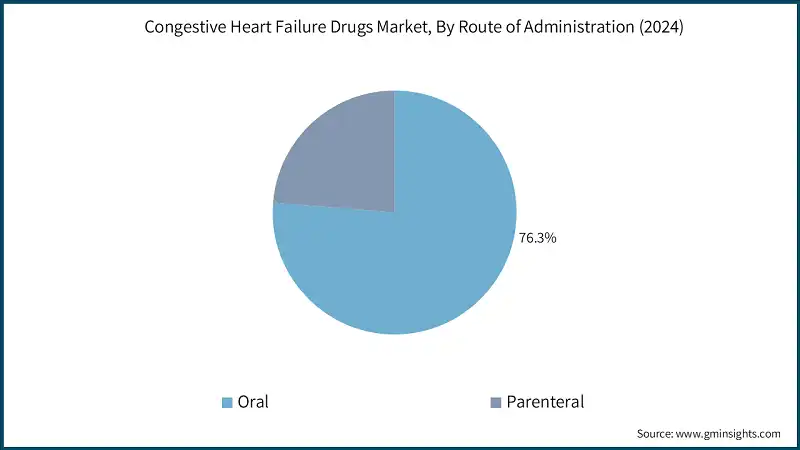
Based on the route of administration, the global Congestive Heart Failure Drugs market is divided into oral and parenteral. The oral segment accounted for 76.3% of the market share in 2024.
- Oral formulations are easy to administer, thus making them a preferred choice by patients undergoing long-term treatment. This improves compliance, especially in chronic diseases such as congestive heart failure (CHF), where patients often require lifelong treatment.
- Moreover, most of the drugs for CHF that are prescribed, such as ACE inhibitors, beta-blockers, angiotensin II receptor blockers (ARBs), mineralocorticoid receptor antagonists (MRAs), SGLT2 inhibitors, and ivabradine, are readily available in oral form, thus supporting the growth of this segment.
- Additionally, oral medications, particularly generics, are usually less expensive than injectable ones. This cost-saving measure has led to increased use of oral formulations in both developed and emerging healthcare markets.
- On the other hand, the parenteral segment accounted for 23.7% of the market share in the global congestive heart failure drugs market.
- The growth of the parenteral segment is mainly due to the rapid onset of action that injectable drugs offer. Parenteral administration, like intravenous (IV) or subcutaneous injections, lets drugs enter the bloodstream directly, thus giving immediate therapeutic effects. This is especially important in acute decompensated heart failure (ADHF), where quick stabilization is crucial to prevent life-threatening complications.
Based on the type, the global Congestive Heart Failure Drugs market is segmented into branded and generic. The branded segment is expected to grow at a 9.9% CAGR during the forecast timeframe. The growth is fueled by the launch of new and innovative, patent-protected therapies like SGLT2 inhibitors and other drugs. Whereas the generic segment is expected to grow at a 11.5% CAGR over the analysis period. The growth of this segment is mainly driven by the cost-effectiveness of the generic drugs. Generic drugs are marketed at a substantially lower price than the corresponding branded ones, thus making them a highly attractive choice for patients, medical practitioners, and insurance companies, particularly in markets where cost containment is a priority.
- Increasing demand for branded drugs is driven by the advantages they offer over generic drugs, such as proven significant improvements in clinical outcomes.
- Moreover, branded drugs benefit from strong physician preference because of their safety, which is well documented due to extensive clinical trial data.
- The marketing efforts by pharmaceutical companies, coupled with rising health care spending, particularly in developed countries, further strengthen this segment's growth.
Based on the distribution channel, the global Congestive Heart Failure Drugs market is classified into hospital pharmacies, retail pharmacies, and online pharmacies. The hospital pharmacies segment is anticipated to reach USD 31.2 billion by 2034.
- Hospital pharmacies are important as they provide treatment such as intravenous drugs, inotropes, and other specialized therapies for these critically ill patients, which are usually not dispensed in outpatient settings.
- Due to heart failure becoming more common, especially among older patients, the demand for these medications within the hospital setting is anticipated to surge greatly.
- Additionally, the growing complexity of CHF treatment regimens and the increasing use of novel, high-cost therapies, such as SGLT2 inhibitors, will further propel the growth of the hospital pharmacies segment.
- On the other hand, the online pharmacies segment is expected to grow at a 10.8% CAGR over the analysis period, driven by the rising adoption of digital health platforms, increasing internet penetration, and growing consumer preference for convenient and contactless medication purchases.
- The shift toward e-commerce in the pharmaceutical industry has been accelerated by greater awareness of chronic disease management, including congestive heart failure, and the convenience offered by online channels in terms of home delivery, price transparency, and medication reminders.
Looking for region specific data?
North America Congestive Heart Failure Drugs Market
The North CHF drugs market dominated the market with a market share of 53.9% in 2024.
- North America's advanced healthcare infrastructure plays a crucial role in supporting the market. The U.S. healthcare system provides access to a wide range of specialized services for heart failure patients, with hospitals and clinics equipped to deliver the latest in CHF treatments, from inotropes to SGLT2 inhibitors.
- Additionally, the Centers for Medicare & Medicaid Services (CMS) in the U.S. has implemented various initiatives aimed at improving the care and treatment of heart failure patients, ensuring that newer, more effective drugs are accessible to a broader population.
- The integration of telemedicine and home care services further boosts accessibility, ensuring better management of chronic conditions like heart failure.
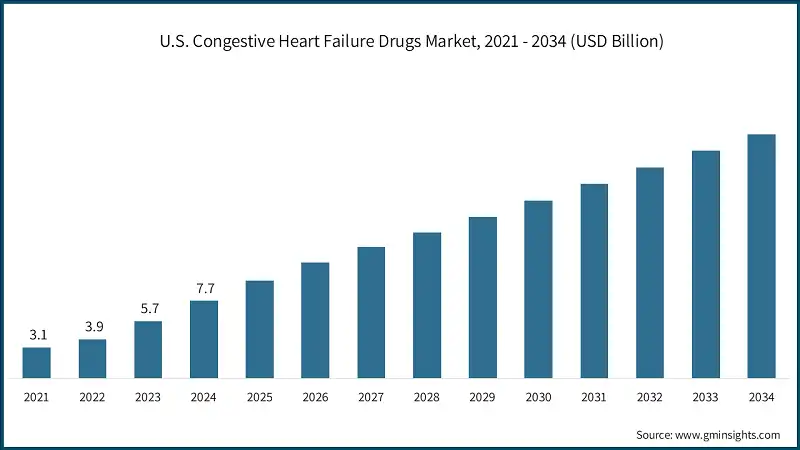
The U.S. congestive heart failure drugs market was valued at USD 3.1 billion in 2021. In 2024, the U.S. dominated the North America Congestive Heart Failure Drugs market with a revenue of USD 7.7 billion, growing from USD 5.7 billion in 2023 and USD 3.9 billion in 2022.
- This growth can be attributed to the high prevalence of heart failure in the country. For instance, according to the Centers for Disease Control and Prevention, in 2022, heart failure caused 457,212 deaths, accounting for 13.9% of all causes of death in the U.S. Such a high patient volume in the country increases the demand for effective medications for CHF.
- Furthermore, the U.S. healthcare system offers easy access to medications for CHF, with reimbursement from private and public insurance programs, thus ensuring widespread access to CHF medications.
Europe Congestive Heart Failure Drugs Market
Europe market was valued at USD 5.3 billion in 2024 and is expected to reach USD 15.1 billion by 2034, reflecting steady growth driven by a combination of demographic, epidemiological and healthcare-system factors.
- In the European Union alone, more than 10 million people are believed to live with heart failure. This epidemiological burden is underpinned by the fact that cardiovascular diseases remain the leading cause of death and disability in the region. For example, in the WHO European Region, CVDs were responsible for 42.5% of all deaths in 2019, and more than 10,000 people die each day from these diseases.
- These numbers create a strong and growing demand for effective CHF pharmacotherapies across primary, outpatient and hospital settings.
Germany congestive heart failure drugs market is expected to experience substantial growth in the Europe market in the coming years.
- The increasing number of aging populations in the country is associated with the growing prevalence of heart failure.
- With the population aging, the incidence of heart failure is likely to become more common, which will augment the need for effective drug therapies.
- Additionally, Germany’s well-established healthcare system ensures that CHF drugs, including both established therapies and newer innovations like SGLT2 inhibitors, are widely accessible.
Asia Pacific Congestive Heart Failure Drugs Market
- The Asia Pacific market is experiencing rapid growth, propelled by the region’s rising prevalence of cardiovascular risk factors, such as hypertension, diabetes, obesity, and aging populations, which is significantly increasing the clinical burden of heart failure.
- Expanded access to healthcare, improving diagnostic capabilities, and greater physician awareness are driving earlier identification and treatment of CHF across emerging markets, including China, India, and Southeast Asia.
- Additionally, economic development and urbanization are shifting healthcare expenditure toward chronic disease management, further supporting growth.
The CHF drugs market in India is anticipated to witness significant growth in the Asia Pacific market during the forecast period.
- The market expansion is assisted by the surging prevalence of heart-related issues, coupled with high population age, and the exacerbating impact of lifestyle diseases such as diabetes, high blood pressure, and obesity, which are all significant factors of heart failure.
- Increased awareness and education, developing healthcare systems, and wider availability of insurance are enhancing access to both traditional and innovative therapies for CHF.
- Furthermore, the presence of local pharmaceutical companies manufacturing cost-effective generics, in combination with government policies prioritizing the management of chronic diseases, is increasing the availability of CHF treatment options to a broader patient base.
Latin America Congestive Heart Failure Drugs Market
Brazil is projected to see notable expansion in the Latin America CHF drugs market throughout the analysis period.
- According to the American Heart Association, in 2019, Brazil recorded over 222,000 hospital admissions because of heart failure, highlighting the escalating economic strain and health burden of cardiovascular diseases.
- Thus, effective treatment options for CHF are in high demand due to this rising prevalence.
- Furthermore, advancements in the healthcare system, heightened awareness, and government programs aimed at improving the availability of cardiac care increase the demand for CHF drugs in the country.
Middle East and Africa Congestive Heart Failure Drugs Market
The Saudi Arabia CHF drugs is anticipated to witness substantial growth in the Middle East and Africa market over the forecast period.
- The country is experiencing a steady rise in non-communicable diseases such as diabetes, hypertension, and obesity, key risk factors for congestive heart failure.
- With a continuously ageing population and the urbanization of regions, the prevalence of heart failure is likely to grow, which will subsequently elevate the need for sustained drug therapy.
- As part of Vision 2030, Saudi Arabia is also focusing on restructuring the cardiovascular healthcare system, which provides specialized services and advanced diagnostic tools and improves general health literacy to the public. All these factors will support the growth of the Saudi Arabia market.
Congestive Heart Failure Drugs Market Share
The market is characterized by the presence of several well-established pharmaceutical companies competing across diverse drug classes, including ACE inhibitors, beta blockers, diuretics, aldosterone antagonists, SGLT2 inhibitors, and ARNI therapies. The top 5 players in this market, such as Novartis, AstraZeneca, Bayer, Boehringer Ingelheim, and Teva Pharmaceuticals account for approximately 68.2% of the market share in the global market.
These companies focus heavily on clinical research, strategic partnerships, and geographical expansion to maintain a competitive advantage. Innovation, regulatory approvals, and real-world evidence will continue to shape market dynamics and influence leadership in this space.
Congestive Heart Failure Drugs Market Companies
Some of the prominent players operating in the Congestive Heart Failure Drugs industry include:
- Alnylam Pharmaceuticals
- Amgen
- AstraZeneca
- Bayer
- Boehringer Ingelheim International
- Bristol-Myers Squibb Company
- Eli Lilly and Company
- GlaxoSmithKline
- Johnson & Johnson
- Merck
- Novartis
- Otsuka Pharmaceutical
- Pfizer
- Sanofi
- Teva Pharmaceutical Industries
- Novartis
Novartis remains a dominant force in the Congestive Heart Failure Drugs market, accounting for ~42.5% of the market share, with its breakthrough ARNI therapy, ENTRESTO (sacubitril/valsartan), which is widely recognized as a foundational treatment for HFrEF. Supported by robust clinical evidence demonstrating reduced hospitalization and mortality, Novartis continues to expand its presence through real-world outcome studies, global market penetration, and development of next-generation heart failure solutions. Its strong cardiovascular pipeline and investments in precision medicine further solidify its leadership position in advancing comprehensive CHF management.
AstraZeneca is a frontrunner in the Congestive Heart Failure Drugs market with its SGLT2 inhibitor, FARXIGA (dapagliflozin), which is approved for both HFrEF and HFpEF. Backed by large-scale trials, the drug has demonstrated reduced hospitalization and mortality. AstraZeneca’s integrated cardiometabolic strategy and strong global presence allow it to lead CHF treatment innovation across a wide patient population, especially those with coexisting diabetes and heart failure.
Boehringer Ingelheim, in partnership with Eli Lilly, drives CHF drugs innovation through the SGLT2 inhibitor JARDIANCE (empagliflozin), proven effective in both HFrEF and HFpEF patients. With extensive clinical trial data highlighting reduced cardiovascular death and hospitalization, the company continues to broaden its cardiometabolic portfolio. Its collaborative research approach, patient-centric development strategy, and global expansion efforts strengthen Boehringer Ingelheim’s competitive standing across emerging and established CHF drug markets.
Congestive Heart Failure Drugs Market Report Attributes
| Key Takeaway | Details |
|---|---|
| Market Size & Growth | |
| Base Year | 2024 |
| Market Size in 2024 | USD 18 Billion |
| Market Size in 2025 | USD 22 Billion |
| Forecast Period 2025 - 2034 CAGR | 10.5% |
| Market Size in 2034 | USD 53.9 Billion |
| Key Market Trends | |
| Drivers | Impact |
| Rising prevalence of heart failure | The increasing global burden of heart failure, fueled by aging populations and lifestyle diseases, significantly boosts demand for effective and advanced CHF treatments. |
| Advancements in drug development | Advancements in drug development introduce safer, more effective therapies, increasing treatment options and accelerating market demand for CHF medications. |
| Increasing awareness and screening | Increasing awareness and screening enable earlier diagnosis of heart failure, boosting demand for CHF drugs and improving treatment uptake. |
| Pitfalls & Challenges | Impact |
| Stringent regulatory approval | Strict clinical trial requirements and lengthy approval processes for new CHF drugs delay product launches, increasing development costs and hindering faster market expansion. |
| High cost of advanced medications | The elevated prices of innovative CHF drugs, including ARNI and SGLT2 inhibitors, limit accessibility and affordability, particularly in low- and middle-income regions. |
| Opportunities: | Impact |
| Development of novel drug classes | Emerging therapies like SGLT2 inhibitors and gene-based treatments offer improved outcomes, expanding treatment options and fueling innovation within the congestive heart failure drug market. |
| Integration of telemedicine and remote monitoring for CHF management | Adoption of digital health tools enables continuous patient monitoring, early symptom detection, and improved medication adherence, enhancing treatment effectiveness and supporting Congestive Heart Failure Drugs market growth. |
| Market Leaders (2024) | |
| Market Leaders |
~42.5% market share |
| Top Players |
|
| Competitive Edge |
|
| Regional Insights | |
| Largest Market | North America |
| Fastest growing market | Asia Pacific |
| Emerging countries | China, India, Brazil, Mexico, South Africa |
| Future outlook |
|
What are the growth opportunities in this market?
Congestive Heart Failure Drugs Industry News
- In May 2025, Alnylam Pharmaceuticals announced FDA approval of its sNDA for AMVUTTRA (vutrisiran) to treat cardiomyopathy caused by wild-type or hereditary transthyretin-mediated amyloidosis (ATTR-CM) in adults, aiming to reduce cardiovascular deaths, hospitalizations, and urgent heart failure visits. The approval enhances Alnylam’s presence in the cardiovascular RNAi market and is set to boost its commercial growth.
- In March 2024, Novo Nordisk acquired Cardior Pharmaceuticals. This acquisition enhanced Novo Nordisk’s pipeline in cardiovascular therapies, strengthening its position in heart failure and RNA-based treatment innovation.
- In February 2023, The European Commission approved Forxiga (dapagliflozin) for the treatment of symptomatic chronic heart failure across the full spectrum of left ventricular ejection fraction (LVEF), based on results from the DELIVER and DAPAHF trials.
- In September 2021, the U.S. FDA granted breakthrough therapy designation to Jardiance (empagliflozin) as an investigational treatment for adults with heart failure with preserved ejection fraction (HFpEF), as announced by Boehringer Ingelheim and Eli Lilly and Company. This designation supports accelerated development and review, positioning the companies to strengthen their leadership in the growing heart failure therapeutics market.
The Congestive Heart Failure Drugs market research report includes in-depth coverage of the industry with estimates and forecast in terms of revenue in USD Billion from 2021 – 2034 for the following segments:
Market, By Drug Class
- ACE inhibitors
- Beta blockers
- Diuretics
- Angiotensin 2 receptor blockers
- Mineralocorticoid receptor antagonists (MRAs)
- Angiotensin receptor-neprilysin inhibitors (ARNIs)
- Inotropes
- SGLT2 inhibitors
- Other drug classes
Market, By Route of Administration
- Oral
- Parenteral
Market, By Type
- Branded
- Generic
Market, By Distribution Channel
- Hospital pharmacies
- Retail pharmacies
- Online pharmacies
The above information is provided for the following regions and countries:
- North America
- U.S.
- Canada
- Europe
- Germany
- UK
- France
- Spain
- Italy
- Netherlands
- Asia Pacific
- China
- Japan
- India
- Australia
- South Korea
- Latin America
- Brazil
- Mexico
- Argentina
- Middle East and Africa
- Saudi Arabia
- South Africa
- UAE
Frequently Asked Question(FAQ) :
What was the market size of the congestive heart failure drugs market in 2024?
The market size was USD 18 billion in 2024, with a CAGR of 10.5% expected through 2034, driven by the rising prevalence of heart failure and the growing demand for effective drug therapies.
What is the projected value of the Congestive Heart Failure Drugs market by 2034?
The market is expected to reach USD 53.9 billion by 2034, fueled by advancements in drug development, increasing awareness, and the introduction of innovative therapies.
What is the projected size of the congestive heart failure drugs industry in 2025?
The market is expected to reach USD 22 billion in 2025.
How much revenue did the ARNIs segment generate?
The ARNIs segment generated USD 7.7 billion in 2024, dominating the global Congestive Heart Failure Drugs market.
What was the market share of the oral route of administration segment?
The oral route of administration accounted for 76.3% of the market share in 2024.
Which segment is expected to grow faster, branded or generic drugs?
The generic drugs segment is expected to grow faster, with a CAGR of 11.5% during the forecast period, compared to the branded segment's CAGR of 9.9%. The growth of generic drugs is primarily driven by their cost-effectiveness.
What is the projected valuation of the hospital pharmacies segment by 2034?
The hospital pharmacies segment is anticipated to reach USD 31.2 billion by 2034.
Which region leads the congestive heart failure drugs industry?
North America dominated the global market with a 53.9% market share in 2024, driven by advanced healthcare infrastructure and high disease prevalence.
What are the key trends in the congestive heart failure drugs market?
Key trends include the increasing prevalence of heart failure, the rising demand for therapies that reduce hospitalizations and slow disease progression, and the growing adoption of cost-effective generic drugs.
Congestive Heart Failure Drugs Market Scope
Related Reports