Summary
Table of Content

Camelina Oil Market
Get a free sample of this report
Form submitted successfully!
Error submitting form. Please try again.
Thank you!
Your inquiry has been received. Our team will reach out to you with the required details via email. To ensure that you don't miss their response, kindly remember to check your spam folder as well!
Request Sectional Data
Thank you!
Your inquiry has been received. Our team will reach out to you with the required details via email. To ensure that you don't miss their response, kindly remember to check your spam folder as well!
Form submitted successfully!
Error submitting form. Please try again.
Camelina Oil Market Size
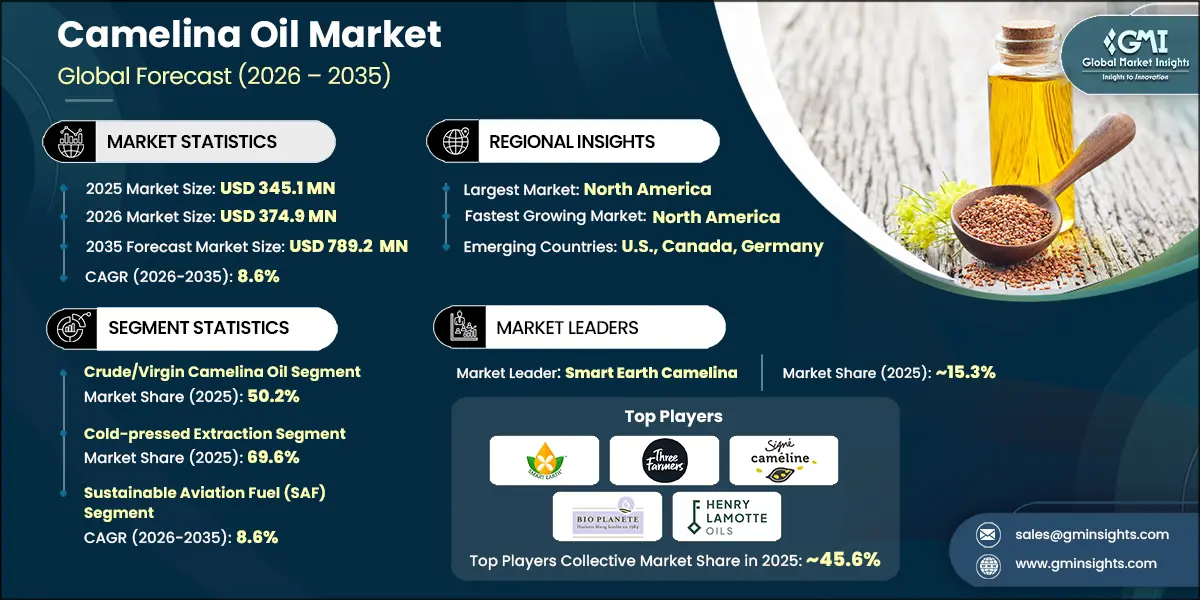
The global camelina oil market was valued at USD 345.1 million in 2025. The market is expected to grow from USD 374.9 million in 2026 to USD 789.2 million in 2035, at a CAGR of 8.6%, according to latest report published by Global Market Insights Inc.
Camelina Oil Market Key Takeaways
Market Size & Growth
- 2025 Market Size: USD 345.1 Million
- 2026 Market Size: USD 374.9 Million
- 2035 Forecast Market Size: USD 789.2 Million
- CAGR (2026–2035): 8.6%
Regional Dominance
- Largest Market: North America
- Fastest Growing Region: North America
Key Market Drivers
- Explosive sustainable aviation fuel market growth & renewable energy mandates.
- Climate-smart agriculture initiatives & sustainable farming adoption.
- Omega-3 nutrition market expansion & plant-based supplement growth.
Challenges
- Limited cultivation acreage & supply chain infrastructure constraints.
- Feedstock competition & price volatility from alternative oilseeds.
Opportunity
- Next-generation SAF technologies & advanced biofuel pathways.
- Sustainable feedstock certification & carbon credit monetization.
Key Players
- Market Leader: Smart Earth Camelina led with over 15.3% market share in 2025.
- Leading Players: Top 5 players in this market include Smart Earth Camelina, Three Farmers/Canpressco, Olimega/Signé Caméline, BioPlanète, Henry Lamotte Oils, which collectively held a market share of 45.6% in 2025.
Get Market Insights & Growth Opportunities
- Camelina oil is a versatile oilseed-derived product extracted from Camelina sativa seeds, primarily produced through cold-pressed extraction, solvent extraction, and mechanical pressing processes. Available in various Products including crude/virgin camelina oil, refined camelina oil, organic camelina oil, and conventional camelina oil, with omega-3 fatty acid content ranging from 30-40% and exceptional oxidative stability, this sustainable oil serves as a critical feedstock for sustainable aviation fuel (SAF), biodiesel production, renewable diesel, edible applications, and as an eco-friendly alternative to traditional vegetable oils in industrial and nutritional applications.
- Currently, North America dominates the camelina oil market, accounting for approximately 31.7% of global market value in 2025, driven by established sustainable aviation fuel initiatives, robust biofuel mandates, and mature agricultural infrastructure supporting low-input oilseed crop cultivation for renewable energy applications. Asia Pacific and Europe represent significant market regions with expanding renewable energy adoption and sustainable agriculture programs, while Latin America and Middle East & Africa maintain growing market presence with increasing interest in drought-resistant oilseed crops and sustainable fuel alternatives.
- Sustainable Aviation Fuel (SAF) applications represent the largest segment, accounting for approximately 38.1% of the market, reflecting the dominant role of camelina oil as a key feedstock in aviation biofuel production for commercial airlines, cargo carriers, and military aviation globally, driven by ambitious carbon reduction targets and sustainable fuel mandates, followed by biodiesel and renewable diesel. Among Products, crude/virgin camelina oil leads with approximately 50.2% market share, followed by refined camelina oil and organic camelina oil, reflecting the preference for minimally processed feedstocks in biofuel applications and the growing demand for cold-pressed variants in premium food and supplement markets.
- The convergence of accelerating sustainable aviation fuel adoption, expanding renewable diesel production, and growing demand for omega-3 nutritional products creates a dynamic environment for the global market. As producers invest in advanced extraction technologies, sustainable farming practices, and capacity expansion to meet surging SAF feedstock demand, the market continues to evolve, ensuring sustained global demand across diverse end-user sectors and geographic markets.
To get key market trends
Camelina Oil Market Trends
- Advanced extraction technologies and cold-pressed processing optimization are revolutionizing camelina oil production, enabling processors to achieve exceptional oil quality with preserved omega-3 content exceeding 35%, enhanced oxidative stability through controlled temperature processing, and improved yield efficiency meeting stringent sustainable aviation fuel feedstock specifications. These technological improvements address critical quality requirements for demanding applications in aviation biofuels, premium edible oils, and pharmaceutical-grade supplements, significantly enhancing fatty acid profile retention and reducing degradation through advanced mechanical pressing, enzyme-assisted extraction, and supercritical CO₂ processes.
- The sustainability transformation is reshaping the camelina oil industry as producers demonstrate increasing commitment to environmental responsibility through regenerative agriculture practices, carbon-negative cultivation methods, and circular economy initiatives including seed meal valorization for animal feed and bioplastics. This shift encourages investment in climate-smart farming systems, cover crop integration, and low-input agricultural models, with several major producers implementing comprehensive lifecycle assessment programs to address climate change concerns, document carbon intensity reductions below 20 gCO₂e/MJ for SAF applications, and meet stakeholder expectations for sustainable feedstock production aligned with global aviation decarbonization goals.
- Strategic vertical integration between airlines and camelina oil producers is creating stable supply patterns and optimizing value chain efficiency across the sustainable aviation fuel ecosystem. These integrated operations enable coordinated production planning with downstream SAF refineries and upstream farming cooperatives, improved sustainability verification through direct agricultural oversight, and reduced supply chain risks, positioning vertically integrated producers with competitive advantages in supply reliability, carbon intensity documentation capabilities, and cost structure compared to standalone camelina processors serving spot feedstock markets.
- Geographic capacity expansion in North America camelina oil market, particularly in the United States and Canada, is fundamentally reshaping global camelina oil supply dynamics, with significant crushing and processing capacity additions generating increased availability to serve rapidly growing regional sustainable aviation fuel, renewable diesel, and functional food industries. These investments reduce feedstock import dependence for regional SAF producers, improve supply chain responsiveness for just-in-time delivery requirements, and enable closer technical collaboration with airlines and renewable fuel refineries in high-growth SAF production clusters, while creating competitive pressure on European producers to expand regional cultivation and processing footprints.
- Application diversification beyond traditional biofuel feedstocks is emerging as a critical growth strategy, with camelina oil gaining traction as a premium omega-3 source in dietary supplements, a sustainable ingredient in cosmetics and personal care formulations, an industrial lubricant base stock for biodegradable applications, and a functional food ingredient for heart-health products. This trend addresses evolving requirements in plant-based nutrition, clean beauty formulations, and bio-based industrial products, enabling market resilience against biofuel policy cyclicality and creating multiple demand drivers through penetration of aquaculture feed supplements, polymer precursor applications, and specialty coating systems requiring high-performance renewable oils with exceptional oxidative stability and nutritional profiles.
Camelina Oil Market Analysis
Learn more about the key segments shaping this market
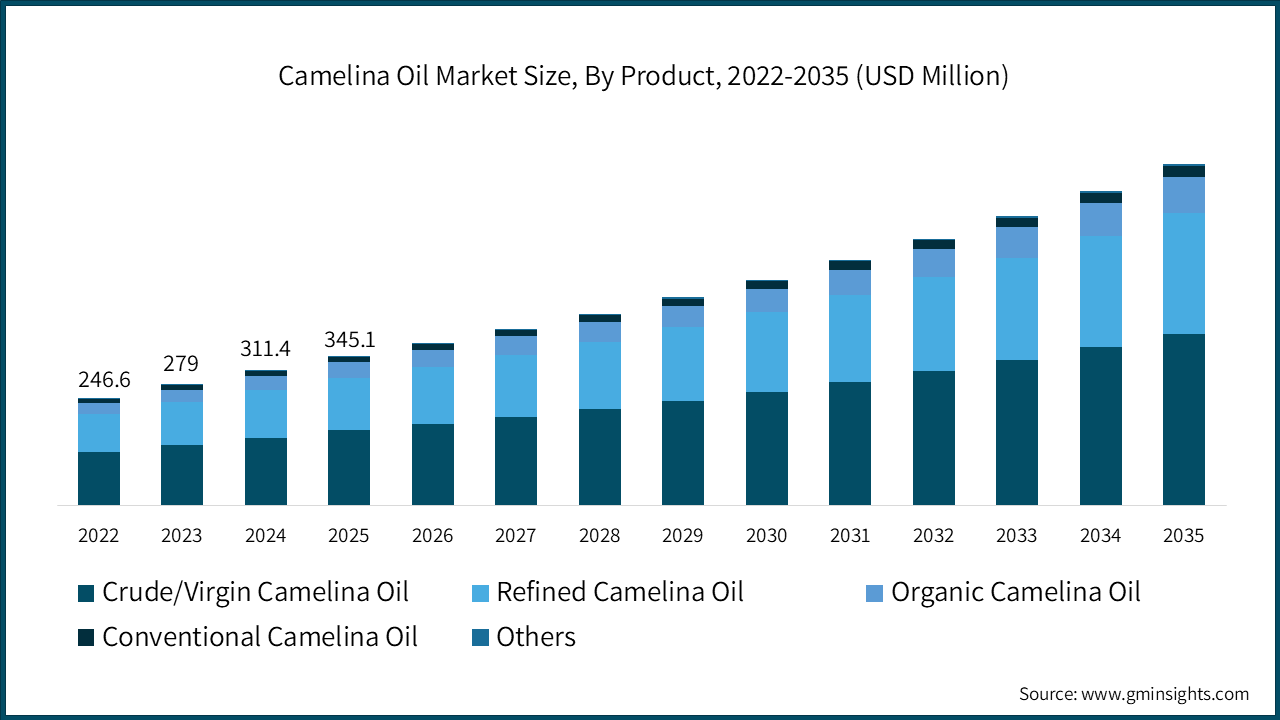
Based on Product, the camelina oil market is segmented into crude/virgin camelina oil, refined camelina oil, organic camelina oil, conventional camelina oil, and others. Crude/virgin camelina oil dominated the market with an approximate market share of 50.2% in 2025 and is expected to grow with a CAGR of 8.6% from 2026 to 2035.
- Crude/virgin camelina oil dominates due to its critical role as the preferred feedstock for sustainable aviation fuel (SAF) and biodiesel production, superior retention of natural omega-3 fatty acids and antioxidants enabling premium nutritional applications, and minimal processing requirements reducing production costs while maintaining essential fatty acid profiles. This Product provides optimal performance in biofuel conversion processes through hydroprocessing and transesterification, preserves natural tocopherols and phytosterols valuable for dietary supplement applications, and meets ASTM D7566 specifications for SAF feedstock with appropriate fatty acid methyl ester (FAME) composition. Its established position in major biofuel production regions including North America and Europe, coupled with proven technical performance across diverse renewable fuel pathways (HEFA-SPK, renewable diesel), solidifies its leading market position driven by global sustainable aviation fuel mandates and renewable energy standard compliance.
- Organic camelina oil represents the fastest-growing segment with a CAGR of 8.8% from 2026 to 2035, driven by increasing consumer demand for certified organic nutritional products, expanding organic food and supplement markets in developed economies, and growing premium positioning in cosmetics and personal care applications. Advanced organic cultivation practices enable camelina oil meeting USDA Organic, EU Organic, and international certification standards with documented traceability, pesticide-free production methods, and sustainable farming verification. Growing consumer emphasis on clean label products, increasing organic retail channel expansion, and technological improvements in organic seed varieties with enhanced yield potential drive accelerating adoption, particularly in North America and Europe with established organic certification infrastructure and strong consumer willingness to pay premium prices for verified organic ingredients.
- Refined camelina oil occupies a significant segment with 35.3% market share in 2025, serving applications in food manufacturing, cosmetic formulations, and industrial processes where neutral flavor profiles, extended shelf life, and standardized specifications are prioritized over minimal processing. This Product provides consistent quality through degumming, neutralization, bleaching, and deodorization processes, enabling broader food applications including salad dressings, cooking oils, and bakery ingredients where crude oil's distinctive flavor would be undesirable. Its established market presence in food processing and personal care manufacturing maintains steady consumption supported by a CAGR of 8.7% through 2035, with growth driven by functional food product development, increasing omega-3 fortification in conventional food products, and cosmetic applications requiring stable, odorless oil bases for skin care and hair care formulations.
- Conventional camelina oil maintains a 3.5% market share in 2025 with a CAGR of 7.9%, serving cost-sensitive industrial applications, animal feed supplementation, and bulk biofuel feedstock markets where organic certification premiums are not justified by end-use requirements. This segment benefits from established agricultural supply chains, economies of scale in conventional farming operations, and lower production costs enabling competitive positioning in price-sensitive markets including industrial lubricant bases and animal nutrition applications.
Based on extraction/processing method, the camelina oil market is segmented into cold-pressed extraction, solvent extraction, and others. Cold-pressed extraction dominated the market with an approximate market share of 69.6% in 2025 and is expected to grow with a CAGR of 8.7% from 2026 to 2035.
- Cold-pressed extraction dominates due to its superior preservation of heat-sensitive omega-3 fatty acids (alpha-linolenic acid) and natural antioxidants, chemical-free processing meeting clean label consumer preferences and organic certification requirements, and premium quality positioning enabling higher value realization in nutritional and cosmetic applications. This extraction method provides optimal retention of bioactive compounds including tocopherols, carotenoids, and phytosterols essential for dietary supplement efficacy, maintains low free fatty acid levels and peroxide values ensuring extended shelf stability, and delivers characteristic nutty flavor profiles valued in gourmet food applications. Its established dominance in premium market segments including organic supplements, functional foods, and natural cosmetics, coupled with growing consumer demand for minimally processed ingredients and sustainable production methods, solidifies its leading position driven by health-conscious consumer trends and premium product positioning strategies across food, nutrition, and personal care industries.
- Solvent extraction represents the fastest-growing segment with a CAGR of 9.0% from 2026 to 2035, driven by superior oil yield efficiency (95-98% extraction rates) critical for large-scale biofuel feedstock production, cost-effectiveness enabling competitive pricing in commodity applications, and established infrastructure in oilseed processing facilities supporting rapid capacity scaling. Advanced solvent extraction technologies using hexane or supercritical CO₂ enable maximum oil recovery from camelina seeds, reducing feedstock costs per unit of oil produced and improving economic viability for sustainable aviation fuel and biodiesel applications where margins are constrained by petroleum fuel price competition. Growing biofuel production capacity, increasing emphasis on feedstock cost optimization, and technological improvements in solvent recovery systems minimizing environmental impact drive accelerating adoption, particularly in large-scale crushing facilities serving renewable fuel refineries where extraction efficiency directly impacts profitability and feedstock supply economics.
- Other extraction methods occupy 5.9% market share in 2025, including enzyme-assisted extraction, aqueous extraction, and emerging technologies such as pulsed electric field and ultrasound-assisted processes. This segment serves specialized applications requiring specific oil characteristics, research and development activities exploring novel processing technologies, and niche markets valuing unique extraction approaches. With a CAGR of 5.3% through 2035, growth is supported by technological innovation in green extraction methods, increasing interest in enzyme-based processes reducing energy consumption, and development of hybrid extraction systems combining multiple technologies for optimized yield and quality outcomes in specialty oil production.
Learn more about the key segments shaping this market
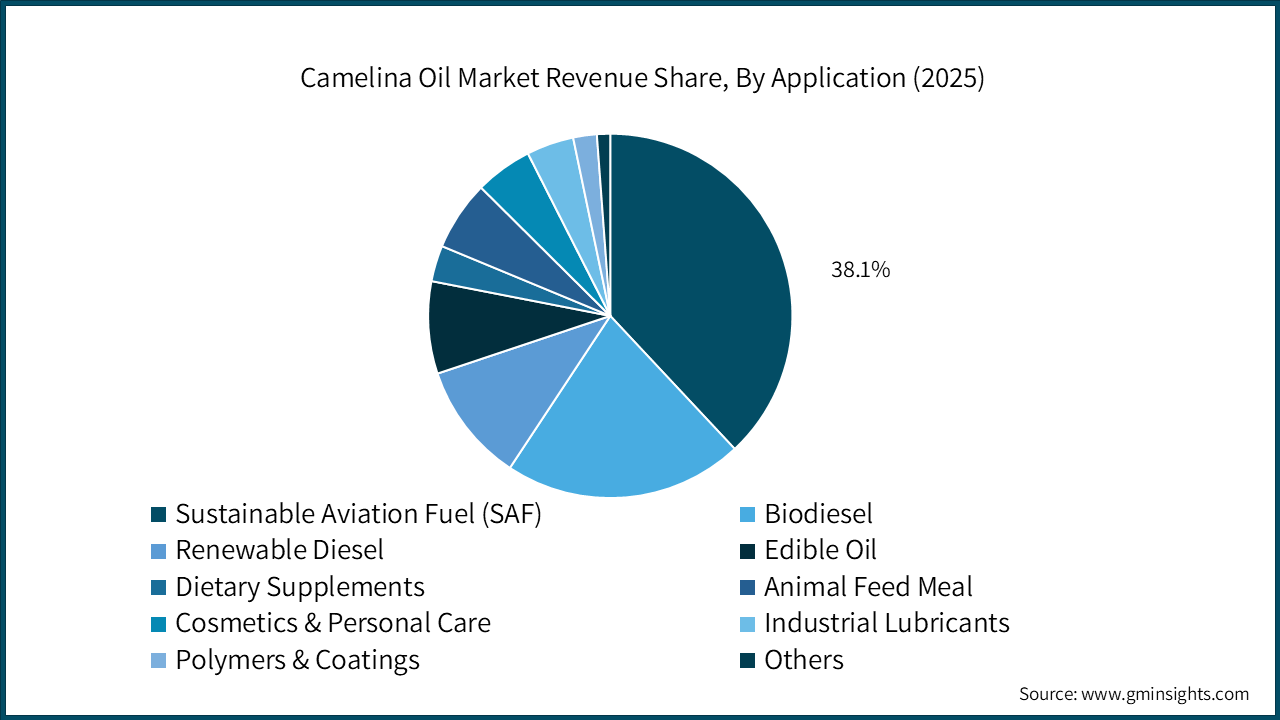
Based on application, the camelina oil market is segmented into sustainable aviation fuel (SAF), biodiesel, renewable diesel, edible oil, dietary supplements, animal feed meal, cosmetics & personal care, industrial lubricants, polymers & coatings, and others. Sustainable Aviation Fuel (SAF) dominated the market with an approximate market share of 38.1% in 2025 and is expected to grow with a CAGR of 8.6% from 2026 to 2035.
- Sustainable Aviation Fuel (SAF) dominates due to camelina oil's exceptional suitability for hydroprocessed esters and fatty acids (HEFA) pathway meeting ASTM D7566 specifications, superior lifecycle carbon intensity reduction (60-75% versus conventional jet fuel), and approved blending up to 50% in commercial aviation. This application provides critical decarbonization pathway for aviation industry targeting net-zero by 2050, addresses airline commitments with multi-year offtake agreements, and benefits from supportive policies including U.S. SAF Grand Challenge, EU ReFuelEU Aviation, and CORSIA requirements. Its dominant position reflects urgent industry need for scalable alternatives, proven commercial flight performance, and favorable cultivation on marginal lands not competing with food production.
- Renewable diesel represents the fastest-growing segment with a CAGR of 9.0% from 2026 to 2035, driven by rapid refinery capacity expansion, superior fuel characteristics (high cetane, excellent cold-weather performance), and strong policy support through Low Carbon Fuel Standards and RFS credits. Camelina-based renewable diesel delivers drop-in compatibility, higher carbon intensity reduction scores improving regulatory credit values, and co-processing capability with petroleum feedstocks. Growing production capacity in North America, recognition of camelina's advantageous fatty acid profile, and expanding transportation market penetration drive accelerating adoption.
- The camelina oil market from biodiesel occupies 21.3% share in 2025, serving FAME production through transesterification, providing renewable fuel mandate compliance, and delivering proven diesel engine performance. This application benefits from mature production infrastructure, established blending channels, and regulatory frameworks including U.S. RFS and EU RED. With 8.5% CAGR through 2035, growth is supported by continued mandate implementation, increasing B20+ blend adoption, and camelina's favorable oxidative stability.
- Edible oil applications represent 8.1% market share with 8.7% CAGR, driven by exceptional omega-3 content (30-40% alpha-linolenic acid) as premium plant-based alternative, favorable omega-3 to omega-6 ratios, and culinary applications in gourmet cooking and functional foods. Benefits include clean label appeal, non-GMO positioning, and nutritional superiority supporting premium pricing.
- Dietary supplements maintain 3.2% market share with 9.0% CAGR, serving plant-based omega-3 market as vegan alternative to fish oil, addressing marine sustainability concerns and heavy metal contamination issues, while providing ALA for cardiovascular health and anti-inflammatory benefits. Growth driven by expanding vegan demographics and product innovation in softgel, liquid, and powder formats.
- Animal feed meal represents 6.2% market share with 8.3% CAGR, utilizing camelina seed meal as high-protein livestock and aquaculture feed, providing omega-3 enrichment in eggs, dairy, and farmed fish. This application creates valuable co-product revenue, improves production economics, and addresses sustainable aquaculture feed demand.
- Cosmetics & personal care occupy 5.1% market share with 8.4% CAGR, leveraging rich vitamin E content, excellent skin absorption, and anti-aging benefits in premium formulations. Growth driven by clean beauty trends, natural ingredient preferences, and functional benefits including moisturization and skin barrier repair.
- Industrial lubricants represent 4.2% market share with 8.2% CAGR, serving bio-based formulations, metalworking fluids, and hydraulic oils prioritizing biodegradability and renewable sourcing. Benefits include regulatory pressure reducing petroleum-based lubricants and environmental advantages in forestry and marine applications.
- Polymers & coatings maintain 2.1% market share with 8.3% CAGR, utilized as bio-based feedstock for polyurethane, alkyd resins, and specialty coatings. Growth supported by bio-based polymer development and sustainable materials initiatives in construction and automotive industries.
Looking for region specific data?
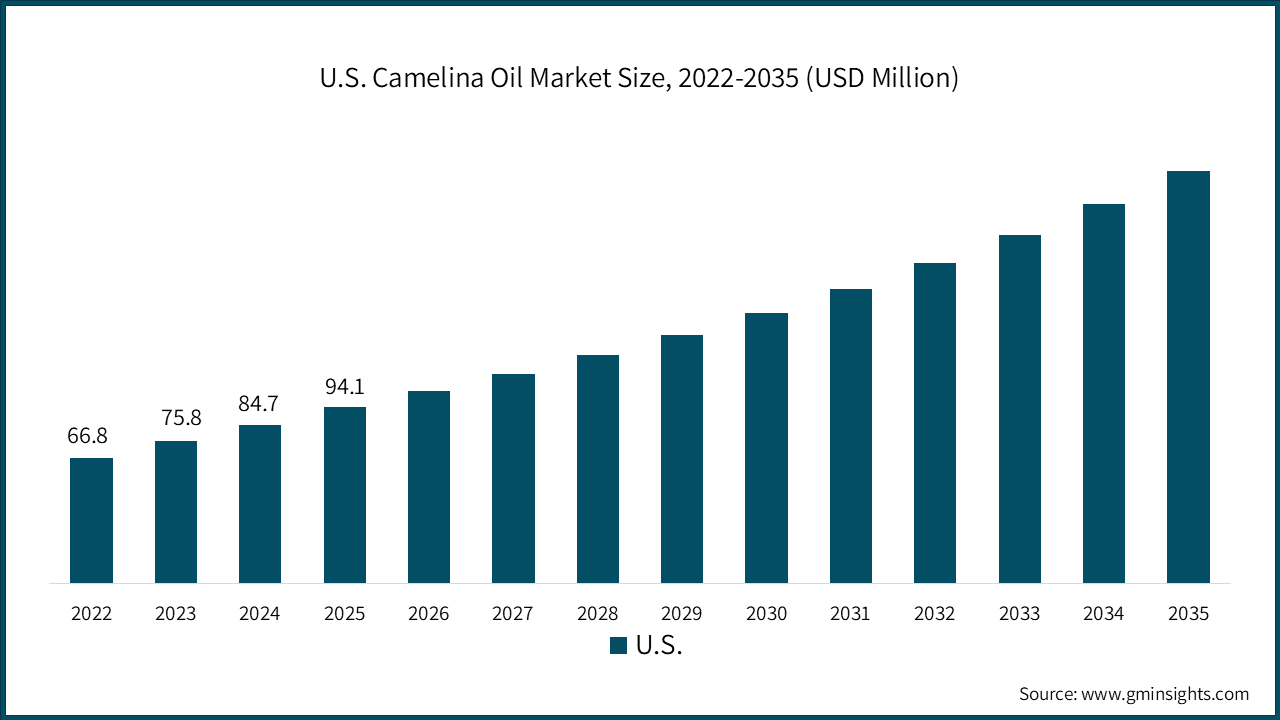
The U.S. camelina oil market accounted for USD 94.1 million in 2025.
- The strong momentum in North America comes primarily from the United States, driven by rapidly expanding SAF production facilities from Gevo, World Energy, and Neste consuming camelina for HEFA-SPK pathways, established renewable diesel infrastructure, and robust agricultural support for climate-smart oilseed cultivation. Emphasis on domestic SAF supply chain development supported by Inflation Reduction Act tax credits and Sustainable Aviation Fuel Grand Challenge targeting 3 billion gallons by 2030 consistently elevates market position. Major producers including Smart Earth Camelina Corp., Sustainable Oils, and Three Farmers Foods, alongside strategic airline partnerships with United Airlines and Alaska Airlines, ensure sustained supply and market leadership.
The Germany camelina oil market is estimated to experience significant and promising growth from 2026 to 2035.
- European growth is driven by aggressive aviation decarbonization mandates under ReFuelEU Aviation, stringent renewable energy targets, and established sustainable agriculture excellence. In Germany, producers focus on certified sustainable camelina meeting ISCC and RSB standards for SAF applications, organic cold-pressed variants for premium food and supplements, and specialty grades for cosmetics and bio-lubricants. Germany's leadership in renewable energy with Lufthansa SAF commitments, strong organic food industry, advanced biofuel refinery investments from Neste and TotalEnergies, and agricultural innovation in climate-resilient cultivation positions the market for sustained expansion supporting Europe's Green Deal and aviation sustainability ambitions.
The China camelina oil market is estimated to experience significant and promising growth from 2026 to 2035.
- Asia Pacific is rapidly growing with China as an essential driver, increasingly driven by expanding SAF initiatives from Air China and China Eastern Airlines, growing plant-based nutrition market with omega-3 supplement demand, and developing renewable diesel capacity. The country experiences increased interest in camelina cultivation on marginal lands and rising consumption across aviation biofuel blending, dietary supplement formulations, and industrial applications including bio-based lubricants and cosmetics. Regional momentum is fueled by government carbon neutrality commitments, expanding middle-class demand for premium nutrition, and industrial diversification supporting sustainable manufacturing.
The Saudi Arabia camelina oil market is estimated to experience significant and promising growth from 2026 to 2035.
- Middle East and Africa growth is driven by expanding SAF interest for regional airlines including Saudi Arabian Airlines and Emirates, agricultural diversification cultivating drought-resistant oilseeds, and food security programs. In Saudi Arabia, Vision 2030 diversification programs promoting agricultural innovation and sustainable fuel production, research into climate-adapted oilseed cultivation in arid conditions, and emerging SAF initiatives drive increased camelina interest for aviation fuel feedstock, functional food ingredients, and industrial applications supporting development beyond hydrocarbons toward sustainable agriculture and renewable fuels.
Brazil camelina oil market is estimated to experience significant and promising growth from 2026 to 2035.
- Brazil contributes to Latin American growth through expanding biofuel industry demanding diverse renewable feedstocks for biodiesel and renewable diesel, growing health sector with omega-3 supplement consumption, and developing sustainable agriculture. With accelerating biofuel production and demand for camelina in biodiesel blending complementing soybean oil, renewable diesel production, and dietary supplements growing in São Paulo and Rio Grande do Sul regions, the market shows promising potential. Growth trends include adoption as rotation crop supporting soil health, potential aviation biofuel applications supporting Embraer's sustainability initiatives, and functional food ingredients serving health-conscious consumers.
Camelina Oil Market Share
The markets are moderately consolidated, with players such as Smart Earth Camelina Corp., Three Farmers/Canpressco, Olimega/Signé Caméline, BioPlanète, and Henry Lamotte Oils collectively accounting for a approximately 45.6% share of global supply in 2025, supported by their advanced cold-pressed extraction capabilities, SAF-grade feedstock expertise, and long-term relationships with downstream sustainable aviation fuel producers, airlines, and organic food companies.
- Camelina oil producers are actively engaged in seed breeding optimization and R&D to improve oil yield efficiency, enhance omega-3 fatty acid content exceeding 35%, and reduce erucic acid, glucosinolates, and oxidation products. Continuous innovations in cold-pressed extraction technology, nitrogen blanketing for oxidative stability, seed variety development for improved agronomic performance, and quality preservation enable manufacturers to meet stringent specifications for sustainable aviation fuel feedstocks meeting ASTM D7566 standards, premium dietary supplements, organic food applications, and specialty cosmetic formulations, supported by advanced analytical controls such as fatty acid profiling, peroxide value testing, and carbon intensity documentation for lifecycle assessment verification.
- Through strategic collaborations with sustainable aviation fuel producers, major airlines, renewable diesel refineries, and organic food brands, suppliers strengthen market positioning and demand stability. These partnerships support co-development of application-specific grades including SAF-grade and organic cold-pressed products, secure long-term supply agreements with aviation fuel producers and airline offtake commitments, and enable integration across the sustainable fuel supply chain and organic food ecosystems, improving supply reliability while supporting carbon reduction initiatives, ISCC/RSB certification programs, and regenerative agriculture adoption.
Camelina Oil Market Companies
Major players operating in the camelina oil industry are:
- Smart Earth Camelina
- Three Farmers/Canpressco
- Olimega/Signé Caméline
- BioPlanète
- Henry Lamotte Oils
- Cargill
- Montana Renewables
- Neste
- Repsol
- Bunge
- World Energy
Smart Earth Camelina Corp. Canadian-based camelina seed breeder and oil producer operating a comprehensive breeding program since 2005, developing proprietary non-GMO varieties including herbicide-resistant NewGold cultivars. Produces cold-pressed camelina oil primarily for animal supplements (equine, canine), aquaculture feed, and sustainable aviation fuel feedstocks. Emphasizes vertical integration from seed development through crushing, bottling, and marketing across Western Canada with focus on drought-tolerant, low-input oilseed genetics.
Three Farmers/Canpressco Saskatchewan-based family-owned agricultural company founded 2010, producing cold-pressed camelina oil alongside pulse-based snacks. Operates vertically integrated supply chain from contracted Western Canadian growers through pressing and bottling in Saskatchewan. Markets non-GMO, traceable camelina oil for culinary use emphasizing omega-3 content, high smoke point, and sustainable farming practices. Distributes through Canadian health food retailers and direct-to-consumer channels with strong farm-to-fork storytelling.
Olimega/Signé Caméline Quebec family-owned business founded 2014, specializing in cultivation, processing, and marketing of camelina-based products. Operates dedicated solar-powered processing facility built 2018 with on-farm production controlling entire supply chain. Produces virgin and roasted camelina oils, seeds, honey, and personal care products under Signé Caméline brand. Emphasizes sustainable, pesticide-free cultivation, non-GMO certification, and premium positioning in Quebec retail markets with expanding international distribution.
BioPlanète Franco-German organic oil mill established 1984, recognized as Europe's first purely organic oil mill. Produces over 70 cold-pressed organic oils including camelina, flaxseed, olive, and specialty blends for culinary and vitality applications. Operates facilities in France and Germany with emphasis on traditional craftsmanship, rigorous quality controls, and long-term partnerships with organic farmers. Serves retail and foodservice channels across Europe with focus on sustainable, certified organic specialty oils.
Henry Lamotte Oils GmbH Bremen-based specialty oils and fats supplier founded 1925, serving food, pharmaceutical, cosmetics, feed, and industrial sectors globally. Produces and trades cold-pressed and refined vegetable oils, specialty fats, waxes, seed flours, and oleoresins with vertically integrated sourcing, processing, and quality control capabilities. Offers customized ingredient development, private label services, and technical application support. Maintains Halal, organic, and multiple quality certifications supporting diverse B2B customer requirements.
Camelina Oil Market Report Attributes
| Key Takeaway | Details |
|---|---|
| Market Size & Growth | |
| Base Year | 2025 |
| Market Size in 2025 | USD 345.1 Million |
| Market Size in 2026 | USD 374.9 Million |
| Forecast Period 2026-2035 CAGR | 8.6% |
| Market Size in 2035 | USD 789.2 Million |
| Key Market Trends | |
| Drivers | Impact |
| Explosive sustainable aviation fuel market growth & renewable energy mandates | Explosive sustainable aviation fuel market growth & renewable energy mandates Driving unprecedented camelina oil consumption as SAF feedstock component, supporting global aviation decarbonization targets, renewable fuel standard compliance, and low-carbon fuel initiatives across airline, cargo, and military aviation sectors |
| Climate-smart agriculture initiatives & sustainable farming adoption | Climate-smart agriculture initiatives & sustainable farming adoption Increasing demand for camelina cultivation as drought-resistant, low-input rotation crop requiring minimal fertilizer and water, enabling carbon sequestration, soil health improvement, and sustainable agricultural diversification driven by regenerative farming practices |
| Omega-3 nutrition market expansion & plant-based supplement growth | Omega-3 nutrition market expansion & plant-based supplement growth Expanding camelina oil applications in dietary supplements, functional foods, and plant-based omega-3 products, driven by consumer health awareness, vegan nutrition trends, and alternatives to marine-derived omega-3 sources |
| Pitfalls & Challenges | Impact |
| Limited cultivation acreage & supply chain infrastructure constraints | Limited cultivation acreage & supply chain infrastructure constraints Create supply bottlenecks for processors dependent on consistent camelina seed availability, requiring investment in farmer contracts, seed development programs, and crushing facility expansion to scale production volumes |
| Feedstock competition & price volatility from alternative oilseeds | Feedstock competition & price volatility from alternative oilseeds Impose competitive pressures from established oilseeds (soybean, canola, sunflower) with mature supply chains and economies of scale, necessitating premium positioning through sustainability certifications and long-term offtake agreements |
| Opportunities: | Impact |
| Next-generation SAF technologies & advanced biofuel pathways | Next-generation SAF technologies & advanced biofuel pathways Offers opportunities for specialized camelina oil grades optimized for hydroprocessed esters and fatty acids (HEFA) pathways, alcohol-to-jet processes, and synthetic paraffinic kerosene production, enabling premium pricing and technology partnerships with aviation fuel innovators |
| Sustainable feedstock certification & carbon credit monetization | Sustainable feedstock certification & carbon credit monetization Present significant growth potential through verified sustainability standards (RSB, ISCC), lifecycle carbon intensity documentation, and carbon credit generation from low-carbon farming practices, addressing aviation industry sustainability requirements while creating additional revenue streams |
| Market Leaders (2025) | |
| Market Leader |
~15.3% Market Share |
| Top Players |
Collective Market Share of ~45.6%in 2025 |
| Competitive Edge |
|
| Regional Insights | |
| Largest Market | North America |
| Fastest growing market | North America |
| Emerging countries | U.S., Canada, Germany |
| Future outlook |
|
What are the growth opportunities in this market?
Camelina Oil Industry News
- In January 2022, Global Clean Energy Holdings, Inc. announced its acquisition of Camelina Company España S.L., Europe’s largest camelina innovator, expanding operations across North America, Europe, and South America. The Madrid-based company strengthens GCE’s renewable fuels strategy through advanced camelina genetics and sustainable biofuel development.
- In November 2023, Oils & Fats International reported that US agricultural bioscience company Yield10 Bioscience and Danish aquafeed supplier BioMar Group signed an agreement to develop omega-3 oil from Camelina as a sustainable, land-based alternative to marine fish oil for aquaculture feeds. The engineered Camelina oil, containing EPA and DHA, aims to support reliable supplies of essential fatty acids for the aquaculture industry.
The camelina oil market research report includes an in-depth coverage of the industry with estimates and forecast in terms of revenue in USD Million and volume in terms of Kilo Tons from 2022–2035 for the following segments:
Market, By Product
- Crude/virgin camelina oil
- Refined camelina oil
- Organic camelina oil
- Conventional camelina oil
- Others
Market, By Extraction/Processing Method
- Cold-pressed extraction
- Solvent extraction
- Others
Market, By Application
- Sustainable aviation fuel (SAF)
- Biodiesel
- Renewable diesel
- Edible oil
- Dietary supplements
- Animal feed meal
- Cosmetics & personal care
- Industrial lubricants
- Polymers & coatings
- Others
The above information is provided for the following regions and countries:
- North America
- U.S.
- Canada
- Europe
- Germany
- UK
- France
- Spain
- Italy
- Rest of Europe
- Asia Pacific
- China
- India
- Japan
- Australia
- South Korea
- Rest of Asia Pacific
- Latin America
- Brazil
- Mexico
- Argentina
- Rest of Latin America
- Middle East and Africa
- Saudi Arabia
- South Africa
- UAE
- Rest of Middle East & Africa
Frequently Asked Question(FAQ) :
What is the market size of the camelina oil market in 2025?
The market size was valued at USD 345.1 million in 2025 and is projected to grow at a CAGR of 8.6% through 2035. Market growth is primarily driven by rising sustainable aviation fuel (SAF) demand, renewable diesel expansion, and increasing adoption of plant-based omega-3 nutrition products.
What is the current camelina oil market size in 2026?
The market is projected to reach USD 374.9 million in 2026. Industry expansion is supported by accelerating SAF capacity additions and renewable fuel mandates across major aviation economies.
What is the projected value of the camelina oil market by 2035?
The market is expected to reach USD 789.2 million by 2035. Strong growth in the SAF industry, renewable diesel production, and premium nutritional applications will continue to strengthen long-term market demand.
How much revenue share did the crude/virgin camelina oil segment account for in 2025?
Crude/virgin camelina oil dominated the camelina oil industry with a 50.2% share in 2025 and is forecast to grow at a CAGR of 8.6% through 2035.
What was the market share of cold-pressed extraction in 2025?
Cold-pressed extraction held a dominant 69.6% share of the camelina oil market in 2025 and is expected to grow at a CAGR of 8.7% during the forecast period. Its leadership is driven by strong demand for minimally processed, high omega-3 oil suitable for dietary supplements, cosmetics, and premium biofuel applications.
How much market share did sustainable aviation fuel (SAF) hold in camelina oil industry in 2025?
The sustainable aviation fuel (SAF) segment accounted for 38.1% of the market share in 2025 and is projected to grow at a CAGR of 8.6% through 2035. Increasing global aviation decarbonization targets and regulatory mandates are accelerating industry adoption of camelina-based SAF feedstock.
Which region leads the camelina oil industry?
The U.S. market accounted for USD 94.1 million in 2025. Growth is driven by strong SAF production capacity expansion, renewable diesel infrastructure development, and federal support programs such as sustainable fuel mandates and climate-smart agriculture initiatives.
What are the upcoming trends in the camelina oil market?
Key trends in the camelina oil industry include rapid expansion of SAF-grade feedstock production, growth in renewable diesel refineries, rising demand for plant-based omega-3 supplements, and advancements in cold-pressed and solvent extraction technologies.
Who are the key players in the camelina oil market?
Key players operating in the market include Smart Earth Camelina, Three Farmers, BioPlanète, Henry Lamotte Oils GmbH, Cargill, Neste, Bunge, Repsol, and World Energy.
Camelina Oil Market Scope
Related Reports