Summary
Table of Content

Blood Collection Market
Get a free sample of this report
Form submitted successfully!
Error submitting form. Please try again.
Thank you!
Your inquiry has been received. Our team will reach out to you with the required details via email. To ensure that you don't miss their response, kindly remember to check your spam folder as well!
Request Sectional Data
Thank you!
Your inquiry has been received. Our team will reach out to you with the required details via email. To ensure that you don't miss their response, kindly remember to check your spam folder as well!
Form submitted successfully!
Error submitting form. Please try again.
Blood Collection Market Size
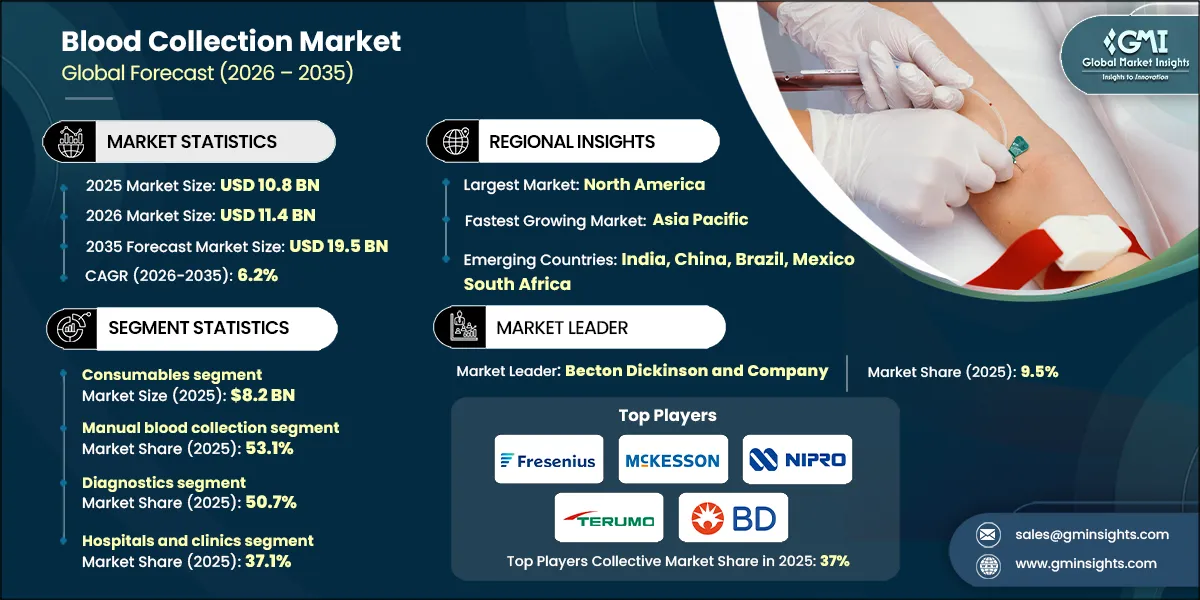
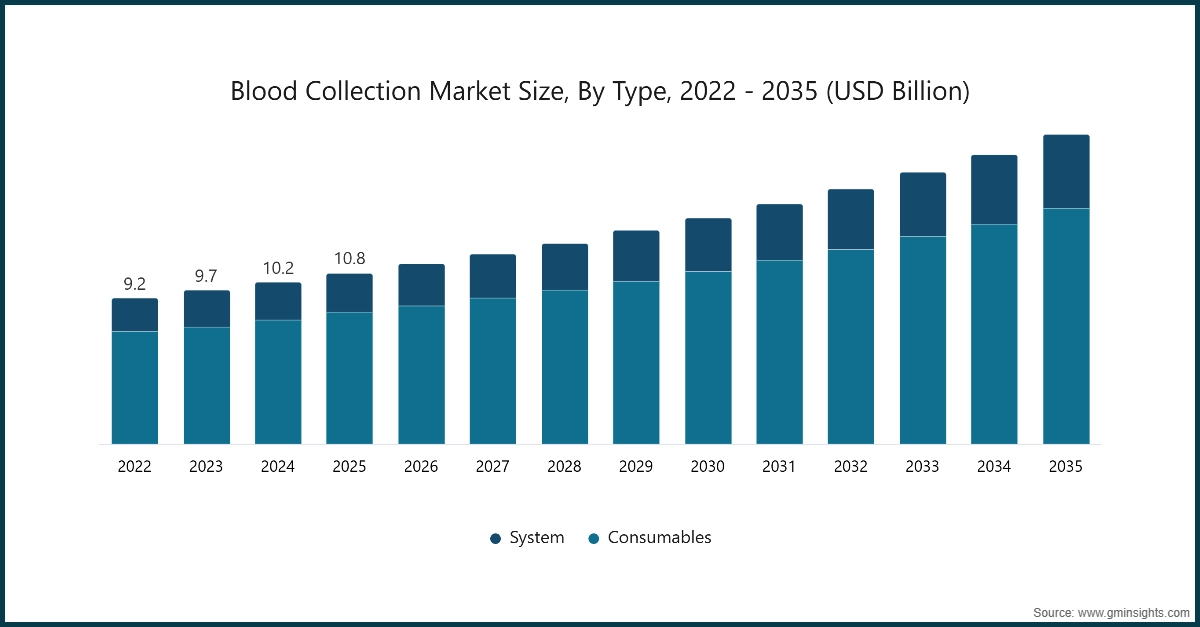
The global blood collection market was valued at USD 10.8 billion in 2025 and is projected to grow from USD 11.4 billion in 2026 to USD 19.5 billion by 2035, expanding at a CAGR of 6.2%, according to the latest report published by Global Market Insights Inc. This steady growth is driven by rising incidence of chronic and infectious diseases, advancements in blood collection technologies and increasing number of surgical procedures.
Blood Collection Market Key Takeaways
Market Size & Growth
- 2025 Market Size: USD 10.8 Billion
- 2026 Market Size: USD 11.4 Billion
- 2035 Forecast Market Size: USD 19.5 Billion
- CAGR (2026–2035): 6.2%
Regional Dominance
- Largest Market: North America
- Fastest Growing Region: Asia Pacific
Key Market Drivers
- Rising incidence of chronic and infectious diseases.
- Advancements in blood collection technologies.
- Increasing number of surgical procedures.
- Rising geriatric population.
Challenges
- Risks associated with blood transfusions.
- Lack of skilled healthcare professionals.
Opportunity
- Rising government-led campaigns for promoting blood donation and disease screening.
Key Players
- Market Leader: Becton Dickinson and Company led with over 9.5% market share in 2025.
- Leading Players: Top 5 players in this market include Fresenius SE & Co, McKesson Corporation, Nipro Corporation, Terumo Corporation, Becton Dickinson and Company, which collectively held a market share of 37% in 2025.
Get Market Insights & Growth Opportunities
The market increased from USD 9.7 million in 2023 to USD 10.2 million in 2024. The rising global burden of chronic and infectious diseases is an accelerating growth in the blood collection market. As disease prevalence increases, so does the demand for timely diagnostics, continuous monitoring, and effective treatment planning, all of which rely heavily on reliable blood sampling and testing. Chronic conditions such as cancer, diabetes, and cardiovascular diseases require routine blood analysis for early diagnosis, staging, and therapy management, thereby expanding utilization of blood collection products across healthcare settings. For instance, according to the World Health Organization (WHO), 2022 recorded approximately 20 million new cancer cases worldwide, resulting in 9.7 million cancer-related deaths. Lung cancer remained the most commonly diagnosed (2.5 million cases; 12.4%), followed by female breast cancer (2.3 million; 11.6%), colorectal cancer (1.9 million; 9.6%), prostate cancer (1.5 million; 7.3%), and stomach cancer (970,000; 4.9%). The growing incidence of such diseases underscores the need for advanced diagnostic workflows supported by efficient and safer blood collection systems. Additionally, recurrent outbreaks of infectious diseases further amplify the requirement for rapid blood-based testing. Collectively, these trends are helping market expansion by driving continuous adoption of blood collection tubes, needles, lancets, and related consumables across hospitals, diagnostic laboratories, and research institutions.
Aditionally, increasing number of surgical procedures worldwide is creating substantial demand for blood collection products. Surgical interventions such as elective, emergency, or transplants require extensive pre‑operative and post‑operative blood testing to assess patient readiness, monitor organ function, evaluate infection markers, and guide clinical decision‑making. This continuous need for diagnostic accuracy directly boosts the consumption of blood collection tubes, needles, collection sets, and related consumables across hospitals and surgical centers. For instance, according to Global Observatory on Donation and Transplantation reported that over 172,400 solid organ transplants were carried out globally in 2023, marking a 9.5% increase compared with the previous year equivalent to roughly 18 transplants every hour. Additionally, 45,861 deceased organ donors were recorded across 93 countries, representing 75% of the world’s population. This substantial rise in donation and transplant activity underscores the escalating demand for robust diagnostic and monitoring systems. Consequently, the need for consistent, accurate, and safe blood collection processes continues to grow, driving wider adoption of advanced needles, tubes, collection sets, and related consumables to support expanding clinical workloads in transplantation medicine.
Blood collection is the process of collecting blood samples from a patient for diagnostic, therapeutic, or research purposes. Blood is collected through venous or capillary methods, depending on the volume required and the type of test. The procedure involves using various tools and devices, such as needles, syringes, lancets, blood collection tubes, and automated systems, to ensure safe, sterile, and accurate sample acquisition.
To get key market trends
Blood Collection Market Trends
- Advancements in blood collection technologies are playing an important role in strengthening the efficiency, safety, and accessibility of diagnostic workflows, thereby serving as a major driver for the market. Modern healthcare increasingly demands faster turnaround times, reduced sample volumes, and higher accuracy requirements that traditional venipuncture methods cannot always fulfill. As a result, innovative solutions that streamline the sampling process while improving patient comfort are gaining rapid traction across hospitals, laboratories and decentralized care settings.
- Advancement such as development of minimally invasive and micro‑collection systems enables high‑quality sample collection from capillary blood, significantly reducing the need for conventional venous draws. This is particularly beneficial for pediatric, geriatric, and chronically ill patients who experience discomfort or difficulty with repeated venipuncture. The shift toward smaller-volume testing aligns with the growing adoption of point‑of‑care diagnostics, further creating the demand for advanced collection tools.
- For instance, BD MiniDraw capillary blood collection system, which offers a minimally invasive approach for collecting lab-quality blood samples directly from the fingertip. Requiring only one‑tenth the volume of traditional venous draws, this FDA 510(k)-cleared device enables reliable diagnostic testing in decentralized settings such as retail pharmacies and community clinics. Such advancements not only expand access to diagnostic services but also drive sustained market growth by catering to evolving care models centered around convenience, accuracy, and patient comfort.
- Additionally, technological innovation is also improving sample integrity and workflow automation. Enhanced tube designs with superior additives, improved material compatibility, and better vacuum control help maintain analyte stability and reduce pre-analytical errors one of the leading causes of inaccurate lab results.
- Therefore, these cutting-edge technologies are setting a new benchmark for the global blood collection industry. By prioritizing patient comfort, procedural safety, and diagnostic precision, they are enabling more effective and accessible blood collection in both traditional healthcare settings and emerging point-of-care environments
Blood Collection Market Analysis
Learn more about the key segments shaping this market
Based on the product type, the market is segmented into system and consumables. The consumables segment dominated the market with the largest revenue of USD 8.2 billion in 2025.
- Consumables refer to the single‑use components essential for drawing, storing, and transporting blood samples. These include blood collection tubes, needles, syringes, lancets, tourniquets, alcohol swabs, and safety‑engineered accessories. Designed for one‑time use, these products play a foundational role in every diagnostic workflow, making them indispensable in clinical laboratories, hospitals, and point‑of‑care settings.
- Consumables used in blood collection play a crucial role in ensuring the accuracy and reliability of diagnostic tests. Tubes containing specific additives such as EDTA, heparin, or citrate are designed to preserve the chemical composition of blood samples, preventing degradation and maintaining the stability of blood components for various analyses.
- Consumables remain the dominant market segment largely due to their high turnover and continual replenishment cycle. Unlike collection systems or devices that are purchased periodically, consumables are used once and replaced immediately, creating constant demand. Their indispensable role in ensuring safety, accuracy, and regulatory compliance reinforces their use in every clinical workflow. Moreover, advancements such as color‑coded tube caps, pre‑labeled components, vacuum-assisted tubes, and safety-engineered needles simplify procedures, reduce human error, and enhance efficiency.
- As healthcare providers prioritize standardized sample handling, rapid diagnostic turnaround, and enhanced safety protocols, consumables continue to be central to achieving these objectives.
Based on the method, the blood collection market is segmented into manual blood collection and automated blood collection. The manual blood collection segment accounted for the highest market share of 53.1% in 2025.
- Stainless steel dominates the blood collection industry primarily due to its strength, corrosion resistance, biocompatibility, and cost‑effectiveness, making it the preferred material for high‑precision therapeutic applications.
- Stainless steel needles maintain structural integrity during insertion, offer smooth penetration especially when silicone‑coated and ensure consistent performance across treatments.
- Additionally, their durability and sterilization compatibility make them suitable for mass production, allowing manufacturers to maintain quality while keeping prices competitive. As a result, stainless steel provides the ideal balance of safety, reliability, and affordability for both practitioners and patients.
- For instance, 3B Scientific GmbH offers stainless‑steel blood collection like the Millennia 5 Needle Pack, designed for smooth insertion and high tensile strength demonstrating how stainless steel’s performance qualities continue to drive its dominance in the global market.
Based on application, the blood collection market is segmented into diagnostics, treatment, and research. The diagnostics segment accounted for the highest market share of 50.7% in 2025.
- The diagnostic segment includes medical devices and consumables such as needles, syringes, blood collection tubes, lancets, and automated blood sampling systems that are essential for collecting and analyzing blood samples to detect, monitor, and manage diseases.
- The growth of this segment is primarily driven by the rising prevalence of chronic conditions such as diabetes, cardiovascular diseases, and cancer, which has significantly increased the demand for advanced blood collection systems.
- For instance, according to the International Diabetes Federation, approximately 589 million adults aged 20–79 was living with diabetes in 2024, a figure expected to rise to 853 million by 2050. As the incidence of diabetes and other chronic disorders continues to increase, the need for reliable diagnostic tools for early detection and ongoing disease management also grows, thereby supporting segment expansion.
- Moreover, technological innovations such as automated blood collection systems, capillary microsampling devices, and digitally integrated diagnostic platforms are transforming diagnostic workflows by improving sample accuracy, reducing turnaround times, and enhancing patient comfort, which further accelerates the growth of the diagnostic segment.
Learn more about the key segments shaping this market
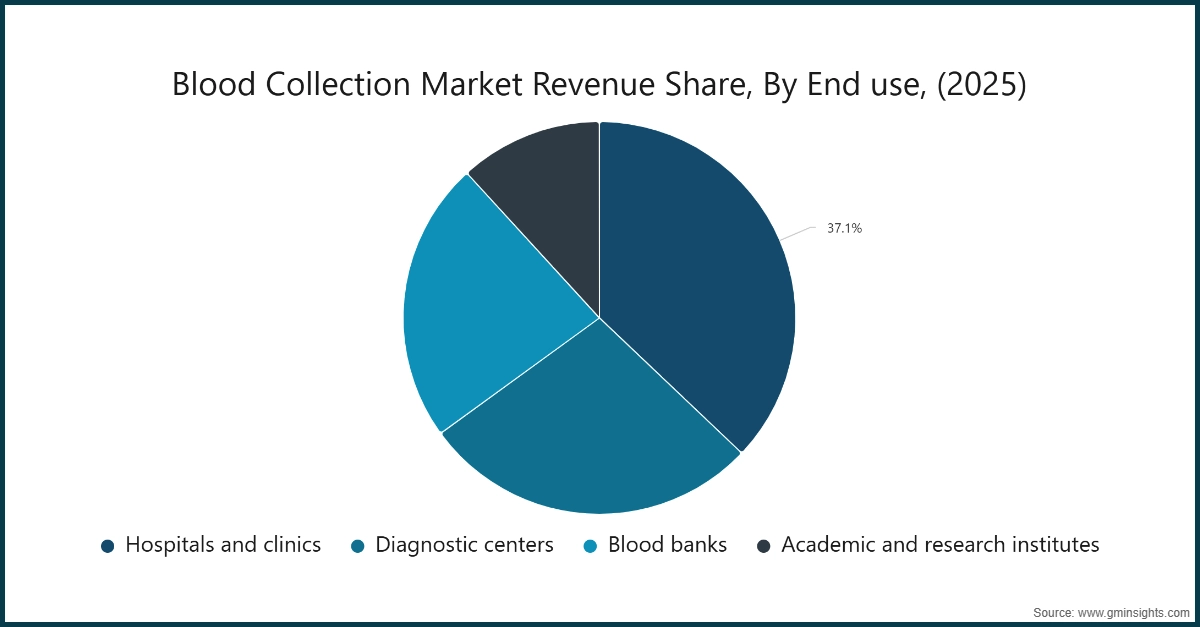
Based on end use, the blood collection market is segmented into hospitals and clinics, diagnostic centers, blood banks, and academic and research institutes. The hospitals and clinics segment accounted for the highest market share of 37.1%
- Hospitals and clinics segment dominates the market due to its central role in patient diagnosis, treatment, and ongoing disease management. These healthcare settings serve as the first and primary point of care, driving continuous demand for blood collection devices.
- Hospitals and clinics witness high patient footfall for routine check-ups, emergency care, surgical interventions, and chronic disease monitoring. Blood testing is an essential component of these services, resulting in frequent utilization of needles, syringes, blood collection tubes, and safety devices. This consistent and high-volume usage significantly fuels market growth.
- Additionally, favorable reimbursement policies, government healthcare investments, and the expansion of hospital networks particularly in emerging economies strengthen the growth of this segment. Increased healthcare spending and the rising number of hospital admissions directly boost the demand for blood collection products. As a result, hospitals and clinics remain a key driver of the overall blood collection market growth.
- The dominance of this segment is further supported by the availability of robust diagnostic infrastructure and skilled healthcare professionals in hospitals and clinics. These facilities are more likely to adopt advanced blood collection systems, including safety-engineered and automated devices. Such adoption enhances efficiency, reduces procedural risks, and encourages manufacturers to expand their product offerings.
Looking for region specific data?
North America Blood Collection Market
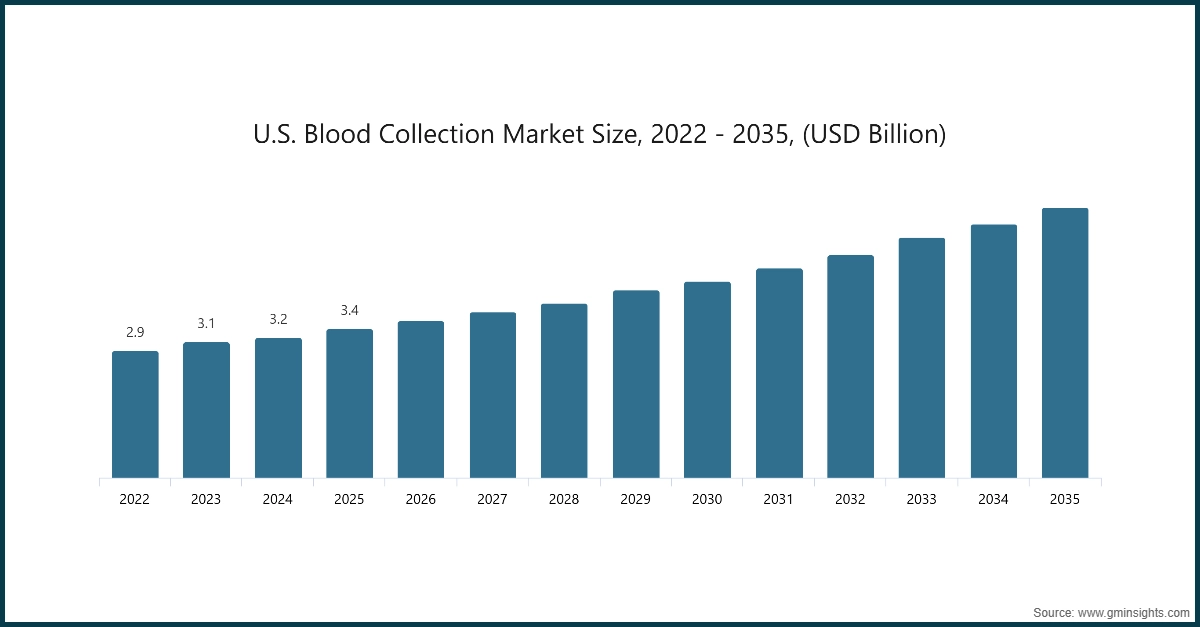
The North America region accounted for 35.4% of the global blood collection industry in 2025. The market in North America is experiencing robust expansion, driven by the increasing prevalence of chronic diseases.
- The expanding geriatric population is a major growth driver for the U.S. market, as aging is strongly associated with a higher incidence of chronic and age-related disorders. Conditions such as cardiovascular diseases, cancer, diabetes, renal disorders, and neurodegenerative illnesses are more prevalent among older adults.
- The rapidly growing aging population is creating a significant demand for diagnostic tools used to identify and manage age-related health conditions, many of which depend heavily on blood-based testing for accurate diagnosis. As life expectancy increases, older adults require more frequent medical evaluations, driving the need for efficient and reliable blood collection solutions.
- For instance, data from the U.S. Census Bureau shows that the older population expanded from 4.9 million people, representing 4.7% of the total U.S. population in 1920, to 55.8 million people, accounting for 16.8% in 2020. This nearly 1,000% increase highlights a major demographic shift, which has substantially amplified the demand for advanced blood collection technologies to support age-related diagnostic procedures.
- These chronic conditions typically involve regular diagnostic testing, continuous monitoring, and long-term treatment plans, all of which rely extensively on routine blood sampling, stimulating the market growth.
Europe Blood Collection Market
Europe market accounted for USD 3.1 billion in 2025 and is anticipated to show lucrative growth over the forecast period.
- The increasing prevalence of chronic and infectious diseases across Europe is a major driver boosting the growth of the blood collection industry. Chronic conditions such as diabetes, cardiovascular diseases, cancer, and infectious diseases require regular diagnostic testing for early detection, disease monitoring, and treatment evaluation, thereby increasing the demand for blood collection devices.
- For instance, according to the International Diabetes Federation, diabetes prevalence in the Europe (EUR) region stands at approximately 9.8%, with nearly 66 million people currently living with the condition. This number is projected to rise by around 10% by 2050, indicating a growing patient population that will require continuous diagnostic and monitoring services reliant on routine blood testing.
- Furthermore, heightened awareness, improved access to healthcare services, and government initiatives aimed at early diagnosis and chronic disease management are reinforcing the demand for efficient and reliable blood collection systems. As a result, the growing incidence of chronic and infectious diseases continues to play a critical role in advancing the Europe market.
Germany's blood collection market is projected to experience steady growth between 2026 and 2035.
- The growing burden of chronic and infectious diseases in Germany is a key factor driving the expansion of the blood collection industry. Conditions such as cardiovascular diseases, diabetes, cancer, and various infectious disorders require frequent diagnostic testing for early detection, risk assessment, and ongoing clinical management. Blood-based diagnostics remain essential across both hospital and outpatient settings, thereby sustaining strong demand for blood collection devices.
- For instance, in 2024, approximately 53.7% of adults in Germany reported having at least one chronic disease or long-term health condition. This high disease burden highlights the growing reliance on routine diagnostic procedures, particularly blood tests, for disease detection, treatment planning, and long-term monitoring.
- The rising number of individuals living with chronic conditions has led to higher utilization of healthcare services, including regular hospital visits, outpatient care, and preventive screening programs. Blood collection devices are essential for monitoring biomarkers, treatment responses, and disease progression, directly supporting increased product demand.
Asia Pacific Blood Collection Market
The Asia Pacific region is projected to show a lucrative growth of about 6.6% during the forecast period.
- The rapidly aging population in Asia Pacific is a major driver for the blood collection market, as older adults have higher healthcare utilization rates. According to UNFPA, by 2050, one in four people in Asia and the Pacific will be over 60 years old, significantly increasing demand for medical interventions that rely on blood and blood components.
- The population of older persons in the region is projected to triple between 2010 and 2050, reaching nearly 1.3 billion people. This demographic shift is associated with a higher prevalence of chronic diseases such as cardiovascular disorders, cancer, and renal conditions, all of which frequently require blood transfusions and related therapies.
- As geriatric patients undergo more surgeries, trauma care, and long-term treatments, the need for reliable blood collection, processing, and storage infrastructure continues to grow. This directly supports increased adoption of advanced blood collection systems across hospitals, blood banks, and diagnostic centers in Asia Pacific.
Japan blood collection market is poised to witness lucrative growth between 2026 – 2035.
- China’s rapidly aging population is emerging as a significant growth driver for the market. As China is experiencing one of the fastest demographic transitions globally, largely driven by increased life expectancy and sustained low birth rates.
- According to WHO, By 2040, individuals aged over 60 are expected to account for nearly 28% of China’s total population. This sharp rise in the elderly demographic is closely linked with higher incidence of age-related conditions such as cardiovascular diseases, cancers, and orthopedic disorders, all of which often require blood transfusions and blood-based therapies.
- Older adults also undergo a greater number of surgical procedures and long-term medical treatments compared to younger populations. As a result, hospitals and healthcare institutions across China are witnessing growing demand for efficient blood collection, storage, and transfusion systems to support geriatric care.
Latin America Blood Collection Market
Brazil is experiencing significant growth in the blood collection industry
- Technological progress in blood collection is a key driver supporting market growth in Brazil. Innovations such as automated blood collection devices, improved needle designs, and closed-system technologies are enhancing donor safety, comfort, and overall collection efficiency across healthcare facilities.
- Digital integration is also transforming blood collection processes in the country. Use of data management systems, barcode tracking, and automation improves traceability, inventory control, and compliance with regulatory standards, strengthening the reliability of Brazil’s blood supply chain.
- Furthermore, ongoing investments by public and private healthcare providers in modern blood banks and transfusion centers are accelerating technology adoption. These advancements improve operational efficiency and support Brazil’s efforts to expand voluntary blood donation and ensure a safe, high-quality blood supply.
Middle East and Africa Blood Collection Market
- The increasing prevalence of chronic diseases in Saudi Arabia is a key driver for the market.
- Conditions such as diabetes, cardiovascular diseases, cancer, and renal disorders are rising due to lifestyle changes and aging demographics, creating sustained demand for blood transfusions and blood-derived therapies.
- As the Saudi healthcare system is investing in modern blood banks, donor recruitment programs, and advanced screening technologies. The growing burden of chronic and infectious diseases is therefore a critical factor accelerating the expansion and modernization of the Saudi Arabia market.
Blood Collection Market Share
- The leading companies in the blood processing and storage equipment market include Fresenius SE & Co, McKesson Corporation, Nipro Corporation, Terumo corporation, and Becton, Dickinson, and Company, collectively accounting for a 37% market share of the global market.
- Leading companies in the blood collection industry are accelerating innovation to improve sample accuracy, patient comfort, and workflow efficiency worldwide. They are introducing ultra‑fine needles, safety‑engineered blood collection devices, and improved sterile single‑use systems to reduce patient discomfort, minimize needlestick injuries, and enhance overall collection precision.
- Market players are strengthening collaborations with hospitals, diagnostic laboratories, blood banks, and community health programs to expand access to high‑quality blood collection products, particularly in fast‑growing regions across Asia‑Pacific, Latin America, and the Middle East.
- With rising demand for blood testing in chronic disease management, emergency care, and preventive screening, companies are increasingly aligning with stricter regulatory standards and quality certifications. This shift supports safer sample collection, consistent product performance, and broader adoption of standardized blood collection procedures across healthcare settings.
- Emerging manufacturers are focusing on cost‑effective production and scalable supply options, appealing to budget‑sensitive hospitals and regional laboratories. These companies often offer specialized solutions such as pediatric micro‑collection tubes, evacuated tubes with tailored additives, and safety‑lancets designed for specific test types. Their expansion primarily relies on distributors, online supply platforms, and localized partnerships, allowing them to enter new markets with minimal operational investment.
Blood Collection Market Companies
Few of the prominent players operating in the blood collection industry include:
- Abbott Laboratories
- Becton, Dickinson, and Company
- Cardinal Health
- F. Hoffmann-La Roche
- FL MEDICAL
- Fresenius SE & Co
- Greiner
- Haemonetics Corporation
- McKesson Corporation
- Nipro Corporation
- QIAGEN
- Sarstedt AG & Co
- Siemens Healthineers
- Streck
- Terumo Corporation
- Thermo Fisher Scientific
F. Hoffmann‑La Roche Ltd leverages its strong diagnostics expertise to support the blood collection market with high‑quality consumables integrated into its broader testing ecosystem. The company’s emphasis on precise sample handling, standardized collection workflows, and compatibility with Roche analyzers enhances reliability across clinical laboratories. Its focus on innovation in pre‑analytical processes helps reduce variability, strengthen sample accuracy, and streamline overall laboratory operations.
FL MEDICAL maintains a notable presence in the blood collection sector through its specialized manufacturing of laboratory tubes, vials, and collection accessories. The company’s commitment to precision molding, high‑grade materials, and consistent quality supports reliable sample preservation and transport. Its ability to deliver customizable solutions tailored to hospital and diagnostic lab needs reinforces its competitiveness in routine and specialized blood testing environments.
Fresenius SE & Co. KGaA contributes to the blood collection market with its expertise in transfusion technologies, blood processing systems, and products designed to ensure safe collection and preservation. The company’s focus on donor safety, contamination prevention, and efficient processing aligns with the needs of blood banks and healthcare facilities. Its global network and strong medical technology capabilities support dependable performance in both therapeutic and donation‑based blood collection applications.
Blood Collection Market Report Attributes
| Key Takeaway | Details |
|---|---|
| Market Size & Growth | |
| Base Year | 2025 |
| Market Size in 2025 | USD 10.8 Billion |
| Market Size in 2026 | USD 11.4 Billion |
| Forecast Period 2026-2035 CAGR | 6.2% |
| Market Size in 2035 | USD 19.5 Billion |
| Key Market Trends | |
| Drivers | Impact |
| Rising incidence of chronic and infectious diseases | Drives higher demand for routine diagnostic testing, directly increasing the volume of blood collection procedures |
| Advancements in blood collection technologies | Boost market growth by improving safety, accuracy, and workflow efficiency, encouraging faster adoption across healthcare settings |
| Increasing number of surgical procedures | Raises the need for pre operative and post operative blood testing, thereby expanding usage of blood collection products |
| Rising geriatric population | Fuels market demand as older adults requires more frequent blood tests for disease monitoring and management |
| Pitfalls & Challenges | Impact |
| Risks associated with blood transfusions | Create hesitancy and increase regulatory scrutiny, limiting the adoption of certain collection practices and emphasizing the need for safer technologies |
| Lack of skilled healthcare professionals | Slows market growth by reducing the efficiency and accuracy of blood collection procedures, especially in developing and resource-constrained regions. |
| Opportunities: | Impact |
| Rising government-led campaigns for promoting blood donation and disease screening | Boost market growth by increasing donor participation and expanding the need for blood collection supplies. |
| Market Leaders (2025) | |
| Market Leader |
9.5% market share |
| Top Players |
Collective market share is 37% in 2025 |
| Competitive Edge |
|
| Regional Insights | |
| Largest Market | North America |
| Fastest growing market | Asia Pacific |
| Emerging countries | India, China, Brazil, Mexico, South Africa |
| Future outlook |
|
What are the growth opportunities in this market?
Blood Collection Industry News
- In March 2024, BD (Becton, Dickinson and Company) launched the BD Vacutainer UltraTouch Push Button Blood Collection Set in India. This device features BD RightGauge technology, allowing the use of a thinner needle, and BD PentaPoint Technology, which together help reduce insertion pain for patients. The product launches expanded BD’s geographic presence in India and strengthened its product portfolio in the region.
The blood collection market research report includes an in-depth coverage of the industry with estimates and forecast in terms of revenue in USD Billion and from 2022 – 2035 for the following segments:
Market, By Product Type
- System
- Automated systems
- Manual systems
- Consumables
- Venous
- Needles and syringes
- Double-ended needles
- Winged blood collection sets
- Standard hypodermic needles
- Other blood collection needles
- Blood collection tubes
- Serum-separating
- EDTA
- Heparin
- Plasma-separating
- Blood bags
- Other venous products
- Needles and syringes
- Capillary
- Lancets
- Micro-container tubes
- Micro-hematocrit tubes
- Warming devices
- Other capillary products
- Venous
Market, By Method
- Manual blood collection
- Automated blood collection
Market, By Application
- Diagnostics
- Treatment
- Research
Market, By End Use
- Hospitals and clinics
- Diagnostic centers
- Blood banks
- Academic and research institutes
The above information is provided for the following regions and countries:
- North America
- U.S.
- Canada
- Europe
- Germany
- UK
- France
- Italy
- Spain
- Netherlands
- Asia Pacific
- China
- India
- Japan
- Australia
- South Korea
- Latin America
- Brazil
- Mexico
- Argentina
- Middle East and Africa
- Saudi Arabia
- South Africa
- UAE
Frequently Asked Question(FAQ) :
What is the blood collection market size in 2025?
The market size for blood collection is valued at USD 10.8 billion in 2025. The rising prevalence of chronic diseases and advancements in blood collection technologies are driving market growth.
What is the market size of the blood collection industry in 2026?
The market size for blood collection reached USD 11.4 billion in 2026, reflecting steady growth driven by increasing surgical procedures and diagnostic testing demand.
What is the projected value of the blood collection market by 2035?
The market size for blood collection is expected to reach USD 19.5 billion by 2035, growing at a CAGR of 6.2%. This growth is fueled by advancements in automated collection methods, rising geriatric populations, and government-led health initiatives.
How much revenue did the consumables segment generate in 2025?
The consumables segment accounted for USD 8.2 billion in revenue in 2025, making it the largest product category. Its dominance is supported by the high demand for disposable blood collection supplies.
What was the market share of the manual blood collection method in 2025?
The manual blood collection method held a 53.1% market share in 2025, driven by its widespread use in resource-constrained settings and established healthcare facilities.
What is the growth outlook for the diagnostics application segment from 2025 to 2035?
The diagnostics application segment is projected to grow significantly, maintaining its leadership with a 50.7% market share in 2025. Increasing demand for routine and specialized diagnostic tests is driving this growth.
Which region leads the blood collection market?
North America led the global blood collection market in 2025, accounting for 35.4% of the market share. The region's dominance is attributed to the high prevalence of chronic diseases and advanced healthcare infrastructure.
What are the upcoming trends in the blood collection industry?
Key trends include the adoption of automated blood collection systems, advancements in safety-engineered devices, and increasing government campaigns promoting blood donation and disease screening. The integration of digital technologies for workflow optimization is also gaining traction.
Who are the key players in the blood collection market?
Key players include Abbott Laboratories, Becton, Dickinson, and Company, Cardinal Health, F. Hoffmann-La Roche, FL MEDICAL, Fresenius SE & Co, Greiner, Haemonetics Corporation, and McKesson Corporation.
Blood Collection Market Scope
Related Reports