Summary
Table of Content

Biosimulation Market
Get a free sample of this report
Form submitted successfully!
Error submitting form. Please try again.
Thank you!
Your inquiry has been received. Our team will reach out to you with the required details via email. To ensure that you don't miss their response, kindly remember to check your spam folder as well!
Request Sectional Data
Thank you!
Your inquiry has been received. Our team will reach out to you with the required details via email. To ensure that you don't miss their response, kindly remember to check your spam folder as well!
Form submitted successfully!
Error submitting form. Please try again.
Biosimulation Market Size
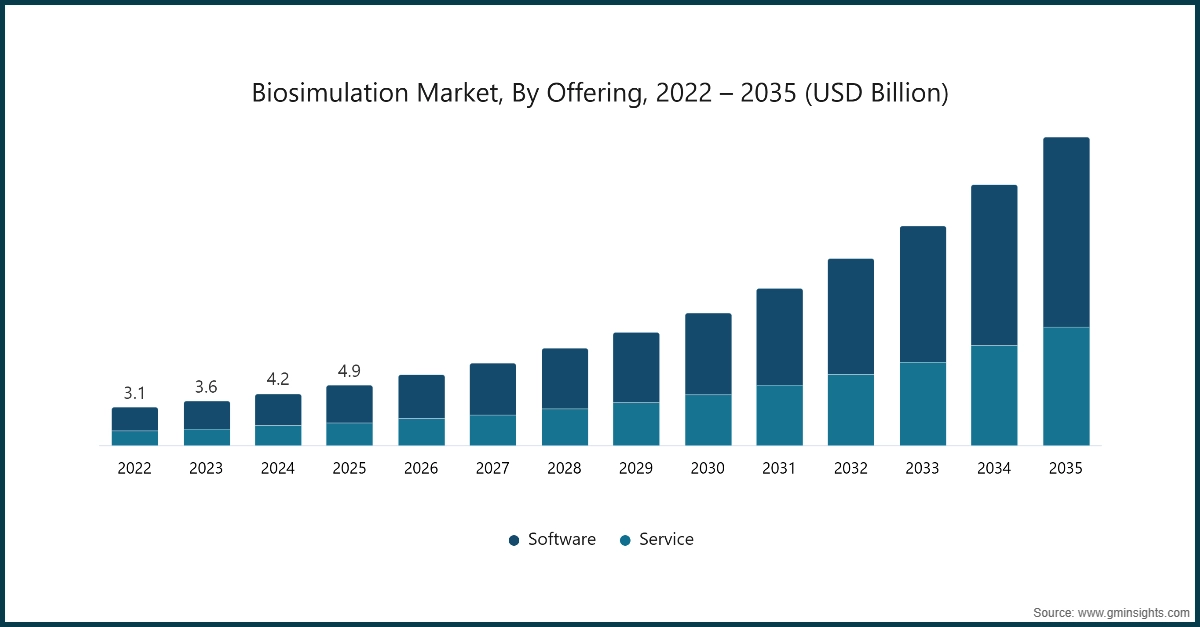
The steady growth of the market is driven by the increasing prevalence of chronic diseases, technological advancements in computational modeling, rising demand for personalized medicine, and the growing use of AI and machine learning. Major companies in the industry include Certara, Simulations Plus, Dassault Systemes, Schrödinger, and Advanced Chemistry Development (ACD/Labs). The market grew from USD 3.1 billion in 2022 to USD 4.2 billion in 2024. The global market is experiencing significant growth, driven by the rising prevalence of chronic diseases.
Biosimulation Market Key Takeaways
Market Size & Growth
- 2025 Market Size: USD 4.9 Billion
- 2026 Market Size: USD 5.7 Billion
- 2035 Forecast Market Size: USD 25.1 Billion
- CAGR (2026–2035): 17.9%
Regional Dominance
- Largest Market: North America
- Fastest Growing Region: Asia Pacific
Key Market Drivers
- Rising prevalence of chronic diseases.
- Technological advancements in computational modeling.
- Rising demand for personalized medicine.
- Increasing use of AI and machine Learning.
Challenges
- High cost of biosimulation software and services.
- Lack of skilled professionals.
Opportunity
- Rising healthcare infrastructure in emerging markets.
Key Players
- Market Leader: Certara led with over 12% market share in 2025.
- Leading Players: Top 5 players in this market include Simulations Plus, Certara, Dassault Systemes, Schrödinger, Advanced Chemistry Development (ACD/Labs), which collectively held a market share of 35% in 2025.
Get Market Insights & Growth Opportunities
For instance, cardiovascular diseases account for the highest number of NCD-related deaths, with 17.9 million fatalities annually, followed by cancers (9.3 million deaths), chronic respiratory diseases (4.1 million deaths), and diabetes (2 million deaths, including those from diabetes-related kidney disease). These four categories together constitute over 80% of all premature NCD deaths. Thus, this highlights the need for advanced solutions such as biosimulation to accelerate drug development, improve disease management, and optimize treatment outcomes, contributing to the growth of the global market.
Additionally, the rising demand for personalized medicine is significantly accelerating growth in the biosimulation market, as precision-focused drug development increasingly relies on advanced in silico modeling to predict patient-specific responses and optimize therapeutic strategies. Personalized medicine requires highly accurate simulations of pharmacokinetics, pharmacodynamics, and disease pathways tailored to individual genetic, metabolic, and physiological profiles, which in turn drives the adoption of biosimulation tools across pharma, biotech, and research ecosystems. Personalized medicine is explicitly cited as a major growth driver because it necessitates more precise and efficient modeling frameworks that reduce trial and error in clinical development, support better dosing strategies, and streamline regulatory submissions, ultimately lowering the time and cost associated with bringing targeted therapies to market.
Biosimulation is the computational modeling of biological systems, processes, and interactions to predict and analyze their behavior under various conditions. It integrates mathematical models, algorithms, and experimental data to simulate physiological, biochemical, and molecular activities, aiding in drug discovery, clinical trial optimization, and personalized medicine development.
The global biosimulation market was valued at USD 4.9 billion in 2025 and is projected to grow from USD 5.7 billion in 2026 to USD 25.1 billion by 2035, expanding at a CAGR of 17.9%, according to the latest report published by Global Market Insights Inc.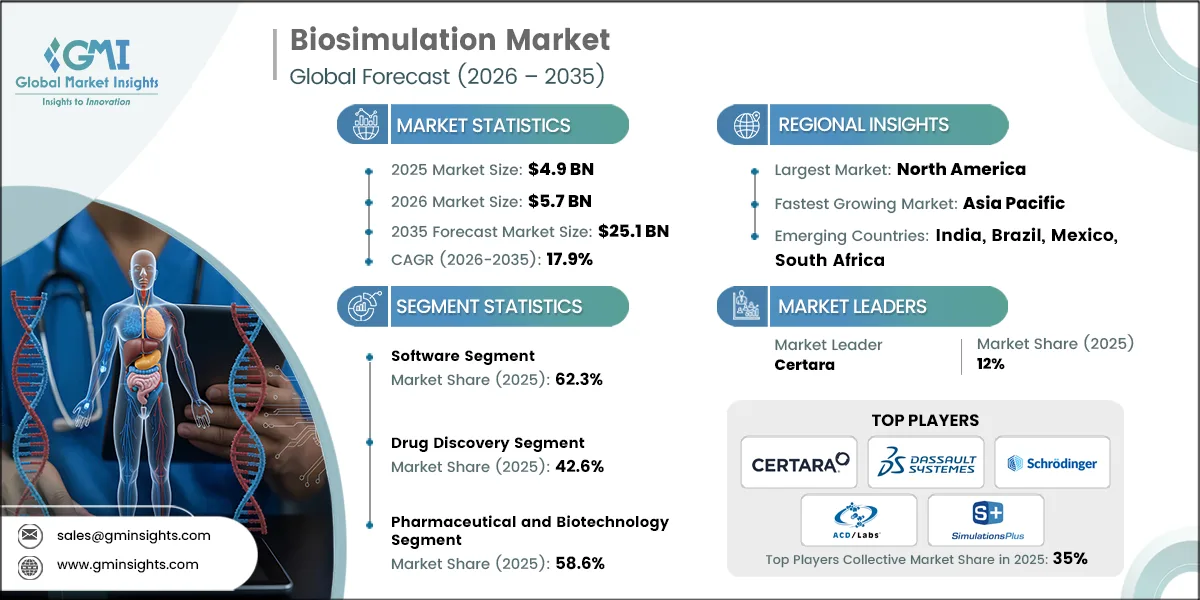
To get key market trends
Biosimulation Market Trends
- Technological advancements in computational modeling are transforming the market by enabling more accurate and efficient simulations of biological systems. Innovations such as artificial intelligence in healthcare, machine learning (ML), cloud computing, and high-performance computing (HPC) are driving these advancements. These technologies allow researchers to handle complex biological data and model intricate physiological processes with unprecedented precision.
- Additionally, AI and ML algorithms are increasingly being integrated into biosimulation tools to enhance predictive accuracy for drug interactions, toxicology studies, and disease progression. For example, AI-driven models can identify potential drug candidates more quickly and reduce the likelihood of failures in late-stage clinical trials.
- The adoption of cloud platforms has simplified the process of performing large-scale simulations. This enables researchers to analyze vast datasets and run parallel simulations in a cost-effective manner. The scalability of these platforms accelerates research timelines and enhances collaboration across geographies.
- Moreover, biosimulation plays a pivotal role in personalized medicine by enabling the simulation of patient-specific genetic and metabolic profiles. This helps predict drug efficacy and design tailored therapies.
Biosimulation Market Analysis
Learn more about the key segments shaping this market
Based on offering, the market is segmented into software and service. Further, the software segment is bifurcated into integrated software suites/platform and standalone modules. The software segment was valued at USD 3 billion in 2025 and held a significant market share of 62.3%.
- Biosimulation software uses advanced algorithms and machine learning techniques to accurately simulate complex biological systems, improving the predictive accuracy of drug efficacy and safety. This capability allows researchers to identify optimal drug candidates early in the development process, enhancing overall efficiency.
- By reducing reliance on traditional laboratory experiments and physical trials, biosimulation significantly accelerates the drug development timeline. This helps pharmaceutical companies cut costs and expedites the transition from preclinical to clinical research. Widely adopted tools, such as Schrödinger’s molecular modeling platform and Physiomics' Virtual Tumour technology, streamline early-stage evaluation and reduce trial-and-error cycles in experimental testing.
- Further, modern biosimulation platforms integrate diverse datasets, including genomic, proteomic, and electronic health records, providing a comprehensive view of biological systems. This integration supports informed decision-making and contributes to the growing adoption of biosimulation technologies, driving market growth.
Based on application, the biosimulation market is bifurcated into drug discovery, drug development, disease modelling, and other applications. The drug discovery segment accounted for a 42.6% market share in 2025.
- Biosimulation software uses advanced algorithms and machine learning techniques to accurately simulate complex biological systems, improving the predictive accuracy of drug efficacy and safety. This capability allows researchers to identify optimal drug candidates early in the development process, enhancing overall efficiency.
- By reducing reliance on traditional laboratory experiments and physical trials, biosimulation significantly accelerates the drug development timeline. This helps pharmaceutical companies cut costs and expedites the transition from preclinical to clinical research. Widely adopted tools, such as Schrödinger’s molecular modeling platform and Physiomics' Virtual Tumour technology, streamline early-stage evaluation and reduce trial-and-error cycles in experimental testing.
- Further, modern biosimulation platforms integrate diverse datasets, including genomic, proteomic, and electronic health records, providing a comprehensive view of biological systems. This integration supports informed decision-making and contributes to the growing adoption of biosimulation technologies, driving market growth.
Based on therapeutic area, the biosimulation market is segmented into oncology, cardiovascular disease, neurological disorders, infectious diseases, and other therapeutic areas. The oncology segment dominated the market, accounting for 36.8% of the revenue share in 2025.
- The increasing global prevalence of cancer is driving the demand for the market. For instance, according to data from the World Health Organization (WHO), in 2022, there were approximately 20 million cancer cases, with 9.7 million cancer deaths reported worldwide. It is estimated that 53.5 million people were cancer survivors within five years of being diagnosed with the illness.
- Biosimulation allows researchers to model tumor growth and predict drug responses, enabling the rapid screening of potential anti-cancer therapies. This reduces reliance on traditional, time-intensive methods, accelerating preclinical and clinical development timelines.
- Advanced modeling tools simulate cancer biology at the molecular and cellular levels, helping identify novel therapeutic targets. These simulations provide insights into how different drugs interact with specific cancer pathways, refining treatment strategies.
- Biosimulation supports the development of precision medicine by modeling patient-specific tumor genetics, proteomics, and microenvironments. This enables oncologists to predict individual responses to treatments and design personalized therapeutic regimens, driving market growth.
Based on the delivery model, the biosimulation market is segmented into subscription models, ownership models, and service-based models. Further, the ownership model is sub-segmented into a license-based model and a pay-per-use model. The subscription models segment dominated the market, accounting for 55.3% of the revenue share in 2025.
- Subscription-based pricing reduces the upfront financial burden for users, particularly small to mid-sized biotech firms and academic institutions. Instead of a hefty one-time purchase, users can access advanced biosimulation platforms through manageable recurring payments.
- Additionally, subscription models often provide flexible plans tailored to the user's needs, enabling them to scale up or down based on project demands. This flexibility is particularly beneficial for companies with fluctuating biosimulation requirements.
- Furthermore, many subscription models bundle software with training, customer support, and additional services. This ensures users can fully leverage the platform's capabilities without requiring extensive internal expertise, thereby driving market growth.
Based on deployment model, the biosimulation market is bifurcated into on-premises model and cloud-based model. The on-premises model segment accounted for a 62.4% market share in 2025.
- On-premises models ensure that sensitive biosimulation data, such as proprietary drug models or confidential patient information, remains securely within the organization’s infrastructure. This high level of control minimizes the risk of data breaches and unauthorized access, which is particularly crucial for organizations handling sensitive or regulated data.
- Moreover, the localized infrastructure of on-premises systems offers reliability and independence from external factors such as internet connectivity or cloud service provider uptime. This independence ensures consistent availability and minimal downtime, allowing researchers to continue critical projects without interruptions.
- To further enhance performance, on-premises systems can leverage high-performance computing (HPC) setups. These setups enable large-scale simulations, such as whole genome pharmacogenomic studies or virtual drug screening, by integrating specialized hardware designed to meet the demands of computationally intensive tasks.
Learn more about the key segments shaping this market
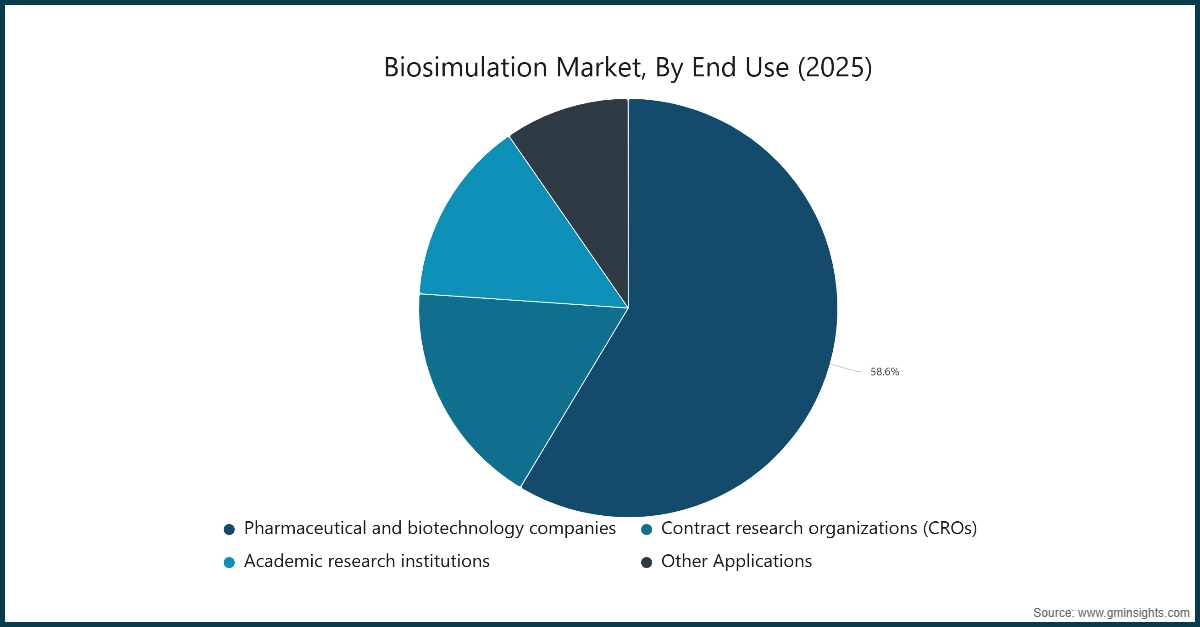
Based on end use, the biosimulation market is bifurcated into pharmaceutical and biotechnology companies, contract research organizations (CROs), academic research institutions, and other application. The pharmaceutical and biotechnology companies segment accounted for a 58.6% market share in 2025.
- Biosimulation serves as a cornerstone of innovation in the pharmaceutical and biotechnology industries, providing a unified approach across drug discovery, clinical trials, and personalized medicine development. At the early stages of drug discovery, biosimulation accelerates progress by modeling molecular interactions, such as receptor-ligand binding, enzyme kinetics, and metabolic pathways.
- Building on this foundation, biosimulation extends its utility into the clinical trial phase. By simulating virtual patient populations, researchers can model diverse dosing regimens, predict outcomes, and assess potential side effects across demographics. This capability streamlines trial design, reduces the number of participants required, and increases the likelihood of regulatory success.
- Moreover, biosimulation’s ability to incorporate genetic, metabolic, and physiological data makes it an invaluable tool for personalized medicine. By predicting individual or subgroup responses to treatments, biosimulation helps pharmaceutical and biotechnology companies tailor therapies to patient-specific needs. This not only improves clinical outcomes but also aligns with the growing demand for precision medicine, further driving market growth.
Looking for region specific data?
North America Biosimulation Market
The North America region accounted for 40.4% of the global market in 2025. The market in North America is experiencing robust expansion, driven by the region’s advanced healthcare infrastructure and technological advancements.
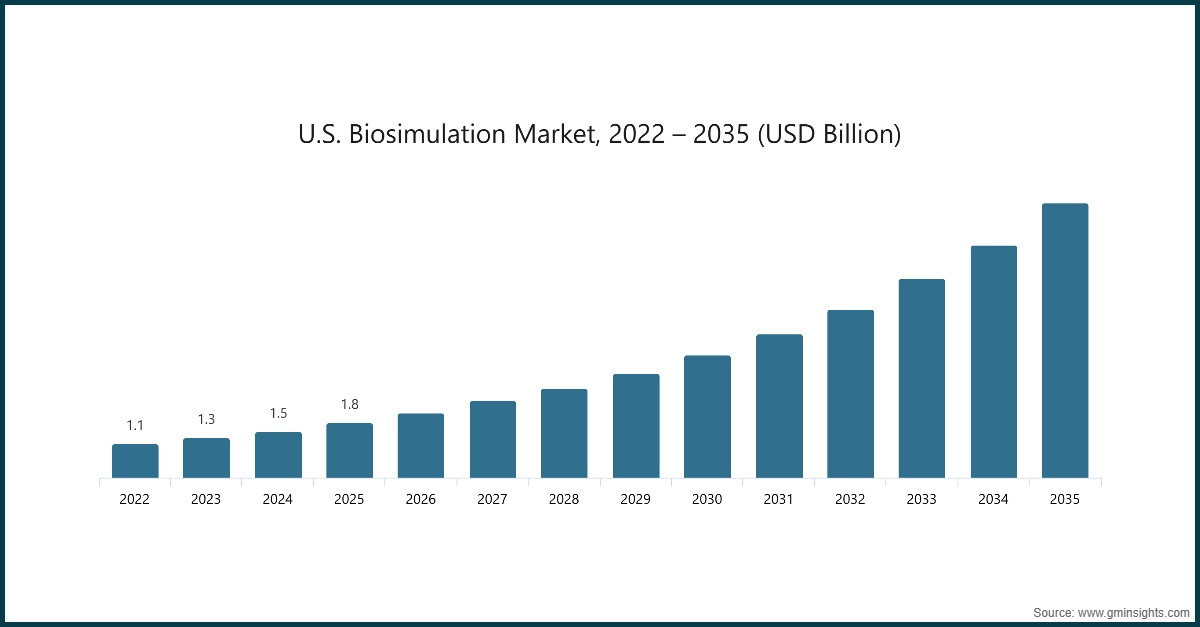
- The U.S. market was valued at USD 1.1 billion and USD 1.3 billion in 2022 and 2023, respectively. In 2025 the market size increased to USD 1.8 billion from USD 1.5 billion in 2024.
- The growth of the U.S. biosimulation market is primarily driven by the increasing prevalence of chronic conditions such as cancer, cardiovascular diseases, respiratory diseases, and other chronic illnesses. These conditions require continuous monitoring, which boosts the demand for advanced monitoring solutions in hospitals and homecare settings.
- The increasing incidence of cancer in the U.S. is driving the demand for biosimulation in the country. For instance, according to the National Cancer Institute, in 2024, it is estimated that 2,001,140 new cases of cancer will be diagnosed in the U.S., with 611,720 fatalities resulting from the disease.
- The U.S. leads the market due to its highly advanced healthcare and R&D infrastructure, strong regulatory support from the FDA, and substantial investment in digital modeling technologies. Pharmaceutical and biotech companies across the country are rapidly shifting from traditional trial-and-error approaches to AI-enhanced in silico modeling, PBPK simulations, and virtual clinical trials, improving development efficiency and strengthening adoption.
Europe Biosimulation Market
Europe market accounted for USD 1.1 billion in 2025 and is anticipated to show lucrative growth over the forecast period.
- The growth of the market in Europe is primarily attributed to the rising prevalence of chronic diseases, especially cancer, and increasing government and EU-backed initiatives aimed at strengthening pharmaceutical R&D across the region.
- Technological advancements in biosimulation tools, including AI-enhanced modelling, cloud-based simulation environments, and integration with real-world clinical and genomic datasets, are accelerating adoption in Europe. These innovations enable real-time modelling, improve workflow efficiency in clinical research, and support optimized study design, driving wider use of biosimulation in clinical development and regulatory submissions.
Germany's biosimulation market is projected to experience steady growth between 2026 and 2035.
- Germany is emerging as a significant market for biosimulation, supported by its strong biotechnology ecosystem, advanced healthcare infrastructure, and expanding use of computational modelling in clinical development. With leading European nations accelerating investment in biosimulation software and AI-enabled modelling, Germany continues to adopt these tools for precision medicine, pharmacometrics, and disease modelling applications.
- Public-private initiatives and increased funding for digital R&D modernization are accelerating the integration of innovative biosimulation platforms in Germany, including AI-driven PBPK models, virtual clinical trial systems, and cloud-based simulation environments. These advancements enhance R&D efficiency, improve safety assessments, and support faster regulatory submissions, collectively strengthening market growth in the country.
Asia Pacific Biosimulation Market
The Asia Pacific region is projected to show a lucrative growth of about 18.4% during the forecast period.
- The market in Asia-Pacific is experiencing rapid growth, driven by the increasing prevalence of chronic diseases and a growing regional focus on accelerating drug development. Asia-Pacific has been identified as one of the fastest-growing regions for biosimulation, with pharmaceutical and biotech companies expanding their adoption of simulation-based platforms to improve predictive accuracy and optimize therapies for diverse patient populations.
- Countries such as China, India, and Japan are rapidly adopting next generation biosimulation technologies. This adoption is supported by advancements in healthcare and R&D infrastructure, along with a growing need for efficient management of complex and long-term conditions.
- The expansion of pharmaceutical research centers, government-backed initiatives promoting digital innovation, and rising investments in clinical development capabilities are accelerating the growth of the market in the region.
China biosimulation market is poised to witness lucrative growth between 2026 - 2035.
- China’s growing elderly population is driving the accelerated adoption of biosimulation tools. The rising burden of chronic and age-related diseases is increasing the demand for advanced predictive modeling to support faster and more efficient drug development across major therapeutic areas.
- According to WHO estimates in 2019, approximately 254 million people aged 65 and above were living in China, and this number is projected to reach around 402 million individuals over the age of 60 by 2040.
- Government initiatives aimed at enhancing healthcare and R&D infrastructure, along with significant national investments in digital health, AI-driven technologies, and the modernization of pharmaceutical research, are accelerating China’s integration of advanced biosimulation systems.
Latin America Biosimulation Market
Brazil in Latin America is experiencing significant growth in the market.
- The growth of the market in Brazil is strongly driven by advancements in computational modelling technologies and the increasing prevalence of chronic and complex diseases that require more accurate predictive tools for drug development. Pharmaceutical and healthcare research institutions across Brazil are adopting biosimulation platforms to improve therapeutic safety, enhance development efficiency, and support evidence-based decision-making.
- Furthermore, government initiatives and private investments in strengthening Brazil’s R&D capabilities are accelerating the adoption of innovative biosimulation technologies, including AI-powered analytics, PBPK modelling, and cloud-enabled simulation platforms. These advancements improve predictive accuracy, optimize clinical trial design, and support timely regulatory submissions, driving sustained growth in the market in Brazil.
Middle East and Africa Biosimulation Market
Saudi Arabia in the Middle East and Africa is expected to experience lucrative growth during the forecast period.
- Saudi Arabia is steadily increasing investments in modernizing its pharmaceutical and biotechnology research ecosystem, driven by both government and private-sector initiatives. The country is prioritizing advanced biosimulation platforms to enhance drug development efficiency, strengthen clinical decision-making, and support its expanding healthcare and life sciences capabilities.
- As part of its Vision 2030 initiative, the Saudi government has allocated significant resources to upgrade research and healthcare infrastructure and integrate innovative technologies, including AI-enabled modelling systems, PBPK simulation tools, and cloud-based biosimulation platforms.
Biosimulation Market Share
- The top five players in the market, Certara, Simulations Plus, Dassault Systemes, Schrödinger, and Advanced Chemistry Development (ACD/Labs), collectively hold a 35% share of the global market. These companies strengthen their positions through continuous innovation in PBPK, PK/PD, and molecular simulation technologies; adherence to regulatory modeling standards; and strategic collaborations with pharmaceutical and biotech firms.
- Certara maintains a strong position with its Simcyp Simulator and Phoenix pharmacometrics suite, offering advanced population-based modeling, virtual clinical trials, and regulatory-ready simulation workflows. The company focuses heavily on integrating AI-enhanced prediction tools, high-performance cloud simulation environments, and expanded disease-specific models to accelerate decision-making and improve R&D efficiency.
- Leading biosimulation vendors are also adopting cost-optimized strategies to penetrate emerging markets, such as offering cloud-based subscription models, modular simulation suites, and scalable computational frameworks suitable for smaller biotech firms, academic centers, and regional CROs. These approaches aim to expand access to advanced modeling tools and accelerate drug development in regions experiencing rapid growth in pharmaceutical research.
- Emerging trends in the market include AI-powered predictive modeling, cloud-native simulation platforms, automation of virtual clinical trial design, and deep integration with real-world data and electronic health records (EHR). These advancements are reshaping drug discovery and development by reducing trial failures, improving dose-response predictions, and supporting regulatory submissions, thereby driving sustained global market growth.
Biosimulation Market Companies
Few of the prominent players operating in the biosimulation industry include:
- Allucent
- Advanced Chemistry Development (ACD/Labs)
- Certara
- Cellworks
- Chemical Computing Group
- Dassault Systemes
- Genedata
- In Silico Biosciences
- Immunetrics
- OpenEye
- Physiomics
- Simulations Plus
- Schrödinger
- Thermo Fisher Scientific
- VeriSIM Life
Certara offers the most widely adopted PBPK platform and regulatory-accepted pharmacometric workflows. Its strength lies in regulatory trust, as global agencies consistently accept Certara’s biosimulation data, giving it a unique competitive edge in drug development and submission support.
Simulations Plus specializes in AI‑enhanced ADMET modeling, PK/PD simulation, and mechanistic toxicity prediction, giving it a strong advantage in early‑stage virtual drug screening. Its flagship tools enable deep, mechanistic modeling of absorption, distribution, metabolism, and elimination, making the company a leader in predictive pharmacokinetics for both small and large molecules.
Dassault Systemes BIOVIA suite delivers enterprise‑scale molecular modeling and multiscale simulation capabilities, uniquely integrating computational chemistry, biology, and materials science within a unified digital platform.
Biosimulation Market Report Attributes
| Key Takeaway | Details |
|---|---|
| Market Size & Growth | |
| Base Year | 2025 |
| Market Size in 2025 | USD 4.9 Billion |
| Market Size in 2026 | USD 5.7 Billion |
| Forecast Period 2026-2035 CAGR | 17.9% |
| Market Size in 2035 | USD 25.1 Billion |
| Key Market Trends | |
| Drivers | Impact |
| Rising prevalence of chronic diseases | The increasing burden of cardiovascular, respiratory, and neurological disorders is driving the need for faster and more accurate drug development. This is boosting the adoption of biosimulation tools to model disease progression, optimize therapies, and reduce clinical trial timelines. |
| Technological advancements in computational modeling | Enhanced access to advanced modeling technologies, including AI-enhanced PK/PD and PBPK simulations, is accelerating the adoption of biosimulation. These advancements improve predictive accuracy, reduce development failures, and lower overall drug development costs. |
| Rising demand for personalized medicine | The integration of AI-driven modeling and big-data-supported simulations enables precise virtual predictions of patient-specific drug responses. This is expanding the use of biosimulation in tailoring individualized treatment strategies. |
| Increasing use of AI and machine Learning | The growing complexity of age-related diseases is increasing the demand for AI-powered biosimulation platforms. These platforms simulate diverse patient populations, refine dosing strategies, and support decision-making for targeted therapies. |
| Pitfalls & Challenges | Impact |
| High cost of biosimulation software and services | The high cost of biosimulation software and services limits adoption in resource-constrained regions and smaller biopharma companies. This slows market penetration and reduces the ability of emerging markets to utilize advanced simulation-based development. |
| Lack of skilled professionals | The shortage of qualified modelers delays model validation, regulatory submissions, and development cycles. This creates barriers to innovation, particularly for AI-enabled biosimulation platforms that require specialized expertise. |
| Opportunities: | Impact |
| Rising healthcare infrastructure in emerging markets | The expansion of R&D capacity and digital infrastructure in emerging regions is creating new opportunities for biosimulation adoption. This enables broader use of simulation-supported drug development and accelerates pharmaceutical innovation. |
| Market Leaders (2025) | |
| Market Leader |
12% market share |
| Top Players |
Collective market share in 2025 is 35% |
| Competitive Edge |
|
| Regional Insights | |
| Largest Market | North America |
| Fastest growing market | Asia Pacific |
| Emerging countries | India, Brazil, Mexico, South Africa |
| Future outlook |
|
What are the growth opportunities in this market?
Biosimulation Industry News
- In August 2024, Certara, Inc. launched Phoenix version 8.5, which enhanced its PK/PD and toxicokinetic modeling software. The update featured an improved interface, faster processing, and advanced tools, simplifying drug development and regulatory submissions to expedite the delivery of new therapies.
- In June 2024, Simulations Plus, Inc. acquired Pro-ficiency Holdings, Inc. and its subsidiaries, a company specializing in simulation-enabled performance and intelligence solutions for clinical and commercial drug development. This acquisition broadened Simulations Plus' capabilities in clinical trial simulations and data-driven decision-making, strengthening its portfolio to better support accelerated drug development.
The biosimulation market research report includes an in-depth coverage of the industry with estimates and forecast in terms of revenue in USD Million and from 2022 - 2035 for the following segments:
Market, By Offering
- Software
- Integrated software suites/platform
- Molecular modeling and simulation software
- Clinical trial design software
- PK/PD modeling and simulation software
- Pbpk modeling and simulation software
- Toxicity prediction software
- Other integrated software suites/platforms
- Standalone modules
- Integrated software suites/platform
- Service
Market, By Application
- Drug discovery
- Drug development
- Disease modeling
- Other applications
Market, By Therapeutic Area
- Oncology
- Cardiovascular disease
- Neurological disorder
- Infectious diseases
- Other therapeutic areas
Market, By Delivery Model
- Subscription models
- Ownership models
- License-based model
- Pay-per-use model
- Service-based models
Market, By Deployment Model
- On-premises model
- Cloud-based model
Market, By End Use
- Pharmaceutical and biotechnology companies
- Contract research organizations (CROs)
- Academic research institutions
The above information is provided for the following regions and countries:
- North America
- U.S.
- Canada
- Europe
- Germany
- UK
- France
- Italy
- Spain
- Netherlands
- Asia Pacific
- China
- India
- Japan
- Australia
- South Korea
- Latin America
- Brazil
- Mexico
- Argentina
- Middle East and Africa
- Saudi Arabia
- South Africa
- UAE
Frequently Asked Question(FAQ) :
What was the market size of the biosimulation market in 2025?
The biosimulation market was valued at USD 4.9 billion in 2025, driven by advancements in computational modeling, increasing prevalence of chronic diseases, and growing demand for personalized medicine.
What is the projected value of the biosimulation market by 2035?
The market is expected to reach USD 25.1 billion by 2035, expanding at a CAGR of 17.9%, fueled by the integration of AI, machine learning, and advancements in biosimulation technologies.
What is the projected size of the biosimulation market in 2026?
The market is projected to grow to USD 5.7 billion in 2026.
How much revenue did the software segment generate in 2025?
The software segment generated USD 3 billion in 2025, accounting for a significant 62.3% market share.
What was the market share of the drug discovery application in 2025?
The drug discovery application held a 42.6% market share in 2025, driven by its role in identifying optimal drug candidates early in the development process.
Who are the key players in the biosimulation market?
Major companies include Allucent, ACD/Labs, Certara, Cellworks, Chemical Computing Group, Dassault Systèmes, Genedata, In Silico Biosciences, Immunetrics, OpenEye Scientific Software, Physiomics, Simulations Plus, and Schrödinger.
Biosimulation Market Scope
Related Reports