Summary
Table of Content

Bioconjugation Market
Get a free sample of this report
Form submitted successfully!
Error submitting form. Please try again.
Thank you!
Your inquiry has been received. Our team will reach out to you with the required details via email. To ensure that you don't miss their response, kindly remember to check your spam folder as well!
Request Sectional Data
Thank you!
Your inquiry has been received. Our team will reach out to you with the required details via email. To ensure that you don't miss their response, kindly remember to check your spam folder as well!
Form submitted successfully!
Error submitting form. Please try again.
Bioconjugation Market Size
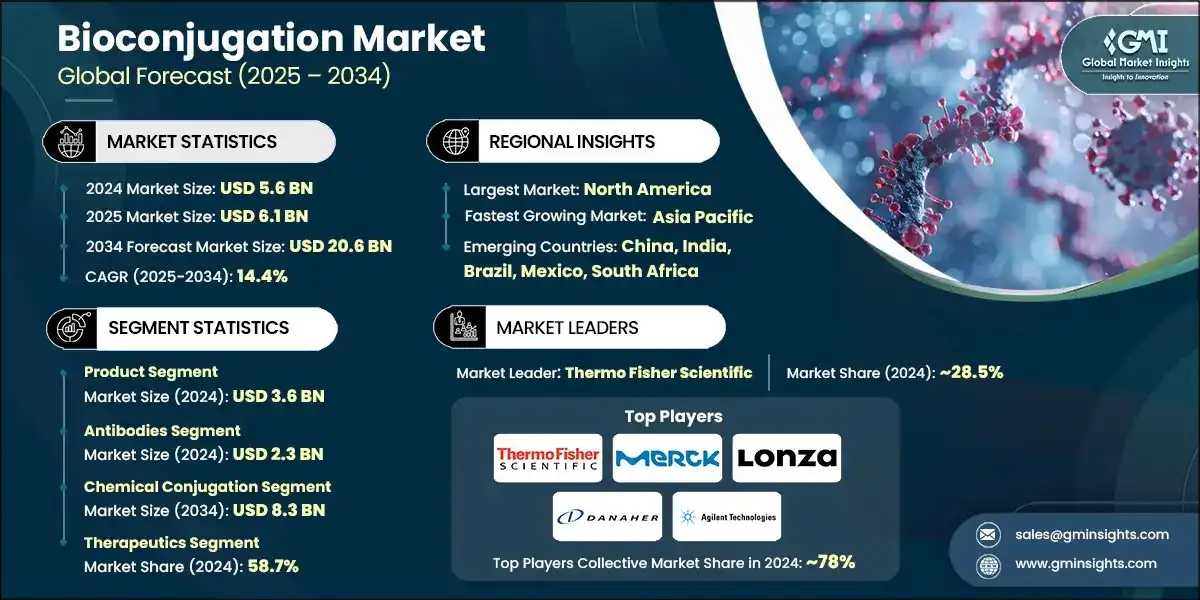
The global bioconjugation market was valued at USD 5.6 billion in 2024. The market is expected to grow from USD 6.1 billion in 2025 to USD 20.6 billion in 2034, at a CAGR of 14.4% during the forecast period, according to the latest report published by Global Market Insights Inc. With the growing incidence of chronic diseases, demand for biologics and advanced therapies is rising, which further increases the demand for bioconjugation products and services.
Bioconjugation Market Key Takeaways
Market Size & Growth
- 2024 Market Size: USD 5.6 Billion
- 2025 Market Size: USD 6.1 Billion
- 2034 Forecast Market Size: USD 20.6 Billion
- CAGR (2025–2034): 14.4%
Key Market Drivers
- Rising prevalence of chronic diseases.
- Advancements in targeted therapies.
- Regulatory approvals for bioconjugates.
- Expanding applications in diagnostics.
Challenges
- Complexity of bioconjugation processes.
- High production and development costs.
Opportunity
- Growth in personalized medicine.
- Advancements in bioconjugation techniques.
Key Players
- Market Leader: Thermo Fisher Scientific led with over 28.5% market share in 2024.
- Leading Players: Top 5 players in this market include Thermo Fisher Scientific, Merck KGaA, Lonza Group, Danaher Corporation, Agilent Technologies, which collectively held a market share of 78% in 2024.
Get Market Insights & Growth Opportunities
For instance, as per the WHO, noncommunicable diseases (NCDs) killed at least 43 million people in 2021, equivalent to 75% of non-pandemic-related deaths globally. Similarly, in 2022, there were an estimated 20 million new cancer cases and 9.7 million deaths. Thus, with the growing incidence of chronic diseases the demand for effective therapeutics is rising, thereby driving market growth.
Furthermore, the application of bioconjugation in antibody-drug conjugates (ADCs) for cancer treatment has seen remarkable growth in recent years. For example, as of mid-2025, approximately 15 ADCs have been approved by the FDA and 19 by at least one global regulatory agency. Furthermore, over 189 ADCs are in active clinical evaluation worldwide. With a growing pipeline of bioconjugate based drugs under development the demand for bioconjugation products and services is rising, thereby propelling market growth.
Bioconjugation is the chemical process of linking two biomolecules, such as proteins, antibodies, or nucleic acids, to each other or to other molecules like drugs or polymers, creating hybrid molecules with combined functional properties. This technique is fundamental in developing targeted therapies, advanced diagnostics, and innovative research tools by enabling precise and stable connections that improve effectiveness and specificity. Key players in the bioconjugation market, including Thermo Fisher Scientific, Merck KGaA, Danaher, Lonza, and Agilent Technologies. These players drive growth by investing in research and development to create more efficient conjugation chemistries and kits. They also offer extensive product portfolios and services, helping researchers and pharmaceutical companies adopt bioconjugation technologies across diverse applications.
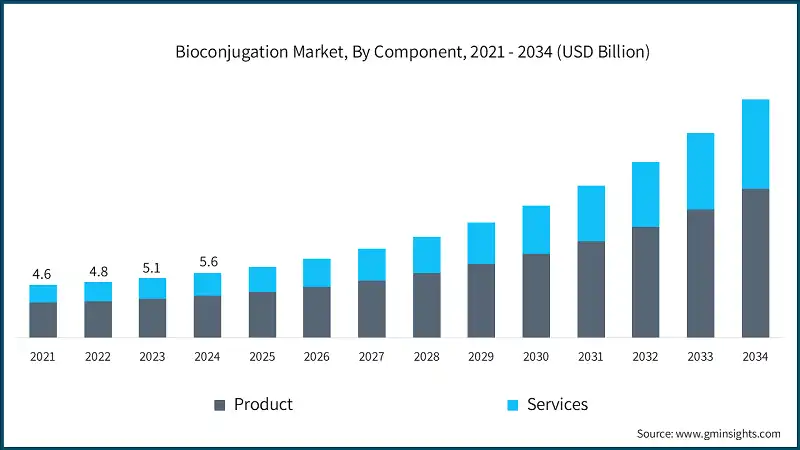
Between 2021 and 2023, the market witnessed significant growth growing from USD 4.6 billion in 2021 to USD 5.1 billion in 2023. This growth can be attributed to the advancements in targeted therapies, especially antibody-drug conjugates (ADCs), and rising investments in precision medicine. For example, the success of ADCs like Enhertu and Kadcyla showcased the potential of bioconjugation technologies, prompting increased research focused on improving linker stability and site-specific conjugation to enhance treatment outcomes. Additionally, innovations in conjugation chemistry such as click chemistry and enzyme-mediated methods have expanded the use of bioconjugation in diagnostics and drug delivery, further boosting market growth.
Bioconjugation refers to the process of covalently attaching biomolecules, such as proteins, antibodies, or nucleic acids, to other molecules, including drugs, enzymes, or synthetic materials. This technique is widely used in fields like biotechnology, pharmaceuticals, and diagnostics to enhance the functionality, stability, and specificity of biomolecules.
To get key market trends
Bioconjugation Market Trends
- One of the most prominent trends in the market is the growing focus on antibody-drug conjugates (ADCs). These targeted therapies combine the specificity of antibodies with the potency of cytotoxic drugs, offering more effective treatment options for cancer patients.
- The success of several FDA-approved ADCs has spurred increased research and development efforts, with companies striving to enhance therapeutic efficacy while minimizing side effects using bioconjugation techniques.
- Another key trend is the expanding applications in diagnostics. Bioconjugation enables the attachment of imaging agents to specific biomolecules, allowing for highly sensitive and targeted visualization of diseases at the molecular level. This precise targeting improves early diagnosis and monitoring of conditions such as cancer and cardiovascular diseases.
- In addition, rising demand for targeted drug delivery is fueling market growth. Advances in antibody-drug conjugates (ADCs), nanomedicine, and personalized medicine drive innovation, enabling more precise and effective treatments with reduced side effects.
- The increasing prevalence of chronic diseases, such as cancer and autoimmune disorders, is further accelerating the need for bioconjugation technologies in drug development.
- The integration of bioconjugation with nanotechnology is emerging as another important trend. Nanocarriers conjugated with targeting ligands and therapeutic agents offer improved drug delivery efficiency and reduced toxicity. This combination is especially promising for treating complex diseases such as cancer and neurological disorders, where targeted delivery and controlled release are critical for treatment success. Research in this area is expanding rapidly, opening new avenues for innovative drug formulations.
Bioconjugation Market Analysis
Learn more about the key segments shaping this market
Based on the component, the global bioconjugation market is divided into products and services. The product segment was valued at USD 3.6 billion in 2024. The segment includes consumables such as reagents and kits, labels, and other consumables, and instruments. The consumables segment dominated the market with a share of 68.4% in 2024.
- This significant share is primarily attributed to the essential role of reagents, linkers, and labeling kits in bioconjugation processes.
- These consumables are integral to various applications, including antibody-drug conjugates (ADCs), protein labeling, and diagnostics.
- Their widespread use in research and drug development, coupled with the recurring nature of their purchase, drives the segmental revenue.
- On the other hand, the services segment is anticipated to rapid growth at a CAGR of 15.3% over the forecast years.
- This expansion is primarily driven by the increasing outsourcing of complex bioconjugation processes to specialized contract research organizations (CROs) and contract development and manufacturing organizations (CDMOs).
- Pharmaceutical and biotechnology companies are leveraging these services to enhance efficiency, reduce operational costs, and accelerate the development of targeted therapies, such as antibody-drug conjugates (ADCs), and personalized medicine solutions, thereby driving the adoption of bioconjugation services.
Based on the biomolecule type, the bioconjugation market is segmented into antibodies, proteins, peptides, oligonucleotides, and other biomolecules. The antibodies segment dominated the market in 2024 with a revenue of USD 2.3 billion.
- The antibodies segment commands a significant share of the market due to its crucial role in targeted therapeutics and diagnostics.
- Antibodies, particularly monoclonal antibodies, are widely used as carrier molecules in antibody-drug conjugates (ADCs) because of their high specificity to disease-associated antigens. This allows for precise drug delivery, reducing toxicity to healthy tissues and improving treatment outcomes.
- In addition to therapeutics, antibodies are also essential in diagnostic assays and imaging applications, where accurate detection of biomarkers is critical.
- The proteins segment held second-largest market share of 19.7% in 2024.
- Proteins such as enzymes and albumin are frequently conjugated to improve drug stability, targeting, or detection. Their biocompatibility with several drugs and functional diversity make them ideal candidates for developing innovative drug delivery systems and biosensors, supporting their continued strong presence in the market.
Based on the technique, the bioconjugation market is segmented into chemical conjugation, enzyme-mediated conjugation, click chemistry, photoreactive crosslinking, and other techniques. The chemical conjugation segment dominated the market in 2024 and is anticipated to reach USD 8.3 billion by 2034.
On the other hand, the enzyme-mediated conjugation segment is anticipated to witness high growth at 14.9% CAGR between 2025 - 2034, owing to its ability to deliver highly specific, site-directed modifications with minimal off-target effects. This method offers greater consistency and stability in bioconjugate production, which is increasingly important for advanced therapeutics like antibody-drug conjugates and precision diagnostics.
- The chemical conjugation segment holds a major share of the bioconjugation market due to its long-standing use, flexibility, and compatibility with a wide range of biomolecules.
- It enables the efficient linking of proteins, antibodies, and other compounds using established chemistries like amine, thiol, and click-based reactions.
- Its reliability, scalability, and broad application in both research and commercial bioconjugate development continue to support its dominant position in the market.
Learn more about the key segments shaping this market
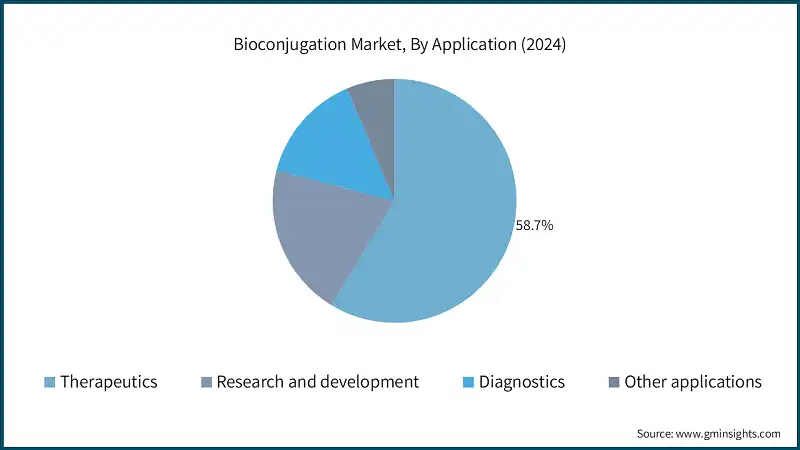
Based on the applications, the bioconjugation market is segmented into therapeutics, research and development, diagnostics, and other applications. The therapeutics segment dominated the market with a market share of 58.7% in 2024 and is anticipated to grow at a CAGR of 15.2% between 2025 - 2034. The therapeutics segment is further segmented into antibody-drug conjugates, protein-drug conjugates, peptide-drug conjugates, and other therapeutic applications.
- The therapeutics segment holds the largest share of the bioconjugation market, driven by the increasing demand for targeted drug delivery and precision medicine.
- Bioconjugates such as antibody-drug conjugates (ADCs), peptide-drug conjugates, and protein-based therapies offer improved efficacy and reduced toxicity, making them highly valuable in treating cancers, autoimmune disorders, and other chronic diseases.
- With several approved bioconjugated drugs already in the market and many more in development, this segment continues to expand rapidly, supported by strong investment, clinical success, and growing adoption in personalized treatment strategies.
Looking for region specific data?
North America Bioconjugation Market
The North America market dominated the global market with a market share of 43.2% in 2024.
- North America dominates the market, driven by advanced healthcare infrastructure, cutting-edge research and development, and an increasing demand for innovative therapeutics.
- The region’s advanced biopharma sector, coupled with regulatory support and significant investment, continues to foster the adoption of bioconjugation techniques.
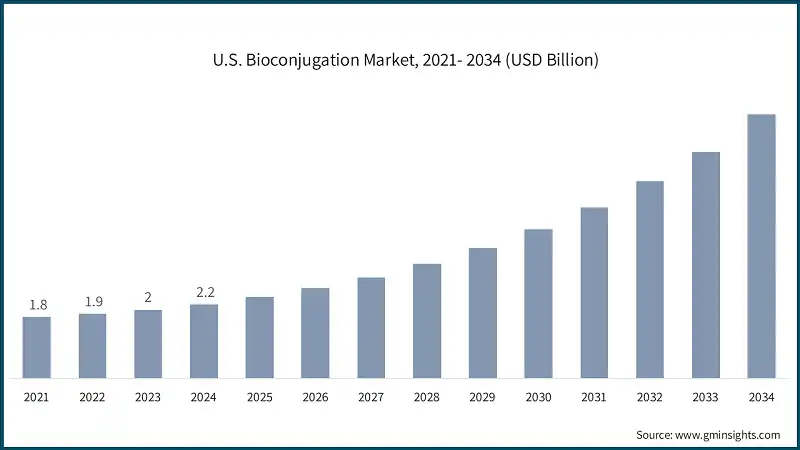
The U.S. bioconjugation market was valued at USD 1.8 billion and USD 1.9 billion in 2021 and 2022, respectively. The market size reached USD 2.2 billion in 2024, growing from USD 2 billion in 2023.
- The U.S. continues to dominate the market, driven by its robust biotechnology ecosystem, substantial research funding, and a favourable regulatory environment.
- The country is home to several leading pharmaceutical and biotech companies and benefits from a strong pipeline of innovative bioconjugate drug candidates and cutting-edge technologies.
- Additionally, the presence of leading research institutions and extensive clinical trial activities further accelerate the development and commercialization of new therapies.
Europe Bioconjugation Market
Europe market accounted for USD 1.5 billion in 2024 and is anticipated to show lucrative growth over the forecast period.
- Europe holds a significant share of the market, driven by its strong pharmaceutical and biotechnology sectors, advanced healthcare infrastructure, and robust research and development activities.
- The region benefits from supportive regulatory frameworks and substantial investments in innovative therapies, particularly in oncology and personalized medicine.
Germany dominates the Europe market, showcasing strong growth potential.
- Germany is a key contributor to the market in Europe, owing to its well-established pharmaceutical industry and research institutions.
- The country’s strong focus on innovation fuels the development and adoption of advanced bioconjugation technologies.
- Additionally, Germany’s supportive regulatory environment and collaborations between academia and industry further accelerate market growth, making it one of the leading hubs for bioconjugation research and commercialization in the region.
Asia Pacific Bioconjugation Market
The Asia Pacific market is anticipated to grow at the highest CAGR of 15.1% during the analysis timeframe.
- The Asia Pacific region is experiencing rapid growth in the market, driven by increasing healthcare investments, rising prevalence of chronic diseases, and expanding biotechnology sectors.
- Countries in this region are focusing on improving healthcare infrastructure and fostering innovation, which is fueling demand for advanced bioconjugation technologies in therapeutics and diagnostics.
- Additionally, growing collaborations between local companies and global players are accelerating market development, positioning Asia Pacific as one of the fastest-growing regions in this space.
China bioconjugation market is estimated to grow with a significant CAGR, in the Asia Pacific market.
- China, in particular, is emerging as a major force in the market within Asia Pacific.
- With substantial government support for biotechnology research and a rapidly growing pharmaceutical industry, China is investing heavily in developing targeted therapies and personalized medicine.
- The country’s expanding clinical trials and increasing adoption of antibody-drug conjugates (ADCs) and other bioconjugated products further drive market growth.
Latin American Bioconjugation Market
Brazil leads the Latin American market, exhibiting remarkable growth during the analysis period.
- Brazil is emerging as a key growth center in the Latin America market, supported by its expanding biotechnology and pharmaceutical industries.
- Increasing investment in healthcare infrastructure and rising awareness of advanced therapeutic options are driving demand for bioconjugated products, especially in oncology and infectious disease diagnostics.
- Additionally, Brazil’s growing research ecosystem and government initiatives to promote innovation are fostering the development and adoption of bioconjugation technologies, contributing to steady market growth in the region.
Middle East and Africa Bioconjugation Market
South Africa market to experience substantial growth in the Middle East and Africa market in 2024.
- South Africa is showing significant growth potential in the Middle East and Africa market driven by growing investments in healthcare and biotechnology.
- The increasing burden of chronic diseases, such as cancer, is fueling demand for advanced diagnostics and targeted therapies that rely on bioconjugation technologies.
- Additionally, government support for innovation and collaborations with international research organizations is helping to strengthen the bioconjugation ecosystem, promoting market growth and improving healthcare outcomes across the country.
Bioconjugation Market Share
The competitive landscape of the market is characterized by the presence of several established global players alongside emerging specialized companies. Top players such as Thermo Fisher Scientific, Merck KGaA, Lonza Group, Danaher Corporation, and Agilent Technologies hold a combined market share of ~78% in the market. Leading companies focus heavily on innovation, expanding their product portfolios, and strategic collaborations to strengthen their market position. Investments in research and development, particularly in novel conjugation chemistries and advanced therapeutic applications like antibody-drug conjugates, are key drivers of competition.
Additionally, partnerships between pharmaceutical firms, contract research organizations (CROs), and biotechnology companies are common strategies to accelerate product development and commercialization, fostering a dynamic and rapidly evolving market environment. Furthermore, smaller players and niche biotech firms contribute by focusing on specialized therapies and cutting-edge technologies. This dynamic environment fosters rapid technological advancements and competitive differentiation, driving the overall growth and diversification of the market.
Bioconjugation Market Companies
Prominent players operating in the bioconjugation industry are as mentioned below:
- Abzena
- AbbVie
- Agilent Technologies
- BD
- Bio-Rad Laboratories
- Catalent
- Charles River Laboratories
- Creative Biolabs
- Danaher Corporation
- GenScript Biotech Corporation
- Genentech (Roche Group)
- Lonza Group
- Merck KGaA
- Piramal Pharma Limited
- Sartorius
- Seagen
- Thermo Fisher Scientific
- WuXi Biologics
Thermo Fisher Scientific is a key player in the bioconjugation market, known for its extensive portfolio of reagents, kits, tools, and services, that support a wide range of bioconjugation applications. With strong global distribution and continuous investment in innovation, Thermo Fisher provides reliable solutions that cater to both research and commercial needs.
Merck KGaA is recognized for its innovative reagents and advanced conjugation technologies. The company focuses on developing high-quality linkers, kits, and chemicals that enhance precision and efficiency in bioconjugation processes. Merck’s strong technical support and collaborative approach help drive adoption across pharmaceutical and research sectors.
- Danaher
Danaher Corporation is a major competitor in the bioconjugation market, leveraging its diverse portfolio of life science and diagnostic tools through subsidiaries like Abcam and Cytiva. Danaher’s strong market presence and commitment to and development enable it to address evolving industry needs effectively.
Bioconjugation Market Report Attributes
| Key Takeaway | Details |
|---|---|
| Market Size & Growth | |
| Base Year | 2024 |
| Market Size in 2024 | USD 5.6 Billion |
| Market Size in 2025 | USD 6.1 Billion |
| Forecast Period 2025 - 2034 CAGR | 14.4% |
| Market Size in 2034 | USD 20.6 Billion |
| Key Market Trends | |
| Drivers | Impact |
| Rising prevalence of chronic diseases | The growing number of chronic conditions like cancer and autoimmune disorders fuels demand for targeted therapies that offer better efficacy and fewer side effects. |
| Advancements in targeted therapies | Innovations such as antibody-drug conjugates have improved precision of drug delivery, making treatments more effective and safer, which encourages wider adoption. |
| Regulatory approvals for bioconjugates | Streamlined approval processes by regulatory bodies like the FDA and EMA have accelerated the introduction of bioconjugated drugs, motivating more companies to invest. |
| Expanding applications in diagnostics | Bioconjugation is increasingly utilized in diagnostic tests and imaging, aiding early disease detection and personalized monitoring, thus broadening market reach. |
| Pitfalls & Challenges | Impact |
| Complexity of bioconjugation processes | The need for precise chemical linking and maintaining molecule stability presents technical challenges that require specialized expertise, limiting scalability. |
| High production and development costs | The synthesis and quality control of bioconjugates are resource-intensive, making products expensive and less accessible, especially in developing markets. |
| Opportunities: | Impact |
| Growth in personalized medicine | Rising interest in tailor-made treatments based on individual genetic profiles creates strong demand for customized bioconjugates. |
| Advancements in bioconjugation techniques | New methods like click chemistry and enzyme-mediated conjugation enhance efficiency and specificity, unlocking potential for novel therapeutic and diagnostic products. |
| Market Leaders (2024) | |
| Market Leaders |
~28.5% market share. |
| Top Players |
Collective market share in 2024 is ~78% |
| Competitive Edge |
|
| Regional Insights | |
| Largest Market | North America |
| Fastest Growing Market | Asia Pacific |
| Emerging Country | China, India, Brazil, Mexico, South Africa |
| Future Outlook |
|
What are the growth opportunities in this market?
Bioconjugation Industry News
- In March 2025, Axplora launched a new GMP payload manufacturing workshop at its Le Mans site in France, reinforcing its position in ADC commercial manufacturing. As part of the France 2030 program, the facility expands Axplora’s capabilities to meet the rising global demand for ADCs, representing 40% of the world's marketed ADCs and 50% of FDA-approved ADCs.
- In November 2024, Lonza announced an expansion of its bioconjugation capabilities in Visp, Switzerland, adding two 1,200L manufacturing suites and supporting infrastructure. The investment aimed to enhance commercial supply capacity and create approximately 200 new jobs, with operations expected to begin in 2028.
- In April 2024, Cytiva introduced its Xcellerex magnetic mixer at the annual Interphex meeting in New York City. The single mixing system has been specifically designed to address challenges faced by customers engaged in large-scale monoclonal antibody, vaccine, and genomic medicine manufacturing processes. This helped the company expand its product portfolio.
- In March 2024, Abzena announced a USD 5 million expansion of its Bristol, PA, bioconjugate development and cGMP manufacturing site. The investment enhanced laboratory space, upgraded facilities, and added new equipment, strengthening existing bioconjugation capabilities and increasing capacity for integrated biopharmaceutical drug programs.
- In June 2023, Lonza announced acquisition of Synaffix B.V. (Synaffix), a biotechnology company focused on commercializing its clinical-stage technology platform for the development of ADCs. This helped the company expand its product offerings.
The bioconjugation market research report includes in-depth coverage of the industry with estimates and forecast in terms of revenue in USD Billion from 2021 - 2034 for the following segments:
Market, By Component
- Product
- By type
- Consumables
- Reagents and kits
- Labels
- Other consumables
- Instruments
- Chromatography systems
- Spectroscopy instruments
- Mass spectrometers
- Flow cytometers
- Electrophoresis equipment
- Filtration systems
- Mixers and shakers
- Incubators
- Other instruments
- Consumables
- By end use
- Pharmaceutical and biotechnology companies
- CROs and CMOs
- Hospitals, clinics, diagnostic laboratories
- Academic and research institutes
- By type
- Services
- By type
- Custom synthesis and conjugation services
- Analytical and characterization services
- Scale-up and manufacturing services
- Other services
- By end use
- Pharmaceutical and biotechnology companies
- Hospitals, clinics, diagnostic laboratories
- Academic and research institutes
- By type
Market, By Biomolecule Type
- Antibodies
- Proteins
- Peptides
- Oligonucleotides
- Other biomolecules
Market, By Technique
- Chemical conjugation
- Enzyme-mediated conjugation
- Click chemistry
- Photoreactive crosslinking
- Other techniques
Market, By Application
- Therapeutics
- Antibody-drug conjugates
- Protein-drug conjugates
- Peptide-drug conjugates
- Other therapeutic applications
- Research and development
- Diagnostics
- Other applications
The above information is provided for the following regions and countries:
- North America
- U.S.
- Canada
- Europe
- Germany
- UK
- France
- Spain
- Italy
- Netherlands
- Asia Pacific
- China
- India
- Japan
- Australia
- South Korea
- Latin America
- Brazil
- Mexico
- Argentina
- Middle East and Africa
- South Africa
- Saudi Arabia
- UAE
Frequently Asked Question(FAQ) :
What is the market size of the bioconjugation in 2024?
The market size was USD 5.6 billion in 2024, with a CAGR of 14.4% expected through 2034, driven by the rising prevalence of chronic diseases and increasing demand for biologics and advanced therapies.
What is the projected value of the bioconjugation market by 2034?
The market is expected to reach USD 20.6 billion by 2034, fueled by advancements in bioconjugation techniques and expanding applications in therapeutics and diagnostics.
What is the projected size of the bioconjugation market in 2025?
The market is expected to reach USD 6.1 billion in 2025.
How much revenue did the product segment generate?
The product segment generated USD 3.6 billion in 2024, dominating the market with a 68.4% share. This segment includes consumables such as reagents, kits, labels, and instruments.
What was the valuation of the chemical conjugation technique segment?
The chemical conjugation segment led the market in 2024 and is projected to reach USD 8.3 billion by 2034.
Which region leads the bioconjugation market?
North America dominated the market with a 43.2% share in 2024, driven by strong research infrastructure and high adoption of advanced therapies.
What are the upcoming trends in the bioconjugation industry?
Key trends include the growing focus on antibody-drug conjugates (ADCs), expanding applications in diagnostics, and advancements in bioconjugation techniques to enhance therapeutic efficacy and minimize side effects.
Who are the key players in the bioconjugation market?
Key players include Abzena, AbbVie, Agilent Technologies, BD, Bio-Rad Laboratories, Catalent, Charles River Laboratories, Creative Biolabs, Danaher Corporation, and GenScript Biotech Corporation.
Bioconjugation Market Scope
Related Reports