Summary
Table of Content

Bacterial Cellulose in Textiles and Biomedical Market
Get a free sample of this report
Form submitted successfully!
Error submitting form. Please try again.
Thank you!
Your inquiry has been received. Our team will reach out to you with the required details via email. To ensure that you don't miss their response, kindly remember to check your spam folder as well!
Request Sectional Data
Thank you!
Your inquiry has been received. Our team will reach out to you with the required details via email. To ensure that you don't miss their response, kindly remember to check your spam folder as well!
Form submitted successfully!
Error submitting form. Please try again.
Bacterial Cellulose in Textiles and Biomedical Market Size
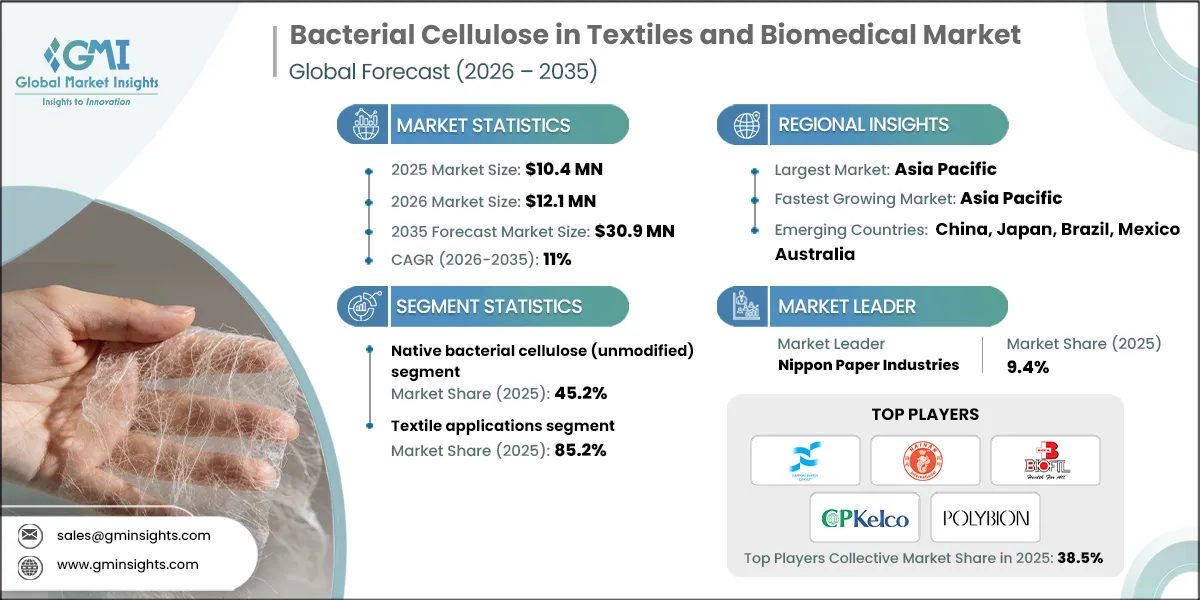
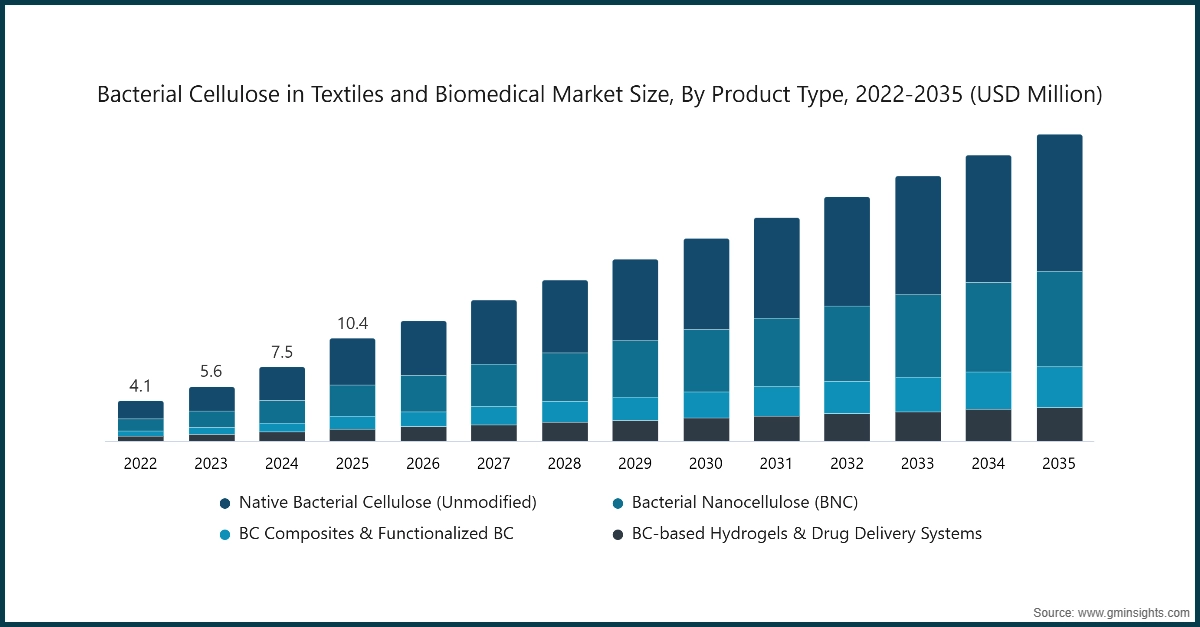
The global bacterial cellulose in textiles and biomedical market was valued at USD 10.4 million in 2025. The market is expected to grow from USD 12.1 million in 2026 to USD 30.9 million in 2035, at a CAGR of 11% according to latest report published by Global Market Insights Inc.
Bacterial Cellulose in Textiles and Biomedical Market Key Takeaways
Market Size & Growth
- 2025 Market Size: USD 10.4 Million
- 2026 Market Size: USD 12.1 Million
- 2035 Forecast Market Size: USD 30.9 Million
- CAGR (2026–2035): 11%
Regional Dominance
- Largest Market: Asia Pacific
- Fastest Growing Region: Asia Pacific
Key Market Drivers
- Growing demand for sustainable & vegan leather alternatives in fashion industry.
- Rising applications in advanced wound care & tissue engineering sectors.
- Increasing investment in bio-fabrication & fermentation technology innovation.
Challenges
- High fermentation & production costs compared to conventional materials.
- Limited production capacity & long fermentation cycles.
Opportunity
- Emerging applications in smart textiles & functional biomaterials.
- Integration with circular economy & biodegradable material initiatives.
Key Players
- Market Leader: Nippon Paper Industries led with over 9.4% market share in 2025.
- Leading Players: Top 5 players in this market include Nippon Paper Industries, Hainan Yeguo Foods, Biofill, CPKelco, Polybion, which collectively held a market share of 38.5% in 2025.
Get Market Insights & Growth Opportunities
- The bacterial cellulose diversity embraces native bacterial cellulose (unmodified), bacterial nanocellulose (BNC), BC composites & functionalized BC, and BC-based hydrogels & drug delivery systems produced through static fermentation systems, agitated fermentation systems, continuous production systems, and bioengineered strain optimization for various applications like sustainable fashion textiles, vegan leather alternatives, wound care dressings, tissue engineering scaffolds, and drug delivery platforms. The market is influenced by the rising demand for sustainable biomaterials and advanced biomedical solutions, with governments around the world undertaking measures to enable bio-based material initiatives, funding research into cellulose nanofiber applications, and putting in place policies to drive countries into transition to more sustainable and circular economy material systems.
- With most of their governments with favorable policies, many Asia Pacific states, especially China, Japan, and Australia, have begun making substantial investments in both bacterial cellulose production and process infrastructures with the region now the largest market for bacterial cellulose systems. North America has, however, been acknowledged as an upcoming and fast-emerging market driven by technological advancement and increased investment in sustainable textile innovations and rising consumer shift toward vegan leather products and advanced wound care formulations.
- The sustainable materials ecosystem underpinned by strong government support and innovative regulations has proven instrumental in the evolution and commercialization of bacterial cellulose development and innovation. The advent of new applications for bacterial cellulose systems across premium sustainable fashion, automotive interiors, advanced wound care, and regenerative medicine sectors, coupled with government strides in support of such initiatives, make this a time for global bacterial cellulose development.
To get key market trends
Bacterial Cellulose in Textiles and Biomedical Market Trends
- The biomaterials industry becomes more and more reliant on this evolution, manifesting as a manufacturing practice that focuses on sustainable production methods and bio-based alternatives. Production processes are increasingly geared toward the optimization of fermentation efficiency, nanofiber yield, and product functionality. One innovation that demonstrates efficiency of resources is a biorefinery concept, which also claims to have various valuable bacterial cellulose products from one fermentation source. These are aimed at global sustainability and circular economy goals and shaped by consumer demand for eco-friendly materials, transforming a supply chain to more transparency-focused supply chains, and motivating regulators to further support bio-based material initiatives.
- Sustainable and high-performance biomaterials with reduced environmental impact are being sought, and bacterial cellulose systems are coming up fast in the developing world. These bio-based materials outmatch other synthetic alternatives because of superior mechanical properties, biocompatibility, and biodegradability benefits. Bacterial nanocellulose and functionalized BC formulations are also catching the attention of fashion-conscious consumers and the medical device companies intended to improve product performance because of their high purity and required functional characteristics.
- Bacterial cellulose systems are attracting more and more interest as subjects for clear regulatory frameworks and certification standards to be applied to bio-based materials, especially in the medical device, sustainable fashion, and biodegradable material sectors. Their development increases product credibility, ensuring safety and, more importantly, acceptance into the market at a global scale. Thus, industry processes that align with regulatory requirements are constantly inspiring innovations while at the same time keeping compliance with the intent of sustainability and biocompatibility development in the bacterial cellulose industry.
Bacterial Cellulose in Textiles and Biomedical Market Analysis
Learn more about the key segments shaping this market
The bacterial cellulose in textiles and biomedical market is segmented into native bacterial cellulose (unmodified), bacterial nanocellulose (BNC), BC composites & functionalized BC, and BC-based hydrogels & drug delivery systems. Native bacterial cellulose (unmodified) dominated the market with an approximate market share of 45.2% in 2025 and is expected to grow with a CAGR of 10.8% by 2035.
- Native bacterial cellulose has begun taking its place in application across the sustainable fashion, vegan leather, wound care dressing, food packaging, and acoustic membrane industries. Native bacterial cellulose derived from natural fermentation processes such as Komagataeibacter xylinus cultivation, coconut water-based fermentation, and agricultural waste substrate fermentation through static culture methods are appreciated for their excellent mechanical strength, high purity, and three-dimensional nanofiber network when compared to plant-derived cellulose materials. The growing demand for sustainable and biodegradable materials and the increasing awareness of vegan alternatives are driving the adoption of native bacterial cellulose in various textile and biomedical applications.
- Bacterial nanocellulose (BNC) represents another larger sector of bacterial cellulose systems, which have opportunities in the markets owing to their use as high-strength reinforcement materials, advanced wound care substrates, and tissue engineering scaffolds in medical device manufacturing, premium textile applications, and regenerative medicine formulations. These nanostructured materials are much favored for their exceptional mechanical properties, excellent biocompatibility, and functional properties being consistent with the trends toward high-performance biomaterials and advanced medical device development programs.
- BC composites & functionalized BC represents a key segment based on their benefits for enhanced functionality, tailored properties, and versatile application in smart textiles, antimicrobial wound dressings, and functional biomedical devices. Rising performance material awareness, growing prevalence of functional textile products and advanced medical applications, and customization demands are increasingly driving demand for BC composites & functionalized BC. Innovations in surface modification technology and composite fabrication processes are increasing the functionality and the cost viability of production; thus, BC composites & functionalized BC is one of the most innovative segments in the bacterial cellulose industry.
- BC-based hydrogels & drug delivery systems are linking up because of their performance benefits, particularly in controlled release applications and bioactive compound delivery for chronic wound management, transdermal drug delivery, and localized therapeutic interventions. The personalized medicine trend and a growing health-conscious population represent key drivers encouraging manufacturers to position BC-based hydrogels as effective, biocompatible alternatives to synthetic polymer carriers. The advancements in hydrogel formulation technology and drug loading optimization are further increasing therapeutic efficacy and patient compliance, thus contributing to the growth of this segment.
Learn more about the key segments shaping this market
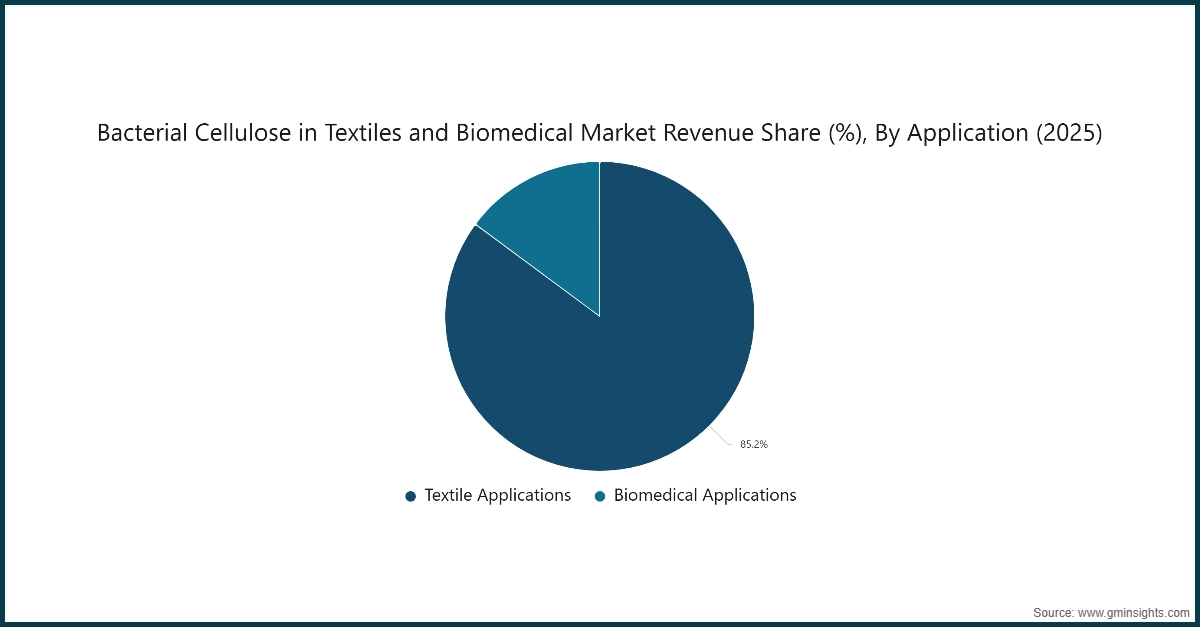
The bacterial cellulose in textiles and biomedical market is segmented into textile applications and biomedical applications. Textile applications dominated the market with an approximate market share of 85.2% in 2025 and is expected to grow with a CAGR of 10.9% by 2035.
- Textile applications have begun taking their place across the sustainable fashion, vegan leather goods, luxury accessories, automotive interiors, and home furnishing industries. Bacterial cellulose textiles utilizing native BC materials, nanocellulose composites, and functionalized BC through wet-laid processes, compression molding, and bio-fabrication techniques are appreciated for their excellent drapeability, leather-like aesthetics, and environmental sustainability when compared to conventional leather and synthetic textile materials. The growing demand for cruelty-free fashion products and the increasing awareness of circular economy principles are driving the adoption of bacterial cellulose in various premium textile and fashion applications.
- Biomedical applications represent another significant sector of bacterial cellulose systems, which have opportunities in the markets owing to their use as wound care dressings, tissue engineering scaffolds, and drug delivery platforms in hospital settings, clinical wound management, and regenerative medicine procedures. These medical-grade materials are much favored for their exceptional biocompatibility, excellent moisture management, and functional properties being consistent with the trends toward advanced wound healing and patient-centered medical device development.
Looking for region specific data?
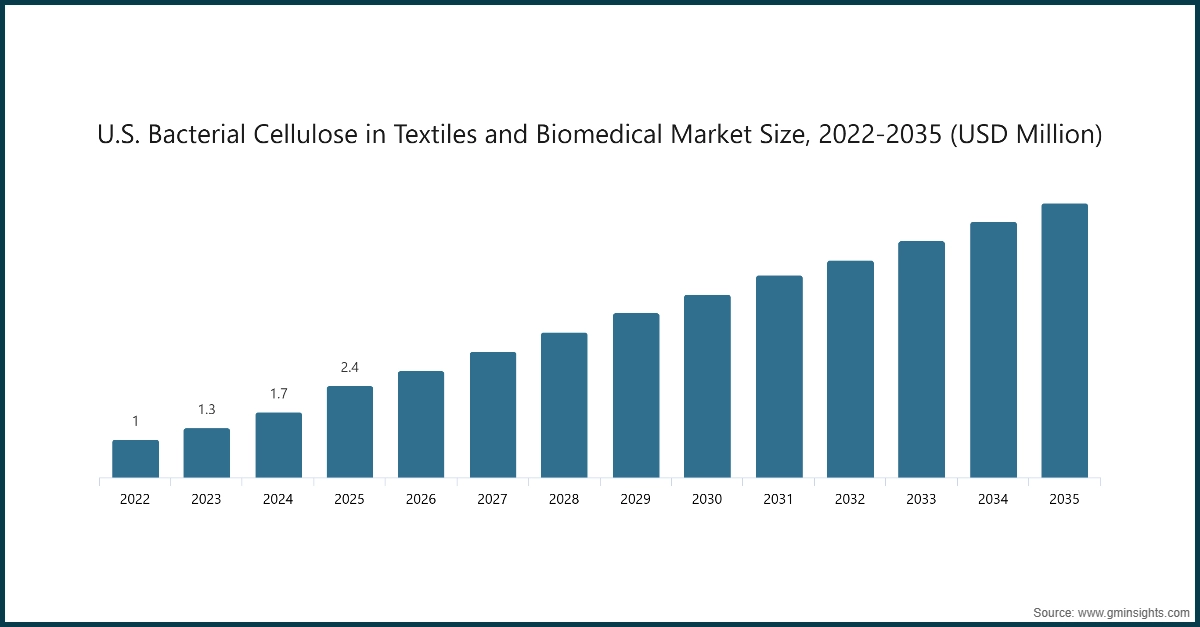
The bacterial cellulose in textiles and biomedical market in North America will grow at a CAGR of approximately 11% between 2026 and 2035.
- Innovations in sustainable bio-fabrication such as the use of advanced fermentation technologies for vegan leather production and medical-grade cellulose development, further drive the adoption of bacterial cellulose materials along the principles of circular economy and sustainable fashion.
- Increasing awareness among consumers about the environmental impact of animal leather and synthetic textiles and the transition to biodegradable, plant-based alternatives have prompted fashion brands and medical device manufacturers to invest in bacterial cellulose materials for sustainable fashion, luxury accessories, and advanced wound care applications, which further drives market growth expansion.
The bacterial cellulose in textiles and biomedical markets in Europe, especially in a few countries like Germany, Poland, Sweden, and the United Kingdom, are expected to grow with a rapid pace in the coming years.
- Continuous research is being conducted to develop eco-friendly fermentation and bio-fabrication techniques which will lessen environmental footprint but also increase mechanical strength and biocompatibility of bacterial cellulose products for vegan leather goods, sustainable textiles, and tissue engineering scaffolds.
- Increasing consumer demand for cruelty-free, sustainable, and ethically-produced products is leading industries into investment in biotechnology innovation and is reinforcing sustainability and circular fashion trends across apparel, automotive interiors, and medical device sectors.
The bacterial cellulose in textiles and biomedical market in China, Japan, and Australia is expected to have lucrative growth between 2026 and 2035, with CAGR of 11.2% in the Asia Pacific region.
- The phenomenon of rapid urbanization and increasing disposable incomes have driven the demands of advanced bacterial cellulose technologies in premium sustainable fashion, luxury vegan leather accessories, and advanced wound care using nanocellulose and functionalized BC products.
- The demand for biocompatible medical materials and environmentally sustainable textile solutions, along with newer innovative fermentation manufacturing practices are driving the increase for natural, high-performance, and bacterial cellulose-based materials.
Between 2026 and 2035, the bacterial cellulose in textiles and biomedical market in the Middle East is projected to grow significantly during this period.
- Enhanced infrastructure development for healthcare, medical device manufacturing, and sustainable fashion industries with advanced bacterial cellulose production systems has been supported by increasing government initiatives and industry efforts that promote the development and acceptance of innovative biomaterial technologies.
- Technological advancements in bio-fermentation and continuous production methods such as bioreactor optimization and substrate utilization efficiency have reduced expenses because of the reduced dependency on imported synthetic materials and also helped convert these systems as sustainable bacterial cellulose production systems accepted in numerous sectors.
Between 2025 and 2035, a promising expansion of the bacterial cellulose in textiles and biomedical sector is foreseen in Latin America.
- Increased environmental awareness and growing policies promoting bio-based materials and sustainable practices would promote use of bacterial cellulose technologies in the sustainable fashion, vegan leather, wound care, and tissue engineering industries.
- Expanding disposable incomes and increasing scientific research into biodegradable textiles and biocompatible medical materials are fueling demand for environmentally friendly, fermentation-derived cellulose systems, thus contributing towards growth in fashion, automotive, healthcare, and regenerative medicine applications.
Bacterial Cellulose in Textiles and Biomedical Market Share
Bacterial cellulose in textiles and biomedical industry is moderately consolidated with players like Nippon Paper Industries, Hainan Yeguo Foods, Biofill, CPKelco, Polybion, and Nanollose which accounts for 38.5% market share in 2025.
- The bacterial cellulose in textiles and biomedical industry consists of such leading companies operating mostly in their regional areas. Their long years of experience with fermentation technologies and bacterial cellulose production have allowed these companies to maintain a strong market position worldwide. Their product offerings are diverse and majorly supported by production capacities, fermentation facilities, and distribution networks, which can serve the increasing demand for bacterial cellulose in textiles and biomedical applications in various regions.
Bacterial Cellulose in Textiles and Biomedical Market Companies
Major players operating in the bacterial cellulose in textiles and biomedical industry includes:
- CPKelco
- Hainan Yeguo Foods
- Nippon Paper Industries
- Polybion
- Biofill
- Nanollose
- Axcelon Biopolymers
- BOWIL Biotech
- fzmb GmbH
- San-Ei Gen F.F.I.
- Kusano Sakko
- S2Medical
- Modern Synthesis
- ScobyTec
- Cellugy
Nippon Paper Industries Co., Ltd. is a leading integrated pulp and paper manufacturer with global operations across Asia and other regions. The company operates across paper, household products, chemicals, and energy segments, with a strong focus on functional materials. Its activities in cellulose nanofiber and bacterial cellulose are supported by significant investments in biotechnology and fermentation, positioning the company as a key player in sustainable and advanced cellulose-based materials.
Polybion is a biotechnology company focused on developing sustainable bacterial cellulose-based materials as alternatives to traditional leather and textiles. The company targets fashion, automotive interiors, and furniture applications, leveraging bio-fabrication and circular economy principles. Its strategic priorities include scalability, material performance, and partnerships with sustainability-driven brands.
CPKelco is a global producer of specialty hydrocolloids and bio-based ingredients serving food, pharmaceutical, personal care, and industrial markets. The company leverages expertise in fermentation and natural polymer chemistry to supply cellulose-based functional ingredients, including bacterial cellulose. Its strategy focuses on sustainability, clean-label solutions, and innovation in nature-derived materials.
Bacterial Cellulose in Textiles and Biomedical Market Report Attributes
| Key Takeaway | Details |
|---|---|
| Market Size & Growth | |
| Base Year | 2025 |
| Market Size in 2025 | USD 10.4 Million |
| Market Size in 2026 | USD 12.1 Million |
| Forecast Period 2026-2035 CAGR | 11% |
| Market Size in 2035 | USD 30.9 Million |
| Key Market Trends | |
| Drivers | Impact |
| Growing demand for sustainable & vegan leather alternatives in fashion industry | Driving increased adoption and innovation in bacterial cellulose textiles, expanding market opportunities across sustainable fashion, luxury accessories, and automotive interior applications |
| Rising applications in advanced wound care & tissue engineering sectors | Boosting demand for medical-grade bacterial cellulose and nanocellulose within the biomedical market, particularly in chronic wound management and regenerative medicine segments |
| Increasing investment in bio-fabrication & fermentation technology innovation | Facilitating favorable production scalability and cost reduction, promoting bacterial cellulose commercialization and market growth through improved manufacturing efficiency |
| Pitfalls & Challenges | Impact |
| High fermentation & production costs compared to conventional materials | Creating barriers to large-scale commercialization of bacterial cellulose products, limiting market penetration in price-sensitive textile and medical device segments |
| Limited production capacity & long fermentation cycles | Challenging supply chain scalability and requiring extensive infrastructure investment to meet growing demand from fashion and biomedical industries |
| Opportunities: | Impact |
| Emerging applications in smart textiles & functional biomaterials | Opening new markets for functionalized bacterial cellulose composites, enhancing performance benefits and enabling innovative product development |
| Integration with circular economy & biodegradable material initiatives | Presents opportunities for bacterial cellulose to contribute to sustainability goals while generating value-added products in eco-conscious consumer markets |
| Market Leaders (2025) | |
| Market Leader |
9.4% Market Share in 2025 |
| Top Players |
Collective Market Share of 38.5% in 2025 |
| Competitive Edge |
|
| Regional Insights | |
| Largest Market | Asia Pacific |
| Fastest growing market | Asia Pacific |
| Emerging countries | China, Japan, Brazil, Mexico, Australia |
| Future outlook |
|
What are the growth opportunities in this market?
Bacterial Cellulose in Textiles and Biomedical Industry News
In May 2024, Polybion, a Mexican biotechnology company, announced the global commercial availability of Celium, its premium bacterial cellulose-based vegan leather material.
In February 2025, Modern Synthesis Limited, a London-based bacterial cellulose biomaterials company, raised USD 5.5 million in equity funding in February 2025 to accelerate the commercialization of its bacterial nanocellulose-based textiles for fashion and sportswear applications.
This bacterial cellulose in textiles and biomedical market research report includes in-depth coverage of the industry, with estimates & forecasts in terms of revenue (USD Million) and volume (Kilo Tons) from 2022 to 2035, for the following segments:
Market, By Product Type
- Native bacterial cellulose (unmodified)
- Bacterial nanocellulose (BNC)
- BC composites and functionalized BC
- Antimicrobial BC
- Polymer-BC composites
- Nanoparticle-enhanced BC
- Conductive BC (smart textiles)
- BC-based hydrogels and drug delivery systems
- Controlled-release systems
- Transdermal delivery systems
- Stimuli-responsive hydrogels
Market, By Application
- Textile applications
- Vegan leather and fashion materials
- Medical and healthcare textiles
- Protective and performance textiles
- Cosmetic and personal care textiles
- Biomedical applications
- Wound care
- Tissue engineering and regenerative medicine
- Drug delivery and transdermal systems
- Implantable devices and medical adhesives
The above information is provided for the following regions and countries:
- North America
- U.S.
- Canada
- Europe
- Germany
- UK
- France
- Spain
- Italy
- Rest of Europe
- Asia Pacific
- China
- India
- Japan
- Australia
- South Korea
- Rest of Asia Pacific
- Latin America
- Brazil
- Mexico
- Argentina
- Rest of Latin America
- Middle East and Africa
- Saudi Arabia
- South Africa
- UAE
- Rest of Middle East and Africa
Frequently Asked Question(FAQ) :
What was the market size of bacterial cellulose in textiles and biomedical in 2025?
The market size was valued at USD 10.4 million in 2025, with a CAGR of 11% expected through 2035. The growth is driven by rising demand for sustainable biomaterials and advanced biomedical solutions.
What is the projected value of the bacterial cellulose in textiles and biomedical market by 2035?
The market is poised to reach USD 30.9 million by 2035, fueled by innovations in fermentation technologies, bio-based material initiatives, and increasing applications in textiles and biomedicine.
What is the expected size of the bacterial cellulose in textiles and biomedical industry in 2026?
The market size is projected to reach USD 12.1 million in 2026.
What was the market share of native bacterial cellulose in 2025?
Native bacterial cellulose (unmodified) dominated the market with an approximate share of 45.2% in 2025 and is expected to grow at a CAGR of 10.8% through 2035.
What was the market share of textile applications in 2025?
Textile applications held a dominant market share of approximately 85.2% in 2025 and is set to expand at a CAGR of 10.9% until 2035.
What is the growth outlook for the bacterial cellulose in textiles and biomedical sector in North America?
The market in North America is anticipated to witness a CAGR of 11% up to 2035, led by advancements in sustainable bio-fabrication and fermentation technologies.
What are the upcoming trends in the bacterial cellulose in textiles and biomedical market?
Adoption of biorefineries, optimized fermentation, high-performance biomaterials, supportive regulations, and growing demand for eco-friendly, biodegradable products.
Who are the key players in the bacterial cellulose in textiles and biomedical industry?
Key players include CPKelco, Hainan Yeguo Foods, Nippon Paper Industries, Polybion, Biofill, Nanollose, Axcelon Biopolymers, BOWIL Biotech, fzmb GmbH, San-Ei Gen F.F.I., and Kusano Sakko.
Bacterial Cellulose in Textiles and Biomedical Market Scope
Related Reports