Summary
Table of Content

Baby Sling Market
Get a free sample of this report
Form submitted successfully!
Error submitting form. Please try again.
Thank you!
Your inquiry has been received. Our team will reach out to you with the required details via email. To ensure that you don't miss their response, kindly remember to check your spam folder as well!
Request Sectional Data
Thank you!
Your inquiry has been received. Our team will reach out to you with the required details via email. To ensure that you don't miss their response, kindly remember to check your spam folder as well!
Form submitted successfully!
Error submitting form. Please try again.
Baby Sling Market Size
- The market is experiencing significant growth, driven by increasing birth rates in emerging economies and evolving parental preferences. According to the World Bank, the global birth rate in 2023 was approximately 17.2 births per 1,000 people, with regions such as Sub-Saharan Africa and South Asia contributing substantially. For instance, Nigeria, with a fertility rate of 5.2 births per woman in 2023, and India, which recorded over 23 million births annually, are among the key markets fueling this demand. This rise in birth rates has directly translated into heightened demand for baby care products, including baby slings, as families prioritize essential items for infant care.
- Governments in several countries are actively promoting higher fertility rates through supportive policies and incentives. For example, Hungary offers financial benefits such as tax exemptions for mothers with four or more children, while Singapore provides "Baby Bonus" cash gifts of up to USD 7,906.8 per child and childcare subsidies. These initiatives have indirectly fueled the demand for baby slings, as parents increasingly seek ergonomic and convenient solutions for carrying their infants.
- Global manufacturers are capitalizing on this demographic momentum by expanding their distribution networks and introducing innovative products tailored to regional preferences. Companies such as Ergobaby and BabyBjörn have launched slings with advanced ergonomic designs, breathable fabrics, and adjustable features to cater to the needs of modern parents. Additionally, local manufacturers in high-growth regions like India and Indonesia are offering affordable options to cater to middle-income families.
- Consumer awareness regarding the benefits of baby wearing has grown significantly, contributing to the rising adoption of baby slings. Research from the American Academy of Pediatrics highlights that baby wearing fosters parent-infant bonding, supports emotional development, and offers hands-free convenience for caregivers. These benefits have resonated with modern parents, who are increasingly prioritizing products that enhance their child’s well-being while simplifying their daily routines.
- Baby slings are also recognized for their physiological advantages, such as promoting skin-to-skin contact, regulating an infant’s body temperature, and stabilizing their heartbeat. A study published in the Journal of Pediatrics found that infants carried in slings cried 43% less overall and 54% less during evening hours compared to those who were not carried. The role of social media in driving awareness cannot be overstated. Influencers, lifestyle bloggers, and pediatric professionals frequently showcase baby slings, emphasizing their practicality, comfort, and stylish appeal.
The global baby sling market was estimated at USD 2.5 billion in 2025. The market is expected to grow from USD 2.6 billion in 2026 to USD 4.5 billion in 2035, at a CAGR of 6.1% according to latest report by Global Market Insights Inc.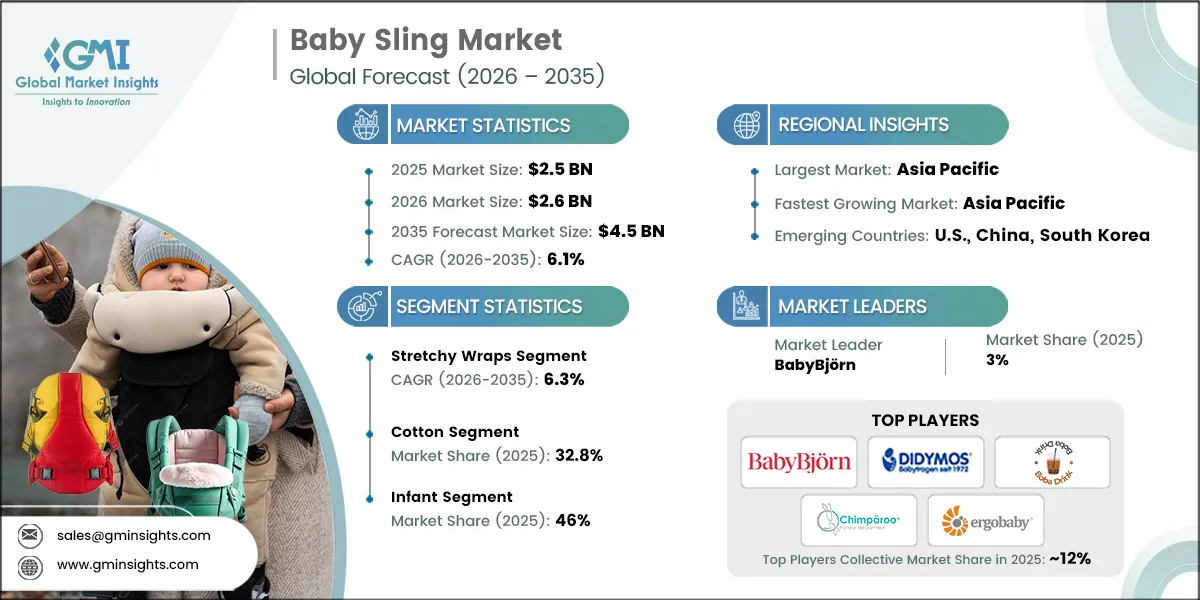
Baby Sling Market Key Takeaways
Market Size & Growth
- 2025 Market Size: USD 2.5 Billion
- 2026 Market Size: USD 2.6 Billion
- 2035 Forecast Market Size: USD 4.5 Billion
- CAGR (2026–2035): 6.1%
Regional Dominance
- Largest Market: Asia Pacific
- Fastest Growing Region: Asia Pacific
Key Market Drivers
- Increasing number of birth rates..
- Increasing consumer awareness about baby wearing..
- Increasing busy lifestyle trends.
Challenges
- Intense competition and market saturation..
- Safety concerns..
Opportunity
- Growth in eco friendly and organic products.
- Innovation in ergonomic and smart features.
Key Players
- Market Leader: BabyBjörn led with over 3% market share in 2025.
- Leading Players: Top 5 players in this market include BabyBjörn, Boba, Chimparoo, Didymos, Ergobaby, which collectively held a market share of 12% in 2025.
Get Market Insights & Growth Opportunities
To get key market trends
Baby Sling Market Trends
- Brands are increasingly adopting eco-friendly materials such as organic cotton, bamboo fibers, and recycled textiles to meet the growing demand for sustainable baby products. This shift is largely driven by environmentally conscious parents who prioritize non-toxic, skin-friendly, and sustainable options for their infants.
- The baby products market is witnessing a significant shift towards online sales, as parents increasingly prefer the convenience of researching and purchasing products digitally. Direct-to-consumer (D2C) brands are capitalizing on this trend by leveraging social media platforms, influencer collaborations, and personalized online shopping experiences to build trust and expand their customer base. For instance, a report by the U.S. Census Bureau highlights that e-commerce sales in the United States reached USD 1.03 trillion in 2022. This growth is expected to continue, with baby product categories such as baby slings, strollers, and feeding accessories being among the most popular items purchased online. D2C brands are also utilizing advanced analytics and artificial intelligence to offer tailored recommendations, enhancing the overall shopping experience for parents.
- The demand for premium baby products, particularly baby slings, is on the rise as consumers seek items that combine ergonomic designs, advanced fabrics, and aesthetic appeal. Parents are increasingly prioritizing products that ensure comfort, safety, and style for their infants. Features such as breathable fabrics, adjustable straps, and enhanced weight distribution are becoming standard in premium baby slings. Additionally, brands are incorporating modern design elements to cater to style-conscious parents, further driving the growth of this segment.
- To address the diverse preferences of modern parents, companies are increasingly offering customizable options in their product lines. Features such as adjustable fits, multiple fabric choices, and culturally inspired designs are gaining traction among consumers. For example, brands are introducing baby slings with adjustable lengths to accommodate different body types and offering fabric options that cater to varying climate conditions.
- Targeting niche demographics, such as new parents, urban families, and eco-conscious buyers, has become a key growth strategy for many companies. According to a survey conducted by the Pew Research Center, 62% of millennial parents prefer products that align with their values, such as sustainability and cultural relevance. This trend underscores the importance of customization and niche targeting in driving market growth.
Baby Sling Market Analysis

Learn more about the key segments shaping this market
Based on product type, the baby sling market is categorized into stretchy wraps, hybrid wraps, woven wraps, ring slings and others. The stretchy wraps segment accounted for revenue of around USD 1 billion in 2025 and is anticipated to grow at a CAGR of 6.3% from 2026 to 2035.
- Stretchy wraps continue to dominate the market due to their exceptional comfort, ease of use, and suitability for newborns. Their elastic fabric allows parents to achieve a snug, womb‑like fit that supports infant security and bonding, making them a preferred choice for first‑time parents. The simplicity of tying methods and the forgiving stretch of the material help reduce user error, further boosting consumer confidence.
- Additionally, stretchy wraps are widely popular because they adapt well to different body types and can be shared among caregivers without complex adjustments. Their affordability compared to structured carriers also contributes to high adoption rates, especially in urban markets where new parents look for cost‑effective yet ergonomic options. As a result, stretchy wraps maintain a leading position within the entry‑level baby wearing segment.
Learn more about the key segments shaping this market
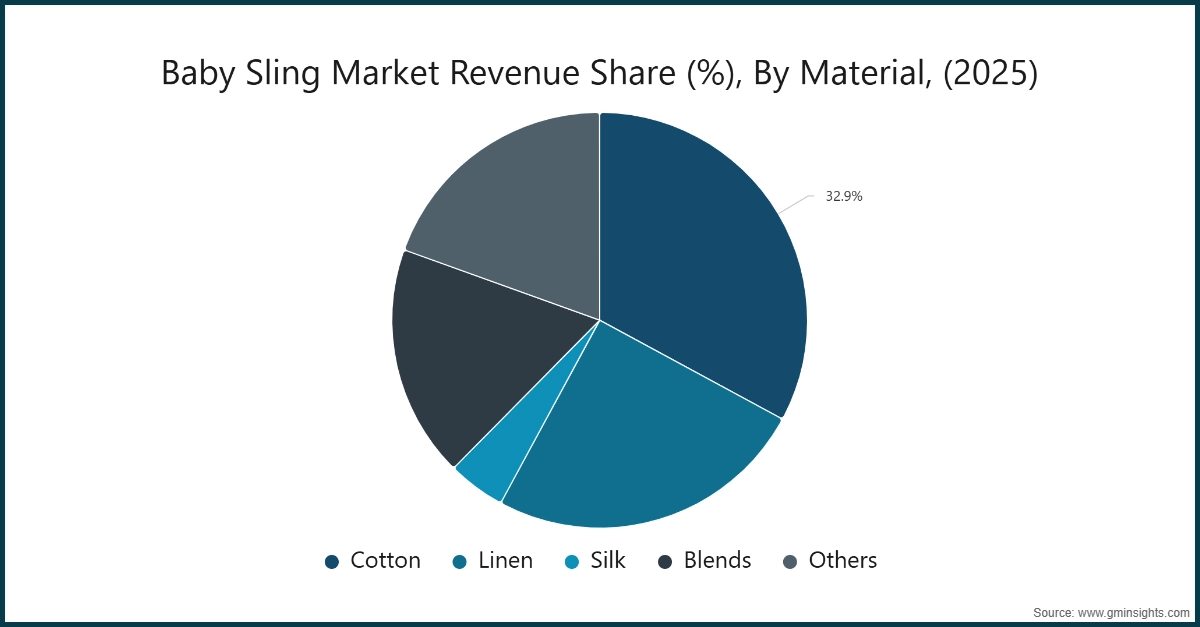
Based on material, the baby sling market consists of cotton, linen, silk, blends and others. The cotton segment emerged as leader and held 32.8% of the total market share in 2025 and is anticipated to grow at a CAGR of 6.9% from 2026 to 2035.
- Cotton remains the most widely used material in baby slings due to its breathability, softness, and skin‑friendly properties. Parents prefer cotton for its natural comfort and its ability to regulate temperature, making it suitable for long periods of wear across different climates. Its hypoallergenic nature provides additional reassurance for caregivers concerned about infant skin sensitivities.
- From a manufacturing standpoint, cotton is versatile, easy to dye, and durable, allowing brands to produce slings in various designs and colors while maintaining consistent quality.
- The material’s easy washability also appeals to modern families seeking low‑maintenance baby‑care products. This blend of practicality, comfort, and affordability ensures that cotton continues to dominate material choices in the market.
Based on age group, the baby sling market consists of newborn (0-3months old), infant (3-10 months old) and toddler (above 10 months old). The infant segment emerged as leader and held 46% of the total market share in 2025.
- The infant segment aged 3–10 months represents a major share of baby sling usage, as this period combines rapid physical development with a strong need for closeness and support. Parents often rely on slings during this stage to keep infants soothed, secure, and aligned in ergonomic positions that support healthy hip and spine growth. The age group is particularly compatible with stretchy wraps, ring slings, and soft structured options.
- This stage also aligns with the period when parents resume daily routines such as work, errands, and travel, increasing the need for hands‑free mobility. Slings offer an effective solution by enabling caregivers to maintain close contact while staying productive. As a result, the 3–10‑month age group is consistently a high‑demand segment, influencing product design, marketing strategies, and brand innovation across the market.
Looking for region specific data?
North America Baby Sling Market
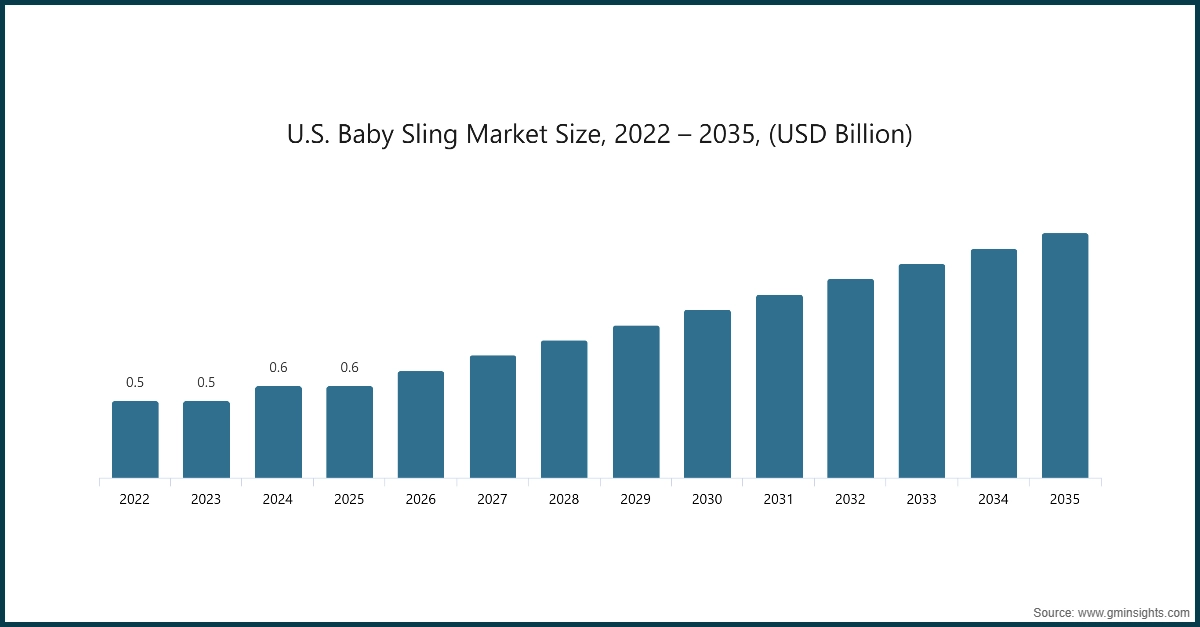
The U.S. dominates an overall North America market and valued at USD 0.6 billion in 2025 and is estimated to grow at a CAGR of 6.3% from 2026 to 2035.
- The US dominates a significant share of the baby sling industry due to high consumer awareness of baby wearing, strong purchasing power, and the popularity of premium, ergonomic baby‑care products. American parents increasingly prioritize comfort, convenience, and safety certifications, driving demand for high‑quality slings and wraps. The presence of established brands, extensive retail networks, and strong e‑commerce adoption further enhances market penetration.
- Additionally, the US benefits from active parenting communities, social media influence, and endorsements from pediatric and wellness experts. These channels help educate parents about the developmental benefits of baby wearing, further strengthening product adoption.
Europe Baby Sling Market
In the European market, Germany is expected to experience significant and promising growth from 2026 to 2035.
- Countries such as Germany, France, and the UK exhibit high adoption of ergonomic carriers and wraps, influenced by high product safety standards and strong regulatory frameworks. European parents often prefer eco‑certified, organic, and sustainably produced baby slings, reinforcing demand for high‑quality materials like organic cotton and linen.
- Moreover, Europe’s well‑developed retail infrastructure and rising popularity of boutique baby‑wearing brands contribute to steady market growth. Parenting workshops, baby‑wearing consultants, and strong community networks help increase awareness and proper usage of baby slings.
Asia Pacific Baby Sling Market
In the Asia Pacific market, the China held 31% market share in 2025 and is anticipated to grow at a CAGR of 6.8% from 2026 to 2035.
- APAC is emerging as one of the fastest‑growing markets for baby slings, driven by rising birth rates, increasing disposable incomes, and rapid urbanization. Countries like China, India, Japan, and Indonesia are witnessing growing adoption of compact and affordable baby-carrying solutions as families seek mobility and convenience in dense urban environments. The region’s expanding middle class and increasing exposure to global parenting trends also contribute to higher product demand.
- E‑commerce growth in APAC has significantly boosted consumer access to a wide variety of baby sling brands, from premium international labels to cost‑effective local manufacturers.
Middle East and Africa Baby Sling Market
In the Middle East and Africa market, Saudi Arabia is expected to experience significant and promising growth from 2026 to 2035.
- The MEA region shows increasing potential for growth in the market due to rising urbanization, growing young populations, and improving economic conditions in several countries. Traditional baby‑carrying practices already exist in parts of Africa, creating a cultural foundation that supports the adoption of modern sling designs.
- In the Middle East, premium and imported baby products are gaining popularity among higher-income consumers, particularly in Gulf nations.
- However, the market is still developing, with awareness levels gradually rising through social media, retail expansion, and international brand presence.
Baby Sling Market Share
- In 2025, the prominent manufacturers in market are collectively held the market share of ~12%.
- BabyBjörn’s competitive edge lies in its strong global brand reputation and commitment to safety-certified, ergonomically designed baby products. The company invests heavily in research and collaborates with medical specialists to validate the safety and comfort of its carriers, giving parents high confidence in product reliability. Its minimalist Scandinavian design, premium materials, and consistent product quality further strengthen BabyBjörn’s position in the premium baby-wearing segment.
- Boba stands out due to its focus on simplicity, comfort, and user-friendly designs, particularly with its popular stretchy wraps and soft structured carriers. The brand emphasizes flexibility, adjustability, and natural movement, making its products highly suitable for newborns and growing infants.
- Chimparoo differentiates itself through its use of high-quality woven fabrics and vibrant, handcrafted designs influenced by global textile traditions. The brand emphasizes customization and ergonomic support, offering a variety of sling types from stretchy wraps to woven carriers tailored to different user preferences and climates. Its focus on versatility and artisan craftsmanship appeals to parents seeking both function and aesthetic uniqueness in their baby-wearing products.
Baby Sling Market Companies
Major players operating in the market include:
- BabyBjörn
- Boba
- Chimparoo
- Didymos
- Ergobaby
- Hip Baby Wrap
- Infantino
- Lenny Lamb
- Lillebaby
- Moby
- Nalakai
- Onya Baby
- Sakura Bloom
- Solly Baby
- Tula
Didymos has a competitive edge rooted in its heritage as one of the earliest pioneers of modern baby wearing, giving it unmatched credibility and expertise in woven wraps. Known for superior fabric quality, durability, and intricate weaving techniques, the brand attracts experienced baby wearers who prioritize long-term use and perfect weight distribution.
Ergobaby holds a dominant position thanks to its strong focus on ergonomic engineering and medical endorsements, especially for its structured carriers. The brand is widely recognized for creating products that ensure optimal hip and spine alignment, making it a top choice for parents prioritizing comfort and safety.
Baby Sling Market Report Attributes
| Key Takeaway | Details |
|---|---|
| Market Size & Growth | |
| Base Year | 2025 |
| Market Size in 2025 | USD 2.5 Billion |
| Market Size in 2026 | USD 2.6 Billion |
| Forecast Period 2026-2035 CAGR | 6.1% |
| Market Size in 2035 | USD 4.5 Billion |
| Key Market Trends | |
| Drivers | Impact |
| Increasing number of birth rates. | Rising birth rates in developing regions are expanding the consumer base for baby slings. As more families with infants emerge, the demand for convenient baby‑carrying solutions naturally increases, driving market growth |
| Increasing consumer awareness about baby wearing. | Growing awareness of the benefits of baby wearing—such as bonding, mobility, and ergonomic support—is boosting adoption of baby slings. Social media, parenting blogs, and pediatric endorsements continue to popularize these products. |
| Increasing busy lifestyle trends | Modern parents with hectic schedules prefer hands free, portable baby carrying options. Baby slings offer mobility and multitasking convenience, making them increasingly attractive in fast paced urban lifestyles. |
| Pitfalls & Challenges | Impact |
| Intense competition and market saturation. | The baby sling market faces strong competition from both established brands and low cost local players. As product options multiply, differentiation becomes difficult, leading to price pressure and slower growth in mature markets. |
| Safety concerns. | Concerns about improper usage, suffocation risks, and lack of standardization may make some parents hesitant to adopt baby slings. Manufacturers must emphasize safety certifications and clear usage guidelines to maintain consumer trust. |
| Opportunities: | Impact |
| Growth in eco friendly and organic products | Parents are increasingly seeking sustainable and non‑toxic baby products. Offering slings made from organic cotton, bamboo fiber, or recycled materials presents a strong opportunity to attract environmentally conscious consumers |
| Innovation in ergonomic and smart features | There is growing interest in slings with enhanced comfort, better weight distribution, and adjustable ergonomic support. Integrating smart features such as temperature‑regulating fabrics or app‑connected safety guidance can further differentiate products |
| Market Leaders (2025) | |
| Market Leader |
3% market share |
| Top Players |
The collective market share in 2025 is ~12% |
| Competitive Edge |
|
| Regional Insights | |
| Largest Market | Asia Pacific |
| Fastest growing market | Asia Pacific |
| Emerging countries | U.S., China, South Korea |
| Future outlook |
|
What are the growth opportunities in this market?
Baby Sling Industry News
- In October 2025, BabyBjörn strengthened partnership with the International Hip Dysplasia Institute, focusing on awareness and education around hip health.
- In 2024, Boba Bliss Hybrid Carrier received 2024 Bronze Mother&Baby Award; launched as the first-ever patented hybrid model combining wrap softness with buckle convenience.
The baby sling market research report includes in-depth coverage of the industry, with estimates & forecast in terms of revenue (USD Billion) and volume (Million Units) from 2022 to 2035, for the following segments:
Market, By Type
- Stretchy wraps
- Hybrid wraps
- Woven wraps
- Ring slings
- Others
Market, By Material
- Cotton
- Linen
- Silk
- Blends
- Others
Market, By Age Group
- Newborn (0-3months old)
- Infant (3-10 months old)
- Toddler (above 10 months old)
Market, By Price Range
- Low
- Medium
- High
Market, By Distribution channel
- Online
- E-commerce
- Company websites
- Offline
- Specialty stores
- Department stores
- Others (Maternity & parenting boutiques, etc.)
The above information is provided for the following regions and countries:
- North America
- U.S.
- Canada
- Europe
- Germany
- UK
- France
- Italy
- Spain
- Asia Pacific
- China
- Japan
- India
- South Korea
- Australia
- Latin America
- Brazil
- Mexico
- Argentina
- MEA
- Saudi Arabia
- UAE
- South Africa
Frequently Asked Question(FAQ) :
What is the market size of the baby sling market in 2025?
The market was valued at USD 2.5 billion in 2025, driven by rising birth rates, increasing awareness of baby wearing benefits, and growing demand for convenient infant carrying solutions among modern parents.
What is the current size of the baby sling industry in 2026?
The industry is projected to reach USD 2.6 billion in 2026, supported by increasing consumer awareness of ergonomic baby carrying products and expanding distribution through online and specialty retail channels.
What is the projected value of the baby sling market by 2035?
The market is expected to reach USD 4.5 billion by 2035, growing at a 6.1% CAGR, driven by rising urbanization, growing demand for convenient baby care products, and increasing popularity of baby wearing among parents worldwide.
Which product type dominates the baby sling industry?
Stretchy wraps dominated the market with revenue of around USD 1 billion in 2025, due to their comfort, flexibility, affordability, and suitability for newborns and first-time parents.
Which material segment leads the baby sling market?
Cotton dominated the market with a 32.8% share in 2025, driven by its breathability, softness, durability, and hypoallergenic properties that make it ideal for infant skin and long-duration carrying.
How large is the U.S. baby sling market?
The U.S. baby sling market was valued at around USD 0.6 billion in 2025, driven by high adoption of baby wearing products, strong e-commerce penetration, and the presence of established baby product brands.
Who are the key companies operating in the baby sling industry?
Major companies in the industry include BabyBjörn, Boba, Chimparoo, Didymos, Ergobaby, Infantino, Lenny Lamb, Lillebaby, Moby, Nalakai, Onya Baby, Sakura Bloom, Solly Baby, and Tula, focusing on ergonomic designs, premium materials, and innovative baby wearing solutions.
Baby Sling Market Scope
Related Reports