Summary
Table of Content

Autonomous Bus Software Market
Get a free sample of this report
Form submitted successfully!
Error submitting form. Please try again.
Thank you!
Your inquiry has been received. Our team will reach out to you with the required details via email. To ensure that you don't miss their response, kindly remember to check your spam folder as well!
Request Sectional Data
Thank you!
Your inquiry has been received. Our team will reach out to you with the required details via email. To ensure that you don't miss their response, kindly remember to check your spam folder as well!
Form submitted successfully!
Error submitting form. Please try again.
Autonomous Bus Software Market Size
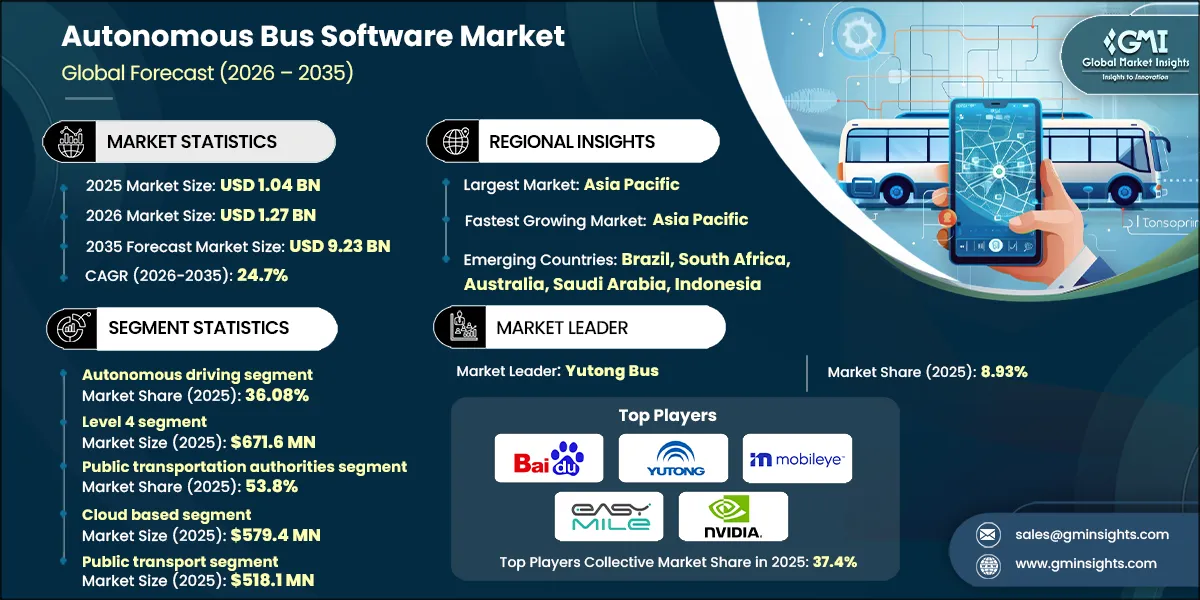
The global autonomous bus software market was estimated at USD 1.04 billion in 2025. The market is expected to grow from USD 1.27 billion in 2026 to USD 9.23 billion in 2035, at a CAGR of 24.7% according to latest report published by Global Market Insights Inc.
To get key market trends
As cities around the world pursue more eco-friendly and efficient mobility solutions, the demand for autonomous buses, supported by cutting-edge software, is rapidly increasing. With the global push toward reducing traffic congestion, pollution, and enhancing the overall urban mobility experience, autonomous buses are emerging as a key component in the future of public transportation. A major driver of growth is the increasing collaboration between technology providers, automotive manufacturers, and local governments. These partnerships are accelerating the development and deployment of autonomous bus solutions across various regions. By leveraging sophisticated sensors, AI, machine learning, and cloud-based analytics, these buses can offer real-time navigation, optimize route management, and ensure enhanced passenger safety.
In July 2024, Hamburg, Germany, launched a large-scale pilot program for autonomous electric buses, aiming to become a "smart city" with sustainable mobility. Backed by Volkswagen Group, Deutsche Bahn, and several tech providers, the buses, equipped with AI, sensors, and cloud-based software, navigated complex urban environments and integrated into the city’s existing public transport system. This showcased the potential for seamless operation in mixed-traffic environments, while reducing carbon emissions. The initiative represents a significant step toward the global adoption of autonomous buses in urban transport.
The COVID-19 pandemic significantly disrupted global industries, including the transportation and mobility sectors, by forcing a shift in how people and goods move. Public transportation systems faced massive declines in ridership due to lockdowns and social distancing measures, leading to financial strain. However, the crisis also accelerated the adoption of technology, including autonomous vehicles, as cities and companies sought solutions to minimize human contact while maintaining transportation services. In the wake of the pandemic, there was an increased emphasis on contactless, automated, and safe transit solutions, which accelerated interest in autonomous buses. As public health concerns continue to influence urban mobility trends, the pandemic has underscored the need for more resilient, tech-driven public transportation systems that can withstand future crises.
The growing emphasis on smart cities is also propelling the adoption of autonomous bus solutions. With the integration of intelligent transportation systems (ITS), autonomous buses can communicate with other vehicles, traffic infrastructure, and transit management systems, facilitating seamless operation and reducing the potential for accidents. Government initiatives aimed at increasing urban mobility, reducing emissions, and enhancing public transportation services are also fueling market growth. For example, cities like Singapore and Helsinki have already initiated pilot programs for autonomous buses, setting a global example for the future of mobility.
The Asia-Pacific region, particularly China and South Korea, is poised for substantial growth in the autonomous bus software market. The rapid pace of urbanization, strong government support for autonomous vehicle (AV) technology, and growing demand for innovative transportation solutions make this region a critical market. In China, government-backed initiatives such as Made in China 2025, focusing on innovation and smart manufacturing, are accelerating the development of autonomous vehicle technologies. Additionally, the region's massive investment in smart cities and 5G infrastructure lays the foundation for widespread autonomous bus adoption.
Autonomous Bus Software Market Report Attributes
| Key Takeaway | Details |
|---|---|
| Market Size & Growth | |
| Base Year | 2025 |
| Market Size in 2025 | USD 1.04 Billion |
| Market Size in 2026 | USD 1.27 Billion |
| Forecast Period 2026-2035 CAGR | 24.7% |
| Market Size in 2035 | USD 9.23 Billion |
| Key Market Trends | |
| Drivers | Impact |
| Rising Demand for Shared Mobility and On-Demand Transport | The shift towards shared mobility and on-demand transport boosts the demand for autonomous buses as flexible and efficient solutions. |
| Improved Safety and Traffic Management | Autonomous buses enhance safety and traffic flow through AI-driven safety features and real-time traffic management, making them attractive for urban transport systems. |
| Growing Public Awareness and Acceptance | Increasing public confidence in autonomous vehicles drives acceptance and adoption of autonomous bus services in urban areas. |
| Rising Interest in Autonomous Vehicles | Global interest in autonomous vehicle technologies, particularly for sustainable urban mobility, accelerates the growth of the Autonomous Bus software market. |
| Pitfalls & Challenges | Impact |
| Regulatory and Legal Challenges | Inconsistent regulations and legal complexities across regions create barriers for the widespread deployment of autonomous buses. |
| High Development and Operational Costs | High development, integration, and operational costs pose challenges for the large-scale adoption of autonomous bus systems, particularly in smaller cities. |
| Opportunities: | Impact |
| AI-driven APM & predictive analytics | AI and machine learning offer opportunities to enhance route optimization, safety, and predictive maintenance, driving market growth. |
| Collaborations and Partnerships with Cities and Transport Operators | Partnerships with cities and transit operators present opportunities for faster adoption and overcoming regulatory and infrastructure challenges. |
| Market Leaders (2025) | |
| Market Leader |
8.93% Market Share |
| Top Players |
Collective Market Share is 37.4% |
| Competitive Edge |
|
| Regional Insights | |
| Largest Market | Asia Pacific |
| Fastest growing market | Asia Pacific |
| Emerging countries | Brazil, South Africa, Australia, Saudi Arabia, Indonesia |
| Future outlook |
|
What are the growth opportunities in this market?
Autonomous Bus Software Market Trends
Autonomous buses are increasingly relying on AI-driven vision-based navigation systems that use computer vision and machine learning to interpret data from cameras, sensors, and LiDAR devices in real-time. Unlike traditional mapping methods that rely on pre-existing digital maps, this approach allows buses to dynamically understand and adapt to their environment, such as identifying pedestrians, traffic signals, and road markings. By doing so, these systems can enhance safety and route optimization, ensuring the bus operates efficiently even in complex or changing traffic conditions.
In March 2024, Stellantis Ventures made a significant investment in artificial intelligence (AI) technology aimed at improving LiDAR-based systems for driver assistance and autonomous vehicles. This investment was focused on advancing the development of cost-effective AI systems that enable real-time decision-making without the need for pre-mapped routes. By improving computer vision and sensor fusion capabilities, Stellantis seeks to offer smarter and more affordable solutions for autonomous transportation, helping to push the automotive industry toward safer and more efficient self-driving solutions.
As the transportation sector pivots toward sustainability, the integration of electric drivetrains and autonomous technology is becoming increasingly important. Autonomous buses are not only being designed to improve efficiency and safety but also to reduce the environmental impact of public transportation. Many cities are now incorporating electric autonomous buses into their fleets, capitalizing on the dual benefits of autonomous technology and clean energy to reduce carbon emissions and operating costs.
In January 2024, ABB announced its acquisition of a controlling stake in Meshmind, a company specializing in AI and Industrial IoT solutions. Meshmind's machine vision and AI technologies are expected to complement ABB's efforts to develop more sophisticated electric autonomous systems. The partnership aims to integrate AI with electric drivetrains for smarter and more sustainable automation systems, with a focus on enhancing the efficiency of autonomous buses and vehicles. This acquisition supports ABB’s broader goal of advancing electric and autonomous mobility solutions across multiple industries.
Autonomous Bus Software Market Analysis
 Learn more about the key segments shaping this market
Learn more about the key segments shaping this market
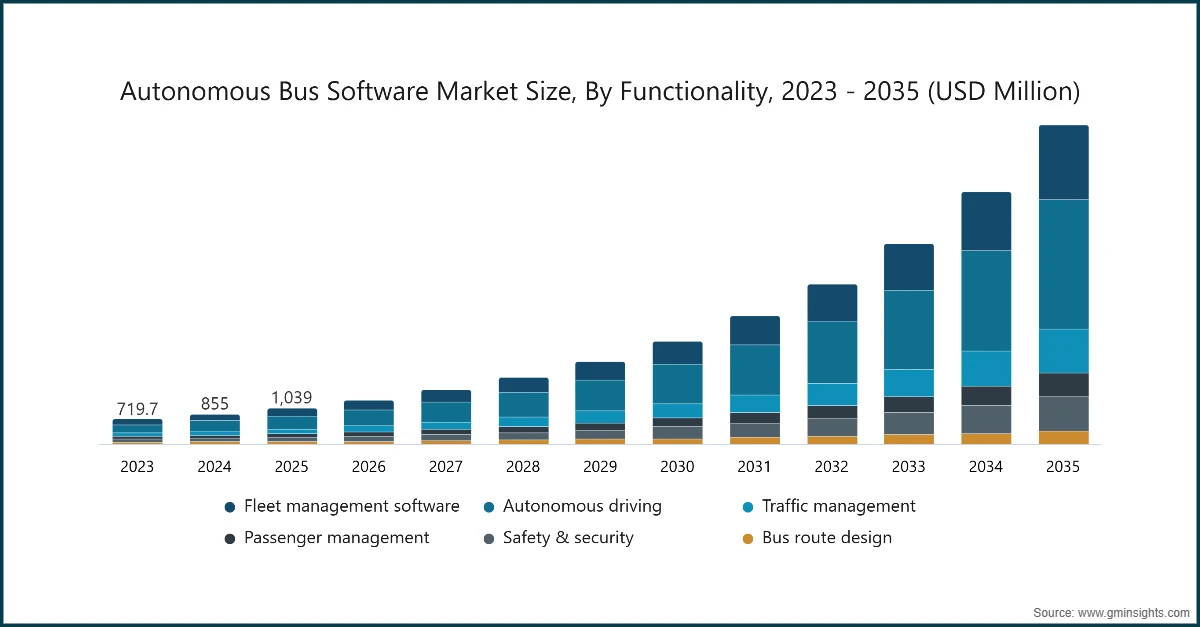
Based on functionality, the market is divided into fleet management software, autonomous driving, traffic management, passenger management, safety & security, bus route design. The autonomous driving segment dominated the market accounting by 36.08% share in 2025 and is expected to grow at a CAGR of 26.1% from 2026 to 2035.
- The autonomous bus software market is rapidly growing, driven by the increasing adoption of fleet management software that enhances operational efficiency and safety. This software enables real-time remote monitoring of buses, allowing operators to track their fleet's status, ensuring immediate responses to any technical issues or delays. It also incorporates IoT-driven maintenance forecasting, which helps predict and address potential problems before they escalate, ultimately reducing downtime and repair costs. Additionally, route optimization and fuel consumption tracking are crucial features, enabling better operational efficiency. The ability to monitor and adjust fleet operations remotely improves decision-making and long-term planning, making fleet management not only more efficient but also cost-effective. As the market grows, these capabilities will be critical in enabling seamless operation of autonomous buses in cities worldwide.
- Central to autonomous buses is their navigation software, which integrates technologies like LiDAR, radar, GPS, and cameras, all powered by artificial intelligence (AI) and deep learning-based computer vision. This combination enables autonomous buses to navigate in real-time, detect obstacles, recognize road signs, and adjust their speed and trajectory accordingly. The system uses advanced sensors and algorithms to process complex road data, allowing the bus to make quick, safe decisions in urban traffic.
- A notable example in the autonomous bus software market is Transdev’s collaboration with Keolis in February 2024 to deploy autonomous buses in Lyon, France. This partnership utilizes AI-powered navigation software to ensure safe operation without requiring pre-mapped routes. These buses use real-time sensor fusion, including LiDAR and cameras, to interpret their surroundings and adapt dynamically to changes in the road and traffic conditions. The system mimics human driving behavior, enabling the buses to handle complex situations such as navigating narrow streets, busy intersections, and sudden traffic shifts.
Learn more about the key segments shaping this market
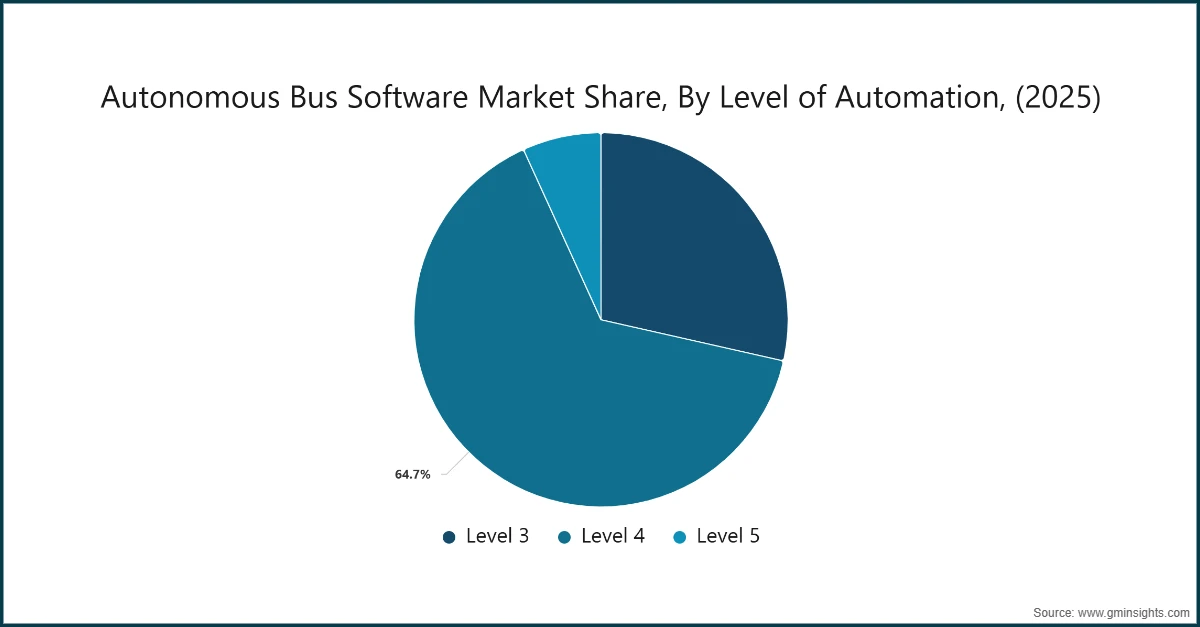
Based on autonomy level, the autonomous bus software market is divided into level 3, level 4, level 5. The level 4 is the largest segment in market and was valued at USD 671.6 million in 2025.
- Level 4 autonomous buses are designed to operate automatically within predefined areas, such as closed campuses, business districts, or smart cities. These buses leverage AI-powered predictive analytics, machine learning, and real-time traffic data to navigate diverse road environments. By continuously adapting to traffic conditions and passenger demand, these systems enable efficient, autonomous operation. Although legal and infrastructure challenges remain for operating autonomous buses on public roads, cities across the U.S. are conducting test trials to refine these technologies in controlled environments. These trials are essential for gathering data and understanding how autonomous buses can integrate into urban transport systems.
- In March 2024, Vicinity Motor Corp. partnered with ADASTEC Corp. to develop the Vicinity Autonomous Lightning EV, a Level 4 autonomous electric bus. The bus will meet SAE Level 4 autonomy standards, enabling full autonomy on predefined routes. Designed for easy passenger access and environmental sustainability, this fully electric bus integrates advanced autonomous technology to improve efficiency and safety. The collaboration highlights a significant step towards creating greener and smarter public transport solutions that can operate seamlessly within urban settings.
- Other industries have also leveraged the use of cloud technology for flexible fleet management. This allows real-time route optimization based on traffic and passenger data, ensuring buses are deployed efficiently. Digital twins, or virtual simulations, are also being used to test various driving scenarios before software updates are applied. This helps improve safety and system performance without risking real-world complications. Although challenges around legal frameworks and infrastructure remain, these advancements in AI, cloud-based management, and digital simulation are key to unlocking the future of autonomous buses in urban environments.
Based on end use, the market is categorized as public transportation authorities, private transport operators, and corporate fleets. Public transportation authorities segment dominated the market with 53.8% share in 2025 and is expected to grow at a CAGR of 25.5% between 2026 to 2035.
- The autonomous bus software market is advancing with a variety of propulsion types, including electric, hybrid, internal combustion engine (ICE), and hydrogen fuel cell buses. Electric buses are the most popular choice in urban settings due to their zero-emission nature. These buses, integrated with AI-driven software, optimize route management, real-time traffic monitoring, and predictive maintenance, ensuring efficient and eco-friendly operations. As cities focus on sustainability, electric buses are becoming a key component of modern public transport systems.
- Hybrid buses, combining electric and combustion engines, offer flexibility in areas lacking extensive charging infrastructure. They can seamlessly switch between power sources to improve efficiency for both urban and suburban routes. Meanwhile, hydrogen fuel cell buses are gaining momentum due to their fast-refueling times and zero-emission operation. With hydrogen infrastructure gradually expanding, these buses are ideal for longer or intercity routes, providing a cleaner alternative to traditional fuel-based systems.
- As autonomous buses become more prevalent, cloud-based fleet management enhances operational efficiency. These systems allow real-time monitoring of electric, hybrid, and hydrogen fuel cell buses, tracking battery health, fuel consumption, and maintenance needs. For hydrogen buses, cloud platforms manage refueling schedules and hydrogen usage, optimizing fleet performance. This technology enables data-driven decisions, improving route efficiency, reducing downtime, and supporting the sustainability goals of modern public transportation.
Based on deployment, the autonomous bus software market is divided into cloud based, On-premises and hybrid. Cloud based dominated the market and was valued at USD 579.4 million in 2025.
- Real-time fleet management, coupled with AI-powered traffic analytics and automation, is increasingly being integrated through cloud-based deployment of Autonomous Bus software on remote servers. One of the leading trends in this field is the rise of AI-driven Mobility-as-a-Service (MaaS) platforms. These platforms enhance the compatibility of autonomous buses with advanced transit systems, particularly within smart cities. By leveraging cloud computing, operators can optimize traffic flows, improve route efficiency, and ensure that autonomous buses function seamlessly within complex urban networks.
- Cloud-based solutions also provide significant advantages such as over-the-air updates, which ensure that the autonomous buses remain compliant with the latest safety regulations and navigational requirements without the need for manual intervention. Additionally, the integration of big data and IoT technologies within these systems allows for more effective mitigation of traffic congestion and route optimization. This results in a more efficient transport network, improving both operational efficiency and passenger experience.
- in September 2024 Zenmov, Inc. autonomous bus service, launched in the Philippines. Powered by Zenmov’s Smart Mobility Operation Cloud, the service collects real-time traffic data and optimizes bus routes accordingly. The software also automates the monitoring and evaluation processes, ensuring that the fleet maintains maximum operational uptime. With the ongoing expansion of 5G networks, cloud-based solutions are expected to dominate the market due to their scalability, cost-effectiveness, and ability to enable real-time management of autonomous fleets, further enhancing urban mobility systems.
Based on application, the autonomous bus software market is divided into public transport, campus and corporate shuttles, airport shuttles, others. Public transport is the largest segment in market and was valued at USD 518.1 million in 2025.|
- As urban centers worldwide adopt smart city frameworks, autonomous buses are increasingly integrated into public transportation networks. These self-driving buses provide cost-effective, environmentally friendly, and efficient travel options for city residents. AI-powered route optimization allows buses to dynamically adjust their schedules based on passenger demand and real-time traffic conditions. By reducing congestion and lowering emissions, autonomous buses play a crucial role in enhancing the sustainability and resilience of modern urban infrastructure.
- Beyond city streets, autonomous shuttle systems are transforming mobility within campuses, business parks, and corporate facilities. These low-speed shuttles offer convenient, on-demand transportation for students and employees across confined areas. Advanced technologies like geo-fencing and real-time monitoring ensure the vehicles operate safely within predefined routes while maintaining efficiency. By reducing the need for personal vehicles, these shuttles improve accessibility and promote sustainable intra-campus travel solutions.
- Autonomous vehicles are also being deployed for airport transfers and other specialized services, such as tourist transport and industrial site mobility. By providing consistent, reliable, and contactless service, these shuttles enhance passenger experience and operational efficiency. Integration with airport management systems allows for precise scheduling, reducing wait times and improving overall level of satisfaction. As autonomous technologies mature, their adoption in these sectors is expected to grow rapidly, supporting seamless, eco-friendly transport in diverse environments.
- In March 2025, a European airport launched its first autonomous shuttle service connecting terminals and parking areas. Developed in collaboration with a leading mobility technology provider, the low-speed, electric shuttles operate within a geo-fenced zone, ensuring safe navigation through crowded airport grounds. Passengers can track shuttle arrivals via a mobile app, while on-board attendants ensure smooth and secure experience. The initiative highlights the potential of autonomous vehicles to enhance efficiency, reduce emissions, and provide convenient last-mile transport solutions.
Looking for region specific data?
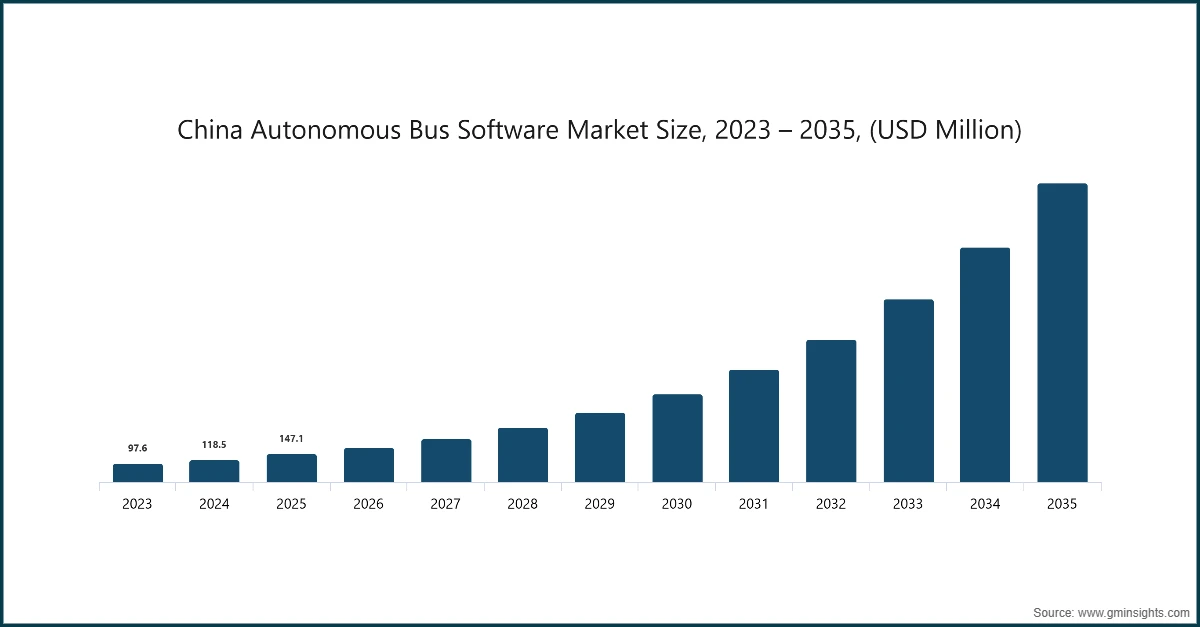
China autonomous bus software market will grow tremendously with CAGR of 27.1% between 2026 and 2035.
- China, along with other rapidly developing Asia-Pacific nations, has emerged as a major hub for Autonomous Bus software adoption, driven by aggressive urbanization, smart city development, and large-scale public transportation modernization. Strong government backing for autonomous driving, AI, and intelligent transportation systems (ITS) has significantly accelerated investment in Autonomous Bus software platforms.
- China’s extensive deployment of pilot autonomous bus projects in major cities such as Beijing, Shanghai, Shenzhen, Guangzhou, and Wuhan has played a critical role in market expansion. During 2024 and 2025, autonomous buses were increasingly deployed in controlled urban zones, industrial parks, airports, and university campuses, relying heavily on advanced software for perception, navigation, fleet management, real-time monitoring, and safety control. These deployments supported high passenger volumes and continuous operations, highlighting the scalability and reliability of Autonomous Bus software systems.
- Leading Chinese technology and mobility companies, including Baidu (Apollo), Huawei, Tencent, Alibaba, WeRide, Pony.ai, and AutoX, are actively developing and deploying Autonomous Bus software solutions. These platforms integrate AI-based perception, V2X communication, cloud-based fleet orchestration, and real-time analytics to ensure safe and efficient operations. Furthermore, government initiatives promoting smart public transport, low-carbon mobility, 5G connectivity, and AI-driven traffic management are further boosting demand for Autonomous Bus software across municipal transport authorities and private operators in China.
US autonomous bus software market will grow tremendously with CAGR of 25.2% between 2026 and 2035.
- The North America market is moderately concentrated, with the United States accounting for approximately 86.1% of the regional market share in 2025, while Canada represents the remaining 13.6%. This distribution reflects disparities in urban mobility investment, smart transportation infrastructure maturity, and autonomous vehicle (AV) policy frameworks, with the U.S. serving as the primary growth engine for Autonomous Bus software adoption.
- The U.S. market is driven by expanding deployments of autonomous and semi-autonomous buses across smart cities, airports, university campuses, and controlled urban corridors. Transit authorities and mobility operators increasingly rely on advanced software platforms for perception, real-time decision-making, route optimization, fleet orchestration, and safety monitoring. Leading deployments by organizations and technology providers such as Waymo, Cruise, Navya, and autonomous transit pilot programs supported by municipal agencies reinforce U.S. leadership. The integration of AI, machine learning, digital twins, and V2X communication further accelerates demand for sophisticated Autonomous Bus software solutions.
- The Canadian autonomous bus software market, while smaller, is expanding steadily as cities and transit agencies explore autonomous public transport to address labor shortages, sustainability goals, and last-mile connectivity challenges. Organizations and pilot programs supported by companies such as Magna, SNC-Lavalin, and Canadian transit authorities are deploying autonomous buses in controlled environments, relying on robust software platforms to ensure safety, regulatory compliance, and reliable operations. Growth is further supported by strong government backing for clean mobility, smart infrastructure, and AI innovation, increasing demand for Autonomous Bus software across both public and private sectors.
The Germany autonomous bus software market in Europe will experience robust growth of 26.1% between 2026 and 2035.
- Germany continues to lead the European autonomous bus software industry, supported by its strong automotive, industrial, and intelligent mobility ecosystem. Major automotive OEMs, Tier-1 suppliers, and public transit authorities are actively deploying advanced Autonomous Bus software to support pilot projects and early commercial deployments. Companies such as Volkswagen, BMW, Daimler Truck, and Siemens Mobility leverage sophisticated software platforms for perception, route planning, fleet management, and safety assurance across controlled urban environments.
- Regulatory frameworks and safety standards play a key role in accelerating adoption. Germany’s structured approach to autonomous vehicle regulation enables controlled deployment of autonomous buses on public roads. For instance, Deutsche Bahn and municipal transit operators rely on AI-driven autonomous software platforms to ensure real-time system monitoring, redundancy, and compliance with functional safety requirements, supporting reliable and legally compliant autonomous operations.
- France is witnessing strong growth in Autonomous Bus software adoption, driven by smart city initiatives, public transportation digitization, and sustainability goals. Transit authorities and technology providers such as RATP, Navya, Alstom, and Keolis deploy Autonomous Bus software to enable autonomous shuttles and buses in urban districts, airports, and business parks. These solutions focus on perception accuracy, passenger safety, traffic integration, and service continuity, particularly in dense metropolitan environments.
- Other European countries are increasingly investing in Autonomous Bus software to modernize public transport systems and reduce emissions. In Italy, mobility providers and industrial groups deploy autonomous buses in industrial zones and tourist corridors, supported by software platforms for navigation, remote supervision, and fleet optimization. In Spain, smart mobility projects in cities such as Barcelona and Madrid leverage Autonomous Bus software to improve last-mile connectivity and urban transport efficiency.
The Brazil will experience robust growth of 22.2% between 2026 and 2035.
- Brazil dominates the Latin American autonomous bus software market, supported by its large urban population, expanding public transportation networks, and growing focus on smart mobility solutions. Major cities are increasingly exploring autonomous and semi-autonomous bus technologies to improve traffic efficiency, reduce operating costs, and enhance passenger safety. Government initiatives promoting intelligent transport systems (ITS), digital infrastructure, and sustainable mobility are accelerating adoption of Autonomous Bus software across municipal transit agencies and private mobility operators.
- For instance, São Paulo and Curitiba have launched pilot programs and feasibility studies involving autonomous or connected buses operating in controlled corridors and dedicated lanes. These deployments rely on advanced software platforms for real-time perception, route planning, fleet supervision, and safety monitoring. Autonomous Bus software enables operators to manage complex urban environments, ensure service continuity, and optimize operational efficiency during peak commuting hours.
- Beyond Brazil, other Latin American countries are showing growing opportunities for Autonomous Bus software adoption, driven by urban mobility challenges and public transport modernization. In Argentina, transit authorities and technology partners are exploring autonomous shuttle and bus pilots in business districts, industrial zones, and university campuses. These projects rely on robust software systems to ensure operational safety, system uptime, and reliable performance, supporting broader smart city and digital transportation initiatives across the region.
UAE autonomous bus software market will grow tremendously with CAGR of 20.3% between 2026 and 2035.
- The United Arab Emirates holds a leading position in the Middle East market, accounting for approximately 40.1% of the regional market share in 2025. Growth is driven by rapid smart city development, advanced digital infrastructure, and strong government support for autonomous mobility. National initiatives such as Smart Dubai, Abu Dhabi Smart City, and the UAE National AI Strategy are accelerating the deployment of autonomous and connected public transport systems, increasing demand for advanced software platforms to manage perception, navigation, fleet operations, and real-time monitoring.
- Public transport authorities and enterprises across mobility, logistics, and urban development sectors are increasingly implementing Autonomous Bus software to deliver safe, efficient, and future-ready transportation services. For instance, Dubai’s Roads and Transport Authority (RTA) has launched multiple autonomous shuttle and bus trials, relying on AI-driven software for real-time decision-making, remote supervision, and passenger safety. Similarly, smart mobility projects in Abu Dhabi use Autonomous Bus software to manage operations in controlled environments such as business districts, islands, and tourist zones, highlighting the UAE’s growing reliance on advanced autonomous software to support next-generation public transportation.
Autonomous Bus Software Market Share
- The top 7 companies in the market are Baidu, EasyMile, Mobileye, NVIDIA, Yutong Bus, Volvo, and WeRide. These companies hold around 37.4% of the market share in 2025.
- EasyMile specializes in autonomous vehicle solutions for public transport, particularly electric shuttles and buses. Known for its EZ10 autonomous shuttle, EasyMile integrates AI-driven software with robust sensor technologies like LIDAR and cameras to enable safe and efficient navigation in urban environments, contributing to eco-friendly transportation solutions worldwide.
- Mobileye, an Intel company, is renowned for its advanced driver-assistance systems (ADAS) and autonomous driving technologies. The company’s software combines real-time computer vision and AI to help autonomous buses navigate complex urban environments. Mobileye’s partnerships with vehicle manufacturers allow for the scaling of autonomous buses globally, with a focus on safety, traffic navigation, and route optimization.
- NVIDIA plays a pivotal role in the autonomous bus market by providing powerful computing platforms like NVIDIA DRIVE, which enable AI-based navigation and real-time decision-making. Their high-performance GPUs and deep learning models power the systems used in autonomous buses, helping to manage sensor data, optimize routes, and ensure safety in dynamic urban settings.
- Yutong, one of China’s largest bus manufacturers, has made significant strides in autonomous electric buses. The company combines its expertise in electric propulsion systems with AI and autonomous driving technology, deploying self-driving buses in multiple cities across China. Yutong is focusing on sustainability, safety, and integrating AI systems for precise route management and operational efficiency.
- Volvo is a leader in both autonomous driving and electric bus technology. The company has been testing autonomous electric buses for urban public transport, leveraging AI and sensor technology to enhance operational safety, improve route efficiency, and reduce environmental impact. Volvo’s focus is on delivering sustainable and safe public transportation solutions with AI-powered fleet management.
- WeRide is a Chinese autonomous driving startup that focuses on developing autonomous mobility solutions for both passenger cars and buses. By integrating AI algorithms, LIDAR, and camera systems, WeRide’s autonomous buses are designed to improve traffic flow, safety, and energy efficiency. The company is working with multiple global partners to deploy autonomous buses in smart cities, offering solutions for sustainable urban mobility.
Autonomous Bus Software Market Companies
Major players operating in the autonomous bus software industry include:
Baidu
- Easy Mile
- Mobileye
- NVIDIA
- Yutong Bus
- Volvo
- WeRide
- Waymo
- Aurora Innovation
- May Mobility
- This technology-driven approach in the autonomous bus software market focuses on developing sophisticated autonomous driving systems that leverage AI for real-time data analysis, sensor fusion, and predictive modeling. The integration of machine learning algorithms enables these systems to optimize routes, adjust to traffic patterns, and ensure passenger safety. Collaboration with vehicle manufacturers and urban planners accelerates the deployment of autonomous bus systems, enabling quicker integration into existing public transportation networks.
- A partnership-driven strategy is essential for establishing key alliances with transit authorities, city planners, and vehicle manufacturers across various regions, helping to ensure the rapid adoption of autonomous bus technology. These strategic collaborations allow for customized solutions that fit the infrastructure and regulatory requirements of specific regions. Additionally, working closely with legislators helps smooth the process of compliance with evolving safety regulations, which are becoming increasingly stringent as autonomous vehicles gain more traction in public transit systems.
- Strategic joint ventures with AI companies and equipment providers allow for the fast-tracking of validation through dense urban pilot projects. These pilot programs test Autonomous Bus software in real-world scenarios, overcoming operational barriers and refining the technology for larger-scale deployment. Successful implementation in these high-density areas helps validate the technology’s reliability and safety, building confidence for wider adoption across global markets.
- To support ongoing growth and widespread deployment, subscription-based services provide a stable revenue model while facilitating continuous updates and improvements to the autonomous bus systems. This approach ensures that operators receive regular software updates, enhancing functionality, security, and compliance with emerging regulations. It also enables a smoother integration of autonomous buses into public transport networks, helping cities transition to smarter, more sustainable mobility solutions.
Autonomous Bus Software Industry News
In September 2025, under Karsan & RATP partnership they launched the Autonomous e-ATAK, the first Level 4 serial-production bus to carry passengers on the 4.5-kilometer Paris 393 bus route. This is a major real-world integration into a high-density urban transit line.
In April 2025, Guident launched a pilot in West Palm Beach, Florida, featuring the MiCa autonomous shuttle. The defining software feature here is Guident's Remote Monitoring and Control center, which allows a human operator to "tele-operate" or oversee multiple buses from a central hub, solving the "edge case" problem where buses get stuck in unexpected construction.
- In February 2024, in collaboration with TaKuRoo Inc., Tier IV Inc., and Sumitomo Mitsui Auto Service Co., Sumitomo Corporation joined in the bold autonomous bus pilot project that BOLDLY Inc. is spearheading in Kumamoto city. The project is expected to enhance practical operational analysis in order look self-driving bus solutions. This is hoped to deepen self-driving transit initiatives.
- In January 2025, Oxa announce the plans implemented the advanced autonomous Ford E-Transit shuttle in the first quarter of 2025. Oxa also announced that they would now be the providers for autonomy systems for the self-driving bus project under Sunderland Advanced Mobility Shuttle (SAMS) for the United Kingdom.
The autonomous bus software market research report includes in-depth coverage of the industry, with estimates & forecasts in terms of revenue (USD Billion) volume (Million Units) (from 2022 to 2035), for the following segments:
Market By Functionality
- Fleet management software
- Autonomous driving
- Traffic management
- Passenger management
- Safety & security
- Bus route design
Market By Level of Automation
- Level 3
- Level 4
- Level 5
Market By Deployment model
- On-premises
- Cloud-based
- Hybrid
Market By Application
- Public transport
- Campus and corporate shuttles
- Airport shuttles
- Others
Market By End Use
- Public transportation authorities
- Private transport operators
- Corporate fleets
The above information is provided for the following regions and countries:
- North Ameria
- US
- Canada
- Europe
- UK
- Germany
- France
- Italy
- Spain
- Belgium
- Netherlands
- Sweden
- Russia
- Asia Pacific
- China
- India
- Japan
- Australia
- Singapore
- South Korea
- Vietnam
- Indonesia
- Latin America
- Brazil
- Mexico
- Argentina
- MEA
- South Africa
- Saudi Arabia
- UAE
Frequently Asked Question(FAQ) :
What are the upcoming trends in the autonomous bus software market?
Key trends include AI-driven vision-based navigation, electric autonomous platforms for sustainable mobility, and cloud-based fleet management with predictive analytics and digital twin integration.
Who are the key players in the autonomous bus software market?
Key players include Baidu, Yutong Bus, Mobileye, EasyMile, NVIDIA, Volvo, WeRide, Waymo, Aurora Innovation, and May Mobility.
What was the market share of the public transportation authorities segment in 2025?
The public transportation authorities segment dominated the market with 53.8% market share in 2025 and is expected to grow at a CAGR of 25.5% between 2026 to 2035.
Which region leads the autonomous bus software market?
China autonomous bus software market will grow tremendously with CAGR of 27.1% between 2026 and 2035.
What was the market value of the Level 4 autonomy segment in 2025?
The Level 4 autonomy segment was valued at USD 671.6 million in 2025, representing the largest segment in the autonomy level category.
What is the current autonomous bus software market size in 2026?
The market size is projected to reach USD 1.27 billion in 2026.
How much market share did the autonomous driving segment hold in 2025?
The autonomous driving segment dominated the market with 36.08% market share in 2025 and is expected to grow at a CAGR of 26.1% from 2026 to 2035.
What is the projected value of the autonomous bus software market by 2035?
The autonomous bus software market is expected to reach USD 9.23 billion by 2035, propelled by AI-driven predictive analytics, collaborations with cities and transport operators, and integration with smart city infrastructure.
What is the market size of the autonomous bus software in 2025?
The market size was USD 1.04 billion in 2025, with a CAGR of 24.7% expected through 2035 driven by rising demand for shared mobility, improved safety and traffic management, and growing public awareness and acceptance of autonomous vehicles.
Autonomous Bus Software Market Scope
Related Reports