Summary
Table of Content

Asia Pacific Pet Therapeutic Diet Market
Get a free sample of this report
Form submitted successfully!
Error submitting form. Please try again.
Thank you!
Your inquiry has been received. Our team will reach out to you with the required details via email. To ensure that you don't miss their response, kindly remember to check your spam folder as well!
Request Sectional Data
Thank you!
Your inquiry has been received. Our team will reach out to you with the required details via email. To ensure that you don't miss their response, kindly remember to check your spam folder as well!
Form submitted successfully!
Error submitting form. Please try again.
Asia Pacific Pet Therapeutic Diet Market Size
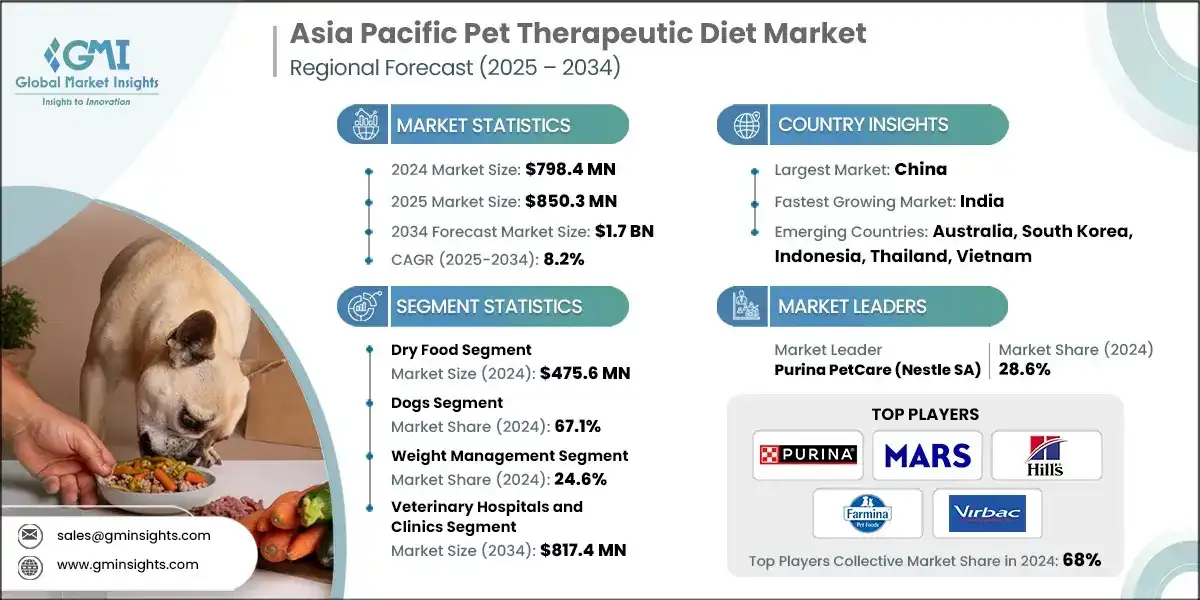
The Asia Pacific pet therapeutic diet market was estimated at USD 798.4 million in 2024. The market is expected to grow from USD 850.3 million in 2025 to USD 1.7 billion in 2034, at a CAGR of 8.2%, according to the latest report published by Global Market Insights Inc. Rising awareness among pet owners regarding the role of nutrition in managing chronic diseases and ensuring the overall health of animals is a key factor driving market growth in the region.
Asia Pacific Pet Therapeutic Diet Market Key Takeaways
Market Size & Growth
- 2024 Market Size: USD 798.4 Million
- 2034 Forecast Market Size: USD 1.7 Billion
- CAGR (2025–2034): 8.2%
Key Market Drivers
- Increasing pet population across the region.
- Increasing prevalence of chronic and lifestyle-related disorders in pets.
- Rising disposable income in the region.
- Expansion of online distribution channels in the veterinary field.
Challenges
- High cost of therapeutic diets.
Opportunity
- Integration of digital platforms and telehealth.
Key Players
- Market Leader: Purina PetCare (Nestle SA) led with over 28.6% market share in 2024.
- Leading Players: Top 5 players in this market include Purina PetCare (Nestle SA), Mars, Incorporated, Hills Pet Nutrition (Colgate-Palmolive), Farmina Pet Foods, Virbac, which collectively held a market share of 68% in 2024.
Get Market Insights & Growth Opportunities
In China, 44.4% of dogs examined were obese according to one study. Due to increasing incidence of diseases like obesity, diabetes, kidney disease, and skin allergies among companion animals, veterinarians now prescribe therapeutic diets as a treatment component. This increasing awareness of preventive and condition-specific nutrition is persuading pet owners to embrace specialty diets instead of depending on traditional pet food.
Pet therapeutic diet is a category of pet food that deals with specifically designed food products intended to prevent, treat, or support the treatment of certain health conditions in companion animals. Market leaders such as Mars, Hill's Pet Nutrition, Nestlé Purina PetCare, and Farmina Pet Foods command strong market shares in the Asia Pacific pet therapeutic diet market owing to their extensive product lines, veterinary affiliations, and wide distribution networks. These players drive the market through heavy investments in research and development to develop science-based formulations, educational campaigns with veterinarians to raise awareness, and offline and online retail routes to enhance accessibility.
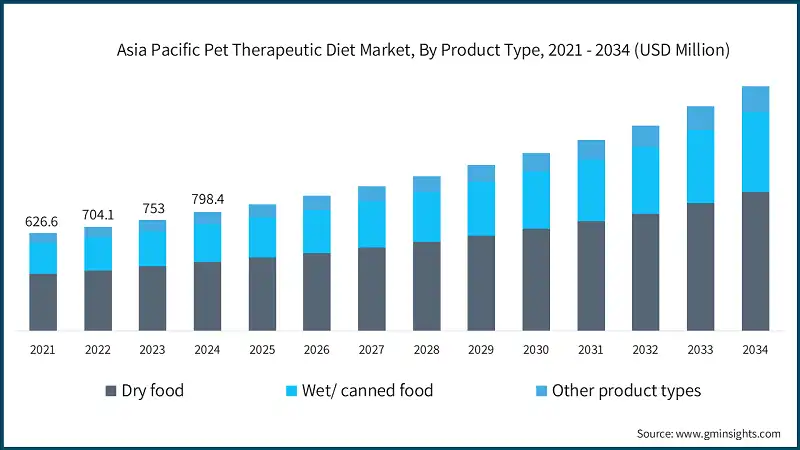
The Asia Pacific pet therapeutic diet market witnessed steady growth, growing from USD 626.6 million in 2021 to USD 753 million in 2023. Between 2021 and 2023, the market experienced robust growth as pet ownership surged, and health-focused nutrition became a greater concern for pet parents. The market witnessed growth owing to a surge in pet adoption during the COVID period, which translated directly into increasing demand for niche diets used to treat obesity, digestive diseases, kidney disorders, and allergies. The pet population in India saw a noticeable rise during the COVID-19 pandemic, with several households adopting pets during this period. This shift led to a surge in the overall pet care market as new pet parents began spending more on their pets health and overall well-being.
Pet therapeutic diets, also known as veterinary diets, are pet foods designed to be fed to pets with specific diseases or medical conditions. They act complementary to medications or drugs, and they are therefore used to treat or prevent disease in pets. These diets require veterinary oversight or a prescription and target issues like obesity, renal disease, gastrointestinal disorders, joint health, skin disorders, and other health conditions such as dental health, liver care and diabetes control.
To get key market trends
Asia Pacific Pet Therapeutic Diet Market Trends
- Growing pet humanization and health awareness are major trends driving the adoption of pet therapeutic diets in the region. Pet owners in the Asia Pacific region increasingly treat pets as family members, leading to higher attention to diet and overall health. This increases demand for therapeutic diets that control chronic diseases, promote longevity, and enhance quality of life.
- Additionally, a growing number of veterinary practices in the region positively influences regional market growth. Veterinarians are key drivers for recommending therapeutic diets, and their growing focus on preventive care has driven the adoption of therapeutic diets in Asia Pacific.
- Awareness campaigns, pet health check-ups, and joint promotions between pet food companies and veterinary clinics have further established the advantages of condition-specific diets.
- Furthermore, there is growing preference for premium, natural, and functional ingredients within pet therapeutic diets. Owners demand diets that are free from artificial additives and fortified with nutrients specifically designed to meet certain health requirements. This trend inspires firms to experiment with superfoods, probiotics, and regionally favored protein sources to appeal to the increasingly health-conscious consumer base.
- Also, the growth of digital and retail platforms, subscription models, and tele-veterinary solutions is revolutionizing how pet owners access therapeutic diets. Online distribution channels enable greater reach beyond key cities, offer convenience, and support personalized diet plans shipped directly to consumers. Firms use digital media to provide advice, track compliance, and build brand loyalty.
- Lastly, demand for breed-specific, life stage, or disease condition-specific diets like renal, gastrointestinal, or weight management diets is rising. Consumers are increasingly educated and seek products that meet their pet's individual health requirements. This trend boosts R&D investment in novel formulation development that is effective, palatable, and compliant with local taste preferences.
Asia Pacific Pet Therapeutic Diet Market Analysis
Learn more about the key segments shaping this market
The market was valued at USD 626.6 million and USD 704.1 million in 2021 and 2022, respectively. In 2024, the market size reached USD 798.4 million, growing from USD 753 million in 2023.
Based on the product type, the Asia Pacific pet therapeutic diet market is classified into dry food, wet/canned food, and other product types. The dry food segment dominated the market in 2024 and was valued at USD 475.6 million.
- The dry food segment dominated the Asia Pacific pet therapeutic diet market owing to its cost-effectiveness. Compared to wet or semi-moist therapeutic diets, dry foods are generally less expensive, enabling pet owners to maintain long-term health regimens for their pets without excessive expense. This affordability is especially important in price-sensitive markets across the region, where consumers seek a balance between quality and sustainable usage.
- Additionally, the convenience of use and storage offered by dry foods further increases their adoption. Pet owners prefer the dry form as it is convenient to store, measure, and serve, enabling convenient daily feeding.
- On the other hand, the wet/canned food segment was valued at USD 224.5 million in 2024 and is poised to witness high growth over the coming years. Wet foods are preferred for pets suffering from dental problems, low appetite, or particular medical conditions demanding greater hydration.
- Increasing knowledge of the health advantages linked with water-dense diets, coupled with increased availability through online stores and veterinary clinics, is leading to steady expansion in the wet food category throughout the region.
Learn more about the key segments shaping this market
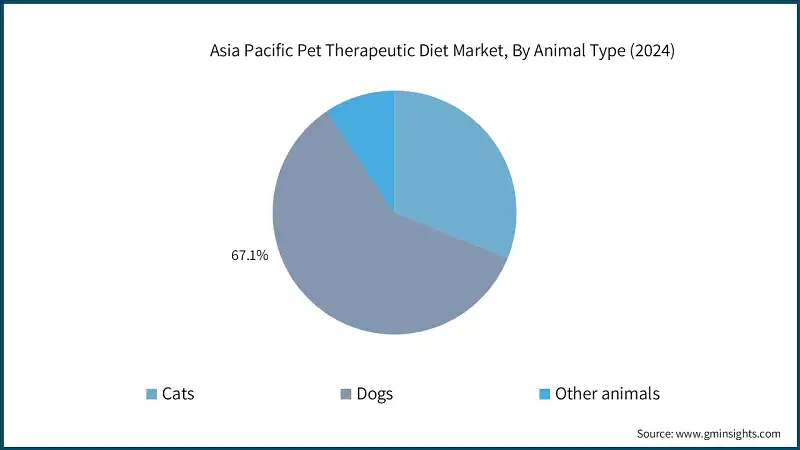
Based on animal type, the Asia Pacific pet therapeutic diet market is segmented into cats, dogs, and other animal types. In 2024, the dogs segment accounted for the largest share of 67.1% in the market. On the other hand, the cat segment is anticipated to witness rapid growth at a CAGR of 8.7% between 2025 – 2034, supported by steadily increasing cat ownership and awareness of specialized nutritional needs.
With cats increasingly regarded as family members, owners are more attentive to their specific nutritional requirements, especially for managing conditions such as urinary tract disorders, obesity, and food sensitivities. This growing awareness is translating into higher adoption of therapeutic diets tailored to feline health needs.
- Dogs account for the largest share of the Asia Pacific pet therapeutic diet market, primarily because of their high ownership rates compared to other companion animals. For example, the number of households with pet dogs and cats in India accounted for approximately 23 million and 1.7 million, respectively, in 2023.
- Further, the increased incidence of chronic conditions like obesity, diabetes, arthritis, and kidney problems in dogs increases the demand for condition-specific diets.
- Also, given the size difference, serving needs, and caloric demands, dogs require more food for complete nutrition compared to cats and other small mammals, which further strengthens their market share.
- Moreover, the wide product variety available for dogs, ranging from breed-specific formulations to age-related therapeutic diets, enhances segmental growth.
Based on the health condition, the Asia Pacific pet therapeutic diet market is categorized into renal health, gastrointestinal health, skin and coat health, cardiovascular health, weight management, joint care, and other health conditions. The weight management segment dominated the market in 2024 with a market share of 24.6%.
- The weight management segment dominates the market, as there is an increasing number of obesity cases in companion animals.
- Urbanization and lifestyle changes have resulted in decreased physical activity among pets, in addition to higher intakes of calorie-rich treats and frequent feeding.
- As awareness grows among pet owners about the health risks associated with obesity, such as diabetes, joint disorders, and reduced life expectancy, the demand for specialized therapeutic diets aimed at weight reduction and maintenance has accelerated.
- The gastrointestinal health segment held the second-largest market share of 19.6% in the Asia Pacific pet therapeutic diet market in 2024, fueled by the growing prevalence of digestive conditions among companion animals. With growing awareness about the role of nutrition in managing long-term gut health, along with the availability of specialized formulations to effectively manage gastrointestinal and digestive issues in pets, the adoption of therapeutic diets for this indication is anticipated to rise.
- On the other hand, the skin and coat health segment is rapidly growing, driven by the rising incidence of dermatological disorders like allergies, itching, and hair loss among pets. Hence, therapeutic diets, enriched with omega fatty acids, vitamins, and hypoallergenic ingredients, are gaining rapid acceptance among pet owners seeking long-term solutions for recurring skin conditions.
Based on the distribution channel, the Asia Pacific pet therapeutic diet market is categorized into veterinary hospitals and clinics, E-commerce, retail pharmacies, and other distribution channels. The veterinary hospitals and clinics segment dominated the market in 2024 and is anticipated to reach USD 817.4 million by 2034.
- Veterinary clinics and hospitals are a key distribution channel in the Asia Pacific pet therapeutic diet market, as they provide the first point of diagnosis and treatment for pet chronic diseases.
- As therapeutic diets are generally prescribed for treating chronic issues like obesity, gastrointestinal diseases, or renal disease, pet owners rely heavily on veterinarians for guidance. This confidence in professional advice makes hospitals and clinics a reliable channel for therapeutic diet sales.
- Additionally, the increasing number of veterinary clinics in countries such as China, India, Japan, and Australia has increased the reach of therapeutic diets. With pet healthcare infrastructure improving and more clinics adopting integrated care models, the sales of therapeutic diets through these establishments are growing steadily.
Looking for region specific data?
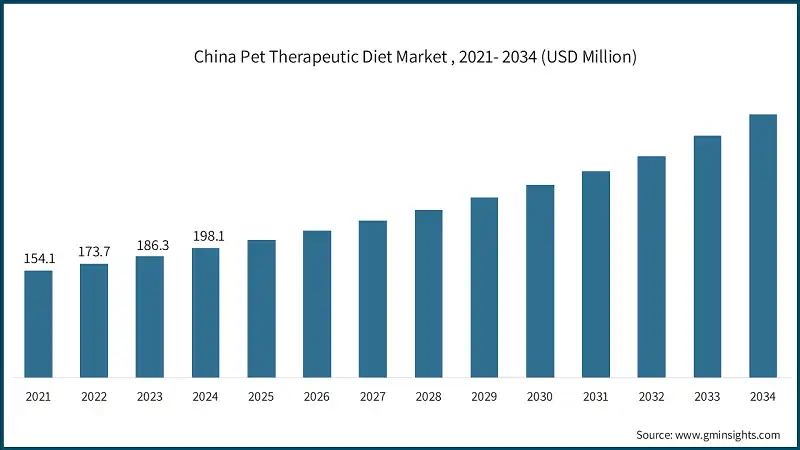
China pet therapeutic diet market was valued at USD 154.1 million and USD 173.7 million in 2021 and 2022, respectively. The market size reached USD 198.1 million in 2024, growing from USD 186.3 million in 2023.
- China holds a dominant position in the Asia Pacific pet therapeutic diet market, owing to its large pet population and growing culture of pet ownership.
- Increasing disposable incomes and the desire to invest in premium pet nutrition have made the country a leading force in the regional market.
- In addition, the growing prevalence of conditions such as obesity, digestive disease, and skin allergies among pet animals has further increased the adoption of therapeutic diets.
- Pet owners are increasingly opting for veterinary-prescribed diets as part of corrective and preventive veterinary healthcare for their pets, and therapeutic nutrition has thus become an important component of veterinary offerings.
India is witnessing rapid growth in the Asia Pacific pet therapeutic diet market, growing at a CAGR of 8.9% over the forecast period.
- High pet population in the country, coupled with the rapid development of animal healthcare infrastructure, is driving the market growth.
- For instance, the country's pet population has seen significant growth over the past decade, rising from 26 million in 2019 to 42 million in 2024.
- Additionally, increasing disposable incomes, the emerging middle class, and urbanization are encouraging pet owners to move towards preventive healthcare and nutrition. This change is driving demand for therapeutic diets specifically aimed at controlling common diseases in pets such as obesity, digestive issues, and skin disorders.
- Lastly, India's thriving e-commerce industry has greatly boosted therapeutic diet adoption, further supporting market growth.
Japan held 20.6% of the Asia Pacific pet therapeutic diet market in 2024.
- In Japan, the pet population in 2024 is estimated to be around 15.9 million, consisting of approximately 6.84 million dogs and 9.07 million cats. With numerous households having older pets that are more likely to develop conditions like renal disorders, obesity, and joint disease, there has been a steady increase in the demand for therapeutic diets.
- The advanced veterinary infrastructure of the country also maintains this high adoption rate.
- In addition, Japan's growing digital ecosystem has enhanced access to therapeutic diets through e-commerce platforms, further boosting market growth.
Asia Pacific Pet Therapeutic Diet Market Share
The top 5 players, such as Purina PetCare (Nestle SA), Mars, Incorporated, Hill's Pet Nutrition (Colgate-Palmolive), Farmina Pet Foods, and Virbac account for ~65 - 70% of the market share. These players focus on various strategies such as business expansion, mergers and acquisitions, collaborations, and novel product launches to consolidate their market presence. For instance, in March 2025, Purina enhanced its therapeutic pet food strategy by launching direct-to-consumer (D2C) sales through veterinary clinics. Through its Vet Direct model, the company addresses both consumer convenience and veterinary engagement, streamlining access to specialized diets for pets with medical needs. This initiative strengthened Purina's market position by boosting customer loyalty and clinic partnerships.
Additionally, regional and local players are increasingly gaining traction by tailoring their offerings to suit local consumer preferences and price sensitivities. Chinese, Indian, and Southeast Asian companies are launching low-cost therapeutic diets in line with local feeding traditions, as well as utilizing cultural familiarity to establish closer relationships with pet owners. This increase in domestic brands is intensifying competition, particularly in developing markets where affordability and availability have strong influence on buying decisions.
Asia Pacific Pet Therapeutic Diet Market Companies
Few of the prominent players operating in the Asia Pacific pet therapeutic diet industry include:
- Blue Buffalo (General Mills)
- Diamond Pet Foods (Schell & Kampeter, Inc.)
- Drools Pet Food
- Eden Holistic Pet Foods
- EmerAid
- Farmina Pet Foods
- Hill's Pet Nutrition (Colgate-Palmolive)
- Husse
- JustFoodForDogs
- Mars, Incorporated
- Open Farm
- Purina PetCare (Nestle SA)
- Stella and Chewy’s
- Virbac
- VNG
- Ziwi Pets
- Purina PetCare (Nestle SA)
Nestlé Purina PetCare holds a significant share of ~28.6% in the Asia Pacific pet therapeutic diet market, leveraging its strong global reputation in pet nutrition and consistent investments in innovation. The brand is one of the key players in the therapeutic diet segment, benefiting from strong R&D capabilities, veterinary partnerships, and broad reach across both veterinary clinics and online channels. In markets such as Southeast Asia and East Asia, Purina has expanded its manufacturing and digital infrastructure, most notably by establishing production operations in Thailand, to meet regional demand.
- Mars, Incorporated
Mars, Incorporated holds a prominent position in the Asia Pacific pet therapeutic diet market, driven by its leadership in nutritional research, veterinary services, and targeted dietary innovation. The company leverages its extensive veterinary partnerships and broad clinic-based distribution to influence prescription-driven demand. In 2023, Mars opened its first research and development center for pet food in Asia Pacific, signaling a strategic shift toward localized product development. Moreover, Mars's 2023 acquisition of Champion Petfoods enhances its access to the premium and specialty diet segment, allowing it to offer a broader portfolio.
- Hill's Pet Nutrition (Colgate-Palmolive)
Hill's Pet Nutrition is known for its Prescription Diet range that targets conditions such as renal health, weight management, digestive care, and joint support. The company works closely with veterinarians, integrating its solutions into professional practice. The company's commitment to nutritional precision is supported by collaboration with academic research institutions and pet health networks, enabling the continuous refinement of therapeutic formulations.
Asia Pacific Pet Therapeutic Diet Market Report Attributes
| Key Takeaway | Details |
|---|---|
| Market Size & Growth | |
| Base Year | 2024 |
| Market Size in 2024 | USD 798.4 Million |
| Forecast Period 2025 - 2034 CAGR | 8.2% |
| Market Size in 2034 | USD 1.7 Billion |
| Key Market Trends | |
| Drivers | Impact |
| Increasing pet population across the region | Rising urban pet adoption drives therapeutic diet demand as owners prioritize preventive healthcare. |
| Increasing prevalence of chronic and lifestyle-related disorders in pets | Growing obesity, diabetes, and kidney disease cases drive demand for condition-specific nutrition. |
| Rising disposable income in the region | Higher incomes and pet humanization enable investment in premium therapeutic products. |
| Expansion of online distribution channels in the veterinary field | E-commerce growth improves market penetration for veterinary-recommended diets. |
| Pitfalls & Challenges | Impact |
| High cost of therapeutic diets | Premium pricing remains a barrier to adoption, particularly in price-sensitive emerging markets across the region. |
| Opportunities: | Impact |
| Integration of digital platforms and telehealth | Combining therapeutic nutrition with telemedicine and subscription models presents opportunities for enhanced customer retention and recurring revenue. |
| Market Leaders (2024) | |
| Market Leaders |
28.6% market share. |
| Top Players |
Collective Market Share in 2024 is 68% |
| Competitive Edge |
|
| Regional Insights | |
| Largest Market | China |
| Fastest Growing Market | India |
| Emerging Country | Australia, South Korea, Indonesia, Thailand, Vietnam |
| Future Outlook |
|
What are the growth opportunities in this market?
Asia Pacific Pet Therapeutic Diet Industry News:
- In May 2025, Nestlé acquired a minority stake in Drools Pet Food Private Limited, citing the move as a financial investment. According to Nestlé's statement, Drools will continue to operate independently, both strategically and operationally. The investment provided Drools with access to additional capital and global expertise, supporting its expansion and innovation in India's growing pet food market.
- In April 2025, Hill's Pet Nutrition introduced an enhancement of its Science Diet adult and senior dry food range by introducing ActivBiome+ Multi-Benefit—a blend of prebiotic fibers and antioxidants that supports digestive, immune, and organ health. This innovation strengthened its competitive edge in the premium pet nutrition market by aligning with growing consumer demand for gut health-focused products.
- In July 2021, as part of its 2030 strategic vision, Virbac successfully acquired iVet LLC, a specialty pet food company. This acquisition not only expanded Virbac's product portfolio but also brought valuable expertise in distribution, logistics, and e-commerce, key components for achieving its pet food growth ambitions in the U.S. market.
The Asia Pacific pet therapeutic diet market research report includes an in-depth coverage of the industry with estimates and forecast in terms of revenue in USD Million from 2021 - 2034 for the following segments:
Market, By Product Type
- Dry food
- Wet/ canned food
- Other product types
Market, By Animal Type
- Cats
- Dogs
- Other animals
Market, By Health Condition
- Renal health
- Gastrointestinal health
- Skin and coat health
- Cardiovascular health
- Weight management
- Joint care
- Other health conditions
Market, By Distribution Channel
- Veterinary hospitals and clinics
- E-commerce
- Retail pharmacies
- Other distribution channels
The above information is provided for the following countries:
- China
- Japan
- India
- Australia
- South Korea
- Thailand
- Indonesia
- Vietnam
Frequently Asked Question(FAQ) :
What is the market size of the Asia Pacific pet therapeutic diet in 2024?
The market size was USD 798.4 million in 2024, driven by increasing awareness among pet owners about the role of nutrition in managing chronic diseases and improving animal health.
What is the projected value of the Asia Pacific pet therapeutic diet market by 2034?
The market is expected to reach USD 1.7 billion by 2034, growing at a CAGR of 8.2% during the forecast period.
What is the projected size of the Asia Pacific pet therapeutic diet market in 2025?
The market is expected to reach USD 850.3 million in 2025.
How much revenue did the dry food segment generate in 2024?
The dry food segment generated USD 475.6 million in 2024, dominating the product type category.
What was the market share of the weight management segment in 2024?
The weight management segment held a 24.6% market share in 2024, leading the health condition category.
Which region leads the Asia Pacific pet therapeutic diet market?
Japan accounted for 20.6% of the Asia Pacific pet therapeutic diet industry in 2024, supported by a pet population of approximately 15.9 million, including 6.84 million dogs and 9.07 million cats.
What are the upcoming trends in the Asia Pacific pet therapeutic diet industry?
Key trends include growing pet humanization, increased focus on preventive care by veterinarians, and rising demand for therapeutic diets to manage chronic conditions and enhance pet health.
Who are the key players in the Asia Pacific pet therapeutic diet market?
Key players include Blue Buffalo (General Mills), Diamond Pet Foods (Schell & Kampeter, Inc.), Drools Pet Food, Eden Holistic Pet Foods, EmerAid, Farmina Pet Foods, Hill's Pet Nutrition (Colgate-Palmolive), Husse, and JustFoodForDog.
Asia Pacific Pet Therapeutic Diet Market Scope
Related Reports